Ring out the old, ring in the new,
Ring, happy bells, across the snow:
The year is going, let him go;
Ring out the false, ring in the true.
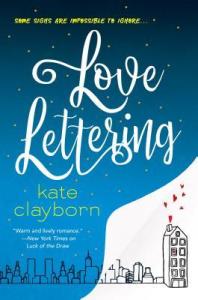
As anticipated, my first two books of 2020 were Kate Clayborn’s Love Lettering and Tana French’s The Witch Elm. They could hardly be more different, but of their kinds, they are both, I think, excellent.
Love Lettering has many of the same qualities that have made Clayborn’s previous books–the ‘Chance of a Lifetime’ trilogy–my favorite contemporary romance series. Interestingly (to me, anyway!), these are qualities that actually dulled the books’ impact at first. Clayborn gives her characters a lot of specificity, both in their personalities and in their activities. This means a lot of backstory and also a lot of neepery (which, as I’ve figured out, is one of my favorite things). In Beginner’s Luck, for instance, one of the protagonists, Kit, is a lab technician, which I suppose might sound a bit dry, but Clayborn does a good job conveying the interest and satisfaction she finds in her job, as well as explaining the scientific work she is also involved in. In the same novel, the other lead character, Ben, helps out at his father’s salvage business–again, maybe not the first thing you’d think of as a romantic setting, but I really enjoy the details about the bits and pieces of lights and fixtures and furniture and their restoration. All this stuff isn’t just background, though: Clayborn is really deft at assembling elements that both further her story and work symbolically within it. In Beginner’s Luck, Ben is puttering away at re-assembling an elaborate chandelier: by the end of the novel it’s clear that putting things back together is what both he and Kit are struggling to do, in their different ways.
 The first time I read Beginner’s Luck I felt that there was so much going on that it got a bit distracting. Maybe this has something to do with my expectations for romance: though there is a lot of emotional intensity in Clayborn’s novels, the central relationship is embedded in a lot of what seemed like padding. It turns out, though, that for me anyway this is exactly what makes her books fun to reread, as more of the novels’ patterns–the connections between their parts–become clearer over time. At the same time, it’s the emotional intensity that means I give a pass to what might otherwise bother me about them, which is that the love story relies (more so in the second and third books in the trilogy than the first) on an initial set-up that seems, if you think about it hard at all, pretty contrived or unlikely. This is especially true of Luck of the Draw, which has nonetheless turned out to be my favorite of the trilogy.
It is also definitely true of Love Lettering, where the relationship between the main characters, Meg and Reid, depends on his implausibly accepting an invitation that I can’t quite imagine anyone actually extending to a virtual stranger. However! Once they get started, their slow-growing friendship plays out in a beautifully nuanced way, their uneasy unfamiliarity teetering bit by bit into trust, pleasure, and of course, ultimately, love. Here too there’s a lot going on in context and character development, especially around Meg’s work doing hand lettering. Clayborn gives us a lot of detail about that work, but it never feels like she’s doing the dreaded “info-dump”: instead, Meg’s interest, her vocation, permeates her first-person narration. She sees lettering everywhere, both literally and when people talk to her–or when she and Reid kiss for the first time:
He shifts, lets his lips rest softly against my cheekbone, and instead of pressing them there, he rubs them back and forth once, as light as a strand of my own hair in the wind, and I see that word, too, drawn in the same pink that’s the color of my natural blush, the pink I turn when I’m warm or embarrassed or aroused. The t, the w, the o, all of them a heavily sloped italic. All of them on the way to somewhere.
It’s a kind of sensual synesthesia that is also elicited for her in a more aesthetic and intellectual way by her relationship with New York–which the novel is also a love letter to, as Meg and Reid’s romance unfolds as they explore the streets in search of inspiration in its billboards, awnings, and facades. Love Lettering turns out to be a novel all about reading signs, literal but also metaphorical and personal; this concept ties together its various subplots, as does the characters’ related struggle to express themselves clearly–to signal their own meaning. My only complaint about the novel is that the ending, which includes a long-deferred revelation about Reid, seemed both a bit rushed and a bit out of sync with the mood or style of the rest of the book. That revelation is also the reason we don’t get the alternating points of view Clayborn used in all three of her previous books. I liked Meg a lot, but it felt a bit odd for a romance to be so completely one-sided. Now that I know everything, however, I will be able to infer a lot more about what is really going on with Reid when I reread it, which I am bound to do before long.
 The Witch Elm has been written about a lot elsewhere; of the reviews I’ve read, I think Laura Miller’s in Slate comes closest to what I thought about it. I know some people have found it too long or too purposeless, for its first half at least, and so not particularly gripping. Maureen Corrigan in the Washington Post concludes her actually fairly positive review a bit crushingly: “I’d say that without any “bang, bang” for hundreds of pages, “The Witch Elm” becomes “boring, boring.” I definitely did not find it boring! Toby’s voice worked for me from the start, though having read Tana French before I knew better than to take him completely at face value. I liked the patient progress of the story through the initial harrowing attack on Toby to the muted Gothic atmosphere of the Ivy House. Once the skull turned up I had (unusually, for me!) lots of theories about how it got there and who was implicated–and French teased me with plenty of hints and possibilities that fit and then contradicted each of them. Toby’s wavering sense of self brought layers to the novel, both philosophical and psychological. “They’re unsettled and they’re frightened,” Uncle Hugo says about the people who hire him to research their genealogies after unexpected DNA results; “They’re afraid that they’re not who they always thought they were, and they want me to find them reassurance. And we both know it might not turn out that way.” That’s Toby’s situation too, eventually, trying to figure out the truth about himself when other people’s accounts of him don’t square with his own. For him too, the result may not be reassuring–but what French conveys so well is that his very craving for stability, for confirmation, for certainty about his own identity, is itself a potent destructive force.
My only quibble with The Witch Elm is that the story about the skull in the tree eventually comes out in a really dull way (narratively speaking – the facts are plenty shocking): Toby just gets told it all in a long and inadequately motivated ‘reveal’ scene. I expected the case to be ‘solved’ in some more subtle and artful way. I realize that the novel is not, really, centered on that whodunit aspect but is actually about Toby–who he is, what he has done or not done, what has enabled him to live and think and ignore and forget the way he has. Still, that bit fell flat for me. Things took another dramatic turn soon after, though, and the novel’s denouement overall was very satisfactory.
So there we are: two new books for the new year, both good ones. What’s next? Well, for one, Pride and Prejudice, which I start with my 19th-century fiction class on Friday.
 For some reason I had it in mind that 2019 had not been a very good reading year for me. Then I went back through my blog posts and discovered that, while there isn’t really one stand-out “best of the year” the way there sometimes is, there have been plenty of reading highlights, and hardly any outright duds. (That in itself is a good enough reason to keep blogging, if you ask me.) According to my book math, that means that overall 2019 has actually been a better than average reading year! Here’s a look back at some of its greatest hits, some also-rans, a few minor disappointments, and some failures (maybe mine, maybe the books’).
 William Trevor’s
  Sarah Hall’s
  Reading
 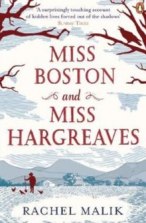 I found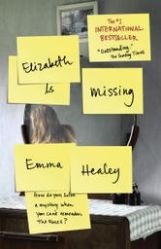
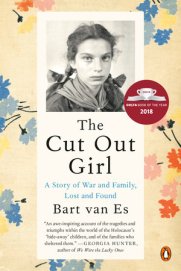 I really admired–and was ultimately quite moved by–the careful self-effacement of
 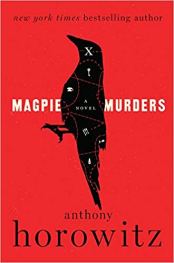 I had fun reading Anthony Horowitz’s
 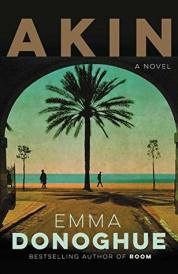 My review of Emma Donoghue’s Akin will be in Canadian Notes and Queries in the new year. I enjoyed reading it quite a bit: even though I found it somewhat contrived, Donoghue is a good enough storyteller to carry me along. It made me think, though, about why
 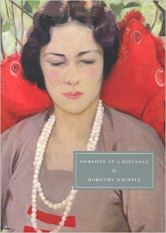 I absolutely love the idea of Persephone Books, and it is thrilling in principle to see so many publishers devoting themselves now to bringing back “lost classics.”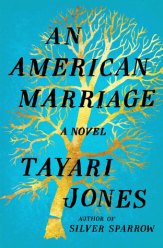
 I am not a very good reader of Virginia Woolf’s fiction, and

 The End!
 2019 began with a lot of thinking about teaching, because I was on sabbatical for the first half of the year and that meant the great luxury of time away from teaching itself. Sometimes in the past the result has been
 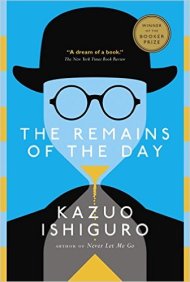 I finally settled on Great Expectations and The Remains of the Day for the representative Victorian and 20th-century novels in the survey course, partly because I love them both and feel confident about teaching them and partly because along with Three Guineas (which will be a new teaching text for me), I could imagine a range of thematic continuities within this set of readings that would work well for final essay assignments–ideas of class and social mobility; social insiders and outsiders, deference, domination, and political power; the relationship between money, privilege, and moral freedom; art and language as vehicles for advocacy or subversion; social order, resistance, and fascism. We’ll see how it goes!
 One of the questions I struggled with as I finalized my book order was
  I thought Women & Detective Fiction went well. I feel less satisfied about Pulp Fiction, mostly because I found the change from 90 (which already felt too big) to 120 students pushed the class past a tipping point for the kind of pedagogy I want to and tried to practice. Part of the problem was just logistical: much as I believe in the value of doing lots of small-stakes exercises to maintain engagement and give frequent opportunities for writing and feedback, I don’t think I can continue with some of my habitual versions of this (such as regular reading journals). The thing about scaling up class sizes is that while the regulations for Writing Requirement classes mean that we have TAs for every 30 students, in practice this only means that we hold steady in terms of the number of finished essays we mark. Everything else remains the responsibility of the professor, from recording attendance and marking exams to handling accommodations and plagiarism cases. As a result there’s no question that larger classes (despite superficially maintaining that 30:1 ratio) are more work for the instructor. (Also, despite my best efforts to address the issue in more effective ways, subbing in The Big Sleep for The Maltese Falcon, while a nice change for me, did not dramatically decrease
  The worst part of the increase in class size for me is that I don’t like teaching (especially teaching first-year students) in a large lecture hall. This is not just about my personal comfort–in fact, I am reasonably confident when giving formal lectures, which have the advantage, from a purely self-interested perspective, of ruling out the unexpected! But my preferred teaching style is interactive, because the back and forth between us reflects the way I think we actually learn to do (and improve) the kind of analysis central to literary studies (through
 And now, on to next term. It is finally time to actually teach the Brit Lit survey and see how my decisions work out (including which readings to include in the nice custom reading Broadview Press put together for us); I’m especially looking forward to covering some poetry, which I rarely get to do. My other course this winter is 19th-Century Fiction from Austen to Dickens: this year’s books are Pride and Prejudice, Waverley (look at that handsome new edition!), The Tenant of Wildfell Hall, Mary Barton, and Hard Times. I’m actually eager to get started: both are small-ish classes (around 35) and I know there will be at least some familiar faces in both as well.
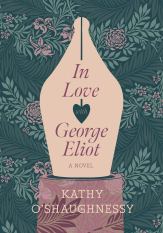 I am trying not to feel dissatisfied with the writing I did in 2019. For one thing, I deliberately took a step back from a certain kind of ‘productivity’ in order to develop ideas about what I hope will turn into some worthwhile projects. This kind of
 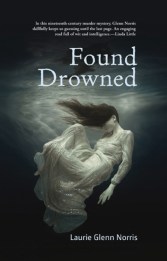 In any case, as it turned out, all of my publications in 2019 were reviews. For Quill & Quire, I wrote about Antanas Sileika’s
 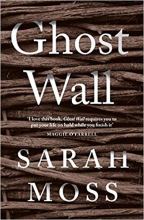 This isn’t really a bad run of reading and writing: there wasn’t any point in 2019 when I didn’t have a review underway in addition to whatever other work I was doing. I think one reason I nonetheless feel disappointed about what I have to show for 2019 is that although many of these books engaged and interested me, none of them excited me the way that, for example,
 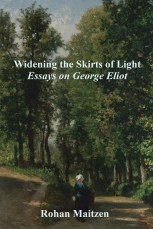 I did publish one more substantial thing this year:
 The emphasis on the house’s stasis tripped me up: in thirty years, things must, surely, have been rearranged, reupholstered, replaced. If it’s a house, not just a literary device, then it should have changed over time, reflecting the lives lived in it and the wider life outside of it. Danny and Maeve have certainly changed, even finally giving up their frequent trips to stare at their former home with a potent mixture of nostalgia and resentment about their disinheritance. This visit should figure–and in fact it does–as a chance to measure that change and to put their memories of the Dutch House into perspective.
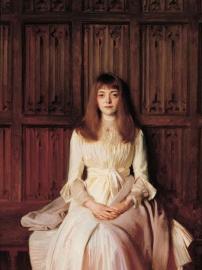 I realize that this is a perfectly obvious reading of The Dutch House: I’m sure I’m not the only reader to fixate on the house itself as symbol rather than setting. Perhaps reading it near Christmas is what made me feel that backwards pull so strongly–at this time of year especially I recognize in myself a similar temptation to dwell in (or on) a childhood space that may have been imperfect but in retrospect seems so certain, so much a part of my current identity even though it is no longer the setting for my life. Because Danny and Maeve are shunted unceremoniously out of their home, the abrupt transition makes it particularly hard for them to move on. Even as they make new homes and family ties they seem somehow stunted or unfinished as adults, while they keep going back and back again to brood about a place where they no longer belong.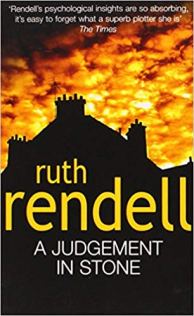
 Is it true that Eunice Parchman–and her accomplice, the same friend the unknowing Coverdales tried to keep away from their home–killed this hapless family “because she could not read or write”? Rendell’s striking opening is as much provocation as declaration, I think. It is certainly true that Eunice’s illiteracy haunts, shames, and distorts her life. It is easy to imagine a version of her story in which, as a result, we pity her and direct our antipathy at a society that repeatedly fails her–fails to educate her, fails to support her, fails to make it safe for her to overcome this debilitating disadvantage–while she retreats into the safety of suspicious solitude:
 Rendell’s opening line is thus a bit of a feint, I think: it seems to set up a novel about the consequences of social and educational failures, but unlike, say, Dickens’s account of Magwitch’s history in Great Expectations, she doesn’t really account for Eunice’s criminality on those terms alone, leaving us to point the finger at ourselves for creating an uncaring system that generates criminals where there should have been (and still could be) a caring human being. Eunice seems irredeemable; Rendell doesn’t make a convincing case that she would have been a different person–and the Coverdales would have lived–if only she could read the printed word. It’s hard to be sure, though, and maybe that’s the question Rendell means to leave with her readers.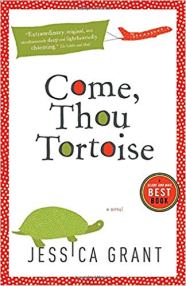
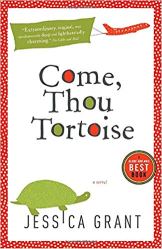
 Maybe the Grant – Ellmann (dis)connection is a red herring. Certainly I’m not in a position to sort it out definitively until (unless) I finish Ducks, Newburyport. For now I really just want to report how much fun I had reading Come, Thou Tortoise, a book I never would have picked up if a wise and witty student hadn’t recommended it to me. It looks twee, for one thing, plus it’s about Newfoundland and I don’t usually get along well with
 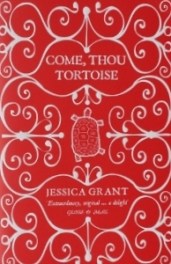 Ellmann’s main complaint about Come, Thou Tortoise is that “somewhere along the way, any real feeling for people goes astray.” Though I can see why Ellmann isn’t able to go along with what she uncharitably calls the novel’s “swill of sweetness,” I think she is just wrong about its lacking real feeling. There is a great deal of tenderness in it, for one thing–though perhaps that’s too close to sentimentality to be what she means. More than that, for all Audrey’s oddities and the comic delights they provoke, the novel is quietly profound about grief. Looking for her lost mouse Wedge (a refugee from her father’s research on longevity–a motif with its own emotional weightiness in the context of his premature death), Audrey goes into her father’s room for the first time since she came home:
 Though I suppose in a technical way the bicentenary year really ended with George Eliot’s birthday on November 22, why stop celebrating before we have to? My only regret is that I’m not actually teaching any of her novels this term–in fact, because of my sabbatical, I haven’t taught any George Eliot in 2019 at all! Shocking! So I haven’t been able to integrate any bicentenary activities into my classroom time. I did point out to the students presenting in Women & Detective Fiction on November 22 that it was an especially auspicious day, but they didn’t seem convinced or otherwise excited. 🙂
 And speaking of excellent company, also in honour of the bicentenary I was invited to be a guest on the CBC Radio show ‘Sunday Edition,’ to talk to host Michael Enright about George Eliot and Middlemarch. You can
  As I browsed through it in preparation for the interview, I stopped to reread many of the moments I love the best–the description of Lydgate’s discovering his vocation in Chapter XV, with its poignant commentary on “the multitude of middle-aged men who go about their vocations in a daily course determined for them much in the same way as the tie of their cravats,” for instance:
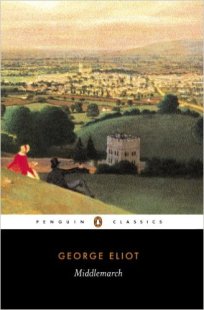 I don’t know if Middlemarch is, as the CBC headline proposes, “the greatest English novel of all time.” I think Eliot (for reasons I discuss in the interview) can reasonably be called the greatest Victorian novelist, and Middlemarch is certainly her greatest book, but there are other models of the novel and other ideas of greatness: as Henry James said, the house of fiction has many windows. One of the things I said to Michael Enright during our conversation was that our judgments of any given novel will depend on what we think the novel (both the particular example and, I think, the genre as a whole) is for. I’m not (much) interested in defending Middlemarch to people who don’t like it, but I am always happy to explain what I think is wonderful about it. I wouldn’t be much good at my job, also, if I didn’t believe we can all learn to read books–all books, any book–better than we do, if someone will just help us along. I hope my interview does some of that work for listeners, and of course for readers who want even more help, there are lots of resources at my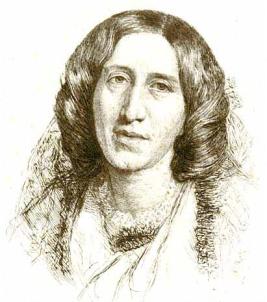
 Ask anyone on campus — student, staff, or faculty — how they are doing and it’s likely you’ll get some version of “hanging in there.” It is ever thus, in November! The weather has turned grey and the unrelenting chill of winter has set in, deadlines that seemed far off loom, work piles up. It can be hard to keep one’s spirits up! One of the things I try to do is stay as positive as possible in the classroom, exuding as much enthusiasm as I can manage for our work in the hope that I can give a bit of a boost to my students’ understandably flagging energy. It’s sometimes a bit tricky, especially because for them I am one of the people setting the deadlines and demanding the work: I can’t really just play nice, at least not all the time. But at least I can try to show them that I scare because I care!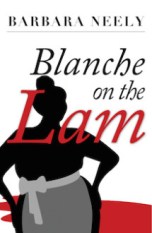
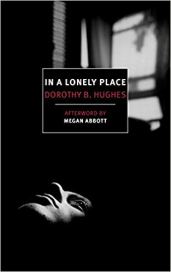 Both of these books seem to have gone over well. Hughes in particular seems to have been a favorite, so much so that I am contemplating assigning In A Lonely Place in the Mystery & Detective Fiction survey class next year instead of my usual hard-boiled options (The Maltese Falcon and The Big Sleep). But Neely too has provoked really engaged conversations: I think we all appreciated the bluntness of Blanche’s critiques as well as Neely’s resistance to feel-good outcomes. Today, for example, we talked about Blanche’s decision not to accept the position she is offered after the case has wrapped up. It would have been sentimentally gratifying for her to stay on as Mumsfield’s caretaker, but throughout the novel she highlights how condescending as well as burdensome she finds the expectation that she’ll play the “Mammy” role, and fond as she is of Mumsfield (and generously as they promise to pay her) it makes sense that she can’t say yes. More broadly, too, an ending in which she stays on with the family after everything that has happened and everything she knows–not just about them but also about the world she lives in–would endorse an optimistic but facile vision of racial reconciliation that the rest of the novel has rejected as at best naive.
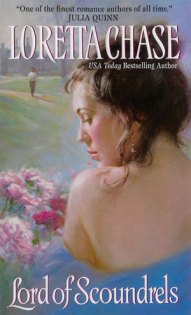 We are well along in our romance unit now in Pulp Fiction, and about two-thirds through Lord of Scoundrels. I think it’s going OK. Today I got peevish towards the end of class because we were working collectively through some passages–it was going pretty well, from my perspective, with a reasonable number of students participating–and as the end of our time approached quite a few students started packing up and then sat poised on the edge of their seats, clearly impatient to get away. I try not to take this personally (it happens, to some extent, almost every time): I know they are busy and anxious and for all I know the ones who were most visibly disengaging had a big midterm in their next class or something. Still, I never go over our time, and not only is it rude to me and to the students who are talking to have all that rustling going on, but it’s demoralizing to see them visibly not caring about the work we’re doing. It undermines that positivity project I mentioned! It also frustrates me that they clearly see class discussion as expendable in a way that lecture time isn’t. From my perspective, that’s the most important thing we do! I’ve made this point to the class more than once, of course. See? Peevish.

 Novel Readings