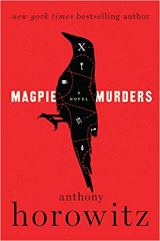
I’ve always loved whodunnits. I’ve not just edited them. I’ve read them for pleasure throughout my life, gorging on them actually. You must know that feeling when it’s raining outside and the heating’s on and you lose yourself, utterly, in a book. You read and you read and you feel the pages slipping through your fingers until suddenly there are fewer in your right hand than there are in your left and you want to slow down but you still hurtle on towards a conclusion you can hardly bear to discover. That is the particular power of the whodunnit which has, I think, a special place within the general panoply of literary fiction because, of all characters, the detective enjoys a particular, indeed a unique relationship with the reader.
Unlike Susan Ryeland, the narrator of (much of) Anthony Horowitz’s Magpie Murders, I’m not actually a fan of whodunnits–at least, not if by the term you mean the kind Magpie Murders at once exemplifies and comments on, which is the Agatha-Christie-style cozy. I just don’t find curiosity a powerful enough incentive to keep reading: if all a book ultimately has to offer me is the solution to a puzzle, I would almost just as soon skip straight to the end and get the answer already. Almost .. because of course a good puzzle mystery can offer other pleasures along the way, and also if the story-telling is brisk and skillful enough then it distracts me from the temptation to flip to the last page.
Magpie Murders was not quite good enough to keep me patient. I got bored with the embedded mystery by the fictional Alan Conway about half way through its 200+ pages–not so bored I wanted to give up, just enough that I started intermittently skimming. That said, it seemed to me a pitch-perfect imitation of a Golden Age novel, so if you like that kind of thing more than I do, you’d probably enjoy it thoroughly. I quite liked the conceit of the mystery-within-a-mystery, and for a while I was pretty engaged with the framing story about Alan Conway’s own suspicious death, but then it seemed to go on too long, and while the parallels and connections to “his” book were presumably meant to make it more fun to puzzle out both murderers, the insistent cleverness of it all eventually made me irritable. I expected a bigger payoff, too, a most stunning twist of some kind, as a reward for the book being quite so long.
 On the other hand, I did appreciate the metafictional commentary on the genre scattered throughout Magpie Murders, though it was (as far as I could tell) somewhat gratuitous or incidental to the novel(s). If the stories Horowitz was telling subverted expectations more than they do, or if their resolutions turned in some way on critiquing the ubiquity of murders on page and screen or the idea that anything about crime is in any way “cozy,” then the whole novel would (for me) have taken on much greater significance. Still, he raises good points about the perverse gratifications of the form even as he unapologetically offers them up, twice over. “I don’t understand it,” says Detective Superintendent Locke when Susan meets with him to discuss her questions about Conway’s death. “All these murders on TV–”
you’d think people would have better things to do with their time. Every night. Every bloody channel. People have some sort of fixation. And what really annoys me is that it’s nothing like the truth. I’ve seen murder victims. I’ve investigated murder. … They don’t put on wigs and dress up like the do in Agatha Christie. All the murders I’ve ever been involved in have happened because the perpetrators were mad or angry or drunk. Sometimes all three. And they’re horrible. Disgusting.
Susan Ryeland (perhaps as a proxy for Horowitz) offers the standard explanation for that ‘fixation.” “In a world full of uncertainties,” she proposes,
is it not inherently satisfying to come to the last page with every i dotted and every t crossed? The stories mimic our experience in the world. We are surrounded by tensions and ambiguities, which we spend half our life trying to resolve, and we’ll probably be on our own deathbed when we reach that moment when everything makes sense. Just about every whodunnit provides that pleasure. It is the reason for their existence.
 That, she concludes, is “why Magpie Murders was so bloody irritating”–unfinished as it is when she first reads it. For me, though, the end of Horowitz’s Magpie Murders did not provide much satisfaction. The dotting of the i‘s and the crossing of the t’s seemed to show up the whole elaborate exercise as artificial, an impressive display of plotting but little to feed any deeper curiosity. I prefer my crime fiction more character driven, and also more embroiled in social and political contexts. I know Horowitz can write that kind of mystery, because he wrote Foyle’s War, one of my favorite series. I’d watch it all again in a heartbeat if I could (stupid Netflix Canada dropped it years ago), because it has the kinds of layers that, for all its intricacies, Magpie Murders lacks.
 I certainly did not desire the disruption that has characterized my last few days at work! My office building was evacuated Thursday morning–just as I was settling in to do, well, a whole bunch of things! It turned out that due to some kind of maintenance mix-up,
 We have been working through Sue Grafton’s A is for Alibi, which everyone seems to have enjoyed quite a bit. It is fast-moving and sassy in a way that (IMHO)
  I was reminded this week, though, that besides being a bit more fun, Grafton’s novel has its own thought-provoking elements, particularly in its development of a male character who plays the part of the femme fatale and also (as other critics have noted) of an extreme form of the Byronic hero–mad, bad, and dangerously sexy to the female protagonist. In our discussion, we found it interesting that while the male hard-boiled PI rarely seems genuinely attracted to the femme fatale, whose allure (at least in the examples we could think of) is too transparently a decoy, Kinsey and Charlie do seem to have an actual spark, even an affinity. Desire is conventionally disruptive to the detective’s work, and it is to Kinsey’s too, but at the same time it almost feels as if it’s just bad luck he’s a murderer, because otherwise they’re pretty well suited! Kinsey’s resolute independence–her refusal to be domestic or to conform to gendered expectations–is refreshing, though I think some aspects of it (like the pride she takes in pumping her own gas) also feel a bit dated now.
 In Pulp Fiction we have been wrapping up work on the second assignment, with drafts and peer editing on Friday and the final versions due Wednesday. Today I gave my opening lecture on romance fiction. Our initial readings are two somewhat polemical primers on the genre (Jennifer Crusie’s
 I didn’t start enjoying the novel more just because the plot became more engrossing, though it did–or because the prose became more pleasurable, because it really didn’t. The other thing that happened was I got used to the slow pace and came to appreciate all the cultural context I was getting through what initially seemed like digressions. It’s true that all the many (many!) descriptions of meals aren’t strictly necessary to the plot, but they certainly added to my sense of what life in Shanghai in the 1990s was like, as did the meticulous accounts of where and how people live:
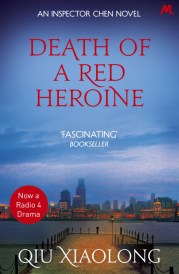 I also really enjoyed the role of Chen’s poetry in his life and in his case–and in the case against him. The idea that his elusive (and allusive) verses harbor subversive messages at once works with the intense suspicion shown by loyal Party members towards anything suggestive of a “Western bourgeois decadent lifestyle” and seemed to me a sly play on the literary difficulty of modernist poetry and the challenge of figuring out what it means. Poring over Chen’s poem “Night Talk,” Zhang wonders if the phrase “mind’s square” is a reference to Tiananmen Square:
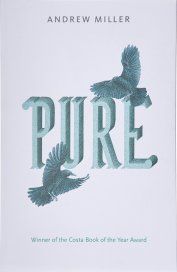 Wine and unsuspected depths of loneliness have produced in him an effusiveness he would not, sober, trust or like in another. Nearly, very nearly, he tells Armand what he is in Paris to do, for surely Armand would be impressed, would see what he himself (in the ruby light of tavern wine) has come to see — that destroying the cemetery of les Innocents is to sweep away in fact, not in rhetoric, the poisonous influence of the past!
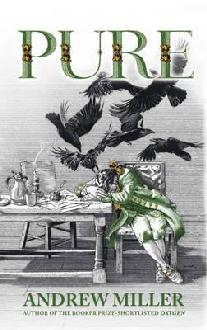 Over time the finds vary: the miners Jean-Baptiste has imported to do the excavation find well-preserved coffins (“inside is a skeleton, the residue of a man, his bones connected by patches of leathery sinew”); a school’s worth of children, laid head to toe; two young women, astonishingly preserved by “a form of mummification” (“skin, hair, lips, fingernails, eyelashes“). These last are of particular interest to the doctors consulting on the dig, using its finds for their own experiments. One is Dr Guillotin, not yet famous for his advocacy of the swift and relatively painless means of execution that came to bear his name. His presence is one of many reminders that this literal purification process is taking place on the cusp of a different kind of transformation, a purging of the past to make way for an as-yet unimagined future.
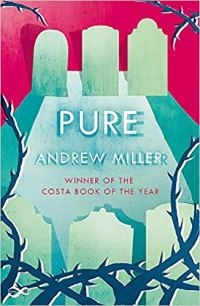 Maybe that’s what Miller wanted: to evoke a scene (which he does pretty brilliantly) and a moment, without attaching it to a larger narrative, whether personal or political. But it frustrated me that so many of the novel’s elements felt seeded with meaning that then didn’t bear fruit. I wanted something from the novel that it didn’t give me, some momentum or culmination. That is about my expectations as much as Miller’s accomplishment, I suppose. Still, when the church they are demolishing breaks open to let the light in and Jean-Baptiste observes, “How filthy everything below now appears! How much the place had depended on its darkness!” it seemed to me that the moment was crying out to be read symbolically in a way that the novel more generally didn’t support. Miller writes wonderfully, though, and if you want a really vivid sense of what it would look, feel, and especially smell like to dig up thousands of old corpses, though, you won’t be disappointed!
 Technically, actually, it was in someone else’s class: I was invited to come and talk about social media to our Honours Capstone Seminar, which (among other things) features a range of guest speakers talking about everything from digital humanities to graduate school to (non-academic) career paths.
 As I told the class, I really struggled with what to say. I have given quite a few talks on the subject by now, especially on blogging: these include relatively informal sessions at faculty
  nce upon a time I might have considered these topics equally relevant for our Honours students, many of whom (in those days) were likely heading on to graduate school. A lot has changed, though, and I no longer feel comfortable actively grooming students for an academic path that (as I said to them) now seems strewn with broken glass. (There’s more about how the dismal academic job market has affected academic blogging in
  In my short talk, I did not go into more detail about the arguments pro and con about graduate school in the humanities (and I know there reasons, some of them pretty good ones, or at least not terrible ones, that other people still insist that encouraging students to head into Ph.D. programs is perfectly rational and ethical). I just highlighted some of the many articles they could read about it if they wanted, and urged them to talk to their professors if they were thinking about it. What I decided to use most of my own time for was making sure that they knew graduate school was not the only (and might be far from the best) way to keep talking about the literature they love in ways they find exhilarating. There are, I said, other places, other people, other opportunities, for people who love books, and I know that because of the time I spend on social media.
 I don’t know if they were very interested in what I had to say. If they were, they didn’t express it through a torrent of follow-up questions, that’s for sure, and I’m also pretty sure that I didn’t make a dent in anyone’s plans regarding graduate school applications. I said things I really believe in, though, which is consistent with what I would have said if I had talked about “best practices” instead, namely, be authentic. Further, and more important, as I worked up these remarks I realized that my own case for twitter and blogging is not really about their academic value anymore either. Whether the students needed or wanted to hear it or not, for me it was useful discovering that I still feel quite passionately about the positive value of reading, writing, and commenting on blog posts, and sharing ideas, tips, enthusiasms, and disagreements about reading via Twitter. Why should they care how much my life changed for the better because one day, without really knowing what I was doing or why, I pressed ‘publish’ on my first Novel Readings post? But I care, and really it has, in ways I could not possibly have predicted. So to the doubters and skeptics (if for some reason you happen to stop by), well, you do you, but I think you’re missing out. And to those of you who, like me, are out here living your best bookish life online and discovering friends and comrades along the way, cheers!
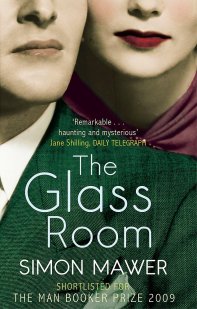 She stands for a moment, one last moment, looking at the Glass Room. Rain runs down the windows like tears from her eyes. The light is diffused, refracted, blurred by the water; just so are memories distorted by time and mood. This is no place for sentiment. It is a place of reason. And yet sentiment is what she feels, the anguish of departure, the exquisite pain of remembering, the fragility of being. When will she be here again?
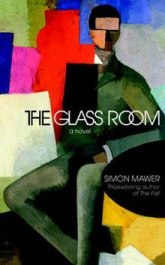 The room itself is beautiful, especially its onyx wall, which reflects the setting sun in an astonishing flare of colour. But not all of its uses are benign: the novel’s historical setting inevitably reminds us of the term ‘Lebensraum,‘ and that anticipates the way the house changes hands and uses when the Landauers flee to Switzerland–Viktor is Jewish, and that puts him and his family at risk. Their house is taken over by German “scientists,” who use it as a laboratory for their research into racial differences:
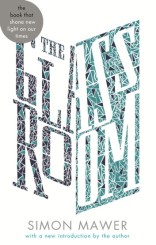 Overall, this works well: it’s a good concept, and Mawer comes across as an extremely competent novelist. If that sounds like damning with faint praise, though, it sort of is. I am surprised that The Glass Room was shortlisted for the Booker Prize (in 2009): to me it was a well-executed concept but not an exhilarating accomplishment. At times, it seemed to me to be trying too hard to be great and profound. Its symbolism and its prose both felt heavy-handed, as here:
 We have started our unit on detective fiction in Pulp Fiction and moved from Sayers to Hughes in Women & Detective Fiction, meaning it’s time to test
 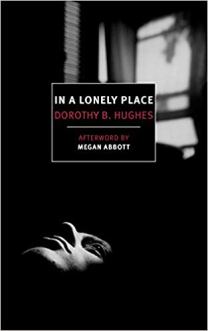 I know The Big Sleep reasonably well at this point (though I still rely heavily on the helpful sketch of the basic plot, complete with who killed whom and why, that I drew up the first time I taught it!). This is my first time teaching In A Lonely Place, though, and so I am feeling my way along, trying to anticipate the most useful lines of discussion to open up, to tell what’s obvious and what isn’t, what examples are most thought-provoking, and so on. One small but important logistical thing you can’t really be sure of until you try it is whether you’ve chosen the right place to break up the novel for reading. I think I should maybe have assigned a bit more of it for today than I did (we read just the first two sections,just about 50 pages), but we didn’t run out of things to talk about, so that was reassuring.
 We are well into the term now, and overall I think it’s going fine. I do not like teaching Pulp Fiction at 120 students, which maybe doesn’t sound like that big a change from 90 but certainly feels like one to me. I miss being able to see their faces–and having at least a fighting chance of learning their names! I know that I have colleagues who have taught intro classes at even larger sizes, and also that I have colleagues who are comfortable, pedagogically, with teaching writing at this scale. Maybe they know something I don’t about how to make it work, but for me, the increasingly sharp division of class time into formal lecture time–you can do some Q&A, but not a wide-ranging, inclusive discussion in a tiered lecture hall–and tutorial time (where the 30:1 ratio is still far from ideal for either discussion or hands-on writing and editing work) is really unsatisfying. I don’t think it serves us or them particularly well.
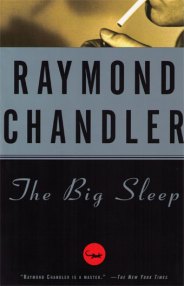 The odds that we’ll ever be able to get back to smaller first-year classes seem slim, however, so I’ll just keep trying to make the best of it. Right now I’m considering giving up on some things I think are pedagogically valuable (like frequent low-stakes work) because logistically it’s just getting to be too much–but it’s too late to do that for this year! In the meantime, we are nearing the end of our unit on Westerns; next week we start on mysteries, with The Big Sleep taking the place of The Maltese Falcon this time around. As you might recall, I had big plans for
 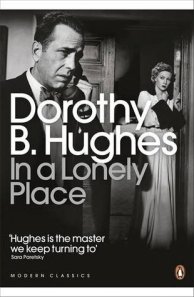 Next up is In a Lonely Place, which means for a while both my classes will be steeped in noir. Though I think both books I’ll be working on are great examples of their kind, it is not my own favorite kind of crime fiction, and it’s likely that this juxtaposition will exacerbate another lurking dissatisfaction of mine this term, which is with the amount of teaching time I’ve been spending on genre fiction. I hope it’s obvious that I am not a snob about genre fiction! I read and enjoy a lot of it; I was the one who introduced our detective fiction class well over a decade ago and I have taught it with great enthusiasm probably a dozen times; a few years ago I volunteered to do Pulp Fiction instead of one of our more standard intro to lit options; I regularly include sensation fiction in my Victorian fiction classes and offer a course exclusively on it; etc. This term, however, I have found myself unexpectedly weary of spending so much of my class time on books that (frankly) wear a bit thin over time because they aren’t, many of them, quite the kind of book that the English literature classroom–or at least my English literature classroom–was designed to showcase.
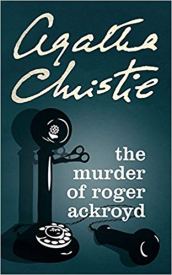 Do I really think that? Can I even say that? What exactly am I saying? I’m certainly not saying we can’t or shouldn’t teach genre fiction, or that doing so doesn’t involve doing rewarding or meaningful analysis. That we even have the concept of ‘horizontal reading,’ though, does suggest that genre fiction isn’t always best approached with the aim of deep or close reading, doesn’t it? Agatha Christie, to give just one example, is brilliant at many things (and I have gotten pretty good at making the case for them), but it’s not much fun lingering over the details of her prose; not much will come–not much of interpretive interest, anyway–from mining them for the kind of nuances we appreciate when we read, say, “Araby.” Sometimes in the detective fiction class I point out that (though of course there are exceptions) a lot of details we might read as symbolic in another kind of fiction are better read more literally in crime fiction: does it make any sense to read the dagger in Roger Ackroyd’s neck as anything other than a convenient sharp object suitable for murder? There is a similarly literal impulse in a lot of detective fiction: no matter how complex the social, political, or psychological elements, it is rare for the language in particular to be of great interest.
 I think what I’m saying is that I love my 19th-century fiction classes, which I still teach regularly, but I have also, over the years, loved teaching other more conventionally “literary” material and I’m starting to miss the greater variety I used to enjoy, especially the chance to teach more poetry and more (literary) fiction from other periods. That’s one reason I’m excited to be doing the British literature survey next term. I’ve also asked that, if possible, my next first-year course assignment be something besides Pulp Fiction. When I first designed my version of the course I imagined that students would get caught up in the contrarian spirit of reading genre fiction instead of the classics, but as far as I’ve ever been able to tell, they mostly don’t care: with rare exceptions, they’ve never thought about the difference before and what they really want is just to get their writing requirement as easily as possible. My advocacy for dismantling the canon is wasted on them: I’m standing there at the lectern basically having an argument with myself! And somehow right now I feel as if I’m losing it.
 This was not how he had imagined it, the truth-telling time. It was as if his secrets had altered in the keeping, had grown like living things, so that he did not quite know them any more. Or that they were not entirely his, not the private stash or black treasure he had imagined. And once more it came to him, the thought that had touched him several times since coming back from Spain, that we are not private beings and cannot hide things inside ourselves. Everything is present, everything in view for those who know how to look.
 I won’t give more specifics about the plot; I’ll just note that it sets up a structure that is at once simple and increasingly suspenseful. Miller makes good use of the common trope of a geographical voyage also being a voyage of personal discovery, so that the cat and mouse game over time becomes something at once subtler and more complex. Though the plotting is very precise, even the moment when hunter and quarry coincidentally and unwittingly cross paths didn’t feel contrived: it just added to the evidence (shared eventually by at least one of Lacroix’s pursuers) that they are not really seeking a legible or reasonable form of justice but are carrying out a more arbitrary exercise of power, playing their parts in a game none of them can ever really win because those who made the rules don’t care who they really are–or who they could be, if they were free to choose.
 Last Wednesday, because of the disruption from Hurricane Dorian it felt as if we were starting the term all over again. A week later, it finally feels as if we are getting into something like a routine–even though the add-drop (a.k.a. “shopping”) period is only just ending, so the list of registered students for Pulp Fiction has been changing literally every day. Still, the majority of students in the class have been coming since September 4, and the general air of uncertainty and anxiety is fading into the usual combination of commitment and resignation. Because it’s a 4th-year seminar, Women & Detective Fiction has been a more focused group from the beginning, but there too we are past the getting-to-know-you period and are (I think) comfortably embarked on what promises to be a really good term’s discussion.
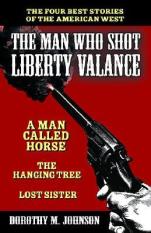 What have we done so far? Well, in Pulp Fiction we have done a bit less reading than usual by this point, but we’ve gone through all of the warm-up texts, starting with Lawrence Block’s “How Would You Like It?” and then, to set up our unit on Westerns, Sherman Alexie’s “My Heroes Have Never Been Cowboys.” If I am assigned this course again for next year, I would like to replace the Block story with something a bit more on point for the course themes. Alexie’s poem, on the other hand, has proved to be a really good opener for Westerns because it clarifies right from the beginning that this is a genre that both invites and deserves significant pushback. Our reading for Friday, for instance, is Louis L’Amour’s “The Gift of Cochise,” which I think is the worst of our Western readings in terms of flattening and dehumanizing its Apache characters. (I actually think L’Amour is trying to do better by them but does so through a version of the “noble savage” stereotype that doesn’t end up helping at all.) “My Heroes Have Never Been Cowboys” has primed us to see this as (among other things) a problem of point of view, one with both specifically literary and broader and still urgent social and political consequences. We read Dorothy Johnson’s “The Man Who Shot Liberty Valance” for today, which is a good story for challenging just what kind of cowboy really counts as a hero: as we discussed, the self-effacing Bert Barricune may be the best shot, but he’s a hero for a different reason–because he lets someone else take the credit and the girl. Next week we start Valdez Is Coming, which has not really gone over that well in previous years. Maybe third time’s the charm!
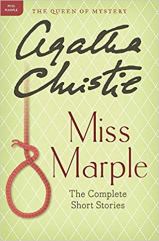
 In Women & Detective Fiction we have just wrapped up three classes on Agatha Christie. Going over my notes from the last time I taught this seminar reminded me that we were struggling a bit, that year, to find enough to talk about–enough that, though I had forgotten about this until it was too late to make the change, I had resolved to assign a novel instead of the stories next time around. Happily, even sticking with the short stories, we had no such trouble this year! The class time has seemed to fly by: not only is it a keen group with plenty to say but the things they are noticing are often things I haven’t really focused on before. We talked a lot, for example, about role playing as a motif across the stories, from the overtly theatrical Jane Helier (an “actual” actress) to Miss Marple herself and the perhaps insoluble puzzle of how far her performance of self-deprecating femininity is a deliberate feint or strategy that enables her detective prowess and how far it is a way for Christie to sincerely re-value the qualities Miss Marple displays. Today was student presentation day and in addition to some useful discussion of her life and works we did an exercise in crime solving ourselves based on her mysterious 11-day disappearance. Next up in this class: Nancy Drew–and one of my students turns out to be an avid Nancy Drew fan and collector, so she is going to bring in some of her early editions to show us. I’m excited: if everyone stays this lively and engaged, it’s going to be a great term.
 Novel Readings