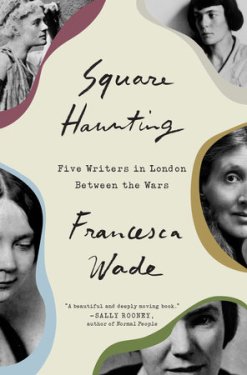
All the women in this book thought carefully about the sort of home they wanted to live in. Though they arrived at Mecklenburgh Square at different stages of life, moving there provided each of them with a fresh start at a critical moment: the way they each chose to set up home in the square was a bold declaration of who they were, and of the life they wanted to lead.
Francesca Wade’s Square Haunting is a nice new example of an old form: the collective biography. I really enjoyed reading it: it’s an elegantly constructed and well-written introduction to five remarkable women–the imagist poet H.D. (Hilda Doolittle); classicist Jane Harrison; historian Eileen Power; Dorothy L. Sayers; and Virginia Woolf. Starting from the very literal connection that all of them at one time (though not, mostly, the same time) lived in Bloomsbury’s Mecklenburgh Square, Wade explores other commonalities between them, especially their conviction that “real freedom entails the ability to live on one’s own terms, not to allow one’s identity to be proscribed or limited by anyone else.” For some of them, moving to Mecklenburgh Square represented their determination to live up to that insight; others came to this realization during their time there and moved away to fulfill it. Neither of these really describes Woolf’s trajectory: she is at once the best known (and most marketable) of the book’s subjects and the one whose time at Mecklenburgh Square was least significant to her formation as an individual or intellectual.
I knew very little about H.D., Jane Harrison, and Eileen Power before, so their chapters were the most novel and informative for me: Harrison in particular was a very appealing character. I already knew a fair amount about Sayers and Woolf, especially around the specific issues and time periods Wade addresses, though, and so their chapters, while also ably executed, inevitably came across as précis versions of what’s available in the very good options we have for full-length biographies–something that might well also be the case for those who knew the other three from existing treatments such as Mary Beard’s The Invention of Jane Harrison.
 This is not to say that there is nothing original about Square Haunting; Wade has not just done her homework and synthesized her findings but added details and insights of her own. Still, the most original thing about her book is its concept: grouping these five women together because they (more or less) shared an address. Wade makes the most of this geographical link, discussing the history of Bloomsbury in general and Mecklenburgh Square more specifically to clarify what it meant to choose to live there, especially for women moving away–as all her subjects were–from women’s conventional roles and paths. Having rooms of their own was both a vital practical step towards the independence they wanted and a heavily symbolic one, a point Wade makes (inevitably and rightly) with plenty of allusions to Woolf’s A Room of One’s Own.
Wade does a nice job drawing out the thematic resonances between her subjects’ lifes and their work. Each in her own genre and with her own particular focus contributed rewriting dominant narratives and expanding our available stock of ideas about how to understand and talk about women who do not conform to them. Harrison, to give just one example,
drew on cutting-edge material evidence from the archaeological digs she’d personally witnessed, and revealed an array of powerful goddesses who once reigned alone over cult shrines . . . but whose ancient worship had silently been replaced by later cults to Zeus, their temples renamed, their powers re-attributed and their legends altered to accommodate the rationalized Olympian pantheon. These new gods, Harrison insisted, reflected not only human form but also man-made hierarchies: their rise was testament to the gradual erosion of women in Greek society.
Her “efforts to reread history through the lens of gender and power” had far-reaching influence, Wade observes:
Her legends of powerful, creative, and vengeful women–and her compelling evidence of the way women have been systematically devalued by centuries of patriarchy–inspired others, over subsequent decades, in their creation of female characters, from E. M. Forster’s Schlegel sisters to James Joyce’s Molly Bloom, Virginia Woolf’s Mrs. Ramsay, and D. H. Lawrence’s Brangwen women.
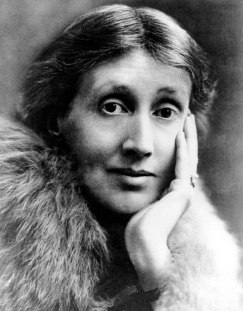 Harrison is the “J—- H—-” of A Room of One’s Own:
on the terrace, as if popping out to breathe the air, to glance at the garden, came a bent figure, formidable yet humble, with her great forehead and her shabby dress–could it be the famous scholar, could it be J— H— herself?
Woolf met Harrison at Newnham in 1904 and “Harrison’s work,” Wade tells us, “gave Woolf a new, subversive model of history which informed all her subsequent novels and essays: one whose revelations offered powerful ‘mothers’ for women to ‘think back through’ and which revealed as man-made–and flimsy–the constructs on which patriarchal society rests.”
Wade makes many more connections than that, both biographical and thematic, and they are all interesting and convincing. Still, by the time I’d finished the book I couldn’t shake the feeling that its organizing premise is a bit thin. Mecklenburgh Square is a clever framing device, but it’s hardly essential to the more substantive discussions Wade gets into about her writers: it’s an excuse or an occasion for the book’s particular biographical studies. Many other women around this time had much in common with Wade’s chosen five, for one thing: Vera Brittain and Winifred Holtby, for instance, who make occasional appearances but happened to live at a different Bloomsbury address. Again, Wade makes the most of her geographical conceit, and it’s mostly successful. I especially liked her conclusion, with its neat revelation that there is now a room reserved for women students in the exact location (as far as researchers can establish) as Woolf’s study in her home at 37 Mecklenburgh Square, which was destroyed in the Blitz. At other times, though, I thought the effort required to sustain or and justify the book’s concept showed through. Probably because I have spent so much (so far fruitless) time trying to imagine how to package and pitch the kind of literary writing I like to do (including about some of these same writers and questions) I found myself almost more impressed with Square Haunting as a successful publishing concept than anything else–as a lesson in, or a reminder of, what sells: biography, of course, or autobiography or bibliomemoir.
The reasons for this are probably similar to the reasons collective biography has always served: we still seek models and exemplars, though now we are more likely to find them in rebels and nonconformists than in the kinds of women celebrated in Victorian examples. The women in Square Haunting serve that purpose for me too, and I have found my own ramblings around Bloomsbury inspiring because for me too it is a place that represents a fantasy of liberation, both personal and intellectual. (As Wade points out, that really is a fantasy now, given what it would now cost to rent or own a flat there: it is no longer hospitable to make-shift bohemianism.) On my UK trip last summer I spent a lot of happy time roaming around and sitting and thinking in both Gordon Square and Tavistock Square, which were Woolf’s addresses at other times in her life. Wade has convinced me I should wander over to Mecklenburgh Square on my next visit, just to complete my tour. What a nice thought: to be a literary tourist again, brushing up once more against the materiality of those whose work continues to expand my mental horizons. As this shut-in time wears on and wears me down, it helps to imagine doing a little more ‘square haunting’ of my own some day.

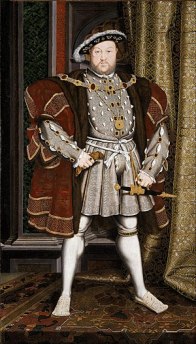 My question is not well-posed, perhaps. After all, it’s never actually length that’s the problem when a book seems too long, is it? It’s
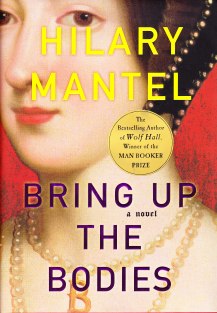
  Why, then, does Mantel include so much of it? Or (to set aside the tired and unhelpful question of authorial intent) what is the effect of her decision to include every little thing–to reject the taut intensity that made both earlier books in her trilogy feel so much shorter, go by so much faster, in favor of this more expansive process? One answer that occurred to me as I neared the novel’s conclusion is that our immersion in the daily nitty-gritty of Cromwell’s life at the peak of his power–the constant demands that he do something, fix something, say something; the endless petty but also perilous contests for political dominance with his rivals and enemies; the fraught delicacy of his dances with Henry’s needy vanity–made his death feel shockingly sudden, even though his eventual fate has always been the one absolute certainty of Mantel’s story. Right to the very moment that he finds himself surrounded, arrested, and imprisoned–the moment that he knows too well is the beginning of the end of his life–Cromwell is in the midst of the complicated business of living. While the dramatic irony that is an inevitable feature of historical fiction always hovers over the novel’s action, the steady hum of everything that’s happening in the moment made me less aware of it, papering over the gap between my knowledge of what’s coming and Cromwell’s ignorance. This effect really heightened the emotional power of the last 200 pages, when his efforts prove (as we knew they would) insufficient to save him.
 Another way I came to think about the novel’s length: The Mirror and the Life is very much a novel about middle age, a time of life in which (as I am learning) present experiences share mental and emotional space with intense memories of the past and a heightened awareness of the finite future. One reason The Mirror and the Light is longer than Wolf Hall and Bring Up the Bodies is that it contains (or Cromwell’s consciousness contains) both of them within it. In this final novel Cromwell is not just living through his present but constantly recalling his past, reaffirming his history and identity, puzzling out continuities and discontinuities between the boy he once was and the man he now is–and at the same time he is anticipating what will come next, always with a sense of being surrounded by the ghosts of his past actions and (not incidentally) his past victims. Also, like many middle-aged people he has reached a professional plateau: The Mirror and the Light is about a man at the height of his career but with no options for lateral movement and no possibility of a graceful retirement. All he can do is hang on and try to enjoy the rewards his many years of hard work have brought him, while others eye his accomplishments, underestimate the price he paid for them, and dream of succeeding him. There’s less intrinsic drama in maintaining power than there is in either winning or losing it–hence the feeling, at times, that both Cromwell and the novel are spinning their wheels and getting nowhere. When the likely next step is disgrace and death, though, just staying in place has its own particular kind of dramatic tension, and again, this set-up made the ending all the more
 Thinking about the novel’s length in these ways reminded me of George Eliot’s comment about Middlemarch: “I don’t see how the sort of thing I want to do could have been done briefly.” It is hard to tell a story that captures the whole scope of life–or, in Mantel’s case, of a particular life–without somehow reflecting that inclusive ambition in your formal choices. Still, my attention and interest did sometimes flag during the frequent scenes of Cromwell and his (few) friends and (numerous) rivals and enemies plotting and nattering and jockeying for position. In contrast, I was riveted by many sections that actually contributed comparatively little to the plot but showcase Mantel’s marvelous writing. Her long sentences are intricately shaped and ornately detailed but always completely controlled: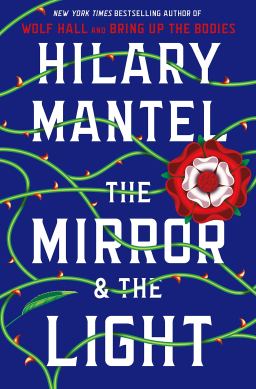
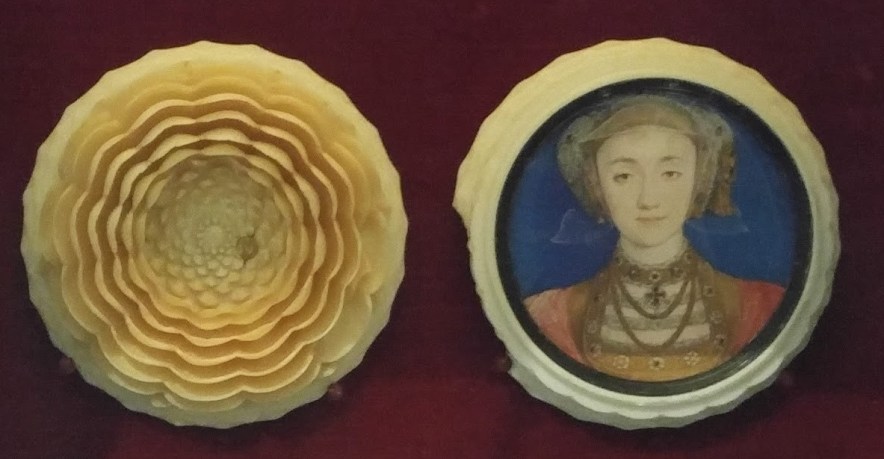
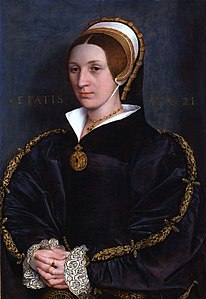 We can’t get close to Catherine, or follow her story to its bloody end, for a very simple reason: chronology. Cromwell’s execution preceded hers, though by barely 18 months. This returns me to the second of my questions about the novel’s form: how would it end? This is obviously not a question about plot; my interest was in the novel’s narration. One of the most discussed aspects of Mantel’s trilogy has been her use of a particularly close form of limited omniscient narration: it is in third-person but as if perched on Cromwell’s shoulder, barely acknowledging that it is not in fact first-person narration, never using the license Austen (to give one example of someone who also loves close third person) sometimes uses in her novels to change point of view once in a while to show us the story’s focalizing character from the outside, or to introduce a bit of information she’s not privy to. (I’m thinking of the rare but vital glimpses we get of Wentworth’s point of view in Persuasion, for example.)
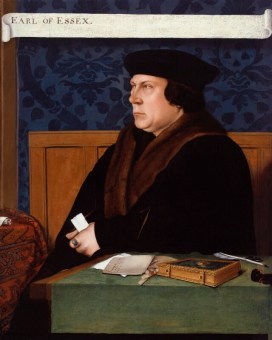 The Mirror and the Light starts in the immediate bloody aftermath of Anne Boleyn’s execution, making Cromwell’s own, less refined ending (“they don’t write words on the head of the axe”) a neat formal symmetry. The trilogy as a whole achieves something similar, beginning with Cromwell beaten to the ground by his father Walter, “pulled downstream on a deep black tide,” and ending with Walter’s voice still challenging him to “get up.” Even at the very last, the force of personality Mantel has created for Cromwell is so strong I almost expected that he would, like the case he recalls even as he mounts the scaffold: the Earl of Arundel “was axed down on this spot and his corpse leapt upright to say a Pater Noster. All headsmen … talk of it as a fact.” He doesn’t, of course, and at the last moment Mantel’s third-person narration proves its value as well as its logic, because he slips away and we are left behind. It is hard to mourn a man like Cromwell, but she has made it impossible not to miss him now that he’s gone.
 In spite of everything, our academic term here is wrapping up on schedule: we are now in the middle of our exam period, final grades are due May 1, and a week or two after that my department will hold a remote version of our annual “
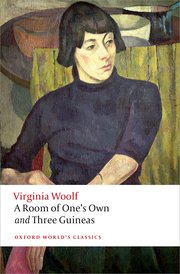 I guess that’s a sort of peroration, isn’t it? Apparently I’m working them in wherever I see an opportunity. Anyway, it’s odd and a bit sad to be wrapping up a term and feel so deflated about it. I think one reason it hits hard is that I spent so much time planning for this one, especially for the Brit Lit survey class–and I was so excited about Three Guineas and about moving from it to The Remains of the Day. Ordinarily at this point I would be throwing myself into choosing the readings for my first-year class in the fall, as instead of doing Pulp Fiction again I am taking on a section of “Literature: How It Works”; I’m finding that hard to focus on, though, both because there’s a lot I still don’t know about what kind or size of class it will be and because I have lost some enthusiasm for advance planning given how much I had to toss out this term. I did put in an order for the books for 19th-Century Fiction from Dickens to Hardy, but for whatever reason, for the first time I can remember it is not filling well (and it’s not, or not obviously, a coronavirus thing, as many of our other courses at that level seem to be filling up just fine) so that’s a bit deflating as well. But there’s time for all of this to get sorted.
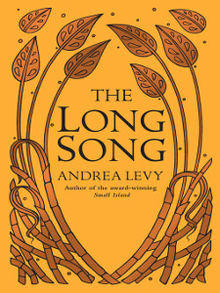 All of this is told in Miss July’s own voice. In some ways this is one of the most appealing features of The Long Song, because July is sharp, funny, and ruthless and because the interplay between her and her son Thomas (at whose prompting she is recounting her life story) draws attention in a clever way to the mediation required between the story she wants to tell and the story he wants her to tell — and also, more generally, to the layers of mediation that were part of how many actual slave narratives reached their audiences. (One of the works cited in Levy’s bibliography is The History of Mary Prince, which I read with my British Literature survey class this term.) I admit, though, that I really struggled with her narration: its cadences and idiom were hard for me to follow, which of course is a reflection on the limitations of my own reading ‘ear.’ The differences from ‘standard’ English are actually pretty subtle most of the time, but they tripped me up surprisingly often, frequently forcing me to go back and start a sentence again to be sure I caught its meaning properly.
 “We’re not members of Molotschna,” Salome bursts out at one point, challenged to consider whether the women owe the imprisoned men any loyalty because they belong to the same colony.
 Peters’s literal absence, and the absence of most of the other men of the colony, is what creates the space in which these women can talk, and that itself is one of the novel’s critical interventions. For most of their lives these women have not been in control of their own stories; their illiteracy has also prevented them from knowing first-hand the terms on which they have understood and lived their lives. “My point, says Salome,”
 I’m not sure whether I’m surprised that it has already been three weeks since we began extreme social distancing here or surprised that it hasn’t been even longer — normalcy itself seems so distant now! It seems remote in both directions, too: hard as it is to think back on the relative simplicity of ordinary life before, it is even harder to look ahead because there is so much uncertainty about when and how those conditions will return. That’s as good an argument as any for trying to take this massive disruption one day at a time, which is certainly what I have been trying to do. My success varies, as does my ability to get through each day with anything like the (again, relative) equanimity and focus I used to have.

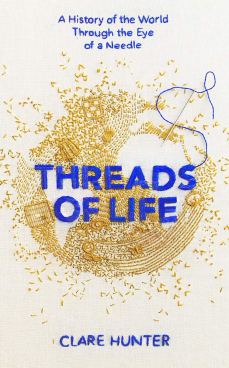
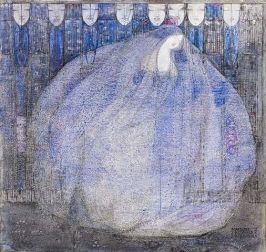

 Stitching has been used for commemoration, solace, and survival, to record personal losses and as a means of political protest and consciousness raising. The NAMES Memorial Quilt became a focal point for raising awareness about AIDS: “it played its part in raising funds for research, better sex education, preventative measures and effective drugs.” Under Pinochet’s harsh rule in Chile, women created arpilleras (“embroideries sewn on burlap”) telling “of their own experiences, of kidnapped sons and daughters, of their search to find them, of the loneliness of not knowing what had befallen loved ones.” At first the regime overlooked these deceptively cheerful-looking crafts “as tools of subversion”–sexism providing women protective camouflage. But once their subversive intent was clear, “the women were followed, their homes raided.” Esther Krintz and her sister survived the Holocaust by pretending to be Catholics; the rest of her family was murdered by the Nazis. “We know this story,” Hunter tells us, “because Esther sewed it down”: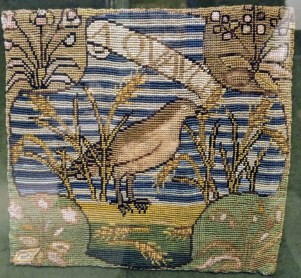

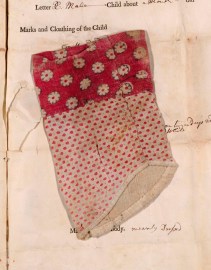 Threads of Life covers so much it would be better for you to read it yourself if you’re interested, rather than for me to keep giving more examples! But there are two others I want to just touch on, because I found them so interesting, and because they represent the two poles of needlework that Hunter’s book moves between: the intensely intimate and personal keepsake, and the deliberately calculated public display. The first, of the former kind, is the “billet book” she looks through from
  My last example, at the other extreme, is Hunter’s discussion of
  Hatshepsut is also the subject of one of my longtime favorite historical novels,
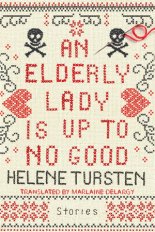 Slowly she set off in the direction of the Rosenlund Canal. In order to make herself look a little shorter and older, she stooped over her walker. She had pulled on a white fabric sunhat with a wide brim, which hid her hair and part of her face. No one took any notice of the elderly lady. . . . The best thing was that none of the people bustling about took any notice of her. An elderly lady out and about in the lovely weather didn’t attract much attention.
 I suppose Maud’s ability to get away with her petty crime spree is a cautionary tale about the dangers of ageism and sexism, which contribute to obscuring the truth about people. But compared to the moral and psychological layers that emerge from Janina’s murders in
 So I packed up and went home–but still, I realized later, without having quite focused on what was happening. For example, I brought home not just the books we were in the middle of but the books that are (were) next on the class schedule, because it still seemed plausible that we would be doing something like actually finishing the courses as originally planned. And I did not bring home a stack of books that it might just be nice to have copies of at home–any of my Victorian novels, for instance. I own around a dozen copies of Middlemarch, and right now every one of them is out of reach! We are still allowed into our building, and I’ve been thinking I should go get one, and maybe some Trollope. I can’t tell if this really makes much sense, though. I mean, it’s not like I don’t have a lot of books to read right here with me, and I also have e-books of a lot of 19th-century novels because when I bought my first Sony e-reader, years ago, part of the deal was a big stack of free classics to go with it. So what if I don’t like reading long books electronically: I could get used to it. It would be a pretty low-risk outing, given that the campus is basically a ghost town at this point, but I think it’s really psychological reassurance I would be seeking, not reading material, and what are the odds that seeing familiar places I can’t really go back to for who knows how long would actually be comforting?
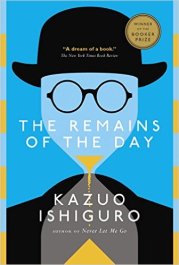 Anyway, it quickly became clear that the right strategy (and, to their credit, the one our administrators have been urging) is not to try to replicate electronically all of our plans for the last few weeks of term, including the final exam period, but to smooth students’ paths to completion as best we can: dropping readings and assignments and giving them options including taking the grade they have earned so far but still also allowing another chance to do better in as painless a way as we can think of. I think the options I came up with for my classes are pretty good, in these respects, but it may be that they don’t go far enough, because this is all turning out to be so much harder than it sounded a week ago–and of course however we might (or might not!) be managing, our students have their own specific circumstances which may make even the most “reasonable” alternatives too much. I have been feeling a lot of regret about the books we won’t get to, especially The Remains of the Day, which I was increasingly excited about as the capstone text for the survey class–what a good book to read right after Three Guineas! As for Three Guineas itself, I was so excited about teaching it for the first time. It’s definitely going back on my syllabus the next time it fits the brief. Sigh.
 One of the most emotionally painful parts of all of this has been the abrupt severance of personal relationships, which is what teaching is really all about. I have put course materials together to get us to the end of our current texts, but it is much less rewarding scripting them than it is taking my ideas and questions in to meet them with and seeing what comes of our encounter. Sure, it doesn’t always go swimmingly, but that just means you try again, or try something different. I know there are ways to include more personal and “synchronous” interaction (as we’ve quickly learned to label it!) in online teaching, and of course as someone who spends a lot of time online I already believe that you can cultivate meaningful relationships without meeting face to face. There just isn’t time for that now, though, and also the demands those tools put on everyone to be available and attentive at the same time are all wrong for our immediate circumstances. It isn’t just about finding ways to get through the course material together either: there are students I have been working with for years who it turns out I saw in person for maybe the last time that Friday without even knowing it. I have been thinking about them, and about all of my students, so much since that hectic departure from campus and hoping they know how much I have valued our time together and how much I already miss them!
 And now, I guess, it’s time to settle in to what people keep euphemistically calling “the new normal.” Here in Halifax we are under strong directions for social distancing; I’ve heard rumors that something more rigorous might be coming, in the hope of really flattening that infamous curve. There are lots of wry jokes and memes about readers or introverts or others whose habits and preferences mean they have been “preparing for this moment our whole lives.” We live a pretty quiet life ourselves, so to some extent this is true of us as well (though not of Maddie, who like many young people is going to be very well served by the various ways she and her friends can stay in touch virtually). It’s pretty different having to stay home, though, and also worrying whenever you go out, even if it’s only for essentials. It’s also not spring yet here–I envy my family in Vancouver the softening weather that makes walks and parks and gardens good options. I am grateful, though, that we are comfortable and together and, so far, healthy. I am also glad I did pick up An Elderly Lady Is Up to No Good, because I finished reading it this morning and it is a nice bit of twisted fun…about which more soon, I hope!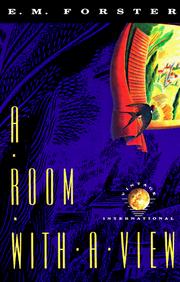
 It is,” as the narrator says, “the old, old battle of the room with the view,” and the joy of the novel is that even as we feel the horror of violence and death and the lesser but equally inexorable horror of everything Lucy must overcome, we see the view open up, we see the light and the violets and the sunshine, we heed the driver’s cry of “Courage and love!”
