Because Kate’s anomalies had now spawned enigmas, discrepancies, holes in the fabric of Kate. It wasn’t that she was crazy, or not like any crazy girls he’d known before. She didn’t weep; she didn’t scream. She wasn’t hyperemotional. If anything, she was all too sanguine–wore the same clothes for days on end and forgot to brush her hair and was perfectly content. . . . But there was also the incident where Kate told Ben a story about an ex-Green Beret who had climbed the White House fence and broken into the White House and bearded the president and the First Lady in bed, and instead of calling for the Secret Service, the president called downstairs for tea, and they sat drinking tea in the president’s bedroom and discussing the treatment of veterans, and the man became the president’s personal friend. She couldn’t remember which president. It had happened sometime in the nineties.
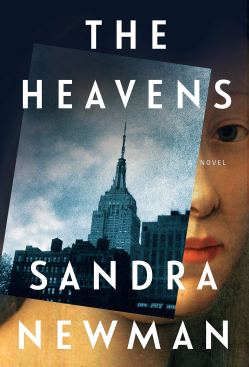
I found Sandra Newman’s The Heavens really engaging until I started getting confused about how exactly it worked, about what the essential conceptual links were between its variable pasts and presents. It is, definitely, a high-concept novel, one that invites that kind of probing: it’s clear that Newman is using the elements of her genre-bending time-traveling speculative historical dystopian romantic novel to say something–lots of things, probably–rather than simply as plot devices. If I understand her at all, some of these things are about the better alternatives we can imagine to the world we actually live in. Some of them are about how to get to that world we would have to, or have had to, make different choices, including about what, or who, or whose stories, we value most.
What I couldn’t ultimately hang on to, though, was why exactly Shakespeare is somehow placed at the center of this project. Is the novel a critique of something exemplified, maybe, by what is sometimes called ‘Bardolotry,’ so that Sad Will (as Kate, or, rather, Emilia, knows him) is present more as a symbol than a character? Is the notion that our fixation on individual accomplishment and fame–what we routinely but perhaps sloppily, think of as ‘genius’–crowds out other kinds of achievement that might lead to better communal futures? If that’s the idea, I feel as if I should be more certain of it, as well as clearer about why Emilia Lanier is the specific device Newman chooses to set up that implicit argument.
 I also didn’t understand the relationship between Kate’s specific choices in the past and the outcome she hopes for from them. She believes (or Emilia believes) that she has some kind of mission to save the world, but as the novel wound on I got more confused about the nature of that mission and the metaphysics that presumably make sense of it, never mind how she and we are supposed to get from what she does then to what happens now. (It probably didn’t help my attempts to never mind all that and just go along with Newman’s unexplained model of time travel that I’ve been proofreading my husband’s book on determinism, which includes compelling arguments about the logical consequences of any speculative ‘what if’ re-imaginings of the past.) Newman is writing fiction, so she doesn’t necessarily have to meet a stringent philosophical standard, but there wasn’t even enough narrative coherence to her version to hold doubts at bay. As far as I can remember it, Audrey Niffenegger’s The Time Traveler’s Wife (to which The Heavens has inevitably been compared) is every bit as metaphysically confusing and implausible but was at least an intensely gripping story.
By the end, then, my appreciation had become quite fragmented. Newman does some things really well, and I was able to sustain an interest in the love story that threads through the novel as well as in the various versions of their ‘now,’ each of them a bit worse than the last but all vividly recognizable. The 9/11 section in particular had a grim emotional intensity without sentimentality or sensationalism. The historical novel that is Kate’s dream life (or whatever it is rightly called) as Emilia is also really well done–again, vivid, specific, and tense. The question of whether Kate is mad or actually somehow having experiences outside of linear time is well handled, often painfully as those around her try to secure her in what they believe to be the only reality. I just couldn’t sort out my thematic and conceptual confusions well enough to feel satisfied with the novel as a whole. That said, I’m not at my most patient and attentive right now as a reader, and it is quite possible that the fault lies not with The Heavens but with me.
Matt Keeley’s review of The Heavens is worth checking out: he is much less equivocal about it than I am, and I think he is right about all the strengths of the novel. As always, if you read this novel too I’d love to know what you thought.
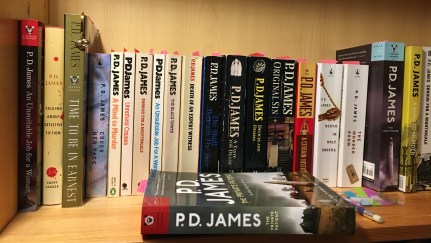
 Good as she is, James turns out to be a poor choice for binge-reading, and yet a plan is a plan and a deadline is a deadline, so I have been persisting. The endeavor is not without its rewards: again, she’s good– very good, even! It’s just that she’s always good in exactly the same way, sometimes even in the exact same words. I was trying to think of other authors who have stood up better to this kind of determined march through their works. I remember really enjoying myself when I read all of Trollope’s Palliser novels straight through many years ago, and I have always loved rereading the Lymond Chronicles start to finish–but stories accumulate in a different way in those than in most detective series. While we are interested in and generally grow attached to the investigators in a long-running series, if the novels become more about them than about detecting, we’ve probably shifted genres–though having said that, counter-examples immediately occur to me, including Elizabeth George and Tana French, and of course there’s Gaudy Night, which perfectly balances case and character. In James’s novels, in any case, the personal arcs of her recurring cast are always peripheral to the main action, and while that strikes me as a principled decision, formally, it also has constricting effects. By the end of The Lighthouse I was far more interested in Dalgliesh’s relationship with Emma Lavenham than in whodunit–and that too is something my essay will most likely take up.
 I have been trying to read other things when I’ve had the energy, which hasn’t been often. I gave up on A Time of Gifts, though, which shames me somewhat to admit but there it is. There was a lot of fine writing but I couldn’t catch any momentum from it, and it turns out not to be as diverting as I’d hoped to read about someone else’s travels while unable to go anywhere myself. I’ve read a handful of romance novels–Christina Lauren’s The Unhoneymooners, Talia Hibbert’s Take a Hint, Dani Brown, and (most of) Jasmine Guillory’s Party of Two–just meh, all of them. I’m a hundred pages or so into Isabella Hammad’s The Parisian and it seems promising; once I finish The Private Patient, I want to settle in and really give it a chance. I’ve also just read Sarah Moss’s forthcoming Summerwater — but I have to save up what I think about that for the review I’ll be writing for the Dublin Review of Books.
 Otherwise, I’ve continued puttering away at ideas for my fall classes. I was feeling overwhelmed by attempting to shape my traditional MWF schedule for 19th-Century Fiction into modules (though it was a boost to remind myself, by doing that work, that the end result will eventually be talking about 19th-century novels again, which I miss!). So for the last few days I’ve gone back to working through ideas for a new grading scheme for my first-year class. I’ve moved away from ‘contract grading’ towards ‘specifications grading,’ and I’ve been trying to map out bundles of activities that would work well with the options we’ll have in the online environment. (If you are wondering what specifications grading is,
  One thing that has started weighing on my mind is that all this planning isn’t the same as actually creating content for the fall. I don’t have much more time, really, before I have to commit to a basic outline of elements for both classes and begin to script presentations, videos, writing prompts, and so forth. The whole specifications grading thing is going to require very careful explanations and instructions. But I remind myself: I’m not starting from scratch, even though the apparatus and presentation will be different. I have oodles of notes and materials, including slides, that can be adapted–and I don’t have to have everything ready to go at once. In some ways I can see that would be desirable, but on the other hand, it seems key, especially when this is all so new to me, that I be ready and able to change things up based on how things go with the first few modules. I hope students will recognize that for me too, this term will involve some trial and error!

 Then, instead of having three distinct conversations about the reading on three separate days (which, again, has always allowed me to pace us, and to model sorting out specific interpretive elements rather than facing everything that’s going on in the novel all at once), we’ll have discussion boards. Presumably, the topics will reflect the same questions I usually set in class, but I’m not sure if I should try to move us through these topics in some kind of sequence across the week, as I would in person, or think of the module as weighted towards reading at the beginning of the week and discussion at the end of the week. Probably the latter–though they might miss getting input and ideas from each other (and from me) earlier in their reading. I don’t want to be micromanaging participation on the discussion boards too much: I’m imagining how strange this all might feel to them, and ideally I’d like it to feel both easy and sort of natural to contribute. Super-rigid requirements (post once by Wednesday, reply once on Thursday, post again on Friday–whatever) really work against that and give me a lot to keep track of.
 I think the next step for me is actually to back away from the overwhelming amount of information and advice I’ve been contemplating about online teaching and go back to my actual teaching notes. Looking at the topics I usually cover with a modular redesign in mind will probably help me realize ways in which these bundles would actually work and think in more concrete ways about just how different the online experience needs or doesn’t need to be. Precisely because I’ve been teaching 19th-century fiction in such a similar way for so long, it is the one that feels the strangest to mess with, but it’s also the one where I have the simplest overall goal–to have the best conversations we can about our readings–and the most faith in the books themselves to get us talking, one way or another. Even if I don’t get everything right on my first attempt to do all this online, at least we’ll still be working our way through Middlemarch!
 From P. D. James’s Devices and Desires:
 This excerpt from Devices and Desires is characteristic of what this conviction looks like in practice. I suppose it could be argued that such long descriptive passages are not strictly necessary, that they are a form of padding in novels otherwise structured very tightly, as all of hers are, around the intricacies of a murder investigation. She treats every room this way, not just ones that clearly lead us towards revelations about the crime: readers who like their mysteries leaner and faster and more plot-driven might feel that the story gets bogged down. I don’t see it (or experience it) that way. For one thing, I enjoy James’s writing–I like the rhythm of her sentences, the meticulous care she takes to create a vivid, tactile sense of place, and the way her catalogs of specifics so often lead, as here, from exterior to interior, from setting to psychology. For another, because James’s crimes are always intensely personal, character is plot for her: thus her attention to setting as a device for exploring character serves the key purpose of her fiction. Finally, here we are seeing through Dalgliesh’s eyes: what this passage tells us is not just how the room’s inhabitant lives (and thus what she is like) but how observant he is, and how his scrupulous detachment as a professional investigator is combined with the self-awareness and sensitivity that make him not just a skilled detective but also a poet.
 From Patrick Leigh Fermor’s A Time of Gifts:
 I’m having a hard time keeping track of what day it is, mostly because under the new work-from-home protocol–and the more general stay-at-home order–there’s not much difference between one day and the next. I’ve also stopped doing grocery shopping on Saturday mornings (which had been my routine for more than two decades): now I go mid-week, usually Wednesday, as early as I’m allowed in the store, which means I’m home by 9 a.m. and so, aside from the gradually receding adrenaline from the stress of the outing, it too then becomes a day like every other day.
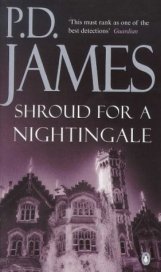 Afternoons are (more or less) for reading. I haven’t posted about any books since The Glass Hotel but that isn’t because I haven’t read any. In fact, I have read four (almost five) books since then, all by P. D. James, because I am rereading her complete works (or all of her mysteries, at any rate) in preparation for writing a piece for the TLS in honor of her centenary. I was really glad that the editors liked this idea: it’s a perfect project for this haphazard summer. I have a lot of ideas about James from having read (and taught) her for years, but I have not had a reason to put those ideas in good order before, and it has also been a long time since I read most of her back catalog. It’s very interesting reading through the books all at once and in order: you quickly notice recurring themes and habits, strengths and weaknesses, and also the way her scope and themes expand. I think (I hope!) that this is a kind of essay I’m reasonably good at, collating and synthesizing across a range of examples; this is also an approach that I think works well for crime series, which are interesting both in their individual parts and as enduring creations that are more than the sum of those parts, often (as in this case) through the story they tell about the central detective that unifies them. My previous essays on
 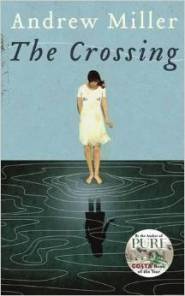 I do have some other books on the go or in the queue. I am about 100 pages into Andrew Miller’s The Crossing, which is the last of the random pile of library books I brought home shortly before the lockdown. It’s good so far in the way his other books were good: meticulous, quietly and a bit ominously atmospheric. I ordered Isabella Hammad’s The Parisian from Bookmark, and it looks very tempting; I pulled Patrick Leigh Fermor’s A Time of Gifts from the shelf because I’ve never read it and if there was ever a time to travel vicariously in excellent literary company, this is surely it. My book club “met” on Thursday to discuss
  We have certainly been watching a lot of TV: the new season of Better Call Saul, The End of the F***ing World, Little Fires Everywhere, The Stranger, Ozark … If we’d known what lay ahead, we might have rationed some of the other shows we watched over the winter–season 5 of Line of Duty, the latest season of Shetland–that we knew to be engrossing. It is a good time to be watching Parks and Recreation for the first time: its gentle, goodhearted humor is a tonic. Sadly, the channel that carried the Great British Sewing Bee and various other painting and craft shows has dropped suddenly from our cable package, just when such low-key distractions would be more welcome than ever, and a lot of the videos on the Youtube channel where I had found the Great Pottery Throwdown are now blocked, which I guess is legitimate but it’s still sad. It was March 8 that I wrote about how
  Well, it’s official:
 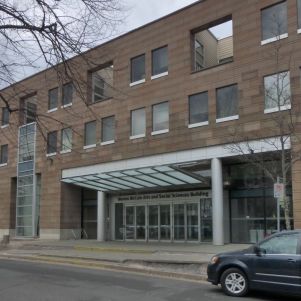 Having the decision made for me by circumstances hasn’t changed everything about how I feel about teaching online, but it has made a lot of those feelings irrelevant. Also, countering my wistfulness about what we’ll be missing are other, stronger feelings about what we will, happily, be avoiding by staying behind our screens. Every description I’ve seen of ways to make face-to-face teaching more or less safe for everyone involved has involved a level of surveillance, anxiety, and uncertainty that I think would make it nearly impossible to teach or learn with confidence: a lot of what is good about meeting in person would be distorted by the necessary health and safety measures, and even without taking into account the accessibility issues for staff, students, and faculty who would be at higher risk, being in a constant state of vigilance would be exhausting for everyone. Frankly, I’m relieved and grateful that Dalhousie has finally made a clear call that (arguably) errs on the side of caution. Now we can get on with planning for it.
 As my regret about the shift to online has been replaced by determination to make the best of it, I’ve also noticed something I’ve seen experienced online teachers point out before, which is a tendency to idealize face-to-face teaching, as if just being there in person guarantees good pedagogy. It doesn’t, of course. In my own case, I know that what I’ll miss the most is lively in-class discussions. But if I’m being honest, I have to admit that even the liveliest discussion rarely involves everyone in the room. Of course I try hard to engage as many people as possible, using a range of different strategies depending on the class size and purpose and layout: break-out groups, think-pair-share exercises, free writing from discussion prompts, discussion questions circulated ahead of time, handouts with passages to annotate and share, or just the good old-fashioned technique “ask a provocative question and see where it gets us.” Even what feels to me like a very good result, though, might actually involve 10 people out of, say, 40 — or 90, or 120 — speaking up. Others are (hopefully!) engaged in different ways, and there are different ways, too, to ask for and measure participation than counting who speaks up in class. Still, I’d be fooling myself if I pretended that there wasn’t any room for improvement–and what I want to think about as I make plans for the fall is therefore not how to try to duplicate that in-class experience online (ugh, Zoom!), partly because we are supposed to focus on asynchronous methods but also because maybe I can use online tools to get a higher contribution rate, which in turn might make more students feel a part of our collective enterprise. And, not incidentally, if all contributions are written, they will also get more (low-stakes) writing practice, which is always a good thing, and they will be able to think first, and more slowly (if that suits them), and look things up in the text, before having to weigh in.
 There are other ways in which (and we all know this to be true) face-to-face teaching isn’t perfect, and there are also teachers whose face-to-face teaching does not reflect best practices for that medium. Given these obvious truths, and especially since the shift to online teaching is driven by factors that themselves have nothing to do with pedagogical preferences, I have been getting pretty irritable about professors publicly lamenting these decisions, especially when it’s obvious that they haven’t made the slightest effort to learn anything about online teaching, or to reflect on the limitations of their own usual pedagogy. One prominent academic just published an op-ed in a national paper declaring that online teaching can only ever be a faint shadow of “the real thing”; others have been making snide remarks on Twitter about the obvious worthlessness of a term of “crap zoom lectures” (that’s verbatim) or questioning why students should pay tuition for the equivalent of podcasts. Besides the obvious PR downside of making these sweepingly negative and ill-informed statements when your institutions are turning themselves upside down to find sustainable ways forward, what kind of attitude does that model for our students? The situation is hard, I agree, and sad, and disappointing. But at the end of the day we are professionals and this, right now, is what our job requires. If we value that job–and I don’t mean that in the reductive “it’s what we get paid for” way (though for those of us with tenured positions, that professional obligation is important to acknowledge and live up to) but our commitment to teaching and training and nurturing our students–then, if we can*, I think we need to do our best to get on with it.
 And happily, though most of us are not trained as online teachers, we do have a superpower that should help us out: we are trained researchers! We can look things up, consult experts, examine models, and figure out how to apply what we learn to our own situations, contexts, pedagogical goals, and values. At this point, that’s what I’m working on: learning about online learning. Yes, I had other projects I was interested in pursuing this summer. In fact, I still do, but I have scaled back my expectations for them, because I can’t think of anything that’s more important right now than doing everything I can to make my fall classes good experiences, for my students and also for me. I have the privilege of a full-time continuing position, after all, and my university is making experts and resources available to me–plus there are all kinds of people generously offering guidance and encouragement through Twitter and I have been following up their leads and bookmarking
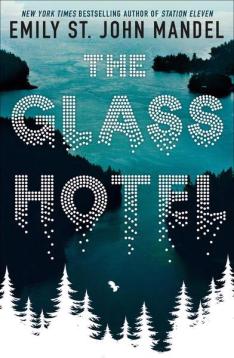 But–why have a painter in this role? Is there something specifically meaningful about her portrait of Lucas? Are we meant to discern a contrast between what she makes (art) and what Jonathan makes, or pretends to make (money)? Is there a further connection along these lines to Paul, brother of Jonathan’s “trophy wife” (she isn’t quite that) Vincent, who is also an artist? Is Paul’s “theft” of Vincent’s archive of videos (repurposing, he prefers to consider it) meant as some kind of analogy to Jonathan’s abuse of his investors’ trust? How does the hotel of the title fit in, besides as a memorable setting? Is it symbolic? (People who live in glass hotels shouldn’t … what?) Is there meant to be a parallel between Vincent’s final moments, as she drowns (this is where the novel begins, so it’s not a spoiler) in the ocean, and the reclusive peace the hotel’s caretaker finally finds? Is the recurrence of drug addiction significant? Why are there so many ghosts? Is the message on the window somehow at the heart of it all? I have a lot of questions!
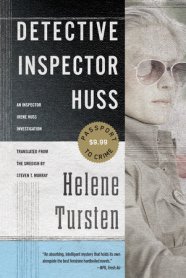 When Krister came home at one a.m. the girls were asleep, but Irene was still up. After telling him about Jenny’s troubles and about the impending end to her skinhead period, she tried to seduce her husband. But he was too tired and not at all in the mood. The Christmas rush at the city’s restaurants had begun. She lay awake for a long time, her whirling thoughts of skinheads, millionaires, bombs, murderers, biker gangs, sexual relations between people who shouldn’t be having any, and sexual relations between people who should.
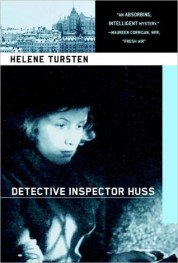 The novel’s central murder plot does not ultimately have anything to do with anti-Semitism or neo-Nazis, but it does have a lot to do with the “seamy underworld” mentioned in the précis. Even the most polished and privileged characters turn out to be at most one or two degrees of separation away from drug dealers, Hell’s Angels enforcers, or (as scary, if less socially contextualized) narcissistic sociopaths. Like the Beck books, that is, and like Henning Mankell’s novels, Detective Inspector Huss shows a pretty unflattering version of Sweden–though it’s no uglier than, say, Ian Rankin’s Edinburgh or
 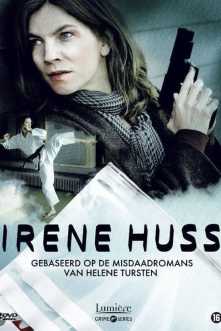 Something Tursten draws particular attention to is sexism in the police force. Irene herself is aware of and angry about it, but in this book at least she mostly chooses not to confront it directly. In contrast, her colleague Birgitta–who is assaulted by a witness she’s interviewing and then informs their boss Superintendent Andersson that she has also been experiencing ongoing harassment from another officer–has eventually had enough. First, when Superintendent Andersson asks if the witness has annoyed her “in some way,”
 Birgitta’s “blue balls” comment is an example of a quality in Detective Inspector Huss that struck me as somehow slightly alien–a reminder that I was reading a book based in a culture that is not my own. The best way I can think of to describe it is that (again, at least in this translation) the novel has a kind of bluntness uncharacteristic of the Anglo-American crime fiction I usually read. It’s not that those books aren’t (sometimes) sexually explicit or graphically violent, or that they don’t often include plenty of swearing. There was just something about the tone or the idiom of the conversations in Tursten’s novel that seemed different, though I have been struggling with how to explain it. Another example: Irene recalls a male colleague who got the mumps as an adult, which caused his testicles to swell up “so grotesquely that he couldn’t walk. Unfortunately, his name was Paul, and he was always called ‘Paul Fig-Ball’ after that.” Poor Fig-Ball comes up a few more times during the rest of the novel and nobody seems to find it in any way an unseemly nickname. (These are just the examples I thought to highlight in my ebook; one problem with this technology is that I can’t flip through the pages easily to find others, including ones that aren’t about testicles! But I know there were many others.)