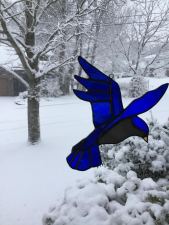
 Last week was our winter term study break, which is always a welcome interlude–more welcome even, I think, than the equivalent week off from classes in the fall because the winter term is grueling in ways the fall term is not, simply because it’s winter! Everything just takes more time and energy. We’ve been having a spell of unusually mild weather over the past few days and it has been so nice not to have any shoveling or scraping to do. There have even been days when it made perfect sense not to wear boots! Imagine that, in February. 🙂
But we’re back in class now, and from here to the end of term it will feel to all of as if we’re hurtling down hill. Why does the second half of term always seem to go by so much faster than the first? It’s not like we don’t still have a lot to get through! So: let’s take stock.
 In British Literature After 1800 we have just finished a couple of weeks on Great Expectations. More than half the class chose to write their first paper on it, which may be a sign of engagement, though it might also be a sign that they don’t want to write on poetry, or that they realized they would like to get the paper out of the way before the later option. In terms of our class discussions, I think it was nice to park ourselves in one place for a while, as the course overall, just by its nature, moves quite briskly along through a range of quite different material. As I look ahead to the other long texts I chose for the course (Three Guineas and The Remains of the Day) I’m pleased at the thematic connections I can see opening up. From a pedagogical point of view, that means they pair up in interesting ways for the later assignments, which include a comparative essay. But they are also different enough in form and voice that our conversations won’t get repetitive.
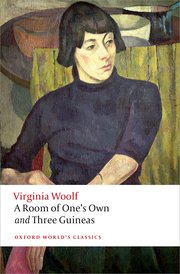 I’ve taught The Remains of the Day quite a few times, but before we get to it there’s quite a lot of material on the syllabus that I haven’t assigned often or at all before, starting on Friday with Kipling’s “The Man Who Would Be King” (which is the first Kipling I’ve ever taught) and including Three Guineas. I have assigned A Room of One’s Own enough times to know some of the challenges of working through Woolf’s long winding arguments. With Room I have found it helpful to start by modeling very carefully how to follow her from one step to another, literally drawing a map of the associative connections from one idea to the next. Skimming is much more hazardous here than it is with Dickens, where you may well miss details or delights if you aren’t paying close attention but you are likely to catch on again eventually. With Room there are set pieces that are particularly good for close reading and discussion (the contrasting dinners in the opening, for instance, or the story of Shakespeare’s sister): I think there are similar exemplary moments in Three Guineas but I haven’t had a chance to test them out and see which ones catch on. Our sessions on it will thus be necessarily experimental, but I hope the students will find the book as brilliant and provocative as I do.
 In 19th-Century British Fiction from Austen to Dickens we have wrapped up our work on Waverley — and I have to say, it seemed to go pretty well! I allowed more class time for it than I have before, and I really dug in on the historical context early on, both of which I think helped, but credit definitely also goes to the students: they just didn’t seem to find it as difficult, or at least as off-putting, as the previous batch did, or if they did, they were more good-natured about it! There was not nearly the precipitous falling off in class discussion after Pride and Prejudice that I’d feared. Something else I’ve already noticed is Waverley (and Waverley) coming up in discussions of other readings (including of Great Expectations, as I have a number of students who are in both classes), which confirms my sense that whatever its challenges, it is a novel that sets the terms for a lot of what happens after it.
 Next up in this class is The Tenant of Wildfell Hall, which we started on Monday. I have assigned this often in my seminar on the ‘woman question’ but I realized it has been nearly a decade since I worked through it in a lecture class instead. As always, I am enjoying rereading it. I think it is such a smart novel, especially in its complicated narrative and chronological structure. (Here’s my Open Letters Monthly essay laying out my ‘reading ‘ of it.) But it’s also very direct and emotionally engaging, making it a rather different experience than Waverley in ways that are both refreshing for us as a group and interesting for us as students of the 19th-century novel. One of the things I thought about a lot during my sabbatical last winter was whether it was time for me to slot Wuthering Heights into this course. I admit, I’m glad I didn’t. For one thing, I’ve got enough new stuff on my plate right at this moment in the term. But the key thing is that I can’t get past how unpleasant I find Wuthering Heights. If I had time to do two Brontë novels, I could do Tenant right after it, as a tonic and a corrective (which is, some critics think, something Anne herself intended it to be), but in a class with only 5 novels altogether, that’s not an option. Still, maybe next time. Or maybe not.
 After Tenant we will be doing Mary Barton and then wrapping up with Hard Times. We’ve already been asked to submit course descriptions and tentative reading lists for 2020-21, and one of the courses I’ll be doing is the Dickens to Hardy course. Dickens is the only novelist explicitly named in both course titles, and every so often I wish I didn’t feel obliged to include him on every reading list–or to include Hardy at all–so I asked this group if they’d feel cheated if they signed up for “The 19th-Century British Novel from Dickens to Hardy” and discovered they would not be reading either Dickens or Hardy. A bit to my surprise, most of them said an emphatic “Yes!” I guess those names have more traction than I realized. The problem for me is that I really (really) want to assign Middlemarch for the class, and I’m wary of including two monstrously long novels, which means once again I’d have to choose among the short(er) Dickens options, which are getting a bit stale for me. Or would I? Would it be so tough to read both Bleak House and Middlemarch in one term? What if I included two really short novels in between, to balance them out (The Warden? Cranford?) and then ended (as apparently I must) on Hardy? I have a couple of months to think about this before the actual book orders are due: I’ll run some scheduling scenarios and see what looks reasonable.
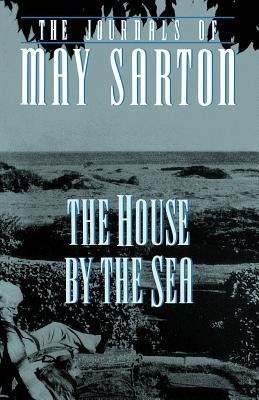 Solitude has replaced the single intense relationship, the passionate love that even at Nelson focused all the rest. Solitude, like a long love, deepens with time, and, I trust, will not fail me if my own powers of creation diminish. For growing into solitude is one way of growing to the end.
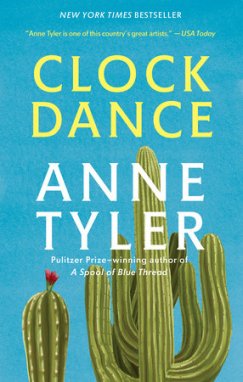 “I’ll just tell you what I’ve learned that has helped me,” he said. “Shall I?”
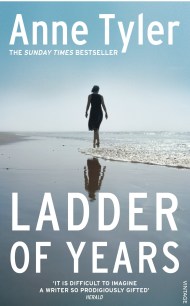 But the other thing about Tyler’s novels is that while her characters may stray, they almost always come home again (literally or emotionally). I think that might be part of why her books are soothing rather than disturbing, but sometimes it also seems to me that her vision is very conservative. Settle down, she often seems to be saying; appreciate what you’ve got; don’t go looking for trouble. You have enough, if you’d just stop wanting more. There’s no room for
  It hasn’t been a good stretch for me in my romance reading. I haven’t read anything since Love Lettering that I expect to re-read, which for me is the real sign of success: since I found my groove as a romance reader (nearly a decade ago, now!), romance has filled a nice niche for me as my go-to genre for incidental reading, books that divert, distract, and cheer me when I don’t have the time or am not in the mood for heavier options. I don’t mean to belittle the genre at all with this characterization. I have always read and reread books in that spirit, but they used to be mostly ‘light’ mysteries (Dick Francis, for instance) or relatively undemanding but satisfying general fiction (Anne Tyler, Joanna Trollope). I still reread old favorites in those genres too, but now my interstitial reading (as I have come to call it) also includes Georgette Heyer and Loretta Chase, Courtney Milan and Kate Clayborn.
 What is it that makes rereading–sometimes frequent rereading–pleasurable? Why do some books invite and reward it and others not? I reread for a living, of course, and for the books I teach the answer usually has to do with complexity: with layers of meaning and intricacies of language or form. Books teach well that don’t reveal themselves completely on a first try–otherwise what is there to talk about, after all? The better you know a book like that, the more you appreciate on each reading: the pleasure itself gets more complicated and multidimensional. That’s not (or not quite, or not usually) the same with the mysteries or romances I reread, though–or with writers like
  But not every romance novel inspires rereading for me, even if I enjoyed it just fine the first time. Sometimes there’s an obvious problem–stilted prose, unconvincing characters, a plot that feels too utterly contrived, leaden dialogue–but others fall flat for no reason I can really put my finger on. The recent string of books that prompts this post included just one of the first kind (Tessa Dare’s The Wallflower Wager, which felt creaky from the get-go and then lumbered predictably along while trying to be spritely and witty, which is the worst effect for me) but mostly books of the second sort, where nothing was overtly wrong but they still didn’t do much for me. Get A Life, Chloe Brown was like that–it was perfectly fine, sometimes even charming, but when I was done, it went straight into the ‘donate’ pile. Ditto Mhairi McFarlane’s Don’t You Forget About Me, and Lucy Parker’s Headliners, and Alyssa Cole’s A Duke by Default. This morning I finished Linda Holmes’s Evvie Blake Starts Over and overall I enjoyed it the most of this recent batch–though I’m not 100% sure it qualifies as romance. (It sits on the fuzzy line between contemporary romance and “chick lit” or “women’s fiction,” especially as it doesn’t quite serve up the requisite HEA–its ending is a very nice happy-for-now one.) If I went back a couple of months, I could give a much longer list of titles–very few of them actually bad but also few of them particularly good. (In romance as in all reading, of course, YMMV, and these are all books others have enjoyed a lot. Love works in mysterious ways, I guess! As we say on Twitter, “don’t @ me.” 😉 )
 When I mentioned my discouraging string of “meh” romance reads on Twitter,
 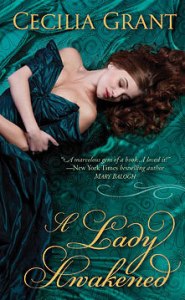 Although my relationship with romance has come a long way since my first skeptical and ill-informed attempts at reading in the genre, I do sometimes get fed up. As I mentioned in that Twitter conversation, I “DNF” romance novels far more often than books of any other kind, and while it’s possible that this result is mostly about me (as a reader or a person, who knows) it’s hard not to think it also says something about the genre, though what exactly that is, I’m not sure. But it’s also true that most romance novels are relatively fast reads, which is why I can get through so many of them in such a short time. Perhaps, proportionally, the hits and misses are not really that out of line with the rest of my reading–they just stack up more quickly! That also means that each romance novel on its own is a fairly low risk endeavor (certainly compared to, say, Ducks, Newburyport, which so far I dislike much more intensely than any of the romances I have picked up and put down without finishing, and which will require a vastly greater investment of time and effort to get the rest of the way through). Moreover, when I do find a romance novel I really like, the pay-off is disproportionately large because of how often I am likely to end up rereading it. I have now read all three of Kate Clayborn’s ‘Chance of a Lifetime’ trilogy three or four times each, for example, and will no doubt reread them again before too long; the same is true of Cecilia Grant’s ‘Blackshear Family’ series, the first one of which, A Lady Awakened, I recently reread with great pleasure. There are even some individual scenes that make the whole exercise worthwhile! Sometimes I pick up Heyer’s Devil’s Cub just to reread the chapter in which Mary, all unwitting, tells the Duke of Avon about her misadventures with his wayward son Vidal: it’s the perfect antidote for a fit of gloom, a reliable dose of “restorative pork jelly” (an allusion other Heyer readers will appreciate!).
 It’s clear that the largest things are contained in the smallest. There can be no doubt about it. At this very moment, as I write, there’s a planetary configuration on this table, the entire Cosmos if you like: a thermometer, a coin, an aluminum spoon and a porcelain cup. A key, a cell phone, a piece of paper, and a pen. And one of my gray hairs, whose atoms preserve the memory of the origins of life, of the cosmic Catastrophe that gave the world its beginning.
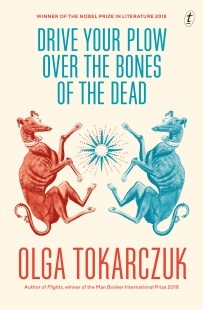 Janina’s main idiosyncrasy is that (as the people around her often protest) she cares more for animals than for people. She is particularly outraged by hunters and their hypocritical justifications for what, to her, is simply murder, and often barbarous murder, at that. “Just look at the way those pulpits work,” she exclaims to the officers taking her statement about a body that turns up in the remote mountainous region where she lives–in this case, a wild boar, though the deaths the police are actually concerned about are the human ones. “It’s evil–you have to call it by its proper name,” she goes on:
 Janina abhors the indignity and suffering humans inflict on animals: “People have a duty towards Animals,” she says, “to lead them–in successive lives–to Liberation. We’re all traveling in the same direction, from dependence to freedom, from ritual to free choice.” It appalls her that other people can go about their business indifferent, or worse–“What sort of a world is this, where killing and pain are the norm? What on earth is wrong with us?” When she proposes that the mysterious deaths in her neighborhood are actually animals exacting retribution, her theory seems at once bizarre and, coming from her, perfectly reasonable. In support of her allegations, after all, she can cite
 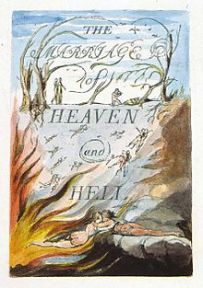 She and her former student Dizzy share a preoccupation with Blake, and as I read the novel I wished I knew enough about him to see how much Tokarczuk is invoking his ideas. Her title is from the Proverbs of Hell, from The Marriage of Heaven and Hell:
 By making Janina the narrator, Tokarczuk sets the novel up to test us about just how far we will go along with her: for all her wit and principle–really, because of them–she is quite a problematic character, especially if we take her at her own word about the logic of everything that happens. But what is a reasonable response to all the things we see around us, after all, or to all the things we know are going on but try not to face? “You know what,” Janina’s neighbor the Writer says to her,
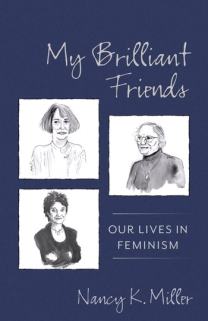
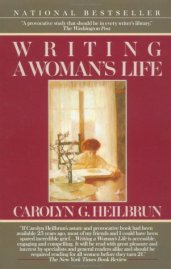 A lot of things about My Brilliant Friends really interested me. The friendships Miller is reflecting on were with Carolyn Heilbrun, Naomi Schor, and Diane Middlebrook: all four of them are big names, renowned scholars of the generation that basically pioneered feminist literary scholarship in the American academy in the later 20th century—and thus the generation that laid the groundwork for my own education as a feminist critic. I’ve written here before about the influence of Heilbrun
  At its heart, though, My Brilliant Friends is really about more personal things than that (again, I think Miller might reply that the personal and the academic are not really so separable, or shouldn’t be). I found I wasn’t always able to be as interested as I wanted to be in the details. The Heilbrun section was the easiest one for me to engage with, because I have a relationship of my own, however indirect, with its subject. Miller’s thoughts on her friendship with Naomi Schor (a relationship which was long, complex, and of intense interest and significance to her) left me mostly unmoved, a detached spectator to the emotional intricacies of its ebb and flow. Of her three main subjects, I knew the least about Diane Middlebrook when I started the book; for some reason she came more vividly to life for me than Schor did, through both Miller’s recollections and her own letters. She sounds wonderful: she possessed, Miller says, “the art of making her friends feel loved and appreciated.” Theirs was a friendship formed relatively late in life, and I found Miller’s reflections on the different bases on which such belated bonds are formed really thought-provoking, especially as I have spent so many years distant from the very dear friends I made in my younger years.
 Death is the occasion for the book. Middlebrook died of liposarcoma, which she was diagnosed with not long after she and Miller met; Schor suffered a cerebral hemorrhage at only 58, which, Miller remarks, “while not a tragically young age, is young enough to feel untimely.” Heilbrun, of course, committed suicide: though a relatively small part of the book as a whole, the other women’s reactions to her choice are among the most thought-provoking moments, because they are tied up with their deepest convictions about autonomy, especially for women, as well as with their thoughts about living, aging, and dying. Miller quotes from an exchange about Heilbrun’s death between Middlebrook and Elaine Showalter (another accomplished and very influential feminist scholar of this generation, of course, and another whose work has played a large part in my own scholarly life—her book A Literature of Their Own was the first book of literary criticism I ever bought for myself, when I was just starting down this academic path). Middlebrook argues that the suicide was an act “taken on behalf of what she valued in herself, which was her independence,” while Miller sides with Showalter, at least emotionally, that while the death itself may have been a legitimate choice, it was regrettable that leading up to it Heilbrun had (as Showalter put it) withdrawn herself “from life, from the trivial, quotidian treats that gave pleasure, and from the tasks and obligations that give pleasure to others.” (As a side note, I looked up the rest of the Showalter-Middlebrook exchange because it is also a discussion about retirement, something that, while most likely a decade or more away for me, has begun to pose itself to me as a question: not just when, but what. My attention was especially caught by Showalter’s reference to a book that makes the case for “people reinventing themselves after 55. She believes,” Showalter says, “that it is actually necessary to make major life changes at this point, or fade away.” Hmm. That gives me just over two years!)
 It’s not just her friends’ deaths that prompt and shape Miller’s writing: early in her work on the book, she herself was diagnosed with lung cancer. “You discover that your position, secured among the living, is unstable, unsure,” she observes; “You may have imagined yourself safely on the side of the living, and then suddenly … you are on the verge, possibly, of disappearing yourself.” This increases her desire to be “the subject”—”to be in charge of the story even if it seemed I had lost control of the narrative.”
 I didn’t much like March Violets–it just didn’t work for me. I should perhaps have anticipated this: in general, noir fiction isn’t really my thing. But I didn’t expect Kerr to go all in on his imitation of Raymond Chandler. Stylistically at least, I think I would have liked it better if he’d gone all in as the next Dashiell Hammett. I have to grit my teeth to get through the metaphorical excesses of The Big Sleep, and Kerr’s, while less florid, also seemed less poetic and a lot more forced. I also think there’s no excuse for perpetuating the sexism of classic hard-boiled detective novels in a contemporary pastiche. In fact, while I find Philip Marlowe’s misogyny disturbing, I give Chandler credit for showing the price Marlowe pays for it, in his embittered isolation, while Bernie Gunther’s sexism (“Her breasts were like the rear ends of a pair of dray horses at the end of a long hard day”) serves only to show off Kerr’s own hard-boiled credentials. (“There’s only one thing that unnerves me more than the company of an ugly woman in the evening, and that’s the company of the same ugly woman the following morning.”)
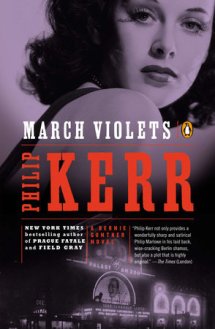 When Bernie gets smart with him, the officer observes that “the ability to talk as toughly as your fictional counterpart is one thing … Being it is quite another.” I can’t imagine any reader of March Violets
  We have had more storms since the last time I posted but happily no more storm days, so we are still on schedule … for now! (In fact, things are looking
  I really did enjoy rereading the novel this time, especially the reliably hilarious as well as deliciously subversive final encounter between Elizabeth and Lady Catherine. One thing we spent a fair amount of time on in class is the way Austen manipulates us into liking or disliking characters, only, much of the time, to undercut or at least complicate our “first impressions” so that we realize we are vulnerable to the same interpretive mistakes as the characters. In this respect I think even Mr Collins gets a bit of a reprieve from our initial distaste. Not only is his offer to Lizzie actually quite honorable, despite also being laughable, considering he has no obligation to make up to the Bennet sisters for the future loss of their home, but at Hunsford we see that while he is still absurd, he treats Charlotte well and has made it possible for her to live a dignified life. I don’t think there’s any backtracking on Lady Catherine, though: she remains an antagonist to that bitterly delightful end:
 In British Literature After 1800 we are still reading poetry and I am still struggling with “how to balance attention to context and content with attention to form,” as I put it in
  This is hardly a radical strategy, including for me. I do often (and did this term) provide study questions for the novels in my 19th-Century Fiction classes, for example, to help students organize their observations as they read the long books–to know what, of all the many details flooding past them, to really pay attention to. But I also find it pretty easy to ask questions in 19th-Century Fiction that will get at least some answers, and usually lots of them, because we always have plot and character as starting points, from which we can level up to questions about form and theme. Maybe because I don’t teach poetry often, I underestimated the difference it makes to be working on, not just poetry, but poetry much of which is in a somewhat archaic diction. My impression (though I may be mistaken) is that many of the students are struggling with the literal meaning of the poems–their basic paraphraseable content. Perhaps, too, the variety in our reading list that keeps things interesting for me (and is to some extent necessitated by the survey format) is making things harder for them because each poet is so different and thus makes different demands on our attention as readers. With that in mind, in the study questions I came up with I tried to make the assigned poems more legible for them, combining questions about theme with prompts to consider form, and making some connections across the poems.

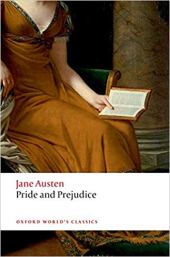 We are well into Pride and Prejudice in 19th-Century Fiction this week and I have to say that while
 In British Literature After 1800 we are skipping briskly through our small sample of Romantic poets. The rapid pace is at once the blessing and the curse of a survey course with a mandate to span more than 200 years of writing in multiple genres: we don’t spend long enough in any one place to go into a great deal of depth, which means we also don’t spend long enough on any one topic to get tired of it. I enjoy the variety myself, including the chance to talk about genres and examples that don’t come up in the courses I teach more often–such as Romantic poetry! In fact, because the introductory courses I’ve taught for the last several years have been either Introduction to Prose and Fiction or Pulp Fiction, I’ve spend hardly any time on poetry at all except for Close Reading, and the last time I taught that was Fall 2017. So I’m having fun, but also feeling a bit wobbly about how to balance attention to context and content with attention to form.
 Novel Readings