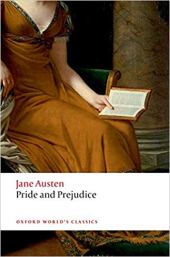
 We are well into Pride and Prejudice in 19th-Century Fiction this week and I have to say that while my reservations about teaching a novel that is so intractably popular remain (and I have seen some of the same symptoms of dealing with a ‘fan favorite’ in class discussions as in the past), overall I think it’s going well. I am certainly enjoying the novel, and the energy in the classroom seems very good: participation is robust for so early in the course, which may of course be a side-effect of that same level of pre-existing comfort that sometimes makes the novel hard for students to approach critically.
I am continuing the effort I’ve been focused on in recent years to wean myself from my lecture notes, and that too is helped by my own familiarity with the novel and the questions I want us to gnaw on collectively. Looking at the fairly detailed notes I have used before, I see that the price (if that’s the right word) of loosening my grip is giving up the more careful “laying out of interpretations” that I used to do, which I always thought of as usefully modeling the construction of literary arguments and the use of literary evidence. Our more free-wheeling discussions–though never, I hope, simply unfocused or scattered–do not necessarily “add up” in the same elegant way that is possible if I’m really controlling the pace and flow of information. The benefit, however, is having the students generate more of the material and then see (as I do my best to organize and shape it on the fly) that they know how to proceed towards those kinds of conclusions themselves. The other thing I’m trying to remember to do is explain the process of our class time in a way that connects it to the process for their assignments–this is something that I realized some years ago that I was taking for granted but needed to make explicit. A key point about process I make over and over is that students often try (as I see it) to skip steps when they begin work on an essay assignment: often when they come to see me I realize that having chosen their topic, they think their next step is to come up with a thesis statement and then work back through the novel to figure out how to support it. As I point out, that’s backwards: a good thesis is much more likely to emerge from their rereading, thinking about, and doing some open-ended writing about the novel with their topic in mind. Their method accounts for why we so often see the best version of an argument in the conclusion, rather than the introduction, of student papers–because that’s the point at which they have actually worked through their ideas and examples closely enough to realize what they want to say. 
A minor point of concern about how the popularity of Pride and Prejudice might affect the rest of the course is that in a show of hands yesterday it looked like nearly half of the students have decided to write their first essay on it (they get to choose among our first four novels for this assignment). That might be as much about wanting to get the essay done early, before they are busier with their other courses. Whatever the reason, though, it’s a much larger proportion of the class than usually does any one novel, never mind the first one of the term. I really hope it doesn’t mean they will be less engaged with our next books, especially Waverley. They will have to write short tests on all of them, which is one of the coercive elements I build into the course requirements in the interests of sustaining everyone’s attention. Of course, I always hope that our books and conversations will keep everyone’s attention because the novels are great and the discussions are interesting! But I’m not naive enough to think those intrinsic qualities will be enough to coax everyone along.
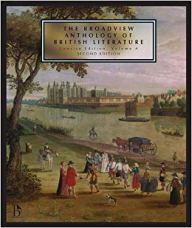 In British Literature After 1800 we are skipping briskly through our small sample of Romantic poets. The rapid pace is at once the blessing and the curse of a survey course with a mandate to span more than 200 years of writing in multiple genres: we don’t spend long enough in any one place to go into a great deal of depth, which means we also don’t spend long enough on any one topic to get tired of it. I enjoy the variety myself, including the chance to talk about genres and examples that don’t come up in the courses I teach more often–such as Romantic poetry! In fact, because the introductory courses I’ve taught for the last several years have been either Introduction to Prose and Fiction or Pulp Fiction, I’ve spend hardly any time on poetry at all except for Close Reading, and the last time I taught that was Fall 2017. So I’m having fun, but also feeling a bit wobbly about how to balance attention to context and content with attention to form.
This problem wasn’t helped by last week’s snow storm, which cost us a class meeting. Because I didn’t want to cut back time on specific poets any more than the survey format already requires, I decided to sacrifice the class I’d set aside to talk about poetic form, including scansion. I’ve been trying to make up for this by integrating discussion of poetic form into our other classes, which of course I was going to do anyway but not starting from scratch. The students have a varying degree of experience with things like scansion: some of them are clearly at home with it, and with talking about poetic devices and forms, while others have looked bemused, frustrated, or completely blank when asked to think or talk about these aspects of our readings. Well, all we can do is keep moving along: I hope that with repetition and coaching from me and practice from them, we will all get more comfortable. For yesterday’s class I decided to do more of the talking myself than I had on Monday because on Monday it seemed to me a lot of them were still very uncertain about what it meant to discuss the relationship between form and meaning in poetry: it’s a bit harder (in my experience, anyway) to teach this through open-ended discussion with poetry than with fiction, where you always have the option of starting with “easy” things like plot and character as a way of opening up thematic and structural issues. I also point out that those of them who feel completely at sea need to put in some time: our readings so far have been quite short, which may be deceptive in terms of the amount of work it requires to read them well.
We’ve read some Wordsworth, some Shelley, and some Keats so far. Tomorrow we’re doing a small cluster of poems by Felicia Hemans and EBB on women and poetry, and then next week we’re on to the Victorians–some Tennyson, some Browning, and a cluster on faith and doubt including some Arnold and Hopkins and some excerpts from In Memoriam. Fun! I hope they think so too.
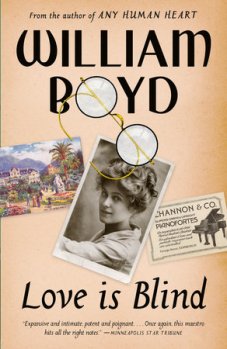
 One distinctive aspect of Love Is Blind is its preoccupation with music. I expected this to bring a more transcendent dimension to the novel–life may be flat, but melody elevates it, or something. Brodie’s own relationship to music is mostly mechanical, though: while he works for a piano virtuoso, his job is weighting the keys and perfecting the piano’s pitch, not rhapsodizing over the results, and the pianist himself is elated at his own skill but conveys no spiritual and hardly any emotional connection to the music he produces. I found this disappointing; it made me think again about other novels about music that made me more excited about it, such as
  Given the cyclical nature of the academic life as well as the recurrence of texts and topics in the classes I teach most often, there are lots of things I might be saying “Not again!” about! This week, however, the particularly irksome repetition is the disruption to the start of term thanks to a big storm–not
  So what, besides calming my nerves (and perhaps theirs as well), is on the agenda for our remaining classes this week? Well, in British Literature After 1800 Friday will be our (deferred) Wordsworth day. In my opening lecture on Monday I emphasized the arbitrariness of literary periods and the challenges of telling coherent stories based on chronology, the way a survey course is set up to do. But I also stressed the value of knowing when things were written, both because putting them in order is useful for understanding the way literary conversations and influences unfold, with writers often responding or reacting to or resisting each other, and because historical contexts can be crucial to recognizing meaning. My illustrative text for this point was Wordsworth’s “I Wandered Lonely As a Cloud,” which (as I told them) is the first poem I ever memorized, as a child. It was perfectly intelligible to me then, and it is still a charming and accessible poem to readers who know nothing at all about what we now call ‘Romanticism.’ Without historical context, it seems anything but radical–and yet Wordsworth in his day (at least, in his early days) was considered literally revolutionary. His poetry “is one of the innovations of the time,” William Hazlitt wrote in “The Spirit of the Age”;
 In 19th-Century Fiction it’s time for Pride and Prejudice, though I’ll start with an abbreviated version of the lecture I would have given on Wednesday on the history of the 19th-century novel. It has been several years since I’ve taught Pride and Prejudice (
 There’s no doubt that if I were teaching Mansfield Park these questions would be a big part of our discussion, as they are when I teach The Moonstone. I haven’t so far arrived at any ideas about how — or, to some extent, why — we would take up this specific line of inquiry in our work on Pride and Prejudice. Perhaps I am too prone to let the novels I assign set their own terms for our analysis–to rely on their overt topical engagements more than what they leave out or obscure–but this particular novel doesn’t seem to be about race and empire, even though its characters live in a world where these things (while never, I think, explicitly mentioned) matter a lot. Beyond acknowledging that fact,
  Ring out the old, ring in the new,
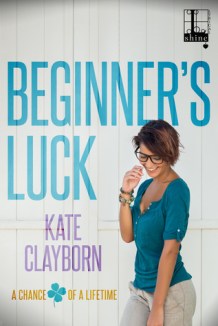 The first time I read Beginner’s Luck I felt that there was so much going on that it got a bit distracting. Maybe this has something to do with my expectations for romance: though there is a lot of emotional intensity in Clayborn’s novels, the central relationship is embedded in a lot of what seemed like padding. It turns out, though, that for me anyway this is exactly what makes her books fun to reread, as more of the novels’ patterns–the connections between their parts–become clearer over time. At the same time, it’s the emotional intensity that means I give a pass to what might otherwise bother me about them, which is that the love story relies (more so in the second and third books in the trilogy than the first) on an initial set-up that seems, if you think about it hard at all, pretty contrived or unlikely. This is especially true of Luck of the Draw, which has nonetheless turned out to be my favorite of the trilogy.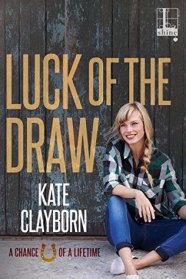
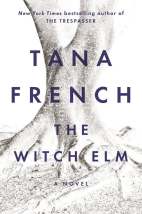 The Witch Elm has been written about a lot elsewhere; of the reviews I’ve read, I think
  For some reason I had it in mind that 2019 had not been a very good reading year for me. Then I went back through my blog posts and discovered that, while there isn’t really one stand-out “best of the year” the way there sometimes is, there have been plenty of reading highlights, and hardly any outright duds. (That in itself is a good enough reason to keep blogging, if you ask me.) According to my book math, that means that overall 2019 has actually been a better than average reading year! Here’s a look back at some of its greatest hits, some also-rans, a few minor disappointments, and some failures (maybe mine, maybe the books’).
 William Trevor’s
  Sarah Hall’s
  Reading
  I found
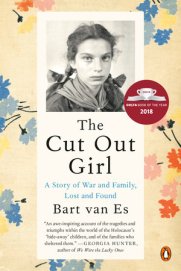 I really admired–and was ultimately quite moved by–the careful self-effacement of
 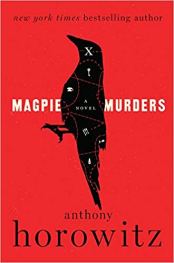 I had fun reading Anthony Horowitz’s
 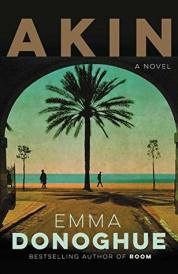 My review of Emma Donoghue’s Akin will be in Canadian Notes and Queries in the new year. I enjoyed reading it quite a bit: even though I found it somewhat contrived, Donoghue is a good enough storyteller to carry me along. It made me think, though, about why
 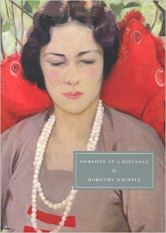 I absolutely love the idea of Persephone Books, and it is thrilling in principle to see so many publishers devoting themselves now to bringing back “lost classics.”
 I am not a very good reader of Virginia Woolf’s fiction, and
 The End!
 2019 began with a lot of thinking about teaching, because I was on sabbatical for the first half of the year and that meant the great luxury of time away from teaching itself. Sometimes in the past the result has been
 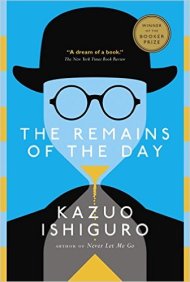 I finally settled on Great Expectations and The Remains of the Day for the representative Victorian and 20th-century novels in the survey course, partly because I love them both and feel confident about teaching them and partly because along with Three Guineas (which will be a new teaching text for me), I could imagine a range of thematic continuities within this set of readings that would work well for final essay assignments–ideas of class and social mobility; social insiders and outsiders, deference, domination, and political power; the relationship between money, privilege, and moral freedom; art and language as vehicles for advocacy or subversion; social order, resistance, and fascism. We’ll see how it goes!
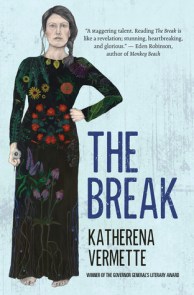 One of the questions I struggled with as I finalized my book order was
  I thought Women & Detective Fiction went well. I feel less satisfied about Pulp Fiction, mostly because I found the change from 90 (which already felt too big) to 120 students pushed the class past a tipping point for the kind of pedagogy I want to and tried to practice. Part of the problem was just logistical: much as I believe in the value of doing lots of small-stakes exercises to maintain engagement and give frequent opportunities for writing and feedback, I don’t think I can continue with some of my habitual versions of this (such as regular reading journals). The thing about scaling up class sizes is that while the regulations for Writing Requirement classes mean that we have TAs for every 30 students, in practice this only means that we hold steady in terms of the number of finished essays we mark. Everything else remains the responsibility of the professor, from recording attendance and marking exams to handling accommodations and plagiarism cases. As a result there’s no question that larger classes (despite superficially maintaining that 30:1 ratio) are more work for the instructor. (Also, despite my best efforts to address the issue in more effective ways, subbing in The Big Sleep for The Maltese Falcon, while a nice change for me, did not dramatically decrease
  The worst part of the increase in class size for me is that I don’t like teaching (especially teaching first-year students) in a large lecture hall. This is not just about my personal comfort–in fact, I am reasonably confident when giving formal lectures, which have the advantage, from a purely self-interested perspective, of ruling out the unexpected! But my preferred teaching style is interactive, because the back and forth between us reflects the way I think we actually learn to do (and improve) the kind of analysis central to literary studies (through
 And now, on to next term. It is finally time to actually teach the Brit Lit survey and see how my decisions work out (including which readings to include in the nice custom reading Broadview Press put together for us); I’m especially looking forward to covering some poetry, which I rarely get to do. My other course this winter is 19th-Century Fiction from Austen to Dickens: this year’s books are Pride and Prejudice, Waverley (look at that handsome new edition!), The Tenant of Wildfell Hall, Mary Barton, and Hard Times. I’m actually eager to get started: both are small-ish classes (around 35) and I know there will be at least some familiar faces in both as well.
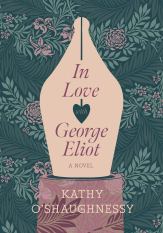 I am trying not to feel dissatisfied with the writing I did in 2019. For one thing, I deliberately took a step back from a certain kind of ‘productivity’ in order to develop ideas about what I hope will turn into some worthwhile projects. This kind of
 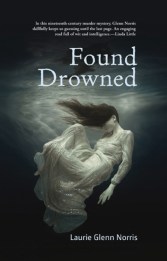 In any case, as it turned out, all of my publications in 2019 were reviews. For Quill & Quire, I wrote about Antanas Sileika’s
  This isn’t really a bad run of reading and writing: there wasn’t any point in 2019 when I didn’t have a review underway in addition to whatever other work I was doing. I think one reason I nonetheless feel disappointed about what I have to show for 2019 is that although many of these books engaged and interested me, none of them excited me the way that, for example,
  I did publish one more substantial thing this year:
 The emphasis on the house’s stasis tripped me up: in thirty years, things must, surely, have been rearranged, reupholstered, replaced. If it’s a house, not just a literary device, then it should have changed over time, reflecting the lives lived in it and the wider life outside of it. Danny and Maeve have certainly changed, even finally giving up their frequent trips to stare at their former home with a potent mixture of nostalgia and resentment about their disinheritance. This visit should figure–and in fact it does–as a chance to measure that change and to put their memories of the Dutch House into perspective.
 I realize that this is a perfectly obvious reading of The Dutch House: I’m sure I’m not the only reader to fixate on the house itself as symbol rather than setting. Perhaps reading it near Christmas is what made me feel that backwards pull so strongly–at this time of year especially I recognize in myself a similar temptation to dwell in (or on) a childhood space that may have been imperfect but in retrospect seems so certain, so much a part of my current identity even though it is no longer the setting for my life. Because Danny and Maeve are shunted unceremoniously out of their home, the abrupt transition makes it particularly hard for them to move on. Even as they make new homes and family ties they seem somehow stunted or unfinished as adults, while they keep going back and back again to brood about a place where they no longer belong.
 Is it true that Eunice Parchman–and her accomplice, the same friend the unknowing Coverdales tried to keep away from their home–killed this hapless family “because she could not read or write”? Rendell’s striking opening is as much provocation as declaration, I think. It is certainly true that Eunice’s illiteracy haunts, shames, and distorts her life. It is easy to imagine a version of her story in which, as a result, we pity her and direct our antipathy at a society that repeatedly fails her–fails to educate her, fails to support her, fails to make it safe for her to overcome this debilitating disadvantage–while she retreats into the safety of suspicious solitude:
 Rendell’s opening line is thus a bit of a feint, I think: it seems to set up a novel about the consequences of social and educational failures, but unlike, say, Dickens’s account of Magwitch’s history in Great Expectations, she doesn’t really account for Eunice’s criminality on those terms alone, leaving us to point the finger at ourselves for creating an uncaring system that generates criminals where there should have been (and still could be) a caring human being. Eunice seems irredeemable; Rendell doesn’t make a convincing case that she would have been a different person–and the Coverdales would have lived–if only she could read the printed word. It’s hard to be sure, though, and maybe that’s the question Rendell means to leave with her readers.
 Maybe the Grant – Ellmann (dis)connection is a red herring. Certainly I’m not in a position to sort it out definitively until (unless) I finish Ducks, Newburyport. For now I really just want to report how much fun I had reading Come, Thou Tortoise, a book I never would have picked up if a wise and witty student hadn’t recommended it to me. It looks twee, for one thing, plus it’s about Newfoundland and I don’t usually get along well with
  Ellmann’s main complaint about Come, Thou Tortoise is that “somewhere along the way, any real feeling for people goes astray.” Though I can see why Ellmann isn’t able to go along with what she uncharitably calls the novel’s “swill of sweetness,” I think she is just wrong about its lacking real feeling. There is a great deal of tenderness in it, for one thing–though perhaps that’s too close to sentimentality to be what she means. More than that, for all Audrey’s oddities and the comic delights they provoke, the novel is quietly profound about grief. Looking for her lost mouse Wedge (a refugee from her father’s research on longevity–a motif with its own emotional weightiness in the context of his premature death), Audrey goes into her father’s room for the first time since she came home:
 Novel Readings