I’m not sure whether I’m surprised that it has already been three weeks since we began extreme social distancing here or surprised that it hasn’t been even longer — normalcy itself seems so distant now! It seems remote in both directions, too: hard as it is to think back on the relative simplicity of ordinary life before, it is even harder to look ahead because there is so much uncertainty about when and how those conditions will return. That’s as good an argument as any for trying to take this massive disruption one day at a time, which is certainly what I have been trying to do. My success varies, as does my ability to get through each day with anything like the (again, relative) equanimity and focus I used to have.
I have done a decent job (I think and hope) at sorting out my classes, at least. Over time it has gotten easier to let go of the plans and expectations that originally shaped them, which in itself is a necessary kind of progress, I guess! I chose the simplest way possible to deliver additional material: rather than recording lectures or trying to wrangle synchronous or interactive components at such a chaotic time, I’ve been making up PowerPoint slide sets in which I have tried to balance information and explanations of my own with questions, pointers, and suggestions for how to keep thinking about the class material. This has been primarily a finishing-up exercise, focused on texts we had already begun work on in class, which helps: the overall direction of our inquiries had been set. It has taken a lot of work, though, partly because I ordinarily use PowerPoint (when I use it at all) to supplement or illustrate or outline our classroom conversation, not as a stand-alone component: I’ve had to think very hard about how to use each slide, how to shape the overall presentation, and of course how exactly to say everything, as I’m not there to clarify, correct, or elaborate. Now I’m moving on to review materials for the students who have opted to write the take-home final exam, and of course I also have to make up the exams themselves — and I have papers to mark, too, an activity that seems a lot more attractive right now than it sometimes does because, unlike almost everything else, it is exactly the same process as ever.
One of the many ways I feel very fortunate right now is that neither of my classes this term is very large. If my teaching load were heavier (as was the case last term, and as is the case for some of my colleagues now), this would all be much harder. Although I am trying not to look too far ahead right now, it is impossible not to be conscious that there are no guarantees that our fall term, including my large first-year writing class, won’t be at least partly online as well. I would not want to teach any class, never mind a writing class, entirely through slide sets, of course! What we have been doing this term is handling an emergency situation as best we can, which (as many people have reiterated in online discussions) is not the same as a purposeful transition to online teaching with due diligence around best practices for learning, engagement, assessment, and accessibility. Everything I have read about online teaching tells me that it takes more time and more planning (and more resources) to do effectively than face to face teaching. Much as I hate the thought of it, because I love being in the classroom so much, it seems foolish to put off learning more about those best practices in the hope that I won’t need to, so I’ve signed up for a course we’ve just been offered through the university (itself asynchronous and online) on ‘online design and delivery.’ Part of the appeal (besides the professional obligation to keep doing my job as well as I can) is taking at least a bit of control over the situation: maybe I can approach the possibility of taking my classes online as a creative opportunity, albeit an unwelcome and unsought one!
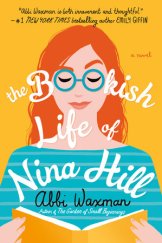
I haven’t been able to do much really attentive reading since I finished Threads of Life last week. There’s not really any good reason for this: it’s mostly lack of willpower as much as nervous distraction! But my sister thoughtfully sent me a selection of tempting lighter reads for my birthday (along with a lovely assortment of other treats!) so I’ve been making my way through these, including Grace Burrowes’ The Captive (she’s a new-to-me historical romance novelist, and I enjoyed this one enough to put some others in the series on hold at the library – ebooks, of course, since the physical library is closed!) and Abbi Waxman’s The Bookish Life of Nina Hill (which is charming, if almost too much so – its premise and plot are cute enough that I think the book would actually be better if Waxman didn’t try so hard to be funny–or ‘bookish,’ which inevitably means, among other things, lots of handwaving to obvious fan favorites like Pride and Prejudice – see also You’ve Got Mail, for example). I also read a short book I’ll be reviewing – Seishi Yokomizo’s The Honjin Murders – so that was not just distracting but also productive!
Like most avid readers, I always have a good selection of unread books on my shelves, but like Colleen I’ve been finding them somehow not quite what I want. In some ways this is a familiar problem for readers: sometimes you just have to wait for the right moment to read a particular book! I’ve had books on the shelf for literally decades that one day just suddenly leapt into my hand, or at least into my awareness, as if at last they were perfectly ripe for reading. But right now it may also represent the difference between choosing books just because they look interesting and choosing books to read when the world is in crisis. Thanks to the King’s Coop Bookstore, whose lovely manager is doing home deliveries by bicycle, I now have Miriam Toews’ Women Talking and Emily St. John Mandel’s Glass Hotel to hand, and I’ve also just sorted out my copy of The Mirror and the Light, which had been stranded in a closed Coles but is now en route to me by mail. I feel that familiar readerly tickle of excitement just naming them here, so hopefully I’ll be deep into one of them soon and that will help my one-day-at-a-time coping strategy feel less grim and more grounded. After all, reading has been the one constant through all the changes in my life, good and bad. It’s not going to let me down now.
So, that’s where I am: trying to keep my head in the moment and not let myself spiral into frantic ‘what if’ or ‘what next’ scenarios, and trying to appreciate the good fortune that means I still have my job, even if for now I can’t do it on the terms I’d like, and to focus on all that we have, rather than what we can’t do. I continue to be grateful for the community of readers I belong to through blogs and Twitter: as so many of our relationships have always been at a distance, in this at least I feel the comfort of continuity.
Here too are the embroiderers’ own responses to what they sewed, to the scenes they had to revisit: tenderness in the stitching of a hapless group of unarmoured archers battling for survival beneath the thundering hoofs of horsed nobility; empathy for the yowling dog guarding King Edward’s deathbed; sadness in the gloom of the stilled fleet of ghost ships beached below Alfred shortly before he gains the throne; all set among the poignancy of loss in the borders’ motifs of fettered birds, hunted deer and predatory beasts. They elicit an emotional response, encouraging humanity across the centuries. This is the power of these stitchers, who, with just needle and thread, wool and linen, captured human experiences which, 900 years on, still move us.
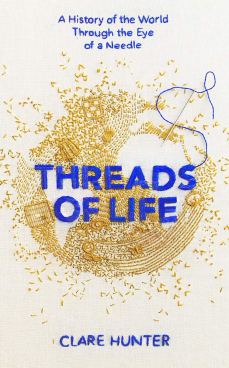
Clare Hunter’s Threads of Life is a marvelous, inspiring, touching, and extremely wide-ranging account of the myriad ways needle crafts of all kinds have mattered and made meaning throughout history. It is as much a manifesto as a work of scholarship, for reasons that are often touched on in the book but nowhere more explicitly than in the opening to her chapter “Value”:
A guest writer has been invited to host the creative writing group I have recently joined. He asks us to introduce ourselves and say a little about what we are working on. As each member outlines their memoir, crime thriller, historical novel or their collection of short stories the writer nods encouragingly. Then it is my turn. I tell him I am writing a book about the social, emotional and political significance of sewing. The writer doesn’t nod. Instead, he pauses, leans forward and places his elbows on the table, then slowly interlaces his fingers. ‘Ah yes’, he says. ‘I can just see me asking my local bookstore if they have that bestseller on social, emotional and political sewing’. His look towards me is pitying.
Though after hearing her read an excerpt about her “discovery of an old patchwork quilt” the writer comes round, admitting he “finds it moving and interesting” and that “it reveals a world he knows little about,” Hunter leaves the group: “There are only so many battles I have the spirit to fight.”
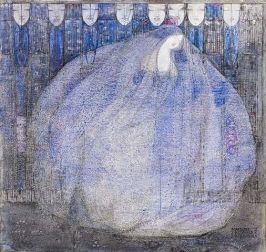
Margaret Macdonald, The Mysterious Garden (1911)
Time and sexism are needlework’s two great antagonists in the story Hunter tells, the first constantly threatening the intrinsic fragility of works made of fabric and thread, held together only by stitches, vulnerable to fading, tearing, fraying, disintegrating; the second constantly either refusing or usurping its standing as art, treasure, or historical artifact. Museum curators turn down collections that are then dispersed or lost forever. Women’s achievements — such as those of Margaret Macdonald (“my chosen muse, my guide), who was married to Charles Rennie Mackintosh — are subsumed into their male partners’ careers or otherwise discounted or ignored:
The Willow Tea Rooms on Glasgow’s Sauchiehall Street are now being restored. The renovations are screened by large hoardings that feature full-sized portraits of Charles Rennie Mackintosh and Kate Cranston. There are none of Margaret. . . I ask about Margaret Macdonald; why is she not pictured outside? The woman I speak to is confused. She has never heard of her. ‘This was her work too,’ I say, ‘as much as that of Rennie Mackintosh.’ . . . How long does it have to take, I wonder to myself, for women artists to be properly and fairly acknowledged?
Yet though Hunter is often, and rightly, angry that it remains necessary to defend and explain and justify and restore the value of stitchery of all kinds, overall Threads of Life is more celebratory than confrontational. It makes the positive case for sewing’s “social, emotional and political significance,” and for its artistic significance as well, through its many accounts of what (mostly, though not exclusively) women have made with their needles and why this work has mattered.
Hunter’s chapters are organized thematically, which is effective if also, cumulatively, somewhat dizzying: their headings include “Power,” “Identity,” “Connection,” “Protest,” “Loss,” “Place,” “Art,” and “Work,” and in each she draws from different regions and periods to illustrate how stitching has contributed to communities and movements across history and around the world. Displaced Palestinian women in refugee camps first “safeguarded their village stitches” and then began to mingle styles, indicating “changing sensibilities, a strengthening of a national consciousness.” Women prisoners of war in Singapore used “sewing as a subterfuge to stay in contact with their menfolk.” The Soviet Union repressed nationalist expression in Ukraine, including “the wearing of national costume”; by insisting instead on a “secularised and theatricalised version,” they “engineered a natural loss of embroidery practice and knowledge” that had to be reclaimed after independence. Suffragettes in the early 20th century carried banners “sewn in ravishing needlework, employing the most beautiful of fabrics — brocades, silks, damasks, and velvets — and using materials deliberately displaced from the privacy of the drawing room to the public arena of demonstration.” Story-cloths made by the Hmong, “an Asian ethnic group of undisputed cultural antiquity” who have faced “centuries of ethnic division, warfare and enforced migration,” tell their stories “of stable rural life, village bombardment, jungle marches, the treacherous crossing of the Mekong River and their meagre existence in refugee camp.”
Stitching has been used for commemoration, solace, and survival, to record personal losses and as a means of political protest and consciousness raising. The NAMES Memorial Quilt became a focal point for raising awareness about AIDS: “it played its part in raising funds for research, better sex education, preventative measures and effective drugs.” Under Pinochet’s harsh rule in Chile, women created arpilleras (“embroideries sewn on burlap”) telling “of their own experiences, of kidnapped sons and daughters, of their search to find them, of the loneliness of not knowing what had befallen loved ones.” At first the regime overlooked these deceptively cheerful-looking crafts “as tools of subversion”–sexism providing women protective camouflage. But once their subversive intent was clear, “the women were followed, their homes raided.” Esther Krintz and her sister survived the Holocaust by pretending to be Catholics; the rest of her family was murdered by the Nazis. “We know this story,” Hunter tells us, “because Esther sewed it down”:
Her scene of when the Nazis arrived in Mniszek in September 1939 has her grandmother in a crisp sprigged apron standing on the steps of her lace-curtained house, her grandfather’s shoe lying where it fell as he was dragged from his home. Esther and her two sisters are tidy in floral dresses and plaited hair, watching helplessly as their world changes.
It was long after the events she records that Esther created her embroidered memoir, choosing “sewing as an act of restoration”. Needlework itself also takes time:
The choosing of a fabric, its cutting out to shape different images — the leaves of a trea, the bright red bow of a girl’s dress — have to be carefully done. The needle lingers and the stitcher is forced to pause from time to time to re-thread a needle, pick out and cut a new piece of thread, decide what to embroider next, what colour or stitch to use. It allows space for reminiscing, for remembering. So it must have been for Esther Nisenthal Krinitz on her slow journey of re-creation; one stitch a commemoration, and the next a farewell.
Embroidered Panel by Mary, Queen of Scots (V&A)
We get to know a lot of individual stitchers besides Esther, from Mary, Queen of Scots — embroidering away her long years in captivity and persistently, as Hunter points out, using her stitched signatures to assert her royal rights and claims — to Mary Lowndes, who “set up the Artists’ Suffrage League to supply the suffragette cause with bold, eye-catching campaigning artwork,” or Elizabeth Snitch, who “embroidered her Map of the County of Bedford Divided into its Hundreds in 1779 when she was twelve.” Elizabeth is one of many girls whose samplers point to more didactic or repressive uses of needlework, especially as it became singled out as women’s work and used to teach and discipline girls who might have preferred other modes of self-expression.
Richard Redgrave, The Sempstress (1846)
Hunter doesn’t avoid other less inspiring facets of the history of her subject, including the dire conditions of seamstresses in Victorian London whose plight inspired Thomas Hood’s famous poem ‘The Song of the Shirt.” Class is often an element in how different kinds of needlework are seen and valued, as is race: for instance, Hunter looks at examples of the often detrimental effects of missionary or imperial incursions that forced changes to indigenous crafts and traditions. Economics play a big part in the story, especially around the transformation brought about by the invention of the sewing machine, which (like so many mechanized ‘solutions’) did not ultimately free people from labor but instead changed both the pace and the nature of their work. One of the costs Hunter emphasizes is the loss of the sociability needle workers had traditionally enjoyed:
Until the invention of the sewing machine, sewing had been companionable. Whether grouped with other women or sitting with the family, a woman could sew and still converse. The advent of the sewing machine changed how and where sewing was done. It became a solitary occupation at home, the silent chore of home workers or the toil of factory workers sewing in places where, amid the clang and clatter of machinery, conversation was impossible.
But, she goes on to note, it also gave women a rare opportunity for “independence and financial freedom” as they could establish themselves as dress makers on their own and work “no longer prey to the vagaries and exploitation of employers.”
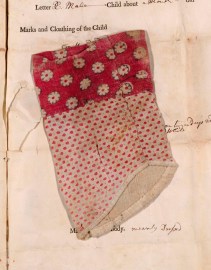
Threads of Life covers so much it would be better for you to read it yourself if you’re interested, rather than for me to keep giving more examples! But there are two others I want to just touch on, because I found them so interesting, and because they represent the two poles of needlework that Hunter’s book moves between: the intensely intimate and personal keepsake, and the deliberately calculated public display. The first, of the former kind, is the “billet book” she looks through from London’s Foundling Hospital. Mothers who left their babies there were “encouraged to leave tokens, both as a memento and as proof of parentage” in case they were ever able to come back and find their child. The result is an intensely touching record of “that moment of choosing, of mothers deciding what remnant of themselves to leave, how best to communicate love, regret, hope, a small explanation to the child they will never see again”:
The tokens are tiny, just an inch or two of cloth, snipped from a shawl, a skirt, a blouse, a bonnet ribbon . . . Many are grimed in dirt, some thinned with wear, most dulled by poverty. . . . One child was left a pale blue satin-soft rosette. In the company of the other, more austere tokens, it appeared as luxuriant as a full-blown rose.
It’s a record of heartbreaking pathos, but at least one such story had a happy ending: “One woman, Sarah Bender, came back eight years later clutching her half of an embroidered heart and was reunited with her son.”
My last example, at the other extreme, is Hunter’s discussion of Judy Chicago’s “The Dinner Party. I knew a bit about this famous art installation, but only vaguely, and not enough to understand that needlework played a big part in its concept and execution. My ignorance is no doubt partly because, as Hunter’s commentary explains, much of the significance of Chicago’s designs got lost in the (mostly male) critical fixation on the dinner plates, which are all I knew any details about. “The history of art,” Hunter acerbically notes,
is awash with graphic and stylised representations of male genitalia. But when Judy Chicago put vaginas on her plates the critics and curators of the art world were aghast. She had stepped across an invisible threshold of gendered taste, its male gatekeepers appalled that such a normal feature of women’s physicality should feature within an artwork dedicated to women’s lives.
But the plates were just part of the overall work, which included “large fabric runners to each place setting which referenced–symbolically and pictorially–each woman’s chronological place in history and provided greater insight to their narratives”:
A wide variety of needlework techniques was embraced. This was no tokenistic application of sewing to enhance the Dinner Party’s visual effects. Each runner was thoroughly researched, carefully considered and exquisitely executed: stitchers translating Chicago’s graphic designs to texture and colour through myriad sewing techniques, painstakingly finding ways to overcome technical challenges. It took two years to complete the runner for Hatshepsut (1503-1482 BCE), the female Egyptian pharaoh of the XXVIII dynasty, made from the finest linen and embroidered with hieroglyphic characters in praise of her reign.
Hatshepsut is also the subject of one of my longtime favorite historical novels, Pauline Gedge’s Child of the Morning, and this was one of many moments when the intrinsic interest of Hunter’s book was enhanced by ways it connected to longstanding interests of my own. In fact, my favorite chapter in my Ph.D. dissertation, which in an expanded form became my first book, was about real and metaphorical needlework in books by 19th-century women historians. It was prompted by my noticing how often needlework came up in works like the Strickland sisters’ Lives of the Queens of England as well as in reviews of them, and by discovering Elizabeth Stone’s 1840 book The Art of Needlework:
As Stone moves needlework from the margins to the mainstream of history, the figure of embroidery that for the male critics captured the combination of triviality and femininity characteristic of the new historiography becomes a symbol of true historical significance . . . Stone’s written account of needlework across cultures and through the ages accomplishes many of the same ends needlework itself furthered, particularly establishing or invoking a community of women whose common interests and skills unite them despite their many differences–urging a gender bond that transcends class barriers, historical distance, and ethnic variation. . . .
Hers is not a story of progress but of kinship, and her shifts from topic to topic, her accumulation of like examples and related incidents, reproduces in her pages the fellowship between women across the ages and across geographical and cultural divides fostered by the art of needlework and celebrated in her book.
Hunter does not mention Stone’s book (or mine, for that matter, though that’s hardly surprising!) but my description of The Art of Needlework fits Threads of Life almost as well. It is the kind of book that evokes both very specific appreciation of the art and craft it describes and a deep and far-reaching sense of community — both created with just needle and thread.
A sampler that now hangs (pressed and framed) in my office.
Slowly she set off in the direction of the Rosenlund Canal. In order to make herself look a little shorter and older, she stooped over her walker. She had pulled on a white fabric sunhat with a wide brim, which hid her hair and part of her face. No one took any notice of the elderly lady. . . . The best thing was that none of the people bustling about took any notice of her. An elderly lady out and about in the lovely weather didn’t attract much attention.
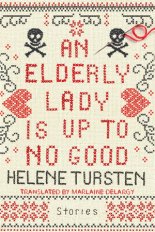
Maud, the protagonist of Helene Tursten’s An Elderly Lady Is Up To No Good, is a sly inversion of Agatha Christie’s iconic “elderly lady” detective, Miss Marple. Both are well aware that they are in the demographic least likely to be noticed or, if seen, taken seriously as decisive players in their own or anyone else’s life. While Miss Marple turns expectations of her irrelevance on their head with her ingenuity in solving crimes, Maud uses them to camouflage her guilt. A nimble octagenarian with all her wits about her, Maud uses canes and walkers to appear more physically feeble than she actually is (and also, when necessary, to trip, strike, or knock people down stairs). When pressed for information about a crime (or, as it often seems, a very unfortunate fatal accident) in her vicinity, she puts on a show of confusion that blends seamlessly with everyone’s assumption that she’s of no importance to their investigation:
A man who introduced himself as Head of Security at the hotel came over to ask Maud if she could tell him how the accident had happened. She told him she had been in the shower, and therefore hadn’t seen the woman fall.
“My hearing isn’t very good, and I had soap in my eyes. And the shower was running, so I didn’t hear anything. But maybe I sensed something, because suddenly I noticed her lying in the water. I . . . oh my goodness . . . sorry, I can’t stop crying . . . that poor woman . . . she was just lying there in the water. I couldn’t help her . . . she wouldn’t grab hold of my stick . . . all that blood . . . that poor, poor . . . ” she sobbed.
He patted her awkwardly on the arm and left her alone.
Reading about Maud’s evil deeds was wryly amusing, but I think the overall effect would have been a lot more interesting if she was more clearly either a straight-up villain or an avenger of wrongs ill-served by proper justice. One of her victims is an abusive husband, and so there’s some moral satisfaction in her scheme to take him out even though her actual motivation is just to end the disturbances his beatings create and get a little “peace at Christmastime.” Otherwise, she’s basically just going after people who annoy or disappoint her.
I suppose Maud’s ability to get away with her petty crime spree is a cautionary tale about the dangers of ageism and sexism, which contribute to obscuring the truth about people. But compared to the moral and psychological layers that emerge from Janina’s murders in Drive Your Plow Over the Bones of the Dead–to the thought-provoking questions Tocarczuk raises about how we decide who matters and who doesn’t and who, if anyone, should act in the interests of higher concepts of justice than the human–Tursten’s offering is pretty slight. It seems unlikely my book club will be meeting any time soon, but if we were able to, I’m not sure this book would give us that much to talk about. It is definitely entertaining, though, in that uncomfortable way that any relatively light-hearted treatment of violent crime can be. Tursten is a writer I’ve had my eye on for a long time: I’m still interested enough that eventually I will still try one of her full-length Inspector Huss novels.
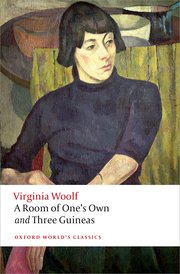
Like everyone else in the world (and how odd for that not to be hyperbole, though our timelines have differed) I have spent the past week adjusting to the unprecedented risks and disruptions created by the spread of COVID-19. Friday March 13 began as a more or less ordinary day of classes: the cloud was looming on the horizon, reports were coming in of the first university closures in Canada, and we had been instructed to start making contingency plans in case Dalhousie followed suit. But my schedule that day was normal almost to the end: I had a meeting with our Associate Dean Academic to discuss my interest in trying contract grading in my first-year writing class; I taught the second of four planned classes on Three Guineas in the Brit Lit survey class and of four planned classes on Mary Barton in 19th-Century British Fiction. The only real break from routine was a brisk walk down to Spring Garden Road at lunch time to pick up a couple of items I thought it might be nice to have secured, just in case: Helene Tursten’s An Elderly Lady Is Up to No Good for my book club, which I knew had just come in at Bookmark, and a bottle of my favorite Body Shop shower gel (satsuma! it is such a sunny fragrance)–hardly essential, but potential pick-me-ups for hard times to come.
Just before my afternoon class, however, we got the news that classes were being suspended as of Monday March 16: it’s a measure of how distracted I actually was, despite the veneer of normalcy, that I didn’t quite process the details and thought for a while that we would still be in classes at least until Wednesday (which is the date the memo told us to have our detailed plans ready for the rest of the term). The first scheduling casualty was the department talk scheduled for that Friday afternoon: I was supposed to be introducing what I’m sure would have been a very interesting talk from Tom Ue on ‘Gissing, Shakespeare, and the Life of Writing,’ but though Tom had come out from Toronto already, the decision was made not to go ahead with it. I suppose it’s true it would have been hard for people to settle down and pay attention, under the circumstances, not to mention inconsistent with the escalating imperative to ‘social distancing.’
So I packed up and went home–but still, I realized later, without having quite focused on what was happening. For example, I brought home not just the books we were in the middle of but the books that are (were) next on the class schedule, because it still seemed plausible that we would be doing something like actually finishing the courses as originally planned. And I did not bring home a stack of books that it might just be nice to have copies of at home–any of my Victorian novels, for instance. I own around a dozen copies of Middlemarch, and right now every one of them is out of reach! We are still allowed into our building, and I’ve been thinking I should go get one, and maybe some Trollope. I can’t tell if this really makes much sense, though. I mean, it’s not like I don’t have a lot of books to read right here with me, and I also have e-books of a lot of 19th-century novels because when I bought my first Sony e-reader, years ago, part of the deal was a big stack of free classics to go with it. So what if I don’t like reading long books electronically: I could get used to it. It would be a pretty low-risk outing, given that the campus is basically a ghost town at this point, but I think it’s really psychological reassurance I would be seeking, not reading material, and what are the odds that seeing familiar places I can’t really go back to for who knows how long would actually be comforting?
Anyway, it quickly became clear that the right strategy (and, to their credit, the one our administrators have been urging) is not to try to replicate electronically all of our plans for the last few weeks of term, including the final exam period, but to smooth students’ paths to completion as best we can: dropping readings and assignments and giving them options including taking the grade they have earned so far but still also allowing another chance to do better in as painless a way as we can think of. I think the options I came up with for my classes are pretty good, in these respects, but it may be that they don’t go far enough, because this is all turning out to be so much harder than it sounded a week ago–and of course however we might (or might not!) be managing, our students have their own specific circumstances which may make even the most “reasonable” alternatives too much. I have been feeling a lot of regret about the books we won’t get to, especially The Remains of the Day, which I was increasingly excited about as the capstone text for the survey class–what a good book to read right after Three Guineas! As for Three Guineas itself, I was so excited about teaching it for the first time. It’s definitely going back on my syllabus the next time it fits the brief. Sigh.
One of the most emotionally painful parts of all of this has been the abrupt severance of personal relationships, which is what teaching is really all about. I have put course materials together to get us to the end of our current texts, but it is much less rewarding scripting them than it is taking my ideas and questions in to meet them with and seeing what comes of our encounter. Sure, it doesn’t always go swimmingly, but that just means you try again, or try something different. I know there are ways to include more personal and “synchronous” interaction (as we’ve quickly learned to label it!) in online teaching, and of course as someone who spends a lot of time online I already believe that you can cultivate meaningful relationships without meeting face to face. There just isn’t time for that now, though, and also the demands those tools put on everyone to be available and attentive at the same time are all wrong for our immediate circumstances. It isn’t just about finding ways to get through the course material together either: there are students I have been working with for years who it turns out I saw in person for maybe the last time that Friday without even knowing it. I have been thinking about them, and about all of my students, so much since that hectic departure from campus and hoping they know how much I have valued our time together and how much I already miss them!
And now, I guess, it’s time to settle in to what people keep euphemistically calling “the new normal.” Here in Halifax we are under strong directions for social distancing; I’ve heard rumors that something more rigorous might be coming, in the hope of really flattening that infamous curve. There are lots of wry jokes and memes about readers or introverts or others whose habits and preferences mean they have been “preparing for this moment our whole lives.” We live a pretty quiet life ourselves, so to some extent this is true of us as well (though not of Maddie, who like many young people is going to be very well served by the various ways she and her friends can stay in touch virtually). It’s pretty different having to stay home, though, and also worrying whenever you go out, even if it’s only for essentials. It’s also not spring yet here–I envy my family in Vancouver the softening weather that makes walks and parks and gardens good options. I am grateful, though, that we are comfortable and together and, so far, healthy. I am also glad I did pick up An Elderly Lady Is Up to No Good, because I finished reading it this morning and it is a nice bit of twisted fun…about which more soon, I hope!
I’m thinking about all my blogging and Twitter friends a lot too and I am so glad we have these networks to keep us connected. May we take strength and comfort from each other even from our usual distance!
For some cheer in these challenging times, a post from the Novel Readings archives about one of the most joyful novels I know.
“We cast a shadow on something wherever we stand, and it is no good moving from place to place to save things; because the shadow always follows. Choose a place where you won’t do harm — yes, choose a place where you won’t do very much harm, and stand in it for all you are worth, facing the sunshine.”
A Room with a View is a novel that doesn’t just make me laugh but also fills me with a glow of what I can only call delight. Comedy alone (as I found with Mapp and Lucia) isn’t necessarily uplifting: too acid an undertone can compromise the pleasure and make you (or me, at any rate) feel a little smaller for having partaken. A Room with a View, however, is so humane, so forgiving — even in its satire — of the muddles we all make of our lives, that it always makes me feel better, bigger, more hopeful.
Zadie Smith quotes Forster calling A Room with a View “bright and merry,” and it is, but it never ignores shadows, darkness, or trouble. I was thinking, reading it this time, that its brightness really relies on its constant reminders that the light is always embattled, that its characters’ small struggles — to be, to do, to love, what is right and beautiful — are part of a wider struggle, the same one Dorothea invokes in Middlemarch when explaining her guiding belief to Will:
That by desiring what is perfectly good, even when we don’t quite know what it is and cannot do what we would, we are part of the divine power against evil — widening the skirts of light and making the struggle with darkness narrower.
Though her struggles are longer and more painful than Lucy’s, Dorothea is more consistent in her pursuit of the light — less prone to deceive herself, or to lie to others. Wrong as she so often is, she at least sees more clearly through the stifling inadequacies of petty convention. Lucy, on the other hand, is constrained and inhibited by convention to the point that she is almost unable (and certainly unwilling) to recognize love and truth when they offer themselves. As a result, as Forster’s wonderful chapter titles itemize for us, she lies — to George, to Cecil, to Mr. Beebe, to Mrs. Honeychurch, to Freddy, to Mr. Emerson, but worst of all, to herself. Her lies put her among “the vast armies of the benighted, who follow neither the heart nor the brain, and march to their destiny by catch-words. . . . The night received her,” Forster intones solemnly. “I have been into the dark,” George tells her urgently, “and I am going back into it, unless you will try to understand.” “It is again the darkness creeping in,” exclaims Mr. Emerson, despairing; “it is hell.”
It is,” as the narrator says, “the old, old battle of the room with the view,” and the joy of the novel is that even as we feel the horror of violence and death and the lesser but equally inexorable horror of everything Lucy must overcome, we see the view open up, we see the light and the violets and the sunshine, we heed the driver’s cry of “Courage and love!”
It’s easier, in a way, to scorn a joyful ending, to belittle as unserious a novel that champions happiness, than to admire novels that rend our hearts with “all the troubles of all people on the face of the earth.” But just as Will cautions Dorothea against the “fanaticism of sympathy,” we shouldn’t shut joy out of literature even when – maybe, especially when – we are all too aware that the world is full of troubles. Sometimes it’s important to stand facing the sunshine.
Originally published December 22, 2014. I hope to have the time and mental clarity to write some new posts before too long! In the meantime, all my best wishes to everyone as we make our way through all this.
Lately I have found myself both gripped and soothed by a particular genre of television, and happily for me there turns out to be a lot of it–in fact, since I brought it up on Twitter I’ve learned of many more options, which means that even at my current rate of consumption I won’t run out for months. The shows I’ve been binge-watching (as much as I can binge-watch anything in this busy time of term!) are all examples of what you might call ‘gamified creativity’: shows in which dedicated amateur practitioners of some art or craft compete through a series of challenges in the hopes of being recognized as the best of the bunch.
The well-known Great British Baking Show is one such show; over the past few years I’ve greatly enjoyed both the original series and the Canadian version. I didn’t initially think about it as showcasing creativity because in some ways baking is such a practical and also such a non-negotiable skill: the cake either rises or it doesn’t, the bottom of the pie is either soggy or it isn’t. Watching Blown Away, Next In Fashion, and some of The Great Pottery Throw Down, however, has clarified for me that a big part of the appeal of TGBBS always was the combination of that practicality with ingenious concepts and creative designs and decorations. That’s what these other shows highlight as well: it’s not enough to be able to sew a hem (or a whole jacket), or throw a pot–you also have to come up with a concept for the project and execute it in a way that (if all goes well) sparks both admiration and pleasure. “Fit for function” is an essential standard on the pottery show, but if all your teapot does is pour, it’s not going to make Keith cry!
I’ve been wondering what it is about these shows (which have been around for years, after all) that is so appealing to me right now. Certainly part of it is that they are not particularly demanding to watch, and also that overall they are quite cheering: the very idiosyncrasy of the participants combined with their shared passion for their craft is just so heartening, so humane, at a time when there seems to be so much anxiety and inhumanity going around. These shows also celebrate qualities that are often devalued in the wider world, including not just creativity but also beauty, originality, and mastery outside the domain of the relentlessly technical and utilitarian. Sure, there’s something artificial about the competitions themselves (must everything be turned into a game show?) but I actually find the judging process fascinating: speaking as someone who recoiled from Elizabeth Gilbert’s “all that matters is that you made anything at all” pitch in Big Magic, I embrace the idea that it is worth striving to do something well, and that people who themselves have achieved excellence are entitled to weigh in on what that means. I feel that I learn something about the technical skills they are evaluating by listening to their comments, which in turn helps me appreciate related artifacts in my own world (such as my own modest pottery collection), and while aesthetic judgment is inevitably more complicated, here too I feel I learn from how the experts carry it out–much as I think we all, as readers, can learn from reading analyses of books by experienced critics, even if we don’t necessarily agree with them.
I think too that I am engaged by these shows because I have been feeling restless in my own work. What I feel, often, watching the participants demonstrate their plans and then do their best to carry them out, is envy. I think it must be wonderful to be able to do the things they can do–and also to be passionate about doing them, so much so that you never question why you are doing them and are happy to keep trying and trying and trying again to do them better. I especially envy the leap of imagination that takes them from “here’s the task” to “here’s my idea for that task”: bread that looks like a lion, a toilet that looks like a turtle. (That turtle toilet filled me with such irrational joy when it turned out so well! Who would ever think of such a thing? Who would ever make it? And yet isn’t it just delightful?) By comparison, my relationship with my own work is often much more uncertain, and the work itself–whether it’s teaching, grading, researching, or reviewing–doesn’t really feel creative, or at any rate it doesn’t really satisfy my vague desire to be creating something. That’s one reason I took that drawing class a couple of years ago–it was an experiment in bringing more creativity into my life, which I guess to me means bringing more art into my life–and it’s also the reason I still sometimes wonder why I gave up so early in my life on the idea of writing, rather than just reading, fiction.
And yet there are creative aspects to my job. As I was starting to write this post, for example, I was also working on my class notes for some new (to me) material I’m teaching next week, including Woolf’s “Kew Gardens” and Three Guineas, both of which I’ve read before, of course, but which I’ve never assigned. This means that I have to come up with a teaching strategy for them, which means figuring out what story I’m going to tell about them: where I’ll begin, what background exposition I’ll include, what plot (for want of a better term) I’ll try to shape our experience of them into. I also think of book reviewing as a kind of storytelling: what might look to a reader of the review “just” like a bit of plot summary, for example, is actually a highly selective retrofitting of the book’s own elements in order to tell my story of what the book is about. The hardest part of writing every review is spotting that story and figuring out how to tell it (and one of the freedoms I most enjoy when writing blog posts, by comparison, is being able to discover it as I go along rather than having to shape the piece around it from the beginning).
Is it because the building blocks of these particular processes are someone else’s stories that, for all the pleasures they really can offer, they don’t quite satisfy the craving for creativity in my own life, the underlying hunger for it that I am feeding with the vicarious experience of it offered through these shows? Perhaps. So what to do about that? I don’t particularly want to change up my approach to either criticism or teaching: I don’t much like criticism that crowds out its real subject (as I see it) with too much other stuff, and though I know my approach to teaching isn’t the only one (I have colleagues, for instance, who incorporate creative writing and other activities into their classes), it is one I believe in and feel comfortable with. I do have some hobbies–crochet and quilting–that give me the satisfaction of actually creating something, but it’s interesting that they are both (for me, anyway, at my limited skill level) pattern-following crafts; my self-expression in both is limited to choosing a pattern and choosing the materials. That’s not nothing, of course! (Also, crochet in particular is perfect to do while watching TV shows of other people making amazingly creative things. 😊)
Will I ever find the courage (not to mention the time) to try something else? What would it be? Would doing it badly–as I am bound to, at first and perhaps always–actually be rewarding at all? Could I ever shut up my inner critic long enough to just enjoy myself while I was doing it? (Here is where I wryly acknowledge that if only I could join in with Gilbert’s celebration of the “disciplined half-ass” I would no doubt be bolder and maybe have more fun!) The only way to find out would be to try, I guess, as I did with drawing. Maybe I should get back to that — or maybe at some point I should try a pottery class. Or try writing something that isn’t about someone else’s writing…
A wedding. A cancer scare. A difficult goodbye. An epic plunge over a waterfall. But is it the big moments that make up a family? Or is it the quiet conversations on the front porch over a hand of cards, playing Star Wars in the backyard, the mundane arguments, the shared meals and baseball games and cups of tea with a shot of whisky? He doesn’t know, so he has to be there for all of them, collect them all and hope in the end they add up to something that feels like a real family.
I chose up We’re All In This Together on a recent trip to the bookstore because I was feeling tired and a bit wary of books that, for whatever reason, I felt I should read: I wanted to bring home something that promised to be both smart and fun. I chose well! I thoroughly enjoyed and admired this book, which has the intimacy and precision of an Anne Tyler novel but is done in bolder colours, with stronger contrasts and, especially, deeper shadows.
We’re All In This Together covers a few turbulent days in the life of the Parker family: Kate Parker–wife to Walter, mother to twins Nicki and Finn, grandmother to (among others) London, Milan, Vienna, and Ross, foster mother to Shawn–has gone over Kakabeka Falls in a barrel and survived, more or less. Kate’s “epic plunge” becomes the catalyst for a series of reckonings in the family, including with Kate’s own rapidly advancing dementia. Was she out of her mind when she decided to go over the falls, or was her daredevil act in some way an expression of her truest self, of the Kate who was never wholly at home in her own family and who feels her memories of the person she once was slipping relentlessly away? “She is tired of living a life without adventure,” Kate herself thinks:
Perhaps she wouldn’t feel this way if she had never known anything different, if she had lived the staid and quiet life in Thunder Bay the way she was supposed to, the way her family thinks she did. She doesn’t know what they think of her now, but she does know that there are quite a few things they would be surprised to discover about her, things she keeps in her heart like a song that only she knows the words to, that she can hum to herself when things get difficult, when she can’t remember someone’s name or how to use the telephone, when she is feeling lost or hopeless or stupid. These are the memories she is most terrified of losing. The memories she has no photos of, the memories that are her only connection to the brave and wonderful person she used to be . . . If she loses them, there will be no one who can remind her of what she’s lost, and that brave and wonderful person will be gone forever.
Jones tells the story of this crisis and its aftermath through chapters from the points of view of different members of the family, exploring both the vexed present and the past that created it. One result of this structure is to keep our sympathies shifting, as we never quite settle into any one perspective on the family’s complicated and often conflicted relationships. There are shifts in tone, too: some parts of the novel are laugh-out-loud funny, others are poignant, tense, uncomfortable, some are painfully bleak. The day Kate goes over the falls, for instance, Shawn’s wife Katriina miscarries for the third time. What room is there for her personal trauma in the midst of this family crisis? Her only refuge is a house she is trying to sell but can’t, because everyone in Thunder Bay knows what happened in it: “Margaret Paulsson went into her twelve-year-old daughter Claudia’s bedroom to wake her up for school and found her hanging from a leather belt attached to the ceiling fan.” Now vacant, the Paulsson house is where Katriina goes to find a strange, empty kind of peace. The house’s haunted vacancy reflects her own repressed suffering, which she secretly expresses by snapping an elastic band over and over on her wrist, and later by cutting “a long, looping spiral on the inside of her calf with a box cutter.”
The novel’s forward momentum comes mostly from Finn’s story: after what she sees as an unforgivable betrayal by Nicki, she has left Thunder Bay for Toronto to start a new life, cut off from her family. Kate’s misadventure brings Finn home again, but it takes the whole novel for her and everyone else to figure out how or if or where she still belongs. Kate, too, has to find her way back, first from the coma she’s in after she’s recovered from Kakabeka Falls, and then from a more literal expedition she goes on with London. (I’m avoiding specifics because this is the kind of novel that sustains and repays curiosity out about what will happen next.) “If this were the movies,” members of the Parker family often say, imagining how their lives might play out if they were planned, scripted, directed. “But this is not the movies,” Kate concludes towards the end of the novel, holding Walter’s hand and “hoping that this moment is one of the ones she will remember.” Of course, the intertwined stories of the Parker family are planned, by the author of their novel, and artfully orchestrated as well, but We’re All In This Together embraces the disorderly energy of real life, with its mingling of hope and despair, laughter and tears.
Last week was our winter term study break, which is always a welcome interlude–more welcome even, I think, than the equivalent week off from classes in the fall because the winter term is grueling in ways the fall term is not, simply because it’s winter! Everything just takes more time and energy. We’ve been having a spell of unusually mild weather over the past few days and it has been so nice not to have any shoveling or scraping to do. There have even been days when it made perfect sense not to wear boots! Imagine that, in February. 🙂
But we’re back in class now, and from here to the end of term it will feel to all of as if we’re hurtling down hill. Why does the second half of term always seem to go by so much faster than the first? It’s not like we don’t still have a lot to get through! So: let’s take stock.
In British Literature After 1800 we have just finished a couple of weeks on Great Expectations. More than half the class chose to write their first paper on it, which may be a sign of engagement, though it might also be a sign that they don’t want to write on poetry, or that they realized they would like to get the paper out of the way before the later option. In terms of our class discussions, I think it was nice to park ourselves in one place for a while, as the course overall, just by its nature, moves quite briskly along through a range of quite different material. As I look ahead to the other long texts I chose for the course (Three Guineas and The Remains of the Day) I’m pleased at the thematic connections I can see opening up. From a pedagogical point of view, that means they pair up in interesting ways for the later assignments, which include a comparative essay. But they are also different enough in form and voice that our conversations won’t get repetitive.
I’ve taught The Remains of the Day quite a few times, but before we get to it there’s quite a lot of material on the syllabus that I haven’t assigned often or at all before, starting on Friday with Kipling’s “The Man Who Would Be King” (which is the first Kipling I’ve ever taught) and including Three Guineas. I have assigned A Room of One’s Own enough times to know some of the challenges of working through Woolf’s long winding arguments. With Room I have found it helpful to start by modeling very carefully how to follow her from one step to another, literally drawing a map of the associative connections from one idea to the next. Skimming is much more hazardous here than it is with Dickens, where you may well miss details or delights if you aren’t paying close attention but you are likely to catch on again eventually. With Room there are set pieces that are particularly good for close reading and discussion (the contrasting dinners in the opening, for instance, or the story of Shakespeare’s sister): I think there are similar exemplary moments in Three Guineas but I haven’t had a chance to test them out and see which ones catch on. Our sessions on it will thus be necessarily experimental, but I hope the students will find the book as brilliant and provocative as I do.
In 19th-Century British Fiction from Austen to Dickens we have wrapped up our work on Waverley — and I have to say, it seemed to go pretty well! I allowed more class time for it than I have before, and I really dug in on the historical context early on, both of which I think helped, but credit definitely also goes to the students: they just didn’t seem to find it as difficult, or at least as off-putting, as the previous batch did, or if they did, they were more good-natured about it! There was not nearly the precipitous falling off in class discussion after Pride and Prejudice that I’d feared. Something else I’ve already noticed is Waverley (and Waverley) coming up in discussions of other readings (including of Great Expectations, as I have a number of students who are in both classes), which confirms my sense that whatever its challenges, it is a novel that sets the terms for a lot of what happens after it.
Next up in this class is The Tenant of Wildfell Hall, which we started on Monday. I have assigned this often in my seminar on the ‘woman question’ but I realized it has been nearly a decade since I worked through it in a lecture class instead. As always, I am enjoying rereading it. I think it is such a smart novel, especially in its complicated narrative and chronological structure. (Here’s my Open Letters Monthly essay laying out my ‘reading ‘ of it.) But it’s also very direct and emotionally engaging, making it a rather different experience than Waverley in ways that are both refreshing for us as a group and interesting for us as students of the 19th-century novel. One of the things I thought about a lot during my sabbatical last winter was whether it was time for me to slot Wuthering Heights into this course. I admit, I’m glad I didn’t. For one thing, I’ve got enough new stuff on my plate right at this moment in the term. But the key thing is that I can’t get past how unpleasant I find Wuthering Heights. If I had time to do two Brontë novels, I could do Tenant right after it, as a tonic and a corrective (which is, some critics think, something Anne herself intended it to be), but in a class with only 5 novels altogether, that’s not an option. Still, maybe next time. Or maybe not.
After Tenant we will be doing Mary Barton and then wrapping up with Hard Times. We’ve already been asked to submit course descriptions and tentative reading lists for 2020-21, and one of the courses I’ll be doing is the Dickens to Hardy course. Dickens is the only novelist explicitly named in both course titles, and every so often I wish I didn’t feel obliged to include him on every reading list–or to include Hardy at all–so I asked this group if they’d feel cheated if they signed up for “The 19th-Century British Novel from Dickens to Hardy” and discovered they would not be reading either Dickens or Hardy. A bit to my surprise, most of them said an emphatic “Yes!” I guess those names have more traction than I realized. The problem for me is that I really (really) want to assign Middlemarch for the class, and I’m wary of including two monstrously long novels, which means once again I’d have to choose among the short(er) Dickens options, which are getting a bit stale for me. Or would I? Would it be so tough to read both Bleak House and Middlemarch in one term? What if I included two really short novels in between, to balance them out (The Warden? Cranford?) and then ended (as apparently I must) on Hardy? I have a couple of months to think about this before the actual book orders are due: I’ll run some scheduling scenarios and see what looks reasonable.
Solitude has replaced the single intense relationship, the passionate love that even at Nelson focused all the rest. Solitude, like a long love, deepens with time, and, I trust, will not fail me if my own powers of creation diminish. For growing into solitude is one way of growing to the end.
There’s not really much new or different in A House By the Sea: like the other Sarton memoirs or journals I’ve read, it is a patchwork of records of her daily life (“At the end of the afternoon yesterday Raymond came to see how I was getting on, and we sat at the table in the porch and had a little talk”), reflections on people she knows, or memories of those she has lost (“The Julian Huxley I knew and loved is beginning to emerge again after the shock of seeing him, old and crotchety, last October”), a lot of fretting and some very occasional rejoicing over her writing projects (“I wonder sometimes whether the sea may not constantl defuse the anxiety without which poetry is impossible for me”), observations on the solitude that nourishes but also occasionally devastates her (“This morning I feel better for having let the woe in, for admitting what I have tried for weeks to refuse to admit–loneliness like starvation”), and descriptions of the natural world around the house she has moved to by the sea:
If there is one irresistible piece of magic here among many others, it is the slightly curving path down to the sea that begins in flagstones on the lawn, cuts through two huge junipers, and proceeds, winding its way down to Surf Point, through the wood lilies in June, to tall grasses in summer, the goldenrod and asters in September, leading the eye on, creating the atmosphere of a fairy tale, something open yet mysterious that every single person who comes here is led to explore.
It’s the last two elements that draw me to these books, which otherwise are such so committed to the everyday that they risk being as dull as uncomposed reality. At their best, they bring out the poetry of the quotidian–and Sarton’s own everyday life, too, sometimes has real drama, while her literary work and connections mean that her activities do become more interesting than they would otherwise be.
The House By the Sea seemed less engaging in those ways than Plant Dreaming Deep or Journal of a Solitude–like At Seventy, it is more incidental and miscellaneous. Still, there are many wonderful descriptions of nature and many moments when her observations about life, death, and especially solitude really resonated with me. The book covers a time that is not without its troubles–a dear friend succumbing to dementia, others to death, her own illnesses bringing constant reminders of her own mortality, importunate visitors, harsh winter storms–but she seeks and often finds strength and comfort in her quiet life and habits. “I have never been so happy in my life,” she says, thinking back over her first year and a half in her house by the sea:
I have not said enough about what it is to wake each day to the sunrise and to that great tranquil open space as I lie in my bed, having breakfast, often quietly thinking for a half hour. That morning amplitude, silence, the sea, all make for a radical change in tempo. Or is it, too, that I am growing older, and have become a little less compulsive about ‘what has to be done’? I am taking everything with greater ease. When I was younger there was far more conflict, conflict about my work, the desperate need to ‘get through,’ and the conflict created by passionate involvement with people. There are compensations for not being in love–solitude grows richer for me every year.
“I’ll just tell you what I’ve learned that has helped me,” he said. “Shall I?”
“Yes, tell me,” she said, growing still.
“I broke my days into separate moments,” he said. “See, it’s true I didn’t have any more to look forward to. But on the other hand, there were these individual moments that I could still appreciate. Like drinking that first cup of coffee in the morning. Working on something fine in my workshop. Watching a baseball game on TV.”
She thought that over.
“But …” she said.
He waited.
“But … is that enough?” she asked him.
“Well, yes, it turns out that it is,” he said.
It’s odd that Anne Tyler’s novels are so consoling to read when over and over the message they quietly send is that for a lot of people (maybe especially middle-aged women) ordinary life is something you either want to escape from or need to recover from. Ladder of Years has been a favorite comfort read of mine for decades now: in times of stress I find my mind wandering to the small barren room Delia moves into after she walks away from her family at the beach and simply doesn’t go back. A place to sleep, a library nearby, a way to make tea: isn’t that enough?
But the other thing about Tyler’s novels is that while her characters may stray, they almost always come home again (literally or emotionally). I think that might be part of why her books are soothing rather than disturbing, but sometimes it also seems to me that her vision is very conservative. Settle down, she often seems to be saying; appreciate what you’ve got; don’t go looking for trouble. You have enough, if you’d just stop wanting more. There’s no room for Maggie Tullivers in her fiction, with their “blind unconscious yearning” bringing everything to ruin, or for a character like Reta in Carol Shields’ Unless, who is quietly but fiercely enraged by “the great female secret of wanting and not getting.” What if we push back, in a way that Tyler’s characters mostly don’t? Maybe it isn’t enough. What if change–maybe even disruption, rebellion, rage–is not just good but necessary? What if I’m being, not consoled but placated?
Clock Dance felt very familiar. From the first page, you’re clearly in Anne Tyler territory, and the whole novel is good in just the way I expect Anne Tyler novels to be good. Ordinary people, ordinary lives, small griefs, a few wounds, some gestures of kindness that create gently transformative connections. I liked it a lot but it did not surprise me at all, except in the faint ambiguity of the ending. Does Willa in fact go home again? Is the new life she imagines so vividly a comforting dream to hang on to, or is there a chance this time that she might take off and leave her disappointments behind? “In her new life,” she thinks, “she will rent a room somewhere.” Maybe it will be Delia’s room. Maybe this time she’ll stay. Or is that just me, asking (for me, for her, for whoever wonders) if this really is enough, and trying to imagine what else it could be?
 I’m not sure whether I’m surprised that it has already been three weeks since we began extreme social distancing here or surprised that it hasn’t been even longer — normalcy itself seems so distant now! It seems remote in both directions, too: hard as it is to think back on the relative simplicity of ordinary life before, it is even harder to look ahead because there is so much uncertainty about when and how those conditions will return. That’s as good an argument as any for trying to take this massive disruption one day at a time, which is certainly what I have been trying to do. My success varies, as does my ability to get through each day with anything like the (again, relative) equanimity and focus I used to have.


 Stitching has been used for commemoration, solace, and survival, to record personal losses and as a means of political protest and consciousness raising. The NAMES Memorial Quilt became a focal point for raising awareness about AIDS: “it played its part in raising funds for research, better sex education, preventative measures and effective drugs.” Under Pinochet’s harsh rule in Chile, women created arpilleras (“embroideries sewn on burlap”) telling “of their own experiences, of kidnapped sons and daughters, of their search to find them, of the loneliness of not knowing what had befallen loved ones.” At first the regime overlooked these deceptively cheerful-looking crafts “as tools of subversion”–sexism providing women protective camouflage. But once their subversive intent was clear, “the women were followed, their homes raided.” Esther Krintz and her sister survived the Holocaust by pretending to be Catholics; the rest of her family was murdered by the Nazis. “We know this story,” Hunter tells us, “because Esther sewed it down”: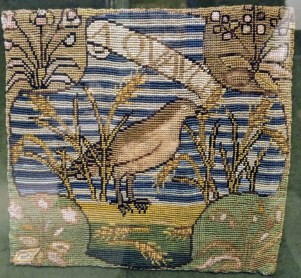

 Threads of Life covers so much it would be better for you to read it yourself if you’re interested, rather than for me to keep giving more examples! But there are two others I want to just touch on, because I found them so interesting, and because they represent the two poles of needlework that Hunter’s book moves between: the intensely intimate and personal keepsake, and the deliberately calculated public display. The first, of the former kind, is the “billet book” she looks through from
  My last example, at the other extreme, is Hunter’s discussion of
  Hatshepsut is also the subject of one of my longtime favorite historical novels,
 Slowly she set off in the direction of the Rosenlund Canal. In order to make herself look a little shorter and older, she stooped over her walker. She had pulled on a white fabric sunhat with a wide brim, which hid her hair and part of her face. No one took any notice of the elderly lady. . . . The best thing was that none of the people bustling about took any notice of her. An elderly lady out and about in the lovely weather didn’t attract much attention.
 I suppose Maud’s ability to get away with her petty crime spree is a cautionary tale about the dangers of ageism and sexism, which contribute to obscuring the truth about people. But compared to the moral and psychological layers that emerge from Janina’s murders in
  Like everyone else in the world (and how odd for that not to be hyperbole, though our timelines have differed) I have spent the past week adjusting to the unprecedented risks and disruptions created by the spread of COVID-19. Friday March 13 began as a more or less ordinary day of classes: the cloud was looming on the horizon, reports were coming in of the first university closures in Canada, and we had been instructed to start making contingency plans in case Dalhousie followed suit. But my schedule that day was normal almost to the end: I had a meeting with our Associate Dean Academic to discuss my interest in trying contract grading in my first-year writing class; I taught the second of four planned classes on Three Guineas in the Brit Lit survey class and of four planned classes on Mary Barton in 19th-Century British Fiction. The only real break from routine was a brisk walk down to Spring Garden Road at lunch time to pick up a couple of items I thought it might be nice to have secured, just in case: Helene Tursten’s An Elderly Lady Is Up to No Good for my book club, which I knew had just come in at Bookmark, and a bottle of my favorite Body Shop shower gel (
 So I packed up and went home–but still, I realized later, without having quite focused on what was happening. For example, I brought home not just the books we were in the middle of but the books that are (were) next on the class schedule, because it still seemed plausible that we would be doing something like actually finishing the courses as originally planned. And I did not bring home a stack of books that it might just be nice to have copies of at home–any of my Victorian novels, for instance. I own around a dozen copies of Middlemarch, and right now every one of them is out of reach! We are still allowed into our building, and I’ve been thinking I should go get one, and maybe some Trollope. I can’t tell if this really makes much sense, though. I mean, it’s not like I don’t have a lot of books to read right here with me, and I also have e-books of a lot of 19th-century novels because when I bought my first Sony e-reader, years ago, part of the deal was a big stack of free classics to go with it. So what if I don’t like reading long books electronically: I could get used to it. It would be a pretty low-risk outing, given that the campus is basically a ghost town at this point, but I think it’s really psychological reassurance I would be seeking, not reading material, and what are the odds that seeing familiar places I can’t really go back to for who knows how long would actually be comforting?
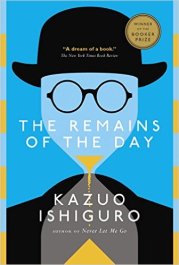 Anyway, it quickly became clear that the right strategy (and, to their credit, the one our administrators have been urging) is not to try to replicate electronically all of our plans for the last few weeks of term, including the final exam period, but to smooth students’ paths to completion as best we can: dropping readings and assignments and giving them options including taking the grade they have earned so far but still also allowing another chance to do better in as painless a way as we can think of. I think the options I came up with for my classes are pretty good, in these respects, but it may be that they don’t go far enough, because this is all turning out to be so much harder than it sounded a week ago–and of course however we might (or might not!) be managing, our students have their own specific circumstances which may make even the most “reasonable” alternatives too much. I have been feeling a lot of regret about the books we won’t get to, especially The Remains of the Day, which I was increasingly excited about as the capstone text for the survey class–what a good book to read right after Three Guineas! As for Three Guineas itself, I was so excited about teaching it for the first time. It’s definitely going back on my syllabus the next time it fits the brief. Sigh.
 One of the most emotionally painful parts of all of this has been the abrupt severance of personal relationships, which is what teaching is really all about. I have put course materials together to get us to the end of our current texts, but it is much less rewarding scripting them than it is taking my ideas and questions in to meet them with and seeing what comes of our encounter. Sure, it doesn’t always go swimmingly, but that just means you try again, or try something different. I know there are ways to include more personal and “synchronous” interaction (as we’ve quickly learned to label it!) in online teaching, and of course as someone who spends a lot of time online I already believe that you can cultivate meaningful relationships without meeting face to face. There just isn’t time for that now, though, and also the demands those tools put on everyone to be available and attentive at the same time are all wrong for our immediate circumstances. It isn’t just about finding ways to get through the course material together either: there are students I have been working with for years who it turns out I saw in person for maybe the last time that Friday without even knowing it. I have been thinking about them, and about all of my students, so much since that hectic departure from campus and hoping they know how much I have valued our time together and how much I already miss them!
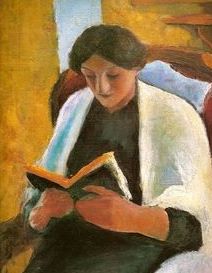 And now, I guess, it’s time to settle in to what people keep euphemistically calling “the new normal.” Here in Halifax we are under strong directions for social distancing; I’ve heard rumors that something more rigorous might be coming, in the hope of really flattening that infamous curve. There are lots of wry jokes and memes about readers or introverts or others whose habits and preferences mean they have been “preparing for this moment our whole lives.” We live a pretty quiet life ourselves, so to some extent this is true of us as well (though not of Maddie, who like many young people is going to be very well served by the various ways she and her friends can stay in touch virtually). It’s pretty different having to stay home, though, and also worrying whenever you go out, even if it’s only for essentials. It’s also not spring yet here–I envy my family in Vancouver the softening weather that makes walks and parks and gardens good options. I am grateful, though, that we are comfortable and together and, so far, healthy. I am also glad I did pick up An Elderly Lady Is Up to No Good, because I finished reading it this morning and it is a nice bit of twisted fun…about which more soon, I hope!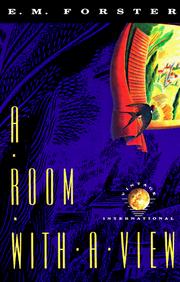
 It is,” as the narrator says, “the old, old battle of the room with the view,” and the joy of the novel is that even as we feel the horror of violence and death and the lesser but equally inexorable horror of everything Lucy must overcome, we see the view open up, we see the light and the violets and the sunshine, we heed the driver’s cry of “Courage and love!”
 Lately I have found myself both gripped and soothed by a particular genre of television, and happily for me there turns out to be a lot of it–in fact, since I brought it up on Twitter I’ve learned of many more options, which means that even at my current rate of consumption I won’t run out for months. The shows I’ve been binge-watching (as much as I can binge-watch anything in this busy time of term!) are all examples of what you might call ‘gamified creativity’: shows in which dedicated amateur practitioners of some art or craft compete through a series of challenges in the hopes of being recognized as the best of the bunch.
 The well-known Great British Baking Show is one such show; over the past few years I’ve greatly enjoyed both the original series and the Canadian version. I didn’t initially think about it as showcasing creativity because in some ways baking is such a practical and also such a non-negotiable skill: the cake either rises or it doesn’t, the bottom of the pie is either soggy or it isn’t. Watching Blown Away, Next In Fashion, and some of The Great Pottery Throw Down, however, has clarified for me that a big part of the appeal of TGBBS always was the combination of that practicality with ingenious concepts and creative designs and decorations. That’s what these other shows highlight as well: it’s not enough to be able to sew a hem (or a whole jacket), or throw a pot–you also have to come up with a concept for the project and execute it in a way that (if all goes well) sparks both admiration and pleasure. “Fit for function” is an essential standard on the pottery show, but if all your teapot does is pour, it’s not going to
  I’ve been wondering what it is about these shows (which have been around for years, after all) that is so appealing to me right now. Certainly part of it is that they are not particularly demanding to watch, and also that overall they are quite cheering: the very idiosyncrasy of the participants combined with their shared passion for their craft is just so heartening, so humane, at a time when there seems to be so much anxiety and inhumanity going around. These shows also celebrate qualities that are often devalued in the wider world, including not just creativity but also beauty, originality, and mastery outside the domain of the relentlessly technical and utilitarian. Sure, there’s something artificial about the competitions themselves (must everything be turned into a game show?) but I actually find the judging process fascinating: speaking as someone who recoiled from Elizabeth Gilbert’s “all that matters is that you made anything at all” pitch in
  I think too that I am engaged by these shows because I have been feeling restless in my own work. What I feel, often, watching the participants demonstrate their plans and then do their best to carry them out, is envy. I think it must be wonderful to be able to do the things they can do–and also to be passionate about doing them, so much so that you never question why you are doing them and are happy to keep trying and trying and trying again to do them better. I especially envy the leap of imagination that takes them from “here’s the task” to “here’s my idea for that task”: bread that looks like a lion, a toilet that looks like a turtle. (That turtle toilet filled me with such irrational joy when it turned out so well! Who would ever think of such a thing? Who would ever make it? And yet isn’t it just delightful?) By comparison, my relationship with my own work is often much more uncertain, and the work itself–whether it’s teaching, grading, researching, or reviewing–doesn’t really feel creative, or at any rate it doesn’t really satisfy my vague desire to be creating something. That’s one reason I took
  And yet there are creative aspects to my job. As I was starting to write this post, for example, I was also working on my class notes for some new (to me) material I’m teaching next week, including Woolf’s “Kew Gardens” and Three Guineas, both of which I’ve read before, of course, but which I’ve never assigned. This means that I have to come up with a teaching strategy for them, which means figuring out what story I’m going to tell about them: where I’ll begin, what background exposition I’ll include, what plot (for want of a better term) I’ll try to shape our experience of them into. I also think of book reviewing as a kind of storytelling: what might look to a reader of the review “just” like a bit of plot summary, for example, is actually a highly selective retrofitting of the book’s own elements in order to tell my story of what the book is about. The hardest part of writing every review is spotting that story and figuring out how to tell it (and one of the freedoms I most enjoy when writing blog posts, by comparison, is being able to discover it as I go along rather than having to shape the piece around it from the beginning).
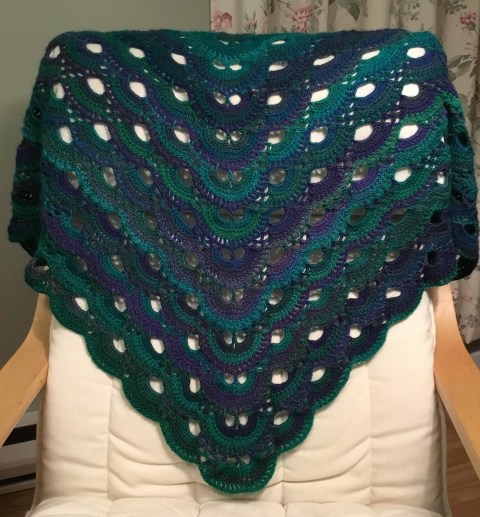 Is it because the building blocks of these particular processes are someone else’s stories that, for all the pleasures they really can offer, they don’t quite satisfy the craving for creativity in my own life, the underlying hunger for it that I am feeding with the vicarious experience of it offered through these shows? Perhaps. So what to do about that? I don’t particularly want to change up my approach to either criticism or teaching: I don’t much like criticism that crowds out its real subject (as I see it) with too much other stuff, and though I know my approach to teaching isn’t the only one (I have colleagues, for instance, who incorporate creative writing and other activities into their classes), it is one I believe in and feel comfortable with. I do have some hobbies–crochet and quilting–that give me the satisfaction of actually creating something, but it’s interesting that they are both (for me, anyway, at my limited skill level) pattern-following crafts; my self-expression in both is limited to choosing a pattern and choosing the materials. That’s not nothing, of course! (Also, crochet in particular is perfect to do while watching TV shows of other people making amazingly creative things. 😊)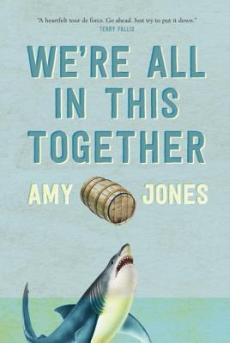
 Last week was our winter term study break, which is always a welcome interlude–more welcome even, I think, than the equivalent week off from classes in the fall because the winter term is grueling in ways the fall term is not, simply because it’s winter! Everything just takes more time and energy. We’ve been having a spell of unusually mild weather over the past few days and it has been so nice not to have any shoveling or scraping to do. There have even been days when it made perfect sense not to wear boots! Imagine that, in February. 🙂
 In British Literature After 1800 we have just finished a couple of weeks on Great Expectations. More than half the class chose to write their first paper on it, which may be a sign of engagement, though it might also be a sign that they don’t want to write on poetry, or that they realized they would like to get the paper out of the way before the later option. In terms of our class discussions, I think it was nice to park ourselves in one place for a while, as the course overall, just by its nature, moves quite briskly along through a range of quite different material. As I look ahead to the other long texts I chose for the course (Three Guineas and The Remains of the Day) I’m pleased at the thematic connections I can see opening up. From a pedagogical point of view, that means they pair up in interesting ways for the later assignments, which include a comparative essay. But they are also different enough in form and voice that our conversations won’t get repetitive.
 In 19th-Century British Fiction from Austen to Dickens we have wrapped up our work on Waverley — and I have to say, it seemed to go pretty well! I allowed more class time for it than I have before, and I really dug in on the historical context early on, both of which I think helped, but credit definitely also goes to the students: they just didn’t seem to find it as difficult, or at least as off-putting,
  Next up in this class is The Tenant of Wildfell Hall, which we started on Monday. I have assigned this often in my seminar on the ‘woman question’ but I realized it has been nearly a decade since I worked through it in a lecture class instead. As always, I am enjoying rereading it. I think it is such a smart novel, especially in its complicated narrative and chronological structure. (
 After Tenant we will be doing Mary Barton and then wrapping up with Hard Times. We’ve already been asked to submit course descriptions and tentative reading lists for 2020-21, and one of the courses I’ll be doing is the Dickens to Hardy course. Dickens is the only novelist explicitly named in both course titles, and every so often I wish I didn’t feel obliged to include him on every reading list–or to include Hardy at all–so I asked this group if they’d feel cheated if they signed up for “The 19th-Century British Novel from Dickens to Hardy” and discovered they would not be reading either Dickens or Hardy. A bit to my surprise, most of them said an emphatic “Yes!” I guess those names have more traction than I realized. The problem for me is that I really (really) want to assign Middlemarch for the class, and I’m wary of including two monstrously long novels, which means once again I’d have to choose among the short(er) Dickens options, which are getting a bit stale for me. Or would I? Would it be so tough to read both Bleak House and Middlemarch in one term? What if I included two really short novels in between, to balance them out (The Warden? Cranford?) and then ended (as apparently I must) on Hardy? I have a couple of months to think about this before the actual book orders are due: I’ll run some scheduling scenarios and see what looks reasonable.
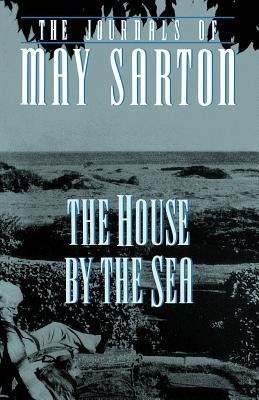 Solitude has replaced the single intense relationship, the passionate love that even at Nelson focused all the rest. Solitude, like a long love, deepens with time, and, I trust, will not fail me if my own powers of creation diminish. For growing into solitude is one way of growing to the end.
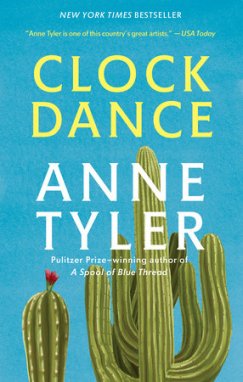 “I’ll just tell you what I’ve learned that has helped me,” he said. “Shall I?”
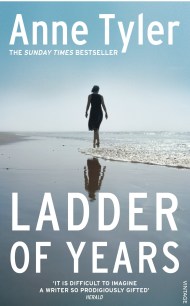 But the other thing about Tyler’s novels is that while her characters may stray, they almost always come home again (literally or emotionally). I think that might be part of why her books are soothing rather than disturbing, but sometimes it also seems to me that her vision is very conservative. Settle down, she often seems to be saying; appreciate what you’ve got; don’t go looking for trouble. You have enough, if you’d just stop wanting more. There’s no room for
  Novel Readings