“Literature nowadays is a trade. Putting aside men of genius, who may succeed by mere cosmic force, your successful man of letters is your skilful tradesman. He thinks first and foremost of the markets; when one kind of goods begins to go off slackly, he is ready with something new and appetising. He knows perfectly all the possible sources of income.”
I enjoyed rereading New Grub Street–although “enjoyed” might be the wrong word given how relentlessly dispiriting the novel is. It’s a well-told story and its satirical commentary on the literary world, in which artists, intellectuals, and idealists suffer while glib, market-savvy opportunists prosper, seems at time uncannily contemporary. “The evil of the time,” says one of the novel’s many ultimately unsuccessful literary men, “is the multiplication of ephemerides”:
Hence a demand for essays, descriptive articles, fragments of criticism, listicles,* out of all proportion to the supply of even tolerable work. The men who have an aptitude for turning out this kind of thing in vast quantities are enlisted by every new periodical, with the result that their productions are ultimately watered down into worthlessness.
As for literary criticism, then as now “such work is indifferently paid and in very small demand.” (Plus ça change, eh?)
 There is a lot to admire about the novel. Its characters are effectively, if somewhat schematically, established; their salient traits and values are distinct and the turns their stories take as they play their parts in Gissing’s depressing story of jockeying and dreaming and ailing and failing are always consistent with the strengths and weaknesses we know them to have. The intersecting plots play out with what in a more stylish writer I might call elegance, and Reardon’s story in particular reaches heights–or is it depths?–of pathos that are very nearly tragic, though Gissing’s tonal register is too prosaic for that label to sit comfortably. The novel is also very good about the way personal feelings are inextricably entangled with people’s money (or the lack of it) and ambition (or the lack of it): its marriages (actual, imagined, sought, and abandoned) play out in nice counterpart to, and sometimes illustrations of, the novel’s literary commentary.
I’m not persuaded, however, that I would like to teach New Grub Street, at least not as a replacement for any of the novels currently in my Dickens-to-Hardy rotation. For one thing, it is in many respects dully documentary–not to the same extreme as Biffen’s über-realist Mr. Bailey, Grocer, but enough to make summary seem more suitable than interpretation. As I read it, I wondered what we would talk about in class–or, more to the point, what we could discover in class discussion, given how straightforwardly expository the novel seemed. What is at stake in the novel that the novel then helps us to understand? The Odd Women–to show I’m not just biased against Gissing–seems to me to give us a lot more to work with in this respect, and it is also faster moving and more dramatic.
 This underwhelmed reaction is, of course, very likely due to some analytical near-sightedness of my own, or to New Grub Street just not being the kind of novel that I like best to look harder at, while my preference for The Odd Women may just be because I know it better and have spent more time thinking, writing, and teaching about its central themes. But overall what I felt by the end of New Grub Street was that for a novel so self-consciously about fiction, it is surprisingly, disappointingly, not particularly metafictional: I couldn’t see a way in which Gissing was offering up a novel that is itself (in structure, form, style, or theme) more than the sum of the literary parts it includes. That lack of transcendence may be the point: if it is a novel about anything, it is about literary failure, including both the kind that presents itself as success and the kind that might actually be success but doesn’t seem like it, and so if New Grub Street was a brilliant, stylish, provocative, or formally innovative novel, its whole premise might implode. I don’t really think, though, that something so artistically self-conscious and deliberate is going on: Gissing is just describing a close possible world to his own, showing it to us in all its meticulous, dreary, disheartening detail. Adam Roberts is absolutely right that New Grub Street “works superbly as a detailed evocation of a particular social and cultural milieu,” but once you’ve acknowledged that, then what? (Adam, characteristically, does much better addressing that question than I have here: read his post for more, including the interesting suggestion that in parts of New Grub Street Gissing “cathects the spirit of Samuel Beckett into a more conventionally upholstered nineteenth-century novel,” an idea that couldn’t occur to me because I haven’t read any Beckett.)
*Of course he doesn’t actually include listicles – but surely they belong.
 The next step after drawing up my plans for refreshing my reading lists was to get my hands on the books I’m interested in. This is easier for some courses than others. For instance, I already own copies of several of the Victorian novels I want to reread, and because I’m a regular customer, both Oxford University Press and Broadview Press are always very helpful about providing exam copies. As a result, I now have a nice TBR shelf of
  A small handful of titles are more easily available, including Attica Locke’s The Cutting Season, so I started with that because it had sounded like a promising option. It’s a decent enough novel but it sparked no excitement in me: it is slow moving and detailed in a way that made it seem drawn out rather than rich or textured, and in terms of innovations in or provocations about the genre, it didn’t seem to me to offer much. Next up, because it too is available locally, will be Rachel Howzell Hall’s
  I didn’t write a separate post about this because it’s a smaller scale project, but I’m teaching Pulp Fiction again this fall and with regret, I think I’m going to give up on Valdez Is Coming. I thought it was eminently “teachable” (that indefinable quality!) but both times I taught it most of the students in the class did not seem to agree! I took True Grit out of the library this week to review it and was quickly reminded
  The third course I plan to spend time rethinking during this sabbatical is British Literature After 1800, one of a suite of 2nd-year survey classes we originally established to orient students in the big picture (nationally and historically) as context and preparation for our more specialized upper-level courses. These curricular intentions are compromised (some might say, rendered inoperable) by the way our program
 So I assigned the “major authors” edition of the Norton Anthology and we read Wordsworth and Coleridge, Keats and Shelley, Tennyson and Browning and Hopkins, Wilde and Joyce and Woolf, Yeats and T. S. Eliot and Auden, Heaney and Rushdie. A bit less predictably, we also read Elizabeth Barrett Browning and Christina Rossetti, and Katherine Mansfield, and while the first time around I assigned Great Expectations as our representative Victorian novel, the second time we read Mary Barton. Both times, our 20th-century novel was
  Looking over my notes, I actually think it was quite a good course of its kind. (You can read some blow-by-blow accounts of it while it was in progress if you’re interested; just scroll down
 I actually already have one specific idea, which is to substitute
  In
In  To date, the books I’ve chosen for this seminar have all been by women writers, about women detectives, and explicitly interested in gender and detection. They all, that is, bring a lot of self-consciousness to their engagement with detective fiction as a genre. Collectively, they also cover a good range of subgenres or types of detective fiction. While in these respects the list has reasonable breadth, however, in other respects it is quite narrow; the feminist tradition it covers is, to put it mildly, not very intersectional. I put in some time in the past trying to fix this problem; though I came up short, the good news is that I do, as a result, already have a preliminary list of names to start with, particularly of African American authors: among these are
  So far I have never assigned a Canadian writer in either of my detective fiction classes, primarily because I haven’t found one that takes the genre in what seems like a new direction or that really made me sit up and take notice. (Phonse Jessome’s
  One of the problems I ran into last time I went down this road was getting my hands on samples from the authors I was interested in. I probably just need to be more persistent and order a lot of titles through interlibrary loan. The other problem is that I’m not really a voracious or enthusiastic reader of mysteries (odd, I know, in the circumstances) so I tire easily of the necessary exploratory work and I can take a while to warm to books that are not immediately appealing to me (though I can eventually get there, as has happened with Walter Mosley’s Devil in a Blue Dress–still not a personal favorite, but one I have found very satisfying to teach). This is why I need help sifting through or coming up with good options so that I can make this reading list represent a wider range of voices. Ideas and recommendations would be very welcome.
 One of my plans for my upcoming sabbatical is to reconsider and possibly refresh my reading lists for courses I offer frequently. It may be that the reading and rereading I do confirms my usual selections, or that it gives me ideas for mixing things up a little, or that I get inspired to rethink my approach altogether–we’ll see! It isn’t that I’m dissatisfied or trying to fix anything in particular about these courses, which usually go very well. It’s just that book orders for the next year come due in the middle of term when I’m too busy to do this kind of exercise. I don’t want change for the sake of change, but I also don’t want to slide into complacency or let my classroom conversations stagnate.
 This context explains the choices I typically make for the 19th-Century Fiction Austen-Dickens-Hardy courses: in our curriculum, there are other courses that focus on particular kinds of fiction from the period, so I stay away from works in those categories (such as Frankenstein or Dracula, for example, or Alice in Wonderland) that I know students will read elsewhere and focus primarily on realist, domestic, historical, or social problem novels. I start with Austen, but I tilt English 3031 towards the Victorians, rather than the Romantics, because they have their own classes; similarly, I end English 3032 with Hardy and (with regret) leave Forster and his fellow Edwardians to the later courses.
 Besides books like Frankenstein that I know are covered frequently in other courses, probably the most obvious absence from this list is Wuthering Heights. I have read it more than once but never taught it, for the simple (if perhaps indefensible) reason that I like the Brontë novels I do teach much better and the maximum of five books per course that seems realistic to me is a zero-sum game. Also, my colleague Marjorie Stone, who loves Wuthering Heights, regularly offers an upper-level seminar on the Brontës. This winter is her last term in the department, however: her impending departure is another reason I am taking stock in this way. Wuthering Heights is (sigh) near the top of my “reread in 2019” list.
 So besides Wuthering Heights, what other alternatives
  There’s another dimension that I need to give further thought to, and that’s which less canonical writers or genres I should work into these plans. I’ve made it this far without reading any novels by Bulwer Lytton or Disraeli or Charlotte Yonge, any “silver fork” novels or Newgate novels or, besides The Odd Woman, any ‘New Woman’ novels. I haven’t read Ouida or Marie Corelli or Amy Levy, or H. G. Wells or* …. but then, the list of books I have read is always (and always going to be) much shorter than the list of books I could have read. The challenge is always deciding which of those are books I really should have read. In the end it’s about defining purposes and drawing lines, which are always exercises in artificial precision. For my current fairly narrow purpose–refreshing the reading list for two undergraduate courses already defined by what they are not–the authors I’ve already identified as priorities are probably more than enough to take on, but if there’s a story about the 19th-century novel from Austen to Hardy (that is, roughly from 1815-1890) that you think I can’t tell, or could tell better, with the help of someone I seem likely to overlook, I’d be happy to know!
 It’s hard to know when to write these year-end posts: there’s always a chance that a book I read in the very final days of the year will be a real game changer! It’s a quiet snowy day today, though, perfect for a little blogging, so I’ll go ahead and write up my regular overview of highs and lows of my reading year and give any late entries their own posts.
 I read quite a few books this year that I thought were near misses: good, even very good, but slightly dissatisfying, for one reason or another. Edna O’Brien’s
  I read a couple of critical darlings that did not quite work for me, though both Ali Smith’s

 I took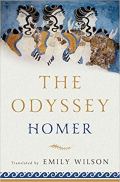
 I’m not quite ready for my traditional posts about what I’ve read and written in the past year: for one thing, I often read at least one really great book between Christmas and New Year’s, when the holiday bustle has ended and the book-shaped packages under the tree have revealed their secrets! (In fact, I’m currently reading Emily Wilson’s translation of the Odyssey, which seems a likely contender for any “best of 2018” list.) That doesn’t mean, though, that I’m not looking back over 2018 and ahead to 2019, trying to figure out where I’ve been, where I am, and where I’d like to be going.
 I do have a sabbatical plan–you have to submit one as part of your application–and also some existing deadlines I need to meet, so I’m not heading into the new year entirely aimless. Still, the precise form my work on that plan will take is really up to me, and figuring that out will be my first and possibly hardest task. A crucial context for me is what I did on and then after my previous sabbatical, in Winter 2015. Over that winter I threw myself into writing what I hoped (and perhaps still do hope) would become a book of “crossover” essays about George Eliot. I wrote a lot of material, and then towards the end of the term I peeled off two parts that I eventually published as self-contained essays. (I did not really appreciate at that point how bad it might be for the book I was imagining to publish a lot of its intended content first.) By and large I enjoyed doing that writing: I felt very motivated and productive, and across my sabbatical my confidence in my overall portfolio grew–which is why I decided, at its end, that I was ready to apply for promotion. This administrative project, too, was initially exhilarating: I had done so much (I thought), in so many different forms, since my first promotion, and the result was (I thought) a body of work I was rightly proud of, some of it well within the usual academic boundaries, but a lot of the more recent work reaching across them or representing my principled resistance to them.
 In the last couple of years the kind of writing I’ve been doing has, more and more, been
  The other question is whether I want–or in some sense need–to stop working (only) in small increments and re-commit myself to a book project, and if so, of what kind? If an essay collection of the kind I have long been playing around with is a non-starter unless I self-publish it (which I might yet do), is there another kind of book I would feel was worth the long-term single-minded effort to produce? I have long objected to the academic fixation on “a book” as a necessary form. I suspect, now, that there is a similar bias in non-academic publishing, or at any rate that one way to get off the kind of plateau I am on is to publish a book of my own which might (at any rate, it seems to have, for others) give me increased visibility and credibility as a critic. I resist that implicit pressure too: I think it’s a good thing to have practising critics who are one step removed from the immediate business of publishing. How long, I wonder, or in what venues, do you have to write reviews before you are perceived as having any stature as a critic, though? How is that kind of professional credit or reputation earned? Do I care? I guess so, or I wouldn’t be wondering! But should I? Is it possible, even if it might in theory be desirable, not to eventually start thinking about going further, doing more, being more?
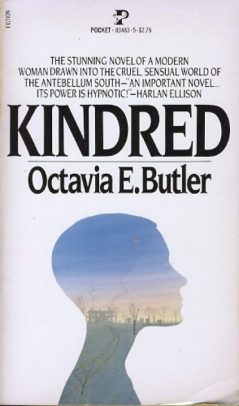 Thinking more about Kindred after I’d finished reading it, I wondered if I would notice more subtleties in it if I knew more about the specific genres it combines: it is a hybrid of time-travel fiction and the slave narrative, and while I have read an example or two of each of these, I have never given sustained thought to their conventions and I have little, therefore, to compare Butler’s effects or choices to. The reader’s guide in my edition includes an essay by Robert Crossley that says some things about these contexts. “One of the protagonist’s–and Butler’s–achievements in traveling to the past,” he says, for instance,
 Not great, just fine. Its strength is its protagonist, who I found just the right side of too contrived as a misfit, a figure of semi-comical pathos with a running undercurrent of desperation. That deeper, darker layer, however, for me was the novel’s weakness. Eleanor Oliphant Is Completely Fine purports to be a novel about


 The main driver of the novel’s plot is less the distribution of the postcards themselves than the investigation launched to discover the writer of these ineffectually seditious messages. It is led by Inspector Escherich, who pursues the criminal he dubs the ‘Hobgoblin’ more out of stern professionalism than any particular dedication to the Führer. When he finally has the Quangels in custody, though, Otto “vanquishes” him with the reality of this long-awaited victory: in “just” doing his job, he has been willingly complicit in the regime’s cruelty and injustice. “You’re working in the employ of a murderer,” Otto points out, “delivering ever new victims to him. You do it for money; perhaps you don’t even believe in the man.” Pressured by the celebratory SS to join them in “baptizing” Otto by smashing their glasses over his head, Escherich has “the sense that he was hitting out at himself, striking with an ax at the roots of the tree of his own life.” Unable to bear what he has done and who he has become, Escherich–“Otto Quangel’s only convert”–takes his own life.
 Novel Readings