 More clutter to clear out of my head, if I can — something that has been on my mind for about three weeks now, but in an unfocused or inconclusive form. In fact, I’ve started and then deleted a couple of posts about this already; I just couldn’t seem to get very far before either deciding I didn’t want to get into it after all or running out of energy. But now the topic feels like mental debris, so let’s see if I can make any kind of sense of it so I can move on. One thing my blog is supposed to be for is freeing me to write about things without having to be absolutely certain about them, after all.
Basically, I recently attended an interesting presentation on (among other things) a site that makes a range of teaching tools available for people in “my” field, Victorian studies. (I put the possessive pronoun in scare-quotes because something else I’ve been puzzling over is whether I still identify with, much less operate within, that scholarly field, or any scholarly field–a subject for another unfocused inconclusive post down the road, perhaps. Consider yourself warned.) The tools looked fine! Cool, even! It is clear that people are using them in interesting and no doubt valuable ways to engage their students and further the goals they have for their courses. Still, I couldn’t imagine ever wanting to use them myself–not because (and this is about the point in the post where I gave up the last two times, because I felt uneasy about potentially being misunderstood on this point!) I have any objections to them on their own terms, but because they seem peripheral to the main objectives I have for my own classes, especially (though not exclusively) my 19th-century fiction classes. Just to clarify the kinds of things I am talking about, one of the tools enables you to construct a timeline; others produce maps or annotations or digital scholarly editions.
 This is all good! That is, it is all good if these are the activities you want your students engaged in–and I genuinely have no problem with that. I’m just not interested in doing that kind of thing myself, and what I was trying to figure out is why, and then whether this signals a deficiency of some kind in my own pedagogical approach. After some reflection, I decided the answer to the first part of that question is that increasingly, I do not approach my classes as steps towards making students into scholars, as part of a program designed to train them to do academic things. Instead, I aim to engage and train them as readers–attentive, well-informed, rigorous readers, to be sure, but with their eyes first and foremost on the page, not on contexts or scholarly apparatus or digital tools.
Another reason this post fell apart before is that I could see then, as I still can, that the distinction I just proposed between readers and scholars is reductive and perhaps unproductively polarizing. Still, I think there’s something to it, something that holds true even if you object to explaining it quite the way I have so far. After all, the vast majority of the students I teach at every level (now, really, including graduate students) are not going to enter the academy as professional literary scholars–but they are (I very much hope!) going to keep reading. My goal is to foster both the skills and the commitment they need to carry on reading as well (as intently, curiously, and critically) as we ask them to in our classes. It also matters to me that the literary works I feel most passionate about teaching are themselves oriented very much towards the world we live in and the relationship we have with it and with each other. Their ‘aboutness’ is moral, social, political; they have designs on us, dear readers, and it takes all the time and energy we have to figure them out and see what stories we have to tell about them in our turn…and that’s not even taking into account just how long it takes to actually read the books with patience and attention.
 I’m not saying that the kinds of hands-on learning students get from constructing timelines (or whatever) can’t contribute to the conversations I prioritize, and clearly it can also give them valuable experience of other kinds, including building the skills set required to work with these kinds of digital tools. I can’t shake the feeling, though, that these projects take time away from, or redirect attention from, the books themselves, and there are so few contexts in which a sustained focus on reading is even possible, much less required and supported. If my own work and interests were in the field of book history, I expect I would find these tools more personally congenial. At the same time, my own estimation of the value of some forms of scholarly work has also eroded so much in the past decade or so–my own impatience with its insularity, with the feeling of playing insider baseball, has gotten so acute– that I have far less interest in drawing students into that world than I have in … well, in doing what I do in my own classes, which is pretty well documented here across the decade-plus history of posts in this series.
It’s not that I never incorporate research into my class assignments: at the upper level in particular, and of course in graduate seminars, there is always a scholarly dimension, and I do my best (albeit with mixed success) to make it relevant and valuable, not just perfunctory. And in spite of my alienation from aspects of academia (also something recorded and interrogated regularly over the dozen years I’ve written this blog) it’s not that I see no value in specialized literary research and scholarship: I have done it myself, and my teaching is suffused with insights and strategies and knowledge gleaned from my three decades as first a student and then a teacher in the academy. I routinely bring contextual information to the classroom; I have brought maps and timelines sometimes too–they are invaluable aids when teaching Waverley! I have also done some digital assignments, including wiki building–though I am much less inclined to go to that kind of logistical trouble now. So maybe I’m fretting about something that is really a difference of pedagogical degree, not kind, or maybe I’m just going through pointless mental convolutions because I felt uncomfortable during that presentation due to the gap between the student experience it championed and the one I (think I) offer and as a result I wanted (as we are all prone to, I suppose, when we feel sidelined or irrelevant) to make up some story to justify myself!
I’m still having second thoughts about this whole post: I wonder why this topic in particular is making me so self-conscious. But I don’t want to lose my nerve about thinking out loud in public, and of course one possible value of writing this up is in hearing what, if anything, other people think about the things I’ve been turning around in my head. I don’t mean to set reading and scholarship, or reading and research, against each other in any absolute way, but it has been hard for me to put the difference I’ve been thinking about in any other way. I’d like to think that my teaching award answers the second part of my earlier question–I am not shortchanging my students — but that doesn’t mean I’m not still learning all the time myself.
 When you don’t blog for a while, or at least when I don’t, one of the obstacles to getting back into a routine is the clutter of possible things to blog about, which becomes strangely unmotivating because it’s hard to pick one topic and just get started. This is an attempt to clear out some of that clutter!
 The one stand-out experience in my recent romance reading was Kate Clayborn’s Best of Luck, which I did not pick up haphazardly at the library but had pre-ordered on the strength of the first two books in the series, Beginner’s Luck and Luck of the Draw. I liked the first one just fine and then really liked the second one a lot; both have also stood up well to rereading. Best of Luck is a good finale for the trilogy. Like the first two, its biggest strength is its characters, who have both distinct and plausibly complicated personalities and histories and genuinely interesting work to do–something Clayborn gives a lot of attention to. I like that: I have a documented fondness for ‘neepery’ and each of her books offers it in spades. The books are not particularly funny or witty, but they are not ponderous, and they earn their angst rather than piling it on (which is what I thought happened in my one excursion into Alisha Rai). The pacing is good and the alternating points of view for each chapter keeps things interesting as the conflicts develop and then resolve. I realize these comments are sort of generic! But that’s because reading and liking Best of Luck after reading and either not liking or not caring much about a handful of other books in the same genre got me thinking about what makes a romance work for me. Voice has a lot to do with it, and so does freshness, and for me the ‘Chance of a Lifetime’ books get high marks for both.
 The other book I was reading for a while (inspired by my not entirely successful experience with N. K. Jemison’s The Fifth Season) was The Hobbit. It turns out that The Hobbit (like Little Women) is a book I know so well from my childhood that it is almost impossible for me to really see the words on the page. It isn’t so much that I read it often as that my brother had the marvelous
  I find myself at something of a loss about how to respond to The Fifth Season. The bottom line, I suppose, is that it didn’t work for me: I felt frustrated from the outset at the barrage of unexplained particulars, and though I think the advice that I got from more proficient readers of SFF to just read on and let the logic of Jemisin’s world and its inhabitants emerge from the action was good advice, and it more or less worked (by the end I did, as promised, have a reasonable grasp of the various terms and elements), the process of getting there–the struggle to understand those crucial building blocks of the story–proved too great an obstacle to my engagement with the novel’s drama for me to get much pleasure out of it. I got intermittently caught up in particular scenes, especially towards the end, but they were never sustained long enough for any momentum to build–and then the final, quite intense, scenes were cut short in the kind of open-ended cliff-hanger that seemed obviously meant to sell the next book in the series. Perhaps that is considered fair play in a genre that seems dominated by series that are cumulative rather than simply sequential, but I felt frankly resentful that after the effort of getting to that point I was not given any satisfactory sense of closure for this installment beyond its having finally (and it really did feel like finally! to me) brought the dispersed parts of the novel together.
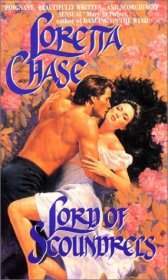 I have had bad experiences before when stepping into unfamiliar genre territory, and I am very aware that reading something well–which doesn’t necessarily mean liking it, but rather knowing how to deal with the kind of book it is–requires recognizing the conventions and norms and expectations that it is dealing in. (At any rate, this is true of genre fiction, which typically relies on a kind of reciprocal proficiency between writers and readers–for me, at any rate, this is one of the ways I define “genre fiction.”) I thought Lord of Scoundrels was ridiculous
  It’s not that The Fifth Season didn’t give me anything to think about. Probably what preoccupied me the most, though, was not thinking about the issues of identity and social order and oppression (and geology) that I take to be central to Jemisin’s project so much as wondering why the unreality of her world grated on me in ways that the equally artificial fictional worlds of other authors don’t. It’s not as if the town of Middlemarch isn’t also made up; it isn’t (to go with a more apt comparison) as if the souls of the unwillingly departed really lingered in the cemetery where Lincoln’s son was interred and intervened to change both his fate and the course of history. I learned to deal with vampires, werewolves, and witches in Joss Whedon’s universe, and, prompted by puzzling over what didn’t work for me about The Fifth Season, I just started rereading The Hobbit for the first time in decades and was immediately delighted.
 What makes the difference? Is it that Saunders and Whedon–to go with the ones who clearly aren’t offering “the nearest thing to [real] life”–are not completely replacing our world but adding a dimension to it, so I am still anchored in familiarity, and as a result the application (if that’s the right word) of their fantastical elements to my thinking about the world I actually live in is more straightforward? Though I am sure Jemisin’s work is meant to reflect on our reality in some way, it’s so complex and elaborate on its own terms that it seems an awfully long way around. (Also, a big part of the point of a book like The Fifth Season is presumably that world building on its own is something readers can simply take an interest in as an alternative reality; maybe my realist habits of mind are precisely the problem.)
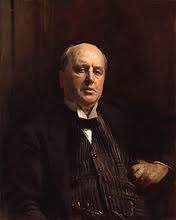 I know there are readers who are as unmoved by Dunnett as I was by Jemisin. As Henry James said, the house of fiction has many windows! I don’t like to preemptively close any of them: I have long thought I must be missing out on a lot of good reading because I don’t read SFF (I haven’t even read Ursula Le Guin-don’t @ me!). I’m not necessarily giving up, on the genre or on Jemisin. If I keep reading around, maybe, as happened with romance, I will find my footing, at which point perhaps I would reread The Fifth Season and find, as with Lord of Scoundrels, that I’m able to appreciate it in a way I can’t now. On the other hand, there are just so many other books and authors I haven’t read that seem likely to engage and excite me without my having to struggle quite so much just to get it that I’m not sure how much of a priority to make that attempt.
  I am perhaps in a blogging slump, not a reading slump, though it can be hard to tell the difference. There have been a lot of comments recently about blogging as a dying form, a remnant (and how odd this characterization seems, after all the flak bloggers used to — and still do — get
  Tim is not talking about book blogging, though, and there (here) I don’t think as much has changed–or, that things have gotten so bad–though I do notice a slowing down, a fading out, not across the board but certainly among some of the folks whose blogs and comments used to be steady sources of stimulation and conversation. That seems natural, though I really miss some of them: people move on, priorities change, the intrinsic rewards of something that has never (for the kind of bloggers I follow, anyway) been tied to extrinsic rewards can fade. The times have changed, in some scary and upsetting ways, and as a result people’s anxiety is high and, amidst the hubbub, their attention is scarce and precious. Other things rightly take precedent. The ebbing of energy is contagious, too: when posting diminishes and commenting declines, and bookish people quite understandably back away from (or just get overwhelmed on) Twitter, it gets harder to imagine who you are talking to when you contemplate writing up a post yourself.
 I’m not really going anywhere in particular with this: I’m just thinking out loud in public, which is what having a blog lets me do! I also trusted (because it works every time I’m in a blogging slump) that if I actually started writing something, anything, here, things would start to turn around for me, because the process itself is a tonic. “It remains important to me to think: today, I might blog,” Tim says in his post, “And to think: I have a place to do it in.” This is very much still true for me. I do a lot of other writing (well, right now it doesn’t seem like a lot, but that’s a subject for another post, especially with a sabbatical coming up) but this is the one place where I can write entirely on my own terms: no rules, no assignments, no editors, no second-guessing, no need to know what it will add up to or if I can pitch it or where I can include it on my annual report. I cherish that writing experience; when I don’t get around to doing it for a while, whether it’s because I’m too busy at work or too tired and distracted or because I think I don’t have anything to say–then I really miss it. Putting things in words is clarifying, and when I’m not under pressure, it’s also fun. Maybe blogs are now internet dinosaurs, but what matters to me (in this as in so many things) is not whether the form is trendy or innovative but what the form enables. Also, lately I’ve been feeling a bit prehistoric myself: maybe form and content are just syncing up!
 As for the possibility of a reading slump, well, I have been reading quite a bit; I just haven’t been blogging about it, because (perhaps unsurprisingly) nothing since Lincoln in the Bardo has seemed worth much notice. I might do a ‘recent reading round-up’ type post next, just to clear the air, or I might wait and see how I do with The Fifth Season, which so far I am finding an odd balance of baffling (and thus off-putting) and gripping. Seasoned sci-fi readers assure me that if I press on, the estrangement will fade, the world-building will work its magic, and I will be on my way. We’ll see! In the meantime, at least I’ve reminded myself why I do this: because I like to.
 I was looking back over some old posts in this series and November entries have a certain … similarity, shall we say! We’re all–students and faculty alike–tired, busy, and kind of gloomy. The introduction of a week-long break (coming next week for us) has not made as much difference as you might think: last year I was struck by how much more tired and behind a lot of my students seemed when classes started up again, and because the break also comes quite late in the month, we all felt a bit frantic after it because the end of classes was suddenly so close.
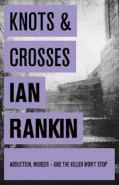 We aren’t quite there yet, however: there’s still the rest of this week to get through. In Mystery and Detective Fiction we’ve just wrapped up our discussions of Ian Rankin’s Knots and Crosses. Although I think Knots and Crosses is gripping and clever, I’ve been wishing that I left The Terrorists in instead when I decided which book to cut to make room for An Unsuitable Job for a Woman, because its political engagement is in some ways more immediately relevant and its morality is more complicated. That said, Knots and Crosses offers a pretty direct engagement with what we now call “toxic masculinity.” Its Gothic games seemed a bit too pat to me this time, though–I don’t entirely disagree with Rankin’s own assessment of it as a bit too clever, a bit too much the self-conscious work of a young writer immersed in literary theory and history and eager to show off what he knew.
 In 19th-Century Fiction tomorrow we are finishing our time on Silas Marner. Because I have only taught Silas Marner once or twice before, and many years ago, I have been feeling my way a bit hesitantly, not being entirely certain which questions will catch students’ interests or draw them most naturally towards the novel’s big ideas or best moments. Oddly, perhaps, I’ve found it difficult precisely because the novel is so short, though I chose it hoping that its brevity would make George Eliot more accessible than usual. I dialed back the amount of context I provided at the outset, but even so it took up nearly one whole class, and that left us only three more to talk more freely about the novel. With Middlemarch, in contrast, I typically have at least three weeks’ worth of classes, or around nine hours, and we get even more time when I assign it in Close Reading. And yet three hours is actually plenty in some ways too: because not a great deal happens in Silas Marner just in terms of plot, I feel as if I have been struggling to work on the meaning of what does go on without repeating myself. Still, I think it has been OK overall. In fact, I have been pleased at both the quantity and the quality of participation in class discussion, which certainly suggests to me that they are finding the novel’s distinct combination of realism and moral fable engaging. We have already talked a fair amount about the importance of taking responsibility and making deliberate choices, rather than trusting to luck, fate, or God, as key to Eliot’s moral vision; tomorrow we will talk about this in the specific context of family, especially parenting, including both Silas’s choice to raise Eppie (in contrast to Godfrey’s actions) and Eppie’s choice to stay with Silas. I think this is the only one of Eliot’s novels that comes close to being unironically sentimental, at least in the main plot line–and it’s just so lovely.
 The three Cs are are Cold, Collins, and Chandler, and I am actually done with all of them now, but I haven’t blogged about my classes since they were all just starting up, so I thought it was time to get caught up. A trace of the first does remain in the form of a minor but lingering cough, but although I did end up having to cancel one day of lectures when I actually lost my voice for a bit, it wasn’t too bad. A number of my students and colleagues have been much sicker, poor things.
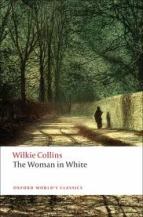 I also felt just a bit impatient with The Woman in White, though it is a lot more fun than The Big Sleep. At one point in our discussions this time a student actually asked a question I ask sometimes too about different novels, that could perhaps be summed up as “Are we giving this novel too much credit?” — or “Are we putting more interpretive weight on this novel’s details than they can really bear?” I feel that more with Lady Audley’s Secret (which I think is fundamentally incoherent, or indecisive, about some of its central thematic questions) than I do with The Woman in White, but I think it’s always a fair question to ask. It’s not one that I think can ever be answered definitively either way, but there’s no doubt that some novels seem less in control of their own meaning than others, while some can rather deflate under scrutiny. Some novels, too (as I ended up saying about The Woman in White, though not, if I remember correctly, to the same student) raise a lot of interesting questions or stir the pot in thought-provoking ways without necessarily resolving every aspect.
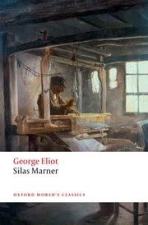 In 19th-Century Fiction we are actually on our penultimate novel, Silas Marner. I’ve been a bit nervous about how it would go, as it starts out pretty slowly and Eliot’s prose requires closer attention than any of our other novelists’. I also haven’t taught it very often–only twice before that I can remember, and never in a lecture class of this sort. Today was “big picture” day so I set up some key ideas and then we began talking about Silas himself, first as he is seen by his neighbors in Raveloe and then as we come to understand him thanks to the narrator’s explanations and commentary. I tried to emphasize the importance of noticing the different ways people arrive at their explanations for what they see, which I think is key not just to the themes of the novel but also to its pacing, in which not much often seems to be happening but we realize, if we know to look for it, that a lot of the action is in perception and interpretation. One student brought up Silas’s beloved pot, which I thought was a particularly nice detail to have picked up on: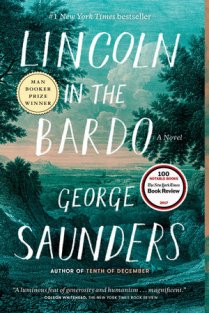
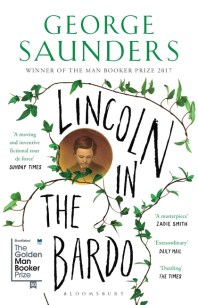 It’s a bravura display of narrative ingenuity, and especially given how fantastical the premise is, the result could easily have been (and I fully expected it would be) flamboyant gimmickry, clever and original but soulless. It isn’t, though: I think Lincoln in the Bardo is actually one of the most touching and heartfelt novels I’ve read in years. However far it spirals away from reality, and however abstract its political or philosophical or historical implications become, it always comes back to the hardest and most intimate truth of all: nothing we love lasts. “None of it was real,” says roger bevins iii near the end:
 Willie’s death is as much the occasion for Lincoln in the Bardo as its subject, and there are many other sorrows recorded in it–many losses as or even more wrenching, many deaths as arbitrary or worse, and many lives that before those deaths were more deprived, more isolated, than Willie’s, that never had the kind of love that brings his stricken father out into the dark, cold night to sit one last futile time with his son. The world is much bigger, and has much bigger problems, than little Willie. His Presidential father, for one thing, carries the burden of leadership alongside his personal responsibilities and feelings. Lincoln imagines his own grief multiplied by the thousands dying in the Civil War:
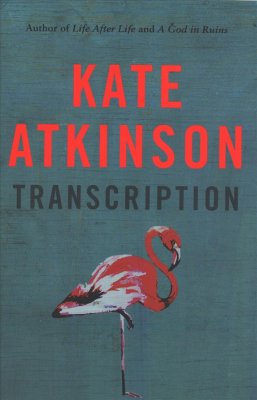 I wasn’t looking forward to Transcription with quite as much enthusiasm of some readers I know, as my own history with Atkinson is a bit mixed. But I know her to be an excellent story teller, with smooth fast-paced prose and an eye for vivid detail and an ear for good dialogue, and the reason I have quibbled with some of her recent books is because I have found them interesting enough to take seriously and ultimately quarrel with.
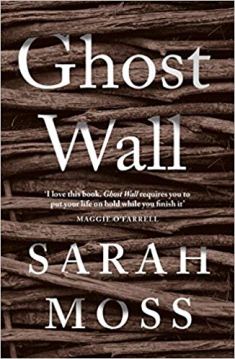 Cold Earth literalizes that haunting in a way that Ghost Wall doesn’t quite: in the newer novel, the spirits animated by artifacts of the past are those of contemporary people acting on what they think they’ve learned, while in Cold Earth Moss teases and frightens her characters and her readers with the possibility that the dead still move among us. Imagination? Delusion? Projection? Perhaps–but to at least one member of the team digging in their remote archaeological site on the coast of Greenland, it is a near certainty that their work has disturbed something more than relics and bones.
 Cold Earth is intense and suspenseful, but it is not a thriller or a horror novel, or (except indirectly) a dystopian one. Moss focuses above all on her characters–the novel is told by several of them in turn, in the form of letters they write to people back home–as they puzzle over their finds and try to interpret how their predecessors in that location lived and died. Each of them has brought a personal history to Greeenland: each of them, in a way, is like an archaeological site of a different kind, and there is something at once comforting and devastating in the way Moss, by setting them down among the ruins of a past community, evokes the inevitable and unpredictable continuity of death. Most of us probably imagine that “history” is something that happens to other people, but by the end of Cold Earth all of its characters have been forced to see they too will eventually be the ones in the ground. The chilling question the novel provokes is whether there will be anybody left to dig them up and wonder about their lives.
 In Mystery and Detective Fiction we’ve just wrapped up our discussion of The Murder of Roger Ackroyd. It’s been an interesting fall to be teaching this course. I always open it with some discussion of the differences between “literary” and genre fiction–not just what those differences are presumed to be but how they shape people’s expectations and evaluations of books on either side of the supposed divide. I imagine, however, that to students already accustomed to a literature curriculum that incorporates not just popular culture but a wide range of media (we have courses on both Chaucer and comics, on Shakespeare as well as Tolkien, on poetry and on television and video games) it sometimes seems as if in advocating for the intellectual gravitas of our course material I am arguing against a straw man.
 This term, however, both Margaret Wente in the Globe and Mail and Luke Brown in the TLS stepped up to show my students in real time that the debates about the literary merits of crime fiction are ongoing and can be both intense and judgmental. Wente published an op-ed decrying the degradation of our curriculum–yes, ours in particular: she singled out Dalhousie’s English department and Mystery & Detective Fiction was among the courses she specifically mentioned as symptoms of our decline. (I won’t link to Wente’s column, because I don’t want her bad faith and shoddy practices rewarded with clicks, but
  In 19th-Century Fiction we’ve just finished our work on The Warden. I’ve written a couple of times already about why Trollope feels unexpectedly pertinent to our current moment, whether as
  The Warden is an odd little book, and in many respects it is hardly a radical one. As we discussed in class, for instance, the bedesman who speak up for what they think is theirs by right are characterized as greedy and ungrateful, and they are ultimately punished for it, ending up worse off both economically and emotionally than they were under Mr. Harding’s wardenship. The novel’s social vision is fundamentally paternalistic. There is something at least potentially radical, though, about its ethical vision–about its casting as a modern-day hero someone who, when criticized, does not lash out but turns inward, and who then will not be dissuaded even by the most powerful people around him into ignoring what his conscience decides is right. Mr. Harding’s resignation does not really fix anything: the novel explores at several levels the complicated relationship between individuals and larger systems and institutions, and in doing so it raises timely questions about the possibility of meaningful moral agency in corrupt circumstances. I think a lot of us are struggling with this right now: the things we can do on our own seem so insufficient that it is tempting to stop trying to do anything. There’s some encouragement to us in the vicarious satisfaction we get from seeing the Warden persist. Even Archdeacon Grantly, imposing bully that he is, is ultimately no match for him! We all probably face a version of the Archdeacon’s exasperated “Good heavens!” sometimes, maybe especially when we try to take some small, imperfect, corrective action of our own. The Warden is not about taking to the barricades–but most of us aren’t going to do that anyway. Mr. Harding might at least inspire us to play our imaginary cellos with renewed vigor as we carry on living our own ethically complicated lives as best we can.
 Novel Readings