 I don’t read a lot of memoirs, or a lot of biographies. The autobiography of renowned biographer Claire Tomalin, however, was so interesting that it made me think I should read more widely in both genres–starting, perhaps, with some of Tomalin’s own biographies, none of which I have read. Recommendations, anyone? I’m thinking perhaps The Invisible Woman, her book about Dickens and Nelly Ternan.
I did not initially find A Life of My Own that engaging. Tomalin’s account of her parents and her childhood was fine, but it seemed somewhat perfunctory, and in fact throughout the book, with rare exceptions, I was frustrated at the “one thing after another” minimalism of it: events unspooled steadily and were recounted without much commentary and in a consistently even (I might even call it flat) tone. This coolness was particularly jarring to me when Tomalin got to the details of her marriage to journalist Nick Tomalin. Nick was not always faithful, but he expected Claire to behave otherwise and reacted badly when he learned she had “embark[ed] on an affair”:
I was standing alone in the kitchen one evening when he came in and advanced angrily with clenched fists raised to punch me in the face. I ducked. His blow broke the wooden bar that held the roller towel on the larder door, where I was standing–I have kept it ever since as a reminder.
“After this,” she remarks laconically, “I had to expect violence from Nick when he was angry,” and a few pages later she recalls an occasion on which “he hit me so hard across the face with the back of his hand…that I needed stitches in my lip for the cut made by his heavy wedding ring.” Perhaps it’s unreasonable for me to expect these shocking details to sound more shocking in the telling, rather than quite so matter of fact. Claire and Nick did separate, but they also got back together eventually, and when she talks about his death (he was killed by a Syrian missile while on assignment in the Golan Heights in 1973) the good memories certainly seem to outweigh the bad for her: “Whatever the failings of both of us in our marriage, it felt now as if the sun had been eclipsed.” Relationships are complicated, and people’s choices often reflect those complications. Maybe Tomalin downplayed the violence (though obviously she did not omit it) because she had, much earlier, made the choice not to let it define their marriage.
 Tomalin’s personal life was complicated in other ways too. She and Nick had four children. The youngest, Tom, was born with spina bifida. One of their daughters, Susanna, fell into a deep depression during her first year at college. “The transformation in her was unfathomable,” Tomalin writes:
The child who had amazed and delighted me for twenty years seemed as though she had been wrung out until almost nothing was left but a small husk of herself. Nothing in her life had prepared us for the change. Susanna had always delighted in the world and expressed her joy in every discovery she made, whether it was a new landscape or a new food, a freshly encountered poem or a painting. Now she seemed almost to have forgotten who she was or how to be.
Susanna eventually succeeded in committing suicide. Tomalin’s heartbreak is clear and poignant here:
None of the warnings I had been given were enough. Clearly she needed much more care than we were able to give her, and to be watched over in a way that I had not done, nor perhaps would I have been able to. Now I know we should have protected her fiercely, and that had we been given more and better advice, we might have saved her.
She writes at length about Susanna’s strength and beauty and pleasures, as if to counter the tragedy of her daughter’s death with the many other facets of her life: “She lit up our lives with her intelligence and generosity.”
 Tomalin’s personal life is only one aspect of A Life of My Own. Through it all she’s working, making her way through the literary world. Much of this material is, again, a somewhat perfunctory rehearsal of what happened when, with a lot of names dropped (which is totally fair, of course, since what’s she going to do, not mention the many famous writers who were in her orbit?). I was always glad when she let herself be a bit more expansive about her work as a writer and editor. About her aspirations as literary editor of the Sunday Times, for instance, she writes:
I knew that literary pages are supposed to make bestsellers, but I wanted mine to cut across the bestseller culture, to draw attention to the unexpectedly good, the unknown writer with something new to say, the odd, the difficult but worthwhile. And whatever passion was left in me, I was passionate about making our book pages the best in the business.
After she left the Sunday Times writing biographies became her main occupation. “Working on a biography,” she comments,
means you are obsessed with one person and one period for several years. Another life is bound up with yours and will remain so for the rest of your own life–that at least is my experience. You have gone in too deep to cast them aside. You will have looked into the context of their lives in every aspect, examined their family backgrounds, their beliefs, their tastes, their eccentricities, their friends and enemies, their ambitions, achievements and failures, their quirks and mysteries, their betrayals and unhappiness, their political allegiances, their medical histories, their finances, their children, their reputations both in life and posthumous. You will have been surprised by them, maybe disappointed, amused, amazed. Your interest is so strong it can be called a passion.
These were the parts of the book I liked the best: there is an energy to them that just seemed missing from the more straightforward autobiographical parts. I would have liked more sense of passion from her own story–I wonder if it comes through more strongly in her biographies of other people. It may also be that the book of hers I should actually follow up with is not The Invisible Woman or another biography but Several Strangers, which is a collection of her literary writing.
 From a more personal standpoint, what resonated most with me in A Life of My Own is Tomalin’s comment about how late she actually began focusing on the biographical work for which she is now best known. “My story should be cheering,” she says, “to anyone who is finding it hard to establish a career they find congenial. . . . I was in my mid-fifties before I could concentrate on full-time research and writing.” Obviously she had a very significant career up to that point, and the experience and perhaps especially the connections she made working at the heart of London’s literary scene not only counted for a lot in themselves but meant she was exceptionally well positioned for a next phase that would probably be much more difficult for someone else. Still, it is indeed cheering, as I look towards my own “mid-fifties,” to think that what feels like a plateau might in its own way, for my own life, actually be a launching pad for some new work I have yet to do.
 They had been married ten years, and until this present day on which Mr. Dombey sat jingling and jingling his heavy gold watch-chain in the great arm-chair by the side of the bed, had had no issue.
 That said, I think that if Dombey and Son were a better novel, I might have been fine on my own and not fallen, as I sadly did, into occasional fits of boredom, impatience, or irritation. Though obviously a first read is almost by definition an imperfect one, some books nonetheless make their greatness clear pretty promptly, and I didn’t think Dombey and Son ever did. It lacks the joyousness of David Copperfield: its children have all the pathos and none of the fun, its villains are more cardboard, its eccentrics are less quirky and more repetitive, its heroes and especially its heroine are much duller (imagine, a heroine who makes Agnes look subtle and complicated!). Though there is something impressive in the portrait of Mr. Dombey and the destructive vortex of his pride, Dickens does not take that critique and radiate it outward with anything like the breathtaking audacity of Bleak House, with its many variations on its central themes. The fairy tale quality of Florence’s story, with its long emotional exile as she is, so paradoxically, held captive by her father’s neglect, loses a lot of its impact as it drags on with its one repetitive idea: Louisa Gradgrind’s story has some of the same qualities but is so much more intense, and also so much more interesting because, unlike Florence, Louisa is capable of anger.
 And so it went for me, really, throughout Dombey and Son: it kept reminding me of other Dickens novels but the comparison was never in its favor. I flagged a lot of bits I liked, and over its 900+ pages there were certainly moments I found sad or funny or even great in that way that only Dickens can be great. I was pretty fond of Captain Cuttle by the end! But at the same time, overall it felt cluttered and it took (yes) a bit too long to get us to the one result that really mattered, namely Mr. Dombey’s realization that his daughter was always already the child he needed. In Novels of the Eighteen-Forties Kathleen Tillotson notes that “Dombey and Son stands out from among Dickens’s novels as the earliest example of responsible and successful planning; it has unity not only of action, but of design and feeling.” I suppose, then, that you could consider it practice for the masterpieces that would follow, a lesser but valuable trial run. I can’t imagine choosing it as a teaching text over any of the ones I usually assign.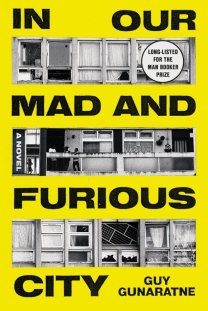
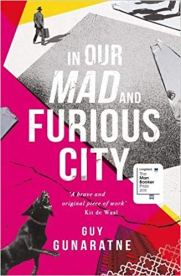 I’m not yet 100% sure that In Our Mad and Furious City is the right book for my purposes, but it is definitely the front-runner now: Liz has good instincts! For one thing, it is relatively compact: the edition I read is 274 not particularly dense pages. I also found it really engrossing. It took me a dozen or so pages to adjust to the voices–it is told by five different first-person narrators–and especially to their language, as most of the speakers use a vernacular which is unfamiliar to me. The effort to learn it, to hear it, to feel it, is part of the novel’s point, I think, and while I did continue to stumble occasionally over idioms I didn’t understand, it got much easier as I went along. (If I do teach it, I think I might bring in the audio book, which
  Although there are clearly big ideas at stake in the novel, Gunaratne does a good job making his characters’ lives seem intensely personal: they do not come across as devices serving only a didactic purpose. Perhaps oddly, the novel reminded me of S. E. Hinton’s classic teen novel The Outsiders: although almost everything about the context and action of In Our Mad and Furious City is different, I felt the same poignancy in it around the idea that youth is, or should be, a time of great but often thwarted possibility. Living on the margins as these young men do, pressed on every side by poverty and prejudice and impossible conflicts of loyalty, realizing even their modest dreams seems almost too much for them to hope for. While the novel is intimate in these ways, though, it is also about British history and politics, with the square at the Estate representing a microcosm of the larger society and its interconnected problems. The novel’s interwoven voices are at once a sign of its many divisions and (maybe) a formal reflection of how its complicated diversity could ultimately create a kind of unity.
 I’m 337 pages into my Oxford World’s Classics edition of Dombey and Son. It ends on page 925, which means I’ve read just over a third of the novel. Not all that much has actually happened–a birth, a few trips and some time at school, a misadventure or two, a death–but all of it has has happened at great length.
 I actually don’t know yet if I think Dombey and Son is too long for its purposes. I hardly know what it’s about yet! Reading it, however, especially after seeing that emphatic criticism tossed out on Twitter with such confidence, I have felt very aware of its length. I’ve been thinking about the strategies I suggest to my students when we read Bleak House, which is even longer (976 pages), many of which have to do with managing the information overload that comes with a first exposure to so many characters before you know who really matters or how they are connected, and with multiple unfolding plots that don’t yet have a known shape. My first class or two for any long novel is usually spent providing what I hope will be useful and widely applicable guidelines: look for variations on this theme, think about these kinds of contrasts between characters, pay attention to who does this and who does that. Students need what one critic calls “rules of notice.”
 When I taught David Copperfield in the fall, I addressed its length explicitly (the OUP edition is 944 pages). I always talk about length when teaching Middlemarch. “I don’t see how the sort of thing I want to do could have been done briefly,” Eliot wrote: that’s a good starting point for discussion about what exactly she is doing and how those purposes make the novel’s scale an important element of its form. (Interestingly, at least in the OUP edition Middlemarch, at 904 pages, is shorter than any of these Dickens novels, though I don’t know if the font size or page layout is standard. It reads longer, I think, perhaps because it demands scrupulous attention in a way that Dickens’s exuberant excesses may not appear to.) With Bleak House, we usually tie the novel’s multiplicities to the scale of its critique: it isn’t about one house or one family or one sad crossing sweeper but about a whole society.
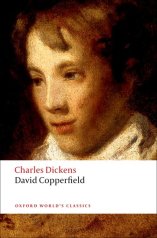 With David Copperfield, though, I found myself wanting to add another consideration, which is the particular ways Dickens makes his novels so long–when he does, because of course he doesn’t always, which is another reason to think about their length as meaningful rather than haphazard or (as those who object to Dickens’s novels as “too long” seem to imply) artistically lazy or inept. A lot of the length in Dickens’s fiction comes from what we might call “riffing.” (Merriam-Webster defines “riff” as “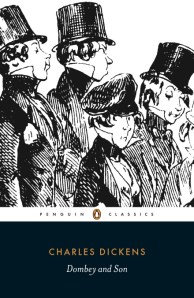
 Last Friday was Munro Day and I almost didn’t notice: usually it’s a highlight of the winter term, a day off right when things are starting to get real and so everyone’s starting to get tired. It’s true that I’ve been tired lately myself, but at least I haven’t had to show up for class! I’m mostly on my usual schedule, because I’m still dropping Maddie off at school, but it has definitely been nice not having to be ready for the day in quite the same way: evenings and weekends aren’t haunted by what’s yet to be done or taken up with prep and grading.
 The survey course isn’t until next winter term so I have plenty of time to keep considering options for which contemporary novel to use. I want something that will play along with the theme of ‘belonging’ and/or be an interesting complement to Wuthering Heights, and with that in mind I’m currently reading
  Finally, after trying and not liking a few other hard-boiled / noir options for Pulp Fiction, I think I have settled on
  Another sabbatical project of a different kind was to come to terms with the essays I’ve written over the past few years about George Eliot, mostly for Open Letters Monthly but also for the Los Angeles Review of Books and Berfrois. What I mean by “come to terms with” is really “decide what to do about,” but the first phrase captures a bit more of the emotional baggage the essays have come to carry. I loved writing them, and on my 2015 sabbatical I worked mostly on more writing of the same kind, some of which I ultimately pitched unsuccessfully to a couple of publications that run similar pieces, such as The Hudson Review. I naively thought this was the kind of cross-over writing that would bolster my application for promotion–distilling, as it did, decades of academic expertise into publicly accessible forms. But it actually made no positive difference to my case at all (not peer reviewed, you see), as it turns out. Since then, the idea of a revised and expanded collection has also proved completely umarketable: the essays themselves don’t do anything with mass appeal and also–and this is something I honestly hadn’t thought enough about–their standing as previously published material works against them. Yes, there are plenty of essay collections out there that are mostly or even wholly republished material (some of them with not much more popular appeal, in subject and approach, than mine) but in those cases the authors’ famous names make the sale.
 So, six weeks into my sabbatical, that’s what I’ve done so far. Well, that and make most of a shawl that, over the past few days, I have had to completely unravel because I realized I had been doing one part of the pattern wrong almost since the beginning. As I ready myself to start re-doing it, it’s hard not to think of the process as a metaphor for my other work. Undoing crochet still leaves you with all the yarn, after all: you just have to make something else out of it. It’s very pretty yarn; that seems like grounds for optimism.
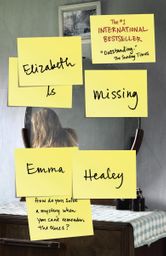 Elizabeth Is Missing gripped me from the first page. It is a poignant, sometimes funny, and often painfully suspenseful novel, not so much because of the mysteries it is structured around–the present puzzle about Maud’s missing friend Elizabeth and the question of what happened to Maud’s sister Sukey in the past–but because I was so anxious on Maud’s behalf. Maud is in her eighties and is just tipping over into senility, or perhaps dementia. Although her recollections of her childhood are vivid and detailed, she is losing her grip on her current everyday reality; everything from going to the store to making toast has become nearly impossible for her, but Maud doesn’t quite know that. So we follow along helplessly as she repeatedly wanders into trouble of one kind or another, in spite of the helpful notes she relies on as prompts and warnings (Coffee helps memory, Don’t cook anything, Haven’t heard from Elizabeth).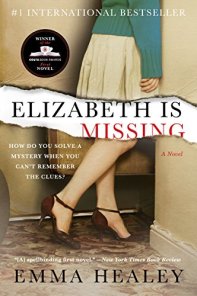

 Edith’s real life gets more and more disappointing, but the life she “records” in her diary is quite different: there, Cliffie gets accepted to Princeton instead of cheating on his admissions tests; he marries, has children, travels, and excels professionally, instead of hanging around home moping, drinking, harassing Uncle George, and getting in trouble. “Splendid day,” Edith writes; “Long letter from Cliffie. . . . D. [Cliffie’s imaginary wife] phoned. She considers going out to join C. when the baby is a few months older. I really think she should.” It is sad as well as deranged: Edith’s reality is not great, after all, and the novel’s one strength is how subtly Highsmith has Edith’s grasp on it deteriorate (at one point she almost says something to the real Cliffie about the family she has concocted for him). Here too there is some suspense: as Edith’s friends and family start to worry about her, trying to get her to acknowledge that all is not well, it seems all too possible that the fissure between truth and lies will lead to some dramatic crisis.
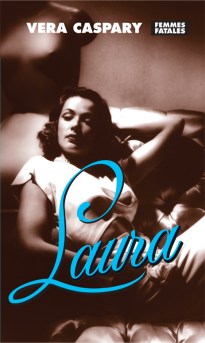 Seating himself in the long chair, his thin hands gripping the arms, he seemed to relax watchfulness. Tired, I thought, and noticed the hint of purple in the shadows of the deep-set eyes, the tension of flesh across narrow cheekbones. Then, quickly, hailing into my mind the scarlet caution signal, I banished quick and foolish tenderness. Dolls and dames, I said to myself; we’re all dolls and dames to him.
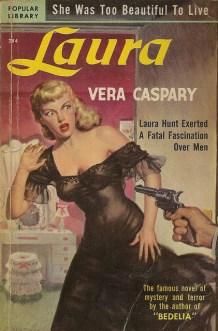 Laura would pose some pedagogical problems of its own, not because it’s creepy (though it is deliciously twisty) but because its first narrator, Waldo Lydecker, is completely insufferable. I actually didn’t know when I began the novel that it would have multiple narrators and I wasn’t sure I was up for 200 pages of his self-conscious pomposity. “I am given,” he tells us,
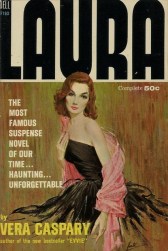 In addition to the clever plot and the pleasures of the multiple narrators, Laura seems to me particularly interesting for (no surprise!) Laura herself, and for the way the other characters attempt to fix her identity in a way that accords with their assumptions about women. Hard-boiled or noir fiction famously tends to limit women to specific roles: victim, dame, femme fatale. Caspary and Laura are both aware of the way women get cast into roles that restrict their individuality and define them in relation to men; Laura’s resistance to this is one of the factors that puts her life in danger. “You are not dead,” another character says to her at one point; “you are a violent, living, bloodthirsty woman.” How much of that sentence is true? It depends, quite literally, on whose story you accept.
 “I know he has a bad nature,” said Catherine; “he’s your son. But I’m glad I’ve a better, to forgive it; and I know he loves me and for that reason I love him. Mr. Heathcliff, you have nobody to love you; and, however miserable you make us, we shall still have the revenge of thinking that your cruelty rises from your greater misery! You are miserable, aren’t you? Lonely, like the devil, and envious like him? Nobody loves you–nobody will cry for you, when you die! I wouldn’t be you!”
 Another is that while Emily Brontë may have had no “interest in shaping her story morally,” Wuthering Heights is a very complexly structured novel, with its multiple nested and embedded narratives. The many hours I’ve spent on other novels with multiple or unreliable narrators, such as The Moonstone or The Tenant of Wildfell Hall, have shown me what fun the interpretive work can be as you sort through who is saying what in particular, to whom and why and with what consequences for our reading of their words. I hadn’t paid that much attention to this aspect of Wuthering Heights before, though I knew it was the subject of a lot of the critical discussion. This time I was more attuned to it and felt some genuine enthusiasm at the prospect of working on it with my students, even if most of the voices we’ll be attending to are as unpleasant as young Catherine’s spiteful words to Heathcliff in my epigraph to this post.
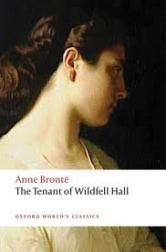 The one reason I’m still hesitating: Perhaps wrongly, I’ve been assuming that the Brontë portion of my reading list is a zero sum game, that if I assign Wuthering Heights I can’t also assign Jane Eyre or The Tenant of Wildfell Hall, and that makes me sad, because those are known pleasures. But the only person making up this rule is me, so maybe I can break it! Would it be so bad if two out of five novels were Brontë novels, especially given how different they are from each other? As I was finishing up Wuthering Heights I kept thinking how great it would be to read Tenant right after: then Heathcliff and Hindley and Hareton could face off against Huntingdon, Hattersley, and Hargrave. What if Wuthering Heights were crowding out Scott or Thackeray instead of Charlotte or Anne? Would that be so bad? (I mean, yes, it would, in a way, because I also love teaching Waverley and Vanity Fair, but you can’t do everything, at least not all at once.)
 Novel Readings