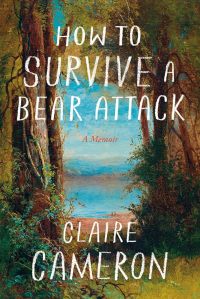
 Will I survive a bear attack? I’d been asking the wrong question. Being alive is one big risk and it will end in death, but the bridge between those two things is love.
After this investigation, my recommendation is to spend your time falling in love with the people and the world around you. Don’t let a fear of death eclipse your life. Run towards love, fight for it, and die for it.
When I was a child, my family went camping most summers, often at Saltery Bay, a significant drive (and two ferry rides) up B. C.’s optimistically named ‘Sunshine Coast.’ I wasn’t – and still am not – particularly outdoorsy, and I am irrationally afraid of starfish, and, less irrationally, of barnacles, so I am not sure I ever swam in the water off the rocks where we hung out day after day. I loved the tidal pools, though, full of mussels and crabs and tiny fish, and I loved staking out our favorite picnic table, the only one with any shade, early in the morning with my dad (the other families must have hated us!). We played Scrabble there, and painted rocks, and colored in our coloring books. Back at the campsite after dark, we played card games and colored some more and designed outfits for my beloved paper doll Hitty (named for and patterned after the wooden doll in this book) and sang songs by the fire when my dad played his guitar.
Every so often on these trips my dad would make a joke to my mother about bears. I am morally certain, now, that she never found them funny. I don’t remember ever taking bears seriously myself. I also don’t remember any particular precautions that we took to keep them at bay. But the elegant and informative B. C. Parks website (no such thing existed during my childhood in the 1970s and 1980s, of course) does say that “bears, cougars, wolves, and other potentially dangerous animals may be present,” and gives advice about how to keep yourself safe.
 We were more wary about bears when we camped at Manning Park, I guess because it’s in the mountains and bears were known to roam there. In fact, I think I remember us all getting into the car once because we spotted a bear in our vicinity, though I am not 100% sure about this.* If we did, it can’t have helped my mother’s anxiety about these burly threats to her family. As Claire Cameron is at pains to emphasize in her new memoir How to Survive a Bear Attack, bear attacks are vanishingly rare. The couple whose grim deaths on a camping trip in 1991 are the anecdotal center of her story were, statistically speaking, in much greater danger on the drive to Algonquin Park; as she also points out, the woman of the pair was – again, statistically speaking – more likely to be killed by her male companion than by a bear. Still, if you are the rare target of a charging bear, those statistics are not going to feel reassuring, and if a bear does actually attack you, you are in extreme danger.
Claire Cameron was not attacked by a bear. The title of her book is not exactly misdirection: in fact, How to Survive a Bear Attack is full of information about bear attacks and how to survive them. The sections have titles like “When to Play Dead,” “When to Fight,” and “A Time to Surrender.” Cameron had turned to the wilderness after her father’s death from cancer, and had found courage and strength in the beauty of the Canadian landscape and her own active engagement with it, hiking, climbing, paddling, and camping. Anyone with these interests has to think about bears, and Cameron often had. A turning point in what became a “full-blown bear obsession” was a close encounter with one when she was planting trees in Northern Ontario. She knew the story about the couple who had died in Algonquin Park, but the cinnamon bear she saw on that expedition was an “apple-eating bear” smart enough to pry the lid off the Tupperware container he’d taken out of her backpack (which the bear had lifted from a van when someone foolishly left the window down a bit) and eat the peanut butter sandwiches inside.
Over the years, Cameron had been plenty close to bears – and also “stood close enough to mountain lions, and jumped over rattlesnakes.” It was only practical to know something about what to do in the event that a bear saw her as a threat, or as prey. But it had never come to that, and then at 45, she got a diagnosis that changed everything. “It was only now,” she says, “that I realized how foolish I was. I’d been preparing to fight a bear when the thing that would most likely kill me – my own DNA – had been lurking in a place much closer.” What she is fighting is cancer, specifically the rare and threatening form of melanoma that led to her father’s death at only 42. At the time of her own diagnosis, Cameron was 45.
Some of the strongest writing in the book comes in the passages where Cameron reflects on how it feels and also what it means to understand that “nature” is not a setting for our lives but that our lives are themselves natural. In the wake of this frightening news, she and her husband hold each other, wonder what to tell their kids, and contemplate a future without the “false sense of security” that comes from the walls we build around ourselves. “Every now and then,” she says,
something happens. A reminder. The mask of control slips to the side and there is a glimpse of what lies behind. We are subject to natural forces. We are delicate, vulnerable creatures, no matter how much time we spend telling ourselves otherwise. Our teeth are blunt, our skin is thin, and our hearts flutter close to the surface. We are subject to the pull of the moon; we can be shifted by the tides and pushed by the wind.
Later, in the context of the deadly bear attack in Algonquin Park, she will note specifically the vulnerability of the backs of our necks: “a person approached from behind with force stands little chance.” This, she thinks, is how Carola died – instantly, at least, unlike her partner Ray, who seems to have fought with everything he had. (Fair warning: parts of this book are quite graphic about the damage bears can do.)
What does a bear attack have to do with cancer? Is it just a metaphor? Yes, partly: the book is about Cameron’s illness and her desire to survive it, and so the section headings (especially 12, “How to Live”) take on dual meaning. But Cameron is also, still, obsessed with literal bears, and just as her turn to the outdoors helped her come back to life after her father’s death, so her strong and initially inexplicable fixation on finding out what exactly happened at that campsite in 1991 helps her find purpose, motivation, and eventually meaning after the surgery that, provisionally anyway, removes her cancer but leaves her weakened and unmotivated. The quest starts with an anomaly, perhaps a mistake, in a note she’d written about the case for her earlier novel The Bear. Suddenly “every hour became urgent”:
By that time, I had lived three years longer than my dad. This felt like borrowed time. I made a list of questions. I was sore and tired. I suspected I might be dying, but finding answers became more pressing than fear.
The next big shift comes as she pursues those answers and comes across a photograph of the killer bear. She had always focused on the people, the victims, the search party, the mourners, herself. Only at that moment does she realize there’s another point of view: the bear’s. Bears “are individuals. They do individual things.” To complete her story of that fatal meeting, she “needed to understand this bear on his terms, not mine.”
 The bear’s story becomes the third strand in the narrative Cameron weaves, which combines her personal story, the story she puts together (including various testimonies and evidence) about Carola and Ray’s horrific final day, and sections from the point of view of the bear that attempt to portray him as a character in his own right – personality, curiosity, hunger, all as far as possible conveyed as aspects of what we might call bearishness. I admit I found these parts not completely convincing, not so much because they are inevitably speculative but because, well, it’s a bear. Cameron knows, and tells us, a lot about bears, including how smart they are, but this bear thinks, remembers, and plans to a degree that seems improbable. I think the idea probably was to make explicit what in reality is more implicit or instinctual; the risk is anthropomorphizing him, and while I think Cameron makes a valiant effort not to do that, still, well, it’s a bear. I still found it very interesting to learn so much about a bear’s life, though! And I liked the connections Cameron makes to Beowulf, one of the stories her father had loved to share with her. Toni Morrison, in an essay on Beowulf, “makes the point that nowhere in the story do people ask questions about why Grendel was hell-bent on eating them.” “When I followed Morrison’s thought,” Cameron explains, “I understood that the bear wasn’t beyond comprehension . . . It felt like trying to reach out and touch Grendel.”
The bear is a bear; the bear is Grendel, embodiment of our oldest and deepest fears; the bear is cancer; the bear is nature. They are all, in their own way, wild – and the wilderness is not somewhere else, separate, held back or “conserved” within inside the arbitrary boundaries of a park:
The wilderness has never been empty. It doesn’t have borders. It’s a word that defines a relationship between the people, the wildlife, and the land. It’s ancient and will be here long after I’m gone. I can’t control where or how it goes. It’s under the carpet, in the alley behind my house, in the lake, inside a glacier, and on an island in Algonquin Park. It’s inside the mind of a black bear.
It’s also much closer. It lives in my cells. To some, those cells might have a mutation. To me, they are cells inherited from my dad. I have cancer. It’s wild inside me.
Cameron completes her investigation and writes her account of what happened, to Carola and Ray, to the bear, to her father, and to herself. There is ultimately no comforting answer to the question that once preoccupied her: “If I’m attacked by a bear, will I survive?” None of us survive, so the question, the preoccupation, is itself misguided, she concludes. “Being alive is one big risk and it will end in death”; instead of running away from bears (which, just by the way, is not a good move in the case of a literal bear attack) we should “run towards love, fight for it, and die for it.” The lesson might seem a little pat, even trite, but the urgency and the poignancy of it are real for Cameron, which gives it power, and besides, things are often trite precisely because they are true. There’s a reason a story as old as Beowulf can still speak to us, can still give Cameron the words she needs to face the end: “I’ll let go then, of all my holdings, my throne, my carefully guarded bones.”
*I checked with my parents and my mother confirms: “The night before, a bear prowled around our tent. At lunch the next day when many were enjoying themselves by a stream at a picnic site, a bear wandered in and I was the only one who made my family get in the car.” That seems a very sensible precaution to me!
The car, the moon, Eric’s face . . . were all changed. She looked at him, his concentration (there was ice out there), his frowning into the onrush of night. She might just sit there, do nothing, say nothing, but it no longer felt inevitable. Her anger, at that precise moment, was absent. The anger, the fear, the shame, the wound that had to be tended like a wayside shrine. And what had replaced them? Only this: the rattling of the little car, the whirr of the heater, the shards of light beyond the edges of the road. A sadness she could live with. Some new interest in herself.
 My recent reading has not been particularly exhilarating, but most of it has been just fine: no duds, just no thrills.
 novel to spend the amount of time on it that I’d need to coax the students through its 450+ pages (more than two weeks, most likely). This is the conundrum of
  I got Madeleine Thien’s Do Not Say We Have Nothing from the library as soon as I had agreed to review her forthcoming novel The Book of Records, on the theory that it was probably a good idea to know something about the earlier one in case there were connections. It turns out there is one possibly important one, though I’m still figuring out exactly what it means: throughout Do Not Say We Have Nothing the characters are reading and writing and revising a narrative called the Book of Records! I actually owned a copy of Do Not Say We Have Nothing for years and put it in the donate pile eventually because for whatever reason I still hadn’t read it. I assigned a story by Thien in my first-year class this year that I thought was really good, so this had already piqued my interest in looking it up again. I had mixed feelings about it. I found it a bit rough or stilted stylistically and never really fell into it with full absorption, but it is packed with memorable elements and also with ideas. It tells harrowing stories about the Cultural Revolution in China and focuses through its musician characters on how or whether it is possible to hold on to whatever it is exactly that music and art mean in the face of such an onslaught on individuality and creativity. It invites us to think about storytelling as a means of survival, literal but also (in the broadest sense) cultural—this is where its Book of Records comes in, as the notebooks are cherished and preserved, often at great risk. I’m not very far into Thien’s new novel yet but it seems even more a novel of ideas, perhaps (we’ll see) too much so.
 Look, I don’t want to pretend everything is fine, in general or in my classes. Last week I was grading take-home midterms for Mystery & Detective Fiction and feeling to my core the truth of what is now a commonplace: AI is pervasive, and not “for better or for worse”—just, unequivocally, for worse. The one consolation I had (and it is, truly, not particularly consoling) is that the results, for the students, are not usually good. This means it doesn’t matter whether I can
 These are long, complex, demanding books! So when the author of that essay declares that “our average graduate literally could not read a serious adult novel cover-to-cover and understand what they read,” that students “are impatient to get through whatever burden of reading they have to, and move their eyes over the words just to get it done,” I have to wonder: are my students really so exceptional? I mean, I do think they are lovely and wonderful; I genuinely look forward to every class. It’s true they are English students, and mostly Honours English students at that, with some graduate students as well, so definitely, when it comes to reading, both an elite and a self-selecting group. Still, when we tell stories about higher ed today, shouldn’t we talk about them too?
 I have come here to walk the earth as human. I choose to be disguised and camouflaged. I live in the faces of the most betrayed and ignored of all humans. I live in silence. I am the words trapped on the bitten tongue. I am more than a statistic. I am more than another hashtag. I live in the heart of the poor woman, the black woman, the elderly woman, the sick woman, the healer, the teacher, the priestess, the witch, the wife, the mother and the girl. I am Death and I am quick. I am a rabbit and I can vanish. I can be anything I want to be. I choose the unheard and unspoken. I live in the silent scream and I will be silent no more and I have so much work to do . . .
 This was my favorite moment in Miranda July’s All Fours:
 I was so tired, but the mess on my bed—the same congestion into which I had nightly crawled without noticing—was suddenly intolerable to me. I yanked at the sheet and the motion sent everything to the carpet. I lifted the sheet with two hands and it billowed slowly back down, and as it did I felt some otherworldly possibility open up inside myself. I picked up one of the pillows from the floor and placed it back on the bed, smoothed the sheet down to make a flat, empty expanse. I stood looking at the bed and breathing. It isn’t something I ever told anyone—how could you say this?—but the lift and descent of that sheet, the air inside it, the peace when it settled, showed me what I wanted. I knew it in that moment, but it took years to find it.
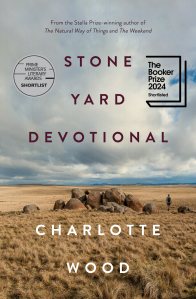
 It wasn’t always clear to me as I read the novel why it had the specific pieces in it that it did (and of course I have not itemized them all here, though it is not a plot-heavy book). Sometimes when I’m reading a novel, even for the first time, I feel a gathering sense of its unity as I go along, of what holds it together for me. Other times if I work at it for a bit patterns emerge—sometimes, this happens while I am writing about it here! It’s likely that if I reread Stone Yard Devotional the ideas that connect its various elements would become clearer: I expect they would, because the novel feels so deliberate, so thoughtful. What did hold it together for me was its tone, or voice. I liked the way the narrator thought and talked. Often she leads herself, and thus us, along an unassuming narrative thread until she arrives somewhere quietly meaningful. Here’s an example:
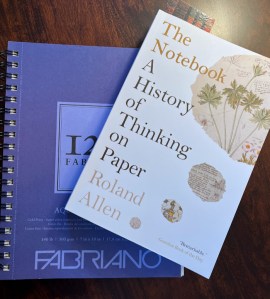
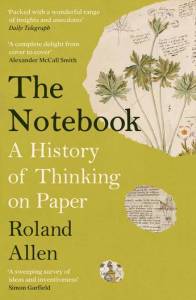 Stackhouse was no poet, no artist, and his literary tastes were unsophisticated. But he wrote for himself, not posterity, and he valued the notebook enough to fill more than three hundred pages, and to invite friends and family to make their notes in it too. His observations might be of consequence to no-one but himself, but isn’t it a happy thought that such documents can survive for centuries, intimate memorials to their owners’ preoccupations—unremarkable, hardly read, yet every one unique?
 My epigraph for this post comes from the chapter on common-place books; there is also one on seafaring logs and one on the remarkable Visboek, or Fishbook, created by the Dutchman Adriaen Coenen in the 1570s. A chapter on travelers’ notebooks highlights Patrick Leigh Fermor and Bruce Chatwin; one on mathematics of course focuses on Newton. The most famous naturalist to keep notebooks was Charles Darwin, and Allen’s remarks about his process exemplify the connections he makes throughout the book between writing and thinking:
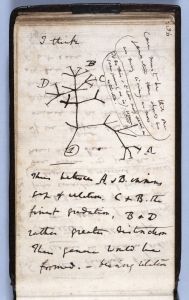 What’s distinctive here, of course, is focusing on notebooks themselves as enabling devices for Darwin’s achievements—Allen draws our attention over and over, as he makes his way through his many topics (including, besides the ones already mentioned, authors’ notebooks, recipe collections, police notebooks, patient diaries, and more) to the importance of the flexibility and portability of notebooks, the opportunities they create for in the moment as well as reflective writing, data collection as well as analysis and synthesis. The simple point that they can be carried with us and require so little else to do this work for us, or to support our work, is what matters: this is what was initially transformative and continues to be endlessly appealing, even in this electronic era. In the chapter on “journaling as self-care” Allen discusses the strong evidence for the value of “expressive writing” for helping to heal trauma (he also touches on the reasons that note-taking by hand seems to be more effective for learning during lectures).
 Like the Florentine accountants, Renaissance artists and early modern scientists before him,” Allen says, “he’d come to understand his notebook as a crucial tool for the mind, a way to turn intangible thoughts into more concrete written ideas that could more easily be manipulated.” So far so good, but once Carroll’s system becomes popular and highly commercial, and “bullet journaling was everywhere,” Allen starts to get a bit sniffy about it—especially about the “huge online community of bullet journalists who took to social media to celebrate and share their own journals.” “Looking at their lists and journal spreads,” he observes, “one senses less intentionality than a straightforward interest in prettification.” He doesn’t seem to approve of the way bullet journaling “fits neatly into the perennially irritating self-help genre,” and “yes,” he says, “if you follow bullet journalists online, you see many doodled sunflowers next to their things-to-do lists.” But, he concedes, “there is something substantial” there nonetheless. Given that he goes on to once more affirm that Carroll’s systematic use of notebooks belongs in the story he’s telling and even, as he notes, has a unique place, as Carroll is rare in himself thinking of the notebook “as a tool, wonder[ing] how it actually works,” I didn’t see why he got so grudging about it there for a while. Michael of Rhodes was interested in “prettification” too, as was the fishbook guy, after all!
 —even to care for the sick. With it, we can come to know ourselves better, appreciate the good, put the bad in perspective, and live fuller lives.
 Last week in my classes it was Reading Week, a.k.a. the February “study break.” Although overall this term has not been nearly as hectic as last term, I was still grateful for the chance to ease up. Work is tiring. Winter is tiring. Grieving is tiring (yes, still). It doesn’t help that I continue to wake up a lot at night with shoulder pain, something I have been trying to fix for years now. (I am getting closer, I think! I am working with an orthopedist who seems pretty confident about what needs doing, although we are waiting for an ultrasound to confirm that the issue is my rotator cuff.)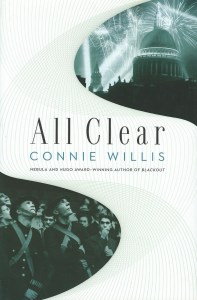
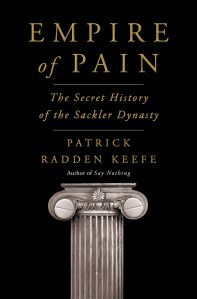 The one other book I got all the way through last week was actually an audiobook: my hold on Patrick Radden Keefe’s Empire of Pain came in, and it proved truly gripping, surprisingly so given that I knew a fair amount about the whole story from various other sources (including the harrowing series Dopesick). I was so caught up in it that I spent longer hours than usual working on my current jigsaw puzzle—which I think contributed to my shoulder pain somehow, so that was a weird confluence as it had me thinking a lot about how tempting the promise of relief would be even for chronic pain as relatively mild as mine. Of course the whole story is also infuriating and outrageous and horrific, and perhaps it would have been more calming to stick to my usual, more benign, program of literary podcasts!
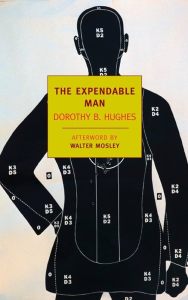 and that timing may well have been the real reason for my middling reaction to it. So far I am enjoying it just fine; we’ll see if when I get to the end this time I feel like reading on in the series.
