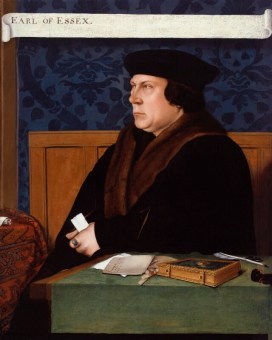
He closes his eyes. What does God see? Cromwell in the fifty-fourth year of his age, in all his weight and gravitas, his bulk wrapped in wool and fur? Or a mere flicker, an illusion, a spark beneath a shoe, a spit in the ocean, a feather in a desert, a wisp, a phantom, a needle in a haystack? If Henry is the mirror, he is the pale actor who sheds no lustre of his own, but spins in a reflected light. If the light moves he is gone.
As I made my way through The Mirror and the Light, I found I was nearly as preoccupied with two questions about the novel’s form as I was with its detailed and sometimes mesmerizing chronicle of Cromwell’s last four years: why is the novel so long, and how would it end?*
My question about its length is a genuine one, not (or not exactly) a complaint or criticism. The novel is very long. I think possibly, if there is any way to measure such a thing, it is too long, by which I mean longer than it needed to be–but obviously it is exactly as long as Hilary Mantel thought it should be, and there’s a part of me that finishes that sentence by saying “and she should know.” She’s too smart and too artful a novelist to have left in anything that didn’t serve her purpose as she understood it, and she’s the kind of writer (meticulous, deliberate) who has earned my trust. That, arguably, shifts the burden to me: if the novel seemed too long to me, what was I missing?
 My question is not well-posed, perhaps. After all, it’s never actually length that’s the problem when a book seems too long, is it? It’s our experience of that length. Many of my favorite books are as long as or longer than The Mirror and the Light (its pages are not even that densely packed) and sometimes a book with relatively few pages or words can seem slack or be tedious to wade through. My question is really more about what Mantel includes than about how much. Compared to Bring Up the Bodies, The Mirror and the Light felt loosely woven: its nearly 900 pages do at once too much and too little. For around 300 pages in the middle of it, I shifted into what I think of as “maintenance” reading: scanning, rather than scrupulously studying, each page, so as to maintain momentum without (I hope) missing anything significant, slowing down when the action or the prose seemed to intensify. There is a lot happening throughout The Mirror and the Light, but much of this action is on a small scale, like individual threads fraying or breaking on a vast tapestry. Cumulatively, every little bit matters because it contributes to the large-scale catastrophe that is Cromwell’s eventual and inevitable fall, but that big pattern (the final phase of the remarkable rise that began in Wolf Hall and accelerated in Bring Up the Bodies) is what’s important, not the minutiae.
 Why, then, does Mantel include so much of it? Or (to set aside the tired and unhelpful question of authorial intent) what is the effect of her decision to include every little thing–to reject the taut intensity that made both earlier books in her trilogy feel so much shorter, go by so much faster, in favor of this more expansive process? One answer that occurred to me as I neared the novel’s conclusion is that our immersion in the daily nitty-gritty of Cromwell’s life at the peak of his power–the constant demands that he do something, fix something, say something; the endless petty but also perilous contests for political dominance with his rivals and enemies; the fraught delicacy of his dances with Henry’s needy vanity–made his death feel shockingly sudden, even though his eventual fate has always been the one absolute certainty of Mantel’s story. Right to the very moment that he finds himself surrounded, arrested, and imprisoned–the moment that he knows too well is the beginning of the end of his life–Cromwell is in the midst of the complicated business of living. While the dramatic irony that is an inevitable feature of historical fiction always hovers over the novel’s action, the steady hum of everything that’s happening in the moment made me less aware of it, papering over the gap between my knowledge of what’s coming and Cromwell’s ignorance. This effect really heightened the emotional power of the last 200 pages, when his efforts prove (as we knew they would) insufficient to save him.
 Another way I came to think about the novel’s length: The Mirror and the Life is very much a novel about middle age, a time of life in which (as I am learning) present experiences share mental and emotional space with intense memories of the past and a heightened awareness of the finite future. One reason The Mirror and the Light is longer than Wolf Hall and Bring Up the Bodies is that it contains (or Cromwell’s consciousness contains) both of them within it. In this final novel Cromwell is not just living through his present but constantly recalling his past, reaffirming his history and identity, puzzling out continuities and discontinuities between the boy he once was and the man he now is–and at the same time he is anticipating what will come next, always with a sense of being surrounded by the ghosts of his past actions and (not incidentally) his past victims. Also, like many middle-aged people he has reached a professional plateau: The Mirror and the Light is about a man at the height of his career but with no options for lateral movement and no possibility of a graceful retirement. All he can do is hang on and try to enjoy the rewards his many years of hard work have brought him, while others eye his accomplishments, underestimate the price he paid for them, and dream of succeeding him. There’s less intrinsic drama in maintaining power than there is in either winning or losing it–hence the feeling, at times, that both Cromwell and the novel are spinning their wheels and getting nowhere. When the likely next step is disgrace and death, though, just staying in place has its own particular kind of dramatic tension, and again, this set-up made the ending all the more
 Thinking about the novel’s length in these ways reminded me of George Eliot’s comment about Middlemarch: “I don’t see how the sort of thing I want to do could have been done briefly.” It is hard to tell a story that captures the whole scope of life–or, in Mantel’s case, of a particular life–without somehow reflecting that inclusive ambition in your formal choices. Still, my attention and interest did sometimes flag during the frequent scenes of Cromwell and his (few) friends and (numerous) rivals and enemies plotting and nattering and jockeying for position. In contrast, I was riveted by many sections that actually contributed comparatively little to the plot but showcase Mantel’s marvelous writing. Her long sentences are intricately shaped and ornately detailed but always completely controlled:
He used to think that the plums in this country weren’t good enough, and so he has reformed them, grafting scion to rootstock. Now his houses have plums ripening from July to late October, fruits the size of a walnut or a baby’s heart, plums mottled and streaked, stippled and flecked, marbled and rayed, their skins lemon to mustard, russel to scarlet, azure to black, some smooth and some furred like little animals with lilac or white or ash; round amber fruits dotted with the grey of his livery, thin-skinned fruits like crimson eggs in a silver net, their flesh firm or melting, honeyed or vinous; his favoured kind the perdrigon, the palest having a yellow skin dotted white, sprinkled red where the sun touches it, its perfumed flesh ripe in late August; then the perdrigon violet and its black sister, favouring east-facing walls, yielding September fruits solid in the hand, their flesh yellow-green and rich, separating easily from the stone. You can preserve them whole to last all winter, eat them as dessert, or just sit looking at them in an idle moment: globes of gold in a pewter bowl, black fruit like shadows, spheres of cardinal red.
Some readers might love the political maneuvering and find a long paragraph on plums extraneous, digressive–but I’ll take the plums every time: it’s like a still-life painting in prose, resonant with feeling but under perfect control. Here’s another characteristic example:
Don’t look back, he had told the king: yet he too is guilty of retrospection as the light fades, in that hour in winter or summer before they bring in the candles, when earth and sky melt, when the fluttering heart of the bird on the bough calms and slows, and the night-walking animals stir and stretch and rouse, and the eyes of cats shine in the dark, when colour bleeds from sleeve and gown into the darkening air; when the page grows dim and letter forms elide and slip into other conformations, so that as the page is turned the old story slides from sight and a strange and slippery confluence of ink begins to flow. You look back into your past and say, is this story mine; this land? Is that flitting figure min, that shape easing itself through alleys, evader of the curfew, fugitive from the day? Is this my life, or my neighbour’s conflated with mine, or a life I have dreamed and prayed for; is this my essence, twisting into a taper’s flame, or have I slipped the limits of myself–slipped into eternity, like honey from a spoon? Have I dreamt myself, undone myself, have I forgotten too well; must I apply to Bishop Stephen, who will tell me how transgression follows me, assures me that my sins seek me out; even as I slide into sleep, my past pads after me, paws on the flagstones, pit-pat: water in a basin of alabaster, cool in the heat of the Florentine afternoon.
For me, passages like these (and the novel is full of them) more than made up for the parts that failed to hold or reward my attention to the same extent, even though, or maybe because, they do little to propel the novel’s plot.

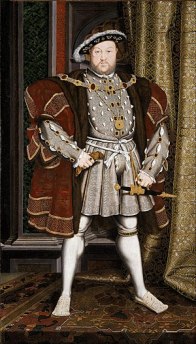
The plot of The Mirror and the Light is important, of course. Its most significant and decisive event is Cromwell’s negotiation of Henry’s marriage to Anne of Cleves: Henry’s disappointment in her, his fourth bride, was Cromwell’s ruin. This is a story I know well from other treatments, especially Margaret Campbell Barnes’s in her lovely 1946 novel My Lady of Cleves, so I was curious to see how Mantel told it. Like Barnes, she highlights the very plausible point that if either partner in this ill-fated marriage was entitled to disappointment or worse, it was Anne, trundled across Europe to marry a diseased and aging king known for ruthlessly discarding wives he didn’t want. Mantel’s Cromwell does his best to befriend Anne and coach her to please her irascible husband, but Henry’s antipathy (sparked by their unfortunate first encounter at which Henry, in disguise, took her by surprise as she traveled towards London) was worsened by his fascination with pretty young Catherine Howard. One reason I actually would have been happy for The Mirror and the Light to have gone on even longer is that I would have loved to see what Mantel did with Catherine: her Anne Boleyn is the best I ever met in any novel, and her doomed cousin’s fate is at least as grimly fascinating. (They are treated as a pair in Jean Plaidy’s 1949 Murder Most Royal, one of the most-read in my battered childhood collection of Plaidy’s novels.) We don’t get to know Anne of Cleves as intimately as we did Anne Boleyn: Mantel allows her some dignity, but she remains (as she was historically) a fortunate bit player in the larger drama.
 We can’t get close to Catherine, or follow her story to its bloody end, for a very simple reason: chronology. Cromwell’s execution preceded hers, though by barely 18 months. This returns me to the second of my questions about the novel’s form: how would it end? This is obviously not a question about plot; my interest was in the novel’s narration. One of the most discussed aspects of Mantel’s trilogy has been her use of a particularly close form of limited omniscient narration: it is in third-person but as if perched on Cromwell’s shoulder, barely acknowledging that it is not in fact first-person narration, never using the license Austen (to give one example of someone who also loves close third person) sometimes uses in her novels to change point of view once in a while to show us the story’s focalizing character from the outside, or to introduce a bit of information she’s not privy to. (I’m thinking of the rare but vital glimpses we get of Wentworth’s point of view in Persuasion, for example.)
Given her obvious interest in perception, consciousness, memory, and identity, and her obvious desire to bring us as close as she could to the mind whose outward manifestations she’s chronicling, why didn’t Mantel use first-person narration? She set herself the challenge, after all, of making a pretty unsympathetic historical figure–one who made many others his victims–into a character who is engrossing enough for us to care how he lives and dies, and first-person narration is a well-established trick for creating intimacy–sometimes sincerely, sometimes to exploit it to ironic effect (as in Ishiguro’s The Remains of the Day). The obvious answer is that then The Mirror and the Light would have had to be a ghost story. It is very much a novel about ghosts, and towards the end Cromwell feels their presence as vividly as that of any of his living companions, but it matters that they are dead while he is not, not yet. The novel, and its central subject, are profoundly interested in what happens when you cross over that line, both as a personal question (“He thinks of his daughters Anne and Grace; perhaps he will meet them as women grown?”) and as a religious one. Following Cromwell across the threshold would force answers to these questions and move us into territory that is beyond even Mantel’s exhaustive research. She’s not beyond imagining those answers (see, for example, Beyond Black), but I didn’t find her approach to them very convincing and I’m glad she let our awareness seep away with Cromwell’s, “going out on crimson with the tide of his inner sea.” She ends it as she should, with the very last of what “he”– long our eyes and ears, our whole consciousness caught up in his hands–can see, and hear, and feel.
 The Mirror and the Light starts in the immediate bloody aftermath of Anne Boleyn’s execution, making Cromwell’s own, less refined ending (“they don’t write words on the head of the axe”) a neat formal symmetry. The trilogy as a whole achieves something similar, beginning with Cromwell beaten to the ground by his father Walter, “pulled downstream on a deep black tide,” and ending with Walter’s voice still challenging him to “get up.” Even at the very last, the force of personality Mantel has created for Cromwell is so strong I almost expected that he would, like the case he recalls even as he mounts the scaffold: the Earl of Arundel “was axed down on this spot and his corpse leapt upright to say a Pater Noster. All headsmen … talk of it as a fact.” He doesn’t, of course, and at the last moment Mantel’s third-person narration proves its value as well as its logic, because he slips away and we are left behind. It is hard to mourn a man like Cromwell, but she has made it impossible not to miss him now that he’s gone.
* A postscript to this post: I realize I never really got around to discussing the basic features of the novel–stuff like its plot and characters and religion and politics–with much specificity, but it has been reviewed widely, so if those things are of more interest to you than these ramblings, it’s easy to find someone talking about them. That’s one reason I decided to address these particular aspects of the novel (which for better or for worse are the ones I was thinking most about as I read it and after I finished it) rather than doing more of a standard review post. In case I haven’t quite made this clear, I think it’s a really good novel, even though I ended up skimming some portions of it–not as good as the first two in the trilogy, where I was never tempted to skim, but still better than most novels. If I had to choose, I’d probably pick Bring Up the Bodies as the best of the three. You?
 From Patrick Leigh Fermor’s A Time of Gifts: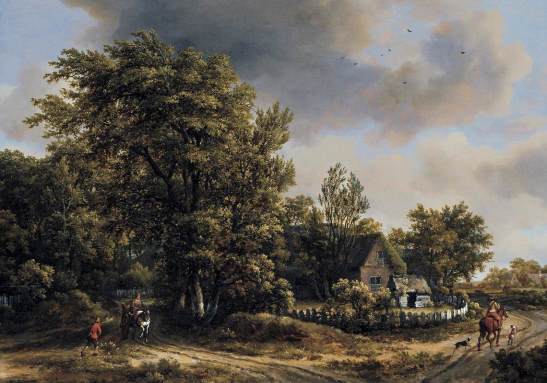
 I’m having a hard time keeping track of what day it is, mostly because under the new work-from-home protocol–and the more general stay-at-home order–there’s not much difference between one day and the next. I’ve also stopped doing grocery shopping on Saturday mornings (which had been my routine for more than two decades): now I go mid-week, usually Wednesday, as early as I’m allowed in the store, which means I’m home by 9 a.m. and so, aside from the gradually receding adrenaline from the stress of the outing, it too then becomes a day like every other day.
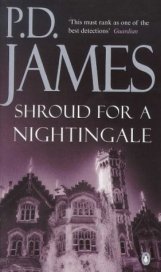 Afternoons are (more or less) for reading. I haven’t posted about any books since The Glass Hotel but that isn’t because I haven’t read any. In fact, I have read four (almost five) books since then, all by P. D. James, because I am rereading her complete works (or all of her mysteries, at any rate) in preparation for writing a piece for the TLS in honor of her centenary. I was really glad that the editors liked this idea: it’s a perfect project for this haphazard summer. I have a lot of ideas about James from having read (and taught) her for years, but I have not had a reason to put those ideas in good order before, and it has also been a long time since I read most of her back catalog. It’s very interesting reading through the books all at once and in order: you quickly notice recurring themes and habits, strengths and weaknesses, and also the way her scope and themes expand. I think (I hope!) that this is a kind of essay I’m reasonably good at, collating and synthesizing across a range of examples; this is also an approach that I think works well for crime series, which are interesting both in their individual parts and as enduring creations that are more than the sum of those parts, often (as in this case) through the story they tell about the central detective that unifies them. My previous essays on
 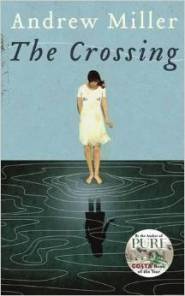 I do have some other books on the go or in the queue. I am about 100 pages into Andrew Miller’s The Crossing, which is the last of the random pile of library books I brought home shortly before the lockdown. It’s good so far in the way his other books were good: meticulous, quietly and a bit ominously atmospheric. I ordered Isabella Hammad’s The Parisian from Bookmark, and it looks very tempting; I pulled Patrick Leigh Fermor’s A Time of Gifts from the shelf because I’ve never read it and if there was ever a time to travel vicariously in excellent literary company, this is surely it. My book club “met” on Thursday to discuss
  We have certainly been watching a lot of TV: the new season of Better Call Saul, The End of the F***ing World, Little Fires Everywhere, The Stranger, Ozark … If we’d known what lay ahead, we might have rationed some of the other shows we watched over the winter–season 5 of Line of Duty, the latest season of Shetland–that we knew to be engrossing. It is a good time to be watching Parks and Recreation for the first time: its gentle, goodhearted humor is a tonic. Sadly, the channel that carried the Great British Sewing Bee and various other painting and craft shows has dropped suddenly from our cable package, just when such low-key distractions would be more welcome than ever, and a lot of the videos on the Youtube channel where I had found the Great Pottery Throwdown are now blocked, which I guess is legitimate but it’s still sad. It was March 8 that I wrote about how
  Well, it’s official:
  Having the decision made for me by circumstances hasn’t changed everything about how I feel about teaching online, but it has made a lot of those feelings irrelevant. Also, countering my wistfulness about what we’ll be missing are other, stronger feelings about what we will, happily, be avoiding by staying behind our screens. Every description I’ve seen of ways to make face-to-face teaching more or less safe for everyone involved has involved a level of surveillance, anxiety, and uncertainty that I think would make it nearly impossible to teach or learn with confidence: a lot of what is good about meeting in person would be distorted by the necessary health and safety measures, and even without taking into account the accessibility issues for staff, students, and faculty who would be at higher risk, being in a constant state of vigilance would be exhausting for everyone. Frankly, I’m relieved and grateful that Dalhousie has finally made a clear call that (arguably) errs on the side of caution. Now we can get on with planning for it.
 As my regret about the shift to online has been replaced by determination to make the best of it, I’ve also noticed something I’ve seen experienced online teachers point out before, which is a tendency to idealize face-to-face teaching, as if just being there in person guarantees good pedagogy. It doesn’t, of course. In my own case, I know that what I’ll miss the most is lively in-class discussions. But if I’m being honest, I have to admit that even the liveliest discussion rarely involves everyone in the room. Of course I try hard to engage as many people as possible, using a range of different strategies depending on the class size and purpose and layout: break-out groups, think-pair-share exercises, free writing from discussion prompts, discussion questions circulated ahead of time, handouts with passages to annotate and share, or just the good old-fashioned technique “ask a provocative question and see where it gets us.” Even what feels to me like a very good result, though, might actually involve 10 people out of, say, 40 — or 90, or 120 — speaking up. Others are (hopefully!) engaged in different ways, and there are different ways, too, to ask for and measure participation than counting who speaks up in class. Still, I’d be fooling myself if I pretended that there wasn’t any room for improvement–and what I want to think about as I make plans for the fall is therefore not how to try to duplicate that in-class experience online (ugh, Zoom!), partly because we are supposed to focus on asynchronous methods but also because maybe I can use online tools to get a higher contribution rate, which in turn might make more students feel a part of our collective enterprise. And, not incidentally, if all contributions are written, they will also get more (low-stakes) writing practice, which is always a good thing, and they will be able to think first, and more slowly (if that suits them), and look things up in the text, before having to weigh in.
 There are other ways in which (and we all know this to be true) face-to-face teaching isn’t perfect, and there are also teachers whose face-to-face teaching does not reflect best practices for that medium. Given these obvious truths, and especially since the shift to online teaching is driven by factors that themselves have nothing to do with pedagogical preferences, I have been getting pretty irritable about professors publicly lamenting these decisions, especially when it’s obvious that they haven’t made the slightest effort to learn anything about online teaching, or to reflect on the limitations of their own usual pedagogy. One prominent academic just published an op-ed in a national paper declaring that online teaching can only ever be a faint shadow of “the real thing”; others have been making snide remarks on Twitter about the obvious worthlessness of a term of “crap zoom lectures” (that’s verbatim) or questioning why students should pay tuition for the equivalent of podcasts. Besides the obvious PR downside of making these sweepingly negative and ill-informed statements when your institutions are turning themselves upside down to find sustainable ways forward, what kind of attitude does that model for our students? The situation is hard, I agree, and sad, and disappointing. But at the end of the day we are professionals and this, right now, is what our job requires. If we value that job–and I don’t mean that in the reductive “it’s what we get paid for” way (though for those of us with tenured positions, that professional obligation is important to acknowledge and live up to) but our commitment to teaching and training and nurturing our students–then, if we can*, I think we need to do our best to get on with it.
 And happily, though most of us are not trained as online teachers, we do have a superpower that should help us out: we are trained researchers! We can look things up, consult experts, examine models, and figure out how to apply what we learn to our own situations, contexts, pedagogical goals, and values. At this point, that’s what I’m working on: learning about online learning. Yes, I had other projects I was interested in pursuing this summer. In fact, I still do, but I have scaled back my expectations for them, because I can’t think of anything that’s more important right now than doing everything I can to make my fall classes good experiences, for my students and also for me. I have the privilege of a full-time continuing position, after all, and my university is making experts and resources available to me–plus there are all kinds of people generously offering guidance and encouragement through Twitter and I have been following up their leads and bookmarking
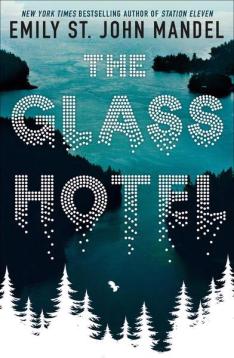 But–why have a painter in this role? Is there something specifically meaningful about her portrait of Lucas? Are we meant to discern a contrast between what she makes (art) and what Jonathan makes, or pretends to make (money)? Is there a further connection along these lines to Paul, brother of Jonathan’s “trophy wife” (she isn’t quite that) Vincent, who is also an artist? Is Paul’s “theft” of Vincent’s archive of videos (repurposing, he prefers to consider it) meant as some kind of analogy to Jonathan’s abuse of his investors’ trust? How does the hotel of the title fit in, besides as a memorable setting? Is it symbolic? (People who live in glass hotels shouldn’t … what?) Is there meant to be a parallel between Vincent’s final moments, as she drowns (this is where the novel begins, so it’s not a spoiler) in the ocean, and the reclusive peace the hotel’s caretaker finally finds? Is the recurrence of drug addiction significant? Why are there so many ghosts? Is the message on the window somehow at the heart of it all? I have a lot of questions!
 When Krister came home at one a.m. the girls were asleep, but Irene was still up. After telling him about Jenny’s troubles and about the impending end to her skinhead period, she tried to seduce her husband. But he was too tired and not at all in the mood. The Christmas rush at the city’s restaurants had begun. She lay awake for a long time, her whirling thoughts of skinheads, millionaires, bombs, murderers, biker gangs, sexual relations between people who shouldn’t be having any, and sexual relations between people who should.
 The novel’s central murder plot does not ultimately have anything to do with anti-Semitism or neo-Nazis, but it does have a lot to do with the “seamy underworld” mentioned in the précis. Even the most polished and privileged characters turn out to be at most one or two degrees of separation away from drug dealers, Hell’s Angels enforcers, or (as scary, if less socially contextualized) narcissistic sociopaths. Like the Beck books, that is, and like Henning Mankell’s novels, Detective Inspector Huss shows a pretty unflattering version of Sweden–though it’s no uglier than, say, Ian Rankin’s Edinburgh or
  Something Tursten draws particular attention to is sexism in the police force. Irene herself is aware of and angry about it, but in this book at least she mostly chooses not to confront it directly. In contrast, her colleague Birgitta–who is assaulted by a witness she’s interviewing and then informs their boss Superintendent Andersson that she has also been experiencing ongoing harassment from another officer–has eventually had enough. First, when Superintendent Andersson asks if the witness has annoyed her “in some way,”
 Birgitta’s “blue balls” comment is an example of a quality in Detective Inspector Huss that struck me as somehow slightly alien–a reminder that I was reading a book based in a culture that is not my own. The best way I can think of to describe it is that (again, at least in this translation) the novel has a kind of bluntness uncharacteristic of the Anglo-American crime fiction I usually read. It’s not that those books aren’t (sometimes) sexually explicit or graphically violent, or that they don’t often include plenty of swearing. There was just something about the tone or the idiom of the conversations in Tursten’s novel that seemed different, though I have been struggling with how to explain it. Another example: Irene recalls a male colleague who got the mumps as an adult, which caused his testicles to swell up “so grotesquely that he couldn’t walk. Unfortunately, his name was Paul, and he was always called ‘Paul Fig-Ball’ after that.” Poor Fig-Ball comes up a few more times during the rest of the novel and nobody seems to find it in any way an unseemly nickname. (These are just the examples I thought to highlight in my ebook; one problem with this technology is that I can’t flip through the pages easily to find others, including ones that aren’t about testicles! But I know there were many others.)
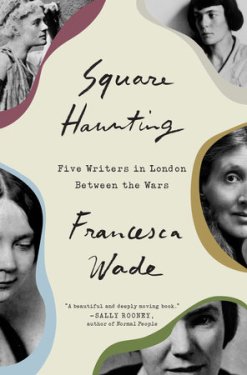
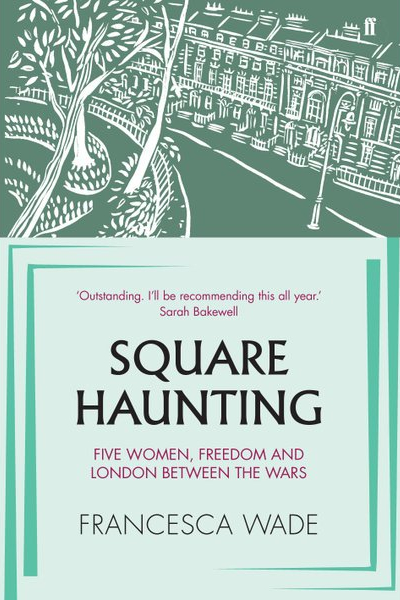 This is not to say that there is nothing original about Square Haunting; Wade has not just done her homework and synthesized her findings but added details and insights of her own. Still, the most original thing about her book is its concept: grouping these five women together because they (more or less) shared an address. Wade makes the most of this geographical link, discussing the history of Bloomsbury in general and Mecklenburgh Square more specifically to clarify what it meant to choose to live there, especially for women moving away–as all her subjects were–from women’s conventional roles and paths. Having rooms of their own was both a vital practical step towards the independence they wanted and a heavily symbolic one, a point Wade makes (inevitably and rightly) with plenty of allusions to Woolf’s A Room of One’s Own.
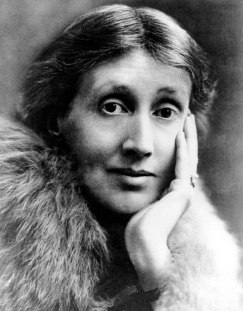 Harrison is the “J—- H—-” of A Room of One’s Own: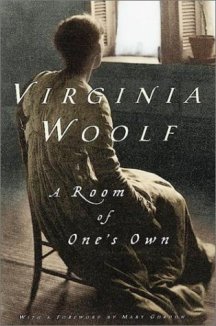

 In spite of everything, our academic term here is wrapping up on schedule: we are now in the middle of our exam period, final grades are due May 1, and a week or two after that my department will hold a remote version of our annual “
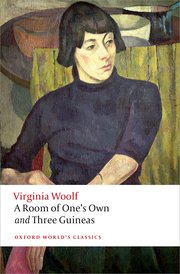 I guess that’s a sort of peroration, isn’t it? Apparently I’m working them in wherever I see an opportunity. Anyway, it’s odd and a bit sad to be wrapping up a term and feel so deflated about it. I think one reason it hits hard is that I spent so much time planning for this one, especially for the Brit Lit survey class–and I was so excited about Three Guineas and about moving from it to The Remains of the Day. Ordinarily at this point I would be throwing myself into choosing the readings for my first-year class in the fall, as instead of doing Pulp Fiction again I am taking on a section of “Literature: How It Works”; I’m finding that hard to focus on, though, both because there’s a lot I still don’t know about what kind or size of class it will be and because I have lost some enthusiasm for advance planning given how much I had to toss out this term. I did put in an order for the books for 19th-Century Fiction from Dickens to Hardy, but for whatever reason, for the first time I can remember it is not filling well (and it’s not, or not obviously, a coronavirus thing, as many of our other courses at that level seem to be filling up just fine) so that’s a bit deflating as well. But there’s time for all of this to get sorted.
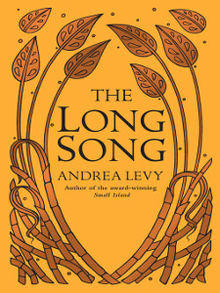 All of this is told in Miss July’s own voice. In some ways this is one of the most appealing features of The Long Song, because July is sharp, funny, and ruthless and because the interplay between her and her son Thomas (at whose prompting she is recounting her life story) draws attention in a clever way to the mediation required between the story she wants to tell and the story he wants her to tell — and also, more generally, to the layers of mediation that were part of how many actual slave narratives reached their audiences. (One of the works cited in Levy’s bibliography is The History of Mary Prince, which I read with my British Literature survey class this term.) I admit, though, that I really struggled with her narration: its cadences and idiom were hard for me to follow, which of course is a reflection on the limitations of my own reading ‘ear.’ The differences from ‘standard’ English are actually pretty subtle most of the time, but they tripped me up surprisingly often, frequently forcing me to go back and start a sentence again to be sure I caught its meaning properly.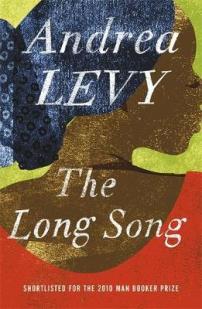
 “We’re not members of Molotschna,” Salome bursts out at one point, challenged to consider whether the women owe the imprisoned men any loyalty because they belong to the same colony.
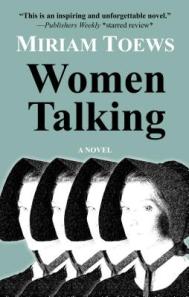 Peters’s literal absence, and the absence of most of the other men of the colony, is what creates the space in which these women can talk, and that itself is one of the novel’s critical interventions. For most of their lives these women have not been in control of their own stories; their illiteracy has also prevented them from knowing first-hand the terms on which they have understood and lived their lives. “My point, says Salome,”
 Novel Readings