 Last Friday was Munro Day and I almost didn’t notice: usually it’s a highlight of the winter term, a day off right when things are starting to get real and so everyone’s starting to get tired. It’s true that I’ve been tired lately myself, but at least I haven’t had to show up for class! I’m mostly on my usual schedule, because I’m still dropping Maddie off at school, but it has definitely been nice not having to be ready for the day in quite the same way: evenings and weekends aren’t haunted by what’s yet to be done or taken up with prep and grading.
I have been trying to be diligent about my sabbatical projects, however, and though it didn’t always feel that way, I think January ended up being pretty productive. I got right to work following up on ideas for refreshing my reading lists, for example. It really does take time: it’s inevitably kind of haphazard, as not every idea you come up with pans out but at the same time every book you look at or look up can send you off in new directions. Already at times I have felt the urge to never mind and just stick with the tried and true! But persisting has paid off: I’m reasonably certain that I’m going to assign Wuthering Heights as the one 19th-century novel for my Brit Lit survey, though I’m still not sure about whether I’ll put it on the roster for Austen to Dickens.
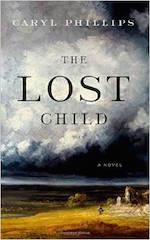 The survey course isn’t until next winter term so I have plenty of time to keep considering options for which contemporary novel to use. I want something that will play along with the theme of ‘belonging’ and/or be an interesting complement to Wuthering Heights, and with that in mind I’m currently reading Caryl Phillips’s The Lost Child. I’m not liking it very much, though, and having decided (I think) against White Teeth and found Small Island to be unavailable in Canada, I’m feeling discouraged. Is it reasonable or lazy to be thinking that maybe everything doesn’t have to change at once in the course? I didn’t specifically pair up the novels I assigned the last time, so maybe as I’ll be shaking up the short readings as well, I can stick with a 20th-century novel I’m already comfortable with.
I have less time to make final decisions about Women & Detective Fiction, so I’m glad to say I think I am making good progress there. One helpful thing is that I’ve shifted the way I’m thinking about the readings: instead of focusing exclusively (as I have in the past) on a fairly narrow range of subgenres, and even more narrowly, on books with woman detectives. Instead I’m approaching it as if it were called “Women Write Crime” – which seems a fair way to interpret the title and makes room for books that, to put it mildly, go a different way with the genre, such as Dorothy B. Hughes’s In a Lonely Place (which does some surprising things with women’s frequent roles as victims or femmes fatales) and Katherena Vermette’s The Break, which is (arguably) not a crime novel but a novel about crime, and especially about indigenous women’s experience of crime and (in)justice. I’m still not 100% sure about The Break (not because I don’t think it’s a very good novel, but because approaching it as crime fiction is not obviously the right thing to do), but I am pretty sure that we’ll read Blanche on the Lam, which will help us focus on both race and class–not just when discussing Neely’s book, but across our readings.
 Finally, after trying and not liking a few other hard-boiled / noir options for Pulp Fiction, I think I have settled on Vera Caspary’s Laura to replace The Maltese Falcon. If, as I currently plan to, I also replace Valdez Is Coming with True Grit, that course too will shift its conceptual focus, away from toxic masculinity (which was, I thought, a pretty good unifying theme across the three main texts, culminating in Lord of Scoundrels which both critiques it and offers a fix for it) to something like “women who disrupt expectations” — for which Lord of Scoundrels will also work well. Issues of masculine identity will still come up, of course!
I still have leads I’m following up, including a stack of 19th-century novels any one of which just might change everything! I actually just started Dombey and Son–but I have to say, it is really long and so it would have to be better (IMHO) than Bleak House to earn a spot on my syllabus. I’m not afraid of working through Really Long NovelsTM with my classes, but I have to believe myself that the effort is more than worth it, or I can hardly expect to carry any of them along with me! I’ve browsed Ivanhoe and The Heart of Midlothian and both made my heart sink at the prospect of convincing students to engage with them: yes, Waverley is a hard sell too, but it’s so influential and so funny (OK, not at first, but once you get it), and when it is good, it is so very, very good (the trial scene, just for example) that I’m willing to do the work. In fact, what looking at the other Scott novels has done for me so far is tempt me to put Waverley on the reading list for Austen to Dickens this time around!
 Another sabbatical project of a different kind was to come to terms with the essays I’ve written over the past few years about George Eliot, mostly for Open Letters Monthly but also for the Los Angeles Review of Books and Berfrois. What I mean by “come to terms with” is really “decide what to do about,” but the first phrase captures a bit more of the emotional baggage the essays have come to carry. I loved writing them, and on my 2015 sabbatical I worked mostly on more writing of the same kind, some of which I ultimately pitched unsuccessfully to a couple of publications that run similar pieces, such as The Hudson Review. I naively thought this was the kind of cross-over writing that would bolster my application for promotion–distilling, as it did, decades of academic expertise into publicly accessible forms. But it actually made no positive difference to my case at all (not peer reviewed, you see), as it turns out. Since then, the idea of a revised and expanded collection has also proved completely umarketable: the essays themselves don’t do anything with mass appeal and also–and this is something I honestly hadn’t thought enough about–their standing as previously published material works against them. Yes, there are plenty of essay collections out there that are mostly or even wholly republished material (some of them with not much more popular appeal, in subject and approach, than mine) but in those cases the authors’ famous names make the sale.
Anyway, I have had multiple conversations with people in the publishing industry that all led me to the same conclusion: these essays (however transformed) aren’t going anywhere. Still, it made me sad to think that they would simply languish forever on the margins of the great wilderness of content that is the internet, so I decided I could at least give them a more organized form by collecting and publishing them myself, which I have now done. I edited them all one more time and expanded a couple of them, and I added an introduction. I didn’t add any wholly new essays, though I do have a couple more in the early stages, because the point was to free myself from this material–and, not incidentally, not to create yet more work that would be ineligible for publication elsewhere. I’m not sure if self-publishing this ebook really answers my ongoing question about book projects, but it should help me think about different book projects instead of what I once hoped this material would turn into. I won’t say that self-publishing doesn’t feel in some ways like a failure, and though publishing experts insist the stigma against it has lifted, perhaps it looks to some people like a vanity project. I have fretted over both of these things (I am still fretting!) but clearly I decided to press on, and the essays are now available at both Kobo and Amazon – or directly from me, if anyone asks. (It is not, apparently, possible to upload ePub files to WordPress, so at this point I can’t simply offer a download link here.)
 So, six weeks into my sabbatical, that’s what I’ve done so far. Well, that and make most of a shawl that, over the past few days, I have had to completely unravel because I realized I had been doing one part of the pattern wrong almost since the beginning. As I ready myself to start re-doing it, it’s hard not to think of the process as a metaphor for my other work. Undoing crochet still leaves you with all the yarn, after all: you just have to make something else out of it. It’s very pretty yarn; that seems like grounds for optimism.
 Last Wednesday, because of the disruption from Hurricane Dorian it felt as if we were starting the term all over again. A week later, it finally feels as if we are getting into something like a routine–even though the add-drop (a.k.a. “shopping”) period is only just ending, so the list of registered students for Pulp Fiction has been changing literally every day. Still, the majority of students in the class have been coming since September 4, and the general air of uncertainty and anxiety is fading into the usual combination of commitment and resignation. Because it’s a 4th-year seminar, Women & Detective Fiction has been a more focused group from the beginning, but there too we are past the getting-to-know-you period and are (I think) comfortably embarked on what promises to be a really good term’s discussion.
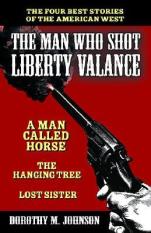 What have we done so far? Well, in Pulp Fiction we have done a bit less reading than usual by this point, but we’ve gone through all of the warm-up texts, starting with Lawrence Block’s “How Would You Like It?” and then, to set up our unit on Westerns, Sherman Alexie’s “My Heroes Have Never Been Cowboys.” If I am assigned this course again for next year, I would like to replace the Block story with something a bit more on point for the course themes. Alexie’s poem, on the other hand, has proved to be a really good opener for Westerns because it clarifies right from the beginning that this is a genre that both invites and deserves significant pushback. Our reading for Friday, for instance, is Louis L’Amour’s “The Gift of Cochise,” which I think is the worst of our Western readings in terms of flattening and dehumanizing its Apache characters. (I actually think L’Amour is trying to do better by them but does so through a version of the “noble savage” stereotype that doesn’t end up helping at all.) “My Heroes Have Never Been Cowboys” has primed us to see this as (among other things) a problem of point of view, one with both specifically literary and broader and still urgent social and political consequences. We read Dorothy Johnson’s “The Man Who Shot Liberty Valance” for today, which is a good story for challenging just what kind of cowboy really counts as a hero: as we discussed, the self-effacing Bert Barricune may be the best shot, but he’s a hero for a different reason–because he lets someone else take the credit and the girl. Next week we start Valdez Is Coming, which has not really gone over that well in previous years. Maybe third time’s the charm!
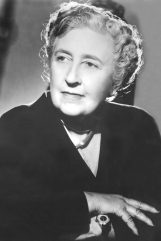 In Women & Detective Fiction we have just wrapped up three classes on Agatha Christie. Going over my notes from the last time I taught this seminar reminded me that we were struggling a bit, that year, to find enough to talk about–enough that, though I had forgotten about this until it was too late to make the change, I had resolved to assign a novel instead of the stories next time around. Happily, even sticking with the short stories, we had no such trouble this year! The class time has seemed to fly by: not only is it a keen group with plenty to say but the things they are noticing are often things I haven’t really focused on before. We talked a lot, for example, about role playing as a motif across the stories, from the overtly theatrical Jane Helier (an “actual” actress) to Miss Marple herself and the perhaps insoluble puzzle of how far her performance of self-deprecating femininity is a deliberate feint or strategy that enables her detective prowess and how far it is a way for Christie to sincerely re-value the qualities Miss Marple displays. Today was student presentation day and in addition to some useful discussion of her life and works we did an exercise in crime solving ourselves based on her mysterious 11-day disappearance. Next up in this class: Nancy Drew–and one of my students turns out to be an avid Nancy Drew fan and collector, so she is going to bring in some of her early editions to show us. I’m excited: if everyone stays this lively and engaged, it’s going to be a great term.
 It hasn’t been stormy in my classes so far–in fact, we have barely had a chance to meet because of the literal storm that passed over Halifax this weekend. Hurricane Dorian churned up the east coast of the United States, and unlike most of the other big storms that head towards us it neither cooled off into an unpleasant but basically harmless rainstorm nor turned out to sea.
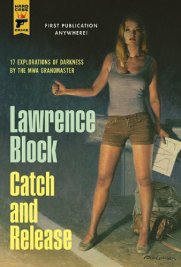 I decided to bump the scheduled classes along a day in Pulp Fiction and make up for it later, so today we picked up right where we left off last Wednesday, with the idea of “pulp fiction” and assumptions about differences between genre fiction and literary fiction. Then we turned to our first reading, Lawrence Block’s creepy little story “How Would You Like It?” It’s a story that doesn’t quite fit into any of the genres we’re actually studying–I suppose it is a kind of crime story, but it isn’t a detective story. It’s an attention-getting story, though, or at least I hope it is, and it’s useful for starting conversations about point of view, tone, and varieties of narrators, including unreliable ones. I wasn’t sure students would be willing to talk in class, given its relatively large size (120) and the rather formal lecture hall, but a lot of hands seemed to be going up, so I’m encouraged. I wonder if my using a microphone helps keep people involved because everyone can hear what’s happening: I am trying to be scrupulous about repeating students’ questions before I answer them, and also since it is wireless I can move around the room, including going up the stairs.
 In Women & Detective Fiction, I decided we would stay on schedule: Monday’s class was supposed to be spent discussion a cluster of ‘classic’ detective stories to provide touchstones for our often subversive takes on classic tropes: I’d assigned “The Purloined Letter,” “A Scandal in Bohemia,” and Hammett’s “Death & Company,” one of his Continental Op stories. I think we can hit the main points about these quickly at the start of today’s class, and then return to them through comparisons with today’s assigned readings: Baroness Orczy’s “The Woman in the Big Hat” (one of her Lady Molly of Scotland Yard stories) and Susan Glaspell’s “A Jury of Her Peers.” Both of these stories begin our term’s work of highlighting the ways gender matters to fundamental questions in detective fiction, including who has the expertise and authority to solve the crime and what “justice” means in a context where women’s experiences in particular and a broader context of sexism mean that the law may not provide it.
 Tomorrow I kick of my 25th year of teaching at Dalhousie and my 13th year of
  It wouldn’t make much of a post to say that five years later, nothing has changed! And yet in most respects that’s true. (Certainly my office looks more or less the same.) I think, or at least I hope, that the consistency in my priorities and methods is a sign of success, not stagnation. I still take class preparation seriously and regularly look for ways to change things up, whether it’s
  There won’t be big changes in my pedagogy this year, then: just the usual tweaks to see if I can get an exercise or an assignment or a reading to go a bit more smoothly or get better results. That doesn’t mean there won’t be surprises or challenges, though. That’s the thing about teaching! Every time you do the “same” thing–discuss the same book, assign the same essay topic, ask the same exam question, whatever–you are doing it with a different group of people and in a different context, not just of your own changing ideas but of theirs, which are shaped by the other courses they are taking and readings they are doing and experiences they are having–and by your life in the moment and their lives too. One of the scary, exhausting, and stimulating things about teaching is that no matter how carefully you have prepared, you never know what exactly is going to happen in the classroom that day. You just show up, bring what you’ve got, and try your best to shape, steer, listen, and respond in a way that serves the goals that you have for the course. In my case, though there are more specific objectives that vary from class to class, my fundamental goal is simply to help my students have as good a conversation about our readings as possible (meaning one that is well-informed and attentive to both text and contexts) so that they will carry away with them a sense of both how to do that and why it’s worth doing. We talk a lot these days about “transferable skills,” and those certainly matter, but the reason I teach English instead of something else is that I consider that specific work well worth doing
  On that motivational note, the two courses on my teaching schedule for this fall term are Pulp Fiction (a large introductory-level class) and Women and Detective Fiction (a small upper-year seminar). I’ve spent a lot of time over the last several weeks getting things in order for them; although I’m a bit anxious, as always at the start of term, at this point I’m eager just to get going. Once again, I will be writing about them here. Though sometimes over the years I have wondered if I’ll find anything new to say in this blog series, the exercise itself always proves that I do, and it also always proves valuable in the same ways I explained
  My
My  I thought it might help to write for some places that do run longer pieces, so I wrote a review “on spec” for one such venue but they didn’t want it–in the end it maybe wasn’t a great fit with the place I sent it, although the book I chose (
 This is why I keep returning to class prep! It’s so straightforward, and after all, it does have to get done. Maybe I should think of it this way: the better prepared I am for the term, the more likely it is that I can keep working on some kind of writing project even after classes start. My colleagues and I often talk about the way teaching expands to fill however much time you can (or are willing to) give it: this is something we advise TAs and junior colleagues to guard against. Good, detailed course planning is part of a strategy for achieving better balance between my various professional obligations; it’s not just a diversionary tactic when your other commitments are getting you down. Right? RIGHT?!
 It has not felt like a very productive week, though it is hard for me to be sure right now as I am still in the
 My other reading has also felt relatively unproductive, though I suppose productivity is not really an appropriate measure for it (though I have long struggled with how or whether to make distinctions between
  Book orders for our fall classes are due by April 1. It’s not a hard and fast deadline, but earlier orders make things easier for the bookstore staff and also enable them to organize book buybacks from students for texts that will be assigned again next year. In theory (though things have not always worked out this way) it also means that if there is some kind of supply problem with a fall book selection, they and thus we find out in plenty of time to choose an alternative. So I do always try to meet the deadline! The problem is that it comes up right when the current term is at its most hectic, which is one reason it is tempting to default to the same reading lists (or very close to them) that I used last time around–and that, in turn, is why I have made it one of my priorities this term, while I’m on sabbatical, to see what else I might assign.
 For Pulp Fiction, I have changed two of the three novels on the list (I’m keeping the short readings the same, so as not to overwhelm myself with new prep!). The first two times I taught it, we read Valdez Is Coming, The Maltese Falcon, and Lord of Scoundrels. I was actually very happy with this list for my purposes: they are all terrific novels, exemplary of their genres but also thought-provoking in their particulars, and the sequence was unified by their engagement with problematic models of masculinity. In practice, however, things did not go as well as I would like. For one thing, Valdez Is Coming was not popular, and it also proved difficult to use for exercises in close reading: there’s a lot going on but it’s subtle, more below the surface than on it, which fits the book well but gave students a lot of trouble. The Maltese Falcon raised different problems: I had more plagiarism cases involving students’ writing on it than I’ve had (to my knowledge, of course) for any text I’ve ever assigned in first year. As a result, I have replaced both of these books: this time our representative Western will be
 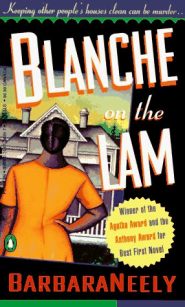 My other fall term course is an upper-level seminar on
 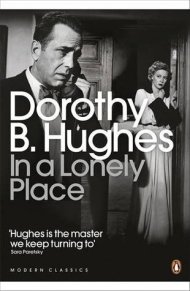 I feel good about these decisions, but I also have some concerns about taking on so much new material. More specifically, I’m worried that the new books for Pulp Fiction will actually prove more difficult for first-year students, not least because of their idiosyncratic first-person narrators–one of my tasks now is to think through their challenging aspects and provide my students with the right tools and approaches to have a productive discussion about them. I was very comfortable with my old reading list for Women & Detective Fiction–too comfortable, of course, as I realized. Now, however, I am anxious about how to handle the difficult scenarios presented in both In A Lonely Place and The Break and about equipping myself to address the appropriate historical and critical contexts for Neely and Vermette responsibly. But there’s plenty of time between now and September to do this work, and at least now that the book orders are placed my attention will no longer be “dispersed over that tempting range of relevancies called the universe” but focused on these particular books.
 “I know he has a bad nature,” said Catherine; “he’s your son. But I’m glad I’ve a better, to forgive it; and I know he loves me and for that reason I love him. Mr. Heathcliff, you have nobody to love you; and, however miserable you make us, we shall still have the revenge of thinking that your cruelty rises from your greater misery! You are miserable, aren’t you? Lonely, like the devil, and envious like him? Nobody loves you–nobody will cry for you, when you die! I wouldn’t be you!”
 Another is that while Emily Brontë may have had no “interest in shaping her story morally,” Wuthering Heights is a very complexly structured novel, with its multiple nested and embedded narratives. The many hours I’ve spent on other novels with multiple or unreliable narrators, such as The Moonstone or The Tenant of Wildfell Hall, have shown me what fun the interpretive work can be as you sort through who is saying what in particular, to whom and why and with what consequences for our reading of their words. I hadn’t paid that much attention to this aspect of Wuthering Heights before, though I knew it was the subject of a lot of the critical discussion. This time I was more attuned to it and felt some genuine enthusiasm at the prospect of working on it with my students, even if most of the voices we’ll be attending to are as unpleasant as young Catherine’s spiteful words to Heathcliff in my epigraph to this post.
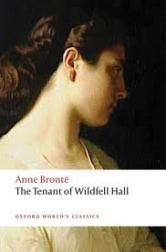 The one reason I’m still hesitating: Perhaps wrongly, I’ve been assuming that the Brontë portion of my reading list is a zero sum game, that if I assign Wuthering Heights I can’t also assign Jane Eyre or The Tenant of Wildfell Hall, and that makes me sad, because those are known pleasures. But the only person making up this rule is me, so maybe I can break it! Would it be so bad if two out of five novels were Brontë novels, especially given how different they are from each other? As I was finishing up Wuthering Heights I kept thinking how great it would be to read Tenant right after: then Heathcliff and Hindley and Hareton could face off against Huntingdon, Hattersley, and Hargrave. What if Wuthering Heights were crowding out Scott or Thackeray instead of Charlotte or Anne? Would that be so bad? (I mean, yes, it would, in a way, because I also love teaching Waverley and Vanity Fair, but you can’t do everything, at least not all at once.)
 There is a lot to admire about the novel. Its characters are effectively, if somewhat schematically, established; their salient traits and values are distinct and the turns their stories take as they play their parts in Gissing’s depressing story of jockeying and dreaming and ailing and failing are always consistent with the strengths and weaknesses we know them to have. The intersecting plots play out with what in a more stylish writer I might call elegance, and Reardon’s story in particular reaches heights–or is it depths?–of pathos that are very nearly tragic, though Gissing’s tonal register is too prosaic for that label to sit comfortably. The novel is also very good about the way personal feelings are inextricably entangled with people’s money (or the lack of it) and ambition (or the lack of it): its marriages (actual, imagined, sought, and abandoned) play out in nice counterpart to, and sometimes illustrations of, the novel’s literary commentary.
 This underwhelmed reaction is, of course, very likely due to some analytical near-sightedness of my own, or to New Grub Street just not being the kind of novel that I like best to look harder at, while my preference for The Odd Women may just be because I know it better and have spent more time thinking, writing, and teaching about its central themes. But overall what I felt by the end of New Grub Street was that for a novel so self-consciously about fiction, it is surprisingly, disappointingly, not particularly metafictional: I couldn’t see a way in which Gissing was offering up a novel that is itself (in structure, form, style, or theme) more than the sum of the literary parts it includes. That lack of transcendence may be the point: if it is a novel about anything, it is about literary failure, including both the kind that presents itself as success and the kind that might actually be success but doesn’t seem like it, and so if New Grub Street was a brilliant, stylish, provocative, or formally innovative novel, its whole premise might implode. I don’t really think, though, that something so artistically self-conscious and deliberate is going on: Gissing is just describing a close possible world to his own, showing it to us in all its meticulous, dreary, disheartening detail. Adam Roberts is absolutely right that New Grub Street “works superbly as a detailed evocation of a particular social and cultural milieu,” but once you’ve acknowledged that, then what? (Adam, characteristically, does much better addressing that question than I have here:
 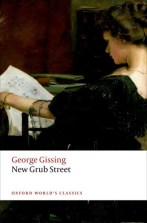 The next step after drawing up my plans for refreshing my reading lists was to get my hands on the books I’m interested in. This is easier for some courses than others. For instance, I already own copies of several of the Victorian novels I want to reread, and because I’m a regular customer, both Oxford University Press and Broadview Press are always very helpful about providing exam copies. As a result, I now have a nice TBR shelf of
 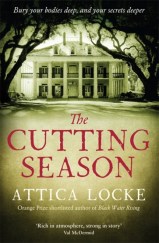 A small handful of titles are more easily available, including Attica Locke’s The Cutting Season, so I started with that because it had sounded like a promising option. It’s a decent enough novel but it sparked no excitement in me: it is slow moving and detailed in a way that made it seem drawn out rather than rich or textured, and in terms of innovations in or provocations about the genre, it didn’t seem to me to offer much. Next up, because it too is available locally, will be Rachel Howzell Hall’s
  I didn’t write a separate post about this because it’s a smaller scale project, but I’m teaching Pulp Fiction again this fall and with regret, I think I’m going to give up on Valdez Is Coming. I thought it was eminently “teachable” (that indefinable quality!) but both times I taught it most of the students in the class did not seem to agree! I took True Grit out of the library this week to review it and was quickly reminded
  Novel Readings