 “We had a limit known as the Whipple line, below which we would not sink. Dorothy Whipple was a popular novelist of the 1930s and 1940s whose prose and content absolutely defeated us. A considerable body of women novelists, who wrote like the very devil, bit the Virago dust when Alexandra, Lynn and I exchanged books and reports, on which I would scrawl a brief rejection: ‘Below the Whipple line.'” — Carmen Callil
A few years back, reading Vera Brittain’s The Dark Tide got me thinking about “books that are bad in uninteresting ways and books that are bad and yet somehow still interesting.” The Dark Tide, I concluded, was of the second sort: conspicuously flawed but energetic and purposeful in a way that made me want to engage with it. Reading Dorothy Whipple’s Someone At A Distance made me wonder: can a book be good and yet also uninteresting? What would that mean, exactly, for any reasonable definition of “good”? Reverting, as I often do, to George Henry Lewes’s remarks about Jane Austen—that she was “the greatest artist that has ever written, using the term to signify the most perfect mastery over the means to her end”—maybe what it means is that a book can be good on its own terms (the means to its end), but that those terms (that end) might not be particularly challenging or complex.*
In the end, that’s what I felt about Someone At A Distance. It read very easily: its interlocking stories of an English family and the young French woman who infiltrates and then destroys it are neatly executed; its people are sharply delineated; the consequences of the affair are believably painful, especially for the blindsided Ellen, who up to the very moment her husband Avery’s betrayal is revealed has thought herself the happiest of wives. She is wholly unprepared for a life without him at its center. “We’re not the new sort of women,” an unlikely ally later tells her,
with University degrees in Economics, like those women who speak on the Radio nowadays, girls who can do anything. We’re ordinary women, who married too young to get a training, and we’ve spent the best years of our lives keeping house for our husbands. Not that we didn’t enjoy it, but now you’re out on your ear like me at over forty.

Whipple conveys Ellen’s shock and grief with real pathos. She also does a good job with Ellen and Avery’s daughter Anne, knocked abruptly out of her childhood idyll by these adult complications:
They stood in the morning sunlight, looking at each other, and from her mother’s face Anne learned, in another lesson, that the grown-up world was not what she had thought it was, not a place of power and fulfilment, but a place of helplessness, pain and ugliness. A world not to enter. Until now, Anne had run joyfully forward, but now she was halted. She shrank back. She had learnt suspicion and distrust and most of all the fear of life that sickens the youthful heart and from which it takes too long to recover, if recover it does.
That’s all pretty well done, I think, and the unfolding of Ellen’s gradual recovery in counterpoint with Avery’s bitterness and regret carries the novel nicely through to its conclusion.
 But. It really doesn’t do more than tell this story. There aren’t any layers to it. The characters are fairly two dimensional, especially the French temptress Louise, who to me was the novel’s weakest element. She’s a selfish narcissist who takes what she wants for her own gratification. The whole catastrophe, in fact, is the result of her resentment at an old lover in her home town in France, himself blithely ignorant “that he, at such a distance, could have had anything to do with the breaking up of that family” or with the rift that opens up between Louise and her own parents. Her unmitigated nastiness sapped the novel of any chance of a real moral or emotional dilemma at its center: Avery is wrong to get involved with her and that’s that. Whipple plays out the moves on the board she has set up, but there’s nothing in it for us to think about: we just follow it all through to the end. And that is just not a terribly interesting exercise: Ellen is a bit of a limp noodle, and the solution that unfolds to her problem of finding her own place in the world is too pat, too easy.
 I did enjoy Someone At A Distance in the moment, but I also found myself comparing it unfavorably to another much better book (in my opinion) about an affair, Joanna Trollope’s Marrying the Mistress. In Trollope’s novel the “mistress” is a genuinely sympathetic character; the relationship that develops creates a genuine tension for the husband and then, eventually, for his children, who can’t help but like his new partner in spite of their loyalty to their mother; and the marriage that ends, while not a bad one, has weak spots that made it vulnerable—indeed, that maybe even made its end, while painful, a change worth bringing about. Yet even though her mistress is not an evil temptress, Trollope is less sentimental about love, and less blandly optimistic about fixing what has been broken. Someone At A Distance ends with the promise of restoration, but why? Knowing what she now knows about her husband, what is that promise worth to Ellen? I didn’t really care, though: by that point I was ready to be finished with her.
I guess for me the bottom line (my version of the Whipple line?) is that competence in story-telling, and even in characterization, isn’t enough. I’d rather read a more ambitious novel that falls short than a novel that doesn’t do more than Someone At A Distance, no matter how well it’s done. I think Carmen Callil may have been on to something with her disparagement of Whipple as not quite good enough. And yet I can’t argue with the introduction, which praises Whipple’s ability to “take an ordinary tale and make it compulsive reading.”
*I am not saying Austen is not great! Just that the idea of suiting means to end is a useful way to gauge literary success.
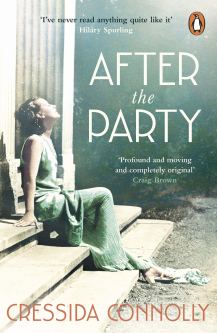 We all have our crosses to bear, our own personal sorrows. Mine is that the people who should be dearest to me, my own children, my sisters, consider me a bad woman. The grandchildren have been taught to be wary. I think I’m a disgrace to them, really. After the war when the newsreel film was shown of what had gone on in Germany and Poland, those places, the horrors . . . It all got tangled up in their minds, as if we’d stood for such barbarism.
 Even after her long imprisonment Phyllis remains indignant that her commitment to Mosley’s cause has cost her anything at all and especially that it has led to people concluding she is not a good person. It would be at once pathetic and laughable if it weren’t also plausible and unhappily timely: Phyllis insists that she and her fascist friends were very fine people. The novel approaches them with sly delicacy, never presenting them as outright villains but allowing the us to experience their moral corruption through the lens of Phyllis’s own self-justifications. It also focuses on the personal relationships that naturalize and sanitize the fascist cause for those directly involved, keeping the political context just vague enough that the reader almost has to shake herself to remember that what they stand for is not acceptable, that fascism isn’t just one reasonable choice among many no matter how elegantly its proponents are dressed or how preoccupied they are with their families, lovers, and friends.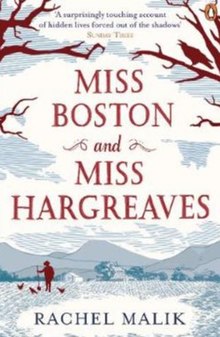
 Although Ernest’s murder and the subsequent trial are the novel’s central plot points, however, or at least its most dramatic ones, it’s interesting how easily subsumed their effects are in the novel’s quieter undercurrents. Surely an act as significant as murder should turn the novel itself into melodrama, should in some way transform our perspective on its characters. How can a woman dubbed “the weedkiller killer” by the tabloids seem so harmless–seem almost, even more provocatively, like a victim herself? Ernest, though abhorrent, is surely not so evil that he deserves his fate, and Elsie and Rene are hardly heroic figures of resistance, to patriarchy or to anything else. Yet all they ever wanted was to live quietly and honestly, and together, and as the lawyers and journalists gather and gawk, Ernest starts to seem in retrospect like a graceless embodiment of all the social forces that try to make something strange and ugly out of their intimacy. The glare of publicity exposes them to all the prurience the novel itself scrupulously avoids:

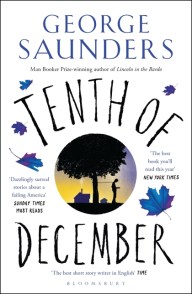 Naturally, my mixed and sometimes vexed response to Tenth of December got me thinking about what contemporary short fiction I have responded to more readily and positively. Because I don’t read a lot of short stories, I really don’t have a lot of other examples to draw on. I was very impressed with Adam Johnson’s
  I wrote
 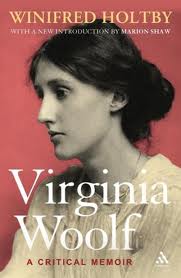 Since
Since 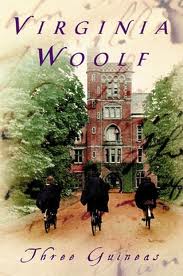
 I struggled with The Years, but I was also very interested in it, at least conceptually. I’ve been reading about it since then, especially about the splitting of the original project into two separate books. I’ve also been thinking about Holtby’s own fiction, especially South Riding, and her self-deprecating description of herself as a “publicist” (rather than an artist / aesthete), and about other novels that are like The Years in giving fictional form to social and political commentary but in very different ways, such as (surprise!) Middlemarch, but also North and South. I hadn’t planned to put any Victorian novels into my pile of relevant books this time, but there they are now, and that has got me thinking about things like periodization and genre and the ways we group or differentiate writers, especially women writers, which brings me back to Holtby’s critical approach, and I’m also interested in Holtby’s political journalism, which reminds me both of the anti-fascist arguments in Three Guineas and of the links between gender politics and fascism in Gaudy Night, which also includes reflections on fictional form and genre . . .
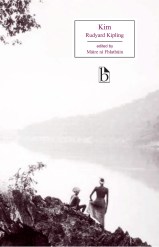 “Hai mai! I go from one place to another as it might be a kickball. It is my Kismet. No man can escape his Kismet. But I am to pray to Bibi Miriam, and I am a Sahib”–he looked at his boots ruefully. “No; I am Kim. This is the great world, and I am only Kim. Who is Kim?” He considered his own identity, a thing he had never done before, till his head swam. He was one insignificant person in all this roaring whirl of India, going southward to he knew not what fate.
 I guess it was lively and entertaining, occasionally, and it was also occasionally beautiful and poetic, and funny, and suspenseful. But I also found it something of a slog to get through, mostly because so much of the dialogue is a wearying blend of theatrical posturing and archaisms. The latter, and perhaps also the former, are meant (I assume) to give the language a “foreign” air so that we know the characters are not actually speaking in English–and there are also idioms and allusions drawn from the characters’ various cultures and languages that add to the effect. A small sample, from the first chapter:
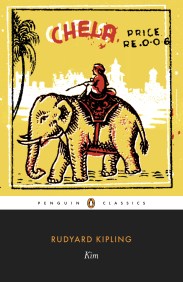 On the other hand, I loved Kipling’s scene setting, which is vivid and concrete and rich in detail. From the crowded streets of Lahore to the mountains of Tibet, he shows us the sights, and conjures up the sounds and smells of the landscape as well. “This was seeing the world in real truth,” Kim thinks as he looks around one bright morning on the road:
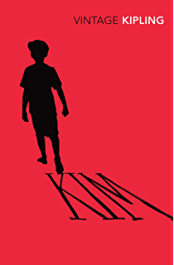 Kim himself is a bit of a delight. I was disappointed that the novel ended so inconclusively, without clearly answering his oft-repeated question about his identity. Reading the very thorough introduction to my Broadview edition by Máiri ní Fhlathúin, I was not surprised to learn that this “unsatisfactory” ending has “proved amenable to many readings, and resistant to any conclusive interpretation”; the readings she summarizes focus primarily on how or whether Kim’s Indian and British identities are reconciled, whether he turns away from or is subsumed by his role as an agent of empire. His relationship with the lama is very sweet, though I personally found the lama kind of tedious (I have limited patience for “holy men” unless they do worldly good, and in my admittedly limited experience of Buddhism I have never found it particularly congenial).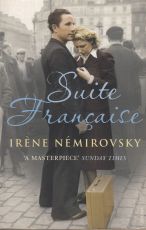
 I was interested, as I said, yet I wasn’t really captivated. The novel has a rather flat affect–perhaps the result of translation, but also reminiscent of Olivia Manning, who writes about war and violence and what survives with similar restraint. Némirovsky’s novel follows a cast of loosely or incidentally connected characters; the overall effect is somewhat like a sampler, or (as the title suggests) a “suite.” If Némirovsky had been able to finish the novel, the cumulative effect might well have been more than the sum of its parts; it seems shoddy to judge what seem like imperfections knowing that what we’ve got is only a fragment.
 The individual stories Némirovsky tells all have their interesting details, but one thing I thought was missing as I read along was any acknowledgment of the specific risk to Jews. This made me wonder exactly what Némirovsky would have known while she was writing in 1941-2. The Appendices include her notebooks and then correspondence from her and her husband Michael including his letters, increasingly desperate, to friends and connections after her arrest in July 1942. It is clear that he, at any rate, did not realize what it means–that it is almost certainly a death sentence. Not only does he try every means he can think of to find her and bring her home, but he even offers to take her place: “Can you please find out,” he writes a couple of months after her arrest,
 I was relieved to discover that nobody else in my book club liked A Fortunate Age either. For once, I feel reasonably confident saying it’s not me, it’s the book! I don’t think we’ve been so unanimous in our dislike of any our choices, in fact, since the disaster that was Paula McLain’s
  I particularly puzzled over why I found its detailed exposition so tedious. I am on record as a fan of exposition! But by half way through A Fortunate Age I was impatiently skimming through its dense paragraphs of stuff that just didn’t seem worth taking more time over. Rakoff inadvertently furnished a clue with her epigraph, which is from Daniel Deronda. (Beware: If you’re going to invite a comparison to George Eliot, it may well work against you!) True, Gwendolen Harleth is every bit as self-absorbed and ignorant of the wider world as the characters in A Fortunate Age, but (and for me this is crucial) George Eliot is not: her account of Gwendolen’s youthful egotism and willfulness is suffused with wry compassion; the context for Gwendolen’s story is not just the relentless minutiae of her immediate experience but everything else the narrator knows and thinks about the world she lives in. Gwendolen’s limitations do not limit her novel–but Rakoff’s characters are all we get in A Fortunate Age, and they don’t repay our sustained attention. I’m not saying the novel needed exactly what Daniel Deronda has–an intrusive narrator, for instance, or profundity, both of which are risky ventures if you aren’t George eliot–but it needed a broader perspective somewhere, a sense of what kind of story it is ultimately telling about these people and this age, especially since the book aspires (as its title indicates) to be about an era, not just a few individuals.
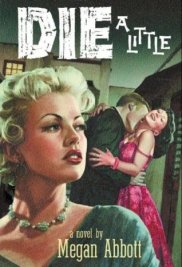 I didn’t think I had read any Megan Abbott before this year, but when I was at the library picking up You Will Know Me I realized that I had signed out one or two of her noir novels at some point in the past–probably while shopping around for ideas for Mystery & Detective Fiction or Pulp Fiction. I hadn’t put the pieces together, mostly because those books are (fairly cleverly) decked out with vintage-style covers which quite simply don’t look as if they belong with Abbott’s contemporary thrillers. (Shallow of me, I know.) I expect it’s also because I didn’t actually read them, or at least not more than the first few pages. It wasn’t personal; it’s just that noir is not my favorite genre–in fact, to a degree that might surprise the students in Mystery & Detective Fiction, I’m not a voracious reader of crime fiction at all, in any flavor, or not any more. When I do read mysteries nowadays, it’s almost always because I want to keep up with old friends, though I do try new writers intermittently, especially if there’s buzz, and sometimes I do like them–Tana French comes particularly to mind. Apparently, on the basis of that admittedly skimpy sample, Abbott was not among them.
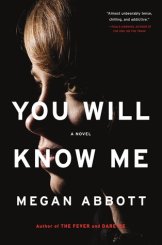 Anyway, lately I’ve been picking up enough buzz about Abbot (who has a new book out) that I thought I would give her what turned out to be another try. First I got hold of The End of Everything–but again I didn’t persist past the first chapter or so. It read like a YA novel, not just because it was centered on teenage girls but because it sounded as if it was written for them. Abbott seems like a self-conscious enough writer that I’m sure she was doing something on purpose with this style, and maybe she went on to do something twisty and surprising with it, but the scenario too seemed a bit pat and familiar and I wasn’t interested in reading on.
 I’m not necessarily calling You Will Know Me a bad book. These are (or are they?) the feelings, the reactions, a thriller depends on and aspires to–which is why I don’t typically read them. There is definitely overlap between thrillers and crime fiction, but for me, the best crime fiction depends on our taking a genuine interest in the people and the outcome, caring about what happens both because it’s possible for us to empathize with at least some of them and because of what’s at stake–the immediate consequences for people’s lives and then beyond that, the possibility of justice, if not realized, than imagined. Other kinds of fiction can also be very suspenseful: Daphne du Maurier or Sarah Waters, for instance. But a novel like Fingersmith is engrossing only initially because it makes us voyeurs and lures us in: then it turns on us, exposes us, and makes us interrogate and repent of our self-absorption. It shows us the moral consequences–for us and for its subjects–of the kind of objectification that a thriller depends on. Fingersmith is also 100 times more subtle and ambitious than You Will Know Me, but that’s not really my point, which is just that I found Abbott’s particular brand of suspense a bit distasteful and ultimately unrewarding.
 Perhaps tangential, perhaps not: A lot of people were pretty annoyed at the recent piece about Emily Brontë in the Guardian, and I agree it was a sloppy job, and unconvincing about its complaints. But
  One of the things (OK, the many things) I can be persnickety about is what to call whatever it is that I write here when I write about books. I call the results “posts,” not “reviews,” not because I consider a book review a limited or limiting form (not by definition, anyway, though in practice published reviews are very often limited, in scope if in nothing else) but because when I’m writing what I think of as a review I feel accountable, both to the book and to the implied audience. As a bare minimum, that accountability means reading every word in the book scrupulously, and then crafting a narrative about it that is very carefully considered. No review is authoritative in any absolute sense, of course, but when I’m wearing my Official Reviewer hat I aspire to a certain kind of confidence in my understanding of the book I’m writing about. Here, in contrast, I can write whatever I want, no matter how inadequate my understanding might be. My blog posts are narratives of my own reading experience, and so I’m answerable only for being honest and thoughtful about that.
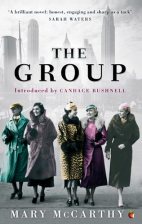 That’s an awfully long preamble to these remarks about Mary McCarthy’s The Group, which my book club met yesterday to discuss. As you might have predicted, I was putting off getting to the book until I’d said all that other stuff because I did not do a good job reading it, and as a result I wasn’t sure I should write about it. But then I remembered that I was blogging about it, not reviewing it, and so it’s okay for me to admit that and write about it anyway! If you want commentary by someone who is much better informed about The Group, I highly recommend
  I never had a conversion moment, but I’m glad I persisted with my reading, not just because it meant I could show my face at my book club but also because the book did turn out to be better than my first impressions of it. My experience improved as I got more used to the style–but I also gave myself permission to skim some of the relentless cascade of details that made up so many of those dense paragraphs. I understand that this may seem precious coming from a Victorianist! I tried to put my finger on what made McCarthy’s exposition seem so long and unpleasant to me in spite of my love for long and excessively detailed 19th-century novels, and I think it’s the same thing that made me recoil from most of her characters: she treats everything, and everyone, so coldly. Ultimately a lot about The Group is very sad, in some cases even tragic, but the novel has none of the humanity, none of the compassion, that its own stories could reasonably summon up. The word ‘sociological’ came up a lot in our book club discussion, and by and large we’d all found her depiction of her women’s lives interesting. But there’s something clinical about each of the women’s stories, with McCarthy observing them shrewdly, scrupulously, often wittily, but never sympathetically.
 I’m not sure if I liked the second half of the book better than the first because I adjusted to (or compensated for) McCarthy’s prose or because I liked the later characters better. Libby’s story was the first one that really engaged me, for the not especially good reason that I’m interested in writing and publishing, and that whole world has a sordid kind of glamour to me as a result. At my book club we were unanimous in liking Polly’s story the best; her relationship with her father is perhaps the only tender one in The Group, and her marriage also seemed like a respite from the acidity of the novel’s other relationships. (I should say that overall everyone else was quite enthusiastic about the novel–listening to them explain why helped me appreciate it better.) Kay’s reappearance in her story in a very different situation made me rethink my earlier reactions to her and her marriage, and the novel’s ending also made me realize that I had missed something of the forest because I was focusing too hard on the individual trees.
