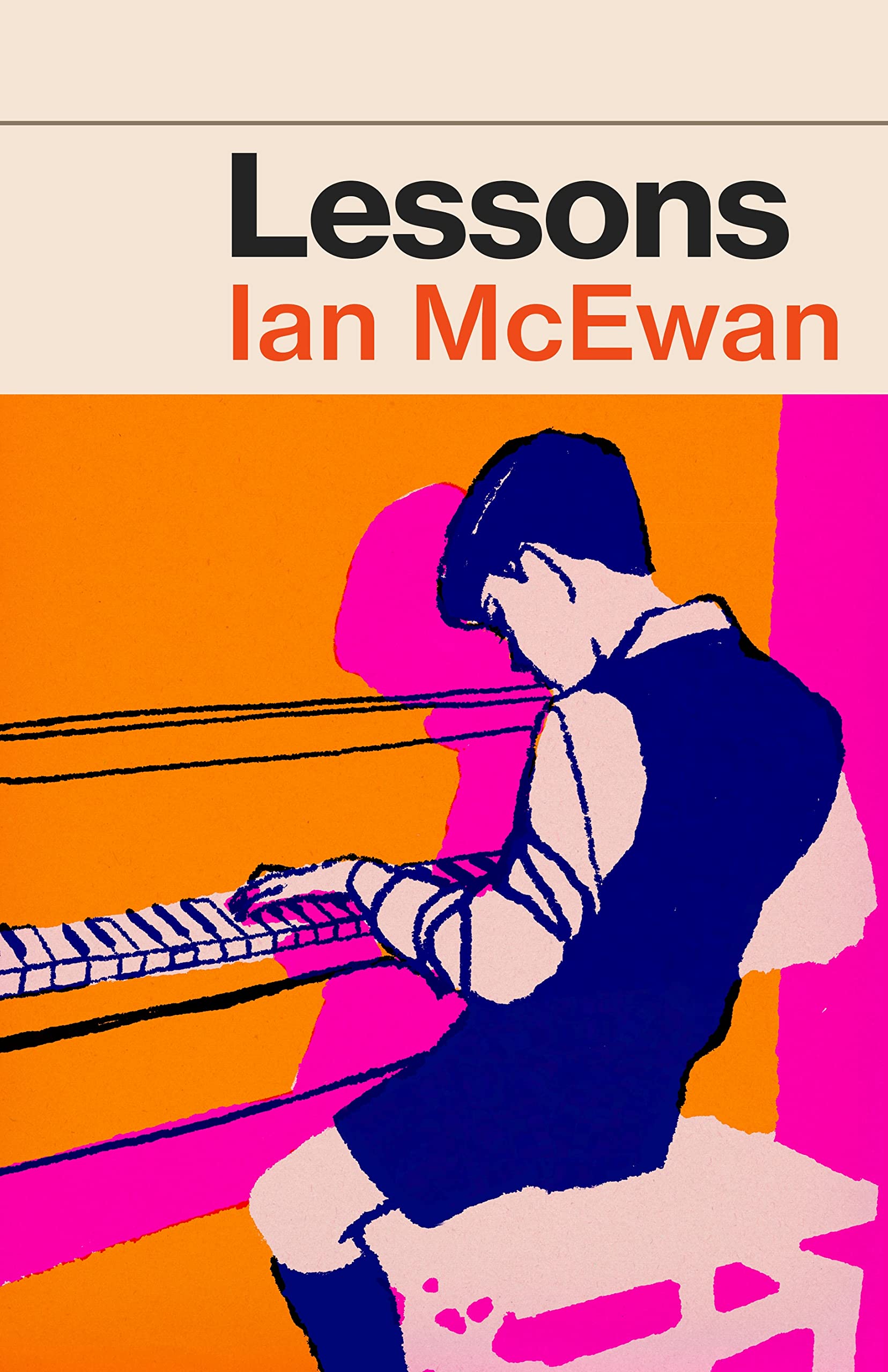
 Reading back since 1986 did not bring him any fresh understanding of his life. There were no obvious themes, no undercurrents he had not noticed at the time, nothing learned. A grand mass of detail was what he found and events, conversations, even people that he could not remember. In those sections it was if he was reading of someone else’s past. He disliked himself for complaining onto the page—about living hand to mouth, not having the right kind of work, not making a long and successful marriage. Boring, no insight, passive. He had read many books. His summaries were hasty, without interest.
Ian McEwan’s Lessons is what I think of as a “soup to nuts” novel, one that, like William Boyd’s Any Human Heart, earns our interest in its protagonist just by sticking with him. Like Logan Mountstuart, Roland Baines doesn’t really develop: he acquires no particular wisdom or insight over the years. He just gets older, and as he does, things happen: people come and go, priorities change, happy times give way to sad ones, opportunities are seized or missed, regrets arise then are displaced by more immediate crises or distractions. The novel’s title suggests that these accumulated experiences teach him something, that the Roland on the last page will be knowing in a way that the Roland we meet at the outset of the novel is not. He is, but not because of any grand epiphany, just because he is older and has been through a lot. Roland is not Pip, reflecting on his earlier life from the moral vantage point of the end of his Bildungsroman. When he looks back, as he often does, it’s with the same mixture of speculation, resignation, satisfaction, and self-reproach that probably most of us become familiar with as we pass from youth into middle age:
These days he ate less, drank more and thought a lot. He had a chair, a view, a certain glass he favoured. Among his subjects were other single starting errors that multiplied through time into a fan-shaped array. On close examination the errors dissolved into questions, hypotheticals, even into solid gains. On this last he may have been deluding himself. But in surveying a life it was inadvisable to acknowledge too much defeat. Marrying Alissa? Without [his son] Lawrence there would have been no joy, no Stefanie, Roland’s new best friend. If Alissa [who left him to pursue her writing] had stayed? . . . Her novel remained exquisite. Leaving school early? If he had stayed, Miriam [his sexually predatory piano teacher], by her own admission, would have hauled him from the classroom and he would have been sunk. . . . Abandoning classical piano and the chance of becoming a concert pianist? Then he would never have discovered jazz, would never have run free in his twenties or learned to respect manual labour or developed a snappy backhand.
And so it goes, on through the many choices that, for better and for worse, have made his life what it was and is.
Following Roland along the journey is consistently interesting, sometimes surprising, occasionally both funny and poignant. There is (unusually for McEwan) no big twist, unless you count that in itself as the trick he pulls on us this time: except for the cuts back and forth between grown Roland and his childhood, the novel is straightforward, chronological, with an almost old-fashioned dedication to exposition, creating a “grand mass of detail” the effect of which is not revelatory but cumulative. At first it takes a bit of patience: where is it all going, you wonder? It’s McEwan, after all, and also right at the beginning Miriam puts her hand on eleven-year-old Roland, where she shouldn’t: surely dark things are in store. But instead time just keeps passing, and though Roland and Miriam’s relationship does turn into something inappropriate and disturbing (how much better is it that at least he’s fourteen by then?), it doesn’t seem, in the end, to be very important. “Were you damaged by it?” a police officer asks Roland, when the possibility arises that Miriam could be held criminally liable for their affair. “No, not at all,” replies Roland promptly, and there really is no evidence in the novel that he was. Should that matter, to the detective, to Roland, to Miriam, to us? Isn’t what she (they) did just wrong? Is the implicit message that there are some wrong things that actually needn’t be a big deal, if we don’t make a big deal of them? Roland is not haunted or traumatized, although when he finally confronts her many years later he is angry: “It had an effect, do you understand? An effect!” He never does press charges. If hers are the lessons of the title, I ended the book uncertain what they were, or what they meant.*
Roland asks himself those retrospective questions about his life during the pandemic: “His London was of the plague year, 1665,” he thinks, “of the diseased wooden town of 1349.” One of his lockdown projects is to sort and annotate boxes of photographs; like so many projects we all imagined would see us through those long indistinguishable days of anxious yet boring isolation, this one founders. One of the side-effects of reading Lessons for me, as it checks off the world events that affect Roland more or less directly (Chernobyl, the fall of the Berlin Wall, the Cuban missile crisis, the Thatcher years, 9/11, 7/7, COVID), was remembering where I was when Big Things happened. Usually, like Roland, I was at most a distant witness, and yet when I think of them I have the feeling that I was there, that they happened to me too: I was in northern Italy when news broke of the accident at Chernobyl, for example, and for weeks we wondered (as Roland does) about the safety of the water, and whether we should keep eating local produce; I was nursing Owen late at night when news broke of Princess Diana’s fatal car accident, and nursing Maddie while idly watching morning talk shows when every station broke way from their regular programming because the first plane had hit the Twin Towers. We are always living in history; I enjoyed Roland’s journey through it. McEwan never uses him as a facile device for a “front row seat,” though; except for some idealistic early attempts to do something “meaningful” by smuggling items into East Berlin, Roland’s own story is (as most of ours are) relentlessly personal.
One of the most interesting aspects of the novel arises from one of its most personal events: Alissa’s decision to leave her husband and infant son. It isn’t until Roland reads her novel that he comes, not just to understand, but to accept the fierce necessity of her decision, which initially I thought might devolve into a predictably judgmental arc, Kramer vs Kramer style, about the selfishness of women seeking personal fulfilment at their family’s expense. Alissa herself describes her situation in ways much like Meryl Streep’s character does, in fact:
The two of you . . . I was nothing. I had nothing. No thoughts, no personality, no wishes except for sleep. I was sinking. I had to get out. . . . You’re a good father and Larry was tiny and I knew he’d be OK. And that you would be too, sooner or later. I wasn’t OK but I’d made my choice and I did what I had to do.
But unlike that character, she has no regrets. When Larry, grown up, shows up on her doorstep, she basically slams the door in his face: she chose otherwise. And when she tells Roland that she did what she had to do, she adds “This,” and hands him her book, The Journey, and it is a masterpiece, one he knows she never could have written if she had stayed home:
Would she, could she, have written The Journey there? The lapidary prose, the high-flying digressions offered up to the ghost of George Eliot, whom Catherine [the protagonist] admires, the fine painfully attuned consciousness of the heroine, the hovering watchful eye, the ever-generous tolerant narrative self-consciously organising, as if in slow motion right before the reader, the vast body of its material? No, impossible, no one could conceive a book of such ambition and execution in that house.
What is it worth, a book like that? More, Roland acknowledges, than the life she rejected. Yet that life has been his life: in rejecting it, she has declared, perhaps, that his life is not a worthwhile one, or perhaps that he is not capable of a better one, a higher one, because he does not have her talent, or her ambition, or her ruthlessness. The question of what we owe the geniuses among us, or what they owe us, is a perennially interesting one, for Roland and for us (and for Helen DeWitt, whose tart confection The English Understand Wool I also read recently). “I am a male Hardwick,” Roland plans to say when he attends a panel on Robert Lowell that takes up the painful story of The Dolphin, for which Lowell “plundered and plagiarised and reshaped the anguished letters and phone calls” from Hardwick when he left her for another woman. “You have to live it to know it,” he wants to say; “the quality of the work absolutely matters . . . Yes, I forgave her because she was good, even brilliant. To achieve what she did she had to leave us.”
Alissa achieves greatness (and very nearly the Nobel Prize). What does Roland have to show for his life, in his old age? A small hand in his, to lead him across the room. It’s an unexpectedly sentimental ending, from McEwan, another way in which this novel surprised me, but also pleased me. Maybe in his old age, he has tired of acerbity and cynicism, of twists that make us cringe or that shake our faith in each other and in the stories we tell. I have always admired the precision and heft and intelligence of McEwan’s prose; I am a big fan of Atonement (which I really miss teaching!), and also, if a bit more equivocally, of Saturday. I have read nearly all of his novels—but I hated (hated!) Nutshell and so I passed on Machines Like Me. I’m glad I didn’t skip this one: I thought it was really good, and I’m looking forward to talking it over with my book club soon.
*A brief post-book club meeting update: After our discussion, I ended up thinking I underestimated the influence of Miriam’s assault, the effect of what you might call the residue of its trauma – although I do still think that it ends up absorbed in the larger story of his life. It is significant but not its defining event, which (perhaps – we debated this) is meant to signal something of a corrective to the current trend towards prosecuting “historical” wrongs.
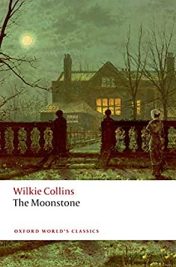 This is my first term teaching both online and in person – not in the same course, but with one of each. So far I like it, actually. My in-person course is an old favorite, Mystery & Detective Fiction. I haven’t taught it in the classroom since Fall 2018, which feels a lot more than four years ago. I taught it online more recently, with some success, measured at least by the number of students who showed up in my Fall 2022 classes at least in part because (according to them) they’d enjoyed it a lot. I’ve remarked here before about the oddity that this has become my most frequently taught course, because it’s such a popular elective. It’s full again this term, at 64. I am grateful for its familiarity: I hope to be able to relax into it. Usually it sparks some of the liveliest discussion of any of my classes, I think because everyone’s there out of interest (it doesn’t fulfill any requirements, so nobody has been coerced into taking it). We warmed up this week with “big picture” stuff about genre fiction, with an overview of the history of detective fiction, and then, today, with “The Murders in the Rue Morgue.” Monday we start The Moonstone, which I omitted, reluctantly, from the online version. I was rereading our first instalment this afternoon and it’s just such a lot of fun. I hope they think so too!






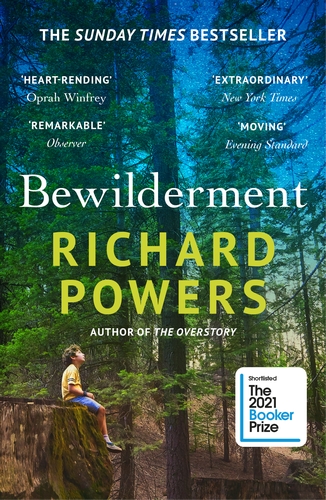 “So far the votes are two Asperger’s, one probably OCD, and one possible ADHD,” he tells Martin, a neuroscientist friend of Alyssa’s to whom he eventually turns for help. “Most of the common meds are pretty normalized,” Martin comments, but when Theo insists that he wants “some treatment short of drugs,” Martin proposes that Robbie enter his ongoing trial of a therapy called
  Theo’s tense, beautiful, heartbreaking account of his life with Robin is intercut with their “visits” to other planets: part of Theo’s work is running simulations of what kind of life might emerge under wildly varying conditions which he and Robbie “explore” with exhilarating curiosity and awe. These sections are weird and wonderful, visions of possible worlds completely unlike our own and yet always imagined as possible points of connection. On the planet Pelagos, for instance,
 I was initially drawn to Bewilderment because of its description as the story of a father and his “rare and troubled boy.” I had a son like that, and while his specific passions and hardships were not the same as Robbie’s, Powers captures a lot of what it was like to try and to fail to know what was right for someone whose gifts and whose difficulties were equally extraordinary, excessive, sometimes exhausting, especially but not only for him. I too liked my son “otherworldly”; his ingenuousness was so precious, even as it made him, sometimes, so vulnerable. “His pronouncements were off-the-wall mysteries to everyone except me,” Theo says of Robin;
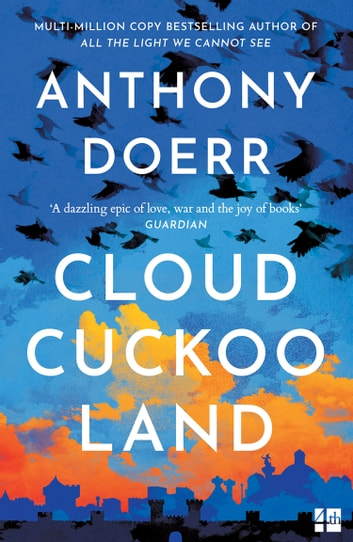 I won’t rehearse the details of the novel except to say (for those who haven’t encountered it or anything about it yet) that it follows a cluster of characters widely separated by time and place: in 15th-century Constantinople, a boy and a girl from two different, antagonistic worlds—both in their own way dreamers—cross paths and find fellowship; in 20th-century Idaho, the lives of an angry boy and an old man unexpectedly converge, their two forms of idealism colliding, with unintended consequences; in a remote future, young Konstance lives a surreal existence aboard a hermetically sealed spacecraft. The novel moves each plot forward a step at a time, orchestrating them with delicate precision. The novel overall is organized around fragments of a “lost” ancient text, The Wonders Beyond Thule by Antonius Diogenes, which plays a key role in each plot as well as providing imagery and inspiration for the novel as a whole.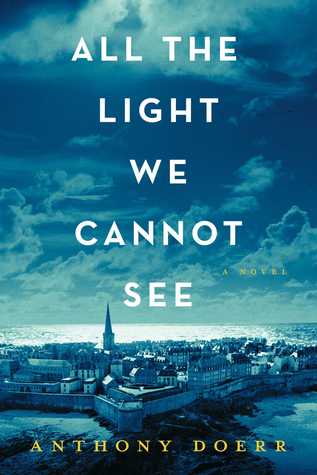
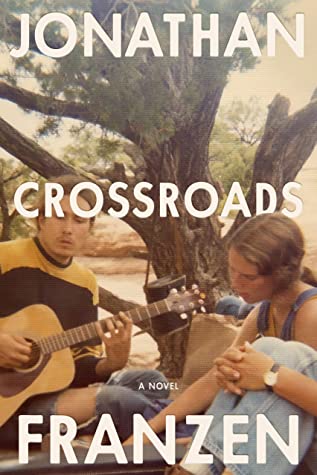


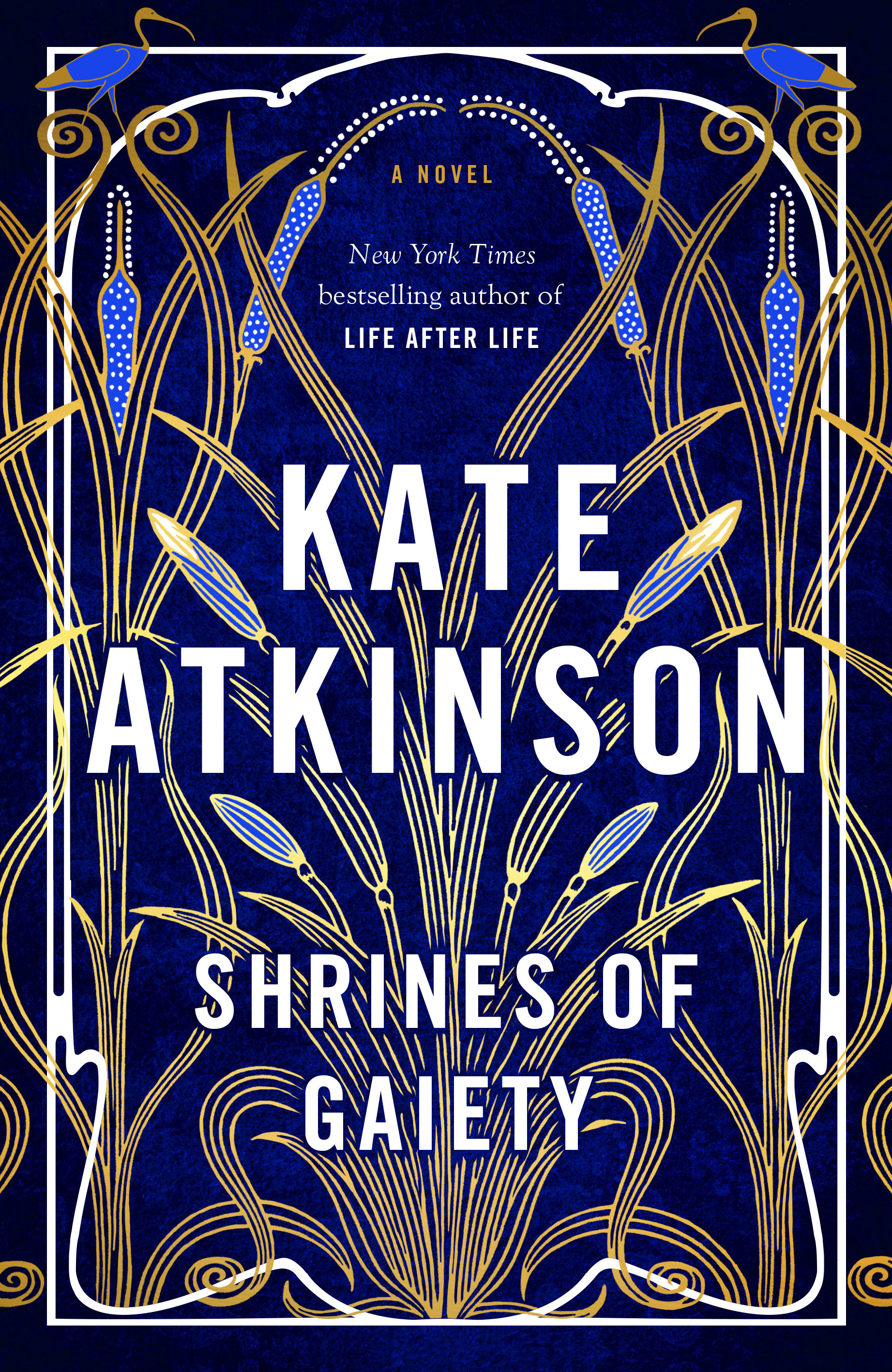 October was a terrible reading month for me. I didn’t even start many books, much less finish them. A last minute push (and, I’ll admit, a bit of fed-up skimming) got me to the end of Kate Atkinson’s Shrines of Gaiety, which I had acquired precisely because I figured that, whatever gripes I have had in the past with her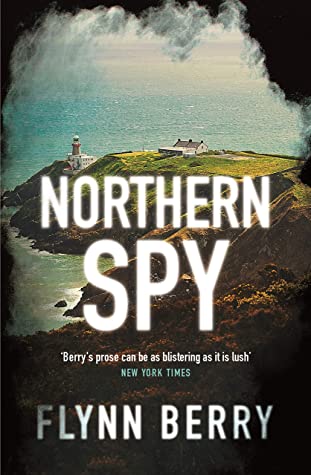
 In 19th-Century Fiction we have been working on Middlemarch for a couple of weeks. I wish I could say it is going well. I don’t think it’s going badly exactly, but honestly this term I don’t really know. Attendance is just appalling: most days, maybe 60% of the class shows up, which is unprecedented, in my fairly long experience. I don’t know what to make of this. I know it’s not personal, or at least I’m trying not to take it personally, but that doesn’t make it any less disheartening. The students who are present are pretty quiet; I think – I hope – they are engaged, but much of the time it’s hard to tell, and I worry that at this point I am mostly performing enthusiasm, not eliciting it. The ones who do speak up have good things to say, but I’m not used to having to work so hard to get anything out of the class, to get any energy back from them. I’m going to keep trying! The ones who are showing up deserve no less, and I remain hopeful that between us we can and will make the most of this opportunity to read this great novel together.


 Novel Readings