 The start of a new month seems like a good time to take stock, once again, of how my plans and projects for this sabbatical term are progressing. May is actually the point in a winter term sabbatical when being on leave stops meaning that much, as the regular teaching term is now over for everyone anyway. May is often very busy with meetings, though (including our department’s traditional ‘May Marks Meeting’), so my time is still more my own than it would be otherwise.
Looking back over the past four months, it does seem to me that I have been making pretty good use of that protected time. Since I placed my book orders for September, my early project to refresh my reading lists has been less of a priority, but it has definitely had results. The biggest change so far is to the approach and book list for Women and Detective Fiction, which I wrote about in my March update. Unfortunately, as I mentioned in my postscript to that post, I ran into problems with my revised book list for Pulp Fiction (specifically, True Grit turned out not to be available from a Canadian supplier), so I decided to go with Valdez Is Coming again and accept that the onus is on me to teach it differently to make it more accessible. Because I wanted at least something to change for this iteration of the course but had rather run out of enthusiasm for novelty, I switched out The Maltese Falcon for The Big Sleep, which I know reasonably well from teaching it in Mystery and Detective Fiction. My overall enthusiasm for Pulp Fiction is actually flagging right now; I hope that in 2020-21 I can offer a different first-year course, perhaps ‘Literature: How It Works,’ which would let me go back to the broader range of texts and topics I used to cover in our (now retired) courses ‘Introduction to Literature’ and ‘Introduction to Prose and Fiction.’
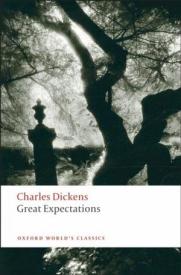 I have until the fall to settle on the book lists for my winter term courses, which are British Literature After 1800 and 19th-century British Fiction (the Austen to Dickens variation). I’ve spent quite a bit of time examining anthologies for the survey course and concluded that the most reasonable way to go is a slim custom text assembled from Broadview’s wide-ranging options. (Who is actually assigning these behemoth volumes? And how do they assign enough in one term to make it worth their students’ expense?) The down side is that for copyright reasons I can’t include much material past Joyce, but I think I can fill in a small number of contemporary poems and a story or two by other means. I have been playing around with a lot of different options for longer texts that I think would work well in combination, because the assignment sequence I am planning to use includes a final essay for which students would compare our last book with either of our previous ones. (One reason for this is that it means one way or another everyone has a stake in our final reading.) Right now the front runners are Great Expectations, Three Guineas, and The Remains of the Day: I can imagine a lot of interesting ways to connect Remains with the other two, including first-person narration, questions of class, dignity, money, and morality, and connections between personal and public politics. The 19th-century fiction book list is still uncertain: one of the big questions for me is whether Wuthering Heights will make it in or whether I’ll lose my nerve and fall back on old favorites.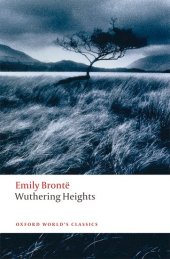
Since fall book orders went in, I have been dedicating most of my time to the more open-ended research I discussed in my earlier posts about the value of ‘uproductive’ time and re-learning patience. Although it still makes me intermittently anxious that I’m not entirely sure where I’m going with all this, I am relaxing more into the process of reading and inquiry–and I am also starting to get a sense of how the different things that interest me might eventually coalesce, though I am a long way from being sure about how to frame the central question, much less how to answer it. I am genuinely enjoying the luxury of just being interested: “curiosity-driven research” is supposedly fundamental to our work, but as I discussed in my post on ‘fallow time’ there are lots of professional disincentives to following your interests in new directions.
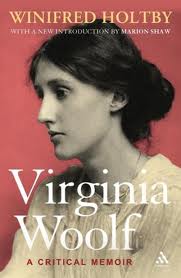
 Having said that, the more I read about Holtby and Woolf, and especially the harder I try to understand what’s going on with The Years, the more I’ve been identifying continuities between this material and longstanding interests of mine, including genre (my monograph was about history and fiction as means of telling particular kinds of stories about women’s lives) and the relationship between literary form and ethics (something I’ve addressed both explicitly and implicitly in a lot of my essays and academic articles). I had long casually accepted the image of Woolf as (to quote Janis Paul) “a kind of patron saint of inner vision and consciousness”; the books I’ve been reading on Woolf’s politics and cultural criticism have helped me see her differently, and especially as perhaps not so entirely unlike Victorian novelists in her interest in using fiction to make a difference in the “real world” (as Alex Zwerdling’s Virginia Woolf and the Real World has it). This week I’ve also been reading scholarship on Woolf’s connections to her Victorian predecessors, including Janis Paul’s The Victorian Heritage of Virginia Woolf and Emily Blair’s Virginia Woolf and the Nineteenth-Century Domestic Novel, neither of which (though both are very interesting on their own terms) turned out to address quite the things I was looking for–but of course in some ways that’s encouraging, as it shows where there might be room for me in the conversation.
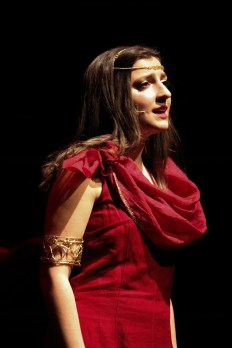
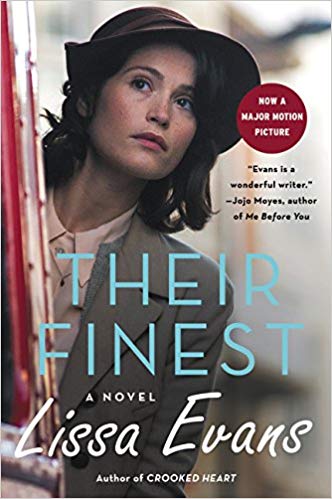
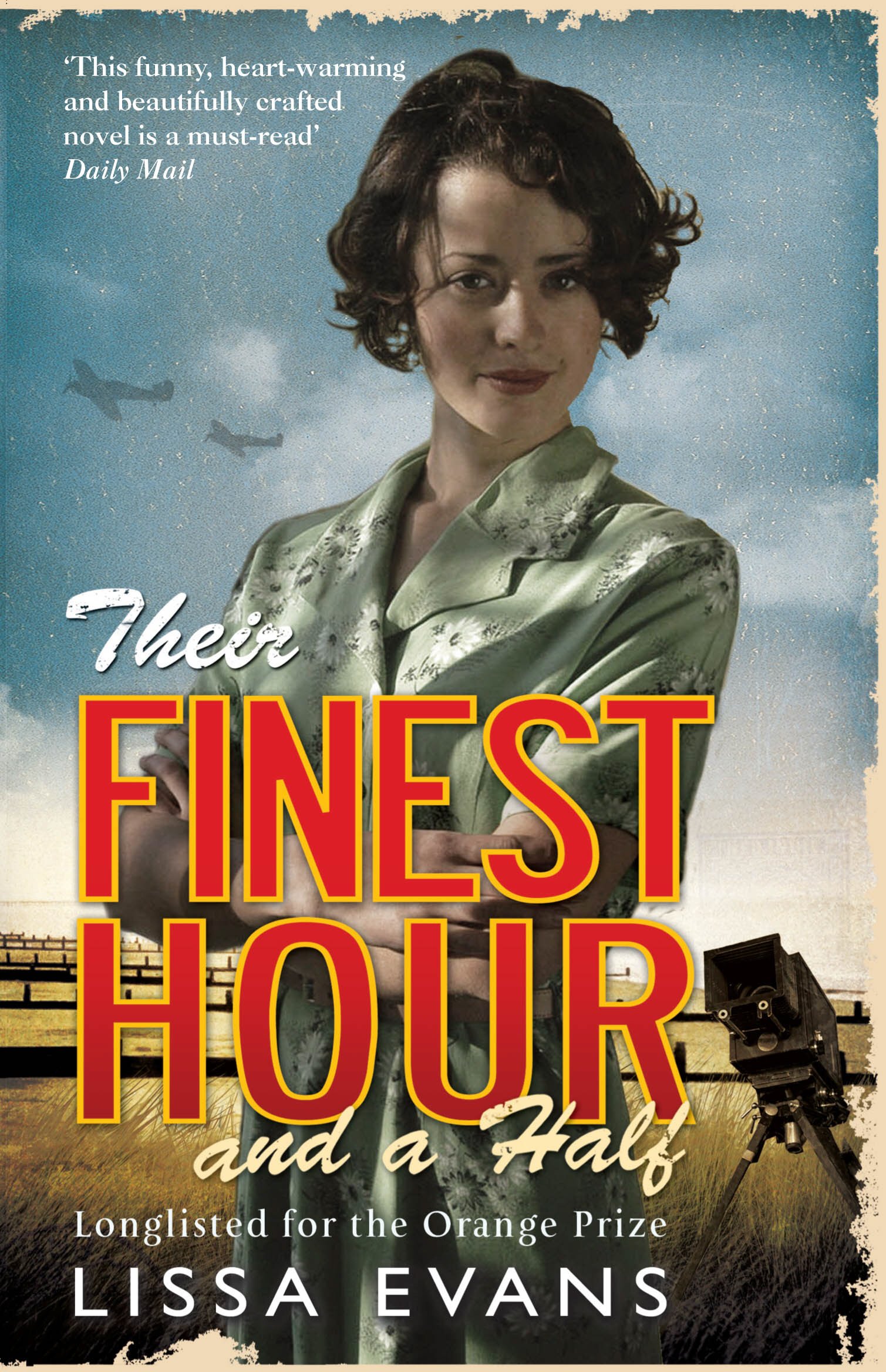
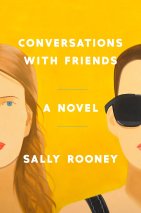 So that’s where I am now, at the two-thirds point in this six-month sabbatical. I have checked off a number of the concrete tasks I set myself, and I have made progress on the more amorphous but no less important task of refreshing my own intellectual engagement. There have been other things going on too, of course (including Maddie’s performance in Jesus Christ Superstar and, exciting in a different way, her acceptance of a place in Dalhousie’s Fountain School of Performing Arts for next year), and as always I’ve been doing other reading, most recently Lissa Evans’s Old Baggage and a reread of The Break for my book club (where it was a big success). My leisure reading right now is Sally Rooney’s Conversations With Friends, which I am not liking at all (my goodness, her sentences are dull!)–but that’s a subject for another post!
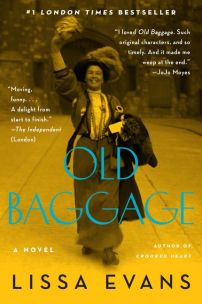
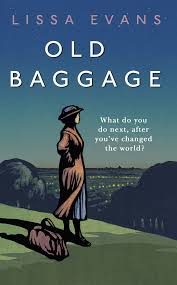 Evans does a wonderful job delineating Mattie’s world, from its domestic apparatus to its politics. The novel takes place mostly in 1928 and 1929, and while like Mattie herself this world is full of energy and change, it is also shot through with pathos from the aftereffects and memories of the war, in which Mattie’s brother Angus was terribly injured:
 This is all really good material, and the novel is well told start to finish, but my initial enthusiasm was somewhat deflated by the way its story eventually played out. Mattie compromises her own mission for reasons that seemed to me both out of character and insufficiently dramatic to create a genuine crisis of either conscience or story. The potential for significant conflict between the youth organizations, their leaders, and (most importantly) the larger political stakes they represent was not realized–perhaps because it would have been incompatible with the novel’s overall lightness of tone and touch–and the novel’s final twist not only seemed weirdly random but was a disappointing relegation of Mattie’s fighting spirit to a form of caretaking retirement. Perhaps the ending was meant to signal that the torch has finally been passed: that the best thing Mattie can do for the next generation of activists, or for the women (such as Ida) who are making new lives based on their achievements, is to free them from domestic responsibilities–to look after their baggage?–so that they can carry on. Still, I thought Mattie deserved better, though I suppose I should not underestimate the radicalism of the doctorate she earns. And as she says, quoting its subject, “All things are difficult before they are easy”: Mattie’s fighting life, which has certainly been difficult, has maybe earned her a future a bit out of the fray, away from the front lines of what we know too well would be an ongoing war.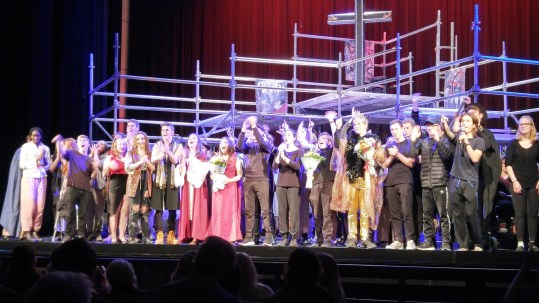
 That’s all still in the future, though, and in the meantime Maddie has exams to get through and I have a bit more time on my sabbatical to make the best use of that I can. Now that everyone else is also done teaching, being on leave feels a bit less special, but I remind myself that May typically fills up with administrative commitments, so I can still enjoy not being part of that. I will write up a post soon reflecting on my sabbatical so far. Before too much longer, I may also actually finish reading a book, and then I can post about that too! I have three in progress: The Break, which I am rereading for my book club, Lissa Evans’s Old Baggage, which I am enjoying so far, and Lucy Parker’s The Austen Playbook which to be honest I am not really loving. I am not currently reading anything on assignment for a review: I’m not sure if that’s good or bad! (It does mean I’m available, if any editors are reading this…)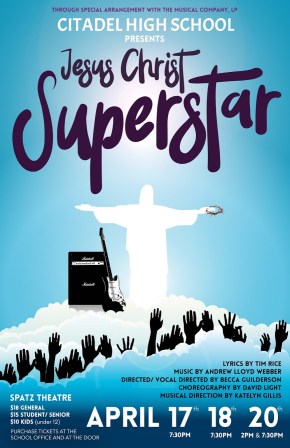


 I wrote
  Since
Since 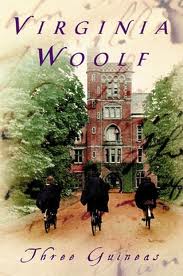
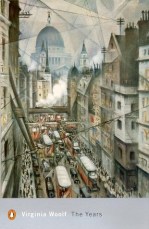 I struggled with The Years, but I was also very interested in it, at least conceptually. I’ve been reading about it since then, especially about the splitting of the original project into two separate books. I’ve also been thinking about Holtby’s own fiction, especially South Riding, and her self-deprecating description of herself as a “publicist” (rather than an artist / aesthete), and about other novels that are like The Years in giving fictional form to social and political commentary but in very different ways, such as (surprise!) Middlemarch, but also North and South. I hadn’t planned to put any Victorian novels into my pile of relevant books this time, but there they are now, and that has got me thinking about things like periodization and genre and the ways we group or differentiate writers, especially women writers, which brings me back to Holtby’s critical approach, and I’m also interested in Holtby’s political journalism, which reminds me both of the anti-fascist arguments in Three Guineas and of the links between gender politics and fascism in Gaudy Night, which also includes reflections on fictional form and genre . . .
 I have been trying to figure out how (or, perhaps more aptly, why) to write a post about The Years, which I finished reading a while ago. How many times can I
  It’s easy for me to find individual sentences or moments or even longer passages from The Years that I liked: that made me pause to reread them, to think about them, to appreciate them. The problem for me is at the higher (or is it lower?) level of structure, of support for meaning: even as I grasp at these pieces, with what sometimes feels like a nice firm grip, I find myself, or them, slipping again soon after. I lose the thread, I miss the connection, I falter, I am lost. What just happened? Why did he say that? Who is she talking to now, and about what? Why is this the detail we’re getting right now? It’s as if I am looking at the novel through something and so not seeing all of it, or, to reverse the image, as if the novel itself is a screen (and this actually feels like a better, more Woolfian, metaphor) over a fuller version, allowing only indirect access to it. I can tell that there is more to the novel than I am understanding, but it eludes me.
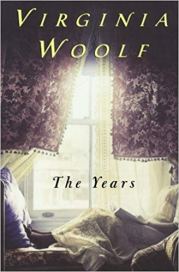 One reasonable response is that I need to work harder as a reader. Another way to put it–my preferred way, since I don’t think I am a lazy reader!–is that I am still learning how to read Woolf (or, Woolf’s fiction, since I am a reasonably good reader of
  Book orders for our fall classes are due by April 1. It’s not a hard and fast deadline, but earlier orders make things easier for the bookstore staff and also enable them to organize book buybacks from students for texts that will be assigned again next year. In theory (though things have not always worked out this way) it also means that if there is some kind of supply problem with a fall book selection, they and thus we find out in plenty of time to choose an alternative. So I do always try to meet the deadline! The problem is that it comes up right when the current term is at its most hectic, which is one reason it is tempting to default to the same reading lists (or very close to them) that I used last time around–and that, in turn, is why I have made it one of my priorities this term, while I’m on sabbatical, to see what else I might assign.
 For Pulp Fiction, I have changed two of the three novels on the list (I’m keeping the short readings the same, so as not to overwhelm myself with new prep!). The first two times I taught it, we read Valdez Is Coming, The Maltese Falcon, and Lord of Scoundrels. I was actually very happy with this list for my purposes: they are all terrific novels, exemplary of their genres but also thought-provoking in their particulars, and the sequence was unified by their engagement with problematic models of masculinity. In practice, however, things did not go as well as I would like. For one thing, Valdez Is Coming was not popular, and it also proved difficult to use for exercises in close reading: there’s a lot going on but it’s subtle, more below the surface than on it, which fits the book well but gave students a lot of trouble. The Maltese Falcon raised different problems: I had more plagiarism cases involving students’ writing on it than I’ve had (to my knowledge, of course) for any text I’ve ever assigned in first year. As a result, I have replaced both of these books: this time our representative Western will be
 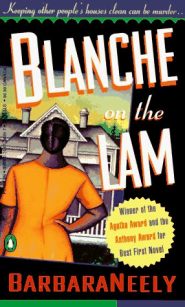 My other fall term course is an upper-level seminar on
 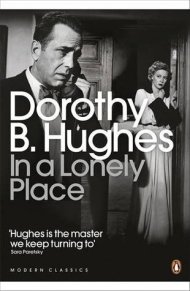 I feel good about these decisions, but I also have some concerns about taking on so much new material. More specifically, I’m worried that the new books for Pulp Fiction will actually prove more difficult for first-year students, not least because of their idiosyncratic first-person narrators–one of my tasks now is to think through their challenging aspects and provide my students with the right tools and approaches to have a productive discussion about them. I was very comfortable with my old reading list for Women & Detective Fiction–too comfortable, of course, as I realized. Now, however, I am anxious about how to handle the difficult scenarios presented in both In A Lonely Place and The Break and about equipping myself to address the appropriate historical and critical contexts for Neely and Vermette responsibly. But there’s plenty of time between now and September to do this work, and at least now that the book orders are placed my attention will no longer be “dispersed over that tempting range of relevancies called the universe” but focused on these particular books.
 Van Es pursues Lien’s story initially because it is also the story of his family: his paternal grandparents sheltered Lien, absorbing her into their family in Dordrecht as the lives of Jews in the Hague, where her parents lived, became increasingly precarious. One of the most painful documents in a book full of wrenching details is the letter Lien’s mother wrote to the unknown recipients of her 9-year-old daughter in August 1942. “She has been taken from me by circumstance,” wrote 28-year-old Catherine de Jong-Spiero;
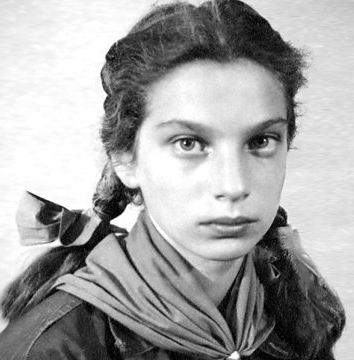
 The Cut Out Girl alternates chapters about Lien’s experiences during the war with chapters recounting Van Es’s research, including interviews with Lien herself, visits to archives and to places Lien lived while in hiding, and meetings with everyone he can find with something to tell him about Lien or about occupied Holland. He shows us Lien as part of the bigger picture, as one girl among many thousands, but also as profoundly individual, as a very particular young girl suddenly removed from everything familiar and having, over and over, to adapt to new people and new expectations, all under a cloud of fear and secrecy. The people who took care of her also are presented with great distinctness. Because most of what he knows about them comes from Lien, it is easy to lose track of the courage these people showed and the fear they must have felt for themselves. Though, as some of their actions show, they were far from perfect, still they rose to the moral occasion at great personal risk and they and people like them saved thousands of lives. “At least 166 Jews spent time in hiding in Bennekom,” Van Es learns, for instance, “a village of just 5,000, and more than 80 per cent of them survived. This is the opposite of the national picture.” It is hard not to be awed at the actions of Jan and Dieuke Heroma, for example, key parts of a large network “constructed to resist the Nazis.” It was Mrs. Heroma who came to take Lien away from her parents, cheering her on the train to Dordrecht with funny place names: “Double Sausage Street,” a road called “Behind the Wild Pig.” Nothing about the kindly face shown in this photograph of her seems extraordinary, but that’s one of the points a story like Lien’s makes for us: ordinary people are capable of doing extraordinary things.
 The Heromas’ antagonists are those like Harry Evers, one of many Dutch police officers who eagerly enforced Nazi policies, tracking down Jews to meet “the targets set by their German masters.” Evers too is otherwise ordinary, “unremarkable, modestly educated, fond of a drink …. not especially political.” He turns in the opposite direction to Mrs. Heroma, though, joining the Fascist Union and then flourishing in the Political Police, tracking and capturing the same people the Heromas and their allies are working so hard to protect. Van Es goes through boxes of files about Evers, including hundreds of witness statements about his appalling actions. “As I read these things,” Van Es comments quietly, “I think of Lien in hiding.” He tells us about one particular case very close to hers but with a different ending. Miepe Viskooper, age 7, was also sent by her parents into hiding with sympathetic people, in the hope that she would be safe. Discovered, Miepe is caught by Evers and his colleagues as she tries to run from them: “Evers came in right behind her, pointing his revolver, shouting ‘It’s the choke hole for you’ at the little girl.” She was brought to join her parents, who had also been arrested, at Westerbork. “As I read this,” says Van Es,
 The Cut Out Girl is not a triumphant story: one thing it drives home is that survival by itself is only part of the battle. On a personal level, though, it does end on a hopeful note: Lien has found happiness in a new phase of her life, and gradually new bonds are being formed between her and the family she was first pasted into then cut out from. There is something lovely about the book’s cautious movement towards this happy ending and the self-effacing way Bart reveals that, in ways he could never have anticipated, his work finding out Lien’s story has done more than fill in a gap. The process has led him to think hard about history but also about his own immediate family, especially his relationship with his stepdaughter Josie. Van Es never presents himself as any kind of heroic discoverer: he is learning as he goes, about himself as well as about Lien.
 There have been some shifts, though, some changes in who is feared or hated and how. One day, looking for the exact location of Lien’s first residence in Dordrecht, Van Es realizes his pacing and staring have attracted attention from the current residents: “a middle-aged man in a kameez comes towards me, asking suspiciously, with a heavy accent, what I am doing. . . . ‘You ought not to be spying on people,’ the man tells me.” As he walks away, Van Es is
