I do know this. There is no Melmoth, no wanderer, no cursed soul walking for two-thousand years towards her own redemption–there is nothing to fear in the shadows on Charles Bridge, in the jackdaws on the windowsill, in the way the shadows on the wall seem sometimes blacker than they should (you are nodding–I know it–you have felt these things too!). No, Thea, there is no Melmoth, there is nobody watching, there is only us. And if there is only us, we must do what Melmoth would do: see what must be seen–bear witness to what must not be forgotten.
Melmoth is that rare thing: a thoroughly entertaining novel of ideas. While in some respects it is a deliciously fearless pastiche of Gothic novels (its title harks back to Charles Maturin’s 1820 novel Melmoth the Wanderer, which is also constructed as a series of documents and framed narratives), it balances its more fantastical elements with sections of grimly compelling historical testimony about the worst human beings are capable of. Through the narrative of Joseph Hoffman, we see hatred, prejudice, and betrayal in Nazi-occupied Prague; the account of Sir David Ellerby bears chilling witness to the evils of religious persecution in 17th-century England; in her diary, a young girl in 1930s Cairo records the story of a nameless Turkish bureaucrat whose “inconsequential” paperwork has genocidal implications:
The memorandum was drafted, and approved, and signed in triplicate; it was signed by his superiors, and by his superiors’ superiors. By morning it awaited attention on desks further afield than Nameless himself had ever traveled; within the week those black marks on that white paper became deeds, not words, and 235 Armenian intellectuals were deported from Constantinople to Ankara.
Later it becomes “necessary to devise a practical means of moving ten thousand Armenians into the interior, where they could do no mischief.” As the new plan unfolds, Nameless and his brother Hassan are at once willingly complicit in and willfully oblivious to the evil they do. But here, and in every horror story Perry’s novel incorporates, there is an unrelenting witness:
“Brothers,” she said. She lifted the bundle she held and crooned to it. “Brothers, didn’t you expect to find me here? Don’t you know me? Don’t you know my name? I, who saw your mother’s pain as she gave birth? Didn’t you see my shadow on the page as you went about your work? Didn’t you feel me at your shoulder as you sharpened your pens into knives?”
“Did you think I wouldn’t see?” she whispers as they shrink in horror from her and from what she has shown them; “Did you think there was no witness?”
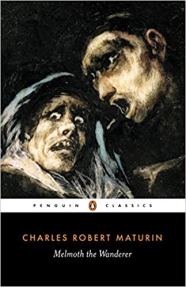 It is Melmoth who is with them, as she is with Joseph and every other malefactor in the novel, including its unassuming protagonist Helen Franklin, whose guilt over a secret from her past has driven her to live a life of penance and self-deprivation. Her crime is betrayal on a small scale, personal rather than political or historical, but then, as Melmoth’s various stories emphasize, even the greatest moral catastrophe is in fact an accumulation of individual acts, and no amount of privacy or secrecy can salve the guilty conscience. Melmoth is at once a legend and a projection of that conscience. Joseph Hoffman learned her story from his teacher, Herr Schröder. Melmoth was one of “a company of women” who found Jesus’s tomb empty after the crucifixion and then saw him resurrected, but Melmoth denied what she had seen:
Because of it she is cursed to wander the earth without home or respite, until Christ comes again. So she is always watching, always seeking out everything that’s most distressing and most wicked, in a world which is surpassingly wicked, and full of distress. In doing so she bears witness, where there is no witness, and hopes to achieve her salvation.
It is not in your hour of greatest need that Melmoth comes to you, but in your worst hour, when you are most wicked and thus most alone, and she tempts you to join her in her lonely wandering: “So she comes to those at the lowest ebb of life, and those she chooses feel her eyes on them.”
 I won’t give away the different ways this sad and creepy story intertwines with the personal and historical narratives that add up to Melmoth the novel, but I will say that I found it wonderfully effective. Though the concept itself is intrinsically melodramatic, as is appropriate to the novel’s Gothic legacy, Perry’s use of it is restrained and she keeps her supernatural wanderer mostly on the margins: a doubt, a shiver, a shadow, a movement of the curtains, a feeling of being followed. The novel itself is not restrained, though: I remarked on Twitter that I was tired of elegant minimalism and looking for writing that showed some writerly glee, and Matthew Reznicek was right that Melmoth shows exactly that.
I also won’t give away the ending, but I thought the final pages implicitly grappled with the question raised by the quotation I chose as my epigraph here: Is there really any witness besides us, and if there isn’t, should it matter to our morality? They also leaven the Gothic darkness with a shimmer of light:
There is something there–something in her, fluttering, weak, making itself felt. She thinks of the box beneath her bed, and its remnants of the time when she had lived. Then she thinks also of another box, another girl–a lid lifted, and all the world’s wickedness let loose. But something had remained then–hope, very small, very frail, like a white moth looking for a flame.
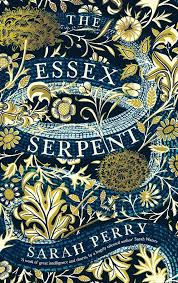
The novel ends with the kind of flourish that might all too easily seem cheap and gimmicky–but I loved it, partly because it is risky, and because it’s fun and playful and also dead serious. It fulfills the spirit of the rest of the novel by drawing us directly into its world–which is, after all, our world. “Dear heart,” she says to us at last; “I’ve watched you so long. . . . won’t you take my hand?” The answer to Melmoth has to be no, but to Melmoth, for me it was an enthusiastic yes–and a somewhat surprised one, as I am not ordinarily enamored of Gothic fiction and as a result, and because I did not love Perry’s previous novel, The Essex Serpent, I had put off reading it. I’m so glad I finally did.

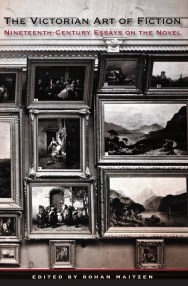 I have first-hand experience of this. After I earned tenure on the basis of my scholarly work on 19th-century women historians, I did some hard thinking and decided I did not want to work on that material any more. It just did not feel very important or interesting to me, so while I could imagine (and in fact had put together some preliminary outlines for) new projects in that field, I decided to take advantage of the security of tenure to do something that mattered more to me–something that felt more urgent–which was the work I went on to do on ethical criticism. I eventually published two peer-reviewed essays based on this work, one in Philosophy and Literature on Martha Nussbaum and the “moral life of Middlemarch” (in 2006), the other in English Studies in Canada on Victorian ethical criticism (in 2007). A further result of this reorientation of my research was the edited volume of Victorian criticism I published with Broadview in 2009.
 Now consider how that phase of my scholarly life was described in the letter denying my promotion appeal. The committee’s assessment was that my record showed “limited scholarly activity between 2000 and 2005″* followed by a “second burst of scholarly output.” Where do you suppose they think that “burst” came from? It came from giving myself time to read, think, and write–and it’s worth keeping in mind that I was in fact writing both of the articles that I’ve mentioned well before their actual publication dates, because the academic submission process takes forever. During those years I also gave conference presentations related to my ongoing research and attended a symposium on literature and ethics in Australia convened by a prominent scholar in the field. This is all scholarly activity! It is “limited” only in the sense that it was preparation for the “output” to come rather than (mostly) measurable outputs in the moment.
 An important step in this process was
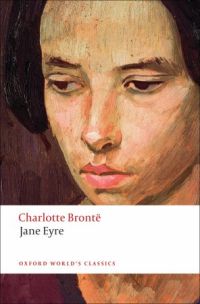
  One way to think about where I am now is that I am having the critical and scholarly equivalent of a “but why always Dorothea?” moment! This is a good thing, or it will be, and I do have some ideas about which direction to go in. I’ve been reviewing things I’ve read and written about over the last decade or so, and it quickly became clear to me that the work I did that excited me the most was the reading (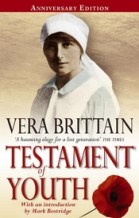
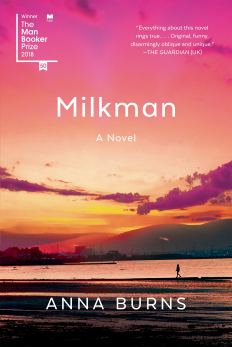
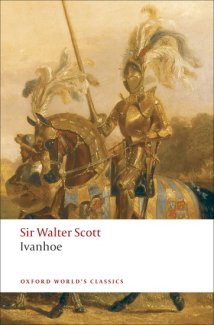 Another element of the novel that presses us to think about a conflict more abstract than its historically specific one (although of course that in some ways was always about abstractions too) is the emphasis on the narrator’s “reading while walking.” As she makes her way around the city, she focuses not (as far as she can help it) on her immediate surroundings but on her books, preferably 19th-century novels. The first time the ominous Milkman pulls up beside her, for example, she is reading Ivanhoe. The narrator knows that in doing this she is “losing touch in a crucial sense with communal up-to-dateness and that that, indeed, was risky.” She is seeking not so much escape as neutrality: reading is a form of withdrawal, a way of refusing or rejecting the whole otherwise intractable situation around her. This is why her reading while walking provokes what initially seems like a disproportionate amount of criticism. Not taking sides is not an option in her world, where nothing is exempt from partisanship–as she and we realize when maybe-boyfriend, a car enthusiast, gleefully shows off his acquisition of a bit of a dismantled Bentley only to be confronted about whether he also got “the bit with the flag on it.”
 The opposition there is also a gendered one, and this is another way that Milkman felt universal (or at least mobile) as well as historically specific. Its central plot is only ambiguously about the actual politics of the Troubles, but it is very clearly a plot about sexual predation and sexual politics. I found the way the narrator loses control of her own story particularly chilling: her frustration that the Milkman’s interest in her negates her own agency, her fear and confusion at his insistent pursuit, her struggle to limit its ramifications, the seeming impossibility of even identifying him as a threat when, as she repeatedly complains, anything short of a physical attack will not be legible to anyone else as the danger she knows it to be. His hints about car bombs connect this story directly to a particular place and time, but her decision not to go running alone anymore is one
  “Hai mai! I go from one place to another as it might be a kickball. It is my Kismet. No man can escape his Kismet. But I am to pray to Bibi Miriam, and I am a Sahib”–he looked at his boots ruefully. “No; I am Kim. This is the great world, and I am only Kim. Who is Kim?” He considered his own identity, a thing he had never done before, till his head swam. He was one insignificant person in all this roaring whirl of India, going southward to he knew not what fate.
 I guess it was lively and entertaining, occasionally, and it was also occasionally beautiful and poetic, and funny, and suspenseful. But I also found it something of a slog to get through, mostly because so much of the dialogue is a wearying blend of theatrical posturing and archaisms. The latter, and perhaps also the former, are meant (I assume) to give the language a “foreign” air so that we know the characters are not actually speaking in English–and there are also idioms and allusions drawn from the characters’ various cultures and languages that add to the effect. A small sample, from the first chapter:
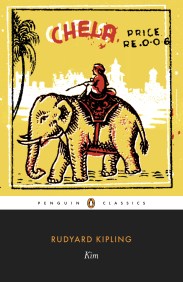 On the other hand, I loved Kipling’s scene setting, which is vivid and concrete and rich in detail. From the crowded streets of Lahore to the mountains of Tibet, he shows us the sights, and conjures up the sounds and smells of the landscape as well. “This was seeing the world in real truth,” Kim thinks as he looks around one bright morning on the road:
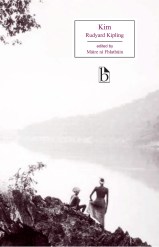
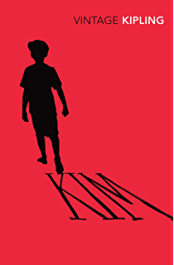 Kim himself is a bit of a delight. I was disappointed that the novel ended so inconclusively, without clearly answering his oft-repeated question about his identity. Reading the very thorough introduction to my Broadview edition by Máiri ní Fhlathúin, I was not surprised to learn that this “unsatisfactory” ending has “proved amenable to many readings, and resistant to any conclusive interpretation”; the readings she summarizes focus primarily on how or whether Kim’s Indian and British identities are reconciled, whether he turns away from or is subsumed by his role as an agent of empire. His relationship with the lama is very sweet, though I personally found the lama kind of tedious (I have limited patience for “holy men” unless they do worldly good, and in my admittedly limited experience of Buddhism I have never found it particularly congenial).
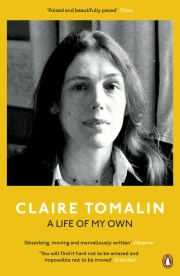 I don’t read a lot of memoirs, or a lot of biographies. The autobiography of renowned biographer Claire Tomalin, however, was so interesting that it made me think I should read more widely in both genres–starting, perhaps, with some of Tomalin’s own biographies, none of which I have read. Recommendations, anyone? I’m thinking perhaps The Invisible Woman, her book about Dickens and Nelly Ternan.
 Tomalin’s personal life was complicated in other ways too. She and Nick had four children. The youngest, Tom, was born with spina bifida. One of their daughters, Susanna, fell into a deep depression during her first year at college. “The transformation in her was unfathomable,” Tomalin writes:
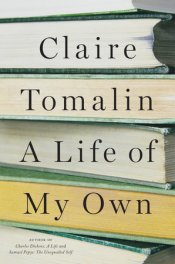 Tomalin’s personal life is only one aspect of A Life of My Own. Through it all she’s working, making her way through the literary world. Much of this material is, again, a somewhat perfunctory rehearsal of what happened when, with a lot of names dropped (which is totally fair, of course, since what’s she going to do, not mention the many famous writers who were in her orbit?). I was always glad when she let herself be a bit more expansive about her work as a writer and editor. About her aspirations as literary editor of the Sunday Times, for instance, she writes:
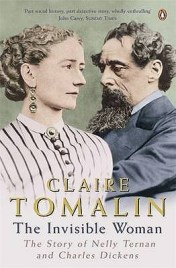 From a more personal standpoint, what resonated most with me in A Life of My Own is Tomalin’s comment about how late she actually began focusing on the biographical work for which she is now best known. “My story should be cheering,” she says, “to anyone who is finding it hard to establish a career they find congenial. . . . I was in my mid-fifties before I could concentrate on full-time research and writing.” Obviously she had a very significant career up to that point, and the experience and perhaps especially the connections she made working at the heart of London’s literary scene not only counted for a lot in themselves but meant she was exceptionally well positioned for a next phase that would probably be much more difficult for someone else. Still, it is indeed cheering, as I look towards my own “mid-fifties,” to think that what feels like
  They had been married ten years, and until this present day on which Mr. Dombey sat jingling and jingling his heavy gold watch-chain in the great arm-chair by the side of the bed, had had no issue.
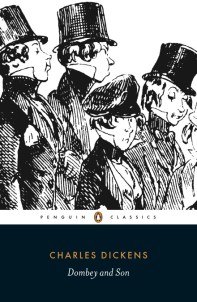 That said, I think that if Dombey and Son were a better novel, I might have been fine on my own and not fallen, as I sadly did, into occasional fits of boredom, impatience, or irritation. Though obviously a first read is almost by definition an imperfect one, some books nonetheless make their greatness clear pretty promptly, and I didn’t think Dombey and Son ever did. It lacks the joyousness of David Copperfield: its children have all the pathos and none of the fun, its villains are more cardboard, its eccentrics are less quirky and more repetitive, its heroes and especially its heroine are much duller (imagine, a heroine who makes Agnes look subtle and complicated!). Though there is something impressive in the portrait of Mr. Dombey and the destructive vortex of his pride, Dickens does not take that critique and radiate it outward with anything like the breathtaking audacity of Bleak House, with its many variations on its central themes. The fairy tale quality of Florence’s story, with its long emotional exile as she is, so paradoxically, held captive by her father’s neglect, loses a lot of its impact as it drags on with its one repetitive idea: Louisa Gradgrind’s story has some of the same qualities but is so much more intense, and also so much more interesting because, unlike Florence, Louisa is capable of anger.
 And so it went for me, really, throughout Dombey and Son: it kept reminding me of other Dickens novels but the comparison was never in its favor. I flagged a lot of bits I liked, and over its 900+ pages there were certainly moments I found sad or funny or even great in that way that only Dickens can be great. I was pretty fond of Captain Cuttle by the end! But at the same time, overall it felt cluttered and it took (yes) a bit too long to get us to the one result that really mattered, namely Mr. Dombey’s realization that his daughter was always already the child he needed. In Novels of the Eighteen-Forties Kathleen Tillotson notes that “Dombey and Son stands out from among Dickens’s novels as the earliest example of responsible and successful planning; it has unity not only of action, but of design and feeling.” I suppose, then, that you could consider it practice for the masterpieces that would follow, a lesser but valuable trial run. I can’t imagine choosing it as a teaching text over any of the ones I usually assign.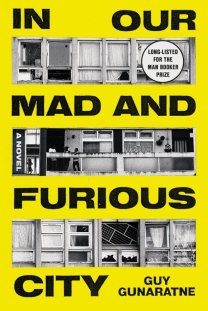
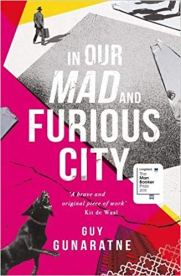 I’m not yet 100% sure that In Our Mad and Furious City is the right book for my purposes, but it is definitely the front-runner now: Liz has good instincts! For one thing, it is relatively compact: the edition I read is 274 not particularly dense pages. I also found it really engrossing. It took me a dozen or so pages to adjust to the voices–it is told by five different first-person narrators–and especially to their language, as most of the speakers use a vernacular which is unfamiliar to me. The effort to learn it, to hear it, to feel it, is part of the novel’s point, I think, and while I did continue to stumble occasionally over idioms I didn’t understand, it got much easier as I went along. (If I do teach it, I think I might bring in the audio book, which
  Although there are clearly big ideas at stake in the novel, Gunaratne does a good job making his characters’ lives seem intensely personal: they do not come across as devices serving only a didactic purpose. Perhaps oddly, the novel reminded me of S. E. Hinton’s classic teen novel The Outsiders: although almost everything about the context and action of In Our Mad and Furious City is different, I felt the same poignancy in it around the idea that youth is, or should be, a time of great but often thwarted possibility. Living on the margins as these young men do, pressed on every side by poverty and prejudice and impossible conflicts of loyalty, realizing even their modest dreams seems almost too much for them to hope for. While the novel is intimate in these ways, though, it is also about British history and politics, with the square at the Estate representing a microcosm of the larger society and its interconnected problems. The novel’s interwoven voices are at once a sign of its many divisions and (maybe) a formal reflection of how its complicated diversity could ultimately create a kind of unity.
 I’m 337 pages into my Oxford World’s Classics edition of Dombey and Son. It ends on page 925, which means I’ve read just over a third of the novel. Not all that much has actually happened–a birth, a few trips and some time at school, a misadventure or two, a death–but all of it has has happened at great length.
 I actually don’t know yet if I think Dombey and Son is too long for its purposes. I hardly know what it’s about yet! Reading it, however, especially after seeing that emphatic criticism tossed out on Twitter with such confidence, I have felt very aware of its length. I’ve been thinking about the strategies I suggest to my students when we read Bleak House, which is even longer (976 pages), many of which have to do with managing the information overload that comes with a first exposure to so many characters before you know who really matters or how they are connected, and with multiple unfolding plots that don’t yet have a known shape. My first class or two for any long novel is usually spent providing what I hope will be useful and widely applicable guidelines: look for variations on this theme, think about these kinds of contrasts between characters, pay attention to who does this and who does that. Students need what one critic calls “rules of notice.”
 When I taught David Copperfield in the fall, I addressed its length explicitly (the OUP edition is 944 pages). I always talk about length when teaching Middlemarch. “I don’t see how the sort of thing I want to do could have been done briefly,” Eliot wrote: that’s a good starting point for discussion about what exactly she is doing and how those purposes make the novel’s scale an important element of its form. (Interestingly, at least in the OUP edition Middlemarch, at 904 pages, is shorter than any of these Dickens novels, though I don’t know if the font size or page layout is standard. It reads longer, I think, perhaps because it demands scrupulous attention in a way that Dickens’s exuberant excesses may not appear to.) With Bleak House, we usually tie the novel’s multiplicities to the scale of its critique: it isn’t about one house or one family or one sad crossing sweeper but about a whole society.
 With David Copperfield, though, I found myself wanting to add another consideration, which is the particular ways Dickens makes his novels so long–when he does, because of course he doesn’t always, which is another reason to think about their length as meaningful rather than haphazard or (as those who object to Dickens’s novels as “too long” seem to imply) artistically lazy or inept. A lot of the length in Dickens’s fiction comes from what we might call “riffing.” (Merriam-Webster defines “riff” as “
 Last Friday was Munro Day and I almost didn’t notice: usually it’s a highlight of the winter term, a day off right when things are starting to get real and so everyone’s starting to get tired. It’s true that I’ve been tired lately myself, but at least I haven’t had to show up for class! I’m mostly on my usual schedule, because I’m still dropping Maddie off at school, but it has definitely been nice not having to be ready for the day in quite the same way: evenings and weekends aren’t haunted by what’s yet to be done or taken up with prep and grading.
 The survey course isn’t until next winter term so I have plenty of time to keep considering options for which contemporary novel to use. I want something that will play along with the theme of ‘belonging’ and/or be an interesting complement to Wuthering Heights, and with that in mind I’m currently reading
  Finally, after trying and not liking a few other hard-boiled / noir options for Pulp Fiction, I think I have settled on
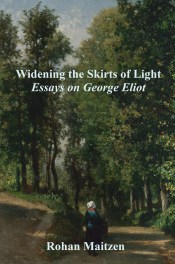
  Another sabbatical project of a different kind was to come to terms with the essays I’ve written over the past few years about George Eliot, mostly for Open Letters Monthly but also for the Los Angeles Review of Books and Berfrois. What I mean by “come to terms with” is really “decide what to do about,” but the first phrase captures a bit more of the emotional baggage the essays have come to carry. I loved writing them, and on my 2015 sabbatical I worked mostly on more writing of the same kind, some of which I ultimately pitched unsuccessfully to a couple of publications that run similar pieces, such as The Hudson Review. I naively thought this was the kind of cross-over writing that would bolster my application for promotion–distilling, as it did, decades of academic expertise into publicly accessible forms. But it actually made no positive difference to my case at all (not peer reviewed, you see), as it turns out. Since then, the idea of a revised and expanded collection has also proved completely umarketable: the essays themselves don’t do anything with mass appeal and also–and this is something I honestly hadn’t thought enough about–their standing as previously published material works against them. Yes, there are plenty of essay collections out there that are mostly or even wholly republished material (some of them with not much more popular appeal, in subject and approach, than mine) but in those cases the authors’ famous names make the sale.
 So, six weeks into my sabbatical, that’s what I’ve done so far. Well, that and make most of a shawl that, over the past few days, I have had to completely unravel because I realized I had been doing one part of the pattern wrong almost since the beginning. As I ready myself to start re-doing it, it’s hard not to think of the process as a metaphor for my other work. Undoing crochet still leaves you with all the yarn, after all: you just have to make something else out of it. It’s very pretty yarn; that seems like grounds for optimism.