I’m not quite ready for my traditional posts about what I’ve read and written in the past year: for one thing, I often read at least one really great book between Christmas and New Year’s, when the holiday bustle has ended and the book-shaped packages under the tree have revealed their secrets! (In fact, I’m currently reading Emily Wilson’s translation of the Odyssey, which seems a likely contender for any “best of 2018” list.) That doesn’t mean, though, that I’m not looking back over 2018 and ahead to 2019, trying to figure out where I’ve been, where I am, and where I’d like to be going.
Taking stock in this way is particularly relevant for me this year because as of January 1, 2019 I will be on a half-year sabbatical, which means instead of being caught up in the routine busyness of the new teaching term I will have the luxury of time to think and write, to consider and then advance my own priorities as a scholar and a critic–and as a teacher, since one of the most valuable things about a term off from actually teaching is a chance to reconsider reading lists and pedagogical approaches without an imminent deadline for book orders making the usual into the inevitable. (In another post, in part with the goal of making myself accountable, I will be drawing up a reading list to help me refresh, rethink, or reinvent some of my standard course offerings.)
 I do have a sabbatical plan–you have to submit one as part of your application–and also some existing deadlines I need to meet, so I’m not heading into the new year entirely aimless. Still, the precise form my work on that plan will take is really up to me, and figuring that out will be my first and possibly hardest task. A crucial context for me is what I did on and then after my previous sabbatical, in Winter 2015. Over that winter I threw myself into writing what I hoped (and perhaps still do hope) would become a book of “crossover” essays about George Eliot. I wrote a lot of material, and then towards the end of the term I peeled off two parts that I eventually published as self-contained essays. (I did not really appreciate at that point how bad it might be for the book I was imagining to publish a lot of its intended content first.) By and large I enjoyed doing that writing: I felt very motivated and productive, and across my sabbatical my confidence in my overall portfolio grew–which is why I decided, at its end, that I was ready to apply for promotion. This administrative project, too, was initially exhilarating: I had done so much (I thought), in so many different forms, since my first promotion, and the result was (I thought) a body of work I was rightly proud of, some of it well within the usual academic boundaries, but a lot of the more recent work reaching across them or representing my principled resistance to them.
Well, we all know how that turned out…and since the 18-month saga of arguments and counterarguments, appeals and, ultimately, rejection ended, I have struggled to regain the buoyancy that had led me to what in retrospect seems like a terrible error in judgment. I have been gradually (if unevenly) reconciling myself to the change in my professional outlook and I have found renewed pride in what I have accomplished since the university handed down its verdict against me. Now that I’m not seeking institutional validation any more, though (which of course is wonderfully liberating in some ways), I face the rather more existential question of what it is that I really do want from my work–what am I writing for?
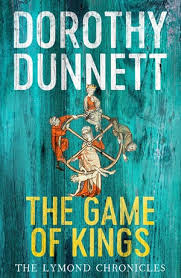 In the last couple of years the kind of writing I’ve been doing has, more and more, been book reviews. I like doing this: I enjoy the variety of books and the challenge of finding a way in, and while it can be frustrating trying to say something that I think is insightful and convincing in what is often a pretty tight word limit, that too has its gratifications. I am starting to feel, however, as if I am on kind of a plateau where this work is concerned. I could probably keep puttering along doing a regular string of reviews indefinitely now that I have proven myself reliable to a couple of editors at different places. Is this what I want? Is this enough? Looking over some of my old reviews for Open Letters Monthly, which were a minimum of 2000 words and often more, I envied their roominess, and even more, I envied the greater freedom I felt in the writing, which is partly from having the space but also from the confidence my co-editors gave me in my ideas. I would like the chance to stretch like that again–but who will give me that kind of room to play and both trust and help me to use it well? The closest I’ve come so far outside of OLM is my TLS piece on Dorothy Dunnett: I was and am so thrilled that the editor I proposed it to took me up on it. (I’m sorry that this, like most of my TLS reviews, is behind their paywall; if anyone ever really wants to read one of them but can’t subscribe, just let me know.) On my sabbatical, one thing I want to do is think about what other opportunities like that I might reach for.
 The other question is whether I want–or in some sense need–to stop working (only) in small increments and re-commit myself to a book project, and if so, of what kind? If an essay collection of the kind I have long been playing around with is a non-starter unless I self-publish it (which I might yet do), is there another kind of book I would feel was worth the long-term single-minded effort to produce? I have long objected to the academic fixation on “a book” as a necessary form. I suspect, now, that there is a similar bias in non-academic publishing, or at any rate that one way to get off the kind of plateau I am on is to publish a book of my own which might (at any rate, it seems to have, for others) give me increased visibility and credibility as a critic. I resist that implicit pressure too: I think it’s a good thing to have practising critics who are one step removed from the immediate business of publishing. How long, I wonder, or in what venues, do you have to write reviews before you are perceived as having any stature as a critic, though? How is that kind of professional credit or reputation earned? Do I care? I guess so, or I wouldn’t be wondering! But should I? Is it possible, even if it might in theory be desirable, not to eventually start thinking about going further, doing more, being more?
So: these are some of the things on my mind as 2018 yields to 2019! I’m not sure how I will answer these questions; indeed, one of my plans for January is precisely not to try to answer them but to reread my archive of essays and reviews (and blog posts) and try to understand and evaluate it–not with a judgmental eye on my past but with an eye out for what aspects of it I especially want to bring with me as I move ahead. I’m hoping I will learn something from that exercise, about both my writing and myself.
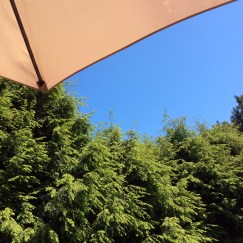 Here in Halifax we have been socked in with fog and cloud a lot lately, and the last two days in particular have been relentlessly overcast and muggy. The humidity alone is demoralizing, and the absence of sunlight just compounds the gloom. Happily we’re supposed to see at least some sun later today–but most of the rest of the week is forecast to be pretty grey. This kind of disappointing weather is typical of May and June here, but by July we’re usually enjoying a bit more brightness! As our long-awaited and always too-brief summer slips away, it’s hard not to feel a bit depressed, especially as constant construction noise in our usually tranquil neighborhood has made even the few really nice sunny days harder to enjoy. I have hardly spent any time reading on the deck, which is the one summer activity I really look forward to!
 My mopey mood has not been helped by the constant barrage of bad news, or by the ceaseless cascade of angry responses to one thing after another on social media. My twitter feed yesterday was heavily dominated, for example, by people being angry about a terrible “take” on libraries and an ill-conceived hit job on Wuthering Heights. I didn’t disagree with (most of) the complaints: I love libraries as much as the next person in my feed, and though Wuthering Heights is
 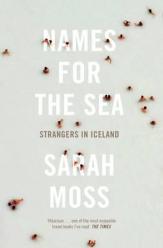 On the bright side, I just finished reading a pretty good book, Sarah Moss’s Names for the Sea, which I will write a bit more about here soon. I also really liked Kathy Page’s Dear Evelyn, which I just finished writing up for Quill & Quire, and now I’m focusing on a short essay on Carol Shields’ Unless, a novel that has come to be one of my very favorites. I also feel good about my piece on
 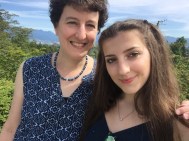 I’m just back from a great week visiting family and friends in Vancouver. It was mostly family this time, as Maddie came with me. She had not been to Vancouver since she was 7 and has not had very many opportunities to spend time with my parents or my brother and sister and their families–it seemed important to make them a priority, and I’m glad we did. The highest cost of my professional life has been the distance it put between me (and thus my children) and them.
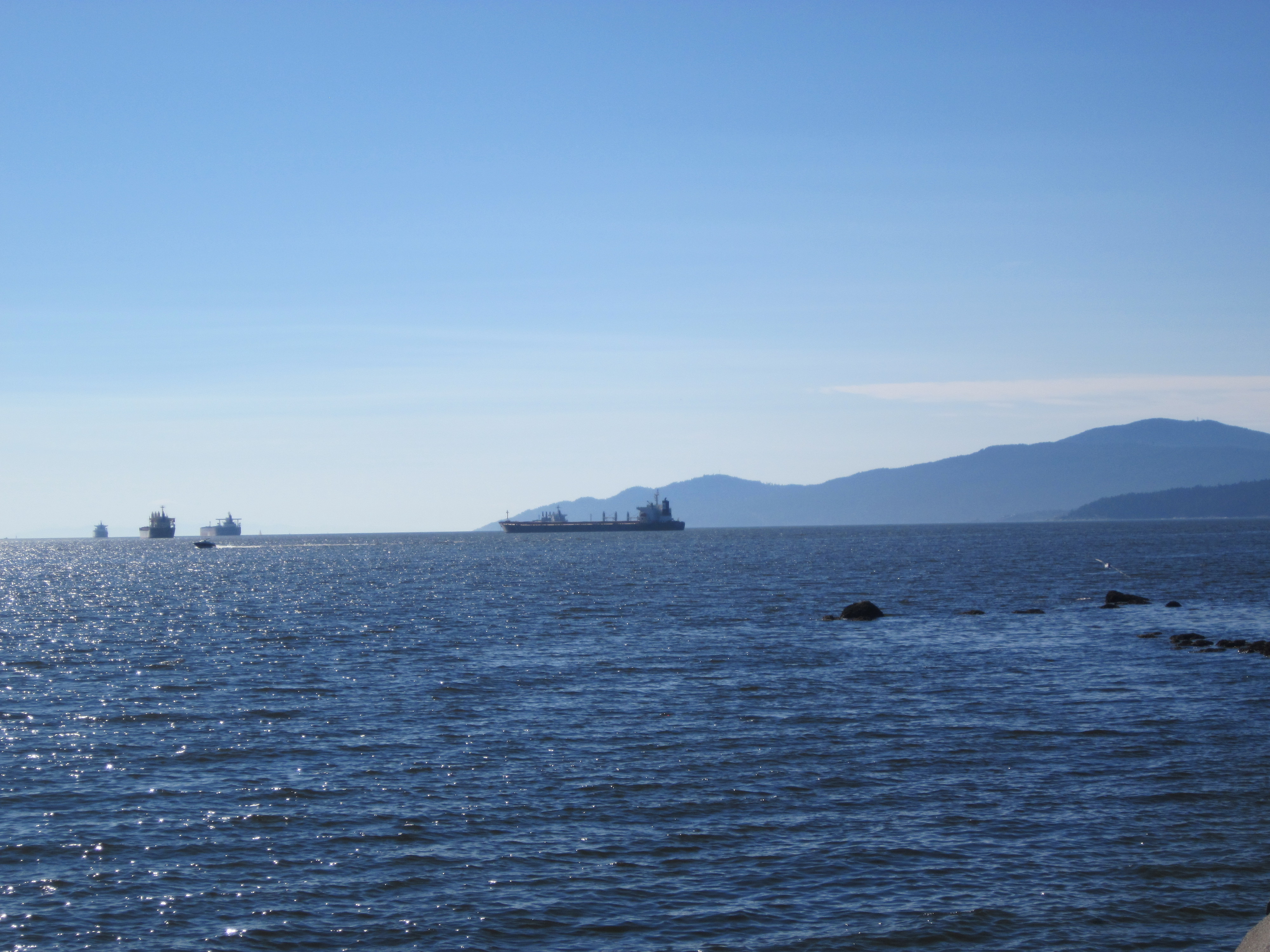
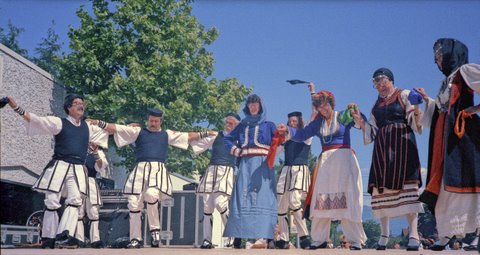
 For once I didn’t buy any books (Maddie and I frugally shared a suitcase, which meant there wasn’t room for much besides the essentials), but I did make off with two books from my mother’s collection: Jenny Erpenbeck’s Go, Went, Gone and Margaret Drabble’s The Pattern in the Carpet. I didn’t steal them! My mother is trying to clear some space on her shelves, so really I was helping. My airplane reading was Nell Painter’s awkward but engaging memoir Old in Art School, which I have now finished and will write more about here soon–once my jet lag subsides and I can concentrate properly. In the meantime, here are a couple of pictures from the trip. Vancouver is such a breathtakingly beautiful place! The last photo is of my parents’ garden, a verdant oasis that always reminds me of


 My drawing class met for the last time this week–it was just six sessions total. That’s obviously not enough time to get really good at anything (though I gather the “ten thousand hours of practice” theory has been more or less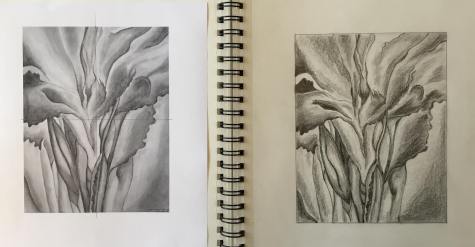


 As a member of Jo VanEvery’s
  For me personally, the “retreat” (how I hate that term, which falsely suggests there’s something soothing about being closeted for hours with my colleagues and having to talk about fraught topics about which in some cases we profoundly disagree) was extremely stressful and undid some of the progress I’d made,
  Anyway, Jo recommends taking stock of what we did accomplish in May, and dealing with meetings and administrative tasks was a big part of that. I also completed the final draft of a report: I was part of the Faculty of Graduate Studies’ internal review committee for the
  One of the things I’d intended to do in May is work out a definite plan for some larger writing projects to focus on over the summer. For some reason I have found this very difficult to do: I have sketched out and even done scraps of writing for a lot of possibilities but I have struggled to commit to any one of them. I have continued to explore places to pitch pieces that aren’t book reviews, and I have some ideas I like, as well as a firm commitment to doing a piece for The Reader, a publication I have long admired for its combination of sophistication and accessibility. I really want to get back to writing about George Eliot; I think what I may need is to stop focusing on venues for a while and just write, the way I could when I always had the option of running something in Open Letters Monthly. Trying to think of the pitch first becomes an exercise in self-defeating second-guessing. Getting going on this–whatever it turns out to be–is a top priority for me this month.
 These are all work things, and of course that’s never everything that’s going on. Maddie had her wisdom teeth out on May 18th, for example, and that meant a week or so of disruption (and a lot of smoothies) while she recovered, but she is basically better now.
 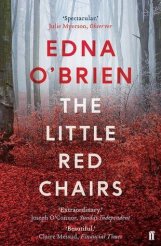 Last but not least, Edna O’Brien’s


 The good news isn’t specifically about what’s happening in my classes this week (although I hope there is some connection): it’s good news about my teaching more generally. This week I learned that I am this year’s recipient of the Faculty of Arts and Social Sciences Award for Excellence in Teaching.
 Given the role that Novel Readings has played in my teaching life–as a vehicle for reflection and a place where I have both shared and received ideas and encouragement about teaching–it is gratifying to know that my blogging was part of the case made on my behalf, and that my success at generating “conversations both within the university and in wider circles” was cited by the committee that selected me to receive the award this year. I started blogging about pedagogy when this kind of outward-facing work was still relatively uncommon for academics and was (as it still largely remains) not entirely congruent with the university’s standard operating procedures. I have found it intrinsically valuable, for the process itself and for the conversations and communities it has brought me into. For that reason alone I would keep it up in any case, but I admit it is nice to have some institutional recognition that it contributes to our core mission.
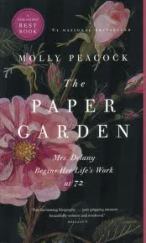 And it has felt even better sharing my good news and basking in people’s happiness on my behalf. I got a lot of help from my friends, both online and off, when things went badly for me; now everyone has been wonderfully supportive about this good news. Social media certainly has its down sides (as we are only too well aware at this point), but there’s also something magical about the way it creates a vast web of connections–intangible perhaps, but still very real–between so many people across such distances. I hesitated before putting my good news out there in case it seemed self-aggrandizing, but I’m so glad I did. Why should we be afraid to invite a bit of cheering for our accomplishments, after all? I was reminded of one of my favorite points from Molly Peacock’s wonderful and inspiring book
  When I visited my parents in Vancouver last May, one of the many nice things we did was watch the recent adaptation of Doctor Thorne. I thoroughly enjoyed it. Trollope (like Austen) adapts very well–much better, in my opinion, than Dickens or George Eliot, the brilliance of whose fiction lies so much in the narrator’s voice and in the other very written qualities of their novels that (for me) adaptations almost always seem inadequate.
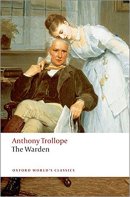 The very qualities that make Trollope such a pleasure to read, though, also make him a bit challenging to teach. The thing about people just “going about their daily business” is that often not much is really happening–there’s not much action, or at least not much dramatic action. To put it another way, the action and the drama in Trollope are often internal, and usually subtle: the characters puzzle through personal and moral problems in infinite shades of grey, rather than the more “glaring colours” of a writer like Dickens (that’s Trollope’s own characterization of Dickens’s method, from the parody of him as “Mr. Popular Sentiment” in The Warden). Given that Trollope’s novels are mostly also quite long, there’s a significant risk that students’ reaction will be boredom: pressed for time as they are, and unaccustomed to fiction that rolls out quite so slowly, they can struggle to find pleasure or interest in the process.
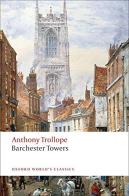 That, at least, has been my experience with Barchester Towers, which I have tried in my standard 19th-century fiction class a couple of times. I’ve had somewhat better reactions to
  It was the longing to get away from just those humming distractions that sent me back to Doctor Thorne last week: not just my own to-do list, but the overwhelming clatter and clutter of the rest of the world. Especially on the news and on social media, what a constant clamor of catastrophes there is, big and small, near and far away, with everything from Can Lit to the CDC in crisis, all demanding attention, all generating takes and counter-takes in an unceasing cascade of anger, fear, and weaponized self-righteousness–much of it wholly justified, but all of it eventually exhausting. It’s all very well to advise simply “unplugging,” but even setting aside the obligation we might have to be informed citizens of both our personal and our political worlds, for me there’s a lot of good mixed in with the bad–a lot of people and issues I don’t want to lose contact with or miss insight into.