John Cotter, Under the Small Lights

This is only the second time I’ve written on Novel Readings about a book by someone I know. The first time was my post about my Dalhousie colleague Ian Colford’s hauntingly elusive collection Evidence. Actually, I don’t exactly know John Cotter–not in person, at least. But in about six weeks I hope to be drinking with him in New York, along with my other new colleagues at Open Letters (where I have just recently joined the editorial team). We have met virtually, you might say, and know each other almost exclusively through our writing, of one kind or another. Reading John’s book is another step towards getting to know him, then, not least because, as he explains here, he has given some of his own afternoons as an aspiring writer to his protagonist Jack.

In both of these cases, I hesitated about posting a review, not because I hesitated about the quality of the books, but because interpretation suddenly seems a more precarious undertaking when you’re that much more aware of the real-life author as someone with plans, intentions, and opinions about his carefully crafted work–ideas with which your own idiosyncratic reading may well be at variance. Of course, this is always the critic’s situation, and usually I just press on. Obviously, that’s what I’ve decided to do here too, not only because of the basic principle that writers want to be read and must expect that nobody else’s reading will be quite their own, but because in this case (as with Evidence) the book is just too interesting for me to leave alone. After I finished it, I kept thinking about what I would say about it if I blogged about it, and after a couple of days it seemed silly not to have a go. John can always set me straight over our drinks in August–or here in the comments section, if he feels the urge.

So. One of the cover blurbs describes the novella Under the Small Lights as a bildungsroman, that is, a coming of age story or a novel of education or development (‘Bildung‘ is one of those German words we can’t quite translate into English). This seems basically apt, though it’s not entirely clear to me how far Jack has developed at the end of the book: he’s looking towards his developed self, perhaps, having cleared away some of the youthful confusions and delusions that have been muddling his progress. It’s also a kunstlerroman, the story of an artist’s development, though here too Jack is looking ahead, aspiring, rather than having achieved–unless, as it’s a first-person narrative, we take Under the Small Lights itself as the end result of that process. There’s no overt metafictional gesture towards that, but with first-person narration there’s always that question of whether we are to take the speaker as the ‘author’ or simply as a device. If the former, we might expect some evidence along the way that the narrator’s perspective has changed, has distanced itself from the in-the-moment experience he narrates (as, for instance, in Great Expectations or Jane Eyre the retrospective narrator displays insight not available to young Pip or young Jane). Again, there are no overt gestures in this direction, but the fairly elaborate construction of the book, which cuts between times and episodes, certainly creates a perspective that, cumulatively, does exceed what Jack seems capable of during the events he describes.

As a character, Jack is indistinct: his creator calls him a “collage personality,” and the novel’s epigraph calls our attention directly to the permeability of identity: “I often think that we’re all mere composites of our favorite people’s habits,” it begins. Though I found Jack’s slightly vaporous quality a problem for a while, it eventually seemed like the point of the book, that is, he needs to define his own character, to declare himself, rather than trying to find it outside himself or borrow it from other people. He has to stop asking:

Next I knew, I was at the Mass Ave. foot of alley #902, still holding my empty gin glass. Barefoot, knowing they were watching from four stories up, I took off running toward the big oak growing by the dumpster. As I threw the glass, aiming for the oak but hitting the dumpster with a tin shatter, I shouted Who am I.

Jack may not know who he is, but he knows who he wants: Corinna. She was his friend Bill’s girlfriend; when the novella opens, she has recently married his friend Paul. For a moment, in between these relationships, it looked as if she might be Jack’s, and his desire for her (or is it his desire to be Bill? or to beat out Paul?) drives him, and the story, forward. Corinna, as I read her, belongs with Hardy’s Sue Bridehead and Waugh’s Julia: they are all fey, elusive, alluring, teasing, putatively intellectual, and (to my annoyance) apparently endlessly attractive to deep-thinking men. That said, one sign of Jack’s development is that (unlike Jude or poor Ryder) he has seen through Corinna by the end, and through the fog of self-indulgent moping that masquerades as enduring love. Though I didn’t think much of poor Jack, it seemed pretty clear that Corinna was a false idol. A Victorian novelist would have given Jack a better option, one he would have proved his maturation by choosing in the end (as Waverley chooses Rose instead of Flora, or David Copperfield learns to love Agnes after Dora). Actually, there’s one Victorian novelist who leaves us with a threesome, rather than a choice (Walter, Marian, and Laura in The Woman in White) which is the kind of conclusion Jack thinks he wants for a long time, everyone living and loving together, but he can’t have it, perhaps because there is too much competition, as well as fantasy, in all of the relationships involved. No good alternative does emerge for Jack, then–certainly not the equally indistinct Star (who in her turn has been a kind of imitation Corinna). It’s just time, finally, to move on, to get on with it. The evocative final pages seemed to me to capture the slightly disorienting sense we probably all have when we realize that people and events that seemed momentous and all-encompassing recede, drift away. You don’t really understand that, when you’re young.

And the characters in this novel really did strike me as very young, not just literally, though they are that, but in their preoccupation with each other, their self-indulgent behavior, their insouciance, their artsy pretention. They weren’t people I recognized; I certainly didn’t recognize my own youth in them, and not, I think, just because it was a different decade, or a different country, though I suppose Vancouver in the late 80s was a pretty different place than Boston or New York in the late 90s. I actually found the picture of their lives quite alienating, as a literal story: I don’t find drunken idiocy or stoned pseudo-profundity entertaining in real life either. So I preferred the characters at their more abstract level, though the bildungsroman form, of course, does imply that they not only will but should change. I also found myself thinking, as I read, about something Claire Tomalin said about George Eliot: “She writes about sex perfectly,” Tomalin says; “She never mentions it at all. I mean, who needs the penis and the pubic hair? Sex isn’t that–sex is the feeling.”

But those are, as I’ve said, my own idiosyncratic responses. Under the Small Lights is an artfully written novel: the style is at once elliptical and allusive, and its parts are elegantly choreographed. It’s also sometimes quite funny: the climactic chapter “The Open Field,” for instance, develops with the painfully comic inevitability of the best episodes of Seinfeld. It has other aspects I haven’t touched on at all, including the play Jack and Bill are trying to write, including on their ill-fated expedition to Walden Pond, or the whole larger interest in acting and theater, and in poetry, all of which adds both intertextual and metatextual layering to the narrative. For a book that’s less than 200 fairly sparse pages, Under the Small Lights has a lot going on. Like Evidence, it’s a book I almost certainly would never have read if I didn’t know the author, and in both case I was glad to have gone that much further outside myself–to have been prompted by friendship to look at the world differently, or at a different world, thanks to their courage in putting their vision into words.

Recent Reading: Mina and Mantel

In my previous post about summer reading plans I forgot to mention that my daughter and I have committed once again to our local library’s summer reading club. (As an aside, let’s hear it for public libraries, perhaps the greatest public institutions we have!)  This year her pledge (for me to match) is 25 books over July and August. I’ve managed to read four titles since she signed up, but I haven’t blogged about any of them yet, so I have some catching up to do.

First up, I finally read Denise Mina’s Field of Blood, which was highly recommended when I put out my ‘bleg’ for ideas for my seminar on women and detective fiction. Unlike many of the titles I read as I worked on my book list, it’s very good! What makes it stand out from the others? The simplest answer is that it suits my own reading tastes better. It’s rich in context and characterization, but it’s not overwritten, pedantic, or (like the awful Stieg Larsson books) just one damned thing after another with intermittent pornography (I know, I know, Salander is a great character, but…). Paddy Meehan is flawed and conflicted, but not melodramatically so; her family and co-workers are effectively and efficiently specified so that we rapidly get a sense of the community she moves in, which is an interestingly complicated one. It’s not really a detective novel, and in fact one reason I think I couldn’t have fit it into my course very well is that the crime itself is almost peripheral to Paddy’s own story. I thought there were a few missteps: there’s a ‘killing-due-to-mistaken-identity’ episode that I found did cross over into cliche in the writing, for instance. I was most interested in the push-and-pull for Paddy herself between her family’s expectations and her ambitions. Paddy is also a good example of the type I now think of (thanks to Anita Brookner) as the tortoise: she’s plain, underappreciated intellectually, overlooked romantically–in short, she’s every socially awkward, ill-at-ease bookish young girl who can therefore read in her eventual success validation of their own painful experience as misfits. As Brookner points out (in Hotel du Lac), books are written for the tortoise market because in reality the hares are off winning the race (or the guy).

I did read one other mystery, though I finished it in June so I can’t count it towards my summer total: Katherine V. Forrest’s Murder at the Nightwood Bar. If I had read this sooner, I might have included it on the syllabus, though I would have had some misgivings. I had hoped to find a teachable example of lesbian detective fiction, which is a thriving subgenre now. Forrest was one of the earliest writers to establish herself in it: Amateur City, the first in the Kate Delafield series, was published originally in 1984, soon after Sue Grafton and Sara Paretsky had launched their female private eyes. Murder at the Nightwood Bar is far more overtly political than the Laurie King and Sandra Scoppetone ones I read earlier, and the crime is set up to resonate with those political interests and to stand as exemplary of a larger social problem, giving the book the kind of unified effect that lends itself to the kind of work we would do in a seminar discussion. On the other hand, it is perhaps a bit too obviously set up in this way: I like a little nuance with my social consciousness raising. Forrest is another competent but unspectacular stylist; nothing in the book seemed as literarily fine as, say, P. D. James’s An Unsuitable Job for a Woman. At any rate, the book didn’t make it on the list for this fall (though Nancy Drew ultimately did–we’ll see how that goes!) but I’ll revisit it next time around.

My other summer book for this post is totally unlike these two: I continued my trip through Hilary Mantel’s back catalogue with The Giant O’Brien. Once again, it was a surprise: like Beyond Black, it gives no sign of being by the same author as Wolf Hall, for instance, except in being strangely conceived but ultimately quite compelling. It follows the experience of a Giant who has travelled from Ireland to London in the 1780s, escaping poverty and famine at the cost, ultimately, of his self-respect, his integrity, his humanity, and even his life, though we realize from early on that all of these aspects have been compromised for him from the start simply by his being a giant, a freak, a spectacle. Juxtaposed against his story is that of the anatomist John Hunter. They are set up to embody a number of oppositions, not just scientist and potential experiment or subject, but also the man of facts, of physicality, and the man of imagination–ironically, in an extraordinary physical frame, but living the life that really matters to him in his mind alone, and through the stories he tells. They are also England and Ireland, I think, and to some extent, also winner and loser. There’s pathos, but Mantel downplays it, going instead for a combination of quirky and grotesque that, inevitably but rightly, one of the critics in the blurbs identifies with Hogarth’s famous prints of 18th-century London. The prose is beautifully styled, moving between short epigrammatic conversations, terse sections of exposition, brutal graphic detail, and passages of great lyricism without any hint of sentimentality:

The poet has his memorial in repetition, and the statesman in stone and bronze. The scholar’s hand lies always on his book, and the thinker’s eyes on canvas travel the room to rest on each human face; the rebel has his ballad and his cross, his bigot’s garland, his wreath of rope. But for the poor man and the giant there is the scrubbed wooden slab and the slop bucket, there is the cauldron and the boiling pot, and the dunghill for his lights; so he is a stench in the nose for a day or a week, so he is a no-name, so he is oblivion. Stories cannot save him. When human memory runs out, there is the memory of animals; behind that, the memory of the plants, and behind that the memory of the rocks. But the wind and the sea wear the rocks away; and the cell-line runs to its limit, where meaning falls away from it, and it loses knowledge of its own nature. Unless we plead on our knees with history, we are done for, we are lost. We must step sideways, into that country where space plaits and knots, where time folds and twists: where the years pass in a day.

Some of the most haunting passages in the novel are those in which the giant pacifies his motley associates with tales told in the resonant tenor voice that belies the monstrosity of his frame. The transcendence of his voice, his ability to take both himself and his listeners outside themselves, outside the ugly and inescapable realities of their literal lives and their physical selves, beautifully captures the promise of story-telling itself.

Music Books: “A little private imitation of what is good is a sort of private devotion to it.”

My title is a line from Daniel Deronda, from a conversation between Daniel and Gwendolen in which he urges her to look past the egotistic gratifications of performance (inaccessible to her, as she has discovered, because of her “middlingness”) to the other values of music as “private study.” As a long-time amateur pianist, I appreciate his suggestion that our private efforts are a way of paying tribute to musical excellence, a way, also, as he says, of preparing “to understand and enjoy what the few can do for us.” His sentiments give some dignity to my laborious attempts at the Rondo alla turca this evening! And I think he is right that playing privately, however badly, is a gesture towards something we believe in as good and beautiful, even aside from the intrinsic value of applying ourselves to something challenging and learning, if we are industrious, the rewards of getting a little bit better at it and maybe even, if we are lucky, approximating something good and beautiful ourselves.

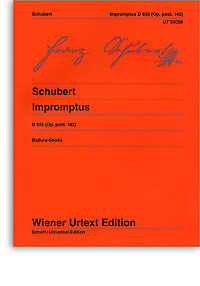
I stopped taking piano lessons when I realized I had to decide between really taking music seriously and accepting myself as a dabbler, but I’ve never been sorry I learned to play–and not just because my former teacher was and is a kindred spirit and one of my favourite people in the world. Music has always been an emotional outlet for me, and over the years, as it turns out, the piano has been an essential accompaniment to all the major (and minor) changes in my life. As a moody adolescent, I channelled all kinds of angst through my family’s old Heinzman upright. After several years away from the keyboard, as a homesick, insecure  graduate student at Cornell, I took regular refuge in a practice room in the basement of the music building and rediscovered not just the challenge and pleasure of playing but also some important part of myself that helped me stand up to the intellectually intimidating environment I found myself in. I also, not incidentally, could eventually give quite a creditable rendition of at least one fabulous Schubert Impromptu.

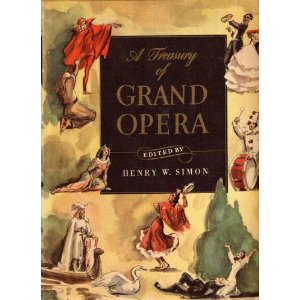
Then I became the accompanist in my family life: my husband and I share a fondness for the great songs of Cole Porter, the Gershwins, and Richard Rodgers, and later expanded our “songfest” repertoire to include old movie classics like “Laura” as well as sappy 70s hits like “The First Time Ever I Saw Your Face.” We used to soothe our infant son after bathtime (which he hated) with rousing renditions of “Di quella pira” (which may explain both his perfect pitch and his aversion to opera), and now our daughter loves to gather with us for carols at Christmas. On those rare occasions these days when I’m home quite alone, I sometimes treat myself to a browse through some old favourites, especially my beloved Treasury of Grand Opera, and almost every summer I vow (as I have again this year) to use some of my ‘down’ time to achieve at least some approximation of mastery over a real piece or two. Our library of music books is relatively small, but I consider them every bit as essential to what Nathan Schneider has just memorably discussed at Open Letters as my “memory theater” as the novels, memoirs, histories, and other genres in the collection. A lot of them turn out to be too old to find images of online–and that, in itself, is one reason I’ll continue to cherish them.

What about you? Do you have music books you cherish, or musical habits that are your own form of “private devotion” to the good?

Best of ‘Novel Readings’: James Wood, How Fiction Works

This review first went up in March 2008. My brooding over deep vs. broad reading has had me thinking again about Wood’s criticism, which I wrote admiringly about when I first discovered him in 2007. (This remarkably belated discovery speaks volumes, I think, of the divide between academic and public criticism.) I have also been thinking a lot about Becky Sharp, because in an essay for the July issue of Open Letters Monthly I lay out a more elaborate version of the argument I touch on here for her incidental significance to the novel in which she is so captivating a heroine. Both lines of thought led me back to take another look at this piece. I haven’t kept up with all of Wood’s reviews since, mostly because he and I often choose different books to pay attention to, but when I do (as with his recent piece on David Mitchell) I’m still struck by the elegant erudition of his language and analysis. Still, as this review shows, I have some sympathy with Lauren Elkin’s proposal that Wood is “a fine specimen of a book reviewer” but not exactly a “literary critic.” Not, as they used to say on Seinfeld, that there’s anything wrong with that.

How Fiction Works was also very ably reviewed in 2008 in Open Letters Monthly, by Dan Green of The Reading Experience.


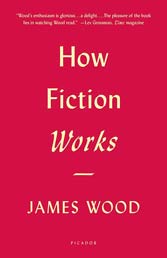
The dust jacket describes How Fiction Works as Wood’s “first full-length book of criticism.” Anyone led by this blurb to expect sustained analysis supported by extensive research and illustration will be disappointed, as in fact How Fiction Works turns out to be essentially a ‘commonplace book,’ a collection of critical observations and insights of varying degrees of originality and sophistication, developed with varying degrees of care and detail. Wood acknowledges having set deliberate limits on his project, likening it in his introduction to Forster’s Aspects of the Novel, proposing to offer practical “writer’s anwers” to “a critic’s questions,” and admitting (though with no tone of apology) that he used only “the books at hand in [his] study.” To some extent I agree with other reviewers who consider it only fair to evaluate the book Wood wrote, rather than regretting he didn’t write another one. Yet even within the parameters Wood sets, I think there are grounds for wishing he, with his exceptional gifts and qualifications as both reader and critic, had not sold himself (or us) short in fulfilling them. Further, beginning with the invocation of Forster but going well beyond it, the book has pretensions to grandeur: for instance, also in his introduction Wood remarks that Barthes and Shklovsky “come to conclusions about the novel that seem to me interesting but wrong-headed, and this book conducts a sustained argument with them” (2). With gestures such as this, Wood claims an elevated stature for his critical contribution that is undermined by its casual construction and over-confident approach to scholarship. Though How Fiction Works provides many further proofs of Wood’s critical gifts and considerable erudition, I think it also proves that even the best practical critic flounders when working only with what he has already to hand or in mind.

Right off the bat I was irritated by the book’s structure. Wood has said that he felt liberated by using the numbered “paragraphs” or sections, but allowing yourself to skip from thought to thought in this way means letting yourself off the hook too often. Frequently in the margins of my students’ work I write “And so? Finish the thought!” One effect of crafting, first paragraphs, and then longer pieces as sustained wholes is that in working out the overall movement of your ideas and building in appropriately specific transitions, you confront both the logic and the further implications of your claims: the form pressures you to think better. Numbered bits, however, relieve that pressure: you can just stop with one topic and start the next, and as long as they are more or less related, you can claim to be producing a unified whole, even if you are only papering over gaps. In How Fiction Works, the breaks often seem unnecessary: a new number sets off what is really just the next sentence in the idea already unfolding. Most of the time, however, they are substitutes for careful transitions. They allow a certain stream-of-consciousness effect to creep in: that last bit reminds me of this exception to a general principle, or of a writer who also does that, or of another favourite excerpt, or of a time I went to a concert with my wife. Well, OK, I guess, and no doubt it would have been much more difficult to do a coherent chapter offering a theory of, say, fictional character, realism, or morality and the novel. And I suppose it’s true that non-academic readers don’t want the kind of detail and complexity such a full account of these topics would require. Even so, the numbered bits felt lazy to me. The footnotes too had an aimlessness about them. Some of them covered ideas or examples that seemed no less important to their chapter than most of the bits allowed their own numbered section (note 53 on p. 150, to give one example) while others appeared entirely unnecessary to the book (note 40 on p. 121, or note 41 on p. 124, for instance).

The TLS reviewer objects to Wood’s “grace notes”: “It is sometimes hard to distinguish a gasp of admiration for another’s skill from the contented sigh when the books in one’s study satisfy one’s own theories.” I shared this reaction, not least because “how fine that is” (139) is an expression of taste, not criticism. But Wood is a compelling reader of details, even passages. It’s when he makes broader assertions that he leaves himself more open to objections. For one thing, he has some governing assumptions about what fiction is for that he treats as universal rather than historically or theoretically specific. In his chapter on “Sympathy and Complexity,” for instance, as a footnote to his remarks on fiction as a means of extending our sympathies (the occasion for one of his shockingly few references to George Eliot!), he adds this:

We don’t read in order to benefit in this way from fiction. We read fiction because it pleases us, moves us, is beautiful, and so on,–because it is alive and we are alive. (129)

Well, maybe, but not everybody, and not all the time: for instance, most of the Victorian critics I have been editing for my Broadview anthology [now that the anthology is actually out, I wonder if Wood would like a copy–maybe I’ll send one along!] would not have recognized this highly aestheticized motive for novel reading. Is it fair, or even sensible, to say that they were simply wrong? Or to ignore how the formal developments of the Victorian novel furthered ends not adequately respected by Wood’s post-Jamesian formulations? His is in many respects a teleological account of the history of the novel. “Progress!” he exclaims after a quotation from Proust: “In Fielding and Defoe, even in the much richer Cervantes, revelation of this altering kind occurs at the level of plot” (125). But were Fielding and Defoe trying to do what Proust did and failing? How much better we might understand them if we allow them what James calls their “donnee.” “It is subtlety that matters,” he declares in his chapter on character; “subtlety of analysis, of inquiry, of concern, of felt pressure”: “I learn more about the consciousness of the soldier in Chekhov’s The Kiss than I do about the consciousness of Becky Sharpe [sic] in Vanity Fair.” But Becky Sharp’s consciousness is surely not the point of Vanity Fair; indeed, I argue in my own lectures [and now, in my essay in July’s Open Letters] that too close a focus on Becky risks diverting us from Thackeray’s grand gesture of holding the mirror up to ourselves, so that the novel becomes an opportunity for us to reflect on our own morality and mortality. “Was she guilty or not?” the narrator asks–and, remarkably, will not tell us, because ultimately she is not the point but the occasion, the device. Thackeray is not a failed Chekhov any more than Dickens is a failed Flaubert. To Wood, “the history of the novel can be told as the development of free indirect style” (58), but that history is partial and often distorting.

About the operations of free indirect discourse and the importance of knowing who ‘owns’ which words, on the other hand, Wood is typically astute. Here’s one place where examples from Middlemarch would have served him well, though at the risk of undermining his generalizations. Consider this passage from Chapter 1, for instance:

And how should Dorothea not marry? — a girl so handsome and with such prospects? Nothing could hinder it but her love of extremes, and her insistence on regulating life according to notions which might cause a wary man to hesitate before he made her an offer, or even might lead her at last to refuse all offers. A young lady of some birth and fortune, who knelt suddenly down on a brick floor by the side of a sick laborer and prayed fervidly as if she thought herself living in the time of the Apostles — who had strange whims of fasting like a Papist, and of sitting up at night to read old theological books! Such a wife might awaken you some fine morning with a new scheme for the application of her income which would interfere with political economy and the keeping of saddle-horses: a man would naturally think twice before he risked himself in such fellowship. Women were expected to have weak opinions; but the great safeguard of society and of domestic life was, that opinions were not acted on. Sane people did what their neighbors did, so that if any lunatics were at large, one might know and avoid them.

Think how much is lost on a reader who improperly identifies the source of that word “naturally”–or the last two sentences altogether!

Wood is good on the telling detail as well as the quality he calls “thisness”: “any detail that draws abstraction towards itself and seems to kill that abstraction with a puff of palpability” (54). But again, when he moves into prescription, he becomes less persuasive, as when he objects to the “layer of gratuitous detail” in 19th-century realist fiction. Again, the challenge is in defining “gratuitous” (as, clearly, Wood himself is well aware), but he can’t propose any principle except, perhaps, his idea that “insignificant” details avoid irrelevance if they are “significantly insignificant” (68). After recounting an incident in which he and his wife had “invented entirely different readings” of a violinist’s frown at a concert, he claims that a “good novelist would have let that frown alone, and would have let our revealing comments alone, too: no need to smother this little scene in explanation” (72). Again, well, maybe. I can imagine at least one “good novelist” who might have done great things with their “different readings” of that little moment, perhaps even using their “revealing comments” as a chance to reveal even more about perception and reality as well as human relationships (“these things are a parable…”). Doesn’t it depend on what your novel is about and on the formal methods you are using to realize those goals?

I’d like to return before I close to the “Sympathy and Complexity” chapter, because this is a topic close to my heart, one on which I have spent a lot of my own critical energy recently, and one I expected Wood to handle particularly well. “Perfunctory” is the best word I can think of to describe it. I’ve mentioned already his dehistoricizing assumption that “we” don’t read in order to receive moral benefits. I doubt this is true in practice, and I also question the separation he implies between moral and aesthetic readings. Here is a case in which even a little research outside “the books at hand in [his] own study” would have immeasurably enriched his discussion: Wayne Booth’s The Company We Keep, for instance, would have helped him complicate exactly that separation. And the conversation about how fiction might do “what [Bernard] Williams wanted moral philosophy to do” (135) has many participants besides Williams: Martha Nussbaum comes promptly to mind. Further, not all novels avoid providing “philosophical answers”; he replicates Nussbam’s error in generalizing about “the novel,” but as a professional novel reader, he should know better.

Here the hybrid character of How Fiction Works proves a genuine weakness, I think. This chapter is not a full, responsible, or authoritative inquiry into its subject. Of course, it does not pretend to be (remember, the book promises only “a writer’s answers” to “a critic’s questions”). But then how should we evaluate it? Doesn’t Wood do even his non-specialist audience a disservice by taking up complicated subjects on which there already exists a rich body of scholarship and offering his own fairly casual observations with the confidence of real expertise? What a much greater contribution it would be to distill that complex material and present it accessibly! To grab what’s at hand and say just what comes to mind bespeaks an enviable but also problematic degree of confidence. And while the non-expert reader is in no position to object, the expert reader is easily deflected with the excuse that she is not the intended audience…

After I read How Fiction Works I re-read some of my collection of Wood’s essays, including his reviews of Never Let Me Go, Saturday, and Brick Lane. This is really wonderful stuff, as I have remarked before; I admire it wholeheartedly for its critical acuity, its literary elegance, and its moral seriousness. But considering How Fiction Works strictly as one among many books about books (and Wood is wrong, or perhaps disingenuous, when he says “there are surprisingly few books” of this kind about fiction [1]), I think there are many better choices available. I continue to recommend David Lodge’s The Art of Fiction, for instance, which takes up many of the same topics as Wood, though under a less grandiose umbrella of prescriptive claims. I think it’s an exciting development that Wood has landed a job in Harvard’s English Department. In taking this now unconventional route from journalism to the academy, he is following in the footsteps of many eminent Victorian critics (David Masson, for instance). But considering how bitterly difficult it is for those following the established professional route to land any academic job at all, it’s frustrating to think that he may not be held to anything like the same standard of rigour as many critics far less lauded and applauded. Here’s hoping that he has more books in him as good as The Broken Estate.

(Original post cross-posted to The Valve.)

Summer Reading Plans

With everything done but the marking in my class, I can now look ahead to July and August and ask myself what any self-respecting English professor inevitably asks: What will I be reading?

Actually, I recently spent a friendly evening with several other English professors and the question they asked me was “How do you ever find time for all that reading?”–which is an interesting question, when you think about it. It does rather imply that I’m reading when I should be doing something else, or at least I’m reading instead of doing something else, namely, whatever it is that they are doing. Or, to refine that insinuation somewhat, it implies that my reading isn’t the same as their reading. Perhaps what they really mean is “How do you ever find time to read so much for fun?” or “to read things that aren’t obviously for your research.” Or maybe it just means “You must be neglecting your garden/family/knitting/TV watching/sleep”  (to which the responses are, in order, yes (but my husband does a great job of it) / no, I’m pretty sure not / yes, definitely, and my quilting too / yes, pretty certainly, but after you have children you come too regard sleep as a rare luxury anyway).  Perhaps they just meant it as a compliment  (“Wow, you read a lot–good for you!”), or perhaps they suspect me of speed-reading! Probably, really, they didn’t mean much by it at all, and the fact that it has obviously made me feel defensive means that I have projected my own anxieties about how I use my time onto them–which I shouldn’t do to my friends!

Still, they got me thinking, not for the first time, about the relationship of my “leisure” or non-required reading to my work and professional life. It’s true that I never, ever pick up a book of academic literary criticism anymore to read just out of interest. Reading of that sort is strictly occasional for me now, meaning that I do it only when the occasion demands–when I’m either studying up on something I’m going to teach for the first time, or the first time in a while, or working on a specific research project. But I don’t think the other reading I do is strictly irrelevant. For instance, I’ve ended up teaching as well as developing research projects based on books I initially read initially “only” for my own interest. Without defining relevance quite so narrowly, too, it just seems right that someone whose job it is to talk to students about literature and perhaps even to put it into some meaningful relationship with their own lives should be an active, curious reader including of some currents in contemporary writing. I make a big deal in my classes about the texts we are reading, which come in such uniform and sanitized packages (no offense, OUP, Penguin, Norton, or Broadview-they’re beautiful and extremely useful editions!), but which were never intended for quite that kind of safe consumption–writers write to stir things up, whether social, political, aesthetic, sensual, or theoretical things. Reading widely, if miscellaneously, helps me sustain an interest in literature as that kind of living and purposeful venture, and I think that reading enhances–it certainly motivates–my classroom time as well as (of course) my own life. The diffusion of my reading attention, though, has in recent years made me less and less patient with the kind of deep, burrowing reading that academic research requires. I’m more and more aware of what I haven’t read, despite all that I have read, and I feel frustrated that the kind of reading I have done (still do) in deliberate pursuit of professional goals (scholarly articles and books) has been at the expense of the kind of broad reading experience that would give me the knowledge and confidence to write a different kind of criticism. And yet, I do have professional responsibilities, and even, maybe, a lingering interest in getting that last promotion, so for those reasons I need to remain a disciplined reader; and I do learn from and sometimes even enjoy the ‘work’ reading I do.

So, with these different priorities (reading deeply or reading widely), what will I be reading this summer?

One possibility that I feel, somewhat sadly, is slipping away from me is The Tale of Genji. When I learned of the summer project being co-hosted by Open Letters Monthly and the Quarterly Conversation, it was just before the beginning of my class, and at this point I’m about 200 pages behind. Though I am enthusiastic about the project in principle, and have been keeping an eye on the interesting and lively posts at its blog site, I fear I can’t catch up and keep up now without abandoning the other books I already had marked as summer prospects. Chief among these is War and Peace, which I’ve been yearning after for some time–so you see why I find adding Genji a difficult prospect. But I do have it from the library, and I have made a start on it, so we’ll see how that goes. I’m also just at the beginning of Margaret Oliphant’s The Perpetual Curate, as a further effort in the Scottish Literature Reading Challenge, and I’m finding it sharp and amusing so far, making it an attractive prospect to stick with it and finish it. I also need to read Virginia Woolf’s The Voyage Out, as one of my MA students is writing a chapter on it; so far, it’s not nearly as alluring a read as The Perpetual Curate (leading me to sympathize with James Wood’s remark that “when Woolf fails it is generally when she is being Victorian”). Still, duty calls! Rereads are also in my future, as I try to, at last, get my Ahdaf Soueif paper into form for submission to a peer-reviewed journal; I’ve been thinking of expanding it from In the Eye of the Sun to include comparative analysis of The Map of Love. On my TBR pile I also have Colm Toibin’s Brooklyn, William Volmann’s Europe Central, A S Byatt’s The Children’s Book, Azar Nafisi’s Things I Have Been Silent About, Hilary Mantel’s The Giant O’Brian, and Lorna Sage’s Bad Blood–tempting, all! Plus I haven’t finished the Hermione Lee biography of Woolf, and I recently picked up several second-hand copies of Woolf’s diaries and letters, which at the very least I would like to spend some concentrated time browsing in. Finally, I am still thinking about the whole ‘books of my life’ idea that came to me towards the end of my recent rant about getting away from metacriticism and on with finding my own critical voice, and the book I would most like to write about, if I can figure out how, is Lynne Sharon Schwartz’s Disturbances in the Field, so I will be reading that again, along with Gaudy Night, another of my top picks for that category.

Hmm. I still haven’t mentioned any scholarly books. I’m sure there will be some! But I doubt I’ll learn more, or even as much, from any of them as I’ll learn from finishing War and Peace.

This Month in My Class and Other Updates: Hilary Mantel, Beyond Black

A long, long time ago, I noted that I was about to begin teaching an intensive spring session course…oh, wait, it was only four weeks ago! And tomorrow is our last class meeting before the final exam. As Archdeacon Grantley would say, Good Heavens! As I said then, “the pace is relentless . . . and it all goes by in what seems like a flash”–and it certainly has gone by with amazing speed and intensity. We’ve read and discussed Pride and Prejudice, Scott’s “The Two Drovers,” Jane Eyre, Gaskell’s short stories “Lizzie Leigh” and “The Old Nurse’s Story,” A Christmas Carol, and Silas Marner. Though at times during class discussion I did regret not having done bigger books (with Dickens, especially), for the time we actually had between class meetings this did seem like plenty to read, as the students were also completing (and therefore I was also reading and evaluating) daily reading responses and two other writing assignments. Also, though at times I regretted having signed up for another of these mad romps, overall it still suits me better to be teaching than not. I was lucky in my students, too, the large majority of whom seemed keen and participated energetically and intelligently pretty much every day.

I hoped that being under some pressure and on a regular work schedule would be good for my reading and blogging. That turned out to be somewhat optimistic (you may have noticed a couple more posts from the archives–though I always meant that to be part of establishing myself at this new address, so it wasn’t altogether a sign of being overwhelmed with other business.) As for my reading, I did complete The Antiquary and write about it for the Scottish Literature Reading Challenge (you should also look at the posts on it at Wuthering Expectations–between us, I think we did it justice–and it is indeed uncanny how allusions to the darn book do crop up once you’re noticing them, as in a review of Silas Marner from which I was reading to my students just yesterday, quite unsuspecting that once again, the Mucklebackit cottage would come up as exemplary of how to write about simple folk without diminishing them). I sneaked in Penelope Fitzgerald’s The Bookshop, too, before things got too crazy (and it appears to be the case that The Blue Flower, which I take to be her best, or at least most highly acclaimed, novel, is not currently in print, at least in Canada? can this be true?).

Last night I also finally managed to finish the only other book I’ve been able to read any of during the course, which is Hilary Mantel’s Beyond Black. It’s a very strange, grimly comic, discomfiting book. A bit hesitantly, I do recommend it, even if (like me) you are a complete skeptic about psychic phenomena of all kinds. Mantel has an astonishing ability to compel my belief in her stories–and her versatility is astonishing as well, as I can’t think of anything about Beyond Black that gives it away as being “by the author of Wolf Hall,” or “by the author of A Place of Greater Safety,” for that matter. You’ll get an idea of the book’s flavor from this remark, by her “sensitive,” Alison, who is impatient with the reiterated questions she gets about proof:

Why should people come through from Spirit for other people who don’t believe in them? You see, most people, once they’ve passed, they’re not really interested in talking to this side. The effort’s too much for them. Even if they wanted to do it, they haven’t got the concentration span. You say they give trivial messages, but that’s because they’re trivial people. You don’t get a personality transplant when you’re dead. You don’t suddenly get a degree in philosophy. They’re not interested in helping me out with proof.

“You don’t suddenly get a degree in philosophy”–I love that. And poor Alison should know, as the spirits (if that’s even the right word) that she deals with are spiteful, even vengeful, dirty-minded, low-humored, or else vaguely pathetic, lost and confused about their situation. When her pale assistant Colette, in a panic, begs for advice on what to do if she dies, Al’s advice is hardly spiritual in the sentimental way we might casually expect:

Don’t start crying. Don’t speak to anyone. Don’t eat anything. Keep saying your name over and over. Close your eyes and look for the light. If somebody says, follow me, ask to see their ID. When you see the light, move towards it. Keep your bag clamped to your body–where your body would be. Don’t open your bag, and remember the last thing you should do is pull out a map, however lost you feel. If anybody asks you for money, ignore them, push past. Just keep moving towards the light. Don’t make eye contact. Don’t let anyone stop you. If somebody points out there’s paint on your coat or bird droppings in your hair, just keep motoring, don’t pause, don’t look left or right. If a woman approaches you with some snotty-nosed kid, kick her out of the way. It sounds harsh, but it’s for your own safety. Keep moving. Move towards the light.

It’s as if the afterlife is a tube station at rush hour, crammed with people equal parts lost, desperate, and treacherous. Al’s spirit guide is an offensive low-life named Morris, who (we gradually learn) was (is?)  intimately connected with Alison’s childhood traumas, which include sexual abuse and mutilation (to oversimplify). I don’t think Mantel is setting up her story of the other side simply as a projection of memories and feelings from this side: though there is some cynicism mixed in about the possible chicanerie among the ranks of the mediums or psychics themselves, and about the neediness and self-absorption of their clients, that some people are “sensitive” to disembodied presences is a reality in the novel, worked out in a wry spirit of ‘what if…’ What if people are just as self-interested and emotionally needy after they pass over? What if they retain some capacity to interact with the living world? What if they can find you, or follow you, and annoy you, no matter where you go to hide? What if the pressure of their intrusions and demands makes you ill and exhausted? On the night of Princess Diana’s death, for instance, Alison is reduced to “rocking herself and groaning” from the shockwaves to her sensitivities. But Mantel shuns pathos: when Diana “manifests” to Alison, she’s lost her glamour but retained a quality of peevish entitlement:

“Give my love to my boys,” Diana said. “My boys, I’m sure you know who I mean.”

Al wouldn’t prompt her: you must never, in that fashion, give way to the dead. They will tease you and urge you, they will suggest and flatter; you mustn’t take their bait. If they want to speak, let them speak for themselves.

Diana stamped her foot. “You do know their names,” she accused. “You oiky little grease spot, you’re just being hideous. Oh, fuckerama! Whatever are they called?”

“Give my love to . . . Kingy. And the other kid. Kingy and Thingy,” she says as she begins to fade away, “melting away to nothing,” Alison thinks, “to poisoned ash in the wind. . . . Al implored her silently, Di, don’t go. The room was cold.”

The constant emotional battering is exhausting, debilitating. If that’s indeed what it’s like being receptive to messages from the beyond, you might find yourself, as poor Alison does, standing in your own hallway yelling “What testicles?” to a recalcitrant spirit. Though I had some sympathy for Colette (‘”That’s it,” she says. “I don’t intend to spend another night under this roof. How can I live with a woman who has rows with people I can’t see, and who stands outside my bedroom door shouting ‘What testicles?’ It’s more than flesh and blood can stand”), it’s tormented Alison, unable to separate her present from her past, who earned my compassion, as she seeks understanding and perhaps relief from her haunted life:

Back and back. There is an interval of darkness, dwindling, suspension of the senses. She neither hears nor sees. The world has no scent or savour. She is a cell, a dot. She diminishes, to vanishing point. She is back beyond a dot. She is back where the dots come from. And still she goes back.

Daniel Mendelsohn, The Lost

From the Novel Readings Archive

3 Quarks Daily has just announced the winners in their 2010 Prize for science blogging, judged by Richard Dawkins. Congratulations to all the nominees, and especially to the finalists and winners. I think 3QD is doing a great thing by drawing attention to the high quality of writing that can be found on blogs: it’s still too common to hear people being dismissive of the form, rather than attentive to the content. The challenge, of course, is filtering through the overwhelming number and variety of sites, something that events such as these 3QD competitions can really help with. It’s a remarkable thing that so many people write so well and so passionately about so many subjects and share their work so freely.  I submitted my post on Daniel Mendelsohn’s The Lost to the 3QD Arts and Literature competition earlier this year because, as I said at the time, “the book absolutely topped my list of notable reads last year, because writing about it as well as I could was important to me, and because I was reasonably satisfied that I had said what I wanted to about it. Also, one of my most trusted readers wrote me to say that she thought it was the best thing I’d ever written on my blog.” I’m proud that my post was selected as a finalist.


“So many people know these horrible stories by now,” Daniel Mendelsohn reflects near the end of The Lost: A Search for Six of Six Million; “what more was there to say? How to tell them?” The Lost itself is, of course, his answer.

This extraordinary book, at its simplest level, is a more or less chronological account of Mendelsohn’s quest to learn the fate of his great-uncle Schmiel (Sam) Jager, his wife Ester, and their four daughters, Lorka (b. 1920), Frydka (b. 1922), Ruchele (b. 1925), and Bronia (b. 1929?). From early in his childhood Mendelsohn knows where his relatives lived, in the Polish town of Bolechow, and he knows that they died during the Holocaust, but beyond this he has only fragments of information, from stories half-heard or half-understood (“Once, I overheard my grandfather saying to my mother, I know only they were hiding in a kessle. Since I knew by then how to make adjustments for his accent, when I heard him say this I simply wondered, What castle?”), from photographs (“killed by the Nazis,” his grandfather has written on the back of a photograph of Schmiel in his WWI uniform, brought by Daniel to school for a presentation to his Grade 10 history class: “I remembered what had been written because I so clearly remembered the reaction to those words of my high school history teacher, who when she read what my gradnfather had written clapped a hand to her handsome, humorous face, . . . and exclaimed, ‘Oh, no!'”), from letters (“The date of Onkel Schmil and his family when they died nobody can say me, 1942 the Germans kild the aunt Ester with 2 daughters,” writes his Great-Aunt Miriam from Israel in 1975).

Only once he makes it his mission to fill in the gaps in his knowledge does Daniel realize, over the course of many years and many interviews with surviving “Bolechowers,” in America and Australia, Israel and Denmark and Poland, that he “knew” almost nothing. Indeed, The Lost is in large part a meditation on what nobody knows, what nobody can know: not just the facts, what happened to Schmiel and Ester and their daughters (“such darling four children,” Schmiel writes in 1939, in one of his desperately dignified letters to his American relatives, asking for money and help to get his family “away from this Gehenim,” this Hell), the facts of their deaths, but also their lives. Who were they, these six people, now almost as lost (as Mendelsohn ruminates near the volume’s close) as the many millions who, before them, lived and were lost into what is now history? What can we really know of them, or say about them?

For everything, in time, gets lost: the lives of people now remote, the tantalizing yet ultimately vanished and largely unknowable lives of virtually all of the Greeks and Romans and Ottomans and Malays and Goths and Bengals and Sudanese who ever lived, the peoples of Ur and Kush, the lives of the Hittites and Philistines that will never be known, the lives of people more recent than that, the African slaves and the slave traders, the Boers and the Belgians, those who were slaughtered and those who died in bed, the Polish counts and Jewish shopkeepers, the blond hair and eyebrows and small white teeth that someone once loved or desired of this or that boy or girl or man or woman who was one of the five million (or six or seven) Ukrainians starved to death by Stalin, and indeed the intangible things beyond the hair and teeth and brows, the smiles and frustrations and laughter and terror and loves and hunger of every one of those millions of Ukrainians, just as the hair of a Jewish girl or boy or man or woman that someone once loved, and the teeth and the brows, the smiles and frustrations and laughter and terror of the six million Jews killed in the Holocaust are now lost, or will soon be lost, because no number of books, however great, could ever document them all, even if they were to be written, which they won’t and can’t be; all that will be lost, too . . . everything will be lost, eventually, as surely as most of what made up the lives of the Egyptians and Incas and Hittites has been lost. But for a little while some of that can be rescued, if only, faced with the vastness of all that there is and all that there ever was, somebody makes the decision to look back. . . .

And of course that is what Mendelsohn himself has done, to look back, to see “not only what was lost but what there is still to be found.” Though his initial interest is in just how his lost relatives died (“we did end up finding out what happened to Uncle Schmiel and his family–by accident,” he tells us early on), his preoccupation becomes something at once more expansive and more elusive: their lives, their experiences, their identities–what they lost, in becoming no longer “themselves, specific” (“I was reminded the more forcefully,” he says at a crucial moment of discovery, “that they had been specific people with specific deaths . . . they were once, themselves, specific, the subjects of their own lives and deaths”) but only six of six million, lost in the sheer magnitude of the loss of which their own deaths were specific only to them.

Mendelsohn’s refusal to take over their specificity, to presume to know them or speak for them, for me was one of the most impressive features of the book. Even when he reconstructs likely scenarios, he frames them with a respectful uncertainty. How presumptuous, after all, to think we can stand, vicariously, in the place of his sixteen-year-old cousin Ruchele, killed in Bolechow’s first official Aktion. “I have often tried to imagine what might have happened to her,” Mendelsohn remarks, “although every time I do, I realize how limited my resources are.” Not only is the evidence fragmentary and unreliable, not only can “memory itself . . . play tricks,” but “there is no way to reconstruct what she herself went through.” Still, he tries, drawing on his own interviews with survivors and witnesses but also from documents in Yad Vashem, but never presuming to know what was really only Ruchele’s knowledge (“It is indeed possible that,” “if she survived those thirty-six hours,” “with what thoughts it is impossible to know,” “Did she hear it? . . . We cannot know.”) “That is the last we see of her,” he says at the end of this section; “although we have, of course, not really seen her at all.” The sense of loss at this point is acute: the waste, the horror, the mystery, the finality of death.

These and the many other, often quite extended, meditations on the limits of our historical knowledge risk bringing a degree of narrative self-consciousness to The Lost that could turn it too far towards Mendelsohn himself. If the book had become more about the storytelling than the stories, I would have liked it far less, but I never felt that the humanity of his family was put second to intellectual gamesmanship or philosophical speculation. Even the long sections of biblical exegesis are woven, always, into his thinking about what might have happened, what it all might have meant or be made to mean, what larger (cyclical, universal) stories these individual stories might in their own ways reiterate. There are high stakes involved in his project, and his insistence that it matters how much we know, where our information comes from, how we piece it together into something meaningful–the effort he puts into questioning or undermining or revising what he learned during his interviews and travels–keeps alive for us that history is made as well as lived by human beings whose complexity cannot be reduced and should not be underestimated. Not that he is a relativist about truth: it matters deeply to him to reach as close as possible to what really happened to Schmiel and Ester and their daughters. The moments at which he comes physically closest take on a special poignancy because as he stands there–for instance, in the kestle, box, not kessle, castle, where Schmiel and Frydka hid for months, and “the material reality” allows Mendelsohn “to understand the words at last”–he is most sharply aware he will never know, really: “those lives and deaths belonged to them, not me.”

Early in the book Mendelsohn points out that “it is naturally more appealing to readers to absorb the meaning of a vast historical event through the story of a single family.” Such, clearly, is the strategy of this book. And yet we are often reminded, because Mendelsohn too is often reminded (sometimes, deservedly, harshly), that in focusing so exclusively on six of six million, others whose lives were equally “specific” are being sidelined, turned into secondary characters. He interviews Jack Greene, “born Grunschlag,” who once dated Ruchele:

I can tell you, he began, that Ruchele perished on the twenty-ninth of October 1941.

I was startled, and immediately afterward moved, by the specificity of this memory.

I said, Now let me just ask you, why–because you remember the date so specifically–why do you remember the date?

As I wrote down Ruchele–>Oct 29 1941, I thought to myself, He must have really loved her.

Jack said, Because my mother and older brother perished on the same day.

I said nothing. We are each of us, I realized, myopic; always at the center of our own stories.

There is no way, of course, to include every story, but Mendelsohn’s strategy of frequently spiralling away from the “main” narrative, following memories and anecdotes as they come into his mind or come from those he is interviewing, is a constant reminder that each story we do hear is one branch on a vast spreading tree. The sheer scope of the horror and loss would be overwhelming even if it were possible to represent it all, so instead we get glimpses, again and again, so that like Mendelsohn himself, though we are focusing on the Jagers, we can never forget that there were many, many others–or if we do, we are soon chastened:

As I looked I suddenly felt foolish for asking Mrs Begley to look in her book [of the victims] for my relatives, whom I never knew and who meant something rather abstract for me at that point, when so many of hers, so much closer to her, were there too. . . .

Then she took a breath that was also a sigh, and started telling me her own stories of slyness and survival, and other stories, too. Of, for instance, how, successfully hidden herself, she had bribed someone to bring her parents and in-laws to a certain place from which she would take them to safety, . . . and how when she arrived at this rendezvous she saw a wagon filled with dead bodies passing by, and on top of the pile of bodies were those of the elderly people she had come to rescue. . . .

And then she added this: Because she herself was in danger, was “passing” at that point, she couldn’t allow herself to betray any emotion when she saw the bodies of her family passing by in the wagon. . . .

Mrs Begley’s story of “passing” (You see, I was fair, and I spoke German) points to another issue Mendelsohn confronts, as a researcher and storyteller: all those he interviews are, necessarily, survivors. So not only do they (like Mrs Begley) all have remarkable stories of their own to tell, of hiding and running and starving, of those who helped them, or didn’t, but they also could not have been witnesses (“Had he seen [Ruchele] being taken? I stupidly questioned. He laughed grimly. If I would have seen her, I would have been dead too!“). One of Mendelsohn’s aunts, asked by her inquisitive relation for details of her own birth, replies, “I’m not going to tell you when I was born because it would have been better if I’d never been born“, and we realize that though the survivors were not lost in the same way as Ruchele and Frydka and Schmiel and Ester and Lorka and little Bronia, still, they lost everything they had and are lost as well. “‘Well,'” says Jack Greene, “‘think of Bolechow. Of six thousand Jews, we were forty-eight who survived.'”

Kind Words: Thackeray Reviews A Christmas Carol

Here’s a bit of Thackeray’s review of A Christmas Carol from Fraser’s Magazine (1844):

Who can listen to objections regarding such a book as this? It seems to me a national benefit, and to every man or woman who reads it a personal kindness. The last two people I heard speak of it were women; neither knew the other, or the author, and both said, by way of criticism, ‘God bless him!’ . . . As for Tiny Tim, there is a certain passage in the book regarding that young gentleman, about which a man should hardly venture to speak in print or in public, any more than he would of any other affections of his private heart. There is not a reader in England but that little creature will be a bond of union between the author and him; and he will say of Charles Dickens, as the woman just now, ‘GOD BLESS HIM!’ What a feeling is this for a writer to be able to inspire, and what a reward to reap!

Considering that Thackeray and Dickens were widely viewed as rivals for the public’s affection and admiration (“Dickens and Thackeray, Thackeray and Dickens!” David Masson begins a comparative essay on the two novelists  in 1851), and that they wrote (as Masson details) in completely different styles, these comments strike me as marvellously warm and generous. Would any ‘leading’ contemporary novelist rise to the occasion in this way if a rival, and one with wholly different aesthetic principles, wrote a smash hit, I wonder? (Is it possible, also, to conceive of any book being received today as a “national benefit”?)

Gaskell, “The Old Nurse’s Story”

I’m in the thick of my summer course: it’s hard to believe that we’ve already covered Pride and Prejudice, “The Two Drovers,” and Jane Eyre. I have a great group of students–they seem very engaged and a significant proportion of them are contributing with gusto to class discussion. But the assignments are starting to come in, so it may be a bit quiet around here for a bit. In the meantime, let me recommend Elizabeth Gaskell’s “The Old Nurse’s Story,” one of our texts for tomorrow, for your reading pleasure. Here’s a teaser:

And the great frost never ceased all this time; and whenever it was a more stormy night than usual, between the gusts, and through the wind, we heard the old lord playing on the great organ. But, old lord, or not, wherever Miss Rosamond went, there I followed; for my love for her, pretty helpless orphan, was stronger than my fear for the grand and terrible sound. Besides, it rested with me to keep her cheerful and merry, as beseemed her age. So we played together, and wandered together, here and there, and everywhere; for I never dared to lose sight of her again in that large and rambling house. And so it happened, that one afternoon, not long before Christmas Day, we were playing together on the billiard-table in the great hall (not that we knew the way of playing, but she liked to roll the smooth ivory balls with her pretty hands, and I liked to do whatever she did); and, by-and-by, without our noticing it, it grew dusk indoors, though it was still light in the open air, and I was thinking of taking her back into the nursery, when, all of a sudden, she cried out:

‘Look, Hester! look! there is my poor little girl out in the snow!’

I turned towards the long narrow windows, and there, sure enough, I saw a little girl, less than my Miss Rosamond dressed all unfit to be out-of-doors such a bitter night, crying, and beating against the window-panes, as if she wanted to be let in. She seemed to sob and wail, till Miss Rosamond could bear it no longer, and was flying to the door to open it, when, all of a sudden, and close up upon us, the great organ pealed out so loud and thundering, it fairly made me tremble; and all the more, when I remembered me that, even in the stillness of that dead-cold weather, I had heard no sound of little battering hands upon the window-glass, although the Phantom Child had seemed to put forth all its force; and, although I had seen it wail and cry, no faintest touch of sound had fallen upon my ears. Whether I remembered all this at the very moment, I do not know; the great organ sound had so stunned me into terror. . .

The full text can be found here or here.

The Antiquary: A Treasure-house of Details, But an Indifferent Whole

I finally finished reading Scott’s  The Antiquary, the first of my commitments for the Scottish Literature Reading Challenge. As some of you will have recognized, my title for this post is actually a line from Henry James’s review of Middlemarch. I have quoted that line often, usually as evidence of James’s failure (or refusal) to acknowledge or appreciate the extraordinary and beautiful convergence of idea and form in that great novel, but also to make the point that James’s idea of wholeness was simply quite different from Eliot’s, partly by design. He had to make his own way, after all. I am quite prepared to blame my own failure to appreciate The Antiquary as a “whole” on my own failure of understanding, my own inability to grasp the motivating or unifying idea of this odd novel. After all, I’ve read it only once, and that with difficulty. I’ll be happy to improve my reading, if only retrospectively, with the help of other people’s insights into its particular merits. (Amateur Reader–I’m counting on you here!)

I settled on The Antiquary for this project because it came highly recommended. Here’s an excerpt from one of Virginia Woolf’s letters:

I don’t know [Scott] accurately and minutely as you do, but only in a warm, scattered, amourous way. Now you have put an edge on my love, and if it weren’t that I must read MSS…I should plunge–you urge me almost beyond endurance to plunge once more–yes, I say to myself, I shall read the Monastery again and then I shall go back to Midlothian. I can’t read the Bride [of Lammermoor], because I know it almost by heart: also the Antiquary (I think those two, as a whole, are my favourites).

Then there’s this famous passage from Eliot’s “The Natural History of German Life”:

The greatest benefit we owe to the artist, whether painter, poet, or novelist, is the extension of our sympathies. Appeals founded on generalizations and statistics require a sympathy ready-made, a moral sentiment already in activity; but a picture of human life such as a great artist can give, surprises even the trivial and the selfish into that attention to what is apart from themselves, which may be called the raw material of moral sentiment. When Scott takes us into Luckie Mucklebackit’s cottage, or tells the story of “The Two Drovers,”–when Wordsworth sings to us the reverie of “Poor Susan,”–when Kingsley shows us Alton Locke gazing yearningly over the gate which leads from the highway into the first wood he ever saw,–when Hornung paints a group of chimney-sweepers,–more is done towards linking the higher classes with the lower, towards obliterating the vulgarity of exclusiveness than by hundreds of sermons and philosophical dissertations. Art is the nearest thing to life; it is a mode of amplifying experience and extending our contact with our fellow men beyond the bounds of our personal lot. All the more sacred is the task of the artist when he undertakes to paint the life of the People. Falsification here is far more pernicious than in the more artificial aspects of life. It is not so very serious that we should have false ideas about evanescent fashions–about the manners and conversation of beaux and duchesses; but it isserious that our sympathy with the perennial joys and struggles, the toil, the tragedy, and the humour in the life of our more heavily-laden fellow-men, should be perverted, and turned towards a false object instead of the true one.

Eventually, I’ve always known, I probably had to get to Luckie Mucklebackit’s cottage myself, and Woolf’s endorsement seemed to clinch the deal.

As it turns out, Luckie Mucklebackit’s cottage is well worth a visit, if only for this exchange:

“Ay, ay,” answered Luckie Mucklebackit, “I see you hae gotten a’ your braws on; ye’re looking about for Steenie now—but he’s no at hame the night; and ye’ll no do for Steenie, lass—a feckless thing like you’s no fit to mainteen a man.”

“Steenie will no do for me,” retorted Jenny, with a toss of her head that might have become a higher-born damsel; “I maun hae a man that can mainteen his wife.”

“Ou ay, hinny—thae’s your landward and burrows-town notions. My certie!—fisherwives ken better—they keep the man, and keep the house, and keep the siller too, lass.”

“A wheen poor drudges ye are,” answered the nymph of the land to the nymph of the sea. “As sune as the keel o’ the coble touches the sand, deil a bit mair will the lazy fisher loons work, but the wives maun kilt their coats, and wade into the surf to tak the fish ashore. And then the man casts aff the wat and puts on the dry, and sits down wi’ his pipe and his gill-stoup ahint the ingle, like ony auld houdie, and neer a turn will he do till the coble’s afloat again! And the wife she maun get the scull on her back, and awa wi’ the fish to the next burrows-town, and scauld and ban wi’ilka wife that will scauld and ban wi’her till it’s sauld—and that’s the gait fisher-wives live, puir slaving bodies.”

“Slaves?—gae wa’, lass!—ca’ the head o’ the house slaves? little ye ken about it, lass. Show me a word my Saunders daur speak, or a turn he daur do about the house, without it be just to tak his meat, and his drink, and his diversion, like ony o’ the weans. He has mair sense than to ca’ anything about the bigging his ain, frae the rooftree down to a crackit trencher on the bink. He kens weel eneugh wha feeds him, and cleeds him, and keeps a’ tight, thack and rape, when his coble is jowing awa in the Firth, puir fallow. Na, na, lass!—them that sell the goods guide the purse—them that guide the purse rule the house. Show me ane o’ yer bits o’ farmer-bodies that wad let their wife drive the stock to the market, and ca’ in the debts. Na, na.”

“Aweel, aweel, Maggie, ilka land has its ain lauch.”

The Antiquary of the title, Jonathan Oldbuck, is a tedious windbag: imagine Waverley‘s Baron of Bradwardine turned protagonist and given free run of the novel, and you have some idea. Of course, he has moments of dignity and a heart of gold, the latter manifested particularly through his steadfast loyalty to his friend and long-time antagonist Sir Arthur Wardour but also through his inexplicable, immediate and unshakeable attachment to the young man Lovel whose mysterious identity becomes the creaky hinge of a fearsomely predictable long-lost-heir plot. Appreciating Oldbuck’s virtues means enduring his endlessly reiterated benevolent misogyny, something I’m sure we are supposed to grin and bear because obviously he doesn’t really hate “womankind.” But he and Lovel and Sir Arthur and the dashing but dull Hector M’Intyre and the conniving German ‘adept’ Dousterswivel and even the surprisingly melodramatic Elspeth, are all just laboring cogs in the unwieldy plot of the novel. To be sure, there’s some intrinsic interest in the Antiquary’s monologues about historical relics, etymologies, and so forth (if you like that kind of thing, well, this is the kind of thing you’ll like), and though dramatizing pedantry is a risky aesthetic strategy, Scott’s dry humor bathes Oldbuck in an affectionate glow that almost (but not quite) redeems the concept. I enjoyed the walk to poor Steenie Mucklebackit’s funeral, for instance, when poor Hector rushes off to wrestle a seal to escape his uncle’s pronouncements on the “funeral rites of the ancient Scandinavians.” There are some other pretty funny bits: the sneezing ghost sequence, for instance, and the anticlimactic non-invasion of the French. There’s some pathos, too: the funeral itself is recounted with a wonderful balance between the parents’ grief and the communal rituals that recognize it and begin the process of healing it. The minister may have the improbable name of ‘Blattergowl,’ but his anxiety about approaching the stricken mother is strikingly rendered:

The minister next passed to the mother, moving along the floor as slowly, silently, and gradually, as if he had been afraid that the ground would, like unsafe ice, break beneath his feet, or that the first echo of a footstep was to dissolve some magic spell, and plunge the hut, with all its inmates, into a subterranean abyss.

But what greatness there is in the novel seems to me highly concentrated in the character of the ‘mendicant’ Edie Ochiltree. He strides through the novel with his own unique dignity and resonance, his rootlessness giving him a particularly mobility which enables him then to mediate between the many forces and systems at play. Edie seems privy to some kind of fundamental knowledge, as well: not a ‘wise fool’ (he’s too explicitly savvy for that), he nonetheless carries the moral force of someone who sees through the inessentials.  Here I’m indebted to Adam Roberts, who through the magic of Twitter picked up my puzzlement about The Antiquary and pointed me here, where he quotes G. K. Chesterton, as he says, “at length”:

These, I say, are two roots of democratic reality. But they have in more civilised literature, a more civilised embodiment of form. In literature such as that of the nineteenth century the two elements appear somewhat thus. Tragedy becomes a profound sense of human dignity. The other and jollier element becomes a delighted sense of human variety. The first supports equality by saying that all men are equally sublime. The second supports equality by observing that all men are equally interesting.

In this democratic aspect of the interest and variety of all men, there is, of course, no democrat so great as Dickens. But in the other matter, in the idea of the dignity of all men, I repeat that there is no democrat so great as Scott. This fact, which is the moral and enduring magnificence of Scott, has been astonishingly overlooked. His rich and dramatic effects are gained in almost every case by some grotesque or beggarly figure rising into a human pride and rhetoric. The common man, in the sense of the paltry man, becomes the common man in the sense of the universal man. He declares his humanity. For the meanest of all the modernities has been the notion that the heroic is an oddity or variation, and that the things that unite us are merely flat or foul. The common things are terrible and startling, death, for instance, and first love: the things that are common are the things that are not commonplace. Into such high and central passions the comic Scott character will suddenly rise. Remember the firm and almost stately answer of the preposterous Nicol Jarvie when Helen Macgregor seeks to browbeat him into condoning lawlessness and breaking his bourgeois decency. That speech is a great monument of the middle class. Molière made M. Jourdain talk prose; but Scott made him talk poetry. Think of the rising and rousing voice of the dull and gluttonous Athelstane when he answers and overwhelms De Bracy. Think of the proud appeal of the old beggar in the Antiquary when he rebukes the duellists. Scott was fond of describing kings in disguise. But all his characters are kings in disguise. He was, with all his errors, profoundly possessed with the old religious conception, the only possible democratic basis, the idea that man himself is a king in disguise.

In all this Scott, though a Royalist and a Tory, had in the strangest way, the heart of the Revolution. For instance, he regarded rhetoric, the art of the orator, as the immediate weapon of the oppressed. All his poor men make grand speeches, as they did in the Jacobin Club, which Scott would have so much detested. And it is odd to reflect that he was, as an author, giving free speech to fictitious rebels while he was, as a stupid politician, denying it to real ones. But the point for us here is this that all this popular sympathy of his rests on the graver basis, on the dark dignity of man. “Can you find no way?” asks Sir Arthur Wardour of the beggar when they are cut off by the tide. “I’ll give you a farm . . . I’ll make you rich.” . . . “Our riches will soon be equal,” says the beggar, and looks out across the advancing sea.

That’s beautiful. To be clearer, Chesterton’s idea is beautiful, and so too is Scott’s, seen through this filter that allows the clutter of the novel to fall away and leaves us this piece of pure gold. I’m pretty sure The Antiquary is not a great novel, maybe not even a good one: it’s just too clunky and uneven–dull, even, for long stretches. But it has some great moments! And we read these things not because they are easy, but because they are Scottish, and they are challenging.