(I feel nothing of that person now. But from the pictures, I can say that I was not unhappy then. I was relatively comfortable and, I thought, a success at what I had set out to do, which was to raise my family and attempt to have a happy marriage. But all that was in one compartment, an objective one, and in another, where I could not reach it, a vague uneasiness was growing. How could I have guessed then what it meant? How could I have changed what happened?)
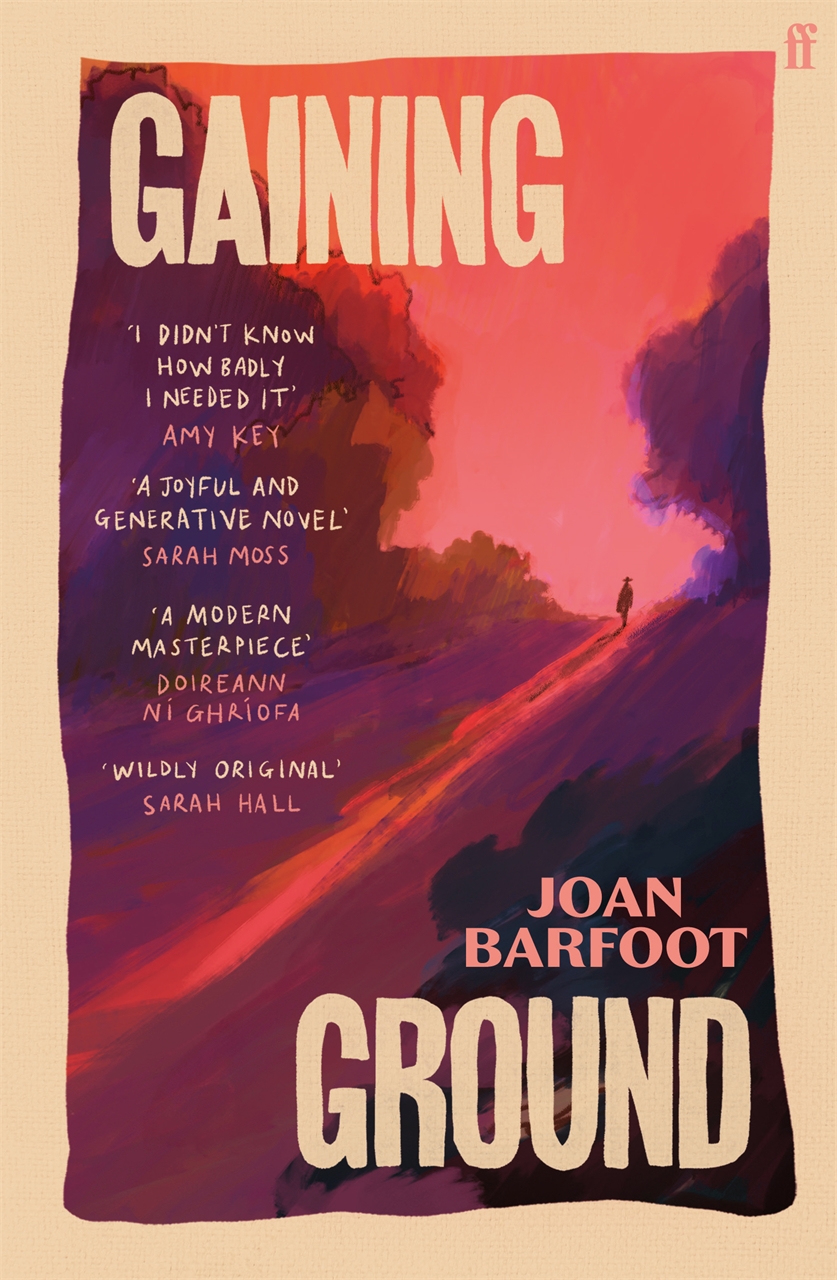
Here’s the question I couldn’t shake as I read Joan Barfoot’s Abra, reissued by Faber with its other title Gaining Ground: is it a period piece? By which I mean, does it seem dated? It was originally published in 1978 and it felt very 1970s to me. It’s not that I didn’t like it: I really did, I think it’s a very good novel. But the Faber edition includes a blurb comparing it to Marlen Haushofer’s The Wall–which, though an older novel, originally published in 1963, read to me like something outside of time, as if it could have been written decades earlier or just this year.
Gaining Ground is a story about escape. Abra is happily but stultifyingly married. She has a nice husband, Stephen, who tries to understand her; she has two children she loves. Still, something is wrong. She is (for want of a better word) unfulfilled. She is disconnected. This life does not feel to her like her real life. “Something’s wrong, obviously,” poor clueless Stephen says; “I can help, I want to help, but you never tell me what it is. Can’t you trust me to try?” She shakes her head:
my mind gone into the fog without words, no explanations, no reasonings, not even the surface ones; because they were not real. I could say it was boredom, but it wasn’t that, it wasn’t really all this time I had. What could it mean to Stephen to say that there was something happening far down where I couldn’t reach, hadn’t reached yet, that was simply wrong? It was the bald statement of something out of joint, but I couldn’t explain what it meant.
Doesn’t this sound like something straight out of The Feminine Mystique? Not that there’s anything wrong with that! And Barfoot evokes Abra’s dissociation from her own situation very powerfully, so that it does seem unbearable:
And so I drifted through the void, wanting out. I was paralyzed, could not reach out a finger, much less leap the gap of belief. And the fog closed in, closed in, over weeks, months, until I could barely see, could make out only shapes, of my children, my husband, the cashier at the supermarket, the people on the streets. I smiled and smiled and made words, but I could not even see myself, through the fog.
Then on impulse Abra goes to see a rural property for sale and finds herself “feeling that this was home.” With the help of a small legacy she has kept in her name (straight out of A Room of One’s Own) she buys it, concealing the withdrawal and the transactions and the location and everything else from her husband, and then without warning, leaving only a note, she leaves her old life behind and starts a new one there, in a rustic cabin by the woods.
The scene of her actual departure is perhaps the most startling in the novel. It’s just so absolute, so unsentimental. She has already put her family into the past–“there was no feeling whatever left,” she says, and when she drives away, she doesn’t look back, “not even a glance through the rear-view mirror.” That it isn’t difficult at all for her to do this made Abra seem to me less like a character and more like a device: surely she would, realistically, be torn, even sorrowful, however determined. She seems set up to dramatize a theoretical or political idea: that motherhood is in some sense arbitrary, that care for the self can be reason enough to reject other obligations, that true freedom and autonomy exist only outside the family, something like that. Her need for what the cabin offers her is so profound and fundamental that nothing else matters.
What she find there is a different rhythm, a way of life that–once she settles into it–feels natural. Again Barfoot’s writing is really evocative:
Once I took some left-over garden seeds into the woods and sprinkled them near me, and then sat down to see what would happen. I sat very still for a long time and slowly, very gradually and tentatively, two squirrels approached, shying, chasing each other away, but almost imperceptibly coming closer each time, and I sat rock-still until finally they nibbled at the seeds, and I wanted to reach down and stroke them, incredible flurried tails they had, wide and grey and proud, and fat bellies too, stuffing themselves, greedy animals, but it is dangerous to try to touch a squirrel, they are nervous and sensitive and will attack; and besides I did not want to affect or change the life here; I wanted just to be part of it, have it accept me. It was necessary to put away fancy human urges to capture or control, or just to make some kind of difference, to be noticed; it was necessary to be an animal.
And she does, she thinks, become an animal, “which is a fine thing.” The gift, or the goal, of this experience seems to be an enviable loss of self-consciousness: at the cabin, she lives without mirrors or clocks “Now I prove my existence by what I do.”
Is it just my own lack of kinship with this desire to get ‘back to nature,’ to lose oneself in the earth and the plants and the trees and become an animal that makes this feel, again, too metaphorical to be wholly engrossing? What kind of a choice is this, really? Her decision to leave her “fancy human” life is an exercise of agency, but in other respects it feels like a retreat.
Barfoot does raise the possibility that it isn’t ultimately a sustainable choice by bringing Abra’s daughter Kate back into her life, which Abra initially finds “an unaccustomed exhaustion, a tiring intrusion.” Her initial reaction to Kate’s appearance is almost absurd: “She has taken it all personally, and it wasn’t personal at all.” “It was just me,” she ventures as an explanation, which understandably infuriates Kate. Kate’s presence does eventually soften Abra, drawing her back into the web of human connections until she has a new decision to make.
I get that my discomfort with Abra’s original decision is somewhat beside the point. Gaining Ground is surely not offered up as a straight ‘realist’ novel any more than The Wall is, or at least not just as that; it is a fantasy born out of second wave feminism, dramatizing the cost to women’s identity of a whole system that erases or disregards their selfhood, that dismisses or frustrates their attempts to live the lives they want on their own terms, and playing out a decisive rejection of all of that. Oddly, though, to me it felt more artificial than The Wall precisely because it has the guise of realism, whereas with The Wall we are immediately cast out of the prosaically believable by the wall itself. Gaining Ground reads like a feminist statement piece, while The Wall felt more existential than political.
I have more or less answered my opening question: yes, to me Gaining Ground did seem dated, a period piece, which is not in itself a criticism. It’s a pretty powerful book. It clearly made me think–I am still puzzling over it, actually, and over my response to it so far. I wish my book club had taken me up on the suggestion that we read it together, as I would have liked to talk it over with the rest of the group.


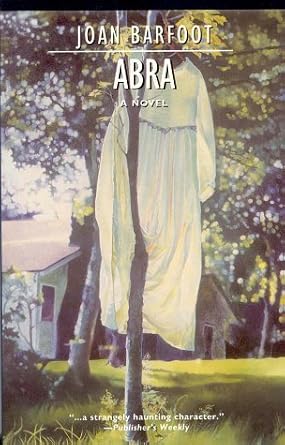
Reading this I found myself flashing back to the 1970s (the decade that took me through adolescence and my undergraduate degree) and my complicated relationship with its species of feminism. I do remember when the novel was published as Abra.
>
LikeLike