 We’re hunkered down bracing for the big storm that is working its way up the Eastern seaboard. It isn’t clear yet whether Halifax will get much snow or mostly rain and freezing rain, but the biggest threat seems to be strong winds and thus power outages. Happily, the school board cancelled classes preemptively and classes at Dalhousie don’t start until Monday, so none of us has anywhere to go. [January 5 update: Our power went out almost as soon as I pressed ‘publish’ on this post and we just got it back. It got pretty cold in the house but otherwise we got off easy–and there was no measurable snow in Halifax at all, so no shoveling!]
I also don’t have much I have to do, as with the forecast in mind, I went in to campus the last couple of days and finished up most of my materials for the new term. My syllabi and Brightspace sites were already mostly done: I prefer to chip away at work over the break rather than have a big panic when it’s over and everything needs to be ready in a hurry. (I know this is contrary to the oft-heard advice to academics to take a “real” break, and I certainly understand the way our work’s porous boundaries can become debilitating, but this is what works best for me.)
So what lies ahead? I have just two courses again this term, and they are at opposite ends of our undergraduate curriculum, so that will keep me alert. I have taught them both before, but as always, I hope I can teach them better this time! One is Pulp Fiction, which I am offering for just the second time. I haven’t changed much since last year’s iteration: individual classes (as all teachers know) develop their own personalities and that can skew one’s sense of what readings, discussions, and assignments worked or didn’t work. That doesn’t mean I didn’t learn anything last time, of course, or that I haven’t changed anything at all.
 One specific innovation–a modest but, I hope, a valuable one–is that this year I am going to take some time to talk explicitly about note-taking strategies. Particularly for class meetings that are discussion based, I often get the sense that students do not know what to write down. Many clearly do not record anything at all, while those that think of themselves as conscientious note-takers often seem to be trying to transcribe every word. I’ve been reading up on the Cornell system and I think it’s easily adapted to the kinds of class sessions I typically run, so that’s what I’m going to focus on. Once I’ve gone over it, I will try to make it a common practice to take the last few minutes of a class to have students literally compare notes. (The image here is from the JMU website; many universities advocate or adapt this format.)
Another minor innovation is a new policy I’m experimenting with to help students who have a crush of overlapping deadlines. Pulp Fiction is a pretty big class (90 students) so it isn’t practical to be endlessly flexible about when our major assignments are due–plus ultimately it doesn’t help students to be stuck working on older material well after the class as a whole has moved on–but sometimes there are cases when a day or two would make a big difference to a student’s workload and stress level, so I thought I would try to formalize a way for them to ask for it. Under this new policy, students can request a penalty-free extension on a paper if they can show that they have another paper or a midterm due on the same day. (They already have options covering illness or other emergencies.) It’s an incremental change but one that I hope will be helpful for the students who need it while keeping things fair and transparent. There have always been students who have asked for extensions or chosen to accept a late penalty in this kind of situation, so this makes clear what principle will guide the process.
 The overall structure of the course will be the same, though, as will the readings, which means I can draw on the notes I had to develop more or less from scratch last year. We’re starting with some general discussion about how and why “pulp” and “genre” fiction get differentiated from “literary” fiction. Then we’ll work through our examples of Westerns, mysteries, and romances, with Valdez Is Coming, The Maltese Falcon, and Lord of Scoundrels complemented by a selection of short fiction and, for Westerns, one poem (Sherman Alexie’s “My Heroes Have Never Been Cowboys”). The only one of the readings I really had second thoughts about was The Maltese Falcon, not because it wasn’t perfect for the course but because it is the only one of our three novels easy to cheat about. This year I will take that into account in the paper topics I assign about it. (Sadly, that means nobody gets to write about Brigid O’Shaughnessy as a femme fatale.)
 My other course is a 4th-year seminar on Victorian sensation fiction. I have taught it several times before but not recently–in fact, to my surprise, I realized I haven’t taught it since 2009! I have, of course, assigned a couple of the key texts we’ll be reading in it for other courses: I have often covered both The Woman in White and Lady Audley’s Secret in 19th-Century Fiction. Even The Woman in White hasn’t been on my syllabus since 2012, though. I started rereading it yesterday and I am really looking forward to discussing it with my students. I’ve never taught Ellen Wood’s East Lynne in any other course: it is such a strange novel! In previous versions of this course the fourth sensation novel on the reading list was Braddon’s Aurora Floyd, but I always thought it was less than ideal to have two novels by the same author, however different they are, so this year I have substituted Rhoda Broughton’s Cometh Up As a Flower. Yes, when I read it this summer I wasn’t entirely sold on it–but as is so often the case, it got more interesting as I read and thought about it, and it is refreshingly unlike the other three. I think it will provoke good discussion. We will wrap things up with Sarah Waters’s Fingersmith, one of my favorite novels and always a class favorite as well. There was a terrible time last summer when it looked as if we wouldn’t be able to find a Canadian distributor for it, but our diligent bookstore buyer found an available stash and it’s ordered and ready.
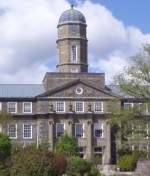 In many ways, I’m looking forward to the term. There are only two real sources of anxiety (besides the usual anticipatory stage fright). One is just that it’s winter, which always brings complications. The other is that it’s a bargaining year and negotiations between the administration and the faculty association seem to be dead ended. Last time around, they were right up against the strike deadline when a deal was finally reached, and it was very hard on everyone but especially the students. I’m not in the faculty association myself (technically I am appointed to the University of King’s College, an affiliated but independent and non-unionized institution). My classes are all Dalhousie classes, though, and if there is a strike we’d almost certainly all be locked out in any case. The parties are heading to conciliation: we can all hope things get sorted quickly and reasonably.
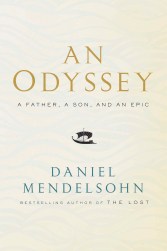 The best of my new reading this year was Daniel Mendelsohn’s






 Seen from afar, the lighthouse merely struck deft blows at the darkness, but to anyone standing under the shelter of its whitewashed walls a deeper sense of mystery was invoked: the light remained longer, it seemed, and spread wider, indicating greater ranges of darkness and deeper wonders hidden in that darkness.
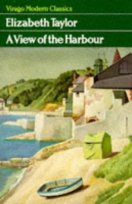
 Within a few pages of the novel, Taylor has deftly introduced us to a cluster of the small town’s residents, including Tory and her novelist friend Beth Cazabon, and set in motion the small movements that over the course of the novel will gather intensity until by the end they crest and break, their energy dissipating, like the waves. Moving among them is one outsider, Bertram Hemingway, a visiting would-be artist who gradually moves from observing to participating in the subtle human dramas unfolding around him. Watching over them is Mrs Bracey, once a key player in the town but now an invalid whose acidity is somewhat tempered when she decides to have her bed relocated upstairs. From there she will once again be able to look out over the harbour “which had been a grey and white, remembered, half-imagined scene for so long”:
 A View of the Harbour is intricately constructed, all of its interconnected stories moving a little piece at a time, paths crossing, perspectives changing, the lights brightening or fading as the characters move in and out of the foreground. It is easy to imagine many of the incidents as framed tableaux, caught by an artist’s eye so that a moment of intimacy takes on the character of a broader revelation. Unsurprisingly, it’s often Bertram, the designated artist, who makes this potential explicit:
 An interesting complement to Bertram is Beth Cazabon, who is often so lost in the lives of her characters that she struggles to stay connected to the lives of her children, or her husband–which is a blessing insofar as she remains oblivious to his infidelity. Beth (and thus also, by implication, Taylor) is only too aware that this preoccupation with fiction is not altogether to the benefit of the author or her real-life friends and family, and that it also may mean little to posterity–Beth has no pretensions about the lasting value of her work. “I’m not a great writer,” she reflects;

 Today is the last day of fall term classes. I’ve felt a bit confused all day because while it is a Tuesday really, we had Monday classes, thanks to a scheme some committee cooked up to “equalize” the exact number of days every class meets. (Next term the same geniuses have ordered that we have thee “Fridays” in a row, one actually on a Friday, then two more on the following Monday and Tuesday. You tell me how much sense that makes if your Friday meetings are usually tutorials…)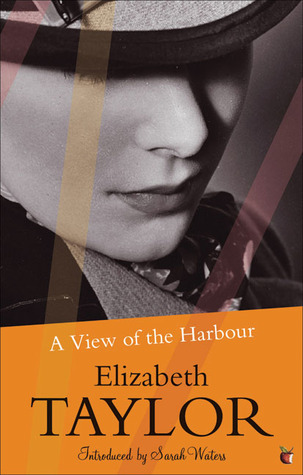
 I have often but not always marked the occasion of a new issue of
  On that note, I should add that I have no plans to give up Novel Readings, which actually predates my own association with Open Letters Monthly by a couple of years. I moved the blog from
  Novel Readings