Ona’s eyes have become big. She appears to be in a reverie, or enraptured. This is the beginning of a new era, she says. This is our manifesto . . .
What’s a manifesto? asks Autje again.
The other women frown. They look at Ona, who smiles. I’m not entirely sure, she says, but I believe it is a statement of some kind. A guide.
Then Ona looks at me and asks, Well?
Yes, I agree, it’s a statement. A statement of intent. Sometimes revolutionary.
Agata and Greta exchange alarmed glances.
No, no August, says Agata, it cannot be revolutionary. We are not revolutionaries. We are simple women. We are mothers. Grandmothers.
Women Talking is itself a kind of manifesto, I suppose, though it does not read like a statement of intent so much as an inquiry, almost an autopsy. The book is at once ruthlessly specific (what should these women, who have been abused, tortured, raped, silenced, rendered extraneous to the meaning of ther own community, do?) and almost shockingly expansive: what should (or can) we all do, once we recognize how deep and entangling the world’s systemic injustices are? In this respect Women Talking reminded me (as it did Dorian) of Woolf’s Three Guineas as I read it, especially as the possible outcomes the women have been debating coalesce into a plan. “We can best help you to prevent war,” Woolf concludes, “not by joining your society but by remaining outside your society but in cooperation with its aim.”
For Toews’s women, the choice is more literal, but the problem they seek to solve is very much the same: how is it possible to belong to a corrupt society without being complicit? “How can we enter the professions and yet remain civilized human beings,” asks Woolf. How can we stay with these men and remain safe and true to our faith, wonder the women:
Imagine the response of the men, upon being asked to leave the colony. What reason would be given them?
Everything we’ve discussed, says Ona. That to uphold the charter of our faith we must engage in pacifism, in love and forgiveness. That to be near these men hardens our hearts towards them and generates feelings of hatred and violence. That if we are to continue (or return to) being Good Mennonites, we must separate the men from the women until we can discover (or rediscover) our righteous path.
There are important differences, of course. For Woolf, for instance, freedom, not faith, is the measure of what is right. But Peters, the bishop of Toews’s semi-fictional Molotschna colony, matches up well to Woolf’s “figure of a man”:
some say, others deny, that he is Man himself, the quintessence of virility, the perfect type of which all the others are imperfect adumbrations. He is a man certainly. His eyes are glazed; his eyes glare. His body, which is braced in an unnatural position, is tightly cased in a uniform. Upon the breast of that uniform are sewn several medals and other mystic symbols. His hand is upon a sword. He is called in German and Italian Führer or Duce; in our own language Tyrant or Dictator. And behind him like ruined houses and dead bodies–men, women and children.
 “We’re not members of Molotschna,” Salome bursts out at one point, challenged to consider whether the women owe the imprisoned men any loyalty because they belong to the same colony.
We’re not members! she repeats. We are the women of Molotschna. The entire colony of Molotschna is built on the foundation of patriarchy (translator’s note: Salome didn’t use the word ‘patriarchy’ . . . ) where the women live out their days as mute, submissive, and obedient servants. Animals. Fourteen-year-old boys are expected to give us orders, to determine our fates . . .
Ona makes this analysis more abstract:
Peters said these men are evil, the perpetrators, but that’s not true. It’s the quest for power, on the part of Peters and the elders and on the part of the founders of Molotschna, that is responsible for these attacks, because in their quest for power, they needed to have those they’d have power over, and those people are us.
I thought it was interesting that Toews kept Peters basically off stage: he lurks in the margins of the novel’s (in)action, though the evil he perpetrates and perpetuates through his perversion of religious leadership is at the center of the novel’s biggest moral questions–as well as being the source of August’s own personal tragedy. This strategy keeps the women centered, and also keeps their resistance impersonal: they seek a solution to what Peters represents and enforces, not to take action against him individually.
 Peters’s literal absence, and the absence of most of the other men of the colony, is what creates the space in which these women can talk, and that itself is one of the novel’s critical interventions. For most of their lives these women have not been in control of their own stories; their illiteracy has also prevented them from knowing first-hand the terms on which they have understood and lived their lives. “My point, says Salome,”
is that by leaving, we are not necessarily disobeying the men according to the Bible, because we, the women, do now know exactly what is in the Bible, being unable to read it. Furthermore, the only reason why we feel we need to submit to our husbands is because our husbands have told us that the Bible decrees it. . . .
The issue, continues Salome . . . is the male interpretation of the Bible and how that has been ‘handed down’ to us.
Here, I was reminded of Anne Elliot’s trenchant comments in Persuasion: “Men have had every advantage of us in telling their own story. Education has been theirs in so much higher a degree; the pen has been in their hands.”
As the women debate what they think they know about their faith, August remarks “Perhaps it is the first time the women of Molotschna have interpreted the word of God for themselves” — one of many moments in the novel when his own role as scribe and interpreter is highlighted. That they need and trust him to write down their talk marks him initially as an ally. Over the course of the debates, however, we see that this assumption is too simple, both about how the women perceive him and about the purpose of his presence in the hayloft, which turns out to be less about what he can do for the women and more about what they (and Ona in particular) can do for him. “I asked her what good the minutes would do her and the other women if they were unable to read them,” August recalls; “Maybe there was no reason for the women to have minutes they couldn’t read. The purpose, all along, was for me to take them.” He is not the women’s savior; they do not actually need him to make sense of either their traumatic experiences or the dilemma they face in choosing between leaving for the unknown and remaining in a community which has failed them but is nonetheless made up of people they love.
There’s a lot more that could be said about Women Talking; the best discussion I’ve read of its political and thematic implications is Lili Loofbourow’s in the New York Review of Books. Thought-provoking as the novel definitely is (and I know I will keep thinking about it), though, I’m uncertain at this point whether it is as artistically successful as it is conceptually rich. I found it an oddly flat book, stylistically: not just plain, in a way suited to the blunt and often awkward discourse of the characters, but lacking emotion in a way that I find (usually disappointingly) typical of a lot of contemporary fiction. There’s some reason for it here, because of August’s self-consciousness as a narrator and maybe also because the traumas that necessitate the women’s conversation are themselves almost intolerable to contemplate. There are emotional outbursts, and they do add some welcome drama–but having said that, there was ultimately something impressive about the women’s desire to act out of reason and principle rather than anger, hate, or sorrow. At the end, too, after pages of so little actually seeming to happen, there’s a surprising sense of loss when we are left behind with August. “There’s no plot,” Agata says when they are interrupted by the suspicious (but fortunately senile and thus unthreatening) Ernie Thiessen, whose hayloft they have appropriated for their meetings; “we’re only women talking.” That describes the novel perfectly, and it doesn’t sound like much–but it turns out to be a lot. Maybe it’s even revolutionary.
 I’m not sure whether I’m surprised that it has already been three weeks since we began extreme social distancing here or surprised that it hasn’t been even longer — normalcy itself seems so distant now! It seems remote in both directions, too: hard as it is to think back on the relative simplicity of ordinary life before, it is even harder to look ahead because there is so much uncertainty about when and how those conditions will return. That’s as good an argument as any for trying to take this massive disruption one day at a time, which is certainly what I have been trying to do. My success varies, as does my ability to get through each day with anything like the (again, relative) equanimity and focus I used to have.

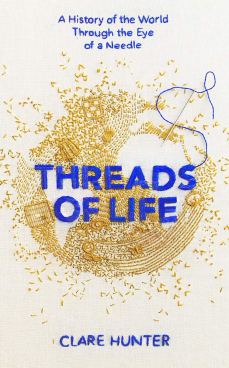

 Stitching has been used for commemoration, solace, and survival, to record personal losses and as a means of political protest and consciousness raising. The NAMES Memorial Quilt became a focal point for raising awareness about AIDS: “it played its part in raising funds for research, better sex education, preventative measures and effective drugs.” Under Pinochet’s harsh rule in Chile, women created arpilleras (“embroideries sewn on burlap”) telling “of their own experiences, of kidnapped sons and daughters, of their search to find them, of the loneliness of not knowing what had befallen loved ones.” At first the regime overlooked these deceptively cheerful-looking crafts “as tools of subversion”–sexism providing women protective camouflage. But once their subversive intent was clear, “the women were followed, their homes raided.” Esther Krintz and her sister survived the Holocaust by pretending to be Catholics; the rest of her family was murdered by the Nazis. “We know this story,” Hunter tells us, “because Esther sewed it down”: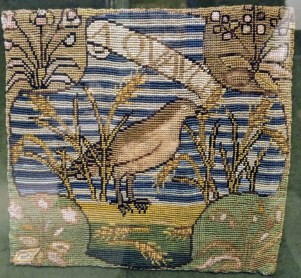

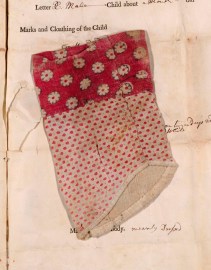 Threads of Life covers so much it would be better for you to read it yourself if you’re interested, rather than for me to keep giving more examples! But there are two others I want to just touch on, because I found them so interesting, and because they represent the two poles of needlework that Hunter’s book moves between: the intensely intimate and personal keepsake, and the deliberately calculated public display. The first, of the former kind, is the “billet book” she looks through from
  My last example, at the other extreme, is Hunter’s discussion of
  Hatshepsut is also the subject of one of my longtime favorite historical novels,
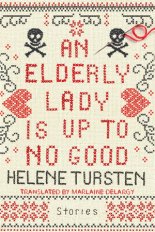 Slowly she set off in the direction of the Rosenlund Canal. In order to make herself look a little shorter and older, she stooped over her walker. She had pulled on a white fabric sunhat with a wide brim, which hid her hair and part of her face. No one took any notice of the elderly lady. . . . The best thing was that none of the people bustling about took any notice of her. An elderly lady out and about in the lovely weather didn’t attract much attention.
 I suppose Maud’s ability to get away with her petty crime spree is a cautionary tale about the dangers of ageism and sexism, which contribute to obscuring the truth about people. But compared to the moral and psychological layers that emerge from Janina’s murders in
 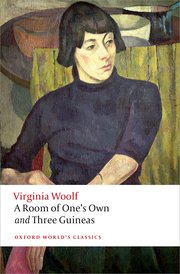 Like everyone else in the world (and how odd for that not to be hyperbole, though our timelines have differed) I have spent the past week adjusting to the unprecedented risks and disruptions created by the spread of COVID-19. Friday March 13 began as a more or less ordinary day of classes: the cloud was looming on the horizon, reports were coming in of the first university closures in Canada, and we had been instructed to start making contingency plans in case Dalhousie followed suit. But my schedule that day was normal almost to the end: I had a meeting with our Associate Dean Academic to discuss my interest in trying contract grading in my first-year writing class; I taught the second of four planned classes on Three Guineas in the Brit Lit survey class and of four planned classes on Mary Barton in 19th-Century British Fiction. The only real break from routine was a brisk walk down to Spring Garden Road at lunch time to pick up a couple of items I thought it might be nice to have secured, just in case: Helene Tursten’s An Elderly Lady Is Up to No Good for my book club, which I knew had just come in at Bookmark, and a bottle of my favorite Body Shop shower gel (
 So I packed up and went home–but still, I realized later, without having quite focused on what was happening. For example, I brought home not just the books we were in the middle of but the books that are (were) next on the class schedule, because it still seemed plausible that we would be doing something like actually finishing the courses as originally planned. And I did not bring home a stack of books that it might just be nice to have copies of at home–any of my Victorian novels, for instance. I own around a dozen copies of Middlemarch, and right now every one of them is out of reach! We are still allowed into our building, and I’ve been thinking I should go get one, and maybe some Trollope. I can’t tell if this really makes much sense, though. I mean, it’s not like I don’t have a lot of books to read right here with me, and I also have e-books of a lot of 19th-century novels because when I bought my first Sony e-reader, years ago, part of the deal was a big stack of free classics to go with it. So what if I don’t like reading long books electronically: I could get used to it. It would be a pretty low-risk outing, given that the campus is basically a ghost town at this point, but I think it’s really psychological reassurance I would be seeking, not reading material, and what are the odds that seeing familiar places I can’t really go back to for who knows how long would actually be comforting?
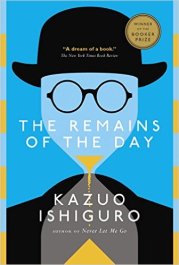 Anyway, it quickly became clear that the right strategy (and, to their credit, the one our administrators have been urging) is not to try to replicate electronically all of our plans for the last few weeks of term, including the final exam period, but to smooth students’ paths to completion as best we can: dropping readings and assignments and giving them options including taking the grade they have earned so far but still also allowing another chance to do better in as painless a way as we can think of. I think the options I came up with for my classes are pretty good, in these respects, but it may be that they don’t go far enough, because this is all turning out to be so much harder than it sounded a week ago–and of course however we might (or might not!) be managing, our students have their own specific circumstances which may make even the most “reasonable” alternatives too much. I have been feeling a lot of regret about the books we won’t get to, especially The Remains of the Day, which I was increasingly excited about as the capstone text for the survey class–what a good book to read right after Three Guineas! As for Three Guineas itself, I was so excited about teaching it for the first time. It’s definitely going back on my syllabus the next time it fits the brief. Sigh.
 One of the most emotionally painful parts of all of this has been the abrupt severance of personal relationships, which is what teaching is really all about. I have put course materials together to get us to the end of our current texts, but it is much less rewarding scripting them than it is taking my ideas and questions in to meet them with and seeing what comes of our encounter. Sure, it doesn’t always go swimmingly, but that just means you try again, or try something different. I know there are ways to include more personal and “synchronous” interaction (as we’ve quickly learned to label it!) in online teaching, and of course as someone who spends a lot of time online I already believe that you can cultivate meaningful relationships without meeting face to face. There just isn’t time for that now, though, and also the demands those tools put on everyone to be available and attentive at the same time are all wrong for our immediate circumstances. It isn’t just about finding ways to get through the course material together either: there are students I have been working with for years who it turns out I saw in person for maybe the last time that Friday without even knowing it. I have been thinking about them, and about all of my students, so much since that hectic departure from campus and hoping they know how much I have valued our time together and how much I already miss them!
 And now, I guess, it’s time to settle in to what people keep euphemistically calling “the new normal.” Here in Halifax we are under strong directions for social distancing; I’ve heard rumors that something more rigorous might be coming, in the hope of really flattening that infamous curve. There are lots of wry jokes and memes about readers or introverts or others whose habits and preferences mean they have been “preparing for this moment our whole lives.” We live a pretty quiet life ourselves, so to some extent this is true of us as well (though not of Maddie, who like many young people is going to be very well served by the various ways she and her friends can stay in touch virtually). It’s pretty different having to stay home, though, and also worrying whenever you go out, even if it’s only for essentials. It’s also not spring yet here–I envy my family in Vancouver the softening weather that makes walks and parks and gardens good options. I am grateful, though, that we are comfortable and together and, so far, healthy. I am also glad I did pick up An Elderly Lady Is Up to No Good, because I finished reading it this morning and it is a nice bit of twisted fun…about which more soon, I hope!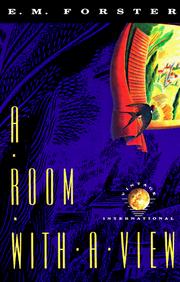
 It is,” as the narrator says, “the old, old battle of the room with the view,” and the joy of the novel is that even as we feel the horror of violence and death and the lesser but equally inexorable horror of everything Lucy must overcome, we see the view open up, we see the light and the violets and the sunshine, we heed the driver’s cry of “Courage and love!”
 Lately I have found myself both gripped and soothed by a particular genre of television, and happily for me there turns out to be a lot of it–in fact, since I brought it up on Twitter I’ve learned of many more options, which means that even at my current rate of consumption I won’t run out for months. The shows I’ve been binge-watching (as much as I can binge-watch anything in this busy time of term!) are all examples of what you might call ‘gamified creativity’: shows in which dedicated amateur practitioners of some art or craft compete through a series of challenges in the hopes of being recognized as the best of the bunch.
 The well-known Great British Baking Show is one such show; over the past few years I’ve greatly enjoyed both the original series and the Canadian version. I didn’t initially think about it as showcasing creativity because in some ways baking is such a practical and also such a non-negotiable skill: the cake either rises or it doesn’t, the bottom of the pie is either soggy or it isn’t. Watching Blown Away, Next In Fashion, and some of The Great Pottery Throw Down, however, has clarified for me that a big part of the appeal of TGBBS always was the combination of that practicality with ingenious concepts and creative designs and decorations. That’s what these other shows highlight as well: it’s not enough to be able to sew a hem (or a whole jacket), or throw a pot–you also have to come up with a concept for the project and execute it in a way that (if all goes well) sparks both admiration and pleasure. “Fit for function” is an essential standard on the pottery show, but if all your teapot does is pour, it’s not going to
  I’ve been wondering what it is about these shows (which have been around for years, after all) that is so appealing to me right now. Certainly part of it is that they are not particularly demanding to watch, and also that overall they are quite cheering: the very idiosyncrasy of the participants combined with their shared passion for their craft is just so heartening, so humane, at a time when there seems to be so much anxiety and inhumanity going around. These shows also celebrate qualities that are often devalued in the wider world, including not just creativity but also beauty, originality, and mastery outside the domain of the relentlessly technical and utilitarian. Sure, there’s something artificial about the competitions themselves (must everything be turned into a game show?) but I actually find the judging process fascinating: speaking as someone who recoiled from Elizabeth Gilbert’s “all that matters is that you made anything at all” pitch in
  I think too that I am engaged by these shows because I have been feeling restless in my own work. What I feel, often, watching the participants demonstrate their plans and then do their best to carry them out, is envy. I think it must be wonderful to be able to do the things they can do–and also to be passionate about doing them, so much so that you never question why you are doing them and are happy to keep trying and trying and trying again to do them better. I especially envy the leap of imagination that takes them from “here’s the task” to “here’s my idea for that task”: bread that looks like a lion, a toilet that looks like a turtle. (That turtle toilet filled me with such irrational joy when it turned out so well! Who would ever think of such a thing? Who would ever make it? And yet isn’t it just delightful?) By comparison, my relationship with my own work is often much more uncertain, and the work itself–whether it’s teaching, grading, researching, or reviewing–doesn’t really feel creative, or at any rate it doesn’t really satisfy my vague desire to be creating something. That’s one reason I took
  And yet there are creative aspects to my job. As I was starting to write this post, for example, I was also working on my class notes for some new (to me) material I’m teaching next week, including Woolf’s “Kew Gardens” and Three Guineas, both of which I’ve read before, of course, but which I’ve never assigned. This means that I have to come up with a teaching strategy for them, which means figuring out what story I’m going to tell about them: where I’ll begin, what background exposition I’ll include, what plot (for want of a better term) I’ll try to shape our experience of them into. I also think of book reviewing as a kind of storytelling: what might look to a reader of the review “just” like a bit of plot summary, for example, is actually a highly selective retrofitting of the book’s own elements in order to tell my story of what the book is about. The hardest part of writing every review is spotting that story and figuring out how to tell it (and one of the freedoms I most enjoy when writing blog posts, by comparison, is being able to discover it as I go along rather than having to shape the piece around it from the beginning).
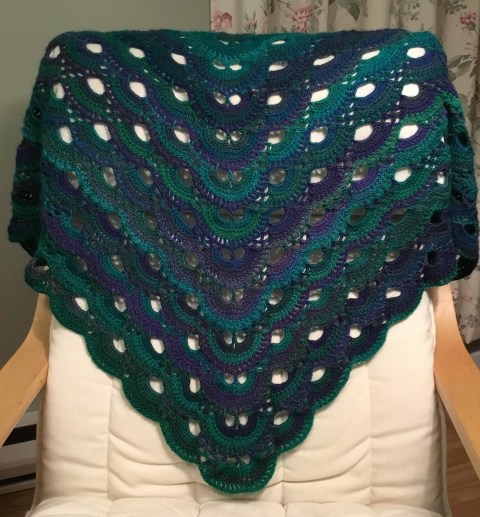 Is it because the building blocks of these particular processes are someone else’s stories that, for all the pleasures they really can offer, they don’t quite satisfy the craving for creativity in my own life, the underlying hunger for it that I am feeding with the vicarious experience of it offered through these shows? Perhaps. So what to do about that? I don’t particularly want to change up my approach to either criticism or teaching: I don’t much like criticism that crowds out its real subject (as I see it) with too much other stuff, and though I know my approach to teaching isn’t the only one (I have colleagues, for instance, who incorporate creative writing and other activities into their classes), it is one I believe in and feel comfortable with. I do have some hobbies–crochet and quilting–that give me the satisfaction of actually creating something, but it’s interesting that they are both (for me, anyway, at my limited skill level) pattern-following crafts; my self-expression in both is limited to choosing a pattern and choosing the materials. That’s not nothing, of course! (Also, crochet in particular is perfect to do while watching TV shows of other people making amazingly creative things. 😊)
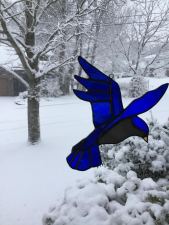 Last week was our winter term study break, which is always a welcome interlude–more welcome even, I think, than the equivalent week off from classes in the fall because the winter term is grueling in ways the fall term is not, simply because it’s winter! Everything just takes more time and energy. We’ve been having a spell of unusually mild weather over the past few days and it has been so nice not to have any shoveling or scraping to do. There have even been days when it made perfect sense not to wear boots! Imagine that, in February. 🙂
 In British Literature After 1800 we have just finished a couple of weeks on Great Expectations. More than half the class chose to write their first paper on it, which may be a sign of engagement, though it might also be a sign that they don’t want to write on poetry, or that they realized they would like to get the paper out of the way before the later option. In terms of our class discussions, I think it was nice to park ourselves in one place for a while, as the course overall, just by its nature, moves quite briskly along through a range of quite different material. As I look ahead to the other long texts I chose for the course (Three Guineas and The Remains of the Day) I’m pleased at the thematic connections I can see opening up. From a pedagogical point of view, that means they pair up in interesting ways for the later assignments, which include a comparative essay. But they are also different enough in form and voice that our conversations won’t get repetitive.
 In 19th-Century British Fiction from Austen to Dickens we have wrapped up our work on Waverley — and I have to say, it seemed to go pretty well! I allowed more class time for it than I have before, and I really dug in on the historical context early on, both of which I think helped, but credit definitely also goes to the students: they just didn’t seem to find it as difficult, or at least as off-putting,
  Next up in this class is The Tenant of Wildfell Hall, which we started on Monday. I have assigned this often in my seminar on the ‘woman question’ but I realized it has been nearly a decade since I worked through it in a lecture class instead. As always, I am enjoying rereading it. I think it is such a smart novel, especially in its complicated narrative and chronological structure. (
 After Tenant we will be doing Mary Barton and then wrapping up with Hard Times. We’ve already been asked to submit course descriptions and tentative reading lists for 2020-21, and one of the courses I’ll be doing is the Dickens to Hardy course. Dickens is the only novelist explicitly named in both course titles, and every so often I wish I didn’t feel obliged to include him on every reading list–or to include Hardy at all–so I asked this group if they’d feel cheated if they signed up for “The 19th-Century British Novel from Dickens to Hardy” and discovered they would not be reading either Dickens or Hardy. A bit to my surprise, most of them said an emphatic “Yes!” I guess those names have more traction than I realized. The problem for me is that I really (really) want to assign Middlemarch for the class, and I’m wary of including two monstrously long novels, which means once again I’d have to choose among the short(er) Dickens options, which are getting a bit stale for me. Or would I? Would it be so tough to read both Bleak House and Middlemarch in one term? What if I included two really short novels in between, to balance them out (The Warden? Cranford?) and then ended (as apparently I must) on Hardy? I have a couple of months to think about this before the actual book orders are due: I’ll run some scheduling scenarios and see what looks reasonable.
 Solitude has replaced the single intense relationship, the passionate love that even at Nelson focused all the rest. Solitude, like a long love, deepens with time, and, I trust, will not fail me if my own powers of creation diminish. For growing into solitude is one way of growing to the end.
 Novel Readings