She was surprised to find it more or less possible, most of the time, to follow her meal plan: it seemed that perhaps the battle was over, the endgame complete. She had followed the rules all the way to the end, until it was possible to go no further. She had met the experts’ standards until her heart and liver and kidneys failed in quantifiable and quantified ways, until other experts told her that it was time to stop and now, surely, there must be a period of grade, a little mercy.
If food issues or eating disorders are a problem for you, you may not want to read either this post or Moss’s book.
My Good Bright Wolf is a harrowing, disturbing, honest, vulnerable account of Sarah Moss’s anorexia, though that neat diagnostic term seems inadequate to the complexity of the story she tells about the childhood, the parenting, the schooling, the culture of femininity and beauty, and the “experts” that all played a part in making it impossible for her to accept food as nourishment her mind and body needed – never mind to embrace eating as pleasure.
How do you tell a story like this about your life, and especially about your family, that does justice to your own suffering, and your own rage, while still also, as far as is possible, doing justice to good intentions, to sound principles, to the tensions and struggles of the people who did you so much harm? How do you convey the extraordinary power of feelings – compulsions – that to other, “healthy,” people do not, cannot, make sense? How do you bring both yourself and your readers to an understanding that is not (because it can’t be) the same as an explanation? How do you orchestrate the voices in your own head, both the ones expressing your unreasoning, impossible, self-destructive conviction that you should not eat, and the ones – trained, educated, hyper-rational – that know better? While Moss’s experience would, I think, have been gripping and heart-rending if told in a more conventional expository way, the most remarkable thing about the memoir she has written is the form she created for it, which is constantly interrogatory, and which adopts elements of allegory or fairy tale to shift our thinking away from the strictly literal towards something at once more surreal and more affecting.
Her mother, for instance, is always “Jumbly Girl,” her father “the Owl.” They are characters as much as people; Moss is aware of that, self-conscious about herself as in some sense their creator, certainly their narrator. The artifice does not signal untruth, but truth, in memoir, is a function of memory, and she knows memory can never be wholly reliable:
They’re gods and monsters, your mum and dad, mythological. Larkin was right, they were fucked up in their turn, by fools in old-style hats and coats. Fools who taught them, one way and another, that love takes the forms of surveillance and judgement, that children will stay dependent and needy forever if not forced to grow up. Fools who taught them that care and attention are scarce resources, not to be wasted on the undeserving. And maybe they’re not really your parents, the Owl and Jumbly Girl, not really human at all, just voices in your head.
But their real voices – the ones she remembers – say things like “We know she’s fat” when she is taken for a mandatory weigh-in with the school nurse, who replies “She’s not overweight, nothing to worry about there,” much to her shock – “Next she’d be saying you could do maths. Nonsense.” They say things like “no need for any lunch, there’s plenty of meat on those bones.” They permit only “natural” foods, only organic produce, no fast food or processed food, no sweets – healthy, in theory, but punitive in practice. They preach (though the Jumbly Girl does not always practice) a doctrine of self-control, and eventually, in early puberty, Moss learns she can win at that game, “dieting” so much she stops menstruating:
You had only another two or three periods, not enough to learn how to manage or accept them. Bones emerged comfortingly, hips, clavicle, shoulders and then ribs. Even the popular girls . . . envied your bones, as they had never envied and would never envy anything else about you. You began to get tired on the two-mile walk across the city to school, to get a bit dizzy sometimes on the stairs, and you greeted it all with relief. Here was safety. Here was something you could do.
A severe case of frostbite from a sailing trip leads her to a doctor who is “concerned about how thin you are”; he diagnoses anorexia and refers her to a psychiatrist, but her mother says “we’re about to spend a month hiking,” so “she’ll have to manage.”
Sailing, hiking, trips to the Continent, ballet lessons, organic food: Moss is very aware – sometimes uncomfortably so, I thought – of her “privilege,” though her self-conscious admissions of it are unhappy echoes of her parents’ rebuttals (real? imagined?) of her “complaints.” “You must be sick in the head, complaining about this stuff, ballet and sailing and private school”;
Do you have any idea, even now, what a lucky girl you were? Have you forgotten the food collections for the families of striking miners another two junctions up the motorway, have you forgotten how skinny some of the kids at your first school were?
Answer me this: would it be better to know that your parents wanted to feed you and couldn’t, or to know that they could and didn’t want to?
Seriously?
Moss is astute about the social contexts and structures that meant her father, a professor, was away all day and resentful, at home, about incursions on his time and attention, and also about the frustration of her mother – indeed, her mother’s whole generation, able to get an education (her mother had a Ph.D. too) but then too often expected to conform, “clever girls . . . before marriage and maternity enclosed and enraged them.” Her mother cooked and sewed, and young Sarah admired and emulated those skills even while absorbing guilt, even hatred, of them fueled by feminist rejection of them. Her sympathy for her mother’s thwarted aspirations complicates her resentment at her own miserable treatment and fills her with ambivalence about her own ambitions: “Bad scholar, bad writer, bad clever girl.”
Through all of this, Sarah reads, and My Good Bright Wolf has long, fascinating sections about Little Women, about Little House on the Prairie, about Swallows and Amazons, about The Bell Jar, drawing out what they have to say about food, about nourishment, about ideal girls. Moss goes on, of course, to become both a literary critic and scholar and a novelist. This is not, by any means, however, a “literature saved my life” kind of book. The “life of the mind” she idealizes often seems, to her, to be at odds with her own physicality; the one argument that works, when any argument does, to get her to eat is that if she doesn’t, she will not be able to think and thus to write. Her success, as a student then an academic then a writer, only changes the terms and the stakes of the battle she fights with her body. Once – quite recently – in Italy, on a fellowship, in just the kind of circumstances that seem ideal for writing (“What a privilege, to have a room of one’s own with all meals found, all housework done, for six weeks!”), she finds herself in a particularly devastating spiral, unable to eat, dissociating, disintegrating. “I’ll get over it,” she insists to her therapist, who responds “You’re not safe” and insists that she come home.
My Good Bright Wolf is not, as I said, a book about writing (or reading) as salvation, and it is also not a recovery narrative, though by the end there are glimpses of reconciliation between Moss and her hungry body: “No making of art – or love, or war, or peace, or dinner – without a body, no body without food.” What would it feel like for her to be at ease, at home, in her body (“my house / my horse my hound,” as it’s called in her epigraph, May Sarton’s poem “Question”)? It would feel like the time she and a friend stop at a café in Lombardy, “with a view of the mountains and the sound of wind in the leaves”:
There’s a small bowl of the estate’s honey and one of preserved wild berries, and for now, for this sunny moment, you’re not scared, it’s just good food in a good place . . .
Sunlight, earth and water become grass becomes milk becomes cheese becomes you walking and thinking and writing.
The moment is the opposite of anorexia.
It feels fragile, precious, whole.
 That instant, the memory of a long-lost word rises up in her, cut in half, and she tries to grab hold of it. She had learned that, in times past, there had been a word, a Hanja word . . . by which people had referred to the half-light just after the sun sets and just before it rises. A word that means having to call out in a loud voice, as the person approaching from a distance is too far away to be recognized, to ask who they are . . . This eternally incomplete, eternally unwhole word stirs deep within her, never reaching her throat.
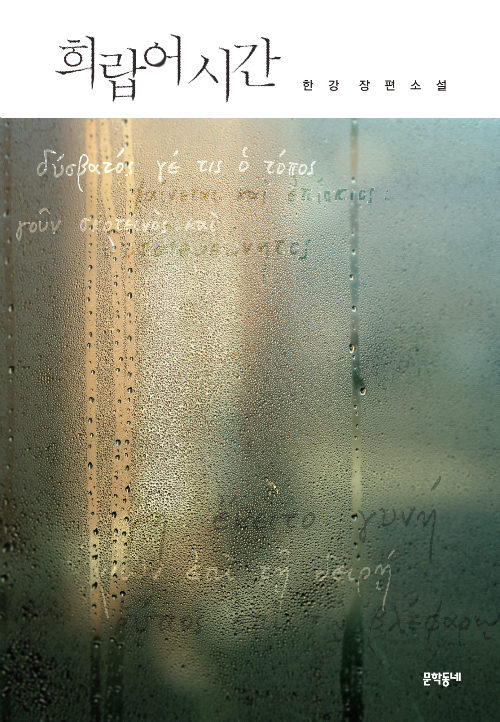 And yet overall I was captivated by Greek Lessons, not so much by its particulars as by the melancholy space it created. Ordinarily I prefer some forward momentum in a novel (both cause and effect of my specializing in the 19th-century novel for so long!). What Greek Lessons offers instead, or this is how it felt to me, is a kind of time out, from that fictional drive and also from the busy world that these days overwhelms us with “content” and noise. In the intimacy of the portrayal of these two people, both of whom are retreating from the world partly by choice but mostly from the cruelty of their circumstances, there is some recognition of how hard it is to be ourselves, to be authentic, to see each other. The quiet sparseness of Han Kang’s writing could be seen as an antidote to the pressure to perform who we are and to insist on making space for ourselves out there. (Pressured by her therapist to break her silence, the woman thinks, “she still did not wish to take up more space.”)
 November wasn’t a bad reading month, considering how busy things were at work—and considering that “work” also means reading a fair amount, this time around including most of both Lady Audley’s Secret and Tess of the d’Urbervilles for 19thC Fiction and an array of short fiction and poetry for my intro class. (I have not managed to get back into a routine of posting about my teaching, but I would like to, so we’ll see what happens next term.)
 I felt the need for something cheering in the wake of The Election and landed on Connie Willis’s To Say Nothing of the Dog: it was a great choice, genuinely comic and warm-hearted but also endlessly clever. I had a lot of LOL moments over its characterizations of the Victorian period, and it is chock full of literary allusions, many of which I’m sure I didn’t catch. A lot of them are to Agatha Christie and Dorothy L. Sayers: who know that Gaudy Night would be one of its main running references. I liked it enough that I’ve put The Doomsday Book on my Christmas wish list, even though I don’t ordinarily gravitate towards this genre.
 I knew I would read Noémi Kiss-Deáki’s Mary and the Rabbit Dream the first time I heard about it. It sounded like exactly my kind of thing: a fresh style of historical fiction, with a strange and subversive story to tell. It was published in the UK by Galley Beggar Press—and maybe that should have been a red flag for me, as they are the publishers and champions of Lucy Ellmann, whose Ducks, Newburyport I have begun three times, never making it more than 30 pages, but more significantly (because I still believe Ducks, Newburyport may be worth yet another try) whose Things Are Against Us I absolutely hated. On the other hand, I didn’t hate After Sappho, which they also published, and I do try, on principle, to push my own reading boundaries. So when Coach House Press here in Canada put out their edition of Mary and the Rabbit Dream, I promptly picked it up and happily began it.
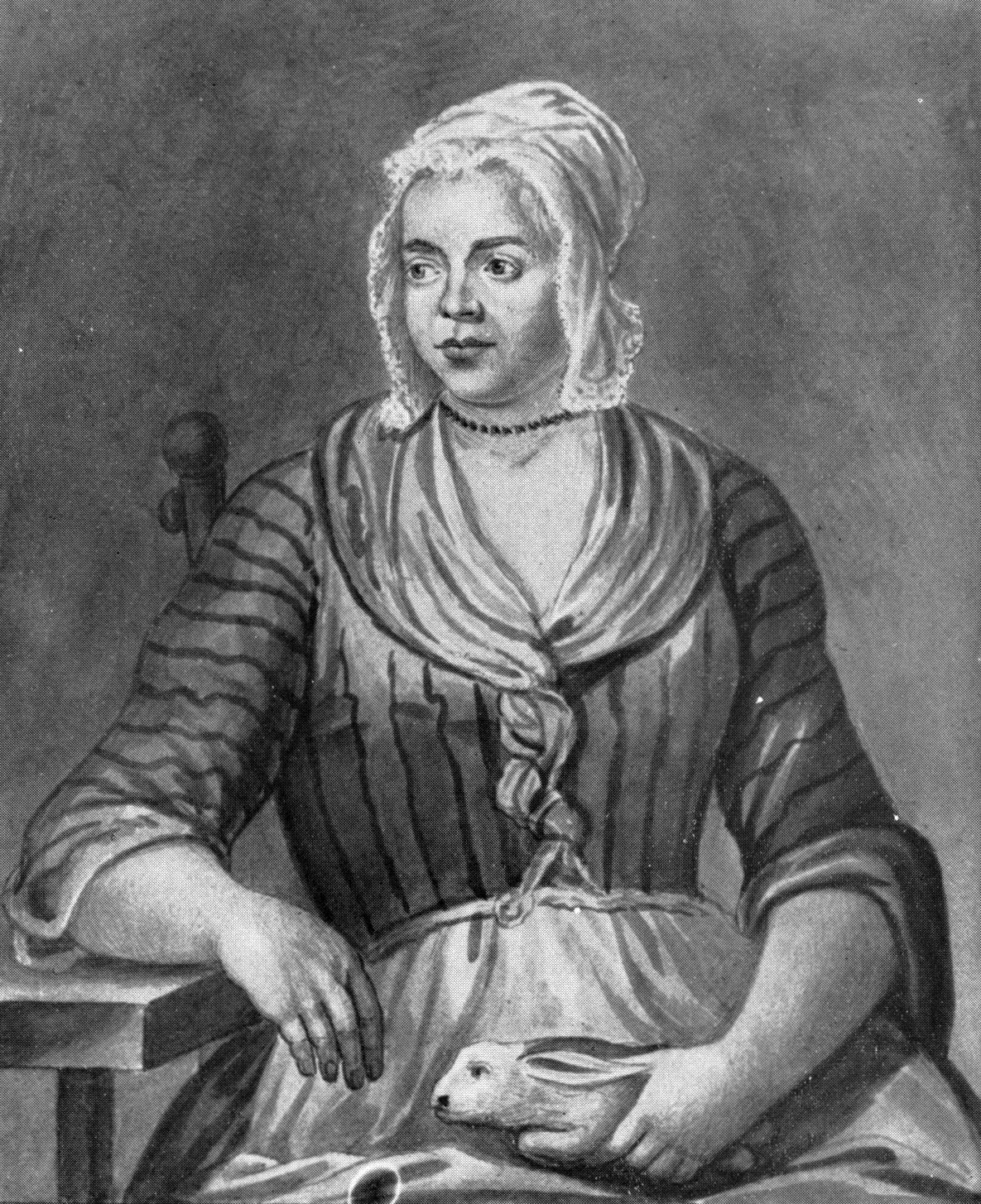 There is a lot that is good and interesting about this novel, especially the way that, while it centers sympathetically on Mary and her experience, it also uses her story as a device to expose the cruelty of misogyny and the punishing self-satisfaction of a certain species of scientific certitude. There is a particularly harrowing scene in which a powerful man, determined to break her and expose her as the fraud he is sure she is, threatens Mary with live vivisection, explaining to her with truly menacing “objectivity” that
 I might have tolerated the long stretches of this kind of stuff better if they hadn’t so often devolved into heavy-handed comments on what is perfectly obvious from the story itself, about how vile and prejudiced and uncaring the men are; or about how unfair the whole system is, especially to Mary (as happens in the example above); or about the symbolic meaning of what is going on. The worst such moment was this one, right after Mary, in excruciating pain and exhausted from relentless examinations, breaks down and begins screaming (“she slips down on the floor, she starts screaming, she screams and screams and screams”):
 Claudia Piñeiro’s Time of the Flies is, like the other novels of hers that I’ve read, a crime novel. Sort of. It is about a convicted murderer, Inés: she killed her husband’s lover, but at the time of the novel is out of prison and making her living running an environmentally friendly pest control business. Then she is approached by one of her clients to provide a deadly pesticide—so that she too can kill “a woman who wants to take my husband the same way yours was taken from you,” or so she tells Inés. Inés, who is not in general a murderous person and who also would very much like not to go back to prison, is tempted only because her friend Manca urgently needs treatment for breast cancer but can’t afford to pay to get it right away. The situation gets more complicated when a connection emerges between the client and the daughter Inés has not seen since her imprisonment.
 Clearly Piñeiro is doing something experimental here, creating a genre hybrid in a way that is actually reminiscent of Woolf’s The Pargiters, which I’ve been thinking about for some time because I’m fascinated by Woolf’s attempt to combine fiction and non-fiction, story and commentary. Woolf considered it an unsuccessful attempt and gave it up, turning her “novel-essay” into a novel (The Years) and an essay (Three Guineas). Maybe, I found myself thinking as I made my way to the end of Time of the Flies, Piñeiro should have done the same: if she didn’t trust her story to raise these questions for us, to stimulate those debates, she could have written a companion essay, or a different work altogether, leaving us the crime novel we expected when we picked the book up. It’s awkward, distracting, sometimes (to be honest) boring to have the plot, the suspense that Piñeiro is so good at building, constantly interrupted with these more abstract political sections, especially when they take such an uncertain form, voices themselves interrupting each other, offering competing arguments, incorporating references.
 That might be a good explanation for the hybrid nature of Time of the Flies, but it doesn’t necessarily make the book a success. I’d probably have to read it again (and again) to make up my mind about that, which I might do, given that I offer a course called “Women and Detective Fiction.” Last time around I almost assigned Elena Knows for it. Another title I’ve considered for the book list is Jo Baker’s The Body Lies, which is quite unlike Time of the Flies except that it too is a crime novel that turns out to be about crime novels, and especially about the roles and depiction of women in them, the voyeurism of violence against women, the prurient fixation on their wounded or dead bodies, the genre variations that both do and don’t reconfigure women’s relationship to the stories we tell about crime and violence. I thought Baker’s novel was excellent. I certainly didn’t have any trouble finishing it, in contrast to the concerted effort I made to get to the end of Time of the Flies. I really did want to know what happened! But I felt like I had to wade through a lot of other stuff to get there. If I do reread it, maybe that stuff will turn out to be the real substance of the book.
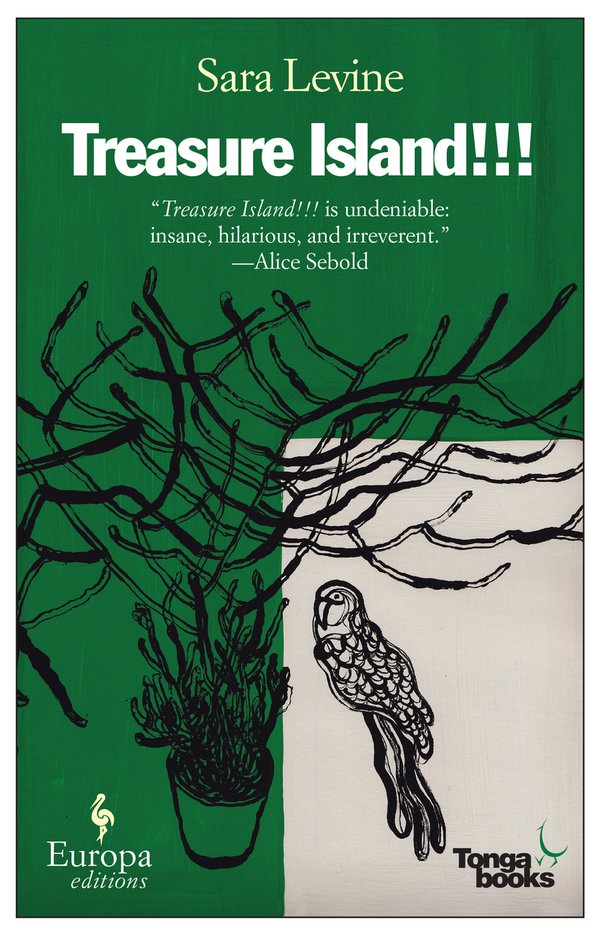 That said, I did quite enjoy Sara Levine’s Treasure Island!!!, which I picked up quite randomly at the library, mostly because it’s a Europa Edition but also because I vaguely recalled hearing good things about it online. It turned out to be a sharp and very funny send-up of the “great literature transformed my life” genre. Its narrator, whose life is in something of a shambles, reads Treasure Island and decides it offers her a template for turning things around. She adopts the novel’s “Core Values”—BOLDNESS, RESOLUTION, INDEPENDENCE, HORN-BLOWING—and applies them to her job (which, improbably and hilariously, is at a “pet hotel,” where clients sign out cats, dogs, rabbits, even goldfish), her boyfriend, and her family, with hilarious if also sometimes weirdly poignant results. I have such a love-hate relationship with books that purport to turn literature into self-help manuals that I relished the premise, but Levine uses it as a launching point for something much zanier than I could possibly have expected or can possibly summarize.



 I had such good intentions to post regularly again this term about my classes . . . and somehow the first month has gone by and I’m only just getting around to it. The thing is (and I know I’ve said this a few times recently) there was a lot going on in my life besides classes in September, much of it difficult and distracting in one way or another—which is not meant as an excuse but as an explanation. Eventually, someday, maybe, my life won’t have quite so many, or at least quite such large, or quite such fraught, moving pieces. Honestly, I am exhausted by the ongoing instability—about which (as I have also said before) more details later, perhaps—and the constant effort it requires to keep my mental balance.
 There are still things I like about teaching first-year classes, though, chief among them the element of surprise, for them as well as for me: because students mostly sign up for them to fulfill a requirement, and choose a section based on their timetable, not the reading list, they often have low expectations (or none at all) for my class in particular, meaning if something lights them up, it’s kind of a bonus for them; and for me, it’s a rare opportunity to have a room full of students from across a wide range of the university’s programs who bring a lot of different perspectives and voices to the class. I do my best to keep a positive and personal atmosphere—and some interactive aspects—even in a tiered lecture hall that makes it essential for me to use PowerPoint and wear a microphone; we have weekly smaller tutorials that also give us a chance to know each other better.
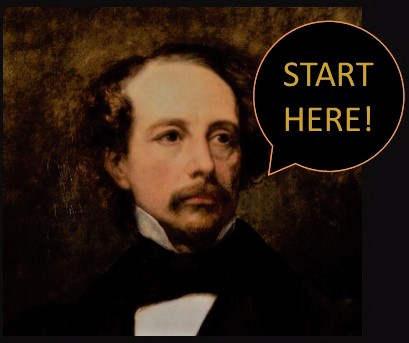
 My other class is 19thC Fiction, this time around the Dickens to Hardy version. (Speaking of full-year classes, once upon a time I got to teach a full year honours seminar in the 19th-century British novel and let me tell you we did some real reading in that class! Ah, those were the days.) (Is talking like this a sign that I should be thinking more seriously about retirement?) I went with “troublesome women” as my unifying theme this time: Bleak House, Adam Bede, Lady Audley’s Secret, and Tess of the d’Urbervilles. We have been making our way through Bleak House all month; Wednesday is our final session on it, and I am really looking forward to it. I hope the students are too! But I’m also already getting excited about moving on to Adam Bede, which I have not taught since 2017. It was wonderful to hear a number of students say that they were keen to read Bleak House because, often against their own expectations, they had really loved studying David Copperfield with me last year in the Austen to Dickens course. (You see, this is why we need breadth requirements in our programs: how can you be sure what you are interested in, or might even love, if you aren’t pushed to try a lot of different things? And of course even if you don’t love something you try, at least now you know more about it than whatever you assumed about it before.)
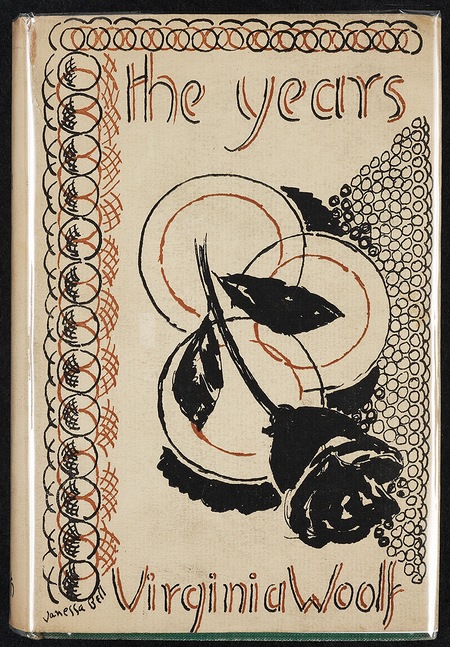 In many ways the first month of term is deceptively simple: things are heating up now, for us and for our students, as assignments begin to come due. After a fairly dreary summer, though, when the days often seemed to drag on and on, I appreciate how much faster the time passes when there’s a lot to do and I’m making myself useful (or so I hope) to other people. I also decided to put my name on the list for our departmental speaker series, to make sure the work I did over the summer didn’t go to waste, so I will wrap up this week by presenting my paper “‘Feeble Twaddle’: Failure, Form, and Purpose in Virginia Woolf’s The Years.” Wish me luck! It has been a long time since I did this exact thing; in fact, I believe the last presentation I made to my colleagues was about academic blogging, more than a decade ago. I have given



 Novel Readings