
Only one entry supplied an adequate definition, and she circled it with red ink, and referred to it nightly. Life: a constellation of vital phenomena–organization, irritability, movement, growth, reproduction, adaptation.
Anthony Marra’s A Constellation of Vital Phenomena is such a good book — it is so beautiful, so terrible, so moving, so well-designed — that it feels ungenerous to add that it also seems a bit generic, a bit familiar.
I don’t mean that its particular story, with its meticulously imagined people and their intensely specific, believably personal lives, are themselves unoriginal. We haven’t met these people struggling through a war-torn world before, and the account Marra gives of their lives–of their suffering, of their clutching attempts to preserve some faint radiance of humanity in spite of everything that is terrible and heartbreaking and violent around them–is both gripping and immensely touching.
The context of their lives is also, at least to me, unfamiliar fictional territory. I knew little about the Chechen wars before reading Marra’s novel; I know more about them now, and bringing that historical and political story to readers is (surely) part of what motivated Marra to write this novel. There are so many pockets of tragedy in the world; it is easy, from far away, to miss or disregard far too many of them. Even if it is true that our attention is finite, our capacity for sympathy isn’t, and one thing (not, of course, the only thing) an artist can do is help us reach out, if only imaginatively and vicariously, where our hearts hadn’t gone before. A Constellation of Vital Phenomena takes what might be, for many readers, a tragic but distant muddle, and makes it real, in that paradoxical way that only fiction can.
A Constellation of Vital Phenomena does not feel pedantic or didactic, though, informative as it is. It is a story of intersecting lives: the historian whose work and life both, in their own ways, go up in ashes; the inept local doctor who finds new purpose in a catastrophe; the hardened surgeon who amputates limbs more easily than she loves or trusts; the tortured informer whose capitulation is, sadly, as comprehensible, maybe more so, than others’ resistance; the little girl, whose survival is first a practical challenge then a symbolic victory against war–perhaps even against death itself. I make them sound like types, but Marra is too smart and too gifted for that: they feel individual, and the way the complicated intersections of their lives are gradually revealed to us is engrossing and artful.
 But to me that same art sometimes felt just a bit too conspicuous: I often thought about how well-crafted the novel was, structurally as well as at the sentence level. Is that even a fair thing to say, I wonder? That a a book is too clearly well-written, that a writer’s sentences are a little too good? Here’s the novel’s opening line, for example: “On the morning after the Feds burned down her house and took her father, Havaa woke from dreams of sea anemones.” I bet you didn’t see those sea anemones coming! That surprise is excellent: right away, I’m intrigued, and it turns out, too, that sea anemones aren’t an incidental choice. Here’s another sentence from quite a bit further along, though: “The silver Makarov pistol was all Ramzan thought about for the two weeks preceding Dokka’s disappearance, in which he failed to produce a single bowel movement.” Surprise again! And maybe now you see what I mean. This is an effect Marra likes. He is good at producing it, but it risks being gimmicky, and these lines, to me, smack of the journalistic imperative to have a good “lede.” There’s something a bit self-conscious about it: there’s a bit of self-display.
Another trick Marra likes, and uses effectively, is prolepsis: he’s always tossing in tidbits about where his characters will be a few days, or a week, or many years from the novel’s present. That too was artful, and thematically effective: it sustained Marra’s emphasis on the novel as about a moment in a long and moving history, and it kept us glancing forward from the often unbearably grim details, towards a future in which things get better, at least for some. I liked these life rafts of hope, but they too sometimes drew my attention out of the world of the novel and into Marra’s own world-making. Again, I’m not sure that’s even a fair complaint–these are not the sorts of things that necessarily bother me in other novels, and they didn’t much impair my involvement in A Constellation of Vital Phenomena either, but they did a bit.
The larger distraction for me, though, was the sense that for all the excellence of this novel, it wasn’t altogether new. Its main theme (let’s sum it up as “the persistence of humanity in the face of inhumanity”) is itself, sadly, familiar: plenty of other novels show us glimmers of goodness among the shadows of unspeakable evil–Anthony Doerr’s All the Light We Cannot See or Nadeem Aslam’s The Wasted Vigil, to give just a couple of examples. The novel’s episodic structure, with its interwoven narratives, is also a familiar approach–I was reminded of Colum McCann’s Let the Great World Spin, for instance. These are all books I both liked and admired (not always the same thing, of course), and I liked and admired A Constellation of Vital Phenomena too, but I was struck by how predictable it seemed, not, again, at the level of the specific stories, but as a type. Regular readers of this blog will know that I am hardly a fan of experimental fiction. My tastes are quite traditional, really: I do much better with books like Hild than Dept. of Speculation; I’m more Anita Brookner or J. G. Farrell than Jennifer Egan. (And Offill and Egan aren’t even really very “experimental.”) So it was interesting to find myself chafing at what seemed like the relative safety of this novel compared to, say, The Orphan Master’s Son. Johnson’s novel doesn’t do anything radical with form, and in some ways it has a similar interwoven structure, but it felt more daring, more exciting than A Constellation of Vital Phenomena. Many individual moments in Marra’s novel startled and touched me, but Johnson’s novel as a whole overpowered me.
I’m trying to figure out my own slight reservations, really, more than I am registering any serious criticisms of A Constellation of Vital Phenomena. It’s certainly one of the best novels I’ve read this summer, maybe this year. It’s a bit startling to consider that it was Marra’s first novel, and that he was under thirty when it was published in 2013. I missed out on it then; I picked it up after hearing the inimitable Steve Donoghue discuss it with admiration in one of his book haul videos. I’m really glad I did. I’m going to be thinking about it for a while, and probably recommending it to quite a few people in my turn.

 Al Aswany avoids a simplistic “us vs. them” account: some of his English characters are intensely sympathetic to and involved in the nationalist movement, and some of the Egyptian staff at the Automobile Club collude in their own subjugation, partly through need and fear, but also partly through habits ingrained through a long cultural history of deference to authority. The cruelties of the Egyptian characters to each other is often more overt than the evils of colonialism, but it’s also always clear that the systemic injustice of occupation undermines all efforts for progress and moral improvement. Though the novel is pointedly political, it manages never to be didactic: instead, Al Aswany’s quietly persistent differentiation of his cast of characters just keeps undermining the insulting abstractions on which people’s prejudices depend.
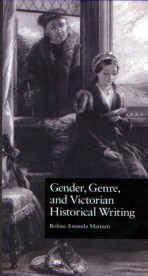 I mentioned in my last post that I had recently read a new academic book that I ultimately decided not to review, partly because I didn’t want to scapegoat the author for my alienation from the genre it belongs to. I’m still not going to name it (and that’s my own book pictured at left, just so there’s no confusion), not just because I’ve made that ungenerous mistake before but because I have had the same question about a lot of academic books lately. This is just the most recent one to leave me wondering: what is this book worth?
 If there were such an expectation and people routinely met it or else paid a professional price,
  It has been a while since I’ve posted, and also a while since I posted a reading roundup! The two things are related: because I haven’t been posting often, it might seem as if I haven’t been reading much, but I have — it’s just that much of my recent reading has been for reviews, which means it feels redundant to post about it, or else it has been light reading I don’t have much to say about. Or, in a couple of cases, it has been books that deserve more to say than I’ve got in me, or that I hoped to have a lot to say about but that came up short. These are the rare converging conditions that are just right for a roundup post!
 My light reading has included some good contemporary romances: Ruthie Knox’s Truly, which I really enjoyed, and two of Molly O’Keefe’s ‘Boys of Bishop’ novels — Between the Sheets and Never Been Kissed. O’Keefe’s are just a tiny bit too angst-ridden to become real favorites of mine: I like my romance with a bit more comedy and a lot less suffering. But both of these authors write well and create convincing characters, and Truly had some really excellent “neepery” about urban bee-keeping. I’ve started several historical romances but tired of them all before the half-way point — including Julia Quinn’s Because of Miss Bridgerton and a forthcoming Mary Balogh, Someone to Love. Not too long ago I read Sarah MacLean’s The Rogue Not Taken, and I did really like that; I think it’s just that for me right now, I’ve had enough of that particular flavor and none of the ones I tried seemed novel enough. I also just finished Sue Grafton’s X, which some of you may have seen me griping about on Twitter. When I say “finished” I mean that once I realized it wasn’t going to pick up, I skipped along hastily until I finally reached its big climactic scene, about 5 pages before the last of its nearly 500. Grafton assembles her pieces competently, and Kinsey’s still a pretty good character, but that book was way too long to be so completely lacking in interest or suspense.
 A book that deserves better than I can give it is
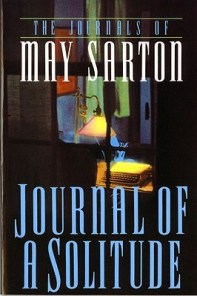 Of course, I’m not sure I would like that much solitude in practice (any more than Sarton’s friend
 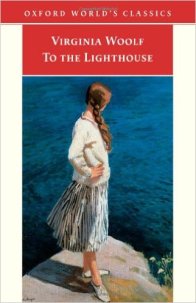 I’m reading To the Lighthouse for the first time. I know, I know. I also know that I should love it, because it is beautiful and moving and brilliant and original — and I sort of do, so far, except when I don’t. I am not a particularly good reader of Woolf’s fiction: it was only a few years ago that I finally read
  “Time passes.” It’s such a neutral-sounding phrase, almost like a stage direction, one that requires all the director’s ingenuity to show us its truth without taking us through the whole chronology. It’s an obvious truth, one we’re all perfectly well aware of, but we feel it deeply only during what George Eliot calls “one of those rare moments of experience when we feel the truth of a commonplace,”
 You see, I’ve been working on these off and on since 1993. I was newly married then and still not quite accustomed to the amount of golf my husband likes to watch on TV every weekend. Since it was hard to get away from the TV in our small apartment, and it didn’t seem very friendly (or very practical) to absent myself from home altogether, I decided to take up some hobbies that would keep my hands busy and give me a sense of accomplishment while I watched golf with him. A long-time reader of Tudor fiction, I was also working on a dissertation about Victorian historical writing, including Agnes Strickland’s Lives of the Queens of England— one way or another, Henry VIII and his wives had been in my life a long time. My thesis also included a chapter on the symbolic significance of needlework in Victorian historiography! So I was pretty excited when I chanced on a pattern in New Stitches magazine for Katherine Howard (wife #5, beheaded, in case you can’t keep them all straight). and even more excited when I realized it was part of a series and I could order the back issues, which I did. Over the next few years I completed four of the queens (Katherine Howard, Anne of Cleves, Katherine of Aragon, and Anne Boleyn). Just two wives were left, plus Henry himself.
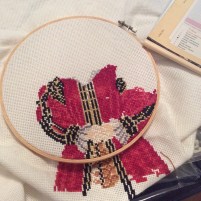 What inspired me to take her out? Mostly that I’ve been experimenting with


 It’s an aesthetic effect that, when it works, perfectly suits the kind of man Spenser is: a man whose actions, as he says to Susan in Promised Land, speak for themselves. This doesn’t mean he isn’t introspective or capable of nuanced insight. He’d just rather act on what he discerns than spell it out. It’s primarily Susan who encourages him to articulate his life, which I’ve always thought was her primary role in the series — that and providing psychological and emotional support to people caught up in Spenser’s cases who aren’t well served, or sufficiently served, by his decisive but often unconsoling minimalism.
 The case Spenser is involved with here involves a woman, Pamela Sheppard, who leaves her husband for no stronger reason than general dissatisfaction with her marriage. (There turns out to be more awry with her husband than that he doesn’t really see her for who she is, but that’s where she starts.) She ends up falling in with a group of women keen to start a revolution against the patriarchy, and as a result she ends up an unwilling participant in a bank robbery that goes horribly wrong. Spenser is entirely unmoved by her distress:
 And it is fascinating to watch Sayers build layers into their relationship in order to move it out of the awkward spot she’d started it in in Strong Poison. By the end of the novel they are speaking quite differently to each other than they were at the beginning. All of that is great (and so much more interesting, to me at least, than the timetables and tides and encrypted letters on which the actual murder mystery turns). It’s not just Harriet with Peter that’s such a happy feature of the novel, though. Peter shows up in the book, but from the very beginning it is Harriet’s story overall. So we’re always approaching both the case and the relationship from her perspective, with a focus on what events mean to her. The novel even opens with one of the great literary declarations of female independence:

 That’s not right, though. The excuse (as if any is needed) for all of this stuff about whales is the writing. The fortifications of Quebec! Old Roman walls! The alliteration in “a dense webbed bed of welded sinews”! In
  Novel Readings