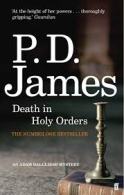
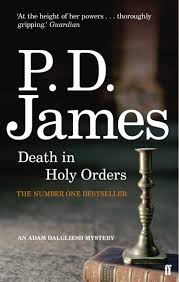
 That’s not actually the title of any of P. D. James’s novels, of course: it’s the basic plot of Death in Holy Orders, which I just finished rereading for the first time in a decade or more. Coincidentally, when I picked it more or less randomly out to revisit, I had also just reread Trollope’s The Warden, and so I had rigidly self-righteous Archdeacons on the brain even before James’s Archdeacon Crampton met his bloody end–then James herself made the Trollope connection explicit by having one of her characters read aloud from Barchester Towers with the deliberate intent of “discomforting the Archdeacon.”
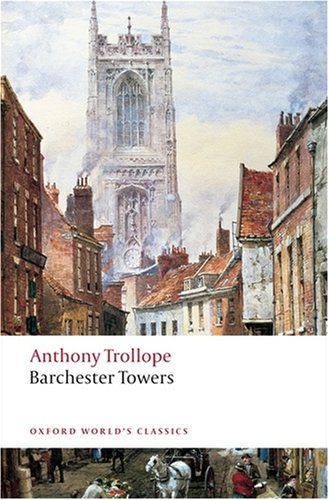
The passage he reads is from the novel’s first chapter, in which the gentle and unworldly Bishop (known to us from The Warden as Mr. Harding’s great friend) is on his deathbed. “Nothing could be easier,” Trollope’s narrator assures us, “than the old man’s passage from this world to the next.” Things are more complicated, however, for his ambitious son, Archdeacon Grantly:
By no means easy were the emotions of him who sat there watching. He knew it must be now or never. He was already over fifty, and there was little chance that his friends who were now leaving office would soon return to it. No probable British prime minister but he who was now in, he who was so soon to be out, would think of making a bishop of Dr. Grantly. Thus he thought long and sadly, in deep silence, and then gazed at that still living face, and then at last dared to ask himself whether he really longed for his father’s death.
The effort was a salutary one, and the question was answered in a moment. The proud, wishful, worldly man sank on his knees by the bedside and, taking the bishop’s hand within his own, prayed eagerly that his sins might be forgiven him.
 It is, as the provocateur who reads it aloud remarks, “one of the most impressive chapters Trollope ever wrote,” full of pathos, moral tension, and psychological insight. Our disgust at the Archdeacon’s selfishness is quickly countered by his own rueful self-knowledge and sincere penitence–and by Trollope’s explicit rebuttal of those who think he was “wicked to grieve for the loss of episcopal power, wicked to have coveted it, nay, wicked even to have thought about it, in the way and at the moments he had done so.” Ambition is natural in any profession, Trollope notes, and we “can hardly hope to raise the character of the pastor by denying to him the right to entertain the aspirations of a man.”
He rose with even greater vehemence to Archdeacon Grantly’s defense at the end of The Warden, a defense not against imagined external critics but against his own authorial choices:
We fear that he is represented in these pages as being worse than he is; but we have had to do with his foibles, and not with his virtues. We have seen only the weak side of the man, and have lacked the opportunity of bringing him forward on his strong ground. . . . On the whole, the Archdeacon of Barchester is a man doing more good than harm,—a man to be furthered and supported, though perhaps also to be controlled; and it is matter of regret to us that the course of our narrative has required that we should see more of his weakness than his strength.
Trollope typically resists absolutes of either virtue or vice–and that is one reason murder of the particularly calculated and brutal kind that takes place in Death in Holy Orders is so unimaginable in his world. Its cruelty and its finality obliterate ethical ambiguity; such an act disallows the nuance that is Trollope’s moral stock-in-trade.
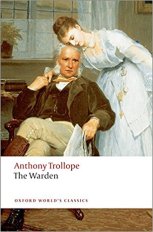 That said, James and Trollope do have a lot in common. James herself points to Austen, Eliot, and Trollope, rather than the Gothic or sensation novelists, as her chief fictional influences, and you see it in her patient, probing characterization as well as her meticulous attention to setting. Reading Death in Holy Orders so soon after The Warden I was struck by their shared interest in the Anglican Church as an institution defined both by its corporate identity and by the characters of the individual men who embody it, with their ideals and their faith but also their ambition, greed, and vanity. Both novels also depict the Church as an institution in which continuity and tradition are under constant pressure from changes without and within, and in which the laudable aim of preserving what is good can too easily be twisted into a justification for tolerating what is bad.
In both books, too, it is the self-righteous Archdeacon who epitomizes many of the worst tendencies of the priesthood they belong to, including self-righteousness, arrogance, and a preoccupation with worldly practicalities. While Trollope, as shown, wraps Archdeacon Grantly in the protective padding of his own humane understanding, James and her characters show no such forgiveness towards Archdeacon Crampton, who is universally hated. This is a formal necessity in a murder mystery, to be sure: more than one person must have a sufficient motive to be a plausible suspect, or where’s the puzzle? But it’s the specifics that are thematically revealing–and that turn out, in James’s case, to be a bit disturbing.
If Crampton, like Dr. Grantly, were “a fitting impersonation of the church militant here on earth,” a rigid defender of the status quo, the dislike both Archdeacons provoke could be neatly interpreted (as I think it can be, in Trollope’s case) as a call for the Church to reform, to live up to its professed spiritual ideals rather than insisting indignantly on its worldly authority and privilege. Instead, however, it turns out that one of the main reasons Crampton is disliked is that he was overzealous (as the other characters see it) in prosecuting a priest, Father John, accused of sexually molesting young boys. “The offences had been more a question of inappropriate fondling and caresses than of serious sexual abuse,” reflects Father Martin, another of the priests at the Seminary where Father John now resides, and the punishment might have been light if Crampton hadn’t “busied himself in finding additional evidence,” as a result of which Father John ended up serving time in jail. Father Martin considers Crampton’s pursuit of Father John “inexplicable”: “there was something irrational about the whole business.”
Everyone at the Seminary is sympathetic towards Father John, who seems as kind and unworldly as Trollope’s aged Bishop. If their tolerance were shown as priests closing ranks to protect one of their own, or the Church more generally, from damaging exposure, that would be one thing: then, again, a critical inference could be drawn–especially if solving the murder required them eventually to confront and regret their defense of a convicted pedophile, however otherwise likable he might be. Alternatively, I suppose, Father John’s case could have been used as an explicit model of sin, penance, and forgiveness: he has done his time, and if he were remorseful it could be worth exploring how or whether he was entitled to regain his standing in the Church. Unfortunately, though, the novel overall offers nothing to counter Father Martin’s perspective that Father John has been hard done by: that he has been punished with undue severity for a little harmless “fondling” of choir boys. It’s not just his fellow priests but also Emma Lavenham, English professor and emergent love interest for Commander Dalgliesh, who treats him with indulgent kindness; Dalgliesh himself, James’s moral avatar, expresses more concern about Father John’s trial and imprisonment (“which must,” he reflects, “have been an appallingly traumatic experience”) than he does about the priest’s young victims, whose trauma goes unacknowledged by anyone. Apparently it’s not that the Church needs to be held accountable for enabling and sheltering Father John but that his accusers, the Archdeacon among them, by making much ado about almost nothing, should be ashamed for blighting a good man’s life.
Death in Holy Orders does not ultimately turn on Father John’s history with the Archdeacon; his backstory is not central to the murder investigation but simply adds another (supposedly) unpleasant dimension to what we know about the murder victim. I suppose that could be an argument for not paying too much attention to it, except that the more I think about it, the more creepy that makes its treatment. It’s hard not to conclude that James herself considers accusations of that sort incidental–a lot of unnecessary and damaging fuss in a world, and a Church, with bigger problems. Surely, though, her reforming Archdeacon deserved at least as vigorous a defense as Trollope’s: that James allows Crampton to die cruelly and unmourned puts James out of step with the literary lineage she claimed.
 I didn’t like it. In fact, I really didn’t like it. The comparison to Shirley Jackson on the cover tempted but misled me: there’s nothing sly or subtle in this novel, nothing to make you start and look again, or laugh then shudder and look away, the way you have to with We Have Always Lived in the Castle. The only reason I can think of that Eileen was nominated for prestigious prizes including the Booker is that in the rush to free women writers and female protagonists from the stifling obligation to be nice and likable some people have concluded that being mean and unlikable is an aesthetic virtue in and of itself. I have written about this trend a couple of times before: here, comparing Claire Messud’s The Woman Upstairs (which I disliked for some of the same reasons I disliked Eileen) to Barbara Pym’s (much better) Excellent Women, and here, attempting to parse the Ferrante phenomenon. I don’t object in principle to novels preoccupied with anger, vomit, and excrement, and I don’t demand carthasis or epiphany as my reward for being vicariously immersed in them, but I would like some sense that they mean something, or that the novel somehow takes us beyond them. Eileen (like Eileen) is just nasty for nastiness’s sake. Who needs that? Not me.





 I should say, as a disclaimer, that I am not at all an expert on Sophocles’ Antigone: though I have known the play’s basic story for many years and seen one production of it, my sense of what it’s fundamentally about depends almost entirely on Eliot’s commentary on it, which I have thought about often as an interpretive key to her fiction, especially The Mill on the Floss. So it is entirely possible that Shamsie has captured nuances of its characters’ principles and actions that make her retelling accurate in ways I can’t see–or, alternatively, that she has up-ended key elements of it for her own purposes in ways that, again, I can’t grasp the significance of. That said, I think it’s fair to expect the novel itself to convince me of the urgency of its central conflict, and it just didn’t. Most importantly, there’s nothing in Aneeka’s relationship with her brother before his recruitment as a terrorist that made her final vigil by his body seem like an inevitable and principled result: her love for her twin was never depicted in a way that gave it tragic potential. Further, her relationship with Eamonn was deceitful and manipulative from the start, and the novel did not convince me that she had come to love him sincerely enough to justify either his sacrifice or her final gesture. As a result, the novel’s final image, though poetic, range false to me.
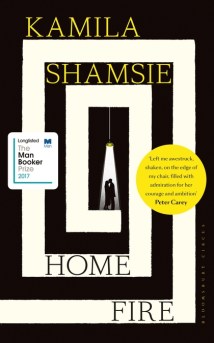 Home Fire is a good contemporary novel and its central theme of conflicting loyalties, especially tensions between personal feelings and legal, political, and moral obligations is interesting and obviously topical. I didn’t find Shamsie’s prose particularly artful: on the back cover Aminatta Forna is quoted as calling it “simple” and “lucid” but I would describe it as flat and sometimes awkward, if also sometimes rising to eloquence. I have
  As a member of Jo VanEvery’s
  For me personally, the “retreat” (how I hate that term, which falsely suggests there’s something soothing about being closeted for hours with my colleagues and having to talk about fraught topics about which in some cases we profoundly disagree) was extremely stressful and undid some of the progress I’d made,
  Anyway, Jo recommends taking stock of what we did accomplish in May, and dealing with meetings and administrative tasks was a big part of that. I also completed the final draft of a report: I was part of the Faculty of Graduate Studies’ internal review committee for the
  One of the things I’d intended to do in May is work out a definite plan for some larger writing projects to focus on over the summer. For some reason I have found this very difficult to do: I have sketched out and even done scraps of writing for a lot of possibilities but I have struggled to commit to any one of them. I have continued to explore places to pitch pieces that aren’t book reviews, and I have some ideas I like, as well as a firm commitment to doing a piece for The Reader, a publication I have long admired for its combination of sophistication and accessibility. I really want to get back to writing about George Eliot; I think what I may need is to stop focusing on venues for a while and just write, the way I could when I always had the option of running something in Open Letters Monthly. Trying to think of the pitch first becomes an exercise in self-defeating second-guessing. Getting going on this–whatever it turns out to be–is a top priority for me this month.
 These are all work things, and of course that’s never everything that’s going on. Maddie had her wisdom teeth out on May 18th, for example, and that meant a week or so of disruption (and a lot of smoothies) while she recovered, but she is basically better now.
 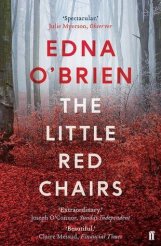 Last but not least, Edna O’Brien’s
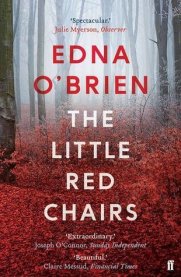
 It’s not just Fidelma’s, though, and here again O’Brien’s narrative choices are interesting. Though there is some shifting around of perspective in the first section, the movement of the novel is fairly linear until Dr. Vlad’s identity is revealed and he is arrested. One of the consequences of his discovery is an attack on Fidelma so horrific that it was difficult for me to read to the end of the few pages it takes up. It is not the first scene of appalling violence in the novel, but it is by far the most immediate and personal. It changes everything–not just Fidelma, now herself a kind of casualty of war, but the novel. From this point on it follows Fidelma’s attempt to make a new life for herself away from Cloonoila, but rather than focusing on her singular experience it folds in other stories of victims and refugees from violence.


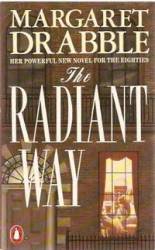 Jane Austen recommended three or four families in the Country Village as the thing to work on when planning a novel. . . . A few families in a Country Village. A few families in a small, densely populated, parochial, insecure country. Mothers, fathers, aunts, stepchildren, cousins. Where does the story begin and where does it end?
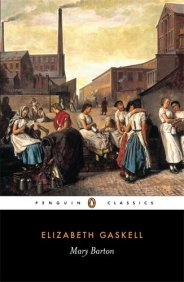 As this passage illustrates, The Radiant Way is about the condition of England in the 1980s, and its treatment of that era matches, rather than counters, what it suggests is the spirit of the age: it is (mostly) satirical, snide, cynical, bitter. I wonder if that is why it seemed to me so much more dated than, say, Mary Barton, with its heartfelt appeals to our common experiences and better natures. There is something naive, of course, about Gaskell’s novel, and many of her attitudes are outdated. Maybe I just prefer her kindness and optimism to Drabble’s somewhat ruthless explication of people’s weaknesses and compromises. The extent to which her analysis is still painfully current, too, shows that if anything she was prescient about the corrosion of the welfare state, the devaluation of art and education, and the instability of love as a foundation for happiness. Maybe I just wish it were dated.
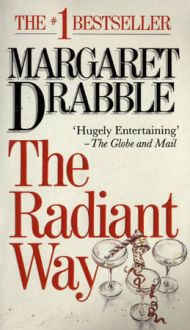 I read The Radiant Way for my book club (it’s our follow-up to
  I’ve been in a bit of a reading slump lately, which has been reflected in the slow pace of my blogging. I’m not sure exactly what is behind it this time, but I think it happens to all of us occasionally, and it always passes eventually. Still, it’s a disheartening phase when it comes, to be picking up books and putting them down again without much caring!
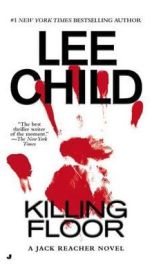 I also started Lee Child’s Killing Floor, the first of his hugely popular Jack Reacher thrillers. I admit it had never occurred to me to try this series until Stig Abell, the editor of the TLS, sang its praises. I had no particular assumptions about Lee Child, good or bad, it’s just that the books had never stood out to me until Abell said how much he’d enjoyed reading through them all last year–so I picked up a couple at a book sale. I got about half way through Killing Floor before I lost interest. I don’t think there’s anything really wrong with this book any more than there is anything wrong with The Mirror Thief: in fact, I thought Killing Floor seemed quite good of its kind. But for whatever reason I just wasn’t gripped–I wasn’t even slightly curious about how the knotty plot was going to turn out, and so I eventually stopped picking it up again after I put it down. When I started it, it reminded me of Robert B. Parker’s Spenser mysteries, which I love. It is much wordier, and it may be that I wouldn’t enjoy Parker’s books if it took a lot longer for things to happen in them–or if Parker spent as much more time on the really grim bits as Child does here. I also didn’t bond with Reacher. I was intrigued by Child’s introduction, in which he outlines his own motivations for the style of the series as a whole and for Reacher’s character in particular. Reacher is deliberately both arrogant and hard to like, which are not qualities I’m against in principle, in a main character–but again, I don’t imagine I would like Parker’s books if I didn’t find Spenser’s combination of strength and honor so appealing. Maybe I’ll appreciate Reacher more as a character if/when I get to know him better. For now, though, I’ve put him on hold.
 It’s not as if I haven’t read any books all the way through since classes ended. One thing that works is coercion! I’ve read two books for reviews, one an interesting study of Agatha Christie, the other a new novel by Canadian writer Merilyn Simonds. (My review of the former has been filed; my review of the latter is underway.) I’m also making good progress on Margaret Drabble’s The Radiant Way, which I need to finish for next weekend’s meeting of my book club. Deadlines are useful things. In the interstices of my days I’ve also reread all three of
  Classes have been over for a while now, but the business of the teaching term isn’t quite over. I mentioned before that one unfortunate feature of marking season is academic integrity hearings: I had more this year than I’ve ever had before, which has taken up a lot of my time and also given me a lot to think about. Individual cases are confidential, of course, but at some point I plan to write a separate post about some trends I’ve noticed around plagiarism and some ideas I have about how to address both its causes and its consequences. Some of what I’ve been dealing with and thinking about is addressed in
  Since classes ended, I’ve been thinking a lot about what seemed to work and what didn’t this term. It’s always hard to know what are actual lessons about pedagogy that you can carry forward and what are idiosyncratic reactions or developments based on the specific and unpredictable population of a particular class. For instance, I thought that overall Pulp Fiction went much better this year than last. What did I do differently? Not much logistically: I used the same readings and course structure, and more or less the same assignments. Class participation was way up, though, and most of the time the atmosphere felt happier: is that because (anxious to avoid whatever went wrong last year) I tried even harder than usual to be positive, friendly, and encouraging? Did we all benefit from my having broken in this material last year and so being more adept with it this time? Or did I just get lucky and have a larger proportion of reasonably talkative students who softened the atmosphere for others to join in and thus helped increase overall engagement?
 I have also concluded that Valdez Is Coming is not a good choice for my representative Western. When I read it on my own,
  As for Victorian Sensations, I thought it was quite a successful seminar. Participation levels were consistently high and (as important) were of high quality; as I told the class at the end of term, I genuinely looked forward to showing up and talking with them about our readings. The only novel I hadn’t taught before was Cometh Up As A Flower; we found it provocative and sometimes puzzling, and quite a few students chose to include it in their term paper, which is a sign that they were engaged with it. It might be fun to include it in one of my standard Victorian fiction class, where it would fit well with other novels in which passion and duty collide (The Mill on the Floss, for instance), or in which the ‘romance’ of marrying for money is overtly stripped away. One slight surprise for me was that discussion flagged a bit for Fingersmith. Everyone seemed to really enjoy reading it, but it was conspicuously harder to get them to talk about it. This might have been (a bit paradoxically) because they found it fun to read and so their critical faculties shut down in ways they really can’t with a novel like East Lynne (which is pretty hard work to slog through, honestly); it might also have been that we read Fingersmith last, and by the final weeks of term everyone’s tired and overwhelmed with work.
 Less of a surprise, but still a challenge, was how difficult it was to generate discussion on the classes I’d set aside for “critical approaches” to our novels. After the first of these sessions I realized that I needed to approach them differently, so I ran those classes more overtly than I usually do in a seminar class, adding some contextual information about the history of literary criticism and devising a set of “metacritical” discussion questions to supplement students’ questions on the specific readings. Even so, discussion was halting. I think the main reason was actually closely related to my goals for these readings. In my experience, when students read criticism they are often mining it for usable quotations, which they then drop into their own arguments as if the fact that somebody else said it proves their claim. I wanted to get them to engage with other scholars in a more equal and conversational way, learning how to see what kind of criticism they are reading (by considering its original date of publication, the venue it was published in, the kinds of questions it asks, and the kinds of evidence it considers) and then if they use it in their own work, signaling how and why in a different way. Just saying “As Critic Smartypants argues” instead of “Critic Smartypants argues” is an improvement: it implies “I’ve thought about this and agree,” not “Smartypants said it, so it’s true.”


 Novel Readings