
I recognise my own distrust of Icelandic tourism, of the collector’s desire to tick off geysers and volcanoes and midnight sun on some kind of Lonely Planet checklist, totting up experiences like any other commodity. There must be a better reason to travel, a better way of travelling, than the hoarding of sights your friends haven’t seen … I want to sense the long-dead outlaw’s dread of the dark, not to be told about it in an interpretation centre. I want, I suppose, an unmediated Iceland, even though I know there’s no such thing.
Sarah Moss writes wonderfully about her family’s stint in Reykjavik, the result of a longstanding fascination with “northerly islands” which, in combination with another longstanding desire, for her family to experience life “abroad,” led her to seize an opportunity to teach at Iceland’s National University.
Moss is wry and self-aware and sometimes funny about her difficulties adapting, both to Iceland’s culture and customs and to the more general condition of being an “outsider.” She frankly admits her own peevishness–with the food especially, but also with the traffic, the weather, the housing. Names for the Sea is not, this is to say, a romanticized travelogue or a promotional brochure, even tacitly. Indeed, far from making me dream of someday seeing Iceland for myself, Names for the Sea killed quite dead my faint previous interest in ever going there–even though as an ordinary tourist I could presumably avoid some of the particular challenges Moss and her family encounter with shopping, furnishing, driving, and just generally living.
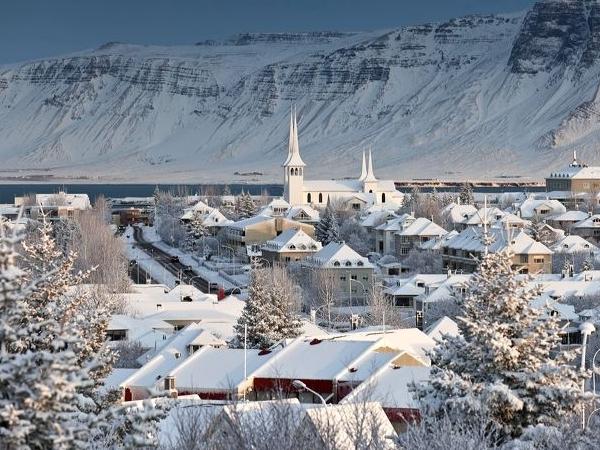 I had sometimes wondered about Iceland as a place to visit, mostly because I know a few people who are from there or have been there and have made it sound pretty cool, and also because Iceland has a reputation for bookishness (for instance, there’s its tradition of a “Christmas book flood” or Jolabokaflod–imagine having a whole word for that!). Unlike Moss, however, I am not instinctively drawn to northerly places. Halifax is quite far enough north for me! (And despite its climate Halifax is not even very far north — it is approximately as far south as Portland Oregon, which I actually find quite disorienting. That just goes to show you that where weather is concerned, latitude isn’t everything!) Moss does nothing to reassure me about how harsh and unforgiving Iceland’s climate is: how long, dark, and relentless its winter, and how fleeting its spring and summer. “By November,” she reports,
it’s been winter for a while. We recognise winter not just because the colours of land and sky and sea have changed, although the greens and blues have turned to shades of grey, but because there is less light, even in the middle of the day. The sun rises at a shallower angle every day, every day the zenith is a little lower, every day sunset is a little further south, as if the sun is running out of power. . . . There is snow, and then rain again, and then more snow. . . . I try to remember the midsummer light, and to know that as the days are shortening now they will lengthen after the solstice. Life will come as surely as death. It’s hard to believe, my Arctic theology.
Moss is also eloquent about the hazards of the road:
Icelandic driving is terrifying. Nobody indicates. Even bus drivers accelerate towards junctions and then jump on the brakes at the last minute, sending passengers and shopping crashing to the floor. People swerve across lanes to leave the freeway from the inside. Icelanders have one of the highest rates of mobile phone ownership and usage in the world, and they don’t stop when they’r driving. . . . In one month we have seen four major accidents, the kind that write off cars, trigger airbags and leave glass and blood, and in one case a baby’s car-seat, on the road.
Since driving is right up there with winter on my list of things I hate, and driving in winter is one of my biggest sources of anxiety here where most (!) people at least try to follow the rules of the road–well, let’s just say that wherever Reykjavik once was on my bucket list, it’s a lot further down now.
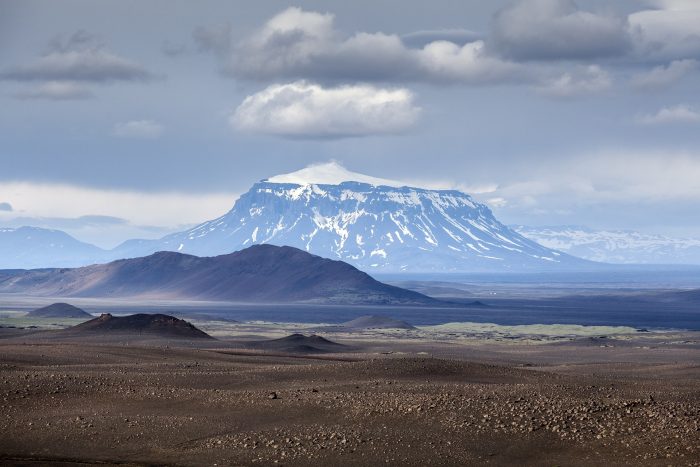 And yet. Though it sounds as if Iceland is not for me, Moss’s life in Iceland, while full of difficulties, is not, for her, altogether without its charms. She and her family are intrepid enough (or stubborn enough, or both) to explore the country’s alien landscape, including its active volcanoes–they are there during the disruptive eruption of Eyjafjallajökull in 2010. Moss herself is also determined to learn as much as she can about this strange place she has come to, so she goes out of her way to meet people with expertise in everything from Icelandic politics to local cuisine to elves–“I find the idea of talking to someone about elves embarrassing,” she admits, but nonetheless she braves the trip out of the city to do it, and the conversation is as odd and interesting and faintly disconcerting as you’d expect.

I particularly enjoyed her chapter on knitting, which apparently nearly everybody in Iceland does:
On buses, in restaurants, during meetings, in class. In the first week of term, several students came into the classroom, put down their cups of coffee, took off their coats, hats and scarves and pulled out laptops, power cables, poetry anthologies, knitting needles, and wool. I didn’t, I decided, mind. . . . I can crochet while watching a film. . . . Icelandic undergraduates, it turned out, can knit while drinking coffee, taking notes on their Apple Macs and making enlightening contributions to discussions of Lyrical Ballads. I watched the pieces grow from week to week, comforted, somehow, by the progress of socks and matinee jackets as we worked our way through from Gray’s ‘Elegy Written in a Country Churchyard’ towards The Prelude, as if the knitting were a manifestation of accumulating knowledge. Colleagues knit in meetings, which seems a far more constructive use of time than the doodles produced in the English equivalent. I wonder if anyone would say anything if I tried in committees at home, instead of drawing borders of trees and wonky geometrical patterns around the minutes.
(She should try it, if she hasn’t already! So far nobody has made any objection when I take my crochet out in our department meetings. My theory is that they realize it’s better for everyone there that I manage my stress.)
 I also enjoyed her account of her attempts to improve her Icelandic by watching Icelandic films and reading Icelandic fiction, both of which turn out to be good lessons, for a literature teacher, about how much tacit knowledge it really takes–how much cultural capital and “insider” experience–to make sense of what you’re reading and seeing. “Rain drips from everyone’s hair,” she says of the movies, those set in the Middle Ages blurring into the documentaries of early 20th-century life;
Children run in and out of turf houses through low doorways, like rabbits emerging from and disappearing into burrows, and every so often one of the men says something apparently proverbial, like ‘the dark horse runs longest’ or ‘the fog hides many secrets’ and hits another man on the head with an axe … It’s like listening to a tale told by a drunk; I am fascinated, mostly by the landscape, but have no idea what the narrative logic might be. The subtitles are little help because there seems to be no relationship between what people say (not much, mostly about farming) and what they do (mostly farming but sometimes murder).
She does not fare much better with novels. Detective fiction, she observes, is “obviously written with translation in mind,” so it is full of explanations that make comprehension easier for her. Literary fiction, on the other hand, “cause[s] me the same puzzlement as the films”:
I simply don’t understand why the characters do what they do, can’t see the connection between speech and action. In apparently gentle novels of bourgeois life, characters rape and kill with no warning, no reflection and little reaction from anyone else. I find the violent episodes entirely unpredictable, never know at the beginning of a paragraph if the person coming through the door is bringing coffee or a crowbar to the person sitting at the table.
Iceland is “distinctive for its low crime rate,” so she wonders why its fiction and film feature so much “bloodletting”–“Are Icelanders simmering with rage under their jumpers?”
 I admired Moss’s perseverance: there is something endearing, even, about her determination to understand, to make sense, not just of these opaque texts but of every aspect of Icelandic life. I’m not sure this is “a better way of travelling” (or of travel writing–the result was sometimes a bit more detail than I actually wanted about the country’s history, politics, or finances) but it is clearly her way: Moss is driven by intellect, or perhaps her need to ask and get answers about everything was a way of compensating for the difficulty she had simply being and feeling in a place where everything is so unfamiliar. I appreciated that she never glossed over those difficulties, and also that for all her inquisitive effort Iceland remained, in some ways, just out of reach for her: the book offers no magic moment of recognition, no epiphany.
Perhaps Iceland’s resistance to Moss’s quest for understanding explains why her fascination with the place endured in spite of everything, even bringing her family back to visit soon after they moved back to the UK, to move once more among “landscapes that simply don’t make sense, mountains that the mind can’t read.” The way Moss writes about that landscape is the only thing about Names from the Sea that nearly changes my mind about travelling to Iceland: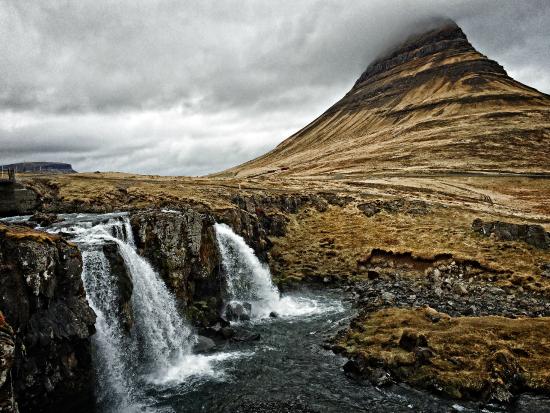
It’s like watching God in the act of creation, passing through fells of bare naked lava and rock, like seeing the world before it was finished. We’re on day four of Creation, moving back towards day three, a world made of sky, fire, earth and water with none of the complications that came later. The mountains are red, as if the cinders haven’t yet cooled, or the black of embers, carved by valleys where it seems that if you watched long enough, you’d see that the rock is still flowing. The elements are translated here: what is solid looks like liquid, rock like water, earth like fire.
I lack Moss’s hardiness and spirit of adventure, though, so what Names for the Sea ultimately convinced me to do was to order another of her novels. I have yet to read anything by her that I haven’t both enjoyed and admired.
 Here in Halifax we have been socked in with fog and cloud a lot lately, and the last two days in particular have been relentlessly overcast and muggy. The humidity alone is demoralizing, and the absence of sunlight just compounds the gloom. Happily we’re supposed to see at least some sun later today–but most of the rest of the week is forecast to be pretty grey. This kind of disappointing weather is typical of May and June here, but by July we’re usually enjoying a bit more brightness! As our long-awaited and always too-brief summer slips away, it’s hard not to feel a bit depressed, especially as constant construction noise in our usually tranquil neighborhood has made even the few really nice sunny days harder to enjoy. I have hardly spent any time reading on the deck, which is the one summer activity I really look forward to!
 My mopey mood has not been helped by the constant barrage of bad news, or by the ceaseless cascade of angry responses to one thing after another on social media. My twitter feed yesterday was heavily dominated, for example, by people being angry about a terrible “take” on libraries and an ill-conceived hit job on Wuthering Heights. I didn’t disagree with (most of) the complaints: I love libraries as much as the next person in my feed, and though Wuthering Heights is
 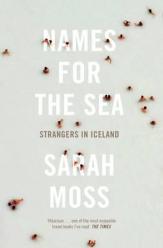 On the bright side, I just finished reading a pretty good book, Sarah Moss’s Names for the Sea, which I will write a bit more about here soon. I also really liked Kathy Page’s Dear Evelyn, which I just finished writing up for Quill & Quire, and now I’m focusing on a short essay on Carol Shields’ Unless, a novel that has come to be one of my very favorites. I also feel good about my piece on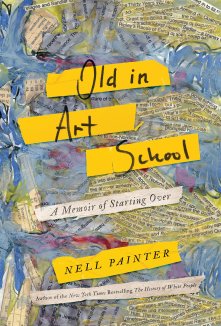
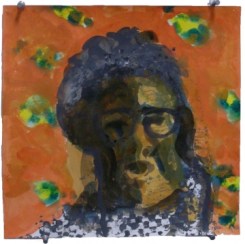



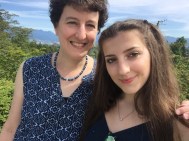 I’m just back from a great week visiting family and friends in Vancouver. It was mostly family this time, as Maddie came with me. She had not been to Vancouver since she was 7 and has not had very many opportunities to spend time with my parents or my brother and sister and their families–it seemed important to make them a priority, and I’m glad we did. The highest cost of my professional life has been the distance it put between me (and thus my children) and them.
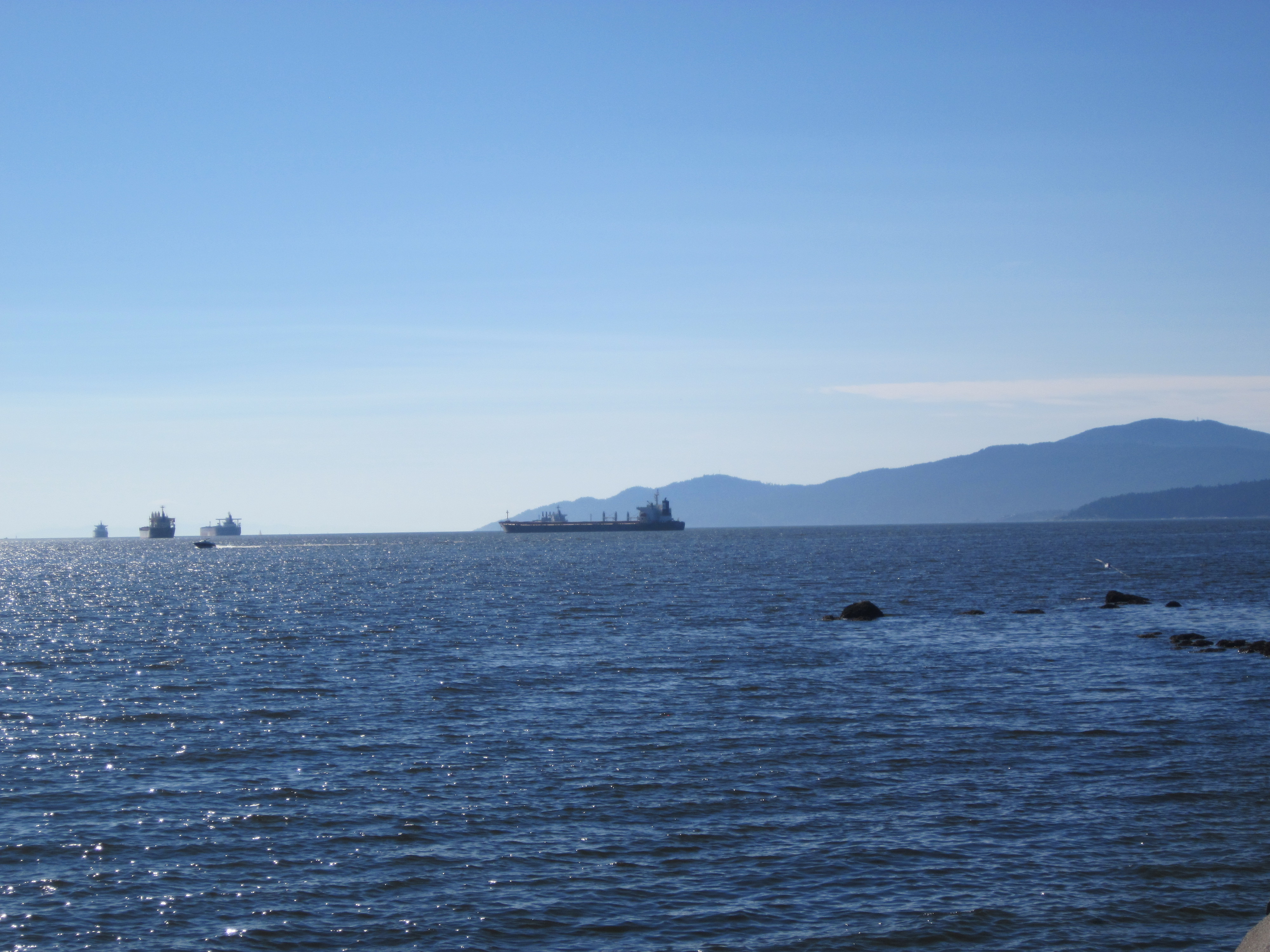
 For once I didn’t buy any books (Maddie and I frugally shared a suitcase, which meant there wasn’t room for much besides the essentials), but I did make off with two books from my mother’s collection: Jenny Erpenbeck’s Go, Went, Gone and Margaret Drabble’s The Pattern in the Carpet. I didn’t steal them! My mother is trying to clear some space on her shelves, so really I was helping. My airplane reading was Nell Painter’s awkward but engaging memoir Old in Art School, which I have now finished and will write more about here soon–once my jet lag subsides and I can concentrate properly. In the meantime, here are a couple of pictures from the trip. Vancouver is such a breathtakingly beautiful place! The last photo is of my parents’ garden, a verdant oasis that always reminds me of



 Against these rare soaring moments, and in contrast also to the tension and pathos of Adam’s anxiety for Miriam, Moss sets Adam’s wry commentary on being a stay-at-home dad and some terrific low-key satire of academic life. “Like all universities,” he says about the one where he teaches, “it is always building,” paving over the green spaces for car parks then digging up the car parks for new buildings so that “a swarm of angry drivers is permanently circling campus.” “I imagine there is some market research,” he goes on,
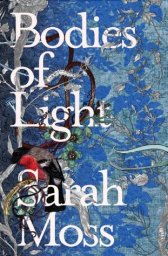
 I found The Tidal Zone gripping, moving, funny, and smart. It is written in a higher emotional register and with a faster pace than Moss’s Bodies of Light and Signs for Lost Children, which
  I don’t write up every TV show I watch, but I just finished a complete viewing of all 12 seasons of Bones and 12 seasons is a lot–so I thought it deserved a bit of comment. (Warning: spoilers ahead.)
 My biggest bone to pick with Bones is that the writers didn’t have the courage not to marry off Booth and Brennan. I understand that there’s a lot of cultural pressure to have a romantic relationship between your male and female lead and that this is something a lot of fans wanted. Watching the first few seasons in the wake of the #metoo and #timesup movements, though, I found it really refreshing to see a man and a woman in a working relationship who didn’t lust after each other. It felt really healthy, and I enjoyed the way Booth and Brennan pushed back against the constant assumption that because they trusted and fought for each other they must also be lovers. It’s true that marriage and children add elements to a series that are useful for both plot and character development–but I can easily imagine how much richer the arcs could have been if they had married other people, especially people outside law enforcement, and then dealt with the challenges of those people’s feelings towards their work and their partnership. I knew when I started the show that they did eventually marry, so I knew it was coming; still, I was disappointed. I got used to it, though, and I admit I thought their married relationship was pretty cute overall. I’m glad they never stopped bickering, at least.
 Probably my favorite thing about the show was the science. I read around a bit to see if it was any good, and I gather it’s at least not terrible, though of course it is all sped up and simplified. (I don’t know if any of the things Angela does are plausible: I found the “Angelatron” stuff the hardest to take seriously.) Regardless of the accuracy of it all, it’s always presented as if we should find it gripping, and I especially appreciated the unapologetic enthusiasm of Brennan and Hodgins for their work. (I loved Hodgins’s experiments.) Even Booth’s frequent impatience with the “squints” didn’t detract from the fact that in this show, nerds are not just cool–they are heroic! And with the exception of Avalon the psychic, the show had little truck with unscientific theories or methods. Booth’s “gut”–and his faith–are significant parts of his individual character, but solving the case always came down to the evidence.
 My drawing class met for the last time this week–it was just six sessions total. That’s obviously not enough time to get really good at anything (though I gather the “ten thousand hours of practice” theory has been more or less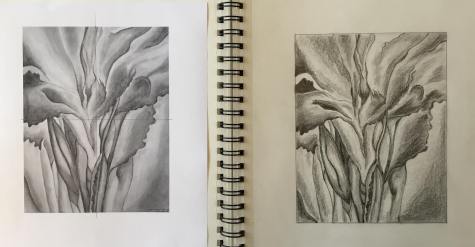


 I didn’t like it. In fact, I really didn’t like it. The comparison to Shirley Jackson on the cover tempted but misled me: there’s nothing sly or subtle in this novel, nothing to make you start and look again, or laugh then shudder and look away, the way you have to with We Have Always Lived in the Castle. The only reason I can think of that Eileen was nominated for prestigious prizes including the Booker is that in the rush to free women writers and female protagonists from the stifling obligation to be nice and likable some people have concluded that being mean and unlikable is an aesthetic virtue in and of itself. I have written about this trend a couple of times before:

 I should say, as a disclaimer, that I am not at all an expert on Sophocles’ Antigone: though I have known the play’s basic story for many years and seen one production of it, my sense of what it’s fundamentally about depends almost entirely on Eliot’s commentary on it, which I have thought about often as an interpretive key to her fiction, especially The Mill on the Floss. So it is entirely possible that Shamsie has captured nuances of its characters’ principles and actions that make her retelling accurate in ways I can’t see–or, alternatively, that she has up-ended key elements of it for her own purposes in ways that, again, I can’t grasp the significance of. That said, I think it’s fair to expect the novel itself to convince me of the urgency of its central conflict, and it just didn’t. Most importantly, there’s nothing in Aneeka’s relationship with her brother before his recruitment as a terrorist that made her final vigil by his body seem like an inevitable and principled result: her love for her twin was never depicted in a way that gave it tragic potential. Further, her relationship with Eamonn was deceitful and manipulative from the start, and the novel did not convince me that she had come to love him sincerely enough to justify either his sacrifice or her final gesture. As a result, the novel’s final image, though poetic, range false to me.
 Home Fire is a good contemporary novel and its central theme of conflicting loyalties, especially tensions between personal feelings and legal, political, and moral obligations is interesting and obviously topical. I didn’t find Shamsie’s prose particularly artful: on the back cover Aminatta Forna is quoted as calling it “simple” and “lucid” but I would describe it as flat and sometimes awkward, if also sometimes rising to eloquence. I have
  Novel Readings