The third course I plan to spend time rethinking during this sabbatical is British Literature After 1800, one of a suite of 2nd-year survey classes we originally established to orient students in the big picture (nationally and historically) as context and preparation for our more specialized upper-level courses. These curricular intentions are compromised (some might say, rendered inoperable) by the way our program actually works now: the surveys are no longer specific program requirements but are simply part of suites of classes from which students make their own selections. We do not have the option, either, to make specific surveys prerequisites for specific upper-level courses. I wish it were otherwise, and we did at one time have a more structured (and thus, IMHO, more coherent) curriculum. But here we are, and here these courses still are, and in Winter 2020, for the first time since 2010, I will be teaching this particular one again.
In 2010, not only was it clearer how this course fit into our overall offerings but it also was supposed to do specific kinds of work for our majors and honours students, focusing not just on literary content but also on research and writing skills at a a step up from what we typically cover in our first-year classes. Now that the surveys are no longer program requirements at all, much less part of a deliberate skills-based sequence, that is no longer (as far as I know!) a necessary part of them, any more than it is in any of our other 2000-level offerings. This alone would mean reconsidering the structure and assignments I set up for it when I offered it before, when students did (among other things) an elaborate annotated bibliography. Even if the place of the course in our program had not changed, however, I would want to rethink the reading list.
When I drew up the syllabus in 2010, I followed a very conventional — by which I mean, quite canonical — model. This was not (or not just) a failure of imagination on my part: given the very wide range of our other course offerings, it seemed like a priority to address the “standard” classics that (in my experience) students have often had surprisingly little chance to read at the outset of an English major, ones that are often touchstones or pushing-off points for later authors or movements or specific texts. While in some ways this might seem like a conservative approach, in other ways I consider it essential for understanding our field: it is hard, for instance, to discuss the significance of challenges to the canon, or exclusions from the canon, or problems with the whole notion of canonicity to begin with, without some sense of the traditional canon as a starting point. Or so I thought, anyway: this course, as I conceived of it, set out a preliminary version of literary history that would be complicated (as I repeatedly discussed in class) by other approaches and other courses.
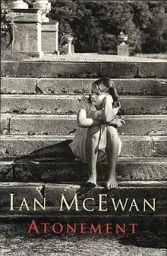
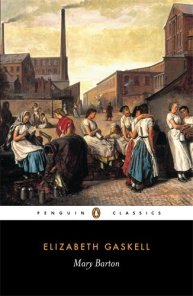
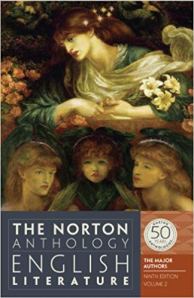 So I assigned the “major authors” edition of the Norton Anthology and we read Wordsworth and Coleridge, Keats and Shelley, Tennyson and Browning and Hopkins, Wilde and Joyce and Woolf, Yeats and T. S. Eliot and Auden, Heaney and Rushdie. A bit less predictably, we also read Elizabeth Barrett Browning and Christina Rossetti, and Katherine Mansfield, and while the first time around I assigned Great Expectations as our representative Victorian novel, the second time we read Mary Barton. Both times, our 20th-century novel was Ian McEwan’s Atonement, which worked really well because it directly–metafictionally and thematically–addresses changing ideas about fiction from Modernism to modernity. The course was a lot of work for me, both because I had to teach a lot of material outside my usual area and because of the challenge of conceptualizing it so that there was some coherence–some patterns and themes to follow across the term–while still doing my best to keep the whole problem of canonicity in view. As part of this effort, I set up one of the most elaborate course requirements I’ve ever done: a collaborative wiki-building project for which the students (working in teams) built study guides for the course based on the lectures and readings as well as their own research and also incorporated some information about readings not included in our syllabus.
 Looking over my notes, I actually think it was quite a good course of its kind. (You can read some blow-by-blow accounts of it while it was in progress if you’re interested; just scroll down this page until you get to 2010!) Now that this course is not specifically meant as a prelude to other courses, however, I am rethinking the kind of course it should be on its own terms. I would still like to provide something of a canonical overview–because, again, I think some sense of what that looks like is really helpful for other critical, even subversive, conversations–but I would also like to build more of the critiques and revisions and alternatives into the course itself, rather than assuming they will come up later. This assumption just doesn’t seem reasonable any more given the extreme flexibility of our current program (which is a response to scarce resources more than a principled shift away from requirements or sequences), and I also think we will have more interesting conversations in the moment if I shape the reading list to include more contestation and urgency.
How to do that, though, without losing the basic chronological survey structure that distinguishes this course from ones organized by genre, theme, or just narrower parameters? I have been thinking about organizing the readings into clusters, such as gender or nation and identity, but I don’t like to abstract topics or themes as if it doesn’t matter when they took on a particular literary form or voice or what IRL they might have been responding to. In every course I teach, in fact, including introductory classes, the mystery class, and the 19th-century novel classes, I tend to teach things in chronological order because it makes the most sense to me pedagogically: it allows us to work through any relevant historical contexts in order, and to talk about ways writers respond to each other. That doesn’t mean it’s impossible to compare earlier and later treatments of related ideas or forms; it just means that this possibility gets more robust as the course progresses. (This is one reason I often focus the first assignment(s) on a single text and then make later assignments comparative.)
One thing I could do, as a compromise, is choose all of the texts for the course with an overarching theme in mind. This is probably quite feasible, especially if that theme is itself somewhat flexible. In fact, having some reason to choose one thing over another is going to be essential, as canon (re)formation in the past couple of decades has been almost entirely additive: anthologies have only gotten bigger, and some of them, vast already in print, also have associated websites with still more potential material! The thing about letting go of the “old standards” approach is that it leaves you quite overwhelmed with possibilities. Thinking in terms of “how to have the best conversation about X” rather than about coverage (which was impossible, of course, even in the old model) will be not just helpful but essential. I just (just!) need to settle, in that case, on which conversation(s) I want the course to highlight and then figure out how best to include a variety of voices–which is something that I should have done better at in the previous versions.
 I actually already have one specific idea, which is to substitute Andrea Levy’s Small Island for Atonement. It too is a book that crosses literary generations and that tells a story about telling stories, but it starts from a very different place and has very different concerns. I think it’s a very readable book, less subtle, perhaps, than Atonement but also less insular. Atonement is very much a novel about novels, which is one reason I admire it and enjoyed teaching it; this time around, though, for this course, I think I want less literary self-consciousness and more social and political engagement in the reading list. That might make Mary Barton still a good option, but I’m also wondering about Kipling’s Kim, which is one of the 19th-century novels I’ll be getting to know this term–because like Small Island, it’s (as I understand it, anyway) about how we think about who we are in relation to where we come from and where we live. Is that the overarching theme I want to go with? I don’t know yet, but at least it’s a place to start thinking about how to conceptualize this survey course in a new (for me) and possibly more relevant way.
I’d be very interested in knowing how other people approach survey courses of this kind. I have always thought that they are, or should be, the backbone of a good English curriculum. Obviously that view no longer prevails, in practice, in my own department, where we once had a mandatory survey (“Literary Landmarks”) for all majors and honours students. I am sensitive to the objection that we don’t want to perpetuate narrow ideas about the canon or literary history. Within the scope of any such course, though, these issues can always be confronted directly–as I know they were by my colleagues who taught “Literary Landmarks” back in the day. If you have taught — or taken — a survey course, what principles organized it? How did you approach the impossible task of coverage and the essential task of subverting your own generalizations as you went along? What readings worked really well? And, not incidentally, if you assigned an anthology, which one? (At the moment, I am inclined towards making up a custom anthology using Broadview’s excellent tool for this.)
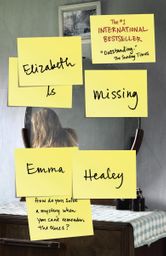 Elizabeth Is Missing gripped me from the first page. It is a poignant, sometimes funny, and often painfully suspenseful novel, not so much because of the mysteries it is structured around–the present puzzle about Maud’s missing friend Elizabeth and the question of what happened to Maud’s sister Sukey in the past–but because I was so anxious on Maud’s behalf. Maud is in her eighties and is just tipping over into senility, or perhaps dementia. Although her recollections of her childhood are vivid and detailed, she is losing her grip on her current everyday reality; everything from going to the store to making toast has become nearly impossible for her, but Maud doesn’t quite know that. So we follow along helplessly as she repeatedly wanders into trouble of one kind or another, in spite of the helpful notes she relies on as prompts and warnings (Coffee helps memory, Don’t cook anything, Haven’t heard from Elizabeth).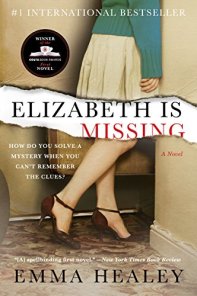

 Edith’s real life gets more and more disappointing, but the life she “records” in her diary is quite different: there, Cliffie gets accepted to Princeton instead of cheating on his admissions tests; he marries, has children, travels, and excels professionally, instead of hanging around home moping, drinking, harassing Uncle George, and getting in trouble. “Splendid day,” Edith writes; “Long letter from Cliffie. . . . D. [Cliffie’s imaginary wife] phoned. She considers going out to join C. when the baby is a few months older. I really think she should.” It is sad as well as deranged: Edith’s reality is not great, after all, and the novel’s one strength is how subtly Highsmith has Edith’s grasp on it deteriorate (at one point she almost says something to the real Cliffie about the family she has concocted for him). Here too there is some suspense: as Edith’s friends and family start to worry about her, trying to get her to acknowledge that all is not well, it seems all too possible that the fissure between truth and lies will lead to some dramatic crisis.
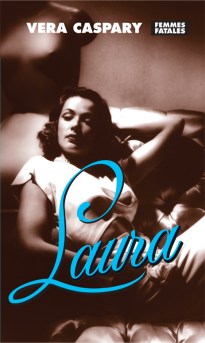 Seating himself in the long chair, his thin hands gripping the arms, he seemed to relax watchfulness. Tired, I thought, and noticed the hint of purple in the shadows of the deep-set eyes, the tension of flesh across narrow cheekbones. Then, quickly, hailing into my mind the scarlet caution signal, I banished quick and foolish tenderness. Dolls and dames, I said to myself; we’re all dolls and dames to him.
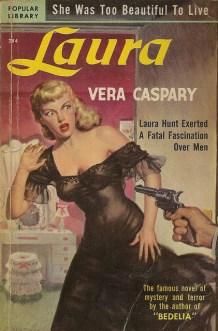 Laura would pose some pedagogical problems of its own, not because it’s creepy (though it is deliciously twisty) but because its first narrator, Waldo Lydecker, is completely insufferable. I actually didn’t know when I began the novel that it would have multiple narrators and I wasn’t sure I was up for 200 pages of his self-conscious pomposity. “I am given,” he tells us,
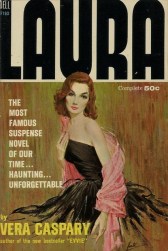 In addition to the clever plot and the pleasures of the multiple narrators, Laura seems to me particularly interesting for (no surprise!) Laura herself, and for the way the other characters attempt to fix her identity in a way that accords with their assumptions about women. Hard-boiled or noir fiction famously tends to limit women to specific roles: victim, dame, femme fatale. Caspary and Laura are both aware of the way women get cast into roles that restrict their individuality and define them in relation to men; Laura’s resistance to this is one of the factors that puts her life in danger. “You are not dead,” another character says to her at one point; “you are a violent, living, bloodthirsty woman.” How much of that sentence is true? It depends, quite literally, on whose story you accept.
 “I know he has a bad nature,” said Catherine; “he’s your son. But I’m glad I’ve a better, to forgive it; and I know he loves me and for that reason I love him. Mr. Heathcliff, you have nobody to love you; and, however miserable you make us, we shall still have the revenge of thinking that your cruelty rises from your greater misery! You are miserable, aren’t you? Lonely, like the devil, and envious like him? Nobody loves you–nobody will cry for you, when you die! I wouldn’t be you!”
 Another is that while Emily Brontë may have had no “interest in shaping her story morally,” Wuthering Heights is a very complexly structured novel, with its multiple nested and embedded narratives. The many hours I’ve spent on other novels with multiple or unreliable narrators, such as The Moonstone or The Tenant of Wildfell Hall, have shown me what fun the interpretive work can be as you sort through who is saying what in particular, to whom and why and with what consequences for our reading of their words. I hadn’t paid that much attention to this aspect of Wuthering Heights before, though I knew it was the subject of a lot of the critical discussion. This time I was more attuned to it and felt some genuine enthusiasm at the prospect of working on it with my students, even if most of the voices we’ll be attending to are as unpleasant as young Catherine’s spiteful words to Heathcliff in my epigraph to this post.
 The one reason I’m still hesitating: Perhaps wrongly, I’ve been assuming that the Brontë portion of my reading list is a zero sum game, that if I assign Wuthering Heights I can’t also assign Jane Eyre or The Tenant of Wildfell Hall, and that makes me sad, because those are known pleasures. But the only person making up this rule is me, so maybe I can break it! Would it be so bad if two out of five novels were Brontë novels, especially given how different they are from each other? As I was finishing up Wuthering Heights I kept thinking how great it would be to read Tenant right after: then Heathcliff and Hindley and Hareton could face off against Huntingdon, Hattersley, and Hargrave. What if Wuthering Heights were crowding out Scott or Thackeray instead of Charlotte or Anne? Would that be so bad? (I mean, yes, it would, in a way, because I also love teaching Waverley and Vanity Fair, but you can’t do everything, at least not all at once.)
 There is a lot to admire about the novel. Its characters are effectively, if somewhat schematically, established; their salient traits and values are distinct and the turns their stories take as they play their parts in Gissing’s depressing story of jockeying and dreaming and ailing and failing are always consistent with the strengths and weaknesses we know them to have. The intersecting plots play out with what in a more stylish writer I might call elegance, and Reardon’s story in particular reaches heights–or is it depths?–of pathos that are very nearly tragic, though Gissing’s tonal register is too prosaic for that label to sit comfortably. The novel is also very good about the way personal feelings are inextricably entangled with people’s money (or the lack of it) and ambition (or the lack of it): its marriages (actual, imagined, sought, and abandoned) play out in nice counterpart to, and sometimes illustrations of, the novel’s literary commentary.
 This underwhelmed reaction is, of course, very likely due to some analytical near-sightedness of my own, or to New Grub Street just not being the kind of novel that I like best to look harder at, while my preference for The Odd Women may just be because I know it better and have spent more time thinking, writing, and teaching about its central themes. But overall what I felt by the end of New Grub Street was that for a novel so self-consciously about fiction, it is surprisingly, disappointingly, not particularly metafictional: I couldn’t see a way in which Gissing was offering up a novel that is itself (in structure, form, style, or theme) more than the sum of the literary parts it includes. That lack of transcendence may be the point: if it is a novel about anything, it is about literary failure, including both the kind that presents itself as success and the kind that might actually be success but doesn’t seem like it, and so if New Grub Street was a brilliant, stylish, provocative, or formally innovative novel, its whole premise might implode. I don’t really think, though, that something so artistically self-conscious and deliberate is going on: Gissing is just describing a close possible world to his own, showing it to us in all its meticulous, dreary, disheartening detail. Adam Roberts is absolutely right that New Grub Street “works superbly as a detailed evocation of a particular social and cultural milieu,” but once you’ve acknowledged that, then what? (Adam, characteristically, does much better addressing that question than I have here:
  The next step after drawing up my plans for refreshing my reading lists was to get my hands on the books I’m interested in. This is easier for some courses than others. For instance, I already own copies of several of the Victorian novels I want to reread, and because I’m a regular customer, both Oxford University Press and Broadview Press are always very helpful about providing exam copies. As a result, I now have a nice TBR shelf of
  A small handful of titles are more easily available, including Attica Locke’s The Cutting Season, so I started with that because it had sounded like a promising option. It’s a decent enough novel but it sparked no excitement in me: it is slow moving and detailed in a way that made it seem drawn out rather than rich or textured, and in terms of innovations in or provocations about the genre, it didn’t seem to me to offer much. Next up, because it too is available locally, will be Rachel Howzell Hall’s
  I didn’t write a separate post about this because it’s a smaller scale project, but I’m teaching Pulp Fiction again this fall and with regret, I think I’m going to give up on Valdez Is Coming. I thought it was eminently “teachable” (that indefinable quality!) but both times I taught it most of the students in the class did not seem to agree! I took True Grit out of the library this week to review it and was quickly reminded
  In
In  To date, the books I’ve chosen for this seminar have all been by women writers, about women detectives, and explicitly interested in gender and detection. They all, that is, bring a lot of self-consciousness to their engagement with detective fiction as a genre. Collectively, they also cover a good range of subgenres or types of detective fiction. While in these respects the list has reasonable breadth, however, in other respects it is quite narrow; the feminist tradition it covers is, to put it mildly, not very intersectional. I put in some time in the past trying to fix this problem; though I came up short, the good news is that I do, as a result, already have a preliminary list of names to start with, particularly of African American authors: among these are
  So far I have never assigned a Canadian writer in either of my detective fiction classes, primarily because I haven’t found one that takes the genre in what seems like a new direction or that really made me sit up and take notice. (Phonse Jessome’s
  One of the problems I ran into last time I went down this road was getting my hands on samples from the authors I was interested in. I probably just need to be more persistent and order a lot of titles through interlibrary loan. The other problem is that I’m not really a voracious or enthusiastic reader of mysteries (odd, I know, in the circumstances) so I tire easily of the necessary exploratory work and I can take a while to warm to books that are not immediately appealing to me (though I can eventually get there, as has happened with Walter Mosley’s Devil in a Blue Dress–still not a personal favorite, but one I have found very satisfying to teach). This is why I need help sifting through or coming up with good options so that I can make this reading list represent a wider range of voices. Ideas and recommendations would be very welcome.
 One of my plans for my upcoming sabbatical is to reconsider and possibly refresh my reading lists for courses I offer frequently. It may be that the reading and rereading I do confirms my usual selections, or that it gives me ideas for mixing things up a little, or that I get inspired to rethink my approach altogether–we’ll see! It isn’t that I’m dissatisfied or trying to fix anything in particular about these courses, which usually go very well. It’s just that book orders for the next year come due in the middle of term when I’m too busy to do this kind of exercise. I don’t want change for the sake of change, but I also don’t want to slide into complacency or let my classroom conversations stagnate.
 This context explains the choices I typically make for the 19th-Century Fiction Austen-Dickens-Hardy courses: in our curriculum, there are other courses that focus on particular kinds of fiction from the period, so I stay away from works in those categories (such as Frankenstein or Dracula, for example, or Alice in Wonderland) that I know students will read elsewhere and focus primarily on realist, domestic, historical, or social problem novels. I start with Austen, but I tilt English 3031 towards the Victorians, rather than the Romantics, because they have their own classes; similarly, I end English 3032 with Hardy and (with regret) leave Forster and his fellow Edwardians to the later courses.
 Besides books like Frankenstein that I know are covered frequently in other courses, probably the most obvious absence from this list is Wuthering Heights. I have read it more than once but never taught it, for the simple (if perhaps indefensible) reason that I like the Brontë novels I do teach much better and the maximum of five books per course that seems realistic to me is a zero-sum game. Also, my colleague Marjorie Stone, who loves Wuthering Heights, regularly offers an upper-level seminar on the Brontës. This winter is her last term in the department, however: her impending departure is another reason I am taking stock in this way. Wuthering Heights is (sigh) near the top of my “reread in 2019” list.
 So besides Wuthering Heights, what other alternatives
  There’s another dimension that I need to give further thought to, and that’s which less canonical writers or genres I should work into these plans. I’ve made it this far without reading any novels by Bulwer Lytton or Disraeli or Charlotte Yonge, any “silver fork” novels or Newgate novels or, besides The Odd Woman, any ‘New Woman’ novels. I haven’t read Ouida or Marie Corelli or Amy Levy, or H. G. Wells or* …. but then, the list of books I have read is always (and always going to be) much shorter than the list of books I could have read. The challenge is always deciding which of those are books I really should have read. In the end it’s about defining purposes and drawing lines, which are always exercises in artificial precision. For my current fairly narrow purpose–refreshing the reading list for two undergraduate courses already defined by what they are not–the authors I’ve already identified as priorities are probably more than enough to take on, but if there’s a story about the 19th-century novel from Austen to Hardy (that is, roughly from 1815-1890) that you think I can’t tell, or could tell better, with the help of someone I seem likely to overlook, I’d be happy to know!
 It’s hard to know when to write these year-end posts: there’s always a chance that a book I read in the very final days of the year will be a real game changer! It’s a quiet snowy day today, though, perfect for a little blogging, so I’ll go ahead and write up my regular overview of highs and lows of my reading year and give any late entries their own posts.
 I read quite a few books this year that I thought were near misses: good, even very good, but slightly dissatisfying, for one reason or another. Edna O’Brien’s
  I read a couple of critical darlings that did not quite work for me, though both Ali Smith’s

 I took