 It is hard to know how to begin the 2020-21 iteration of this ongoing series without cliches about how everything about it is unprecedented. In recent years I had started to worry that continuing to post about my teaching might be boring–a bit, perhaps, to me but more so to the people who still come by and read this blog–because in so many ways, things had been going on more or less the same for so long. I kept tweaking things, including both my teaching methods and my course design and reading lists, but the academic year has a predictable routine and one way or another I have kept teaching more or less the same material. And now none of that seems boring to me at all. I would so much rather be writing again about how annoying our long add-drop period is than about what’s actually going on. But here we all are, in general, without the option to go back to the way things used to be, and here I am, in particular, one week into the unprecedented experience of an all-online semester.
 So how is it going? One of the oddest things about it, to be honest, is that I really have no idea. The whole past week felt like a massive anti-climax: after months of work, trying to re-train myself and take on board an overwhelming amount of information about “best practices” for online course design and student engagement and teacher presence, after taking a 9-week online course myself to learn about how to do this, after countless hours revising my course outlines and schedules and learning new tools and building my actual Brightspace course sites … all with September 8 as the looming deadline for when the students would “arrive” and the whole experiment would really begin … After all of this, there was no one moment when we were back in class, no online equivalent to that exhilarating and terrifying first face to face session. Instead, because this is how asynchronous online teaching works, students just gradually and on their own timeline started checking in and making their first contributions, while I watched and waited and wondered and tried not to pounce too fast whenever a new notification appeared.
It was strange–it is strange–but in many ways the lack of drama is obviously exactly what I should want: it means that, so far anyway, nothing has imploded. Students seem to be doing fine learning their way around Brightspace; I haven’t had a wave of messages (I haven’t had really any, in fact) asking for clarification of policies or procedures; I haven’t heard, so far, of anything at all going wrong, from acquiring the course books to viewing the uploaded video lectures. I’m sure that eventually there will be problems, at their end or mine, but I am relieved that we seem to have had an uneventful roll-out in both courses.
 I’m also genuinely pleased about the contributions that have come in, especially, in both courses, the introductions students have been posting on our “getting to know each other” discussion boards. As I said to them, our first crucial task is to begin building the class into a community, and it has been lovely to see them embrace that goal by telling us a little bit about themselves and then (best of all) responding with great friendliness to each other. I don’t usually solicit individual introductions in all of my F2F classes, only in the smaller seminars, so actually I know more about these groups than I think I ever have this early in the term. While a lot of what I read and practiced this summer was about how to make myself present to my students as a real, if virtual, person, this exercise has been great for making them present to me, not just “students” in the abstract but two really varied and interesting groups of people who bring different perspectives, interests, and needs to our collective enterprise.
 Still, I find the spread of the experience out over all hours of the day and all the days of the week disorienting, destabilizing, uncomfortable. Usually my weekly schedule involves regular build-ups to each class meeting: preparing notes and materials and ideas and plans, doing the reading, summoning the energy. Then there’s the live session, which in the moment absorbs all my concentration. When it’s over, I’m drained, even if (especially if!) there has been a really good, lively discussion: being in the moment for that kind of exchange is unlike anything else I do in terms of how focused but also flexible, how attentive to others but also on-task I need to be. I love it, and I really miss it already. I know we can have engaged and intellectually serious exchanges in our online format, but they won’t have the same rhythm, or perhaps any rhythm at all, who knows. Not having to be up and dressed and out the door early in the morning (or ever!) is some compensation, and I expect I will find more of a routine as we settle into the term, but (and I expect I’m going to be saying things like this a lot this term, so sorry for the repetition) it’s a strange new way of being a professor.
 As for specifics, well, we’re discussing Seamus Heaney’s “Digging” and Adrienne Rich’s “Aunt Jennifer’s Tiger” in my intro class this coming week, and in 19th-Century Fiction it’s time for Hard Times (which I assigned this term because we ended up cutting it last term when we ‘pivoted’ to online). These are all texts I like a lot, though in my experience Hard Times is often a hard sell, even to students who otherwise like Dickens (which is never all of them, of course). Will I be able to communicate my enthusiasm and generate the kinds of discussions I aspire to in the classroom without being in the classroom? I guess I’ll find out. I’m trying to create recorded lectures that open up into writing prompts, rather than drawing conclusions, much as I would move in the classroom through laying out some ideas, contexts, or questions and then opening things up to their input. I am actually having some fun with this, though yet one more unknown is how effective my first attempts will be. I have the next two weeks of material nearly completed, so that buys me a bit of time: as I see what works and what doesn’t, and which approach to the lectures they prefer, I can adapt the next round accordingly.
I guess I would characterize my current feeling about this term as “cautiously optimistic.” Besides, it doesn’t really matter how I feel: this is what we all have to do. Doing it as well as possible under the circumstances remains the only plan I have.







 Where Mrs. Browning saw, he smelt; where she wrote, he snuffed.
 And this brings me to the other thing I really liked about Flush, which is the clever way Woolf conveys the daring and intensity of the romance between EBB and Robert Browning. Flush is keenly sensitive to changes in his mistress’s mood and the progress of her feelings for Browning – from keen but uncertain interest to expanding confidence to love – is beautifully conveyed through Flush’s peripheral and often peevish point of view: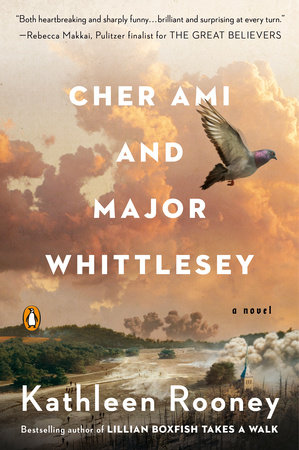
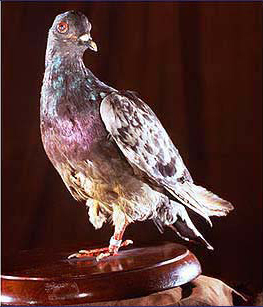 Rooney actually took at least two big risks in taking on this particular subject–or, in taking it on the way she did. The first is the obvious one: a pigeon narrator! But I think this leap of imaginative faith was necessary to mitigate the second risk, which is telling yet another story of bravery and brotherhood in the trenches. To some extent Cher Ami and Major Whittlesey is exactly that kind of book, and this literary ground is so well-trodden that even the best new treatments can seem clichéd (and
  This is a structural reflection of Rooney’s commitment to equivalence between her human and her animal protagonists, and by the end that equivalence seemed to be the real point of the novel. It’s making the case against speciesism; it pushes us repeatedly to consider why we (including novelists) typically treat animals as accessories to human stories if we consider them at all, rather than accepting that they have their own whole, intrinsically meaningful lives and perspectives. “I think of these numbers still all the time,” says Cher Ami as she reflects on the devastating human casualties on the front; but also,
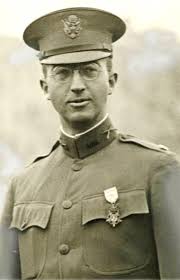
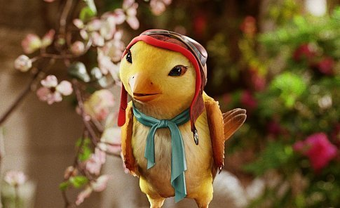 That said, her whole approach is a flamboyant adventure in anthropomorphism: if I were inclined to be critical about the book, I might start there, with the idea that the best way to earn our respect for animals is to depict them as essentially human-like. For all the specific references to pigeon behaviors and preferences, Cher Ami doesn’t really seem much more bird-like in her consciousness than Margalo in Stuart Little 2. I also got a bit tired of Rooney’s using her as a device for social commentary and criticism: for a stuffed bird, Cher Ami gets pretty preachy about racism and sexism and militarism. Those were the moments when my own commitment to Rooney’s experiment got the most wobbly. In contrast, my engagement with Charles Whittlesey never wavered. The sad story of his inability to recover from what he saw and did in “the Pocket” during those terrifying days–the very things that, to others, made him a hero–is a more powerful critique of war and the cynicism of its leaders and promoters than any of Cher Ami’s more didactic remarks.
 The other World War I novel Cher Ami and Major Whittlesey most reminded me of was Timothy Findley’s The Wars, because there too it is animals who force a moral reckoning. Findley does not go as far as Rooney in addressing the animals’ own perspectives: in fact, it’s their inability to speak or act for themselves that arouses Robert Ross’s rage and, ultimately, rebellion. The horses are provocations for his crisis of conscience, not meaningful agents in themselves. The affinity between the two novels lies in their aversion to the human arrogance that subordinates other living creatures to our often highly destructive priorities. World War I is often talked about as particularly tragic because its losses served no higher purpose. “The defeat of Hitler and company,” as Cher Ami remarks,
 I have fallen out of the habit of regular blogging in the last little while. One of the odder features (to me) of my blog archive is that early on, I actually posted much more frequently, even though my life back then was much more hectic. I think in those days writing blog posts felt intellectually liberating–which it still does, but less urgently so, given the ways in which my life has changed. Time to myself is a less precious commodity now, too, so blogging feels less like an escape and more like another task (which is silly, of course, as it remains entirely voluntary). Then when I find myself in the doldrums, as I have recently, it is hard to muster up both the energy to post and enough faith in myself to believe I have something to say.
 Things were a bit hectic and stressful around here for some family reasons too, so I have been struggling to concentrate on the more demanding books in my reading pile. I read Amy Jones’s Every Little Piece of Me but didn’t like it nearly as much as
 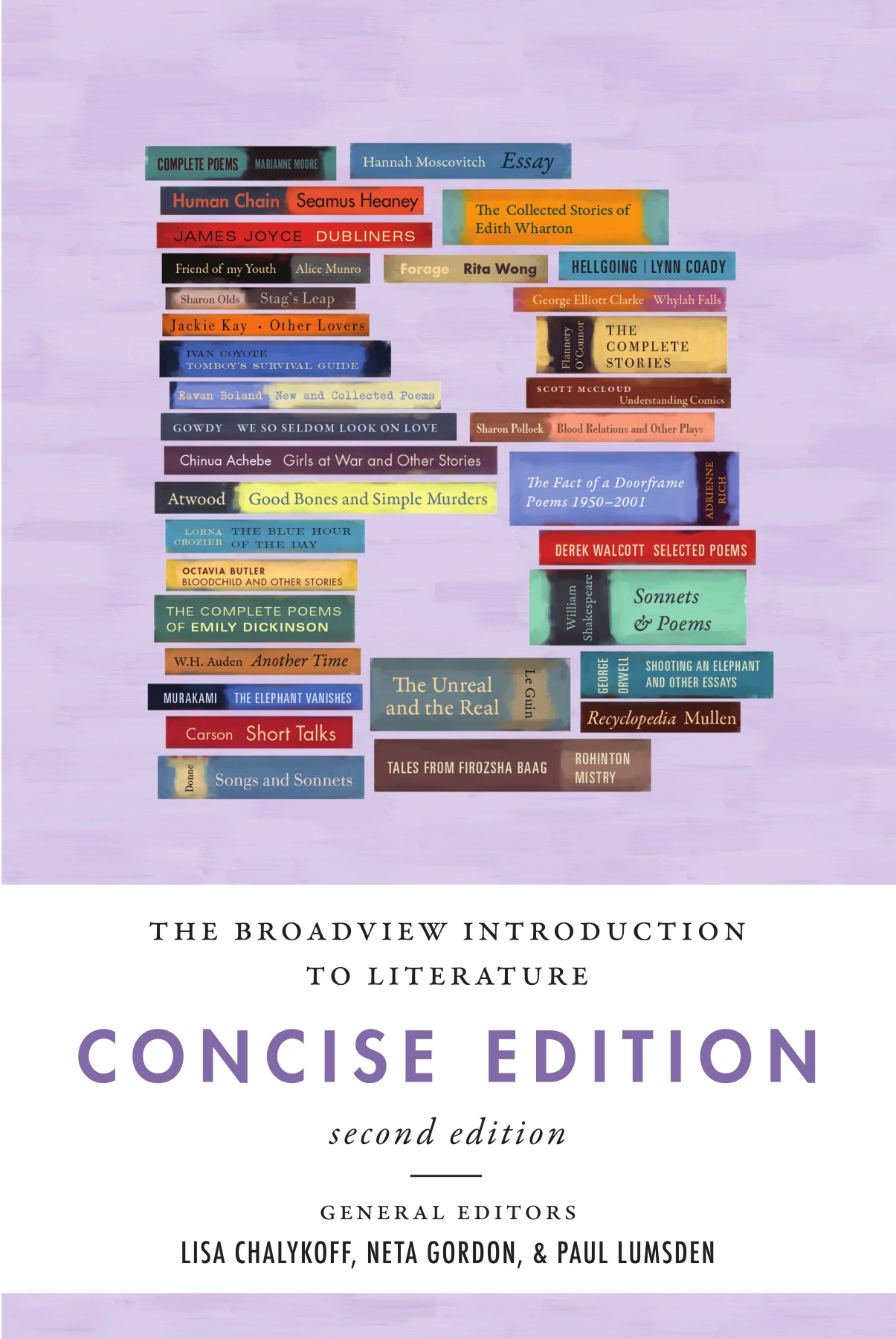 The other reading I’ve been doing is in the Broadview anthology I ordered for my first-year class, as it contains a lot of stories and poems I don’t know at all. I’m impressed at the range of styles and voices in the reader–and mine is the concise edition, too! I haven’t quite pinned down the specific readings for the course yet, but in this, as in my other fall class prep, I do feel I am making progress. I have spent such a lot of time thinking about online teaching this summer that I was starting to panic about not actually having built my course sites or created content for them. I hope that theoretical time will pay off, but in any case it is definitely time to stop thinking and start doing–and since the TLS piece went in, that’s what I’ve been focused on. It is daunting to feel September is so close, but at the same time I am looking forward to it for the same reasons I usually welcome the return to classes: activity, conversation, intellectual exercise, the stimulation of being busy in more concrete ways. Sure, it won’t be the same kind of activity or conversation, but I’ll take it.
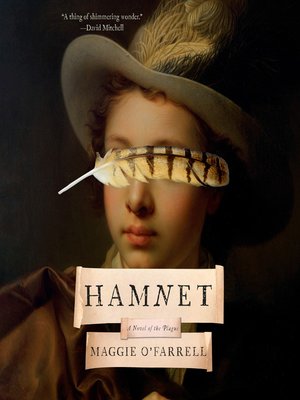 It is impossible not to have Hamlet in mind while reading Hamnet (as it is more simply and, I think, more aptly titled in its UK release), and I imagine that someone who knows the play better than I do (so, a lot of people!) would find many echoes and resonances that deepen O’Farrell’s effects. But she resists, rightly I think, making either Shakespeare or Hamlet the most important thing about Hamnet–she avoids holding out their future fame (unknown and unforeseeable to her characters, after all) as what matters most about the lives her people are living in the moment. Instead, she focuses our attention and ties our emotions to their small family circle, and especially to the story of Hamnet’s mother Agnes (better known to us as Anne). The novel’s themes of love and loss, grief and guilt, parents and children, are (some of) Hamlet‘s themes as well, and by the end O’Farrell has convinced me of their connection, but in her telling Hamnet’s death does not matter because it inspired Hamlet, but rather Hamlet matters because it is an offering to Hamnet:
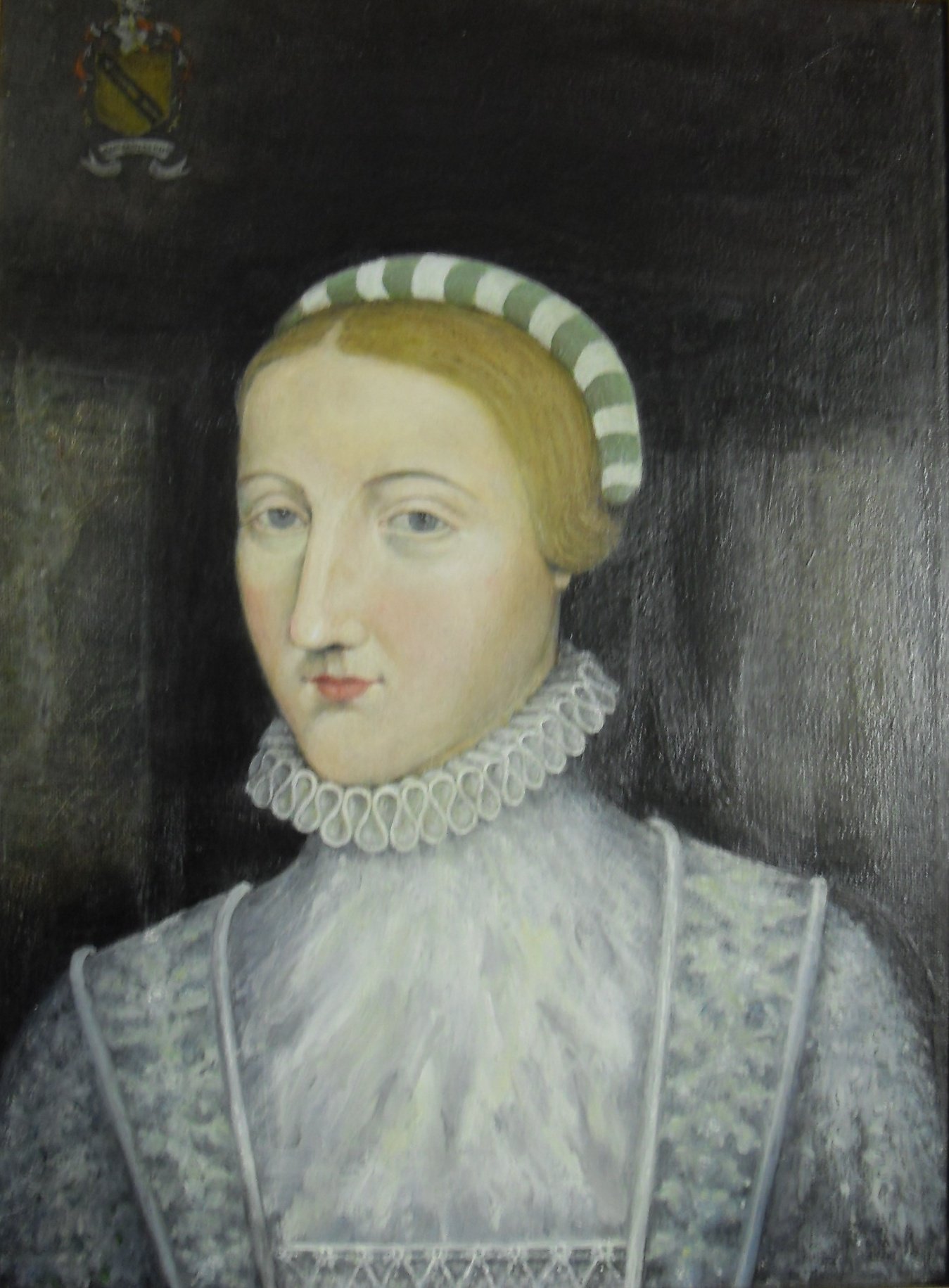 Shakespeare’s greatness, as Agnes understands it, is as a father, not as a playwright. In fact, Shakespeare (who is never directly named–he is always “the glover’s son” or “the Latin tutor” or just the husband or the father) is just barely a main character in O’Farrell’s novel. Hamnet is really Agnes’s book, and O’Farrell portrays her with wonderful specificity, from her knowledge of medicinal herbs to her uncanny ability to read a person’s character and future from pinching the bit of flesh between thumb and forefinger:
 It’s there, of course, that he finds his vocation and begins the work that will lead him to Hamlet and beyond. But that richer life keeps him apart from Agnes and his children: his older daughter Susanna and the twins, Hamnet and Judith. He is away on the day Judith becomes ill, which turns into the day Hamnet dies. Agnes too is away, though not as distant, and O’Farrell writes with devastating clarity about what it means to her when she discovers that her harmless expedition to gather honey meant that her son faced catastrophe alone:
 What O’Farrell does best, though–and this is no surprise, given
  But of course Hamnet itself is built, artfully, on just that moment, and art’s ability not just to convey pain but also to console is one of the reasons we value and need it, though artists are often ambivalent or uneasy about that. “I sometimes hold it half a sin,” writes Tennyson in In Memoriam A.H.H.,
 They sat for longer at the table, the cigarette Florian had put out to smoke unsmoked, the tea he’d made gone cold. This was what he would take with him, he thought. This was what he would leave behind. These moments now would haunt whole days.
 It has this quality in common with
  As for Ellie, her expectations of happiness in her life are low enough to content her with her marriage to a man burdened by guilt and grief for his part in the accidental death of his first wife and their baby. It isn’t until she glimpses Florian Kilderry passing through her small community that she is awakened to the possibility of something more. Theirs is a sweet friendship but not a great mutual passion, and by the end of the summer Florian himself regrets the part he has played in it and the price Ellie pays in dashed dreams:
 It’s an intensely small-scale and personal novel, but I thought Trevor was also drawing out a particularly Irish tragedy through Miss Connulty’s suffering for her “craven appetites” and the story of Ellie’s stern convent upbringing:
 I also didn’t understand the relationship between Kate’s specific choices in the past and the outcome she hopes for from them. She believes (or Emilia believes) that she has some kind of mission to save the world, but as the novel wound on I got more confused about the nature of that mission and the metaphysics that presumably make sense of it, never mind how she and we are supposed to get from what she does then to what happens now. (It probably didn’t help my attempts to never mind all that and just go along with Newman’s unexplained model of time travel that I’ve been proofreading my husband’s book on determinism, which includes compelling arguments about the logical consequences of any speculative ‘what if’ re-imaginings of the past.) Newman is writing fiction, so she doesn’t necessarily have to meet a stringent philosophical standard, but there wasn’t even enough narrative coherence to her version to hold doubts at bay. As far as I can remember it, Audrey Niffenegger’s The Time Traveler’s Wife (to which The Heavens has inevitably been compared) is every bit as metaphysically confusing and implausible but was at least an intensely gripping story.
 Good as she is, James turns out to be a poor choice for binge-reading, and yet a plan is a plan and a deadline is a deadline, so I have been persisting. The endeavor is not without its rewards: again, she’s good– very good, even! It’s just that she’s always good in exactly the same way, sometimes even in the exact same words. I was trying to think of other authors who have stood up better to this kind of determined march through their works. I remember really enjoying myself when I read all of Trollope’s Palliser novels straight through many years ago, and I have always loved rereading the Lymond Chronicles start to finish–but stories accumulate in a different way in those than in most detective series. While we are interested in and generally grow attached to the investigators in a long-running series, if the novels become more about them than about detecting, we’ve probably shifted genres–though having said that, counter-examples immediately occur to me, including Elizabeth George and Tana French, and of course there’s Gaudy Night, which perfectly balances case and character. In James’s novels, in any case, the personal arcs of her recurring cast are always peripheral to the main action, and while that strikes me as a principled decision, formally, it also has constricting effects. By the end of The Lighthouse I was far more interested in Dalgliesh’s relationship with Emma Lavenham than in whodunit–and that too is something my essay will most likely take up.
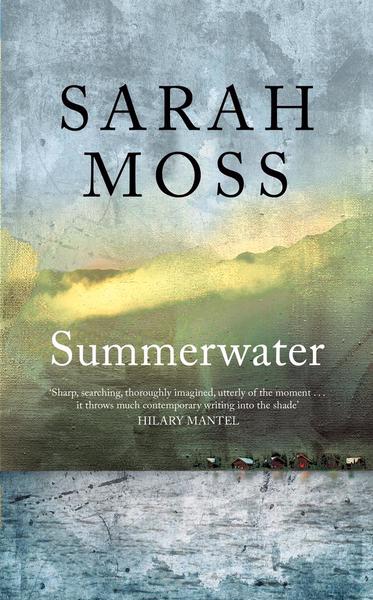
 I have been trying to read other things when I’ve had the energy, which hasn’t been often. I gave up on A Time of Gifts, though, which shames me somewhat to admit but there it is. There was a lot of fine writing but I couldn’t catch any momentum from it, and it turns out not to be as diverting as I’d hoped to read about someone else’s travels while unable to go anywhere myself. I’ve read a handful of romance novels–Christina Lauren’s The Unhoneymooners, Talia Hibbert’s Take a Hint, Dani Brown, and (most of) Jasmine Guillory’s Party of Two–just meh, all of them. I’m a hundred pages or so into Isabella Hammad’s The Parisian and it seems promising; once I finish The Private Patient, I want to settle in and really give it a chance. I’ve also just read Sarah Moss’s forthcoming Summerwater — but I have to save up what I think about that for the review I’ll be writing for the Dublin Review of Books.
 Novel Readings