 Claudia Piñeiro’s Time of the Flies is, like the other novels of hers that I’ve read, a crime novel. Sort of. It is about a convicted murderer, Inés: she killed her husband’s lover, but at the time of the novel is out of prison and making her living running an environmentally friendly pest control business. Then she is approached by one of her clients to provide a deadly pesticide—so that she too can kill “a woman who wants to take my husband the same way yours was taken from you,” or so she tells Inés. Inés, who is not in general a murderous person and who also would very much like not to go back to prison, is tempted only because her friend Manca urgently needs treatment for breast cancer but can’t afford to pay to get it right away. The situation gets more complicated when a connection emerges between the client and the daughter Inés has not seen since her imprisonment.
Already, then, we are in what seems like a familiar mix for Piñeiro: women whose troubles and also whose transgressions are partly the result of individual characters and circumstances and partly symptoms of a world in which women are constrained, ideologically as well as socially and economically. What are the limits of justification for striking back against patriarchy, or against the men who embody, however unthinkingly, its privileges and advantages? What counts as a crime in a context that is itself systemically unjust? What do women owe each other, in the name of friendship, or motherhood, or solidarity?
This is promising stuff! But. By the end of the novel, its various strands, though cleverly plotted, did not cohere in a very satisfying way, I thought—but that isn’t what made Time of the Flies a struggle to read. Piñeiro is a good enough storyteller that the parts of the novel taking us through Inés’s decision and its consequences would have kept me engaged, and in fact those parts of the novel did. The challenge is that interspersed with Inés’s story there are long discursive sections made up of this kind of debate, or commentary, or polemic, or analysis: 
Let’s set the insects and fumigations aside for a moment and get to the bigger issue: one woman killing another woman. Are you talking about Bonar or Inés? Bonar wants to do it, Inés already did it. And is the woman being killed just because she’s a woman? No. Yes. Is she the husband’s lover ‘just because she’s a woman’? In a way. Really? Don’t be silly. What are you saying? That it’s not femicide. I don’t agree. Yes, the killer has to be a man. Can’t a woman kill another woman just because she’s a woman? It’s not that I want to pick on men. I just think that if we noticed that women are, on the whole, radically less violent, we might be able to theorise where violence comes from and what we can do about it a lot more productively.* There are violent women. That’s the exception, she said, ‘on the whole‘, didn’t you hear? Inés isn’t violent. But she committed a violent crime: she killed Charo. That’s different. Charo’s death wasn’t femicide. Yes it was. Let’s not get bogged down in a theoretical legal debate when we’re not even the jury. What are we? We’re the chorus. We’re an assembly.
*Rebecca Solnit, Men Explain Things To Me, Haymarket Boks, 2014, p. 24.
Another sample, from near the end of the novel, after the revelation that a key instigation for the client’s murderous intentions is actually her daughter’s transitioning to become a son:
Should we have a go at the issue or just stick to Inés and her poison? What issue? The issue of Timo-Tamara, Tamara-Timo. We address every issue. Not necessarily. But why wouldn’t we address this issue? Because it’s one of the most polarising issues in twenty-first century feminism. We should proceed with caution. We are not cowards. Let’s be careful. I’ll sit this one out. If it’s controversial, all the more reason to debate it. Is it controversial in Latin America, though? Less so, we understand marginality. It has nothing to do with where you are in the world. It would seem that it does at least somewhat. Feminism has to be committed to gender freedom, to radical equality, and to alliances with other minoritarian positions, sexual dissidents. Transphobic feminism is no feminism, that cannot happen.* Are there really people who want to leave trans people out of feminism? Incredible. I can’t believe it. Yes, that’s what they want to do. I think we should take some time to think about it a bit more.
*Judith Butler, from the ‘Pandemia, democracia y feminismo’, Lecture Series, Universidad de Chile.
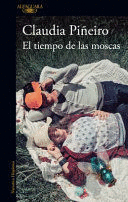 Clearly Piñeiro is doing something experimental here, creating a genre hybrid in a way that is actually reminiscent of Woolf’s The Pargiters, which I’ve been thinking about for some time because I’m fascinated by Woolf’s attempt to combine fiction and non-fiction, story and commentary. Woolf considered it an unsuccessful attempt and gave it up, turning her “novel-essay” into a novel (The Years) and an essay (Three Guineas). Maybe, I found myself thinking as I made my way to the end of Time of the Flies, Piñeiro should have done the same: if she didn’t trust her story to raise these questions for us, to stimulate those debates, she could have written a companion essay, or a different work altogether, leaving us the crime novel we expected when we picked the book up. It’s awkward, distracting, sometimes (to be honest) boring to have the plot, the suspense that Piñeiro is so good at building, constantly interrupted with these more abstract political sections, especially when they take such an uncertain form, voices themselves interrupting each other, offering competing arguments, incorporating references.
Until I copied out these samples, I hadn’t really thought about these as choric. I do find that a useful way to understand their role, and it also helps me appreciate that (I think) Piñeiro is trying to avoid didacticism by presenting topics precisely as debatable, though (as in the section on trans-inclusive feminism above) it is pretty clear that not every issue has, in her view, more than one legitimate side. Clarifying as the idea of a chorus is for the form of these sections, though, it doesn’t help me like them any better as part of my reading experience, which may e my own fault for resisting them as part of the book I thought I was reading. Hey, who spilled their feminist theory all over my mystery novel? But of course a lot of crime fiction has specifically feminist underpinnings, even before they got really explicit with the ‘feminist turn’ in the genre in the 1970s and 1980s. Piñeiro is just going much further, using her crime story as a provocation for feminist analysis.
 That might be a good explanation for the hybrid nature of Time of the Flies, but it doesn’t necessarily make the book a success. I’d probably have to read it again (and again) to make up my mind about that, which I might do, given that I offer a course called “Women and Detective Fiction.” Last time around I almost assigned Elena Knows for it. Another title I’ve considered for the book list is Jo Baker’s The Body Lies, which is quite unlike Time of the Flies except that it too is a crime novel that turns out to be about crime novels, and especially about the roles and depiction of women in them, the voyeurism of violence against women, the prurient fixation on their wounded or dead bodies, the genre variations that both do and don’t reconfigure women’s relationship to the stories we tell about crime and violence. I thought Baker’s novel was excellent. I certainly didn’t have any trouble finishing it, in contrast to the concerted effort I made to get to the end of Time of the Flies. I really did want to know what happened! But I felt like I had to wade through a lot of other stuff to get there. If I do reread it, maybe that stuff will turn out to be the real substance of the book.

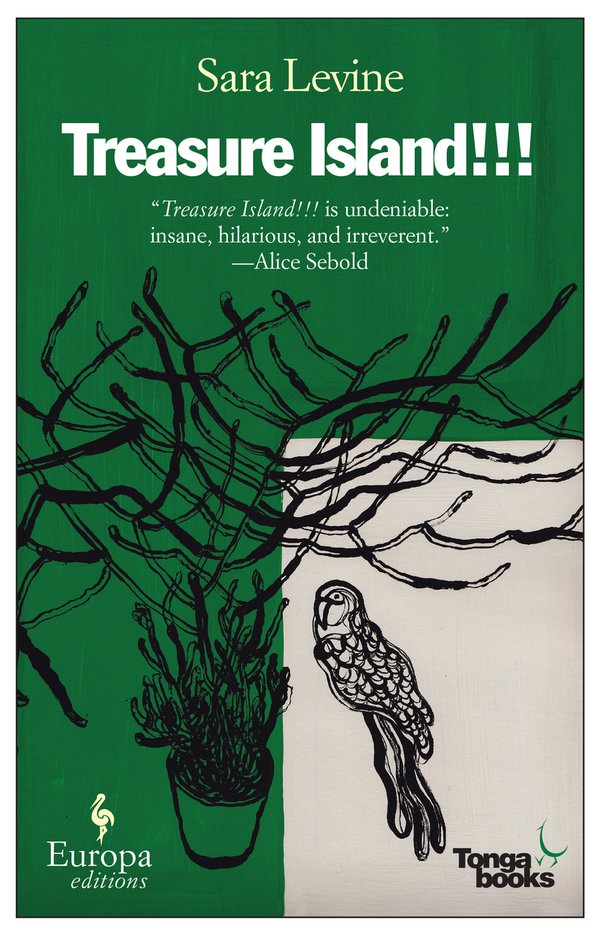 That said, I did quite enjoy Sara Levine’s Treasure Island!!!, which I picked up quite randomly at the library, mostly because it’s a Europa Edition but also because I vaguely recalled hearing good things about it online. It turned out to be a sharp and very funny send-up of the “great literature transformed my life” genre. Its narrator, whose life is in something of a shambles, reads Treasure Island and decides it offers her a template for turning things around. She adopts the novel’s “Core Values”—BOLDNESS, RESOLUTION, INDEPENDENCE, HORN-BLOWING—and applies them to her job (which, improbably and hilariously, is at a “pet hotel,” where clients sign out cats, dogs, rabbits, even goldfish), her boyfriend, and her family, with hilarious if also sometimes weirdly poignant results. I have such a love-hate relationship with books that purport to turn literature into self-help manuals that I relished the premise, but Levine uses it as a launching point for something much zanier than I could possibly have expected or can possibly summarize.
 Another car would have come along, a family car for which she had said she was waiting, or even another man, a white man. Most travelers, like most men, were intrinsically decent. The end result for Iris would have been the same, cruelly the same. But he needn’t have been involved. He was the wrong man to have played Samaritan, and he’d known it, known it there on the road and in every irreversible moment since.
 There are many interesting aspects of the investigation that unfolds as Hugh (with painful inevitability) ends up the prime suspect in Iris’s death. I haven’t spent enough time with the novel at this point to be sure what to make of all of them, but one thing I’ll want to think more about is Ellen’s role, which doesn’t fit any of the usual restrictive hard-boiled parts for women to play. It seems tied to the novel’s attention to class, which, as Mosley notes in his Afterword to the NYRB edition, does not protect Hugh the way he hopes it will: his education and career path, his family’s money and social standing—none of it insulates him from hatred or suspicion. But Ellen’s money and connections are sources of strength, as is her prompt and unequivocal commitment to being on Hugh’s side. If Iris can be seen as a version of the damsel-in-distress turned femme fatale (intentionally or not), Ellen is an ally and partner for Hugh, one who refuses to sit on the sidelines while an injustice is perpetrated. There are other details worth considering about who helps Hugh and who doesn’t, too, including the white lawyer whose motives are primarily political, rather than principled.
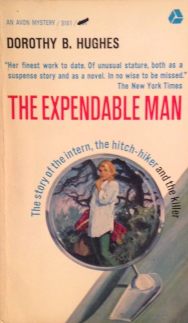 The thing that does make me hesitate is the oddity (arguably) of assigning a novel that is fundamentally about race, and that is told from the point of view of a Black man—but which is written by a white woman. “A white woman writing of a young black man’s problems with the law was a certain kind of gamble,” Mosley comments in his Afterword—but Mosley himself doesn’t seem to consider it problematic, moving immediately on to remark Hughes’s general interest in writing “from perspectives far from her own.” It is clear from the afterword that Mosley greatly admires Hughes in general and The Expendable Man in particular. What kind of representation is more important, in a class like mine that tries to show the range of uses to which the forms of detective fiction have been put since its emergence as a distinct form? It seems as if Mosley would consider it most important to address “the darker reality” (as he puts it) that lies behind more “glittering versions of American life.” Presumably he thinks the gamble paid off for Hughes because the result was a very good novel.
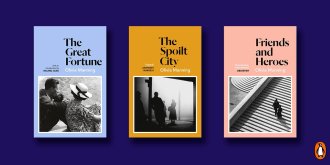 It’s not that I haven’t been reading. In fact, in the last couple of weeks I reread all three novels in Olivia Manning’s Balkan Trilogy, which is, cumulatively, over 900 pages. This is because I’m going to be writing up something about them for the TLS to mark the nice new reissues by Windmill Books. What exactly I’m going to say is something I’m still working out: the problem is not too few ideas but too many, given what strange and fascinating and provoking books these are. But because I have a formal writing project to do about them, I won’t be adding anything about them here. (I
  soon: the tl;dr version (though it’s actually quite a short review anyway!) is that they are good and have real historical and moral depth behind the genre-fiction surface, especially through the way their stories reach back to Hungary’s fascist and Soviet-dominated past. My mother kindly just shipped me her copy of Porter’s memoir The Storyteller, apparently out of print now, which I am looking forward to reading.
 I’ve done some other reading “just” for myself and it’s really here that I’ve felt that things are not going so smoothly. The books have been fine. Well, two of them have been fine: Jo Baker’s The Body Lies and Kate Clayborn’s Love At First. Baker’s is the next one we’ll be discussing in my book club: because we are all tired, stressed, and distracted, people wanted something plotty, and I took on the job of rounding up some crime fiction options that looked like they would also be “literary” enough for us to have something to talk about. I think we chose reasonably well with The Body Lies: it purports to be a novel about both violence against women and about how that violence is treated in so much crime fiction, meaning it has a metafictional aspect that adds interest beyond the novel’s own story. I finished it quickly, because I found it quite engrossing, so that’s a good sign in a way–but I also finished it unconvinced that it had avoided the trap of reproducing the things it aims to critique. I read it too soon, as we won’t be meeting up for a while, so I’ll have to reread at least part of it before our discussion to refresh my grasp of the particulars: I’ll come to that rereading with this question top of mind.
 I was really excited for the release of Love At First because I am a big fan of Clayborn’s previous novels: they are in the relatively small cluster of romance novels that I have appreciated more the more often I reread them (which in this case has been quite frequently), because she packs a lot into them. That complexity, which can make them seem a bit cluttered at first, turns out (for me at least) to give them more layers and more interest than I often find in recent examples of the genre, which are either too thin and formulaic to sustain my interest or try too obviously to check off too many boxes, making them read like they were designed by focus groups, rather than emerging in any way organically. I really enjoy the intense specificity of her characters and their lives, including their work, which she pays a lot of attention to (yay, neepery). I feel a bit deflated by Love At First, because it seemed – while both very sweet and very competently written and structured – a lot less interesting and a lot less intense than the others. For the first time reading Clayborn, I felt I was reading something almost generic: the story goes through the motions rather than jumping off the page. I’ll reread it eventually: maybe I will find more in it then. I did like it! But I had hoped to really love it, and I didn’t–at least not at first. 🙂
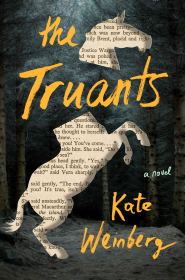 And speaking of books I don’t love, I have stalled half way through Kate Weinberg’s The Truants. It showed up on my radar around the same time I was looking into The Body Lies and they seemed so well paired that I ordered them both at the same time. Now I wonder what got into me: I started, hated, and quickly abandoned Donna Tartt’s The Secret History and everything about The Truants (including many of the blurbs!) signals that it is in the same vein. There’s nothing wrong with it qua book; it seems deft and clever and (like The Body Lies, but in a different way) it is also aiming at something metafictional through its engagement with Agatha Christie and ideas about how crime fiction works. But I can’t stand academic stories that turn on cults of personality around professors, which are creepy and and antithetical to everything I believe about teaching, not to mention about student-teacher relationships (hello, Dead Poets Society, which once upon a time I found enthralling but now consider kind of appalling). Also, while I try not to hold academic settings up to reductive standards of realism — and I’m also aware that I don’t understand the British system being portrayed very well, so I can’t actually be sure if I’m right when my reaction is “but this isn’t what we do!” — it gets distracting when the scenarios seem too far off. I have not so far managed to get genuinely interested in any of the characters, which means I keep not picking the book up to read further, which in turn means I’m also not picking up anything else because I feel as if I should finish it first. That’s a foolish “should,” I know, though I am by habit and on principle someone who does mostly try to finish the books I start, in case they get better or I figure out how to read them, both things that have happened often enough to make me hesitant to toss things aside. I’m not going to toss this one aside, or at any rate I’m not going to put it in my malingering “donate” stack (how I wish the book sale was once again able to accept donations, as this stack is getting kind of large!). Instead, I’m going to put it back on my Mysteries shelf and try it again another time.
 I think I need to read something richer and more challenging to turn things around — and to do that I need to stop making excuses about distractions or poor concentration. Reading, including reading well, is a decision we can make, I honestly think, and it’s not just that I feel disappointed in myself when I’m not doing it; it’s also that my life overall feels worse without it. One of my favorite quotations is from Carol Shields’ wonderful novel Unless: “This is why I read novels: so I can escape my own unrelenting monologue.” My current unrelenting monologue (like most people’s these days, I expect) is not a particularly sustaining one: I need reading to give me other stories to think about. I need blogging for the same reason, I find: it is still the only writing I do that feels genuinely my own. This is not by way of making some kind of bold resolution about either reading or blogging, but it actually helps just putting into words why I hope I will be doing more of both.
 I’m doing pretty well working my way through my Christmas book stack.
  The Gathering is also a very good novel–probably an excellent one. I feel much less inclined to urge you to read it if you haven’t already, though, because it is also a fairly lugubrious one. It is a family story of a particular kind: I want to say, of a particularly Irish kind, which may or may not be fair. Insofar as it has a plot, it is organized around the gathering (of course) of the remaining members of a large family (and assorted spouses and children) after the suicide of their brother Liam. It is narrated by his sister Veronica, and around this present gathering she weaves together a sad tapestry of memories and questions, at first mostly about her grandmother Ada and about Liam–who has never really been ‘right’ since they were first sent as children to stay with Ada-and eventually about what might be painful secrets in Veronica’s own past. If you suspect that the story’s original sin is sexual abuse, you are right, and how awful is it that this revelation not only does not come as a surprise in the novel but felt like a cliché? Enright’s treatment of it is not clichéd, or prurient, or sensational: it is sad and angry, and short on redemptive promises. She writes beautifully, and says a lot of things that will linger with me, like this bit, from early on before we know for sure why Veronica’s outlook is so shadowed:
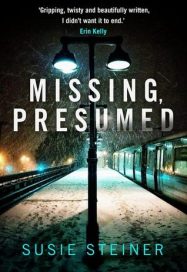 My other recent reading (besides reading for my classes, of course) has been two pretty good mysteries. One was the first in Susie Steiner’s Manon Bradshaw series, Missing, Presumed, which I read out of order because when I first looked, only her most recent was locally available. The one I read then was good enough that I put this on my wish list, and I actually thought it was better in some ways–though that might because I already knew a bit about Manon. It was especially interesting to see how the family situation she’s in, in the later book, comes into being in this one. The other is the second of Dervla McTiernan’s series about Cormac Reilly (Ireland again!), The Scholar. This was very well done but–and this is very rare for me, suggesting I’m either a lazy or an inept reader of detective stories!–I more or less figured out the crime pretty early on. It didn’t matter that much to my enjoyment of the book, as I read crime fiction more for character and atmosphere than for the mystery itself.
 From P. D. James’s Devices and Desires:
 This excerpt from Devices and Desires is characteristic of what this conviction looks like in practice. I suppose it could be argued that such long descriptive passages are not strictly necessary, that they are a form of padding in novels otherwise structured very tightly, as all of hers are, around the intricacies of a murder investigation. She treats every room this way, not just ones that clearly lead us towards revelations about the crime: readers who like their mysteries leaner and faster and more plot-driven might feel that the story gets bogged down. I don’t see it (or experience it) that way. For one thing, I enjoy James’s writing–I like the rhythm of her sentences, the meticulous care she takes to create a vivid, tactile sense of place, and the way her catalogs of specifics so often lead, as here, from exterior to interior, from setting to psychology. For another, because James’s crimes are always intensely personal, character is plot for her: thus her attention to setting as a device for exploring character serves the key purpose of her fiction. Finally, here we are seeing through Dalgliesh’s eyes: what this passage tells us is not just how the room’s inhabitant lives (and thus what she is like) but how observant he is, and how his scrupulous detachment as a professional investigator is combined with the self-awareness and sensitivity that make him not just a skilled detective but also a poet.
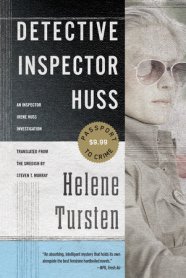 When Krister came home at one a.m. the girls were asleep, but Irene was still up. After telling him about Jenny’s troubles and about the impending end to her skinhead period, she tried to seduce her husband. But he was too tired and not at all in the mood. The Christmas rush at the city’s restaurants had begun. She lay awake for a long time, her whirling thoughts of skinheads, millionaires, bombs, murderers, biker gangs, sexual relations between people who shouldn’t be having any, and sexual relations between people who should.
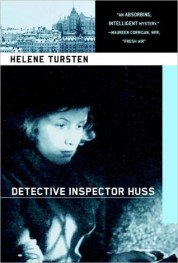 The novel’s central murder plot does not ultimately have anything to do with anti-Semitism or neo-Nazis, but it does have a lot to do with the “seamy underworld” mentioned in the précis. Even the most polished and privileged characters turn out to be at most one or two degrees of separation away from drug dealers, Hell’s Angels enforcers, or (as scary, if less socially contextualized) narcissistic sociopaths. Like the Beck books, that is, and like Henning Mankell’s novels, Detective Inspector Huss shows a pretty unflattering version of Sweden–though it’s no uglier than, say, Ian Rankin’s Edinburgh or
  Something Tursten draws particular attention to is sexism in the police force. Irene herself is aware of and angry about it, but in this book at least she mostly chooses not to confront it directly. In contrast, her colleague Birgitta–who is assaulted by a witness she’s interviewing and then informs their boss Superintendent Andersson that she has also been experiencing ongoing harassment from another officer–has eventually had enough. First, when Superintendent Andersson asks if the witness has annoyed her “in some way,”
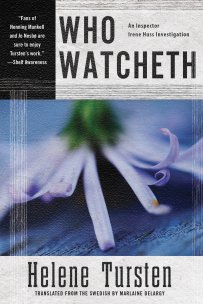 Birgitta’s “blue balls” comment is an example of a quality in Detective Inspector Huss that struck me as somehow slightly alien–a reminder that I was reading a book based in a culture that is not my own. The best way I can think of to describe it is that (again, at least in this translation) the novel has a kind of bluntness uncharacteristic of the Anglo-American crime fiction I usually read. It’s not that those books aren’t (sometimes) sexually explicit or graphically violent, or that they don’t often include plenty of swearing. There was just something about the tone or the idiom of the conversations in Tursten’s novel that seemed different, though I have been struggling with how to explain it. Another example: Irene recalls a male colleague who got the mumps as an adult, which caused his testicles to swell up “so grotesquely that he couldn’t walk. Unfortunately, his name was Paul, and he was always called ‘Paul Fig-Ball’ after that.” Poor Fig-Ball comes up a few more times during the rest of the novel and nobody seems to find it in any way an unseemly nickname. (These are just the examples I thought to highlight in my ebook; one problem with this technology is that I can’t flip through the pages easily to find others, including ones that aren’t about testicles! But I know there were many others.)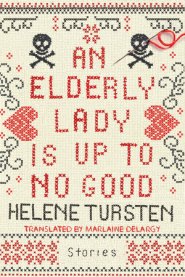
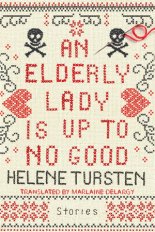 Slowly she set off in the direction of the Rosenlund Canal. In order to make herself look a little shorter and older, she stooped over her walker. She had pulled on a white fabric sunhat with a wide brim, which hid her hair and part of her face. No one took any notice of the elderly lady. . . . The best thing was that none of the people bustling about took any notice of her. An elderly lady out and about in the lovely weather didn’t attract much attention.
 I suppose Maud’s ability to get away with her petty crime spree is a cautionary tale about the dangers of ageism and sexism, which contribute to obscuring the truth about people. But compared to the moral and psychological layers that emerge from Janina’s murders in
  It’s clear that the largest things are contained in the smallest. There can be no doubt about it. At this very moment, as I write, there’s a planetary configuration on this table, the entire Cosmos if you like: a thermometer, a coin, an aluminum spoon and a porcelain cup. A key, a cell phone, a piece of paper, and a pen. And one of my gray hairs, whose atoms preserve the memory of the origins of life, of the cosmic Catastrophe that gave the world its beginning.
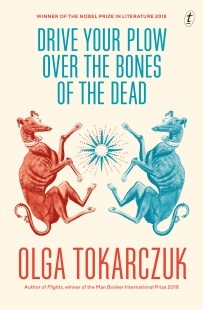 Janina’s main idiosyncrasy is that (as the people around her often protest) she cares more for animals than for people. She is particularly outraged by hunters and their hypocritical justifications for what, to her, is simply murder, and often barbarous murder, at that. “Just look at the way those pulpits work,” she exclaims to the officers taking her statement about a body that turns up in the remote mountainous region where she lives–in this case, a wild boar, though the deaths the police are actually concerned about are the human ones. “It’s evil–you have to call it by its proper name,” she goes on:
 Janina abhors the indignity and suffering humans inflict on animals: “People have a duty towards Animals,” she says, “to lead them–in successive lives–to Liberation. We’re all traveling in the same direction, from dependence to freedom, from ritual to free choice.” It appalls her that other people can go about their business indifferent, or worse–“What sort of a world is this, where killing and pain are the norm? What on earth is wrong with us?” When she proposes that the mysterious deaths in her neighborhood are actually animals exacting retribution, her theory seems at once bizarre and, coming from her, perfectly reasonable. In support of her allegations, after all, she can cite
 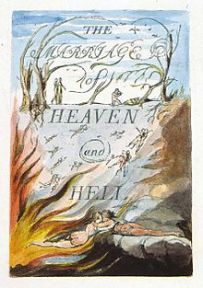 She and her former student Dizzy share a preoccupation with Blake, and as I read the novel I wished I knew enough about him to see how much Tokarczuk is invoking his ideas. Her title is from the Proverbs of Hell, from The Marriage of Heaven and Hell:
 By making Janina the narrator, Tokarczuk sets the novel up to test us about just how far we will go along with her: for all her wit and principle–really, because of them–she is quite a problematic character, especially if we take her at her own word about the logic of everything that happens. But what is a reasonable response to all the things we see around us, after all, or to all the things we know are going on but try not to face? “You know what,” Janina’s neighbor the Writer says to her,
 I didn’t much like March Violets–it just didn’t work for me. I should perhaps have anticipated this: in general, noir fiction isn’t really my thing. But I didn’t expect Kerr to go all in on his imitation of Raymond Chandler. Stylistically at least, I think I would have liked it better if he’d gone all in as the next Dashiell Hammett. I have to grit my teeth to get through the metaphorical excesses of The Big Sleep, and Kerr’s, while less florid, also seemed less poetic and a lot more forced. I also think there’s no excuse for perpetuating the sexism of classic hard-boiled detective novels in a contemporary pastiche. In fact, while I find Philip Marlowe’s misogyny disturbing, I give Chandler credit for showing the price Marlowe pays for it, in his embittered isolation, while Bernie Gunther’s sexism (“Her breasts were like the rear ends of a pair of dray horses at the end of a long hard day”) serves only to show off Kerr’s own hard-boiled credentials. (“There’s only one thing that unnerves me more than the company of an ugly woman in the evening, and that’s the company of the same ugly woman the following morning.”)
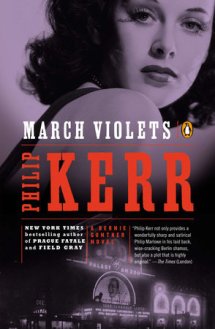 When Bernie gets smart with him, the officer observes that “the ability to talk as toughly as your fictional counterpart is one thing … Being it is quite another.” I can’t imagine any reader of March Violets
  Novel Readings