I taught Joyce’s “Araby” recently in my first-year class, the first time in years I have done so in person. I love the story, but I’ve never reacted to it as intensely as I did this year: I found myself sobbing over it as I prepared my notes because the boy’s plight—standing anguished in the wreckage of his dreams, clutching his bright but tragically inadequate coin in his hand—reminded me so much of Owen bringing his gifts and his talent and his humor to the world only to end up feeling there was no place for them or him in it. Anguish indeed.
I think this is why this old post on teaching “The Dead” has been on my mind. What is—what can or should be—the relationship between such intensely personal responses to literature and the work I do every day? I had put the last paragraph of “The Dead” on one of my slides for my “Araby” lecture, just to show them how beautiful Joyce’s prose can be; I told the class I wouldn’t read it aloud, both because it deserves better than I can do and because I feared I might start crying. I don’t know if that meant anything to them, but I do know that our discussion of “Araby” was a lot like the sluggish session on “The Dead” that prompted me to write this post in 2010. That was a long time ago; I’ve been trying to think about what, if anything, has changed since then. I think I try harder, now, when I’m teaching to hold the cathedral doors open, but I also still believe that analysis is not just pedagogically essential but intrinsically valuable.
Standing in Chartres Cathedral Unmoved
I’ve been thinking more about this passage from May Sarton’s The Small Room that I quoted in my earlier post on the novel, from Lucy’s irate speech to her students on returning their woefully inadequate assignments:
Here is one of the great mysterious works of man, as great and mysterious as a cathedral. And what did you do? You gave it so little of your real selves that you actually achieved boredom. You stood in Chartres cathedral unmoved. . . . This is not a matter of grades. You’ll slide through all right. It is not bad, it is just flat. It’s the sheer poverty of your approach that is horrifying!
I’ve been marking assignments myself (in my more benign moments, I call it ‘evaluating assignments,’ which sounds less adversarial). But that’s not actually what has had the line about standing in Chartres cathedral unmoved running through my head. Instead, it’s our recent class meeting on James Joyce’s “The Dead,” which I know I am not alone in finding one of the greatest pieces of modern fiction: smart, patient, subtle, powerful, poignant. My very smart talented teaching assistant led the class, and as always happens when I hand over the reins, I learned a lot and was reminded why I ended up where I am today, namely, because I loved being an English student. (I had the same treat today because another of our very smart and talented graduate students kindly took over the class on T. S. Eliot. Boy, we can pick ’em!) Because I was sitting among the students, I couldn’t see their faces, so I had less than my usual sense of whether they were engaged or listening, but there was certainly not a flurry of responses in answer to Mark’s questions about the story.
Now, it’s not a hugely forthcoming group anyway, and for that I partly blame both the style in which I have decided to teach the course (basically, lectures, with some Q&A, which seemed to fit the purpose of the course) and also the room we were assigned (quite a formal tiered lecture hall, narrow but deep, which exaggerates the distance and difference between the front of the room and the back and makes the prospect of throwing up your hand to volunteer an idea more intimidating, I expect, to any usually reticent students). Anyway, I sat listening to Mark and looking at the moments on the page he called our attention to and filling up with the old excitement—but also simmering a little at what seemed to me an undue lack of excitement in the rest of the room. ‘Aha!’ I thought. ‘This is what Lucy was talking about! Here they are, in Chartres cathedral, unmoved!’

But the more I’ve thought about that moment and my reaction, the less satisfied I am—not with them (though come on, it’s “The Dead”!), but with myself and with the unfair lose-lose situation I am (silently) putting the poor students in.
The thing is, my classroom is nothing like Chartres cathedral. And I don’t mean just in the look and layout, though here’s a picture so you can imagine the scene for yourself:

[2023 update: the classroom for my current intro class is at least as grim.] No, the dissimilarity I’m thinking about is one of atmosphere. Or, perhaps more accurately, attitude. As I remarked in my write-up of The Small Room, Sarton seems to me to be appealing to “an old-fashioned view of literature as a kind of secular prophecy,” imagining a world in which “the professor’s scholarship giv[es] her the wisdom to speak ‘from a cloud,’ a ‘creative power,’ a ‘mystery.'” I wasn’t—and I’m not—lamenting that this is not my academy. I’m not a secular priest; I have no special creative power, no authority to speak to them from some mysterious height– no interest, either, in evoking spiritual revelations. That’s not my business. We can’t just stand there and emote, after all. There’s not much point in their bringing their “real selves” to their work in the way Lucy seems to want it: what would I grade them on? Failure (or success) at having their own epiphanies, rather than failure (or success) at explaining the concept of ‘epiphany’ in the context of Joyce’s fiction in general and “The Dead” in particular? As Brian McCrea writes,
People who want to become English professors do so because, at one point in their lives, they found reading a story, poem, or play to be an emotionally rewarding experience. They somehow, someway were touched by what they read. Yet it is precisely this emotional response that the would-be professor must give up. Of course, the professor can and should have those feelings in private, but publicly, as a teacher or publisher, the professor must talk about the text in nonemotional, largely technical terms. No one ever won a National Endowment for the Humanities grant by weeping copiously for Little Nell, and no one will get tenure in a major department by sharing his powerful feelings about Housman’s Shropshire Lad with the full professors.
And as I wrote in response to McCrea in a (much) earlier post,
While we can all share a shudder at the very idea, to me one strength of McCrea’s discussion is his admission that marginalizing affect, pleasure, and aesthetic response is, in a way, to be untrue to literature, and that the professional insistence on doing so also, as a result, marginalizes our conversation, alienating us, as McCrae says, “from our students, our counterparts in other academic departments, our families [unless, he allows, they include other professional critics–otherwise, as he points out, even they are unlikely to actually read our books and articles], and, ultimately, any larger public” (164-5). (In Democracy’s Children, John McGowan makes a similar point: “There remains a tension between the experience of reading literature and the paths followed in studying. . . . To give one’s allegiance to the academic forms through which literature is discussed and taught is to withdraw [at least partly] allegiance to literature itself” [65]).
They aren’t standing in Chartres cathedral unmoved. I’m slamming the door of Chartres cathedral in their face. They might well have been feeling all the excitement I could hope for, or at least those who actually did the reading for the day might have. But it wouldn’t be their fault if they thought the CIBC Auditorium was no place to bring it up. It wouldn’t be Mark’s fault either, or mine. We do show enthusiasm and appreciation for the literature we’re covering, to be sure, but it’s not of the viscerally rapturous variety, or even the aesthetically transcendent variety. It’s a heavily intellectualized variety, and while I don’t think that makes it inauthentic, it isn’t something they are quite ready to emulate, not yet. I want them to feel the readings, and to show that they feel them, but there’s really no appropriate way for them to express that feeling in the ways they would find natural.
But what are we to do? I’m not a fan of the unreflective response, and taking down the nets would open up our class discussions (at least potentially) to a particularly banal and subjective kind of verbal tennis (“I really like this” / “Can you say more about why?” / “Not really, I just thought it was nice / beautiful / relatable”). Nobody learns anything from that. I usually just hope that my enthusiasm (however peculiar its variety) catches their interest and makes them read more, and more alertly, then they otherwise would. I try to give them tools to notice and think about their more personal responses, too: how they might have been achieved by the formal strategies of the work, and what their implications might be. I was remembering, though, a conversation of my own with one of my undergraduate professors. We had been reading Matthew Arnold, including “To Marguerite—Continued,” at a time when a lot of emotionally difficult things were going on in my life, and after our seminar (in which, as I recall, we talked about things like faith and doubt, and modern alienation, and verse forms, and metaphors) I very tentatively went up to the professor—one of my favorites, a wry 18th-century specialist who always looked faintly sardonic (as is only fitting, of course, for that period). “But don’t you think,” I remember saying (and those who know me now would not, probably, believe how nervous it made me even to stand there and ask this kind but intimidating man anything at all) “don’t you think that life is like he says? that we are isolated like that?” “Perhaps,” was his only reply—that, and a quizzical lift of his eyebrow. Well, what else could he say? What did my angst have to do with his class?
But (I’m full of these equivocations tonight, apparently) I can’t help but think that, for all the gains involved in professionalizing the study of literature, one of the reasons our students don’t graduate and go out into the world and absolutely trumpet the value and significance of the work they did with us is precisely that we have given up that prophetic role. We stood with them outside the cathedral, perhaps, and told them it mattered, and explained its history and architecture and social role and so forth, but left them to stand inside, moved, on their own. To be sure, they might have ignored it altogether if it weren’t for us (how many of these kids would pick up Joyce on their own?), but no wonder they are left thinking that when it came to the things that really mattered, we weren’t there for them.
Originally published November 10, 2010
 Perhaps, after all, this Ph.D. is not worth my while . . . The world inhabited by my subjects still seems bright and seductive, and the subjects themselves—the Brownings and Harriet Hosmer and William Story and, above all, Mrs. Gaskell—are still alive to me. The more I know of them, the more I love them. But I couldn’t be further from them, here at my desk in the British Library . . . My research is laborious and rewarding: I am clawing at an enormous cliff face, hoping to tunnel through it, but the rock is unbreakable . . . The enormity of the task ahead—writing 100,000 words of pure, never-before-known knowledge—is off-putting, impossible, preferably avoidable.
 I don’t actually have a lot to say about Stevens’s book in particular. I more or less enjoyed it: it’s fine, if you’re into memoirs, which I am generally not. Stevens’s particular take on autobiography in this book strikes me as remarkably niche, which makes me wonder even more about how publishing works. How big can the audience be for a book about a (relatively obscure? I’d say so?) young person’s love life and academic difficulties and preoccupation with Elizabeth Gaskell? Perhaps it was





 A lot of things about My Brilliant Friends really interested me. The friendships Miller is reflecting on were with Carolyn Heilbrun, Naomi Schor, and Diane Middlebrook: all four of them are big names, renowned scholars of the generation that basically pioneered feminist literary scholarship in the American academy in the later 20th century—and thus the generation that laid the groundwork for my own education as a feminist critic. I’ve written here before about the influence of Heilbrun
 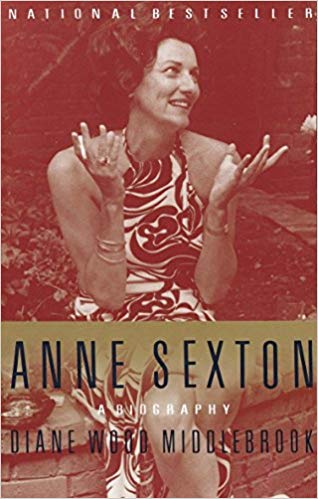 At its heart, though, My Brilliant Friends is really about more personal things than that (again, I think Miller might reply that the personal and the academic are not really so separable, or shouldn’t be). I found I wasn’t always able to be as interested as I wanted to be in the details. The Heilbrun section was the easiest one for me to engage with, because I have a relationship of my own, however indirect, with its subject. Miller’s thoughts on her friendship with Naomi Schor (a relationship which was long, complex, and of intense interest and significance to her) left me mostly unmoved, a detached spectator to the emotional intricacies of its ebb and flow. Of her three main subjects, I knew the least about Diane Middlebrook when I started the book; for some reason she came more vividly to life for me than Schor did, through both Miller’s recollections and her own letters. She sounds wonderful: she possessed, Miller says, “the art of making her friends feel loved and appreciated.” Theirs was a friendship formed relatively late in life, and I found Miller’s reflections on the different bases on which such belated bonds are formed really thought-provoking, especially as I have spent so many years distant from the very dear friends I made in my younger years.
 Death is the occasion for the book. Middlebrook died of liposarcoma, which she was diagnosed with not long after she and Miller met; Schor suffered a cerebral hemorrhage at only 58, which, Miller remarks, “while not a tragically young age, is young enough to feel untimely.” Heilbrun, of course, committed suicide: though a relatively small part of the book as a whole, the other women’s reactions to her choice are among the most thought-provoking moments, because they are tied up with their deepest convictions about autonomy, especially for women, as well as with their thoughts about living, aging, and dying. Miller quotes from an exchange about Heilbrun’s death between Middlebrook and Elaine Showalter (another accomplished and very influential feminist scholar of this generation, of course, and another whose work has played a large part in my own scholarly life—her book A Literature of Their Own was the first book of literary criticism I ever bought for myself, when I was just starting down this academic path). Middlebrook argues that the suicide was an act “taken on behalf of what she valued in herself, which was her independence,” while Miller sides with Showalter, at least emotionally, that while the death itself may have been a legitimate choice, it was regrettable that leading up to it Heilbrun had (as Showalter put it) withdrawn herself “from life, from the trivial, quotidian treats that gave pleasure, and from the tasks and obligations that give pleasure to others.” (As a side note, I looked up the rest of the Showalter-Middlebrook exchange because it is also a discussion about retirement, something that, while most likely a decade or more away for me, has begun to pose itself to me as a question: not just when, but what. My attention was especially caught by Showalter’s reference to a book that makes the case for “people reinventing themselves after 55. She believes,” Showalter says, “that it is actually necessary to make major life changes at this point, or fade away.” Hmm. That gives me just over two years!)
 It’s not just her friends’ deaths that prompt and shape Miller’s writing: early in her work on the book, she herself was diagnosed with lung cancer. “You discover that your position, secured among the living, is unstable, unsure,” she observes; “You may have imagined yourself safely on the side of the living, and then suddenly … you are on the verge, possibly, of disappearing yourself.” This increases her desire to be “the subject”—”to be in charge of the story even if it seemed I had lost control of the narrative.”
 In retrospect, I’m glad my pitch for a article reporting back on the George Eliot Bicentenary Conference was rejected: the cognitive dissonance I struggled with during the conference was strong enough that I have been puzzling over how or whether to write about it even here, in relative obscurity and without being answerable to anyone else for whatever it is that I come up with to say.
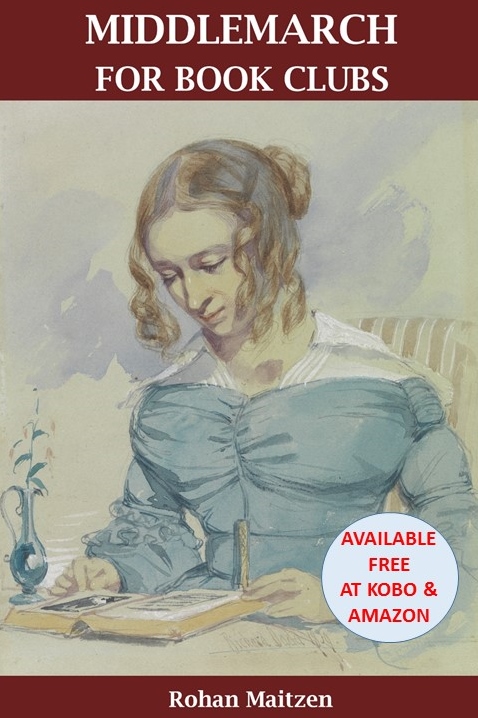
 Each of the presenters on our panel addressed quite a different “application” for George Eliot. I spoke about what I see as reasons for but also the difficulties with “pitching” her work to the kind of bookish public I have been trying to write for–at left is my design for a George Eliot tote bag meant to illustrate the case I made that her books are not, as too often assumed,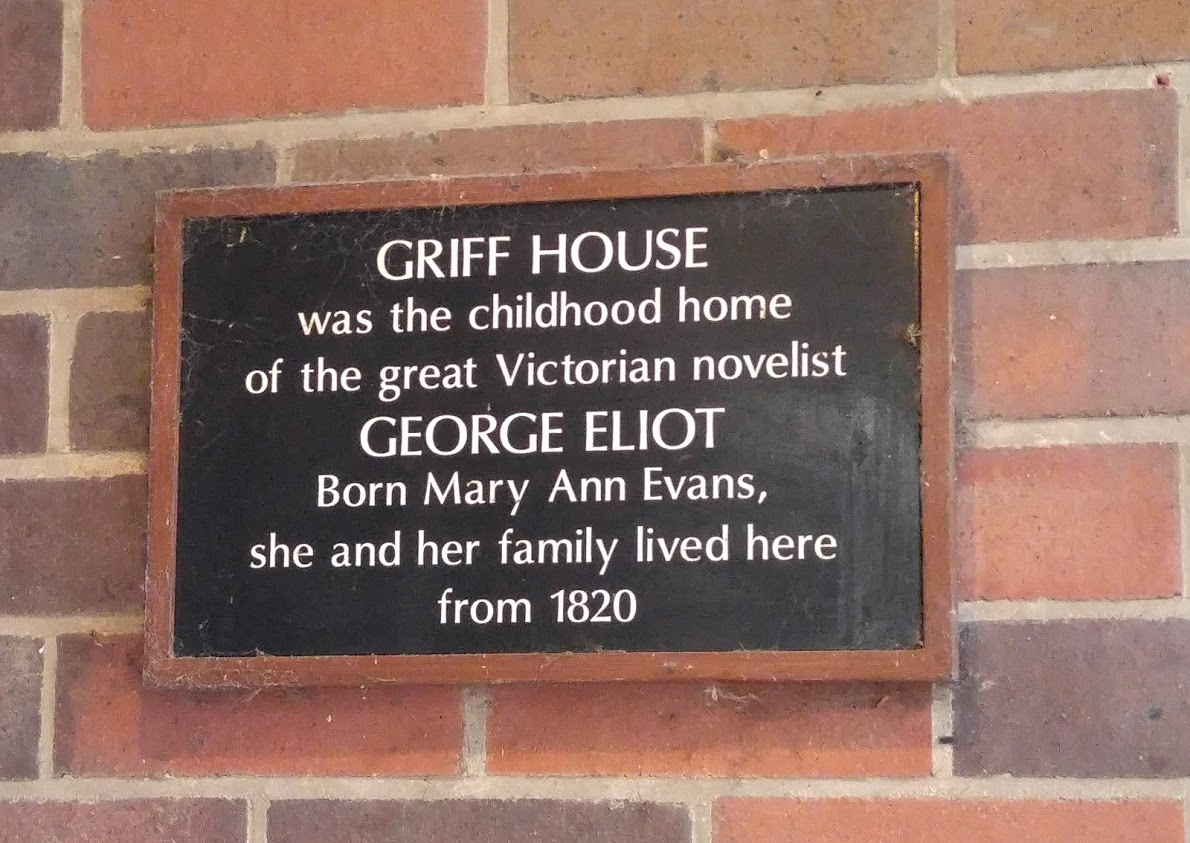

 It isn’t exactly that I want no part of it, though. As I hope I have also made clear here over the years, my own intellectual life has been shaped and enriched by many kinds of academic scholarship (though
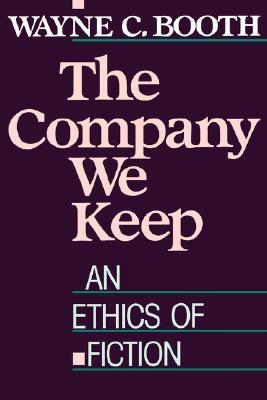
 I have first-hand experience of this. After I earned tenure on the basis of my scholarly work on 19th-century women historians, I did some hard thinking and decided I did not want to work on that material any more. It just did not feel very important or interesting to me, so while I could imagine (and in fact had put together some preliminary outlines for) new projects in that field, I decided to take advantage of the security of tenure to do something that mattered more to me–something that felt more urgent–which was the work I went on to do on ethical criticism. I eventually published two peer-reviewed essays based on this work, one in Philosophy and Literature on Martha Nussbaum and the “moral life of Middlemarch” (in 2006), the other in English Studies in Canada on Victorian ethical criticism (in 2007). A further result of this reorientation of my research was the edited volume of Victorian criticism I published with Broadview in 2009.
 Now consider how that phase of my scholarly life was described in the letter denying my promotion appeal. The committee’s assessment was that my record showed “limited scholarly activity between 2000 and 2005″* followed by a “second burst of scholarly output.” Where do you suppose they think that “burst” came from? It came from giving myself time to read, think, and write–and it’s worth keeping in mind that I was in fact writing both of the articles that I’ve mentioned well before their actual publication dates, because the academic submission process takes forever. During those years I also gave conference presentations related to my ongoing research and attended a symposium on literature and ethics in Australia convened by a prominent scholar in the field. This is all scholarly activity! It is “limited” only in the sense that it was preparation for the “output” to come rather than (mostly) measurable outputs in the moment.
 An important step in this process was
  One way to think about where I am now is that I am having the critical and scholarly equivalent of a “but why always Dorothea?” moment! This is a good thing, or it will be, and I do have some ideas about which direction to go in. I’ve been reviewing things I’ve read and written about over the last decade or so, and it quickly became clear to me that the work I did that excited me the most was the reading (
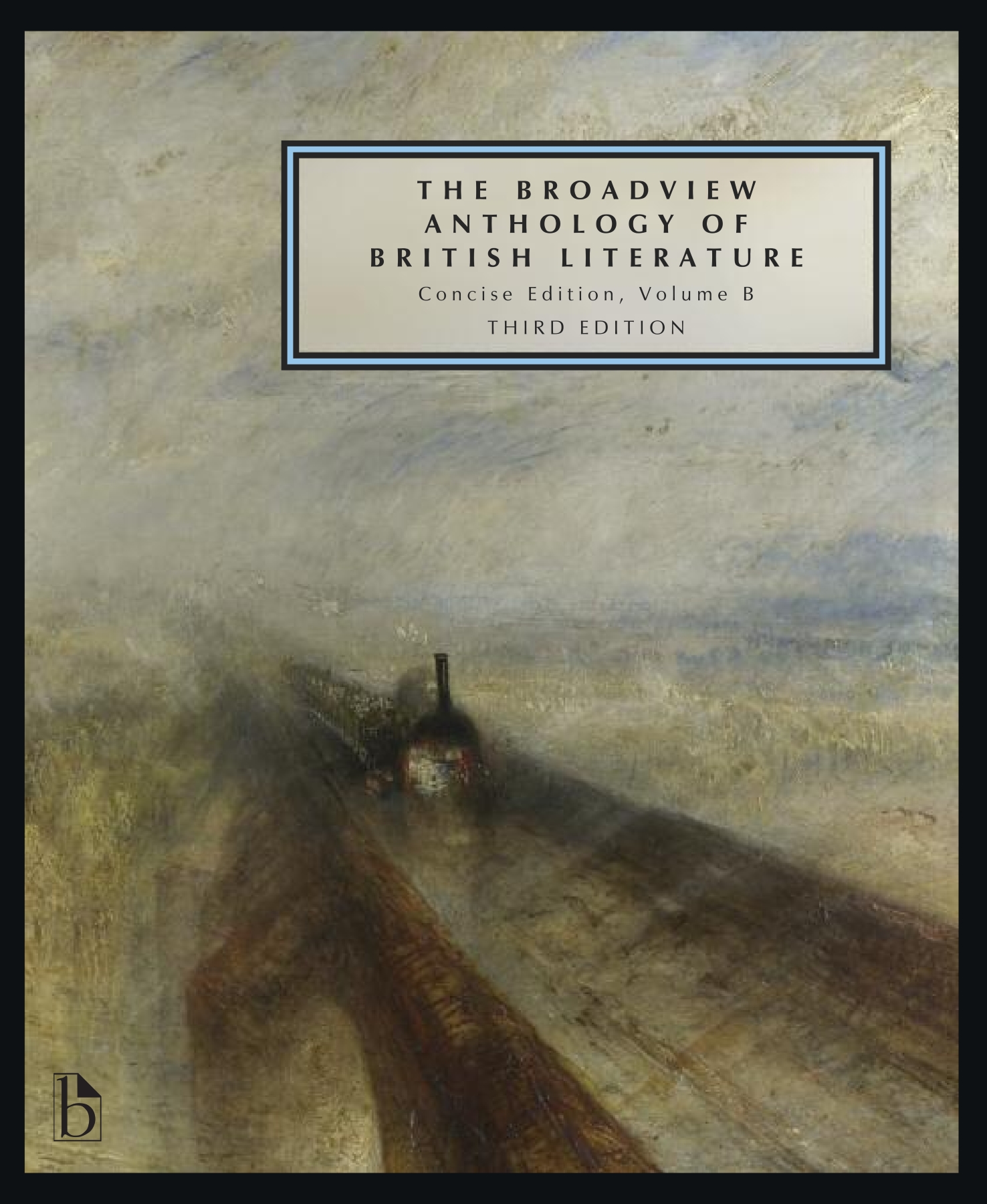 The third course I plan to spend time rethinking during this sabbatical is British Literature After 1800, one of a suite of 2nd-year survey classes we originally established to orient students in the big picture (nationally and historically) as context and preparation for our more specialized upper-level courses. These curricular intentions are compromised (some might say, rendered inoperable) by the way our program
 So I assigned the “major authors” edition of the Norton Anthology and we read Wordsworth and Coleridge, Keats and Shelley, Tennyson and Browning and Hopkins, Wilde and Joyce and Woolf, Yeats and T. S. Eliot and Auden, Heaney and Rushdie. A bit less predictably, we also read Elizabeth Barrett Browning and Christina Rossetti, and Katherine Mansfield, and while the first time around I assigned Great Expectations as our representative Victorian novel, the second time we read Mary Barton. Both times, our 20th-century novel was
 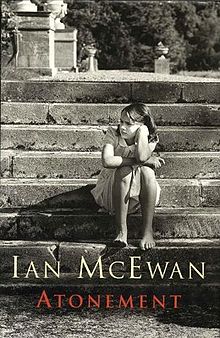 Looking over my notes, I actually think it was quite a good course of its kind. (You can read some blow-by-blow accounts of it while it was in progress if you’re interested; just scroll down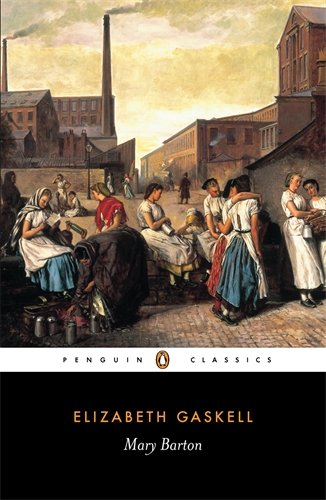
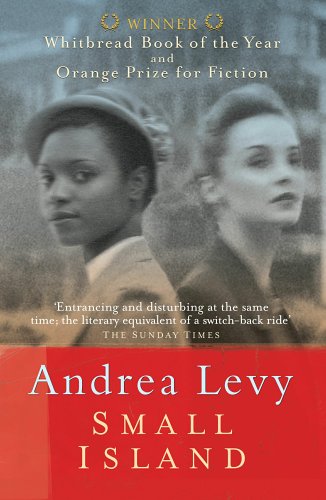 I actually already have one specific idea, which is to substitute
 It’s still a slow and incremental process: I have more than once, in conversation, compared my efforts to build up my portfolio of work and thus my credibility in that role (for which my academic credentials mean relatively little) as being on a hamster wheel. I am very fortunate in that I do not need to depend on the results financially–but at the same time that also means I am doing this work alongside the other demands of my job. I’m increasingly happy with the results, though, especially now that they include a couple of pieces that reflect me more personally–that came out of my own strong interests and let me show a bit more of my own style and personality as a writer.
 In other words, a year after a fairly crushing blow to my career and (not incidentally) my self-esteem, I’m doing OK, even well. (Today was certainly an excellent day! There’s nothing like being included in


 Novel Readings