
2016 was an odd year for me as a writer. On the one hand, I wrote a lot of literary criticism, for a wider range of venues than ever before. This experience was challenging, educational, exhilarating, and occasionally frustrating: in some cases, I had to write shorter and faster than I ever had before, and in others I had to find an angle on books or writers that weren’t immediately congenial or intelligible to my critical sensibilities. I also had to work with new editors and adapt to their different styles and priorities. Overall, I’m very proud of the results.
On the other hand, I also got the clear message from my employer (and many colleagues) that this is not the kind of writing they value, and that if I hope to advance professionally, I’d be better off giving it up, scrambling back into the ivory tower and devoting myself to a very different model of literary criticism. I actually wrote thousands of words in 2016 trying to turn this judgment around — attempting to persuade people on campus (none of them, ironically, actually literary critics of any kind) to recognize my essays and reviews, and the other elements of my diverse portfolio of projects and publications, as worthwhile contributions to my academic discipline. Of all the writing I did this year, this was the least pleasant, and ultimately the least rewarding.
Where does this leave me? Well, mostly it leaves me wondering how much more writing about literature I could have done in 2016 if I hadn’t wasted so much time (and, perhaps even more relevant, so much angst and energy) on a futile quest to change academic priorities — even if it did initially seem as if I was just urging everyone to live up to their oft-stated commitment to outreach, public engagement, and innovation. It certainly hasn’t persuaded me to do as I was told: I’m not against academics doing specialized research leading to peer-reviewed publications in academic venues, but I strongly believe enough academics in my field are doing this already and that it is both right and imperative that universities loosen their grip and encourage, support, and even reward faculty who do other kinds of work as appropriate to their disciplines.

Institutional issues aside, I feel as if I made a lot of progress as a writer this year. Book reviews are not the be-all and end-all of my writing ambitions: I would particularly like to write more, longer, better, wider-ranging essays. I wasn’t able to do much of that this year, but the reviewing I’m doing is both honing my skills and helping me build up my credibility (one interesting and humbling thing about writing outside the academy is that my formal credentials and my academic c.v. mean very little “out here,” where authority is something you have to earn in other ways). I hope that in 2017 I will keep moving forward — both as a reviewer and as an essayist. This includes hoping that I make more progress compiling my existing essays on George Eliot into a book: now that I’ve self-published one e-book, I feel emboldened about doing another.
There’s a complete list of my publications under the ‘Other Writing’ tab above. Here I’ll just mention a few from 2016 that stand out to me, for one reason or another.
At Open Letters, I was particularly pleased with “Our Editions, Our Selves,” which was ostensibly a review of the lovely new Penguin Deluxe Classics edition of Middlemarch but which also gave me a chance to ruminate about my personal history with my favorite novel. Writing this review of Mary Balogh’s Only Beloved brought me some comfort and joy, and it was also my first attempt to write something thoughtful about romance fiction.

At The Quarterly Conversation, I wrote about David Constantine’s The Life-Writer and In Another Country, which I already mentioned in my previous post as some of the best reading I did in 2016. Because Constantine was new to me, and because his fiction is so elegant, I was a bit intimidated when I started working on the review, but in the end I felt that I had found something interesting to say and said it pretty well.
I published four reviews in the Times Literary Supplement in 2016. My favorite was of Emma Donoghue’s The Wonder — to me, anyway, this little piece reassured me that I am starting to be more at home in shorter reviews, that I can still sound like myself in a more compressed form. (I think my forthcoming review of Danielle Dutton’s Margaret the First is actually better, though; it will be out in January, I expect.) I was proud of my only longer piece in the TLS (so far), which discussed three recent scholarly books on Victorian women’s writing: this was not as much fun to do, but (again, to me, anyway) it seemed like a good example of my academic expertise being used in the service of a wider public.
I was very happy to write about Maurizio de Giovanni’s Bastards of Pizzofalcone novels for 3:AM Magazine: these were two of many good examples of crime fiction I read and/or reviewed in 2016. And I also appreciated the reviewing opportunities I got from Quill and Quire, including two neo-Victorian novels (Smoke and By Gaslight) that, again, let me draw on my academic background a little while nudging me out of my comfort zone.
Overall, then, on my own terms 2016 was a productive year for me as a writer and a critic. A key goal for me in 2017 is to stop seeking validation on other people’s terms!
 After well over a year, my application for promotion to Professor finally concluded last week, with the disappointing news that my appeal of President Florizone’s negative decision was unsuccessful.*
 It is tempting, of course, to use this opportunity to lay out my whole case, to rehearse the ups and downs as my application went through its nine (nine!) stages of review, and to air my specific grievances as well as parade my allies and advocates. Militating against that self-indulgent impulse, though, is the conviction that even if it were professionally appropriate to expose all the parties involved in that way, nobody really wants to read that 10,000 word screed. Besides, I’ve done a lot of relitigating of details in the past 16 months. It will do me more good to pull back a bit, to get out of the weeds and try instead to articulate what seems to have been the fundamental problem, which I now think can be aptly summed up as (to borrow a phrase from Middlemarch) “a total missing of each other’s mental track.” I won’t name names or quote at length from any submissions, and I’ll try to avoid special pleading — though I can hardly be expected to hide which side I’m on! It will help me to write about it in this way, I hope: it will exorcise some of the frustration and bitterness I still feel. And then I will be done with it — publicly, at least — and I will do my best to gather up all the energy that has been dispersed among these professional and psychological hindrances for so long and rededicate it to the ongoing task of becoming the kind of literary critic and
  From the Novel Readings Archives: I still find myself thinking a lot about the questions raised by Brian McCrea’s book Addison and Steele Are Dead, which I wrote about during my first year of blogging. Apparently I’m in something of a minority, or presumably I’d be able to find the actual cover image online somewhere! But rereading this post nearly a decade later, McCrea’s theory about the relationship between literature, professionalism, and teaching still seems well worth considering.
 As he develops his argument, McCrea offers an interesting overview of the 19th-century and then 20th-century critical reception of Addison and Steele. He explains the Victorians’ admiration for these 18th-century predecessors largely in terms of the different understanding that prevailed about the relationship of literature, and thus of the literary critic, to life. Rightly, I’d say (based on my own work on 19th-century literary criticism), he sees as a central Victorian critical premise that literature and criticism are public activities, that their worth is to be discussed in terms of effects on readers; hence the significance attached, he argues, to sincerity as well as affect. Especially key to McCrea’s larger argument is his observation that the 19th-century writers were not “academicians” or “specialists in a field”:
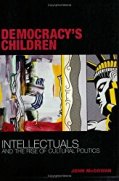 While we can all share a shudder at the very idea, to me one strength of McCrea’s discussion is his admission that marginalizing affect, pleasure, and aesthetic response is, in a way, to be untrue to literature, and that the professional insistence on doing so also, as a result, marginalizes our conversation, alienating us, as McCrea says, “from our students, our counterparts in other academic departments, our families [unless, he allows, they include other professional critics–otherwise, as he points out, even they are unlikely to actually read our books and articles], and, ultimately, any larger public.” (In Democracy’s Children, John McGowan makes a similar point: “There remains a tension between the experience of reading literature and the paths followed in studying. . . . To give one’s allegiance to the academic forms through which literature is discussed and taught is to withdraw [at least partly] allegiance to literature itself”).
 Earlier this year there was a lot of buzz when a Princeton professor published a “
 I have been thinking about the question of failure in academia again since my promotion was denied. The appeal is ongoing, so I don’t yet know how the story will finally turn out, but no matter how it does, the fact will always remain that I was not successful in this process.** It has recently occurred to me that one reason last year was so difficult for me is that when things took a turn for the worse, one of my most intense reactions was humiliation. I felt profoundly embarrassed, because I had been held up for scrutiny and found wanting: I had not passed the test, and in this world, that feels not just like a professional evaluation but also like a very personal and all-too-public shaming. I know that this is not an entirely rational response, but I bet it also isn’t unusual for academics who fail in this way, especially when you add in
  What I have been thinking about more recently, though, is how much worse this cringing attitude made the whole experience for me, because it led me to be not just discreet but downright secretive about what was going on. I’m not saying that I should have made all aspects of the case public (and I don’t plan to now, either): I have some doubts about the advice on
  I don’t rule out that some of the intensity of my own reactions might be idiosyncratic: I myself was surprised that I took it all so hard, and that has been cause for some self-reflection. (Indeed, I have experienced fits of meta-failure in which I have been thoroughly unimpressed with myself for not handling everything better!) That’s what got me thinking again about the general context, though — about what failure means and how failure is treated in the academic world. And it also got me thinking about other failures in my own life, along the lines of the ‘CV of Failures.’ It isn’t, after all, as if this is the first time I have swung at something and missed. So in the spirit of Johannes Haushofer, here are a few more of my own failures. I’ll restrict the list to things that quantify more easily than, for instance, my general failure to thrive during my graduate coursework, and that are on a larger scale than, say, the many books I have failed to understand.
 The case itself is cleverly contrived but not, I think, particularly meaningful. On a completely personal and thus mostly irrelevant note, I enjoyed that it turned on the victim’s fondness for retsina: retsina is actually the first wine I ever drank, back when I was a regular in a Greek dance performing group, so for some time I didn’t realize just how distinctive (many would say, just how disgusting) it actually is. I haven’t had any in years, but now I’m tempted to see if our local wine store carries any. As I recall, it certainly goes well with the robust flavors of Greek cooking — garlic, lemon, and lamb especially. It isn’t really key to the crime, though, except that because nobody likes it but the victim, it proves a useful vehicle for delivering the fatal poison. (This is not a spoiler, as the method of the murder is one of the first things we find out!)
 I finished Honest Doubt thinking that, though I didn’t love it this time either, I should reread more of the series. Even 2000 was a long time ago in my own academic career, and for all that aspects of Honest Doubt seemed faintly archaic already, some of its truths hit home in a way they didn’t before. Even its title, in fact, has new resonance to me, taken as it is from Tennyson’s lines (from In Memoriam) “There lives more faith in honest doubt / Believe me, than in half the creeds.” My own doubts about a range of academic values and practices have made me seem to some, I think, like a negative force, maybe even a threat (or, and I’m not sure if this is better or worse, like an irrelevance). I’ve described myself as feeling sometimes like “a nonbeliever in church”: to me, though, my doubts have always been indications of my faith that what we do not only is valuable but can be even more so.
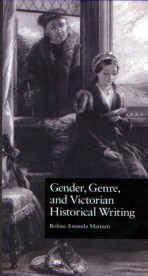 I mentioned in my last post that I had recently read a new academic book that I ultimately decided not to review, partly because I didn’t want to scapegoat the author for my alienation from the genre it belongs to. I’m still not going to name it (and that’s my own book pictured at left, just so there’s no confusion), not just because I’ve made that ungenerous mistake before but because I have had the same question about a lot of academic books lately. This is just the most recent one to leave me wondering: what is this book worth?
 If there were such an expectation and people routinely met it or else paid a professional price,
  On university campuses we hear a lot about innovation these days, from hype about the latest ed-tech fad to proclamations by institutions like my own about fostering a “culture of innovation.” This has got me reflecting on how we define or recognize innovation — something that is not as obvious, I think, as its champions, or as those who insist on it as a measure of academic success, typically seem to assume. In some fields, of course, it’s easy enough to tell when something is new, if it shifts or breaks a paradigm. But in others, context makes all the difference, as my own chequered career as a “thought leader” demonstrates.
 Today, of course, an interdisciplinary degree is wholly unremarkable; Dalhousie even has an entire
  But when I got to Cornell, I discovered that far from being a radical, I was actually a conservative! It turned out that there were some kinds of questions you couldn’t safely ask there, arguments you couldn’t seriously entertain, without undermining your feminist credentials. My first big mistake was giving a seminar paper called “The Madwoman in the Closet”: it queried some then-dominant trends in feminist criticism, particularly in 19th-century studies, and tried (perhaps crudely, but I was a beginner at all of this — and frankly, my somewhat old-fashioned training at UBC had not prepared me well for it) to figure out how politics and aesthetics were getting balanced (unbalanced, I thought, maybe, possibly) in the debates. My professor was keen to have these discussions, but said to me quite frankly that he felt that as a male professor, he couldn’t raise these questions. So I blundered in, and paid the price. I also wrote a more or less positive review of Christina Hoff Sommers’
  Exhibit C: my critical writing. There are many possible angles to consider here, but I’ll focus on my recent work outside of academic publishing, because its status has been much on my mind lately. In a way, the kind of criticism I’ve been doing recently — from book reviews to literary essays — is not innovative at all: it’s the same kind of work everyone else is doing who also writes for newspapers and magazines and literary journals. But from an academic perspective, to be writing for those venues instead of for academic journals is itself innovative: it’s the kind of thing that gets called “knowledge mobilization” or “knowledge dissemination” or “public humanities.” Except that some of these publishing ventures resemble (in style, not necessarily in content) an older kind of literary criticism — a kind some might call belles lettres — which is now considered passé in academic circles. So my recent work could be considered retrograde, not innovative. Except that to break from the conventions of academic writing and try to replicate the best qualities of belles lettres (fine, smart, accessible writing, with its own literary elegance) while still doing criticism informed by decades of academic scholarship … couldn’t that combination of new insights and old forms itself be innovative? Then, what about the content of the reviews and essays? Every new interpretation of a literary text is a critical innovation, isn’t it? So every review of a new book, representing a new intellectual encounter, is intrinsically ground-breaking, even if book reviewing as a form is the oldest kind of literary criticism. What if you make a new critical argument, based on original research, but in an essay outside the norms of academic publishing — if that argument falls in the forest, can anybody hear the innovation? Or what if the argument of an essay is new to one audience but not to another? What is going on then?? Am I doing original work or not???
 From the Novel Readings archives, a post that addresses issues still very much on my mind: what we mean by the terms “research” and “scholarship,” and what we take to be the duties of professors and the work of the humanities.
 Drawing on the Handbook published by the CAUT (invoked by his Dean in response to Drummond’s appeal of the Committee’s decision), Drummond himself brings in the vocabulary of knowledge “dissemination” which is once again very current in discussions of our aims:
 Again, it’s not that I think we should not do research, or publish what it teaches us–but it’s a shame that the system is so rigged in favor of hurrying it along and rushing it into print–not to mention aiming it at a specific (and very narrow) audience. “I know for a fact,” Drummond observes, “that policies of forced publication never brought into being–nor could ever have brought into being–those critical books that have been to me most valuable.” That’s certainly true of my reading as well. The narrow concept of research and the pressure to publish also, when made the primary measures of professional success, marginalize undergraduate teaching. (The emphasis in grantsmanship on teaching and funding graduate students, or “HQP” [Highly Qualifed Personnel] is another whole area of trouble.) Finally, it seems to me paradoxically retrograde to be urging or following a model that measures productivity by grant size or output of peer-reviewed publications at a time when the entire landscape of scholarly communication is changing. We can circulate our ideas, enhance our and others’ understanding, pursue our inquiries and disseminate our knowledge in more, and often cheaper, ways than ever before. As long as we are all using our time in service of the university’s central mission–the advancement of knowledge, including through teaching–by the means best suited to the problems we think are most important and interesting to pursue, aren’t we doing our duty as professors?
 Recently I went out for a very pleasant lunch with a group of local Victorianists. One of the topics of discussion was retirement, and particularly how demoralizing it has been for people we know who have given literally decades of their lives to their universities only to be urged to consider retirement before they themselves feel ready for it. Nobody that we know wants to work past the point where they can’t do their job well, but for many professors 60-ish can actually be a peak time for creative productivity. Academic careers start slowly anyway, given the years it takes to earn qualifications, to land a permanent position (for the increasingly small number privileged enough to do so), then to meet the demands for tenure. Women with children, in particular, may have waited a long time to really flex their intellectual muscles: researchers have shown that
 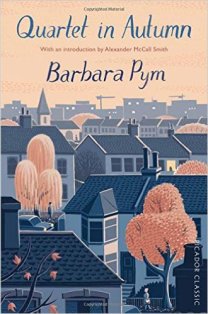 Anyway! Retirement is not the main subject of this post (though it’s related to it, in ways I’ll come back to): it’s just the context for how, at our nice lunch, I ended up mentioning Barbara Pym’s
  This is not to say that there are not pleasures to be had in the kinds of professional reading I’ve mentioned, or that English professors don’t ever want to do that reading. Of course they — we — do. But it’s still reading for work, and it’s pretty clear that “how do you find time to read?” really means “how do you find time for reading that isn’t for work?” Again, this is a question that can be tinged with envy, as if to say the person would also like to do that, but it’s also implicitly, inevitably, judgmental: “why aren’t you as busy with work as I am — why aren’t you too busy to read?”
 But the truth is, I’m probably not, if by “busy” you mean spending every available minute doing academic work — though that depends, of course, on how you define “working” (not to mention “academic”). I have
