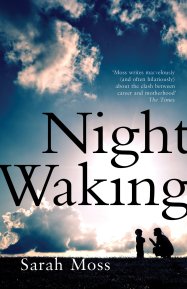
I stood up and slammed my hand into the mattress next to his head. He screamed. I shook his cot.
‘Moth, for fuck’s sake go to sleep right now. If you don’t go to sleep this minute, I’m going to kill myself. I’m going to take a knife and kill myself. Is that what you want? Mummy will be dead and then you’ll be happy.’
My hands on the cot rail are shaking. I must not attack him. Must not touch him or I will put my hands round his neck and kill him. I cannot leave because I would never come back and I cannot stay because I am about to pick him up and ram his head into the wall until he stops making that intolerable noise.
‘Anna, what the hell are you doing?’
Giles grabbed my shoulder. I stopped myself before my fist connected with his arm.
‘I want three fucking minutes to myself. I want to pee. I want to have a drink of water. I want to brush my hair. I used to give lectures and write my book.’
It is apt, if unfortunate, that I’ve had trouble making my way through Sarah Moss’s Night Waking because I haven’t been sleeping well; by the time I’m done with reading I have to do, and do attentively, for deadlines, I have little energy left to concentrate on anything but a bit of Buffy. I’ll blame that same mental fatigue for my tendency to focus on the novel’s contemporary story without working as hard as the novel deserves to integrate it thematically with the interleaved historical material or to give due diligence to the epigraphs from various sources about child development.
I didn’t read Night Waking so badly that I couldn’t tell its parts are clearly all related, that they knit together into a pattern about the complexity of mother-child relationships and about motherhood as an intensely fraught role, both personally and socially. I just can’t articulate what that pattern is. Or maybe their collective point is not that intricate after all: maybe it is that, though we keep trying, it is impossible to “properly” understand or diagnose or theorize or perfect parenting: that really we all just muddle through in whatever way our historical and other circumstances dictate, and that there will always be someone there to judge us for doing it wrong even as there will always be at least a faint hope that, whether because of or in spite of us, things will turn out okay. 
Alternatively, maybe my reading was unbalanced because Moss wrote Anna’s voice so well that she overpowered the other more overtly intellectual aspects of the novel. I loved Anna–and by that I don’t mean that I liked her necessarily, though I mostly did. In many ways, actually, she is just the kind of unlikable heroine that many critics celebrate today: she is fierce, angry, bleakly witty, dangerously honest about her hatred of the daily demands and inanities of her small children. She is a good mother (my epigraph notwithstanding), by which I mean she loves her children in the profound, helpless way that has also been my own experience of parental love; she is vigilant and responsive and self-critical. But she is also bored, resentful, and near despair at the chasm between the life she once lived–self-directed, intellectually challenging, contemplative–and her current mind-numbing isolation and exhaustion.
Night Waking takes place on the fictitious Hebridean island of Colsay. Anna, her husband Giles, and their children Raph (Raphael) and Moth (Timothy) have moved there from Oxford so Giles can do research on puffins and also so that they can oversee renovations to a family cottage they plan to (and eventually do) rent out. In theory, and sometimes in reality, Anna is finishing a book about the paradoxical relationship between the Romantic idealization of childhood and the contemporaneous trend towards putting children in a range of ‘care’ or oversight facilities: “boarding schools, orphanages, hospitals and prisons.” She sometimes discusses her research, and Moss even includes bits of the book, with Anna’s reflections on and revisions to it–she captures the academic tone and the self-consciousness of the academic writing process perfectly.
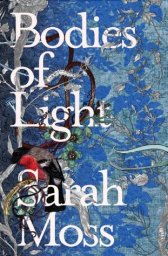
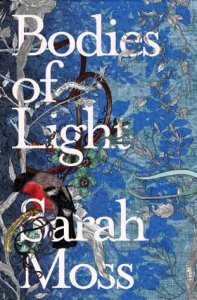 At first most of the tension of the novel comes directly from Anna’s personal situation, but when Anna and the children uncover a baby’s skeleton while digging in the garden, further layers accumulate. Anna becomes preoccupied with finding out the baby’s identity and thus gets drawn away from her book and into research on Colsay. We learn about the island with her, from her sources, and also from the 19th-century letters that make up yet another facet of the novel. The letters–which Anna eventually reads and incorporates into her work–are from May Moberly, younger sister of Alethea Moberly, the protagonist of Moss’s later novels Bodies of Light and Signs for Lost Children. (I somehow hadn’t realized that May’s story came first. On her website, Moss says “I knew quite a lot of May’s story when I finished writing Night Waking, although most of it wasn’t part of that book.”) May, a trained nurse, has been sent to Colsay, part of what turns out to be an unwelcome intervention into the island’s high rate of infant mortality.
All of these elements, and also Anna’s involvement with the family who come to Colsay to vacation in the cottage, are individually interesting and collectively resonant. What came through to me most clearly, though, was Anna herself: her struggles with guilt and boredom and sleeplessness–with the sometimes overwhelming conflict between love and desperation–while more extreme than my own, were completely, unhappily, familiar. As Night Waking ends, Anna’s life is changing for the better. If I’d read the novel fifteen years ago, I would have rejoiced in that cautious optimism, eagerly embracing the promise that balance can eventually return, as well as the message that it is both right and possible to reconcile being a parent with being (by) yourself. But now that my own children’s night wakings are long over and they are nearly independent, I am amazed and a bit frightened by how disorienting it is to face the very thing Anna and I both sometimes yearned for: their absence. Who knew–certainly Anna can’t imagine–that a room of one’s own just might, eventually, feel so empty.



 I was relieved to discover that nobody else in my book club liked A Fortunate Age either. For once, I feel reasonably confident saying it’s not me, it’s the book! I don’t think we’ve been so unanimous in our dislike of any our choices, in fact, since the disaster that was Paula McLain’s
  I particularly puzzled over why I found its detailed exposition so tedious. I am on record as a fan of exposition! But by half way through A Fortunate Age I was impatiently skimming through its dense paragraphs of stuff that just didn’t seem worth taking more time over. Rakoff inadvertently furnished a clue with her epigraph, which is from Daniel Deronda. (Beware: If you’re going to invite a comparison to George Eliot, it may well work against you!) True, Gwendolen Harleth is every bit as self-absorbed and ignorant of the wider world as the characters in A Fortunate Age, but (and for me this is crucial) George Eliot is not: her account of Gwendolen’s youthful egotism and willfulness is suffused with wry compassion; the context for Gwendolen’s story is not just the relentless minutiae of her immediate experience but everything else the narrator knows and thinks about the world she lives in. Gwendolen’s limitations do not limit her novel–but Rakoff’s characters are all we get in A Fortunate Age, and they don’t repay our sustained attention. I’m not saying the novel needed exactly what Daniel Deronda has–an intrusive narrator, for instance, or profundity, both of which are risky ventures if you aren’t George eliot–but it needed a broader perspective somewhere, a sense of what kind of story it is ultimately telling about these people and this age, especially since the book aspires (as its title indicates) to be about an era, not just a few individuals.
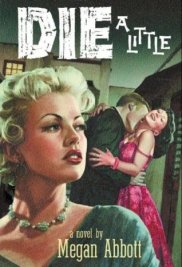 I didn’t think I had read any Megan Abbott before this year, but when I was at the library picking up You Will Know Me I realized that I had signed out one or two of her noir novels at some point in the past–probably while shopping around for ideas for Mystery & Detective Fiction or Pulp Fiction. I hadn’t put the pieces together, mostly because those books are (fairly cleverly) decked out with vintage-style covers which quite simply don’t look as if they belong with Abbott’s contemporary thrillers. (Shallow of me, I know.) I expect it’s also because I didn’t actually read them, or at least not more than the first few pages. It wasn’t personal; it’s just that noir is not my favorite genre–in fact, to a degree that might surprise the students in Mystery & Detective Fiction, I’m not a voracious reader of crime fiction at all, in any flavor, or not any more. When I do read mysteries nowadays, it’s almost always because I want to keep up with old friends, though I do try new writers intermittently, especially if there’s buzz, and sometimes I do like them–Tana French comes particularly to mind. Apparently, on the basis of that admittedly skimpy sample, Abbott was not among them.
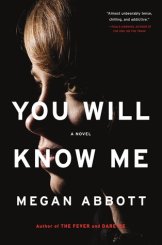 Anyway, lately I’ve been picking up enough buzz about Abbot (who has a new book out) that I thought I would give her what turned out to be another try. First I got hold of The End of Everything–but again I didn’t persist past the first chapter or so. It read like a YA novel, not just because it was centered on teenage girls but because it sounded as if it was written for them. Abbott seems like a self-conscious enough writer that I’m sure she was doing something on purpose with this style, and maybe she went on to do something twisty and surprising with it, but the scenario too seemed a bit pat and familiar and I wasn’t interested in reading on.
 I’m not necessarily calling You Will Know Me a bad book. These are (or are they?) the feelings, the reactions, a thriller depends on and aspires to–which is why I don’t typically read them. There is definitely overlap between thrillers and crime fiction, but for me, the best crime fiction depends on our taking a genuine interest in the people and the outcome, caring about what happens both because it’s possible for us to empathize with at least some of them and because of what’s at stake–the immediate consequences for people’s lives and then beyond that, the possibility of justice, if not realized, than imagined. Other kinds of fiction can also be very suspenseful: Daphne du Maurier or Sarah Waters, for instance. But a novel like Fingersmith is engrossing only initially because it makes us voyeurs and lures us in: then it turns on us, exposes us, and makes us interrogate and repent of our self-absorption. It shows us the moral consequences–for us and for its subjects–of the kind of objectification that a thriller depends on. Fingersmith is also 100 times more subtle and ambitious than You Will Know Me, but that’s not really my point, which is just that I found Abbott’s particular brand of suspense a bit distasteful and ultimately unrewarding.
 Perhaps tangential, perhaps not: A lot of people were pretty annoyed at the recent piece about Emily Brontë in the Guardian, and I agree it was a sloppy job, and unconvincing about its complaints. But





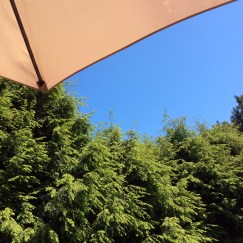 Here in Halifax we have been socked in with fog and cloud a lot lately, and the last two days in particular have been relentlessly overcast and muggy. The humidity alone is demoralizing, and the absence of sunlight just compounds the gloom. Happily we’re supposed to see at least some sun later today–but most of the rest of the week is forecast to be pretty grey. This kind of disappointing weather is typical of May and June here, but by July we’re usually enjoying a bit more brightness! As our long-awaited and always too-brief summer slips away, it’s hard not to feel a bit depressed, especially as constant construction noise in our usually tranquil neighborhood has made even the few really nice sunny days harder to enjoy. I have hardly spent any time reading on the deck, which is the one summer activity I really look forward to!
 My mopey mood has not been helped by the constant barrage of bad news, or by the ceaseless cascade of angry responses to one thing after another on social media. My twitter feed yesterday was heavily dominated, for example, by people being angry about a terrible “take” on libraries and an ill-conceived hit job on Wuthering Heights. I didn’t disagree with (most of) the complaints: I love libraries as much as the next person in my feed, and though Wuthering Heights is
 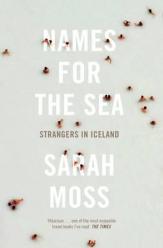 On the bright side, I just finished reading a pretty good book, Sarah Moss’s Names for the Sea, which I will write a bit more about here soon. I also really liked Kathy Page’s Dear Evelyn, which I just finished writing up for Quill & Quire, and now I’m focusing on a short essay on Carol Shields’ Unless, a novel that has come to be one of my very favorites. I also feel good about my piece on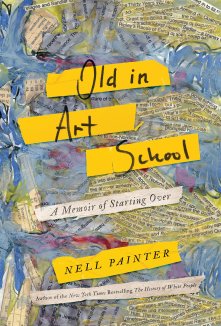



 I’m just back from a great week visiting family and friends in Vancouver. It was mostly family this time, as Maddie came with me. She had not been to Vancouver since she was 7 and has not had very many opportunities to spend time with my parents or my brother and sister and their families–it seemed important to make them a priority, and I’m glad we did. The highest cost of my professional life has been the distance it put between me (and thus my children) and them.
 For once I didn’t buy any books (Maddie and I frugally shared a suitcase, which meant there wasn’t room for much besides the essentials), but I did make off with two books from my mother’s collection: Jenny Erpenbeck’s Go, Went, Gone and Margaret Drabble’s The Pattern in the Carpet. I didn’t steal them! My mother is trying to clear some space on her shelves, so really I was helping. My airplane reading was Nell Painter’s awkward but engaging memoir Old in Art School, which I have now finished and will write more about here soon–once my jet lag subsides and I can concentrate properly. In the meantime, here are a couple of pictures from the trip. Vancouver is such a breathtakingly beautiful place! The last photo is of my parents’ garden, a verdant oasis that always reminds me of



 Against these rare soaring moments, and in contrast also to the tension and pathos of Adam’s anxiety for Miriam, Moss sets Adam’s wry commentary on being a stay-at-home dad and some terrific low-key satire of academic life. “Like all universities,” he says about the one where he teaches, “it is always building,” paving over the green spaces for car parks then digging up the car parks for new buildings so that “a swarm of angry drivers is permanently circling campus.” “I imagine there is some market research,” he goes on,
 I found The Tidal Zone gripping, moving, funny, and smart. It is written in a higher emotional register and with a faster pace than Moss’s Bodies of Light and Signs for Lost Children, which
  I don’t write up every TV show I watch, but I just finished a complete viewing of all 12 seasons of Bones and 12 seasons is a lot–so I thought it deserved a bit of comment. (Warning: spoilers ahead.)
 My biggest bone to pick with Bones is that the writers didn’t have the courage not to marry off Booth and Brennan. I understand that there’s a lot of cultural pressure to have a romantic relationship between your male and female lead and that this is something a lot of fans wanted. Watching the first few seasons in the wake of the #metoo and #timesup movements, though, I found it really refreshing to see a man and a woman in a working relationship who didn’t lust after each other. It felt really healthy, and I enjoyed the way Booth and Brennan pushed back against the constant assumption that because they trusted and fought for each other they must also be lovers. It’s true that marriage and children add elements to a series that are useful for both plot and character development–but I can easily imagine how much richer the arcs could have been if they had married other people, especially people outside law enforcement, and then dealt with the challenges of those people’s feelings towards their work and their partnership. I knew when I started the show that they did eventually marry, so I knew it was coming; still, I was disappointed. I got used to it, though, and I admit I thought their married relationship was pretty cute overall. I’m glad they never stopped bickering, at least.
 Probably my favorite thing about the show was the science. I read around a bit to see if it was any good, and I gather it’s at least not terrible, though of course it is all sped up and simplified. (I don’t know if any of the things Angela does are plausible: I found the “Angelatron” stuff the hardest to take seriously.) Regardless of the accuracy of it all, it’s always presented as if we should find it gripping, and I especially appreciated the unapologetic enthusiasm of Brennan and Hodgins for their work. (I loved Hodgins’s experiments.) Even Booth’s frequent impatience with the “squints” didn’t detract from the fact that in this show, nerds are not just cool–they are heroic! And with the exception of Avalon the psychic, the show had little truck with unscientific theories or methods. Booth’s “gut”–and his faith–are significant parts of his individual character, but solving the case always came down to the evidence.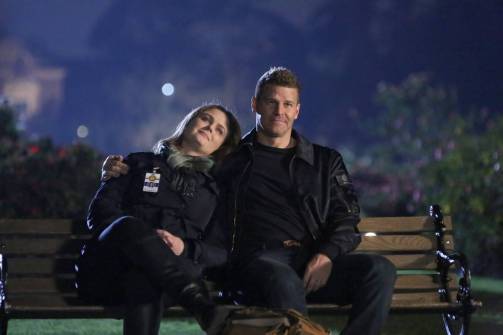
 Novel Readings