Solitude: it’s become my trade. As it requires a certain discipline, it’s a condition I try to perfect. And yet it plagues me, it weighs on me, in spite of my knowing it so well. It’s probably my mother’s influence. She’s always been afraid of being alone and now her life as an old woman torments her, so much that when I call to ask how she’s doing, she just says, I’m very alone.
Almost nothing happens in Jhumpa Lahiri’s Whereabouts. Its unnamed protagonist goes for walks in her neighborhood, visits friends, goes to a gallery or historic site or supermarket or to the seaside. As she meanders, so does her narrative, not in an elaborate internal monologue or an artful stream of consciousness but in a quiet unfolding of seemingly transparent observations and reflections. In her favorite museum, for example, she sits on a bench in a room with “a garden painted onto the walls, teeming with trees, flowers, citrus plants, animals.” As she sits, another woman—”about my age,” “she looks like a foreigner”—sits down, tired and seemingly listless, then “stretches out on the bench”:
That’s how she manages to fully inhabit and possess this room, crossing a certain threshold I’ve always respected.
The narrator is neither annoyed nor impressed by the tourist’s behaviour; she just notices it. The moment brings no epiphany, but it highlights something characteristic about her: even as she moves around, the narrator is closed up, reticent, cautious of boundaries. As she later points out, “when all is said and done the setting doesn’t matter.” We are both always moving and always in some sense at rest, because we are contained within ourselves; as the cliché has it, wherever you go, there you still are.
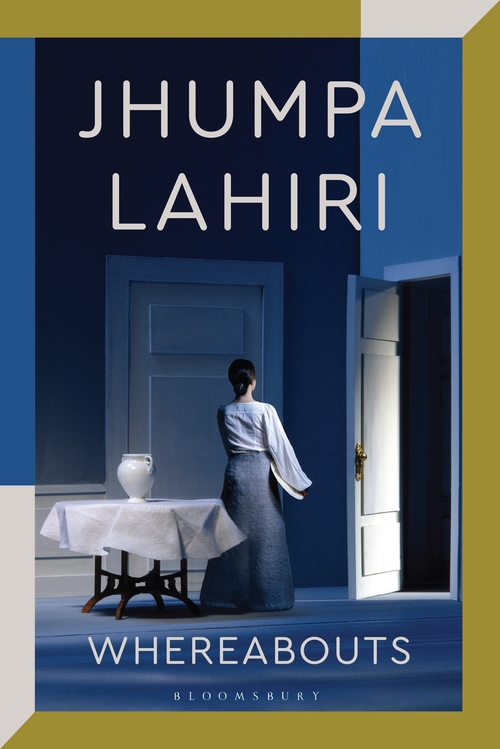 I thought Whereabouts really beautifully captured the paradox that isolation is not, or at least not only, about being alone. “If I tell my mother that I’m grateful to be on my own,” says the narrator,
to be in charge of my space and my time—this in spite of the silence, in spite of the lights I never switch off when I leave the house, along with the radio I always keep playing—she’d look at me, unconvinced. She’d say solitude was a lack and nothing more. There’s no point discussing it given that she’s blind to the small pleasures my solitude affords me. In spite of how she’s clung to me over the years my point of view doesn’t interest her, and this gulf between us has taught me what solitude really means.
Lonely people know that company can make you feel worse, not better. The encounters she has throughout the book often bring her happiness in the moment, or in memory, but almost as often they leave her sad or depleted, or just remind her of the fundamental gap even between individuals who love each other. This separation is not presented as tragic, but it creates an undertow of melancholy beneath the novel’s surface, which is so calm you could almost mistake it for placidity if it weren’t for the occasional hint of yearning or eruption of resistance—as when an importunate guest, married to an old friend, pulls a book from her shelf and asks to borrow it. “I can’t lend my book to this man, I just can’t,” she says, and we can tell why even before she realizes his small daughter has “drawn a thin errant line” on her white leather sofa that he has to have noticed and yet “he’d said nothing to the little girl, nothing to me.”
 A lot of emotion is submerged in Whereabouts. I didn’t love Lahiri’s Lowland because I found it too understated; I felt kept at too much of an emotional distance. As I began Whereabouts I wondered if I would feel the same way about it. I’ve been testy recently, too, about novelists whose critically acclaimed “spare” prose reads to me like an outline of a novel, more a conceptual exercise than a fulfilled promise. But I ended up feeling that there was a lovely congruence in Whereabouts between its form and its interests. Its small pieces all have their own quiet unity, like microfictions, and they accumulate to give a strong sense of the narrator’s experience of being herself in the world. We are not led to any big revelation: Lahiri toys with the possibility of self-discovery as her narrator’s trajectory, but in the end I think she sets that aside as too certain, too definitive, a result—not just for fiction but perhaps also for life. We aren’t ultimately going somewhere, the book suggests; we’re just, as the narrator says, “moving through.”
 Like many Canadians, I decided that the best way to mark Canada Day this year was to reflect rather than celebrate. I have remarked here
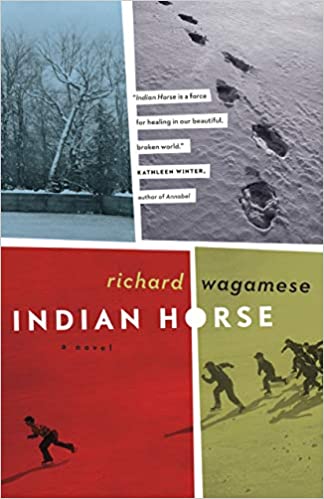
  Wagamese writes vividly about the landscape and the Ojibway traditions that shape Saul’s identity and the pain of being forced away from them and from his family. He also writes really well about hockey: as someone who has never been at all interested in hockey (or any sport), I was surprised how beautiful and exciting some of these sequences were to read. Hockey’s centrality to (many people’s idea of) Canadian identity makes Saul’s story of finding freedom on the ice and then having that joy and his spirit broken by racism an effective way of saying something broader about Canada’s rifts and failures as a nation. The road Saul takes from that breaking point back to some kind of peace, with himself and with hockey, is a hopeful version of a story that both the novel and the news tell us doesn’t always end that way.
 Memorable, readable, topical – and yet I also found Indian Horse a bit dissatisfying, a reaction I might have avoided if I had approached it as a young adult novel, which it turns out to be … maybe? I didn’t think it was when I ordered it, but as I was reading it and thinking that, for all its difficult subject matter, it seemed stylistically unsophisticated and often quite heavy-handed, it occurred to me that it felt like YA fiction and I looked it up and found that it won an award for YA fiction. Aha! That explained it! Or does it? Because I looked around some more and could not confirm that Indian Horse was written or marketed as YA fiction. That left me wondering if or how that question should matter to my judgment of how good a novel Indian Horse is. I don’t look down on fiction written for young(er) readers. I cherish and
 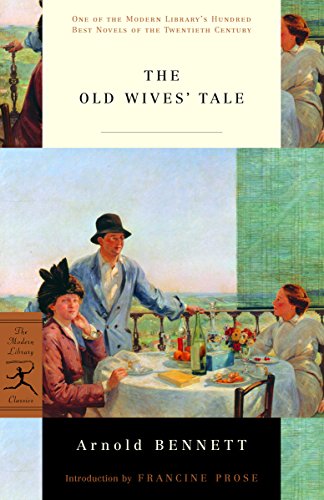 What with servants, chasms, and signboards, Constance considered that her life as a married woman would not be deficient in excitement.
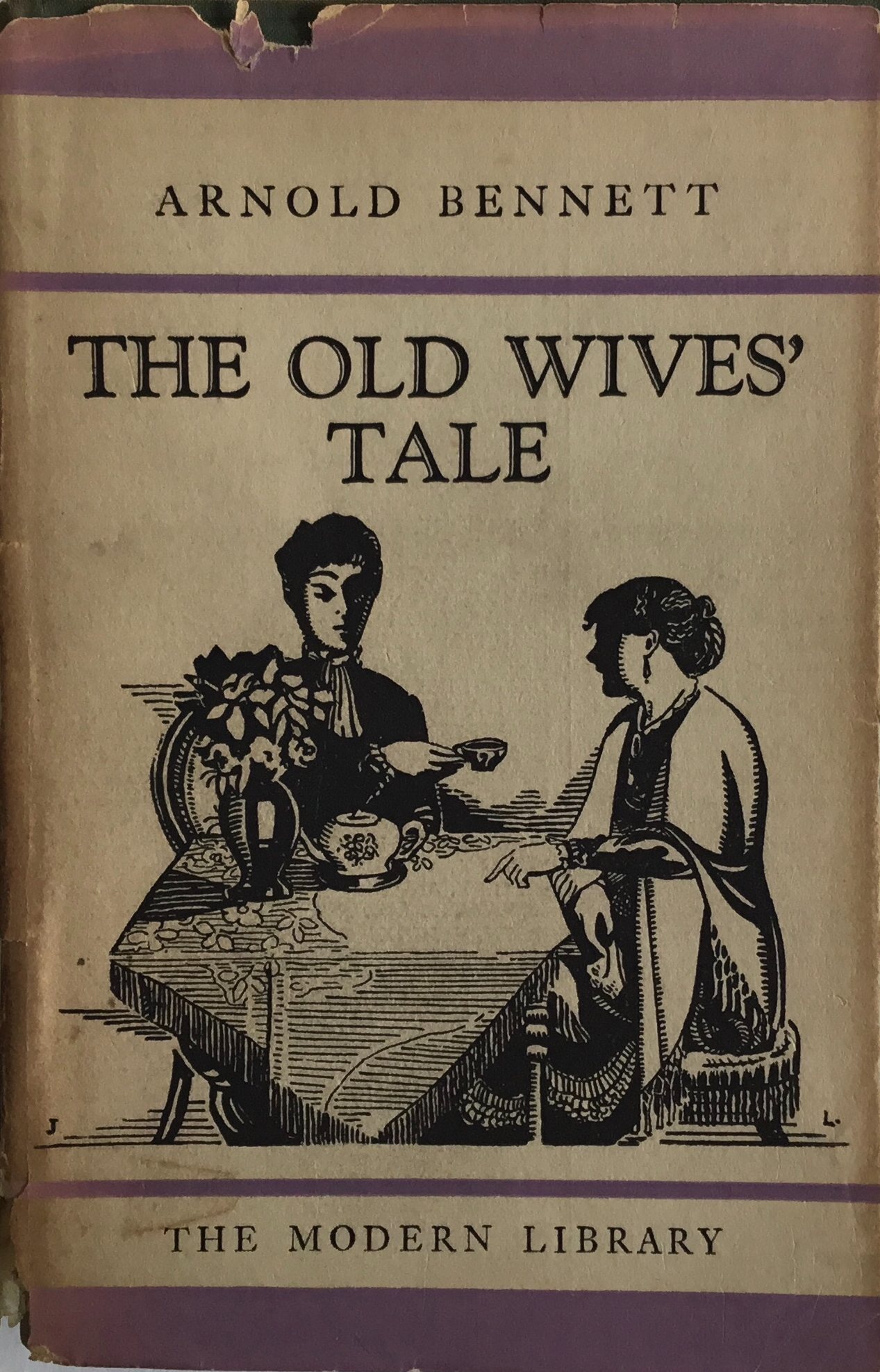
 It is certainly striking already how much Constance’s life has changed since we first met her. In these four chapters she has: gotten married and moved into her parents’ bed; hired a new servant; acquired a dog; been astonished by her husband’s installation of a signboard for the shop; discovered that her husband is a smoker; hosted her first family Christmas; had a baby (and been through a number of parenting crises); and lost her mother. Bennett’s choice of things to highlight confuses me: too much attention goes to what seem like the wrong things, unimportant things (the bed, the dog, the smoking, the signboard). But maybe it only seems this way because I don’t quite get what Bennett is doing with them. There’s such a long section about the bed, for example. In a way, it is a nice set piece: it effectively conveys the disorientation and poignancy of growing up, of realizing that your place in the cycle of life has changed. The description of Constance lying in bed waiting for her husband is also quite sensual:
 Probably the part of this instalment that surprised me the most, in that respect, was the lengthy section from infant Cyril’s point of view.
  Perhaps, after all, this Ph.D. is not worth my while . . . The world inhabited by my subjects still seems bright and seductive, and the subjects themselves—the Brownings and Harriet Hosmer and William Story and, above all, Mrs. Gaskell—are still alive to me. The more I know of them, the more I love them. But I couldn’t be further from them, here at my desk in the British Library . . . My research is laborious and rewarding: I am clawing at an enormous cliff face, hoping to tunnel through it, but the rock is unbreakable . . . The enormity of the task ahead—writing 100,000 words of pure, never-before-known knowledge—is off-putting, impossible, preferably avoidable.
 I don’t actually have a lot to say about Stevens’s book in particular. I more or less enjoyed it: it’s fine, if you’re into memoirs, which I am generally not. Stevens’s particular take on autobiography in this book strikes me as remarkably niche, which makes me wonder even more about how publishing works. How big can the audience be for a book about a (relatively obscure? I’d say so?) young person’s love life and academic difficulties and preoccupation with Elizabeth Gaskell? Perhaps it was


 Exhibit A here, for me, is the tooth pulling. The whole story of Mr. Povey’s toothache and his (highly relatable!) anxiety about going to the dentist is brilliant. “He seemed to be trying ineffectually to flee from his tooth as a murderer tries to flee from his conscience”: that’s a great line, capturing both the man and the mood perfectly. I loved Constance and Sophia’s trepidation as they prepare the laudanum (“Constance took the bottle as she might have taken a loaded revolver … Must this fearsome stuff, whose very name was a name of fear, be introduced in spite of printed warnings into Mr. Povey’s mouth? The responsibility was terrifying”)—and then the rise in both their courage and their impudence as they feel their power over their “patient.” But I did not expect the climax of this scene to be Sophia going at the unconscious Mr. Povey with a pair of pliers (“This was the crown of Sophia’s career as a perpetrator of the unutterable”); I didn’t anticipate her getting the wrong tooth after all, or her wanting to keep the tooth (eww?)—or its becoming the occasion for a terrible breach between the sisters, when Constance violates the sacrosanct privacy of Sophia’s work-box to seize “the fragment of Mr. Povey” and throw it out the window. The whole sequence is hilarious and graphic (that long description of the loose tooth in “the singular landscape” of Mr. Povey’s open mouth!) and, well,
 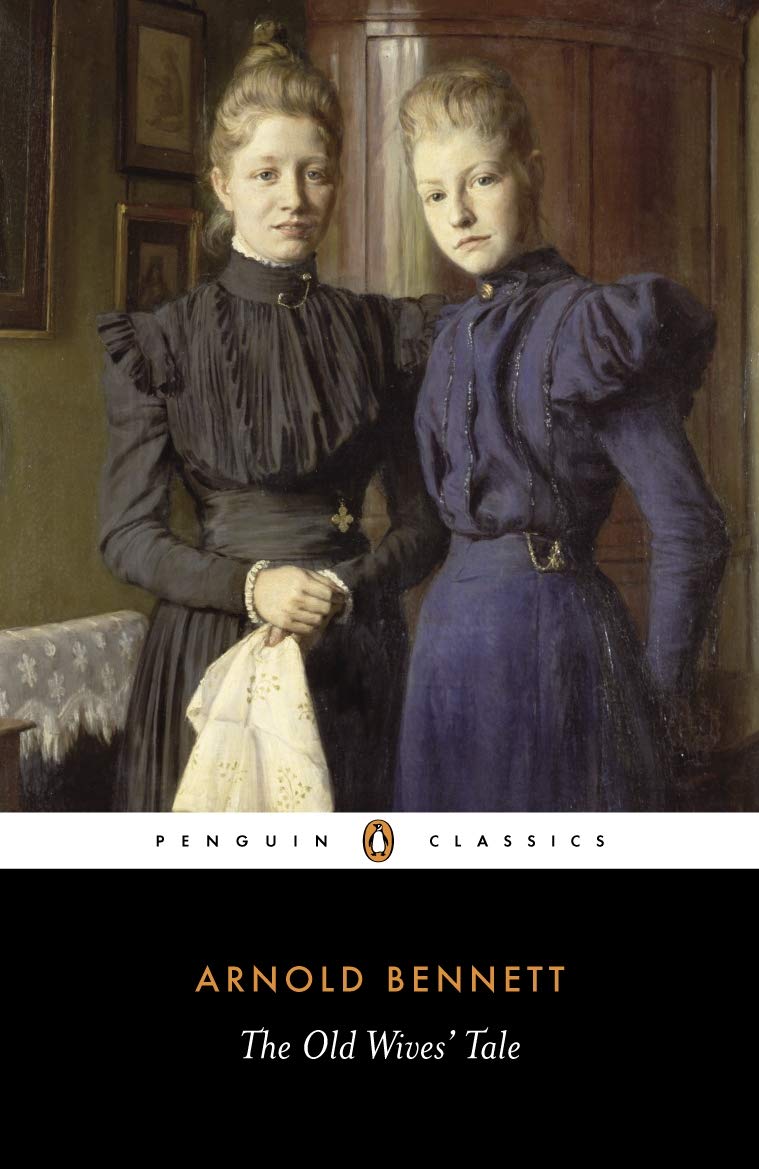 I suppose its main function is to help establish the characters of the two sisters, who certainly reveal themselves as they squabble over the tooth: “the beauty of Sophia, the angelic tenderness of Constance, and the youthful, naïve, innocent charm of both of them, were transformed into something sinister and cruel.” A lot of these four first chapters is about setting up the contrast between them, which I know becomes a major structuring principle of the novel as it goes on. Chapter 4 makes this point really clearly, as it looks at how they have “grown up”: “The sisters were sharply differentiated,” the narrator remarks, in case we couldn’t tell. Constance’s name anticipates her more homely path, while Sophia’s hints at her “yearning for an existence more romantic than this” (as the narrator says about Mrs. Baines’s unexpected kinship with her defiant daughter). I’m enjoying both sisters equally so far: it doesn’t seem as if Bennett is setting them up as antagonists, despite their differences. When Sophia showed her first signs of rebellion, I wondered if she was an Edwardian cousin of Jane Eyre or Maggie Tulliver—but (again, so far) I don’t think so. Her restlessness seems more about her personality than about her circumstances: do you agree? (I loved Mrs. Baines’s attempt to treat Sophia’s “obstinacy and yearning” with castor oil.) Similarly, Constance’s quieter conduct doesn’t (so far) seem like mindless conformity, or capitulation to family or societal pressures: it’s just who she is.
 Two other features of these early chapters that contributed to my sense of the novel’s strangeness, and then I’ll close, because the point of this exercise is to start a conversation, not try to “cover” everything! First, the elephant. I did not expect an elephant at all, much less a thumbnail version of “Shooting an Elephant.” What’s up with the poor elephant, “whitewashed” and shot by “six men of the Rifle Corps”? The thing about a detail like this is that while you can always explain it away as a plot device—in this case a spectacle to get people out of the house and thus leave Sophia there to encounter Mr. Scales and neglect her father for that fatal interval—that doesn’t solve the problem of why the author used this specific plot device. It could have been anything: a fire, a runaway horse, a tightrope walker, a live elephant!
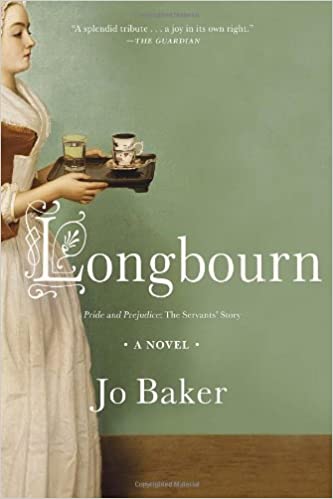 Elizabeth’s departure, once the rain had stopped, caused no particular trouble to anyone below stairs. She just put on her walking shoes and buttoned up her good spencer, threw a cape over it all, and grabbed an umbrella just in case the rain came on again. Such self-sufficiency was to be valued in a person, but seeing her set off down the track, and then climb the stile, Sarah could not help but think that those stockings would be perfectly ruined, and that petticoat would never be the same again, no matter how long she soaked it. You just could not get mud out of pink Persian. Silk was too delicate a cloth to boil.
 Jo Baker’s Longbourn would be a pretty tedious novel if all it did was highlight or criticize these aspects of Austen’s “light, bright, and sparkling” original, and (to me at least) it would also be a boring one if all it did was tell the same story as Pride and Prejudice from a different point of view. I had avoided reading Longbourn up to now because I was so sure it would fall into at least one of these traps, or just be bad by comparison, as so many novels “inspired” by great novels are. (
 I’m undecided about that (and I’d be curious to know what other people think). Certainly some of Longbourn‘s appeal comes from its engagement with its
 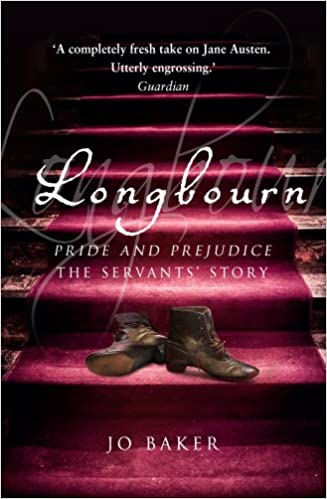 But Baker isn’t rewriting Pride and Prejudice, which carries on cheerfully, and more or less exactly as Austen wrote it, even as Baker’s own drama plays out. She adds some pieces to it: the most important one is Mr. Bennet’s early dalliance which resulted in the living son he and Mrs. Bennet never have (thus the whole rest of Austen’s plot!). I wasn’t convinced that this storyline really fit Mr. Bennet, but I liked the way the presence of this illegitimate heir added to Austen’s critique of the laws of inheritance: it highlights a different kind of injustice from the one the Bennet sisters face. (Some of the plot points around this son struck me as a bit too pat, but the section about his wartime experiences is really well done—gripping, even harrowing, in a most un-Austen-like way.) I particularly liked the way Baker used Wickham: everything about his role in her story seemed entirely in keeping with the man we know from Austen’s. Mostly, though, Austen’s characters are peripheral in Baker’s novel, which I thought was really smart. It gives Baker room to develop her own interesting characters, to set her own vivid scenes—in short, to write her own good novel, without relying on Austen to win the game for her.
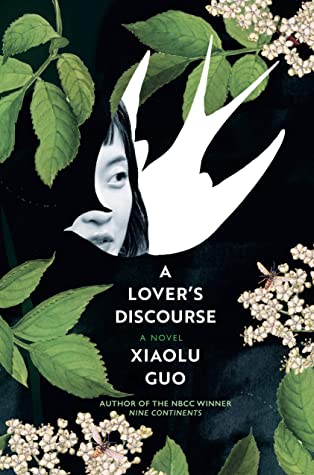 “I am feeling wordless. I call it wu yu. It’s like I have lost my language.”
 My confusion-slash-frustration arose from the elements around the novel’s simple plotline—or, arguably, missing from it. One example: The epigraph for each segment is a bit of dialogue from that segment. Why? Does that mean the rest of the section is just there to contextualize those lines? But what’s the value of reading them once out of context and once in it? It seemed both affected and repetitive. Another: What’s the significance of the directional names for the book’s larger divisions (West, South, Up, Down, etc.), which don’t really seem to apply to anything in them? Do they mean that the novel itself is about (finding? losing?) direction? Is disorientation a theme, a formal premise? Along those lines, are my largely unsuccessful attempts to discern meaning and patterns across the novel as a whole evidence that the book is doing what it wanted to, or that I’m reading it badly, or that it is not just impressionistic (artfully so) but incoherent (badly written, or imperfectly conceived)? Is my frustrated wish for the book to explain itself better actually the author’s desired effect, a challenge to my own reading habits? I do tend to value books that feel finished to me, rather than leaving large gaps for me to fill in myself. (Am I, in theory at least, “losing” one reading language and gaining another?)


 The books I read this week were all balanced on an emotional knife edge, mostly between being funny and being mournful but also, in the case of Nancy Mitford’s Love in a Cold Climate, between being funny and being awful. They all kept me engaged, but in the end it wasn’t a particularly nourishing stretch of reading, by which I mean they all left me feeling a little smaller and sadder than before, a result which is less about content or story (because of course a tragic book can, paradoxically, be very exhilarating to read) but about mood and tone.
 The first of them, Anita Brookner’s Hotel du Lac, was a reread, though after such a long gap (I first read it in 2009) that many of its details felt new to me. When I commented on it here
  Angela Huth’s Invitation to the Married Life was another reread, though I read it so long ago that I never even blogged about it—so, before 2007. That it—
 I hadn’t read Love in a Cold Climate before. A few years back I read The Pursuit of Love, which I
  Even if we resolve that question in the novel’s favor, what should we make of the treatment of Boy Dougdale, also known as “the Lecherous Lecturer” because he preys on young girls? I say “preys” but, though most people in the book profess to find his conduct shocking, they also find it hilarious and they certainly don’t find it criminal. In fact, when Polly decides to marry him, everyone blames him, not for having sexually assaulted her when she was just fourteen, but for his having done “all those dreadful things” to her so that “now what she really wants most in the world is to roll and roll and roll about with him in a double bed.” Some of his acquaintances feel sorry for him being drawn into such an odd marriage, though there are some notes of judgment: “Pity him indeed! All he had to do was to leave little girls alone,” says Aunt Sadie, to which Uncle Davey replies “It’s a heavy price to pay for a bit of cuddling.” Later, after visiting Boy and Polly in Sicily, where they live in scandal-driven exile, Davey says
