 One of my plans for my upcoming sabbatical is to reconsider and possibly refresh my reading lists for courses I offer frequently. It may be that the reading and rereading I do confirms my usual selections, or that it gives me ideas for mixing things up a little, or that I get inspired to rethink my approach altogether–we’ll see! It isn’t that I’m dissatisfied or trying to fix anything in particular about these courses, which usually go very well. It’s just that book orders for the next year come due in the middle of term when I’m too busy to do this kind of exercise. I don’t want change for the sake of change, but I also don’t want to slide into complacency or let my classroom conversations stagnate.
First up for reconsideration are English 3031 and English 3032 (The 19th-Century British Novel from Austen to Dickens and from Dickens to Hardy). They replaced a full-year survey course on the novel that covered the 18th- and 19th century (that was one of the first courses I taught at Dalhousie and it was a lot of reading and a lot of fun!) and a full-year Honours seminar on the Victorian novel (also a lot of reading and a lot of fun!). Now they are are sandwiched in between other more or less period-specific fiction courses: The Novel to 1820 (“from Behn to Austen”) and Fiction of the Earlier 20th Century (not necessarily British) and British Literature of the Earlier 20th Century (not just the novel). In addition, we offer a range of genre-specific courses likely to include a fair amount of 19th-century British fiction, including Mystery & Detective Fiction, Gothic Fiction, Foundations of Science Fiction, and Children’s Literature. I also regularly offer a 4th-year seminar on sensation fiction.
 This context explains the choices I typically make for the 19th-Century Fiction Austen-Dickens-Hardy courses: in our curriculum, there are other courses that focus on particular kinds of fiction from the period, so I stay away from works in those categories (such as Frankenstein or Dracula, for example, or Alice in Wonderland) that I know students will read elsewhere and focus primarily on realist, domestic, historical, or social problem novels. I start with Austen, but I tilt English 3031 towards the Victorians, rather than the Romantics, because they have their own classes; similarly, I end English 3032 with Hardy and (with regret) leave Forster and his fellow Edwardians to the later courses.
Over the years, it turns out I have taught 31 novels in these courses, in many different combinations. Here’s the complete list:
- Austen: Pride and Prejudice; Persuasion
- Braddon: Lady Audley’s Secret (I have assigned Aurora Floyd in the sensation fiction class)
- A. Brontë: The Tenant of Wildfell Hall
- C. Brontë: Jane Eyre, Villette
- Collins: The Woman in White; The Moonstone
- Dickens: Bleak House; Little Dorrit; A Tale of Two Cities; Great Expectations; Hard Times; David Copperfield; A Christmas Carol
- George Eliot: Adam Bede; Felix Holt; Silas Marner; The Mill on the Floss; Middlemarch (I have assigned both Romola and Daniel Deronda in graduate seminars but never in undergraduate courses)
- Gaskell: Cranford; Mary Barton; North and South
- Gissing: The Odd Women
- Hardy: Jude the Obscure; Tess of the d’Urbervilles
- Scott: Waverley; The Heart of Midlothian
- Thackeray: Vanity Fair
- Trollope: The Warden; Barchester Towers (I have assigned He Knew He Was Right in an upper-level seminar but never in an undergraduate course, and also The Eustace Diamonds in a graduate seminar)
To be clear, this is not a list of all the books by these authors, or by 19th-century novelists, that I have read: it is just a list of the titles that I have assigned for our core undergraduate courses on the 19th-century British novel. (We have separate courses on 19th-century American fiction, and on Irish literature from 1700-1900.)
 Besides books like Frankenstein that I know are covered frequently in other courses, probably the most obvious absence from this list is Wuthering Heights. I have read it more than once but never taught it, for the simple (if perhaps indefensible) reason that I like the Brontë novels I do teach much better and the maximum of five books per course that seems realistic to me is a zero-sum game. Also, my colleague Marjorie Stone, who loves Wuthering Heights, regularly offers an upper-level seminar on the Brontës. This winter is her last term in the department, however: her impending departure is another reason I am taking stock in this way. Wuthering Heights is (sigh) near the top of my “reread in 2019” list.
What alternatives might there be to other books on this list? There are many I’ve considered before and rejected, either from lack of interest or for logistical reasons. I can’t imagine choosing Agnes Grey, The Professor, Shirley, Sylvia’s Lovers, or Ruth, for example, over the books by those authors already on my list. Where the choice seems clear to me, I go with the best books. (Remember, it’s a zero-sum game.) I think Wives and Daughters is wonderful but it’s very long and I dare to assign only one very long novel per course: maybe one year Wives and Daughters will win this peculiar lottery, but that would mean no Vanity Fair, or no Bleak House, or no Middlemarch. That’s also the case with No Name and Armadale: I really enjoyed them, but they are very long and, for my purposes, The Woman in White is just fine. I would like to teach The Way We Live Now–but again, it would require balancing it out with shorter books across the rest of the term. This is always possible to do, but so far I haven’t felt that these other Very Long Books are worth displacing my favourites for.
 So besides Wuthering Heights, what other alternatives am I contemplating? Well, to start with, I’m reconsidering the way I have always avoided Frankenstein and Dracula, as well as Dr. Jekyll and Mr. Hyde and The Picture of Dorian Gray. For one thing, soon we’ll be down to one Romanticist in the department and it isn’t clear how often Gothic Fiction will be taught after that. For another, it has been a while since I read any of these novels and I’d like to see how they’d fit into (or disrupt) the discussions I usually have. There are Dickens novels I’ve never read (including Nicholas Nickleby and Dombey & Son) and ones I haven’t read in years (including Oliver Twist and Our Mutual Friend): especially since I assign Dickens in both 3031 and 3032, it would be nice to have more options. Gissing’s New Grub Street is on my re-read list: The Odd Women always goes over well, and New Grub Street seems very timely. It has been decades since I read The Mayor of Casterbridge, The Return of the Native, or Far From the Madding Crowd: I should at least check if Tess and Jude really are my best options for Hardy. Much as I love Waverley, it is always a very hard sell; I’d like to give both The Bride of Lammermoor and Ivanhoe another look. I’ve only ever assigned Margaret Oliphant in a graduate seminar: I’d like to review at least Miss Marjoribanks, to see how it might go over in an undergraduate course. I haven’t read any Meredith, so I will probably give The Egoist a try. I’ve never read any Kipling, either; 2019 will be the year in which I finally read Kim.*
 There’s another dimension that I need to give further thought to, and that’s which less canonical writers or genres I should work into these plans. I’ve made it this far without reading any novels by Bulwer Lytton or Disraeli or Charlotte Yonge, any “silver fork” novels or Newgate novels or, besides The Odd Woman, any ‘New Woman’ novels. I haven’t read Ouida or Marie Corelli or Amy Levy, or H. G. Wells or* …. but then, the list of books I have read is always (and always going to be) much shorter than the list of books I could have read. The challenge is always deciding which of those are books I really should have read. In the end it’s about defining purposes and drawing lines, which are always exercises in artificial precision. For my current fairly narrow purpose–refreshing the reading list for two undergraduate courses already defined by what they are not–the authors I’ve already identified as priorities are probably more than enough to take on, but if there’s a story about the 19th-century novel from Austen to Hardy (that is, roughly from 1815-1890) that you think I can’t tell, or could tell better, with the help of someone I seem likely to overlook, I’d be happy to know!
*If you are shocked at these gaps in my literary education, you should also know that for a long time my ‘Humiliation’ winner was The Heart of Darkness, but I did finally read that. I don’t think either The Egoist or Kim would win the game.
 It’s hard to know when to write these year-end posts: there’s always a chance that a book I read in the very final days of the year will be a real game changer! It’s a quiet snowy day today, though, perfect for a little blogging, so I’ll go ahead and write up my regular overview of highs and lows of my reading year and give any late entries their own posts.
 I read quite a few books this year that I thought were near misses: good, even very good, but slightly dissatisfying, for one reason or another. Edna O’Brien’s
  I read a couple of critical darlings that did not quite work for me, though both Ali Smith’s

 I took
 I’m not quite ready for my traditional posts about what I’ve read and written in the past year: for one thing, I often read at least one really great book between Christmas and New Year’s, when the holiday bustle has ended and the book-shaped packages under the tree have revealed their secrets! (In fact, I’m currently reading Emily Wilson’s translation of the Odyssey, which seems a likely contender for any “best of 2018” list.) That doesn’t mean, though, that I’m not looking back over 2018 and ahead to 2019, trying to figure out where I’ve been, where I am, and where I’d like to be going.
 I do have a sabbatical plan–you have to submit one as part of your application–and also some existing deadlines I need to meet, so I’m not heading into the new year entirely aimless. Still, the precise form my work on that plan will take is really up to me, and figuring that out will be my first and possibly hardest task. A crucial context for me is what I did on and then after my previous sabbatical, in Winter 2015. Over that winter I threw myself into writing what I hoped (and perhaps still do hope) would become a book of “crossover” essays about George Eliot. I wrote a lot of material, and then towards the end of the term I peeled off two parts that I eventually published as self-contained essays. (I did not really appreciate at that point how bad it might be for the book I was imagining to publish a lot of its intended content first.) By and large I enjoyed doing that writing: I felt very motivated and productive, and across my sabbatical my confidence in my overall portfolio grew–which is why I decided, at its end, that I was ready to apply for promotion. This administrative project, too, was initially exhilarating: I had done so much (I thought), in so many different forms, since my first promotion, and the result was (I thought) a body of work I was rightly proud of, some of it well within the usual academic boundaries, but a lot of the more recent work reaching across them or representing my principled resistance to them.
 In the last couple of years the kind of writing I’ve been doing has, more and more, been
  The other question is whether I want–or in some sense need–to stop working (only) in small increments and re-commit myself to a book project, and if so, of what kind? If an essay collection of the kind I have long been playing around with is a non-starter unless I self-publish it (which I might yet do), is there another kind of book I would feel was worth the long-term single-minded effort to produce? I have long objected to the academic fixation on “a book” as a necessary form. I suspect, now, that there is a similar bias in non-academic publishing, or at any rate that one way to get off the kind of plateau I am on is to publish a book of my own which might (at any rate, it seems to have, for others) give me increased visibility and credibility as a critic. I resist that implicit pressure too: I think it’s a good thing to have practising critics who are one step removed from the immediate business of publishing. How long, I wonder, or in what venues, do you have to write reviews before you are perceived as having any stature as a critic, though? How is that kind of professional credit or reputation earned? Do I care? I guess so, or I wouldn’t be wondering! But should I? Is it possible, even if it might in theory be desirable, not to eventually start thinking about going further, doing more, being more?
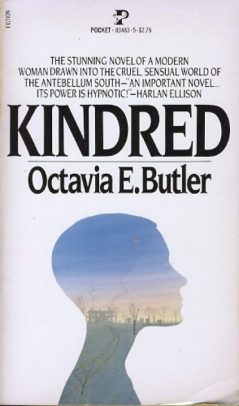 Thinking more about Kindred after I’d finished reading it, I wondered if I would notice more subtleties in it if I knew more about the specific genres it combines: it is a hybrid of time-travel fiction and the slave narrative, and while I have read an example or two of each of these, I have never given sustained thought to their conventions and I have little, therefore, to compare Butler’s effects or choices to. The reader’s guide in my edition includes an essay by Robert Crossley that says some things about these contexts. “One of the protagonist’s–and Butler’s–achievements in traveling to the past,” he says, for instance,
 Not great, just fine. Its strength is its protagonist, who I found just the right side of too contrived as a misfit, a figure of semi-comical pathos with a running undercurrent of desperation. That deeper, darker layer, however, for me was the novel’s weakness. Eleanor Oliphant Is Completely Fine purports to be a novel about


 The main driver of the novel’s plot is less the distribution of the postcards themselves than the investigation launched to discover the writer of these ineffectually seditious messages. It is led by Inspector Escherich, who pursues the criminal he dubs the ‘Hobgoblin’ more out of stern professionalism than any particular dedication to the Führer. When he finally has the Quangels in custody, though, Otto “vanquishes” him with the reality of this long-awaited victory: in “just” doing his job, he has been willingly complicit in the regime’s cruelty and injustice. “You’re working in the employ of a murderer,” Otto points out, “delivering ever new victims to him. You do it for money; perhaps you don’t even believe in the man.” Pressured by the celebratory SS to join them in “baptizing” Otto by smashing their glasses over his head, Escherich has “the sense that he was hitting out at himself, striking with an ax at the roots of the tree of his own life.” Unable to bear what he has done and who he has become, Escherich–“Otto Quangel’s only convert”–takes his own life.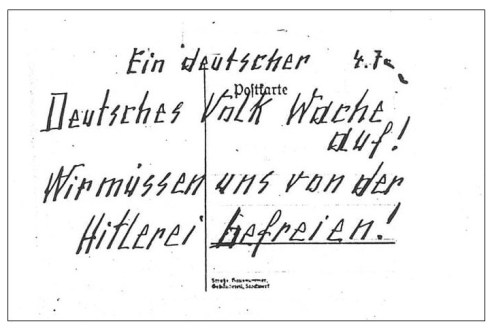
 More clutter to clear out of my head, if I can — something that has been on my mind for about three weeks now, but in an unfocused or inconclusive form. In fact, I’ve started and then deleted a couple of posts about this already; I just couldn’t seem to get very far before either deciding I didn’t want to get into it after all or running out of energy. But now the topic feels like mental debris, so let’s see if I can make any kind of sense of it so I can move on. One thing my blog is supposed to be for is freeing me to write about things without having to be absolutely certain about them, after all.
 This is all good! That is, it is all good if these are the activities you want your students engaged in–and I genuinely have no problem with that. I’m just not interested in doing that kind of thing myself, and what I was trying to figure out is why, and then whether this signals a deficiency of some kind in my own pedagogical approach. After some reflection, I decided the answer to the first part of that question is that increasingly, I do not approach my classes as steps towards making students into scholars, as part of a program designed to train them to do academic things. Instead, I aim to engage and train them as readers–attentive, well-informed, rigorous readers, to be sure, but with their eyes first and foremost on the page, not on contexts or scholarly apparatus or digital tools.
 I’m not saying that the kinds of hands-on learning students get from constructing timelines (or whatever) can’t contribute to the conversations I prioritize, and clearly it can also give them valuable experience of other kinds, including building the skills set required to work with these kinds of digital tools. I can’t shake the feeling, though, that these projects take time away from, or redirect attention from, the books themselves, and there are so few contexts in which a sustained focus on reading is even possible, much less required and supported. If my own work and interests were in the field of book history, I expect I would find these tools more personally congenial. At the same time, my own estimation of the value of some forms of scholarly work has also eroded so much in the past decade or so–my own impatience with its insularity, with the feeling of playing insider baseball, has gotten so acute– that I have far less interest in drawing students into that world than I have in … well, in doing what I do in my own classes, which is pretty well documented here across the decade-plus history of
 When you don’t blog for a while, or at least when I don’t, one of the obstacles to getting back into a routine is the clutter of possible things to blog about, which becomes strangely unmotivating because it’s hard to pick one topic and just get started. This is an attempt to clear out some of that clutter!
 The one stand-out experience in my recent romance reading was Kate Clayborn’s Best of Luck, which I did not pick up haphazardly at the library but had pre-ordered on the strength of the first two books in the series, Beginner’s Luck and Luck of the Draw. I liked the first one just fine and then really liked the second one a lot; both have also stood up well to rereading. Best of Luck is a good finale for the trilogy. Like the first two, its biggest strength is its characters, who have both distinct and plausibly complicated personalities and histories and genuinely interesting work to do–something Clayborn gives a lot of attention to. I like that: I have a documented fondness for ‘neepery’ and each of her books offers it in spades. The books are not particularly funny or witty, but they are not ponderous, and they earn their angst rather than piling it on (which is what I thought happened in my one excursion into Alisha Rai). The pacing is good and the alternating points of view for each chapter keeps things interesting as the conflicts develop and then resolve. I realize these comments are sort of generic! But that’s because reading and liking Best of Luck after reading and either not liking or not caring much about a handful of other books in the same genre got me thinking about what makes a romance work for me. Voice has a lot to do with it, and so does freshness, and for me the ‘Chance of a Lifetime’ books get high marks for both.
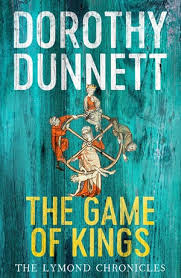
 The other book I was reading for a while (inspired by my not entirely successful experience with N. K. Jemison’s The Fifth Season) was The Hobbit. It turns out that The Hobbit (like Little Women) is a book I know so well from my childhood that it is almost impossible for me to really see the words on the page. It isn’t so much that I read it often as that my brother had the marvelous
  Novel Readings