Novel Readings 2024: Part II

What a nice conversation unfolded under my previous post! I suppose it isn’t surprising that those of us who gather online to share our love of books also share a lot of experiences with books, including making often difficult decisions about what to keep. Acquiring books is the easy part, as we all know, especially because our various social channels are constantly alerting us to tempting new ones. I have really appreciated everyone’s comments.

Now, about the books I actually read and wrote about in 2024!

My Year in Reading

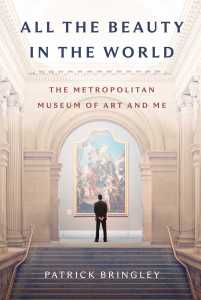
When Trevor and Paul once again invited me to share my ‘book of the year’ with them for their year-end episode, it took me no time at all to decide on J. L. Carr’s A Month in the Country. I haven’t had any second thoughts about that choice—it is, as I said to them, pretty much a perfect book. But I think there was some recency bias in my selection: going back through my notes and posts, I see two other books that I loved every bit as much. The first of them, Samantha Harvey’s Orbital, was one of the first books I read in 2024 and I thought it was completely marvelous, so I was thrilled to see it go on to win the Booker Prize. The second, Patrick Bringley’s All the Beauty in the World, is a thoughtful and wide-ranging and sensitive and thought-provoking meditation on art and life: I read it in a library copy, but I keep thinking (after all that talk about pruning and purging!) that I’d like to have my own copy so that I can go back to it whenever I want. I do wish there was a fully illustrated edition—it would have to be very expensive, I suppose, but it would be worth it.
There are another dozen or so titles that stand out to me as particularly rich reading experiences. My blogging was a bit fitful in 2024, but usually when a book really excited me (for better or for worse) it got its own post, instead of being included in a hastier round-up, so it wouldn’t be hard to find out which ones they were by just scrolling back through my year’s posts! But I will highlight a few. One absolute delight, which I did not in fact write up individually (but I read it in February, the month I actually moved, so it’s amazing that I wrote anything at all!) was Herbert Clyde Lewis’s Gentleman Overboard. I can’t recommend this book highly enough. Its premise is so simple (it’s about a man who falls overboard—surprise!) but between his thoughts as he tries to stay afloat and the reactions of those left behind on the ship, the little episode takes on real philosophical, even existential, weight without every becoming ponderous. Another book, in a completely different style, that also takes on Big Issues is Joan Barfoot’s Exit Lines, a darkly comic novel about what makes life worth living, and who has the right to decide what those reasons have run out. Sarah Perry’s Enlightenment, which I reviewed for the TLS, also takes into questions about the meaning of life, but with such delicacy and tenderness; it is my favorite of Perry’s novels to date (although if your tastes are more Gothic, I highly recommend Melmoth, which I thoroughly enjoyed). I suppose it stands to reason that someone whose favorite novelist overall is George Eliot would appreciate novels with a philosophical dimension. The challenge, as Eliot herself noted, is never to “lapse from the picture to the diagram,” and I think each of these novels in its own way invites us to contemplate important questions without becoming programmatic.
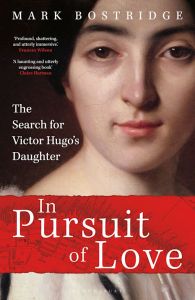
I read two fabulous memoirs in 2024: Mark Bostridge’s In Pursuit of Love (which deserved but did not get its own post) and Sarah Moss’s My Good Bright Wolf (which did). Bostridge’s book is actually a hybrid of biography and autobiography. It is mostly about the sad life of Adele Hugo, Victor Hugo’s younger daughter, who broke away from her father’s overbearing presence and confining household to follow the soldier she’d fallen in love with all the way to Halifax and then to Jamaica. Unfortunately, he was not in love with her, which makes the whole saga both more dramatic—imagine the daring it took, in the mid 19th century, for a young woman to cross the oceans to get what she wanted—and more tragic. Bostridge weaves into this reflections on his own relationship with his father and his own pursuits of love. It’s a compelling narrative on both counts, and the local colour added to its interest, as Bostridge retraced Adele’s journey to Halifax and explored her haunts here (and had dinner with me, incidentally).

Ann Schlee’s Rhine Journey has been highlighted by many others in their ‘best of’ lists; I was very impressed by it too, as I was by Dorothy Baker’s Cassandra at the Wedding. Neither of these is exactly a feel-good read! Another book that has consistently had a lot of buzz in my reading circles is Dorothy B. Hughes’s The Expendable Man; I finally read it and yes, it is indeed excellent. I think I consider In a Lonely Place a slightly better novel (more subtle, more artful) but The Expendable Man is so clever and does such important things within its noir-ish form that I couldn’t resist adding it to the reading list for my Mystery & Detective Fiction class this coming term.  I was not so enthralled by Claudia Piñeiro’s Time of the Flies, which was the least intelligible and satisfying of her novels for me so far. I got a lot out of reading and thinking about Denise Mina’s The Long Drop, but I’m still not entirely on board with true crime as a genre—although, perhaps inconsistently, I am not bothered by historical true crime, and along those lines I quite enjoyed my King’s colleague Dean Jobb’s A Gentleman and a Thief, about the jazz-age jewel thief Arthur Barry. 
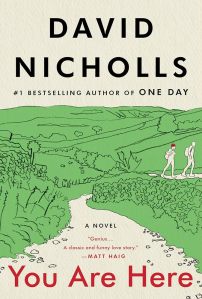
In lighter reading, I loved David Nicholls’s You Are Herehe seems to be a really reliable sort of writer, one whose fiction is accessible without being hasty or flimsy. I still think often about Us, which I read well before my own separation, not because its protagonists are like my own family at all, but because it shows them grappling with changing needs, and just with change, in really perceptive but not melodramatic ways. I discovered (belatedly!) Katherine Center and found much to enjoy in her intelligent romances; I read several of Abby Jimenez’s novels and then decided I’d had enough.

My book club got on a French kick that began with Diane Johnson and took us through de Maupassant, Colette, and Dumas (fils). (I also read Zola’s La Bête Humainethe One Bright Book people made me do it! Ok, they didn’t make me, but I was inspired to read it so I could properly appreciate their episode. The novel is . . . a lot! And Sarah Turnbull’s astute and lively Almost French was an unanticipated connection between these French books and the other memoirs I read.) We chose Elizabeth von Arnim’s Vera for our last book of the year and it is another I highly recommend, especially if you read and liked Daphne du Maurier’s RebeccaVera has a lot in common with Rebecca—the whole plot, really—but the tone is quite different, darker, I would say, because the shadows in Rebecca are Gothic ones and so can be shaken off more easily than the more chillingly realistic menace von Arnim offers up.
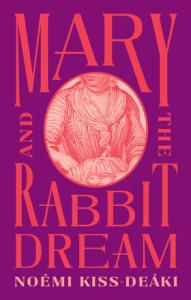
If I had to identify a low point of my reading year, it would probably be Noémi Kiss-Deáki’s Mary and the Rabbit Dream, though I’m a bit reluctant to characterize it that way. There is so much that’s interesting about it, and its style (while off-putting to me) does have an idiosyncratic kind of freshness to it:  it doesn’t sound like any other book I’ve read, not just in 2024 but maybe ever! Was the author being innovative, taking an artistic risk in writing it this way? or is she just not a very good writer? If you read it, I’d be interested to know what you decided!

These are not all the books I read in 2024, of course, but they’re the ones that stand out when I look over my notes and posts. One other change in my book habits seems worth mentioning: I experimented quite a bit with audiobooks this year, partly because of all those extra hours I’ve found in the day, which have meant more time on things like crafts and puzzles. In the past I have not had much success with listening to books, but some of them were great. I would especially highlight Dan Stevens’s wonderful reading of Agatha Christie’s And Then There Were None; Naomi Klein’s reading of her own (exceptionally thought-provoking) Doppelganger, which is really worth reading (or listening to) as we head into the second (sigh) Trump presidency; and David Grann’s The Wager, read by Dion Graham, which kept me spellbound.

My Year in Writing
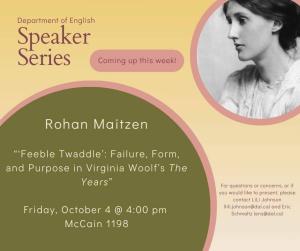
I’m a bit disappointed in how much (or, I should say, how little) writing I got done in 2024. It was my slowest year yet for reviews at the TLS, with just two, of Perry’s Enlightenment and, “in brief,” Sara Maitland’s True North. (I am working now on a review of Anne Tyler’s Three Days in June, so they haven’t quite forgotten me!) I reviewed three novels for Quill and Quire in 2024: Elaine McCluskey’s The Gift Child, Jenny Haysom’s Keep, and Ayelet Tsabari’s Songs for the Brokenhearted. And I did my second review for the Literary Review of Canada, this time of Tammy Armstrong’s Pearly  Everlasting, about a girl whose brother is a bear. (What is it with CanLit and bears?) I worked quite a bit on my “project” (I hate that word, but what else is there?) on Woolf’s The Years as a failed ‘novel of purpose’; I kept myself motivated by putting myself on the list for our department’s Speaker Series. I think the presentation went fine. As always, the tough questions I anticipated and fretted about greatly beforehand were not the ones asked, and in fact I really enjoyed the Q&A.

As we head into 2025, I am thinking about how to “level up” a bit in my writing. I do really like doing reviews that have a limited scope, which I find creatively and intellectually challenging (what can I do in just 700 words?), and also comfortable, in their specificity. But I used to sometimes publish more essayistic pieces too, and I want to give some thought to what else I might do along those lines. I also don’t want all that Woolf work to stop with the presentation version, but at the same time I find it very hard to feel motivated to turn it into an academic article, even though that was my initial plan. I think I need to crack it open and reconsider it as something that might (might!) work for the kind of venue I used to dream of getting into—and did, unsuccessfully, submit to a couple of times—in the past, something like the Hudson Review, maybe. A writer’s reach must exceed her grasp, right?

My previous, somewhat paradoxical, experience has been that writing more means I write more—when I kept up my blog more faithfully, for example, I published a lot more other writing as well. Of course, a lot of other things were different in the past, and I don’t know if 2025 will be the year I get my momentum back. I hope I at least try, because I don’t feel altogether satisfied with my recent output, which is not about “productivity” but more about the kinds of things we were talking about in a more tangible context in the comments on my previous post: what matters, what lasts, what remains.
And on that note—is it sobering or uplifting, aspirational or anxious? all of the above!—I think that’s a wrap on this year-end review. It’s hard to imagine that 2025 can be even a fraction as tumultuous as any of the past three years, personally at any rate (politically, on both sides of the border, it seems likely to be a big old mess). Whatever happens, at least there will always be books, right?

Novels in November!

VeraNovember wasn’t a bad reading month, considering how busy things were at work—and considering that “work” also means reading a fair amount, this time around including most of both Lady Audley’s Secret and Tess of the d’Urbervilles for 19thC Fiction and an array of short fiction and poetry for my intro class. (I have not managed to get back into a routine of posting about my teaching, but I would like to, so we’ll see what happens next term.)

My book club has been trending French for a while: in November we wrapped up a thread that began with Diane Johnson’s Le Divorce back in April, then took us to Guy de Maupassant’s Bel-Ami in July and Colette’s Gigi in August until we arrived at Dumas’s The Lady of the Camellias. I’ve known the story of Dumas’s novel for most of my life because La Traviata has been my favorite opera literally since I was 5, so what was most surprising to me about actually reading The Lady of the Camellias (in English translation, sorry) was how exactly Verdi’s opera maps its every scene. I kept half expecting the characters to burst into song! It was pretty funny to be reading a scandalous French novel at the same time as I was reading about Robert Audley’s scandalous habit of lazing about reading French novels—and I have to say that Dumas’s novel really lived up to the bad reputation French novels have in English novels of the period. Within just the first few chapters there’s an abortion and an exhumed corpse, and the novel as a whole is much more sexually explicit than any mainstream Victorian novel I’ve ever read. (I mean, by contemporary standards it’s more implicit or suggestive than graphic, but compared to the nearly imperceptible details of Hetty’s pregnancy in Adam Bede that so outraged some 19th-century critics, Dumas is really out there!). The Lady of the Camellias: Dumas fils, Alexandre, Kavanagh, Julie,  Schillinger, Liesl: 9780143107026: Books - Amazon.ca

Somehow we didn’t find The Lady of the Camellias that conducive to discussion, and we decided we would head off in a fresh direction with our next book. At the suggestion of one of our members, we chose Elizabeth von Arnim’s Vera, which I also read in November, and it is superb. It is a lot like Rebecca but more domestic realism and less Gothic melodrama, which actually makes it more chilling. I don’t think I’ve read a better account of the kind of coercive control he exercises over her, and her attempts—so loving at first, so gutting as it goes along—to figure out how she can possibly anticipate his ‘rules’ and demands and so avoid his unpredictable rages. As I got nearer and nearer to the end, I got more and more puzzled about how this naïve young second wife was going to get out from under the shadow of her predecessor and/or out of the clutches of her increasingly terrifying husband in the few pages that remained. I don’t want to spoil the ending for anyone who hasn’t read the novel yet but I will say that I found it pretty devastating.

To Say Nothing of the Dog: A novel of the Oxford Time Travel series eBook :  Willis, Connie: Amazon.ca: Kindle StoreI felt the need for something cheering in the wake of The Election and landed on Connie Willis’s To Say Nothing of the Dog: it was a great choice, genuinely comic and warm-hearted but also endlessly clever. I had a lot of LOL moments over its characterizations of the Victorian period, and it is chock full of literary allusions, many of which I’m sure I didn’t catch. A lot of them are to Agatha Christie and Dorothy L. Sayers: who know that Gaudy Night would be one of its main running references. I liked it enough that I’ve put The Doomsday Book on my  Christmas wish list, even though I don’t ordinarily gravitate towards this genre.

I also really enjoyed Clare Chambers’s Shy Creatures, which I picked up on the strength of her earlier novel Small Pleasures. I remarked on Bluesky that it reminded me of Anne Tyler, in that it is a very unassuming book but everything it does, it does well—this kind of fiction can be too easily underestimated, IMHO, especially if, as with both Chambers and Tyler, the seeming simplicity of the writing is accompanied by quietly persistent insight into what makes people tick and what makes things matter. My first review assignment for 2025 is Tyler’s forthcoming Three Days in July and I am really looking forward to both reading and writing about it. I haven’t loved all of her novels equally, but I’m never sorry I’ve read one of them.

I managed to finish Claudia Pineiro’s Time of the Flies and wrote up my thoughts about it already; I also wrote about my rather vexing experience with Mary and the Rabbit Dream. In lighter options, I read my first novel by crime writer Jane Casey, Let the Dead Speak, and thought it was good enough that I will look for more by her the next time I’m at the library; and I read Katherine Center’s The Rom-Commers, which I enjoyed.

Almost French: Love and a New Life in Paris: Turnbull, Sarah:  9781592400829: Books - Amazon.caAll in all, then, there was a lot of variety in both style and quality across the month. December is off to a good start: I’ve just finished Sarah Turnbull’s very engaging memoir Almost French (thank you, Helen!), and at the top of my TBR pile is Han Kang’s Greek Lessons, though I may actually turn next to Mark Bostridge’s The Pursuit of Love, which looks fascinating and which I also have a very small peripheral connection to because I had a nice dinner with Mark when he was in Halifax a few years ago doing research for it. (We have a mutual interest in Vera Brittain, which is how we first got in touch.) December is often one of my best reading months, with the constant busywork of the term calmed down and “just” (ha!) papers and exams to deal with. So thanks to all of you who have already put out your “best of 2024” lists, as I browse them happily looking for treasures to wrap up my own reading year.

“Her Own True Voice”?: Noémi Kiss-Deáki, Mary and the Rabbit Dream

Mary and the Rabbit DreamI knew I would read Noémi Kiss-Deáki’s Mary and the Rabbit Dream the first time I heard about it. It sounded like exactly my kind of thing: a fresh style of historical fiction, with a strange and subversive story to tell. It was published in the UK by Galley Beggar Press—and maybe that should have been a red flag for me, as they are the publishers and champions of Lucy Ellmann, whose Ducks, Newburyport I have begun three times, never making it more than 30 pages, but more significantly (because I still believe Ducks, Newburyport may be worth yet another try) whose Things Are Against Us I absolutely hated. On the other hand, I didn’t hate After Sappho, which they also published, and I do try, on principle, to push my own reading boundaries. So when Coach House Press here in Canada put out their edition of Mary and the Rabbit Dream, I promptly picked it up and happily began it.
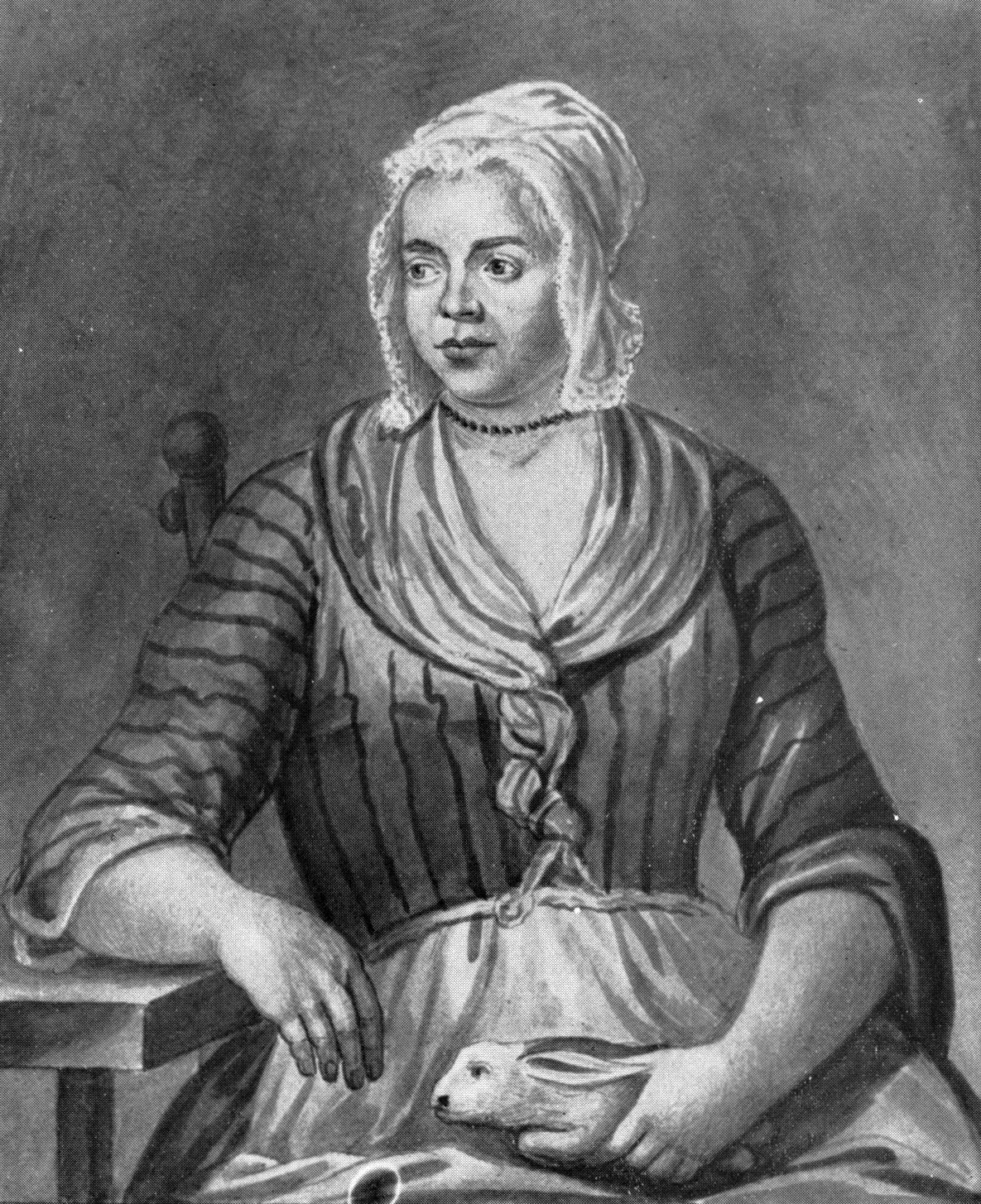
Happily began it . . . and much less happily finished it. I did finish it, because it really does tell a weird and fascinating story, and I genuinely wanted to find out how it ended. It is about Mary Toft, an impoverished laboring woman who in 1724 claimed to have given birth to rabbits, although as Kiss-Deáki tells it, the tall tale was never really Mary’s but was a scheme cooked up by her overbearing mother-in-law to get attention and hopefully money from their wealthier neighbors, who value rabbits much more highly than they do poor people.

The fraud is carried on for some time even as interested and increasingly expert men (always men) investigate, and in case you’re wondering what counts as “evidence” of the rabbit births, well, bits of rabbit (and sometimes of other animal parts) are shoved up into Mary’s body so that she can be seen to “birth” them. It’s exploitive and horrific, and Kiss-Deáki emphasizes Mary’s great suffering along with the appalling indifference to it of those around her, all of whom are using her—and more specifically her wracked and wretched body—for their own purposes. This includes her mother-in-law and her accomplices, but also many esteemed men of science and medicine, who stake their reputations on disproving what is advanced as an extreme example of the fairly widely held theory that what a mother feels, sees, dreams, or otherwise experiences during pregnancy impresses itself on her unborn child. “I just dreamt of a rabbit,” Mary says at one point,

I really did, all my dreams are full of rabbits now, rabbits and hands, they are vile, they are nightmares, but I had one dream that was not vile, not a nightmare, it was a little rabbit, a little rabbit in my womb, ears pink and its little nose shivering pink

and although she is rambling feverishly and we know that she is confusing the nightmare she is currently enduring with a miscarriage she previous suffered, her interlocutor does not.

Mary Toft - WikipediaThere is a lot that is good and interesting about this novel, especially the way that, while it centers sympathetically on Mary and her experience, it also uses her story as a device to expose the cruelty of misogyny and the punishing self-satisfaction of a certain species of scientific certitude. There is a particularly harrowing scene in which a powerful man, determined to break her and expose her as the fraud he is sure she is, threatens Mary with live vivisection, explaining to her with truly menacing “objectivity” that

a vivisection is an operation undertaken on a live body through a series of incisions for the purpose of the betterment of science.

Never mind what might be for the “betterment” of poor Mary Toft, whose eventual confession (in Kiss-Deáki’s version, at any rate) is a damning indictment of everyone’s readiness to make her suffer. (Nobody cares, and off she goes to jail.)

What wasn’t so good about Mary and the Rabbit Dreamand here I have to insert the obligatory disclaimer, as other people may feel very differently, and indeed other people do, unless they were lying in the blurbs they provided! so, what didn’t work about Mary and the Rabbit Dream for mewas Kiss-Deáki’s writing. In parts, it is (as my quotations may show) intense and effective, if you like a spare style. But those short snippets do not capture the oddly stilted and highly repetitive quality of the writing, which at times I found almost comical. A sample, and I promise it was not cherry-picked:

Ann Toft is opposed to it. All the women are opposed to it.

Even Joshua Toft is opposed to it.

But Mr. Howard insists.

And Mary Toft has no opinion.

Mary Toft has suffered too much to have an opinion.

Mary Toft has been listened to too little her whole life to have the courage to form any opinions of her own.

And now she has no opinions. Not even if she tries.

She has suffered too much.

She is stunned with pain and fear.

She is fearful of the women around her. She is fearful of her surroundings.

Everything, right now, inspires fear.

She is the ideal person to use for people who wish to use other people for their own ends.

I suppose you could call it rhythmic or incantatory or something, but I’ll stick with stilted and repetitive, especially because the tic of repeating phrases from line to line is so consistent across the book and serves (to my ear anyway) no purpose. What or who is that supposed to sound like? Is it meant to create an impression of archaism? 

File:Cunicularii, or the Wise Men of Godlimon in Consultation MET  DP824926.jpg - Wikimedia CommonsI might have tolerated the long stretches of this kind of stuff better if they hadn’t so often devolved into heavy-handed comments on what is perfectly obvious from the story itself, about how vile and prejudiced and uncaring the men are; or about how unfair the whole system is, especially to Mary (as happens in the example above); or about the symbolic meaning of what is going on. The worst such moment was this one, right after Mary, in excruciating pain and exhausted from relentless examinations, breaks down and begins screaming (“she slips down on the floor, she starts screaming, she screams and screams and screams”):

Sir Manningham asks,

“Are you done?”

And what Sir Manningham doesn’t realize with that question, is that on this night, at his feet, on the floor, Mary has given birth to something, not a rabbit, but her voice, her own true voice, voicing all the pain, all the anguish, all the misery, all the humiliation.

Honestly, if by this point in the novel, we aren’t able to read her screams exactly that way ourselves, the previous 138 pages were wasted efforts, and besides, it’s just clunky: a moment of high drama, of real emotional consequence, deflates completely with the words “her own true voice.”

Your mileage may vary, as we like to say, which is a reasonable acknowledgment that taste varies and that style is idiosyncratic. That’s what keeps things interesting, when we talk about books! That’s why, as I have occasionally argued at length and try always to demonstrate in my writing here, criticism is, at its best, both conversational and provisional. Also, any book worth saying this much about surely is not a bad book. Books, like people, are rarely all one thing. Still, I really disliked Mary and the Rabbit Dream. I thought that it was badly written. The note on Kiss-Deáki explains that English is her third language, and maybe that accounts for some of the awkwardness I felt in her stylebut it also says that English is the language in which “she has found her author’s voice,” so I have to respect that the prose I am reacting to is not accidental, that it is her “own true voice.” 

Pest Control: Claudia Piñeiro, Time of the Flies

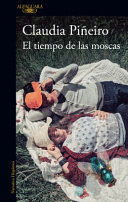
Time of the FliesClaudia Piñeiro’s Time of the Flies is, like the other novels of hers that I’ve read, a crime novel. Sort of. It is about a convicted murderer, Inés: she killed her husband’s lover, but at the time of the novel is out of prison and making her living running an environmentally friendly pest control business. Then she is approached by one of her clients to provide a deadly pesticide—so that she too can kill “a woman who wants to take my husband the same way yours was taken from you,” or so she tells Inés. Inés, who is not in general a murderous person and who also would very much like not to go back to prison, is tempted only because her friend Manca urgently needs treatment for breast cancer but can’t afford to pay to get it right away. The situation gets more complicated when a connection emerges between the client and the daughter Inés has not seen since her imprisonment.
Already, then, we are in what seems like a familiar mix for Piñeiro: women whose troubles and also whose transgressions are partly the result of individual characters and circumstances and partly symptoms of a world in which women are constrained, ideologically as well as socially and economically. What are the limits of justification for striking back against patriarchy, or against the men who embody, however unthinkingly, its privileges and advantages? What counts as a crime in a context that is itself systemically unjust? What do women owe each other, in the name of friendship, or motherhood, or solidarity?

This is promising stuff! But. By the end of the novel, its various strands, though cleverly plotted, did not cohere in a very satisfying way, I thought—but that isn’t what made Time of the Flies a struggle to read. Piñeiro is a good enough storyteller that the parts of the novel taking us through Inés’s decision and its consequences would have kept me engaged, and in fact those parts of the novel did. The challenge is that interspersed with Inés’s story there are long discursive sections made up of this kind of debate, or commentary, or polemic, or analysis: Time of the Flies by Claudia Piñeiro | Goodreads

Let’s set the insects and fumigations aside for a moment and get to the bigger issue: one woman killing another woman. Are you talking about Bonar or Inés? Bonar wants to do it, Inés already did it. And is the woman being killed just because she’s a woman? No. Yes. Is she the husband’s lover ‘just because she’s a woman’? In a way. Really? Don’t be silly. What are you saying? That it’s not femicide. I don’t agree. Yes, the killer has to be a man. Can’t a woman kill another woman just because she’s a woman? It’s not that I want to pick on men. I just think that if we noticed that women are, on the whole, radically less violent, we might be able to theorise where violence comes from and what we can do about it a lot more productively.* There are violent women. That’s the exception, she said, ‘on the whole‘, didn’t you hear? Inés isn’t violent. But she committed a violent crime: she killed Charo. That’s different. Charo’s death wasn’t femicide. Yes it was. Let’s not get bogged down in a theoretical legal debate when we’re not even the jury. What are we? We’re the chorus. We’re an assembly.

*Rebecca Solnit, Men Explain Things To Me, Haymarket Boks, 2014, p. 24.

Another sample, from near the end of the novel, after the revelation that a key instigation for the client’s murderous intentions is actually her daughter’s transitioning to become a son:

Should we have a go at the issue or just stick to Inés and her poison? What issue? The issue of Timo-Tamara, Tamara-Timo. We address every issue. Not necessarily. But why wouldn’t we address this issue? Because it’s one of the most polarising issues in twenty-first century feminism. We should proceed with caution. We are not cowards. Let’s be careful. I’ll sit this one out. If it’s controversial, all the more reason to debate it. Is it controversial in Latin America, though? Less so, we understand marginality. It has nothing to do with where you are in the world. It would seem that it does at least somewhat. Feminism has to be committed to gender freedom, to radical equality, and to alliances with other minoritarian positions, sexual dissidents. Transphobic feminism is no feminism, that cannot happen.* Are there really people who want to leave trans people out of feminism? Incredible. I can’t believe it. Yes, that’s what they want to do. I think we should take some time to think about it a bit more.

*Judith Butler, from the ‘Pandemia, democracia y feminismo’, Lecture Series, Universidad de Chile.

EL TIEMPO DE LAS MOSCAS / THE TIME OF THE FLIES. CLAUDIA PIÑEIRO. Libro en  papel. 9786073825030Clearly Piñeiro is doing something experimental here, creating a genre hybrid in a way that is actually reminiscent of Woolf’s The Pargiters, which I’ve been thinking about for some time because I’m fascinated by Woolf’s attempt to combine fiction and non-fiction, story and commentary. Woolf considered it an unsuccessful attempt and gave it up, turning her “novel-essay” into a novel (The Years) and an essay (Three Guineas). Maybe, I found myself thinking as I made my way to the end of Time of the Flies, Piñeiro should have done the same: if she didn’t trust her story to raise these questions for us, to stimulate those debates, she could have written a companion essay, or a different work altogether, leaving us the crime novel we expected when we picked the book up. It’s awkward, distracting, sometimes (to be honest) boring to have the plot, the suspense that Piñeiro is so good at building, constantly interrupted with these more abstract political sections, especially when they take such an uncertain form, voices themselves interrupting each other, offering competing arguments, incorporating references.

Until I copied out these samples, I hadn’t really thought about these as choric. I do find that a useful way to understand their role, and it also helps me appreciate that (I think) Piñeiro is trying to avoid didacticism by presenting topics precisely as debatable, though (as in the section on trans-inclusive feminism above) it is pretty clear that not every issue has, in her view, more than one legitimate side. Clarifying as the idea of a chorus is for the form of these sections, though, it doesn’t help me like them any better as part of my reading experience, which may e my own fault for resisting them as part of the book I thought I was reading. Hey, who spilled their feminist theory all over my mystery novel? But of course a lot of crime fiction has specifically feminist underpinnings, even before they got really explicit with the ‘feminist turn’ in the genre in the 1970s and 1980s. Piñeiro is just going much further, using her crime story as a provocation for feminist analysis.

The Body Lies: A novel eBook : Baker, Jo: Amazon.ca: Kindle StoreThat might be a good explanation for the hybrid nature of Time of the Flies, but it doesn’t necessarily make the book a success. I’d probably have to read it again (and again) to make up my mind about that, which I might do, given that I offer a course called “Women and Detective Fiction.” Last time around I almost assigned Elena Knows for it. Another title I’ve considered for the book list is Jo Baker’s The Body Lies, which is quite unlike Time of the Flies except that it too is a crime novel that turns out to be about crime novels, and especially about the roles and depiction of women in them, the voyeurism of violence against women, the prurient fixation on their wounded or dead bodies, the genre variations that both do and don’t reconfigure women’s relationship to the stories we tell about crime and violence. I thought Baker’s novel was excellent. I certainly didn’t have any trouble finishing it, in contrast to the concerted effort I made to get to the end of Time of the Flies. I really did want to know what happened! But I felt like I had to wade through a lot of other stuff to get there. If I do reread it, maybe that stuff will turn out to be the real substance of the book.
September Reading: Mostly Light

I read a lot less in September than I did in August—which makes sense, of course, given the return to the many immediate demands of the teaching term. That said, it seems fair to say that in addition to the books I’ll mention here, I also read all of Bleak House for class and most of Paul Murray’s The Bee Sting (though I didn’t actually finish it until October).

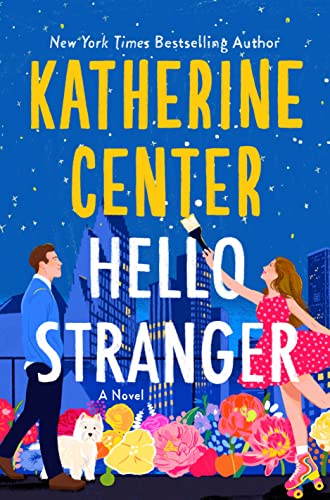
Because I was busy and distracted, most of my personal reading was on the lighter side. I read another of Katherine Center’s novels, Hello Stranger: I liked this one quite a bit, even if the Big Surprise was painfully obvious all along (if you’ve read it, you know what I mean). I don’t think that’s a flaw in the novel, really; it creates a cute bit of suspense and dramatic irony as we wait for the penny to drop for our heroine.

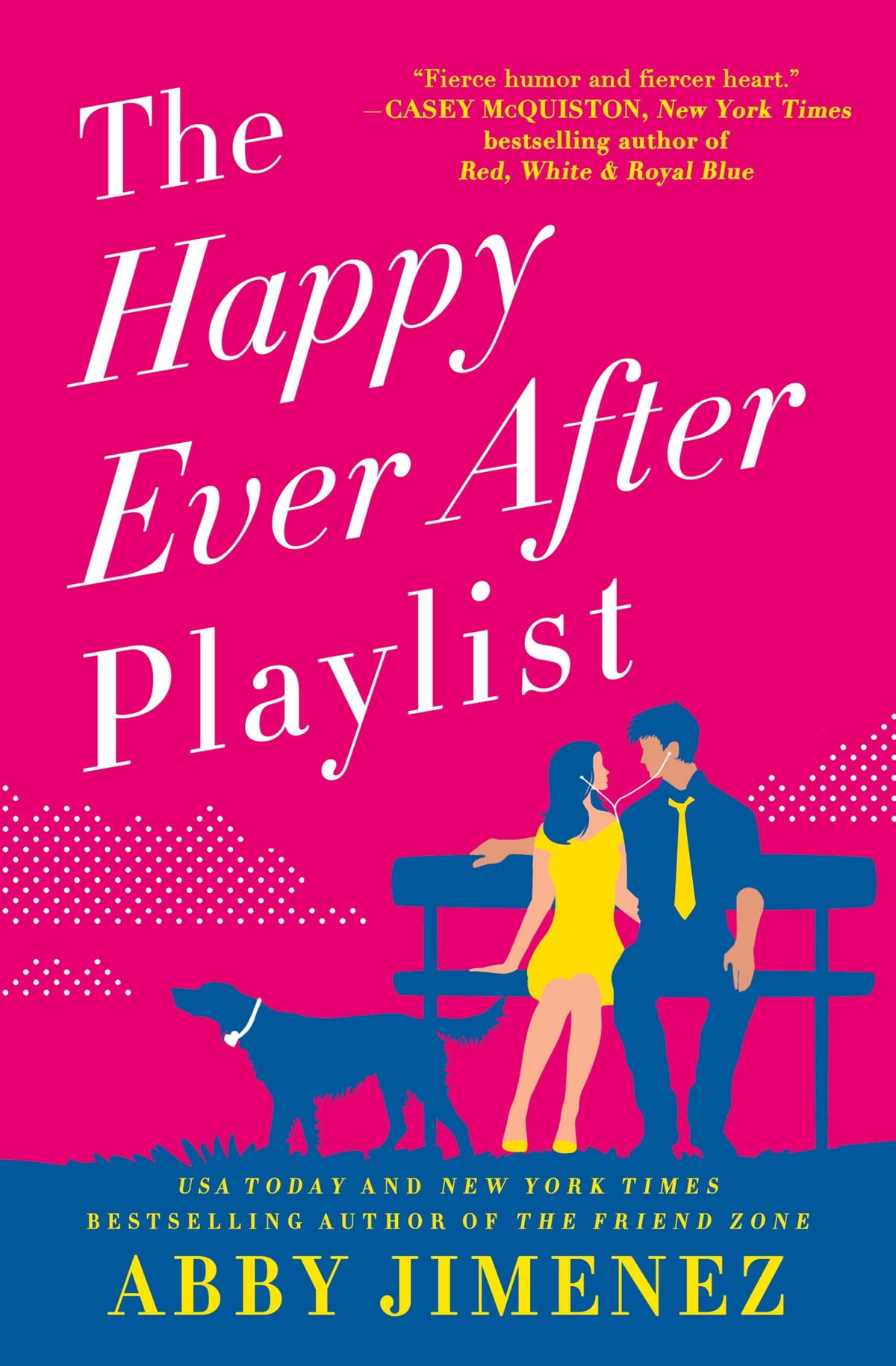
I also read two novels by Abby Jimenez: The Friend Zone and The Happy Ever After Playlist. I enjoyed both of these as well, maybe The Friend Zonebit more, though (and this is definitely just a matter of personal preference) I wish Jimenez would keep her hero and heroine apart longer. The trend in contemporary romances seems be to heat things up really quickly and then draw us along to the HEA not through sexual tension and the push-pull of figuring out if this is the right person but through some kind of crisis that breaks the central pair up (often in a very emotionally fraught way) and eventually gets resolved. I am generalizing from a pretty small sample, as I don’t read tons of romance (contemporary or other) these days. But the pacing of a lot of the ones I do read just feels a bit off to me, because the hot sex happens too soon and then there has to be some other kind of tension to provide the momentum. Imagine Heyer’s Devil’s Cub if Mary and Vidal actually got together a single moment sooner than they actually do in the novel! The delight is knowing they will get there eventually but not until everything else has been properly sorted. Does anyone else feel this way with current romances, or is my reaction idiosyncratic, or (another reasonable possibility) am I just reading the wrong ones (not in general, just for me)? Finally, another lighter read, also basically a romance but packaged a bit more as comic fiction, was Eleanor Lipmann’s Ms Demeanor. This looked fun but in the end I didn’t really find it so: it was OK, but did not particularly interest or entertain me.

The other three novels I finished in September were more “literary” or serious, and none of them really excited me either. Jane Smiley’s A Dangerous Business looked like exactly my kind of thing, and I have quite enjoyed some of her other novels (especially Private Life), but I have already forgotten almost everything about it except its premise. It’s a Western, with a protagonist who works in a brothel and begins trying to detect some mysterious disappearances inspired by her reading of Poe—you can see why I expected to enjoy it more than I did! In contrast, I picked up Anne Michaels’s Held in spite of suspecting it was not for me, because a lot of smart readers have raved about it (including Sam Sacks, one of my most-trusted critics!) and I thought it was worth a try. I suppose it was, but it has that “unfinished” approach to fiction that usually leaves me wishing the writer would actually do their job and write the book, not scatter fragments artfully around gaps. Kent Haruf’s Where You Once Belonged held my attention raptly until the very last page—and then I felt let down by its just ending and not really concluding. It’s not nearly as tender a novel as the ones of his I have liked the best (Plainsong and especially Our Souls At Night); I think if it had been the first of his I read, I would probably not have sought out more.

The Bee Sting was by far my favorite September reading (besides Bleak House of course), but by the time I finally finished it a few days ago, I was honestly a bit tired of it and just really wanted to get to whatever catastrophe was clearly going to happen at the end. (It’s clear from the outset and also from the jacket blurb that it will end in catastrophe, so the suspense is from wondering exactly what that will look like and how bad it will actually be—which is, it turns out, pretty bad.)

While I was reading The Bee Sting and mostly enjoying it, I was also thinking about Murray’s earlier hit novel Skippy Dies, which sticks in my memory less because of the novel itself and more because I so distinctly remember ordering it online late one night in 2010 because I was hearing so much about it and feeling so eager to be part of the wider book conversations I was just starting to participate in. At that time I didn’t buy a lot of books, as (given our overall financial situation and immediate priorities) they still seemed like relatively expensive luxuries, especially with good libraries close at hand. Of course I did always buy books, for myself and as gifts, but I was careful about it, not casual, and clicking a few buttons on my computer and having a book turn up in my mailbox a few days later was both a rarity and a novelty—and a sign that the balance of my world was shifting a bit in some new direction. As I recall, I ordered Skippy Dies from the Book Depository, which was still independent in those days, but I’m so old I can also remember when Amazon was a brand new and thrilling phenomenon—a giant online bookstore that seemed to have everything!—rather than an evil empire.

I realize this is not a particularly momentous memory, and I’m surprised how vivid it is. Clearly that small action felt significant at the time, though, and recalling it now adds to my current rather vertiginous sense of time passing and of the pieces of my life shifting around yet again.

New Reviews and “Right” Reviewers

timthumb

Launch day never comes but what I am surprised at what we’ve pulled off, thanks to the talent, perseverance, and generosity of our contributors and the diligence, enthusiasm, and contributions of our editors! Our May issue seems to me to exemplify what we want Open Letters to be. It covers a wide range of material — I think there’s greater variety in the titles we cover than in most other literary magazines, online or otherwise — and in a range of voices. Have you ever looked at our “About” page? Here’s what the wise heads that set up Open Letters in the first place came up with as our “mission statement”:

We’ve all had the experience of reading a review that sparkled—one that combined an informed, accessible examination of its quarry with gamesome, intelligent, and even funny commentary. These are the pieces we tell our friends about and then vigorously debate.

That’s the kind of writing you’ll find in this month’s issue, so hop on over and take a look! Among its goodies you’ll find a thoughtful exploration of Yoko Ogawa’s Revenge by friend-of-Novel-Readings Colleen Shea (a.k.a. the esteemed proprietress of Jam and Idleness); an exuberantly insightful commentary on a new edition of Birds of America by the inimitable Steve Donoghue; a provocative critique of Tea Obreht’s critically-acclaimed The Tiger’s Wife; and much more.

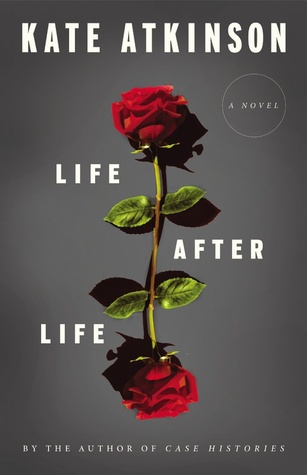
atkinson1My own contribution this month is a review of Kate Atkinson’s Life After Life, which has also been receiving  a fair share of critical acclaim. You’ll have to read my review to find out if I’m joining in the chorus. I will say that the book is extremely readable, and that writing the review was good mental exercise, especially once I decided on how I wanted to structure it.

While I was working on it, a conversation broke out on Twitter about the question of what makes someone a good fit to review a particular book. OK, I started it — well, technically Mark Sarvas started it by noting he thought a particular reviewer was a “terrible choice” for a particular assignment. Happily, I pretty much “assign” my own books to review, but I puzzle over how to make good choices for myself, so I asked what he thought the parameters were. He proposed avoiding cases of “outright conflict,” cases where there’s a specific “axe to grind.” I proposed someone who could be expected to have a good conversation with the book . Gregory Cowles of the NYTBR chimed in (Twitter is fun that way) to suggest “open engagement” as the key.

As I said in that exchange, I seek out books to review that I expect to like, by which I mean books by writers I have some reason to trust, and/or on topics and/or in genres that are within my usual range of interests. This is not to say that my default plan is a good review (in fact, I try not to think in terms of “good” or “bad” reviews). I just figure that way I have the best shot of appreciating what the book does well but also recognizing what, according to my reading experience, it doesn’t do well. To keep going with the conversational metaphor, there’s no point trying to have a lengthy discussion with someone whose language you don’t speak at all. If I were a full-time professional book reviewer, such discrimination would presumably be a luxury. Sometimes when I’m paging through catalogs not finding any “likely candidates” for my next review, I hope I’m not being some kind of prima donna, or  (worse?) that I’m not being intellectually unadventurous. But who would want to read my attempt to review something like Revenge? Or, to go even further outside my normal literary habitat, Richard Hell’s autobiography, reviewed with great panache in this issue by Steve Danziger? Much better to leave these books to readers who get them.

Besides, in a way all contemporary fiction is an adventure for me, since my official expertise is entirely elsewhere. I’ve certainly found plenty to grapple with in the recent books I have reviewed, from The Marriage Plot to Two-Part Inventions. (Whether I’ve acquired expertise, or at least relevant experience, by writing about contemporary fiction on my blog is another question, not entirely unrelated, I suppose!) Mark’s question was timely in part because I was wondering if I was a good choice to review Life After Life. Reviews were coming out all around me as I worked (I managed not to actually read any of them until I had a complete, committed draft of my own!) — Francine Prose’s came out in the New York Times just this past weekend, too. Clearly someone there thought she was a good fit, and I can see why. Every reviewer who acts in “good faith,” though (to call on another of Mark’s Twitter comments) brings something fresh to the conversation. It’s possible, too, especially reading the major literary reviews, to feel as if there’s all too much insider trading (have you heard the joke about the New York Review of Books — that its real name is The New York Review of Each Other’s Books?). I think my review stands up well to Prose’s. (Mind you, she, poor woman, was probably given a word limit.)

What do you think makes someone a good fit for a particular review? Proximity or distance? Expertise or an unexpected angle? Or will you take any of these provided the conversation itself is good enough? These questions are relevant to me not just as a writer but as an editor, after all.

Also, in case you wondered, the next book I’m reviewing is Deirdre David’s biography of Olivia Manning. I think I’m a good fit: I know David’s work as a Victorianist, of course, and I’ve read both trilogies in Manning’s The Fortunes of War, and I know a lot more about early 20th-century women writers than I used to because of my reading in the ‘Somerville’ set. So far it’s entirely fascinating.

2012: My Year in Writing

cassatI began my annual look back at 2012 with my small contribution to the Open Letters year-end feature. I’ll follow up soon with my regular survey of highs and lows from my reading and blogging year. But this year I thought I’d also take a moment to review the writing I’ve done this year for venues besides Novel Readings.
Most of it was for Open Letters Monthly, of course, and I continue to be grateful for the opportunity to write about whatever interests me, as well as for the challenges to write about things I might not otherwise tackle. Also, as I always tell new or prospective contributors, the editing process at OLM is one to cherish: we bring different interests and sensibilities and styles to bear on every piece, but always in the interests of making it the strongest version of itself that we can collectively manage, and I know that my pieces always end up better than they began.

My first OLM piece in 2012 was “The Quiet One: Anne Brontë’s The Tenant of Wildfell Hall.” I think this is a wonderful novel – more artful, in many ways, than Jane Eyre, if without its visceral appeal. I teach it regularly and the more time I spend on it, the more I admire the unity and integrity of Anne Brontë’s accomplishment. It was a treat to write this up: it’s basically a much-elaborated version of the notes I use for lecture and class discussion.

The scariest piece I wrote in 2012 was “Abandonment, Richness, Surprise: The Criticism of Virginia Woolf,” which was my contribution to our special 5th anniversary issue. I was not initially enthusiastic about doing an entire issue on criticism, and I wasn’t at all sure I had what it took to say anything at all about Woolf as an essayist. On the first count, I was completely converted as the pieces came in. Sam Sacks on Frank Kermode, Greg Waldmann on Edmund Wilson, Steve Donoghue on Elizabeth Hardwick, John Cotter on Gore Vidal … the project brought out the best in our writers as they spoke from the heart about the people who showed them what criticism could be. As for my own piece, the faint edge of desperation I brought to the task unexpectedly gave me courage to get more outside my own head than I’m usually able to do and to write with a freedom I rarely feel. This is the 2012 publication I’m most proud of, precisely because it’s a bit riskier in voice and approach than any of the others.

The most fun piece to write, on the other hand, was definitely “All the World to Nothing: Richard III, Gender, and Genre.” As I confess in the essay, I’ve been a “Ricardian” for many years but I hadn’t found a place for that somewhat esoteric interest in my working or writing life before. Yet as I thought about the elements I wanted to include in the essay, I realized that a lot of the work I’ve done as an academic has grown out of my early passion for historical fiction, while a lot of my conceptual thinking about gender and historiography finds apt illustration in the tale of the last Yorkist king and his mostly female advocates. I have a feeling that not a lot of readers followed me down the slightly wandering path I took, but I hope those who did shared in my last gleeful “ha!” They will also understand the great excitement I have felt as this news story unfolds.

I wrote two essays on George Eliot this year, stages in a still somewhat indefinite longer project about her thought and her novels and what they might mean for us today. In the first of them, “Macaroni and Cheese: the Failure of George Eliot’s Romola”, I bypassed the essay I initially thought of writing, in which I made a case (as I did a couple of years ago for Felix Holt, the Radical) that the novel is better than is usually thought, and chose instead to think about the ways in which the novel is every bit as bad as it seems. I know that fear of failure holds me back: I find George Eliot’s failures inspiring because they teach me about reach and ambition and intellectual courage. That said, Romola actually is a fascinating and occasionally thrilling novel, so if you’ve already made your way through the others, don’t be put off by all this talk of failure!

Also for Open Letters, I reviewed The Life of George Eliot, by Nancy Henry (in our ‘annex,’ Open Letters Weekly) and Lynn Sharon Schwartz’s newest novel  Two-Part Inventions. Henry’s biography is smart, thorough, and yet somehow not as exhilarating as a life of George Eliot deserves to be, perhaps because it is that odd hybrid, a ‘critical biography.’ Still, it’s miles and miles better than Brenda Maddox’s abysmal George Eliot in Love. Schwartz is the author of two novels I admire enormously–Disturbances in the Field and Leaving Brooklyn–but I wasn’t inspired by Two-Part Inventions mostly because it seemed to me that Schwartz wasn’t either.

The second of my George Eliot essays this year, “‘Look No More Backward’: George Eliot’s Silas Marner and Atheism,” appeared in the Los Angeles Review of Books (and then, rather to my surprise, in Salon). As the essay was in progress, I had second thoughts about the ‘New Atheist’ hook I’d proposed for it when I pitched it, but that is how I’d pitched it and (understandably) that’s what they wanted me to stick with, so I did. It’s not that I don’t believe what I said, but as I’d feared, that set-up was a distraction for some readers, who seem (at least from the posted comments) not to have persisted as far as my reading of Silas Marner. I have argued before that we could do worse than look to George Eliot for ideas about how to be both godless and good and this was a good experiment in making that argument in more detail and taking it to a wider public, while still doing the kind of close reading that I hope might be seen as my trademark when (if) people think of me as a critic. I have yet to muster enough courage to write a sustained essay on Middlemarch, but when I do, it may well build on this foundation.

Finally, I published one essay in a conventional academic journal this year, though somewhat ironically (given that my non-academic publishing was almost all in my supposed areas of specialization) it’s about blogging: “Scholarship 2.0: Blogging and/as Academic Practice” appeared in the Journal of Victorian Culture. This paper grew out of the conference presentation I gave at the British Association of Victorian Studies conference last summer. It was supposed to be made open access but there seems to be a hitch with the publishers: anyone denied access who wants a copy can just let me know.

So: that’s six essays and two book reviews in 2012, which is not bad for someone who has been told her ‘publication record is spotty‘! And that’s not taking into account any of my writing here on the blog, much less any of the writing I do as a matter of course for work, from lecture notes to handouts to evaluations to memos to letters. Of course, none of the writing in those last five categories really feels like writing, though it’s easy to underestimate how much creativity and ingenuity it calls for. There were some definite highlights in my blogging year, and I’ll be looking back at those in my next post. I love the complete freedom of blogging–freedom from deadlines and other external requirements, and freedom to say what’s on my mind without second-guessing myself too much. However, one of my goals for 2013 is to keep up a good pace of essays and reviews outside Novel Readings, because I still find writing for other people intimidating (and yes, I know, other people read my blog, but it feels very much like my space, so it’s just different, however irrationally). In addition to writing for Open Letters, I might have another go at pitching a piece somewhere else, just to keep pushing my boundaries. But what, and where? (Ideas welcome….) I find I’m still quite clueless about this process, and I hardly know if I’m more nervous about a pitch being turned down or accepted, but that’s just the kind of anxiety I need to get past. Maybe 2013 will be the year I figure out how to just write, without so much agonizing. On the other hand, isn’t agonizing part of what defines writing?

This Week In My Classes: So Much To Do! Also, a New OLM!

It’s the time of term when I really just have to focus on doing one thing at a time: if I contemplate the big picture, it’s overwhelming. The truth is, everything does not in fact need to get done in a hurry or come due at once, but the constant appearance of more items on the ‘to do’ list creates that impression–and thus generates panic–if I’m not careful. Requests for reference letters are streaming in, for instance, and just fielding the inquiries and receiving and collating the documents and forms is a lot of virtual paper-pushing, but the deadlines are in fact spread out between now and January or later, so I have to be careful not to put these nice finite tasks ahead of more amorphous ones that are actually more urgent, if less defined. I do have one extraordinary event coming up next week, a Ph.D. defense (I’m the supervisor): it is not optimum to do these in the middle of term, but that’s how it’s happened, so by next Friday I need to review a 450-page thesis. Given just how important an event this is for the student and our graduate program, more routine business may have to get set aside–marking, for example. Nobody will suffer anything worse than a little suspense if the papers and responses currently awaiting my evaluation take a bit longer than usual to come back.

Routine business goes on, though, in all three of my courses. In Introduction to Literature, we’ve started our short fiction unit, which wraps up the basic ‘introduction to genres’ I’ve been focusing on this term. Next term we revisit all the genres but, as I said to my class today, from a position of strength! We won’t be beginners any more, so we will read longer texts as well as texts in thematic clusters that provoke different kinds of conversations than the ones we’ve been having. My expectations will go up, and they will have a larger role in presenting and analyzing the readings, including, I think, more collaborative group work. I’m really pleased with the good will and hard work I’m seeing from the students in this class so far. I know that they are feeling a lot of pressure at this point in the term too, but they’re hanging in there, and, I hope, feeling that at least in my class they are clear about what the expectations are and supported in meeting them.

In Mystery and Detective Fiction, we’re reading The Terrorists. It really is a superbly interesting and provocative book. Today’s focus was on the plural form of the title, and how the presentation of the different acts of violence and coercion in the novel challenge us to think about innocence and guilt, about motives and justifications, about not “whodunit” but about why. The two convicted murderers in the novel are both people for whom we feel a great deal of sympathy, while their victims hardly seem to deserve the protection of the state. Next class, when everyone has finished the whole book, we’re going to discuss our standard questions about the conclusion — is justice served? on whose terms? what does the novel present to us as a ‘just’ outcome, and how closely does that track what the law declares to be right or wrong? — and then I’m going to open up the discussion further to look back across our earlier readings and start trying to do some more comparative and synthesizing analysis, because whether they write the final exam or do the optional paper, they are going to have to reach a bit more than we’ve been doing on our assignments so far.

In The Somerville Novelists we are moving into the controlled chaos zone of planning the collaborative wiki project. It is a delicate balancing act for me. I need to avoid dictating exactly what I think will work and how I think they should do it (something I know some of them would prefer) but at the same time provide enough guidance and insight that they can make the best use of their time and resources. They’ve been doing some planning on their own, but we met as a class today and I think that it was just in time in some ways, because I realized that there was a risk of their thinking being a bit too narrow, a bit too zoomed in on the particular texts they’re working on, so that the larger framing issues the course aims to address were not part of the conversations they were having and thus not part of the plans they were making–issues like canonicity, for instance, or relationships between gender and genre. I had a chance to make this point today, I hope in a constructive way, and we will return to the discussion and to the planning process on Wednesday. I need to step back soon and let them build their wiki sections, but it’s really important that they not rush to formalizing the structure of their projects before we’ve worked out the conceptual issues better. In order to maintain the momentum of today’s conversation, I’m postponing Wednesday’s planned session on “Pecha Kucha,” which is actually a bit of a relief: I have been working industriously on my sample presentation and would have been ready for Wednesday, but I’ll be better rehearsed on Friday.

In other news, in case you missed the Twitter and Facebook announcements, there’s a beautiful new issue of Open Letters Monthly up, including what will almost certainly be my final OLM contribution for 2012: my review of Lynne Sharon Schwartz’s new novel Two-Part Inventions. I was so sorry not to be more enthusiastic about it, as her novel Disturbances in the Field is one of my all-time favorites. I wrote about it briefly here, and I wrote at length here also about my great admiration for Leaving Brooklyn. During the editing process, one of my co-editors asked if my review was an implicit response to the recent brou-ha-ha about critics being “too nice.” It certainly was not–at any rate, I did not set out to be not nice, and I hope the review does not come across as anything but what I believe it to be, which is honest and thoughtful. In his “Critic’s Manifesto,” Daniel Mendelsohn proposed that “The intelligent negative review … does its own kind of honor to artists: serious artists, in my experience, want only to be reviewed intelligently, rather than showered with vacuous raves—not least, because serious artists learn from serious reviews.” I agree that taking a work seriously is a way of honoring it and its author, and in this case (as with my review of Jeffrey Eugenides’s The Marriage Plot) I tried to write an “intelligent negative review.” It’s not the kind of reviewing that gets a lot of attention: it’s no good at all as link-bait, compared to the outrageous pan or the “vacuous rave”–but it’s hard work and I think does more service to readers and writers than either of the more extreme alternatives.

Blogging is Detrimental to Literature? Make Him Stop Saying That!

Just when you thought maybe, just maybe, the worst was over when it came to casually dismissive generalizations about blogging–you know, of the kind that used to get us all riled up way back in 2008, and that still irked us in 2010–we get this, from the editor of the TLS:

The rise of blogging has proved particularly worrying, [Stothard] says. “Eventually that will be to the detriment of literature. It will be bad for readers; as much as one would like to think that many bloggers [sic] opinions are as good as others. It just ain’t so. People will be encouraged to buy and read books that are no good, the good will be overwhelmed, and we’ll be worse off. There are some important issues here.”

Yes, that’s right: he’s worried that if readers stop tagging along after the “traditional, confident” critics who occupy the literary high ground, they will end up (lemmings that they are) following bloggers over the cliff into the slough of mediocrity, and then they will be worse off! He’s right: there are some important issues here. They just aren’t quite the ones he’s talking about…

Is there really no way we can put an end to this kind of pompous and insulting pronouncement? Can’t we flood the comments with links to book blogs that inspire and excite us as readers and do more than the TLS ever does to bring us to books we would otherwise not discover? Can’t we explain that the world of  “traditional, confident” criticism often seems hopelessly circular and self-referential–that it can only be good for literature to have a variety of voices and perspectives and tastes in play? Can’t we remind him that people have always bought books that others thought were “no good,” and that the process of sorting and judging is always a fraught one? Can’t we get across the basic point that blogging is a form that can hold as great a variety of content as a newspaper (imagine dismissing the TLS because of the existence of the Sun or the Mirror) and that the problem continues to be one of filtering–a problem the TLS could help with by actually reading a wide range of bloggers and encouraging (maybe even engaging with!) those that offer the most informed and provocative and original commentary? Can’t we … Oh, never mind. It’s hopeless.

But actually, no it’s not. Here’s Daniel Mendelsohn,  in his recent ‘Critic’s Manifesto,’ discussing how the “the advent of the Internet [has] transformed our thinking about reviewing and criticism in particular”: “First, there has been the explosion of criticism and reviews by ordinary readers, in forums ranging from the simple rating (by means of stars, or whatever) of books on sites such as Amazon.com to serious longform review-essays by deeply committed lit bloggers.” It’s true he sees this in terms of “ordinary readers” finally going public, not as his having discovered critical peers online, but he certainly acknowledges that there’s more to blogging than seems to be dreamt of in Stothard’s philosophy: he even gives the impression that he might actually have read some book blogs (and not just those run under the aegis of “traditional, confident” publications). Mind you, Mendelsohn (surely someone whose opinion is worth something even to Stothard) has been making more carefully qualified statements like this for years: apparently Peter Stothard doesn’t listen to him either. So, maybe it is hopeless–for Sir Peter.

And for the rest of us? Well, I’m not worried. We’ll just keep reading and writing, and somehow I’m confident nobody will be worse off because of it.

The Worth of Our Work (with Some Thoughts on Jonah Lehrer)

Alas, alas!
This hurts most, this . . that, after all, we are paid
The worth of our work, perhaps.

— Elizabeth Barrett Browning, Aurora Leigh

The very smart and funny Adam Roberts has decided to put an end to his blog Punkadiddle. Iif you haven’t already had the pleasure, you should check out the archives – I particularly enjoyed his skewering of Robert Jordan’s Wheel of Time series, especially this one, which starts hilarious and ends profound (that reminds me–time for a tea break!). As a Victorianist, though, I found posts like this one of the greatest value to my own thinking.

It’s understandable that Adam would decide to close up shop in one venue when, as he says, his time and energy are needed elsewhere. Blogging consistently (by which I mean not just posting regularly but staying involved with comments and generally maintaining a site that reflects genuine engagement with its subject and with other readers and writers) does take a lot of time and energy, and people’s interests and priorities change over time. As a result blogs ebb and flow, and come and go. The Valve, where both Adam and I were contributors, ran out of steam a while back, and that was a group effort, which in theory should be easier to keep invigorated. I’ll miss following Adam’s work at Punkadiddle, but I’ll look forward to keeping up with it in other venues.

One part of Adam’s farewell post really made me think:

Once upon a time writers were paid in money, but now writers are paid (in the first instance at any rate) in eyeballs, which may or may not at a later stage, underpants-gnomically, turn into money.  Part of this new logic is that the writer ought to be grateful simply to have the attention of those eyeballs.  I’m as deep into this new economy as anybody, of course; I read many thousands of fresh new words, free, online every day.  But I wonder if it doesn’t have more downsides than ups.  Take the material contained in the archives of this blog.  If the sort of thing I write is worth paying for then I’m a mug to give it away for free; and if it isn’t worth paying for (of course a great deal of online writing isn’t) then I’m wasting everyone’s time, including my own, carrying on.

As a number of comments on his post have noted, it’s tricky to measure the worth of a blog monetarily: for many bloggers, the chief attractions of the form are the intrinsic pleasures of the writing itself and of the conversation that it stimulates. Yet as Rich Puchalsky comments there, “It’s very easy for people to say that the value of an activity is not measured in what it earns… but part of the monetization of attention is that yes, really, it is hard to say whether written work that people don’t pay for is valued.” Certainly as long as work is unpaid it doesn’t make sense to keep it up unless the effort is repaid in some other way, while anyone who’s enjoying the writing and doesn’t need or want money for it can hardly be faulted for continuing to do it. But how much does the willingness of so many people to write criticism for free make it difficult for those who hope to make a living at it?

As Adam says, it’s a strange new economy here on the internet, with attention or “eyeballs” the primary currency. Adam and I are both somewhat insulated from the effects of this because we’re academics. As Tom Lutz wrote about the Los Angeles Review of Books, “Many of us are also supported, as I am, by our universities (however much they, too, are shrinking and under siege), and so we can write and edit “for free” as part of our commitment to the dissemination of knowledge that is integral to that job” (“Future Tense“). There’s a sense in which Adam and I are both already getting paid for whatever we write, depending on how broadly we define our university’s missions and our professional obligations. (I have a few times made the case that academics who write blogs related to their areas of specialization are making valuable contributions — here, for instance, and more recently here.) Blogging for free can be understood as a variety of open access publishing, and I don’t think anyone’s making the argument that academic articles made freely available aren’t valuable–but at the same time, built into arguments about such open access publishing is the assumption that the work is already being paid for. Academics are also hardly used to being paid specifically for their publications. I have never received a dime from any journal that published my work: the currency there is not eyeballs but prestige and professional recognition. (I also wasn’t paid by the LARB for the essay I published there.) I made a few hundred dollars in total from each of my books. Academics are accustomed, that is, to thinking of writing primarily in non-monetary terms. But, as Lutz points out, “many of us are not [academics],” that is, not everyone publishing their writing for free online already has economic support for that effort.

I don’t know how to do the math here, really, especially when models that assume scarcity increases value hardly seem to apply. Criticism is not a pursuit that responds well to supply and demand, any more than literature itself is–not if what you want is some version of “the best that has been thought and said.” The relationship in both cases between popularity and quality is surely a vexed one. It makes sense in some ways to expect the best work from people who will do it no matter what, simply because it means that much to them, but then with professionalism comes a particular kind of experience and expertise, as well as editorial and public scrutiny which, perhaps, leads to better work overall. (Even as I wrote that last bit, though, I wanted to retract it: the quality of criticism that appears in a lot of paid venues is not inspiring, outside a few elite publications. Punkadiddle is–was–many times better than the review section of my local paper, or of either of Canada’s national papers, for that matter. But isn’t that as much a sign of the limitations of the marketplace as of anything else? Presumably, newspapers publish the kinds of reviews [they think] their subscribers want to read. See also this critique at Lemonhound of a recent published review, though I don’t know if it was paid for.)

In any case, as Lutz says, “We don’t know what the future of publishing is, but we know that the future for every writer requires food.” Edward Champion wrote a strongly-worded response to Lutz’s essay. “Financially speaking,” he observes,

The Los Angeles Review of Books is no different from any other group blog or online magazine. As Full Stop‘s Alex Shephard observed, the question of basic survival is crucial to all writers, regardless of where they come from. The Los Angeles Review of Books‘s present interface relies on Tumblr and, even though it has featured close to 100 posts, it is just as dependent on volunteers and donated time as any other online outlet. As such, so long as it does not pay, it assigns zero value to the labor of its contributors, which makes it not altogether different from The Huffington Post.

“Lutz’s essay is unwilling to swallow the bitter pill,” Champion concludes: ” in a world of free, expertise no longer has any value. . . .  those who want the content are so used to getting it for free that they expect writers of all stripes to surrender their labor for nothing.” In the comments, he and Lutz go back and forth a bit about whether his assessment is unduly negative. I’m certainly hoping that the Los Angeles Review of Books succeeds in its aim of finding a sustainable financial model that includes fair pay for its contributors. As Champion points out, Open Letters Monthly is one of several other “quality online outlets” that have been “getting by” with basically no revenue stream. It’s a labor of love, something we keep doing because we believe criticism is intrinsically worth doing as well as possible. Is this, as Champion says, “an unsustainable model in the long run”? As he’s well aware, oddly it isn’t (as long as we’re willing to cover the core costs, like server space and postage, ourselves), because enough people want to write that they’ll do it for free–if they weren’t, it would certainly be impossible for us to keep offering the magazine for free, which is what the new internet economy expects. Would we like to pay our contributors, never mind our editors? Sure! But we can’t, and they (and we) are all willing to do the work anyway. Maybe, as Adam says, we’re all mugs.

That said, there are people who are paid for their writing, and it seems both inevitable and just that at this moment when there is so much great criticism online for free (the problem, of course, is finding it reliably: the challenge is curating and filtering the endless proliferation of material) there is sharp scrutiny of those lucky few. What should our expectations be–what should the standards be–for those who somehow have made writing a paying gig? It would be gratifying if the hierarchy of quality were clear: if only the very best (the smartest, the most engaging, the most eloquent, the most original) writing was writing that made money. (Heck, it would be gratifying if the very best writing was the writing that attracted the most eyeballs! If only.) This is pretty clearly not the case, and I know I’m not the only person writing for free who sometimes puzzles or even fumes over the results (see, for instance, Steve Donoghue’s often excoriating series on ‘the penny press.’). “You have eight pages in The New Yorker!” I have been known to rant … you’d better use them really, really well! Meaning, of course, use them as I would use them, if I ever got the chance! (Though is it really the money that matters, or, still, the eyeballs? Writers want readers above all. Hence the difficulty of figuring out the economics.)

I think this paradoxical context of scarcity amidst abundance is relevant to the recent brouhaha about Jonah Lehrer, whose “self-plagiarism” has cast a shadow over his recent appointment to a pretty plum position: staff writer for The New Yorker. Is ‘repurposing’ your own work the worst sin a writer can commit? Of course not. Writers rework material all the time. Academics, for instance, routinely use material first in a conference paper, then an article, and then in a book. A writer like Lehrer whose main contribution is a particular expertise or insight in a field is bound to repeat it in multiple variations. But there are ways and ways of doing this, and the measures of how best to do so (ethically, creatively, intellectually) surely include not just transparency (acknowledgement, “as I said in this prior piece,” and attribution, “previously published in”) but also development and enrichment (if large chunks of wording need no revision whatsoever over a long period of time, that suggests not so much dishonesty as mental stagnation). Even if it’s not a strictly illegitimate practice, it’s not very impressive for a writer to be so repetitive.

It’s also a kind of double-dipping. Some have disputed the entire idea of “self-plagiarism,” on the logic that you can’t steal from yourself. That’s true in a literal way, but you can try to get credit twice for doing something once–for submitting the same assignment to two different classes, for instance. That’s considered cheating at a university because it means you did not in fact do the amount of original work your credit-based degree requires. It devalues your credential, and it means you looked for a short-cut, too. The best students don’t do that; the best educated students haven’t done that. The best writers, similarly, won’t be the ones doing the same thing over and over and trying to get credit for it every time. You can’t put the same publication more than once on your c.v. as an academic or, I assume, on your resume as a writer. That’s padding, to make your list of publications look longer than it is. In both situations, time pressure is proposed as an excuse (students are stressed and over-committed, Lehrer’s a busy guy). Srsly? Without even sorting out whether Lehrer had the legal right to rerun material he’d already published (and as far as I know, the consensus is that he retained copyright on his material, but I don’t know the specifics of his contracts), again, don’t we expect something more of our best writers? And don’t we expect staff writers at The New Yorker in particular (a job many of those Champion describes as currently having to “debase themselves for scraps” would be overjoyed to get) to be conspicuously the best? Don’t the editors of The New Yorker expect that their writers will set an example of intellectual curiosity, originality, creativity, and rigor?

Yes, there’s an element of Schadenfreude here, but  it’s about something more than just sour grapes. Those of us who write for free online have heard for years about the deficiencies of our amateur efforts (here’s Ron Hogan on the same example)–it’s no wonder that we get riled up when the very publications that supposedly set the bar for us all turn out to be kind of slack, orwhen  those who somehow (“underpants-gnomically,” as Adam so colorfully says) turn their writing into money turn out not to be conspicuously better than those who don’t or even, like Lehrer, kind of worse. I’m not saying Lehrer clearly doesn’t deserve to be a staff writer at The New Yorker. He’s not a book critic, and he’s got special expertise and celebrity of his own, so he brings things to the table that presumably have their own kind of value. (Still, I would have expected that kind of disrespect for the magazine to be disqualifying for keeping his post.) Even so, I think his example does further complicate the discussion about what writing is worth. In some of the ways that really count, Adam’s writing at Punkadiddle is clearly worth more to him (as an exercise of his own intelligence and wit and expertise) than Lehrer’s was worth to him. Lehrer wanted the paying gigs: to sustain them, he had to take shortcuts and, as a result, he shortchanged his readers and his publishers.

How should we really measure and repay the worth of our work or others’? It’s a wonderful thing to do work that you love, but as the economy of the internet shows (or, for an example in a different area, the economy of higher education), love can make exploitation awfully easy–and there’s no guarantee that love is what you’ll buy with your money, as The New Yorker found out.

I have no interest in monetizing Novel Readings. I am fortunate not to need this work, which I enjoy and benefit from in other ways, to be a specific source of income. But I know (as Ed Champion and Tom Lutz know) that the work we do online is not really free, even if we make it freely available, and I worry that Champion is right that we are all contributing to the devaluing of criticism even as, ironically, we all read and write it for free because we do value it. Open Letters Monthly does not have the manpower or resources or infrastructure to do the kind of massive fundraising work going on at the Los Angeles Review of Books. We do, however, have a PayPal account set up for donations. If you’re ever wondering if you can do anything to help sustain the wonderfully rich and generous and perhaps (if Champion is right) ultimately unsustainable world of online book reviewing, one small gesture would be to put a little in the hat there. At the very least, it would help us with the cost of our web hosting, the one thing eyeballs alone can’t buy.