 In Mystery and Detective Fiction we’ve just wrapped up our discussion of The Murder of Roger Ackroyd. It’s been an interesting fall to be teaching this course. I always open it with some discussion of the differences between “literary” and genre fiction–not just what those differences are presumed to be but how they shape people’s expectations and evaluations of books on either side of the supposed divide. I imagine, however, that to students already accustomed to a literature curriculum that incorporates not just popular culture but a wide range of media (we have courses on both Chaucer and comics, on Shakespeare as well as Tolkien, on poetry and on television and video games) it sometimes seems as if in advocating for the intellectual gravitas of our course material I am arguing against a straw man.
 This term, however, both Margaret Wente in the Globe and Mail and Luke Brown in the TLS stepped up to show my students in real time that the debates about the literary merits of crime fiction are ongoing and can be both intense and judgmental. Wente published an op-ed decrying the degradation of our curriculum–yes, ours in particular: she singled out Dalhousie’s English department and Mystery & Detective Fiction was among the courses she specifically mentioned as symptoms of our decline. (I won’t link to Wente’s column, because I don’t want her bad faith and shoddy practices rewarded with clicks, but here’s a link to a tweet showing the letter I wrote to the editors in response to it.) Brown, in his turn, wrote a rather grudging review of Belinda Bauer’s Snap, which was (regrettably, in his opinion) long-listed for the Booker Prize. Not satisfied with explaining why he didn’t think highly of Snap in particular, Brown drew broader conclusions about mysteries as a necessarily lesser form of fiction. As part of my commentary on Christie, I also quoted Peter Keating’s 2018 book Agatha Christie and Shrewd Miss Marple (which I reviewed myself for the TLS), in which he observes tartly at the outset that Christie is “hugely read, greatly loved, widely admired, and critically ignored” — a situation his own book, of course, sets out to correct.
I bring these “show and tell” materials into class because I think it is valuable for students to see that our work has resonance and relevance outside the classroom. These are debates that are actually going on “out there”–though not always, as Wente’s column exemplifies, to a very high standard. She is not well-informed, but they will be, and I hope this helps them see that there is both a place and a need outside the university for what they are learning–not so much the assigned content of the course as the nature of the conversation we’re having about it.
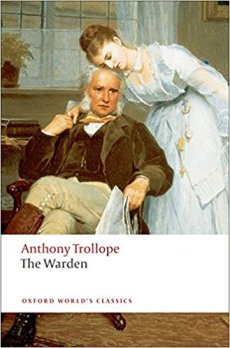 In 19th-Century Fiction we’ve just finished our work on The Warden. I’ve written a couple of times already about why Trollope feels unexpectedly pertinent to our current moment, whether as a respite from or a tacit commentary on its crises. Working on The Warden during Brett Kavanaugh’s SCOTUS hearings was … well, disorienting. Could there be a sharper contrast between meek Mr. Harding–who, faced for the first time with a challenge to the privilege he has so enjoyed (and, by some lights, done such amiable good with), resigns rather than live at odds with his now-provoked conscience–and Kavanaugh, who ranted and raved in outrage at the very idea that he should be investigated thoroughly, never mind held accountable, for any past misconduct? When John Bold rather sheepishly tells Mr. Harding that he is launching a legal inquiry that may prove damaging, the Warden replies, “if you act justly, say nothing in this matter but the truth, and use no unfair weapons in carrying out your purposes, I shall have nothing to forgive.” Then, even after he is assured that Bold’s complaint will fail and there is no legal or regulatory reason for him to give up his contested position, Mr. Harding is not satisfied, because “he was not so anxious to prove himself right, as to be so.”
 The Warden is an odd little book, and in many respects it is hardly a radical one. As we discussed in class, for instance, the bedesman who speak up for what they think is theirs by right are characterized as greedy and ungrateful, and they are ultimately punished for it, ending up worse off both economically and emotionally than they were under Mr. Harding’s wardenship. The novel’s social vision is fundamentally paternalistic. There is something at least potentially radical, though, about its ethical vision–about its casting as a modern-day hero someone who, when criticized, does not lash out but turns inward, and who then will not be dissuaded even by the most powerful people around him into ignoring what his conscience decides is right. Mr. Harding’s resignation does not really fix anything: the novel explores at several levels the complicated relationship between individuals and larger systems and institutions, and in doing so it raises timely questions about the possibility of meaningful moral agency in corrupt circumstances. I think a lot of us are struggling with this right now: the things we can do on our own seem so insufficient that it is tempting to stop trying to do anything. There’s some encouragement to us in the vicarious satisfaction we get from seeing the Warden persist. Even Archdeacon Grantly, imposing bully that he is, is ultimately no match for him! We all probably face a version of the Archdeacon’s exasperated “Good heavens!” sometimes, maybe especially when we try to take some small, imperfect, corrective action of our own. The Warden is not about taking to the barricades–but most of us aren’t going to do that anyway. Mr. Harding might at least inspire us to play our imaginary cellos with renewed vigor as we carry on living our own ethically complicated lives as best we can.
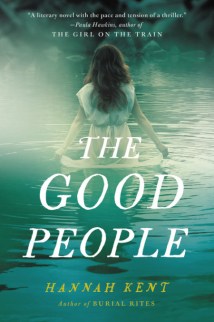
 Nance is a a healer and “handy woman” (midwife) who offers herbal cures and charms and other services to the local people. She believes (as do most of her neighbors) in the presence and power of the ‘Good People’ or fairies. Kent takes her time establishing how pervasive and powerful this belief is, distinguishing it from casual “superstition” and working to convey what the world looks and feels like to people imbued with convictions about threatening supernatural beings with designs on them–the effort they go to warding off misfortune and illness, the fear of missing a crucial sign or step that might have ominous consequences in their lives. “Sure, ’tis a dangerous time for a woman when she’s carrying,” Nance warns a man who comes seeking her help to protect his pregnant wife:
 My attention had been flagging a bit before the women’s efforts to cure Micheál picked up the pace of the novel; I wasn’t sure we needed quite so much time and detail spent on context, on evoking the place and time (Ireland in the 1820s) and people’s lives without much action. In retrospect, I understand better why Kent balanced the elements of her novel the way she did: we need to arrive at Micheál’s treatment / torture prepared to counter the visceral horror it evokes against the truth she has set up, which is that to the women involved it is not abuse or cruelty but a good faith attempt to save a child they genuinely believe has been stolen by the fairies. The novel is not set up (as, for instance, Emma Donoghue’s The Wonder is) as a contest between competing belief systems, much less an interpretive challenge to us about which version of events to believe, the ‘rational’ or the supernatural. We do end up at a trial in which both Nance and Nóra are held accountable in ways that run completely contrary to their version. Though it is hard not to agree with the prosecution that they have done a terrible thing, Kent has made sure we see their actions as reasonable and justifiable to them.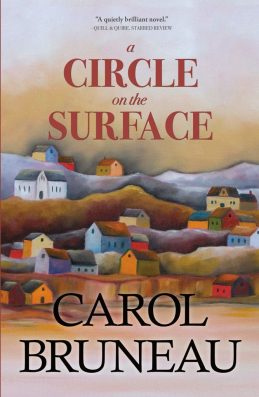


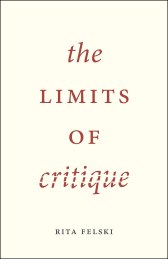 Thinking about this has reminded me that I should finish reading Rita Felski’s The Limits of Critique, which looks like it will give me a more sophisticated way to understand and talk about the tension I feel between what I do and what I sometimes think I’m supposed to be doing. In her introduction she comments that many current critical approaches “subscribe to a style of interpretation driven by a spirit of disenchantment.” That sounds right to me. “Why,” she asks a bit later on “are we so hyperarticulate about our adversaries and so excruciatingly tongue-tied about our loves?” Since I escaped graduate school, my own critical practice has, I think, focused on becoming as articulate as I can about my loves, but I’ve sometimes felt a little sheepish about that, as if my methods, if challenged, wouldn’t really stand up to scrutiny. I look forward to Felski’s arguments–even more since I noticed that one of her chapters is on crime fiction, which rather neatly brings this post back to where it began.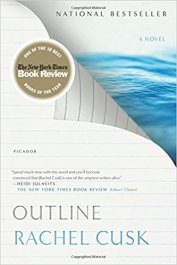

 We’re barely a week into the term but already the sultry summer weather has mostly given way to the cooler crispness of fall. There will still be plenty of warm days well into October, but we won’t be able to take them for granted: they will have the golden haze of precious time stolen from looming winter. I am grateful, this year, for the change in seasons; the heat and humidity were oppressive this summer and the sense of being stifled and confined by the weather made my usual difficulties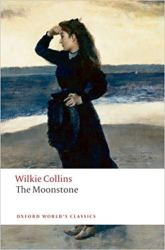
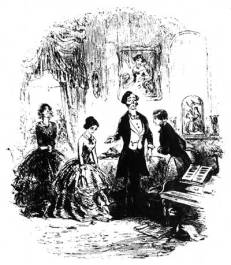
 In 19th-Century Fiction from Dickens to Hardy we’ve had a couple of classes on David Copperfield already. I used the first session to give some general introductory remarks on Dickens and then on Copperfield–comments on the exuberant excesses of Dickens’s style, for instance, and how we might think of it as a deliberate or strategic response to the kinds of problems his fiction is typically about. What could be less utilitarian than the joyful abundance of character and incident in a novel like David Copperfield? And what could be better nourishment for our hearts and imaginations than its sentimentality, its humor, its pathos, and its metaphorical and symbolic richness?


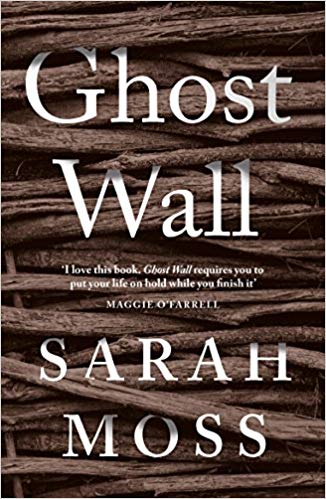


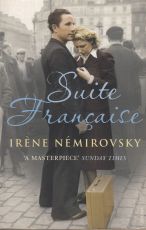
 I was interested, as I said, yet I wasn’t really captivated. The novel has a rather flat affect–perhaps the result of translation, but also reminiscent of Olivia Manning, who writes about war and violence and what survives with similar restraint. Némirovsky’s novel follows a cast of loosely or incidentally connected characters; the overall effect is somewhat like a sampler, or (as the title suggests) a “suite.” If Némirovsky had been able to finish the novel, the cumulative effect might well have been more than the sum of its parts; it seems shoddy to judge what seem like imperfections knowing that what we’ve got is only a fragment.
 The individual stories Némirovsky tells all have their interesting details, but one thing I thought was missing as I read along was any acknowledgment of the specific risk to Jews. This made me wonder exactly what Némirovsky would have known while she was writing in 1941-2. The Appendices include her notebooks and then correspondence from her and her husband Michael including his letters, increasingly desperate, to friends and connections after her arrest in July 1942. It is clear that he, at any rate, did not realize what it means–that it is almost certainly a death sentence. Not only does he try every means he can think of to find her and bring her home, but he even offers to take her place: “Can you please find out,” he writes a couple of months after her arrest,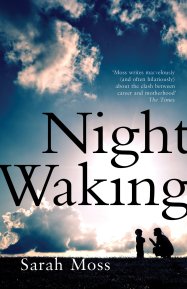

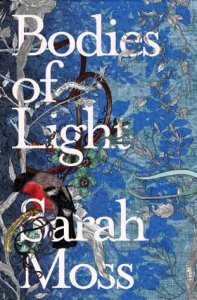 At first most of the tension of the novel comes directly from Anna’s personal situation, but when Anna and the children uncover a baby’s skeleton while digging in the garden, further layers accumulate. Anna becomes preoccupied with finding out the baby’s identity and thus gets drawn away from her book and into research on Colsay. We learn about the island with her, from her sources, and also from the 19th-century letters that make up yet another facet of the novel. The letters–which Anna eventually reads and incorporates into her work–are from May Moberly, younger sister of Alethea Moberly, the protagonist of Moss’s later novels


 Novel Readings