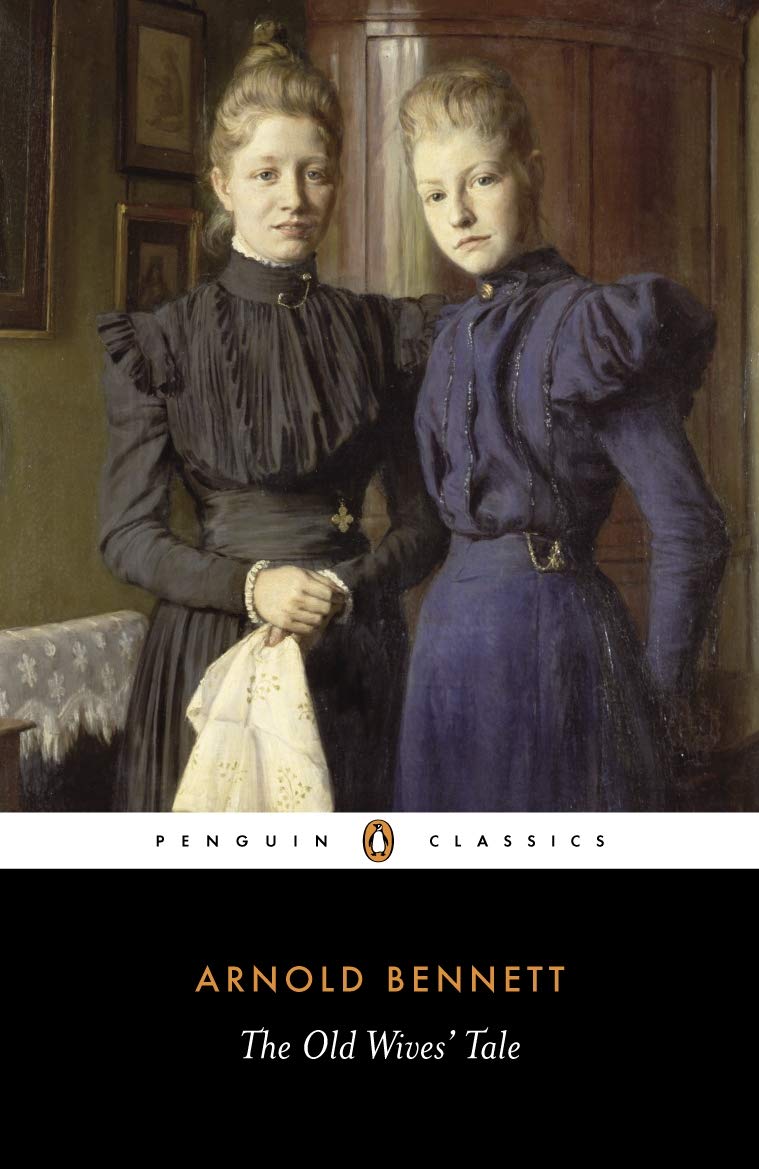
 What affected her was that he had once been young, and that he had grown old, and was now dead. That was all. Youth and vigour had come to that. Youth and vigour always came to that. Everything came to that.
The final volume of The Old Wives’ Tale is called “What Life Is.” Its final two chapters are called “The End of Sophia” and “The End of Constance.” In other words, what life is, is death.
If I say that this predictable – because inevitable – end, both to the novel and to Constance and Sophia, made sense of the rest of the novel for me, I might be overstating the case somewhat, but that’s definitely some of what I felt when I turned the last page. It’s not that nothing that happens to them along the way matters (to them, or thematically) but that the whole purpose of the novel (as clearly stated by Bennett himself in his Preface) is to get us through their lives, and especially through the transformation from youth to age. Recall:
there is an extreme pathos in the mere fact that every stout ageing woman was once a young girl with the unique charm of youth in her form and movements and in her mind. And the fact that the change from the young girl to the stout ageing woman is made up of an infinite number of infinitesimal changes, each unperceived by her, only intensifies the pathos.
This novel was never going to be about epiphanies, or even about growth: it is not a dual Bildungsroman. Despite the long but temporary divergence in their paths, Constance and Sophia don’t change much, or learn much, or even do much. I think this accounts for some of my confusion as I read the middle sections. Unlike most of the fictional heroines I’m familiar with (Anne Elliot, Maggie Tulliver, Margaret Hale, Jane Eyre, or Rhoda Nunn, for example) they weren’t even trying to do much. Even Tess Durbeyfield has a vision of her future, and when it’s demolished, she really struggles to reshape it anew. Constance and Sophia, in contrast, just keep on living. There are decisions, incidents, developments – but these have the scattershot quality of reality, rather than the direction and unity of fiction.
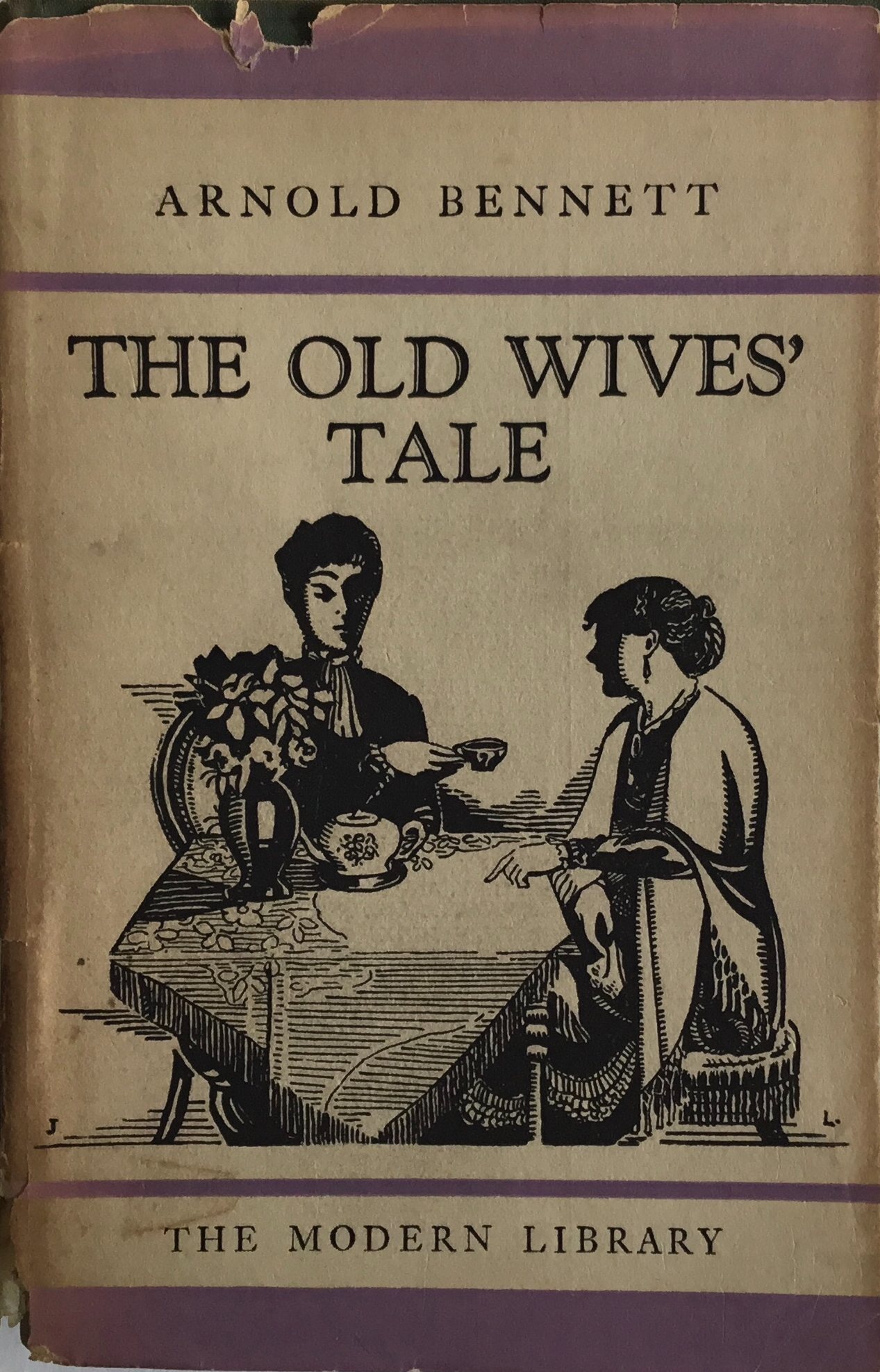 This is not a condemnation of The Old Wives’ Tale, though. One of the challenges for me all along has been figuring out what kind of book it is, so that I could figure out what I was reading it for, or, how to read it well. There are lots of specific aspects of it that I think would reward sustained analysis – especially the relationship between the sisters’ “tale” and the story the novel tells of the Five Towns. But for me anyway, what the final chapters really did was complete the pattern I hadn’t quite been able to make out. It is just the pattern of life, with its beginning, middle, and end. That’s at once not much (for a novel) and everything (for all of us). The result is at once weirdly dull and dissatisfying (is that really all?!) and immeasurably poignant (yes – yes, it is all).
The closest we get to an epiphany is Sophia’s meditation by the deathbed of Gerald Scales. I loved the way Bennett brought her and us to this moment of (mis)recognition. Sophia is so wonderfully shocked that he is old, which is both about the way he has, in her memory, been preserved in the past and about her own (our own?) difficulty understanding – or maybe it’s believing in – her own aging. How can it be, and what does it mean, that no matter what else happens, death is always going to be the end of our stories? This is “the riddle of life” Sophia confronts as she looks at Gerald’s corpse:
He and she had once loved and burned and quarrelled in the glittering and scornful pride of youth. But time had worn them out. “Yet a little while,” she thought, ” and I shall be lying on a bed like that! And what shall I have lived for? What is the meaning of it?” The riddle of life itself was killing her, and she seemed to drown in a sea of inexpressible sorrow.
There really isn’t anywhere else for her to go after this: her literal death felt like a bit of an afterthought, a more important event for Constance than for Sophia herself.
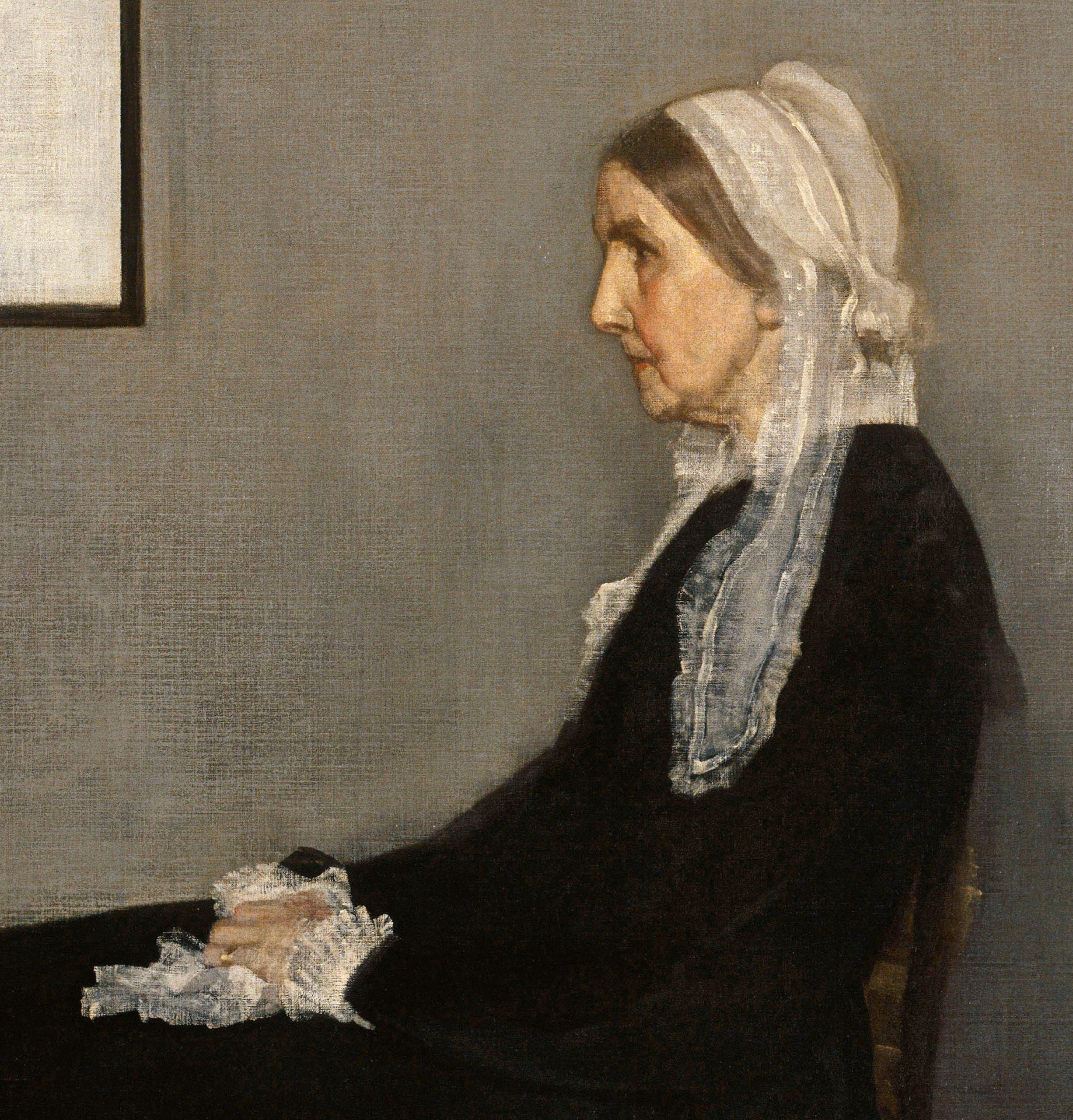 And then it’s Constance’s turn. There’s an extra level of pathos in her being left alone to play out her last act. Like all the death scenes in the novel, hers is blunt, unsentimental, clinical (“It was not rheumatism but a supervening pericarditis that in a few days killed her”). Again, there are lots of specifics we could discuss: of course Cyril wasn’t there, and his career as a “dilettante” is its own form of stasis – but he did do a good job on Sophia’s funeral! and those of you hailing Fossette as the greatest character are of course being hyperbolic (or maybe I think so because I’m not much for dogs) and yet it’s true that she is more charismatic, ultimately, than either of the sisters! But at this point in my thinking about the novel it’s big picture stuff that’s preoccupying me, and so the passage that resonated most with me as I reached the novel’s conclusion was this one:
Old people said to one another: “Have you heard that Mrs. Povey is dead? Eh, dear me! There’ll be no one left soon.” These old people were bad prophets. Her friends genuinely regretted her, and forgot the tediousness of her sciatica. They tried, in their sympathetic grief, to picture to themselves all that she had been through in her life. Possibly they imagined that they succeeded in this imaginative attempt. But they did not succeed. No one but Constance could realize all that Constance had been through, and all that life had meant to her.
First of all, “her friends genuinely regretted her” is not a bad epitaph: I think I’d be happy with it! But the other thing is that it’s not just Constance who knows what she went through and what her life meant to her. It’s also us: we were there. We know. That attention, that knowledge, this novel, is Bennett’s tribute to “the sort of woman who would pass unnoticed in a crowd.”
I admit I finished The Old Wives’ Tale unconvinced that it is a great novel, though it has some great moments. Is it particularly well written, for instance? (I know, I know: how to define or measure that quality? I think I know it when I encounter it, but that’s hardly a reliable test.) Does it go very deep? I’m really glad I read it, though. I know that I am going to keep thinking about it. 
What about you? How did the ending affect your ideas about what went before? Did you finish the novel with new (or renewed) appreciation for Bennett as a novelist? Do we want to have a go at Woolf’s complaint that he is a “materialist” – or do we want to leave her out of this?
 They are worth more to us than the empty human shells we have taken them for; they were children who cried for their mothers, they were young women who fell in love; they endured childbirth, the death of parents; they laughed, and they celebrated Christmas. They argued with their siblings, they wept, they dreamed, they hurt, they enjoyed small triumphs.
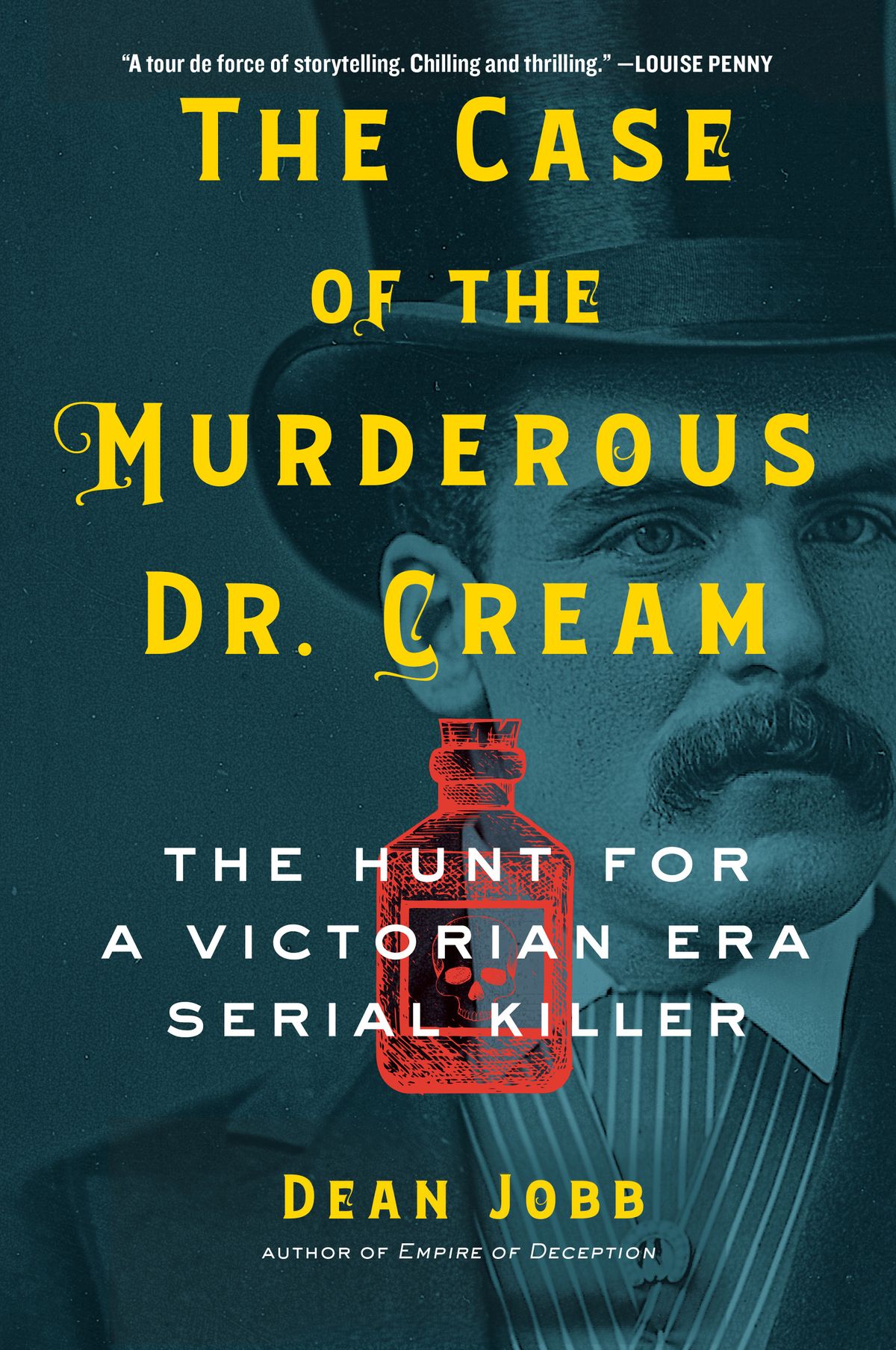 She is also committed to undoing the sensationalism around her subjects’ lives and deaths: I think that’s another explanation for the way she writes the book. She avoids all the obvious kinds of narrative manipulation: she creates no suspense, she does not set a foreboding tone, use foreshadowing, or create melodramatic scenarios or dramatic climaxes. This is one way The Five differs from Dean Jobb’s The Case of the Murderous Dr. Cream: although I did not find his treatment of this murderer’s victims exploitive, Jobb does enjoy dramatic irony and foreshadowing, and overall he tells a more melodramatic and grisly tale. He also, obviously, focuses on the killer, whereas Rubenhold refuses to give Jack the Ripper any more attention than is absolutely necessary. (For instance, there is no speculation at all in The Five about who he was.)
 And no matter how they came to be “sleeping rough,” they didn’t invite or deserve their horrendous deaths. The idea that any version of their life stories should mitigate our distress at the violence done to them—that in any way their murders open them up to that kind of judgment of their characters—is precisely what Rubenhold is crusading against. The epigraph for her conclusion comes from the judge at the trial of the so-called “Suffolk Strangler” in 2008: “You may view with some distaste the lifestyles of those involved,” he says, but “no-one is entitled to do these women any harm, let alone kill them.” Since the first inquests into their deaths, Rubenhold shows, her five have been dismissed as “only prostitutes,” perpetuating the familiar Madonna / whore dichotomy that “suggests there is an acceptable standard of female behavior, and those who deviate from it are fit to be punished.” She rightly points out how persistent this view is, to this day:
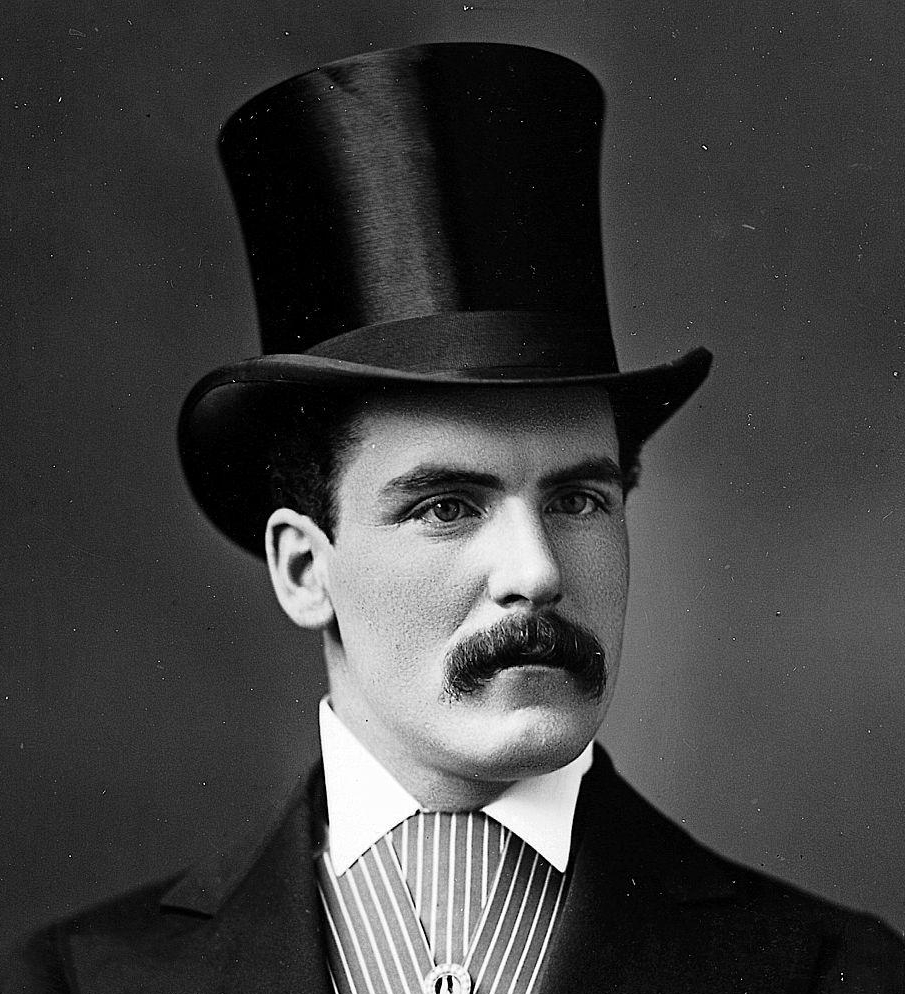 And Cream really was evil. For all Cream’s notoriety, both in the 1890s and among aficionados of serial killers in general and Jack the Ripper in particular, I knew nothing about him before reading this book. A lot of the fun (if that’s the right word!) of The Case of the Murderous Dr. Cream is following the trail of his known and suspected killings, as well as the twists and turns of various efforts over decades to prove his guilt definitively—so I won’t go into detail about all that here. Jobb’s research is extensive and meticulous: he explains in a note on his sources that “every scene is based on a contemporary description of what occurred and where events unfolded; all quotations and dialogue are presented as they were recorded in newspaper reports, memoirs, police reports, and transcripts of court proceedings.” The result is a remarkably specific and vivid account that gives a really complete picture of everything except what is perhaps the most baffling and disturbing aspect of the case: why Cream did what he did. Jobb notes that the concept of “serial killer” was not around at the time of Cream’s murders, and neither was “psychopath.” An attempt was made after his (last) trial to argue that he was legally insane, but it did not prevail. All that could really be said about him was that he was a monster.
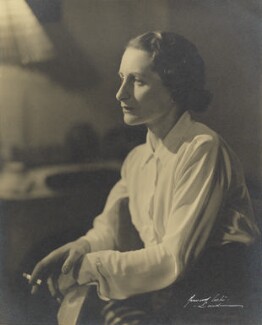 As part of my current research on issues related to gender, genre, and the ‘novel of purpose’ (about which more eventually, when it takes on a clearer shape!) I asked our indefatigable Document Delivery staff to bring in a copy of Vera Brittain’s On Becoming a Writer (1947). It turns out to be in large part advice for aspiring authors, and I’ve been amused, reading it, by how familiar a lot of it sounds as well as how practical and discouraging Brittain is. I thought you might be amused as well, so here’s her list of “nine widely-held illusions regarding the literary life,” in her own words, along with some of her blunt recommendations for overcoming these “phantasies.”
 Having cleared away these sad illusions, Brittain moves on in the next chapter (“First Essentials”) to offer some positive suggestions, though not without one more chastening reminder that your “desire for fame, wealth, and distinguished acquaintances does not in itself constitute a claim to literary success.” There really is something bracing about her Eeyore-like insistence that, while writing may well be worth the effort, it almost certainly won’t be fun, that it’s more likely than not that you aren’t very special or talented, and that the way forward is mostly drudgery. Would a book, not of this type (there are many such) but with this tone get published today? So far—I haven’t read to the end yet—it is certainly the antithesis of Elizabeth Gilbert’s irritating paean to half-assed creativity
 Solitude: it’s become my trade. As it requires a certain discipline, it’s a condition I try to perfect. And yet it plagues me, it weighs on me, in spite of my knowing it so well. It’s probably my mother’s influence. She’s always been afraid of being alone and now her life as an old woman torments her, so much that when I call to ask how she’s doing, she just says, I’m very alone.
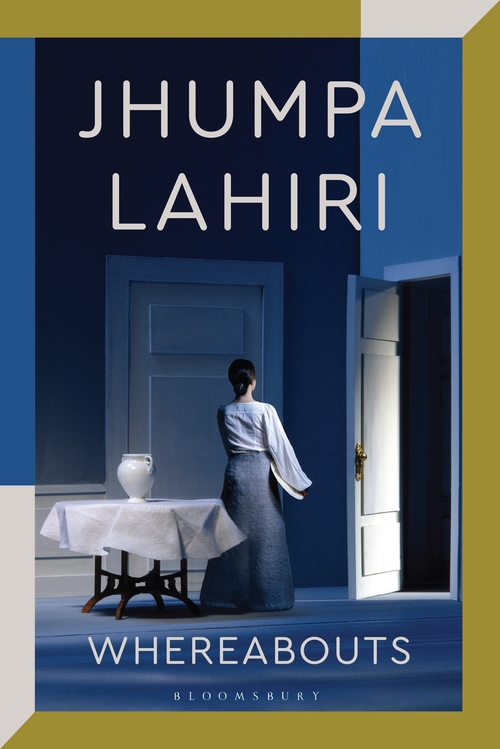 I thought Whereabouts really beautifully captured the paradox that isolation is not, or at least not only, about being alone. “If I tell my mother that I’m grateful to be on my own,” says the narrator,
 A lot of emotion is submerged in Whereabouts. I didn’t love
  Like many Canadians, I decided that the best way to mark Canada Day this year was to reflect rather than celebrate. I have remarked here
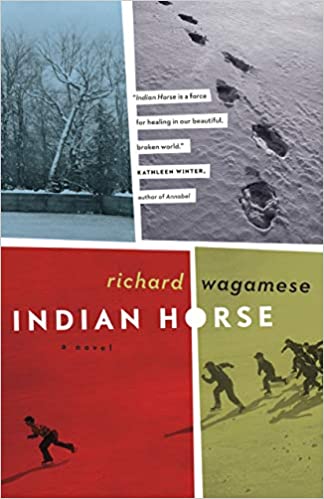
 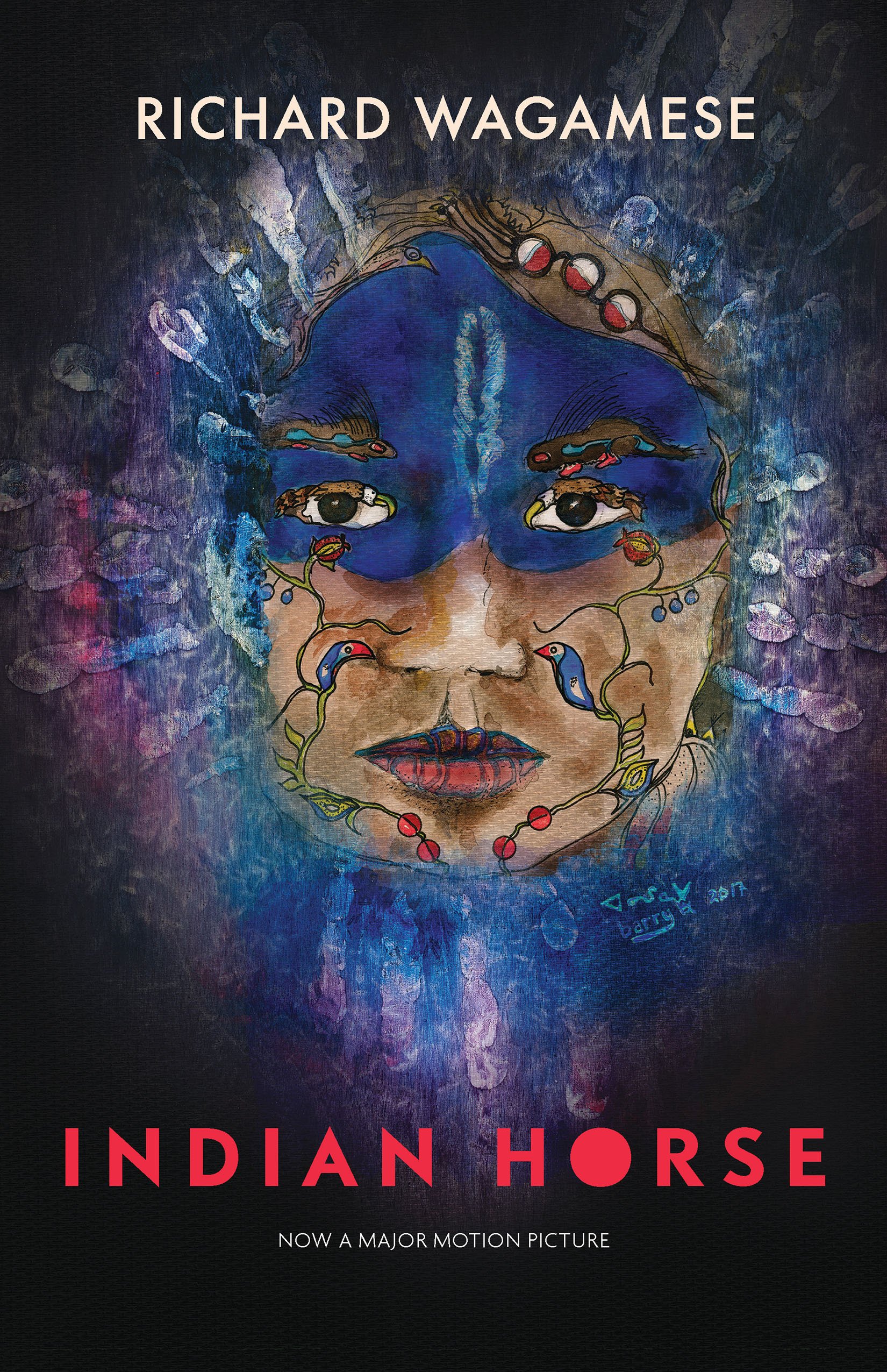 Wagamese writes vividly about the landscape and the Ojibway traditions that shape Saul’s identity and the pain of being forced away from them and from his family. He also writes really well about hockey: as someone who has never been at all interested in hockey (or any sport), I was surprised how beautiful and exciting some of these sequences were to read. Hockey’s centrality to (many people’s idea of) Canadian identity makes Saul’s story of finding freedom on the ice and then having that joy and his spirit broken by racism an effective way of saying something broader about Canada’s rifts and failures as a nation. The road Saul takes from that breaking point back to some kind of peace, with himself and with hockey, is a hopeful version of a story that both the novel and the news tell us doesn’t always end that way.
 Memorable, readable, topical – and yet I also found Indian Horse a bit dissatisfying, a reaction I might have avoided if I had approached it as a young adult novel, which it turns out to be … maybe? I didn’t think it was when I ordered it, but as I was reading it and thinking that, for all its difficult subject matter, it seemed stylistically unsophisticated and often quite heavy-handed, it occurred to me that it felt like YA fiction and I looked it up and found that it won an award for YA fiction. Aha! That explained it! Or does it? Because I looked around some more and could not confirm that Indian Horse was written or marketed as YA fiction. That left me wondering if or how that question should matter to my judgment of how good a novel Indian Horse is. I don’t look down on fiction written for young(er) readers. I cherish and
  It is certainly striking already how much Constance’s life has changed since we first met her. In these four chapters she has: gotten married and moved into her parents’ bed; hired a new servant; acquired a dog; been astonished by her husband’s installation of a signboard for the shop; discovered that her husband is a smoker; hosted her first family Christmas; had a baby (and been through a number of parenting crises); and lost her mother. Bennett’s choice of things to highlight confuses me: too much attention goes to what seem like the wrong things, unimportant things (the bed, the dog, the smoking, the signboard). But maybe it only seems this way because I don’t quite get what Bennett is doing with them. There’s such a long section about the bed, for example. In a way, it is a nice set piece: it effectively conveys the disorientation and poignancy of growing up, of realizing that your place in the cycle of life has changed. The description of Constance lying in bed waiting for her husband is also quite sensual:
 Probably the part of this instalment that surprised me the most, in that respect, was the lengthy section from infant Cyril’s point of view.
  Perhaps, after all, this Ph.D. is not worth my while . . . The world inhabited by my subjects still seems bright and seductive, and the subjects themselves—the Brownings and Harriet Hosmer and William Story and, above all, Mrs. Gaskell—are still alive to me. The more I know of them, the more I love them. But I couldn’t be further from them, here at my desk in the British Library . . . My research is laborious and rewarding: I am clawing at an enormous cliff face, hoping to tunnel through it, but the rock is unbreakable . . . The enormity of the task ahead—writing 100,000 words of pure, never-before-known knowledge—is off-putting, impossible, preferably avoidable.
 I don’t actually have a lot to say about Stevens’s book in particular. I more or less enjoyed it: it’s fine, if you’re into memoirs, which I am generally not. Stevens’s particular take on autobiography in this book strikes me as remarkably niche, which makes me wonder even more about how publishing works. How big can the audience be for a book about a (relatively obscure? I’d say so?) young person’s love life and academic difficulties and preoccupation with Elizabeth Gaskell? Perhaps it was
  Novel Readings