“A Life with No Story”: Rachel Cusk, Outline

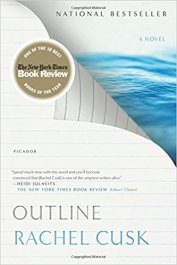
cusk-outline-cover

I said to you, when we first met, that I regard love – the love between man and woman – as the great regenerator of happiness, but it is also the regenerator of interest. It is what you perhaps would call the storyline – he smiled – and so, he said, for all the virtues of my third wife, I discovered that a life with no story was not, in the end, a life that I could live.

At times I wondered, while reading Outline, if a novel with no story was one that I could read. It’s true that there are stories in Outline: each chapter, in fact, tells a different one, in a different voice, which actually made me wonder why the book is considered a novel and not an interlinked story collection, as they don’t exactly add up to any one singular thing. But’s also clear from the beginning of the book that wondering about genre, frustrating expectations of form, is what Outline itself is about–if it is about anything in particular.

For me, someone who loves the kind of fiction Outline refuses to be, it was (predictably) a frustrating book. It has a cool lucidity that made it uncomfortably easy to read. The words slip along, elegantly placed, aphoristically quotable, conspicuously artificial: nobody talks like the people in this book, in monologues interrupted occasionally by oracular observations from the narrator whose paradoxically passive intensity is the novel’s only real through-line. The ease is uncomfortable because it lets you slide along passively yourself, except that at the same time it is hard to miss the overhanging weight of the author’s metafictional preoccupations, which we inevitably also perceive lurking in the narrator’s comments about reading and writing, and which we thus are constantly aware we should be thinking about. “As it happened,” Faye says early on, as her neighbor on the plane to Athens hides his bestseller in his briefcase on learning she’s a writer, cusk-outline-cover-2

I was no longer interested in literature as a form of snobbery or even of self-definition – I had no desire to prove that one book was better than another: in fact, if I read something I admired I found myself increasingly disinclined to mention it at all. What I knew personally to be true had come to seem unrelated to the process of persuading others. I did not, any longer, want to persuade anyone of anything.

That’s clearly not true of Cusk, who wants to persuade her readers that they do not need the conventional apparatus of fiction (most conspicuously plot, but also character arcs), or at any rate that the novel (in general, and also her novel in particular) does not need these things, and in fact is better without them. “We expect of our lives what we’ve come to expect of our books,” says one of Faye’s dialogists; “But this sense of life as a progression is something I want no more of.” Outline reads like the narrative rejection of that perceived expectation: in fact, it has almost no forward momentum at all. “There was no longer a shared vision, a shared reality, even,” Faye says later, reflecting on her children’s development; “Each of them saw things now solely from his own perspective: there was only point of view.”

“There was only point of view” sums up Outline, an observation about the novel that, according to one of Cusk’s characters, could be a condemnation: “As soon as something was summed up,” she says, “it was to all intents and purposes dead, a sitting duck, and she could go no further with it.” Yet Outline doesn’t feel dead, though I wouldn’t necessarily say it feels alive either. To me reading it was like being in a strange kind of limbo, intellectually engaged but emotionally suspended, entranced by the almost hypnotic flow of Cusk’s words but never genuinely caught up in them. I didn’t dislike the experience. I even relished some parts of it: the novel is full of lines and images and suggestions (about life, about love, about family, about writing) that made me pause to appreciate them, or to think about them. Overall, though, Outline seems more a provocation about form and genre–a kind of literary performance art–than anything else: it gives us little else to hold on to as we read. Is that what I want most from a novel? I don’t think so, but there’s something about Outline that shakes my confidence just a bit.


This Week In My Classes: Crime & Copperfield

DALHOUSIE-UNIVERSITYWe’re barely a week into the term but already the sultry summer weather has mostly given way to the cooler crispness of fall. There will still be plenty of warm days well into October, but we won’t be able to take them for granted: they will have the golden haze of precious time stolen from looming winter. I am grateful, this year, for the change in seasons; the heat and humidity were oppressive this summer and the sense of being stifled and confined by the weather made my usual difficulties getting through the summer doldrums that much harder to deal with.

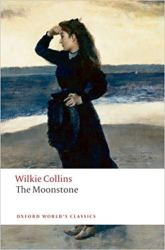
I’m happy, too, to be back in the classroom, partly just to have people around and things to talk about but also because both of this term’s courses begin with books I love. In Mystery and Detective Fiction, after quick stops on Thurber’s “The Macbeth Murder Mystery” (which is a great way to foreground some of the questions about genre expectations and reading strategies that we will address throughout the course) and Poe’s “The Murders in the Rue Morgue,” it is time for The Moonstone, which is one of my favourite novels to teach. It isn’t always universally popular, but over the years it has turned more than a few unsuspecting students on to Victorian fiction!

moonstone-oup

I’ll lead off the discussion tomorrow with some questions about the implications of the Prologue–among other things I like to make sure we notice, its juxtaposition with Betteredge’s self-satisfied view of England’s moral superiority helps us recognize the limits of his point of view, while its account of the theft of the diamond during the siege sets up key questions about eye-witness testimony, evidence, and interpretation. Then we’ll spend some time on Betteredge himself, the world and the family he represents and cherishes, and what he perceives as threats and intrusions. For Friday, when we’ve read further, we will turn our attention to the crime and the first phases of the investigation, with a lot of focus on who becomes a suspect, to whom, and why.

copperfieldIn 19th-Century Fiction from Dickens to Hardy we’ve had a couple of classes on David Copperfield already. I used the first session to give some general introductory remarks on Dickens and then on Copperfield–comments on the exuberant excesses of Dickens’s style, for instance, and how we might think of it as a deliberate or strategic response to the kinds of problems his fiction is typically about. What could be less utilitarian than the joyful abundance of character and incident in a novel like David Copperfield? And what could be better nourishment for our hearts and imaginations than its sentimentality, its humor, its pathos, and its metaphorical and symbolic richness?

There are a few things about the new term that are more depressing than exhilarating — the growing number of my colleagues who are retiring without being replaced, for instance, some of whom I will miss very much personally and all of whom represent significant losses to the depth of expertise and experience in the department. There are larger trends–in enrollment and in institutional and departmental priorities–that I find disheartening too. It is no doubt true that disciplines change for both intrinsic and extrinsic reasons, but that is not really much consolation if the changes mean less and less attention and value to the things that drew me to this profession in the first place. Though of course I know how lucky I was to get a tenure-track position when they were already scarce (though not as vanishingly rare as they have become), I find these days that I am particularly conscious of its costs, which that very rarity makes difficult to calculate or admit to earlier on. Still, as long as one regular part of the job is showing up to have the best conversations I can with students about great Victorian novels, I will still have a reason to look forward to coming to work.

Summer Reading and Writing – 2018 Edition

I’ve read quite a lot since term ended in early May, but it didn’t feel as much like summer reading this year because thanks to a long spell of unpleasant heat and humidity coupled with a massive construction project just one street over, I did hardly any of it on our back deck. I read most of the books I was reviewing in my (unair-conditioned) campus office, where the need to vacate before the heat became unbearable in the early afternoon helped keep me focused on my task, and otherwise I just read at home wherever it was quietest. (Today, on the other hand, it was gloriously sunny, with no humidity and no construction, so my Fall 2018 reading has started off very nicely!) Here’s a quick recap of my summer highs and lows.

It turned out to be the summer of Sarah Moss for me: I read four of her books, including Ghost Wall, which I reviewed for the TLS. I enjoyed them all (and I think Ghost Wall is pretty brilliant), but especially The Tidal Zone. That leaves just one novel (Cold Earth) and some non-fiction of hers that I haven’t read yet. I’m not sure I’m enough of a fan to pursue her into more academic territory, but her monograph does sound rather tempting: Spilling the Beans: reading, writing, eating and cooking in British women’s fiction 1770 – 1830. I also enjoyed her contributions to this otherwise fairly unremarkable discussion of literary criticism today on BBC4’s “Open Book.”

Edna O’Brien’s Little Red Chairs was another book I really enjoyed–or, since “enjoyed” seems a bit too chipper for the story the book tells and the feelings it evokes, I’ll say it’s another book I admired and was engrossed by! How have I not read O’Brien before? I would particularly like to read her first novel, The Country Girls. I didn’t love Kamila Shamsie’s Home Fire, but I read it with great interest; similarly, I didn’t love Irene Némirovsky Suite Française but it has left me with a lot to think about. I really didn’t like Ottessa Moshfegh’s Eileen or Megan Abbott’s You Will Know Me; I admired artistically but personally resisted Alistair MacLeod’s No Great Mischief. Finally, Nell Painter’s Old in Art School was an engaging read that was also timely, given that something else I did this summer was take a drawing class.

I wrote nine pieces for publication over the summer. Most were reviews: for Quill & Quire I reviewed Merilyn Simonds’ Refuge, Alix Hawley’s My Name is a Knife, and Kathy Page’s Dear Evelyn (which I loved); for the TLS I reviewed Ghost Wall (coming soon) and Peter Keating’s Agatha Christie and Shrewd Miss Marple; and for Canadian Notes and Queries I just finished writing up Helen Humphreys’ Machine Without Horses. I also wrote three essays: for the TLS, I wrote about “Reading Trollope in the Age of Trump,” with a focus on Trollope’s great domestic tragedy He Knew He Was Right; for The Reader Magazine, I wrote about Carol Shields’ Unless, which readers of this blog will know is a favorite of mine; and, on a more personal note, I wrote about “Learning to Speak” for Sarah Emsley’s blog series on Persuasion and Northanger Abbey. (The whole series is excellent: I recommend scrolling through to see what else is there.) None of these pieces individually was as exciting as last year’s Dunnett extravaganza, but I enjoyed the range of texts and topics, and I continue to find myself challenged both intellectually and creatively by figuring out what to say (and how to say it) about both books I’m meeting for the first times and old friends I’d like to tell people more about. The tight word limits often felt constraining (for the Trollope and Shields essays especially), but I’m getting more used to the process of generating a lot of material and then, like a sculptor, carving away everything that doesn’t look like the piece it turns out I’m writing. Sometimes (as with the Ghost Wall review) I’m even pretty pleased with the results.

I spent a fair amount of time reflecting on writing priorities, and especially thinking (again!) about whether at some point I should focus my energies on a book project instead of dissipating them (as it sometimes seems) across so many smaller pieces. I have long resisted the idea that “a book” should be a goal in and of itself, as if the form is what matters and not its necessity. There are (IMHO) enough, if not too many, books already (especially scholarly books in “my” field), and it seems foolish to aspire to add to their number unless I have something to say that requires such expansiveness! I’ve also now had multiple reports from people in publishing that there is really no hope of selling (to them, much less to readers) the kind of essay collection I have long had in mind–which doesn’t mean I have given up on it. One thing I don’t like about publishing essays (especially but not only in online venues) is how ephemeral they seem. If only for my own satisfaction, I’d like to fix the best of them in some firmer form–to give them, if I can, a bit more solidity, perhaps by self-publishing them. Is this just vanity? Perhaps! But really, I don’t see how it’s more self-aggrandizing than the kind of pitching and polishing and positioning required for traditional publishing, and it certainly involves many fewer concessions. I’m still thinking about these questions, though, and I am fortunate to have a sabbatical coming up that will give me time to act on whatever decisions I make.

And that’s it for Summer 2018! Classes begin for me on Wednesday, and with them another season of “This Week in My Classes”–the 12th, if I count correctly. (For an index of my years of teaching posts, see here.) My reading continues, of course. I’ve just started Rachel Cusk’s Outline and my book club has chosen George Saunders’ Lincoln in the Bardo for our next meeting; both of these look very different from my usual fare, so I’m excited to see how I do with them. And the first book up for me at work this term is David Copperfield: here’s hoping my students find it as delightful as I do.


Sad, Beautiful, Absurd: Irène Némirovsky, Suite Française

suite

How sad the world is, so beautiful yet so absurd . . . But what is certain is that in five, ten or twenty years, this problem unique according to our time, according to him, will no longer exist, it will be replaced by others . . . yet this music, the sound of this rain on the windows, the great mournful creaking of the cedar tree in the garden outside, this moment, so tender, so strange in the middle of war, this will never change, not this. This is for ever . . .

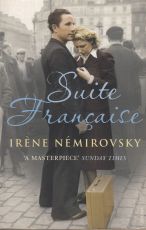
There are two aspects to Suite Française: the (unfinished) novel itself–two parts of an imagined five–and the story of its author, whose arrest, transportation, and eventual death at Auschwitz haunt her fiction about occupied France. It is difficult for me to disentangle my reading of the former from my response to the latter. I was interested enough in Suite Française, which is almost uncomfortably cool and acerbic in its depiction of its characters’ various trials and traumas. There’s no room for sentiment or heroism in Némirovsky’s portraits of people under extraordinary pressure–almost everybody is to some degree petty and self-absorbed, but her upper-class characters in particular are more afraid of losing their luxuries and privileges than they are of the larger and more dire implications of the German occupation.

I found Part I (“Storm in June”), about the flight from Paris as the Germans approached, more gripping than Part II (“Dolce”), about the uneasy relationship between the French characters and the occupying forces: the drama was more overt. Part II is more subtle, both morally and emotionally, as it deals with the difference between “the enemy” in the abstract and the all-too-real human beings sharing homes and gardens and public spaces with the vanquished. One thing that particularly struck me about Part I was that Némirovsky mostly avoided clichéd wartime melodrama: although the evacuees are bombed, for instance, the carnage seems almost incidental, and the two most shocking deaths in that part are only indirectly caused by the war. Part II is primarily about character and atmosphere until near the end, when it turns out Némirovsky has been laying the groundwork for a plot twist that, as her notes show, was going to drive a lot of the action in the subsequent parts.

suite-2I was interested, as I said, yet I wasn’t really captivated. The novel has a rather flat affect–perhaps the result of translation, but also reminiscent of Olivia Manning, who writes about war and violence and what survives with similar restraint. Némirovsky’s novel follows a cast of loosely or incidentally connected characters; the overall effect is somewhat like a sampler, or (as the title suggests) a “suite.” If Némirovsky had been able to finish the novel, the cumulative effect might well have been more than the sum of its parts; it seems shoddy to judge what seem like imperfections knowing that what we’ve got is only a fragment.

Having said that, I did appreciate the novel’s long descriptive passages, which–in contrast to its typically more stilted and utilitarian prose–are often very beautiful, even poetic. Here’s an example that also captures some of the paradoxes of the war-time world Némirovsky depicts. The French villagers have gathered to watch the Germans celebrate the anniversary of their occupation of Paris:

Little by little, darkness spread across the lawns; they could still make out the gold decorations on the uniforms, the Germans’ blond hair, the musicians’ brass instruments on the terrace, but they had lost their glow. All the light of the day, fleeing the earth, seemed for one brief moment to take refuge in the sky; pink clouds spiralled round the full moon that was as green as pistachio sorbet and as clear as glass; it was reflected in the lake. Exquisite perfumes filled the air: grass, fresh hay, wild strawberries. The music kept playing. Suddenly, the torches were lit; as the soldiers carried them along, they cast their light over the messy tables, the empty glasses, for the officers were now gathered around the lake, singing and laughing. There was the lively, happy sound of champagne corks popping.

“Oh, those bastards! And to think it’s our wine they’re drinking,” the Frenchmen said, but without real bitterness, because all happiness is contagious and disarms the spirit of hatred.

It is a memorable vignette, one of many such striking moments in the novel. If it sounds as if Némirovsky is holding out beauty or happiness as in any way the antidote to war and cruelty, though, that would be misleading: the aesthetic pleasure the French take in this spectacle does nothing to undo their resentment and fear at the German presence in their lives, or to compensate for their grief for the loss of their sons and husbands at German hands.

nemirovskyThe individual stories Némirovsky tells all have their interesting details, but one thing I thought was missing as I read along was any acknowledgment of the specific risk to Jews. This made me wonder exactly what Némirovsky would have known while she was writing in 1941-2. The Appendices include her notebooks and then correspondence from her and her husband Michael including his letters, increasingly desperate, to friends and connections after her arrest in July 1942. It is clear that he, at any rate, did not realize what it means–that it is almost certainly a death sentence. Not only does he try every means he can think of to find her and bring her home, but he even offers to take her place: “Can you please find out,” he writes a couple of months after her arrest,

if it would be possible for me to be exchanged for my wife–I would perhaps be more useful in her place and she would be better off here. If this is impossible, maybe I could be taken to her–we would be better off together.

By the time he sent this letter Irène had been dead for over a month. Michael himself was arrested in October 1942 and sent on to Auschwitz, where he died in the gas chambers. Their daughters survived only thanks to the courageous efforts of friends who sheltered them.

Maybe if I hadn’t read these documents immediately after finishing Suite Française the novel itself would have made a stronger impression on me. I found the appendices so compelling and immediate, though, so painfully real, that they overshadowed Némirovsky’s more muted and analytical fiction. The juxtaposition did raise questions for me about the kind of novel she wrote: about whether it deliberately lacks melodrama and avoids the horror and urgency her own story evokes or whether–though the included Preface to the French edition notes that she and her family “all openly wore the Jewish star” as restrictions on French Jews increased–she was spared the full painful understanding of what was really at stake until it was too late for her to write about it. (I’m sure there are answers about who know what when, though who believed what when is probably a somewhat different question. Then as now, it would have been hard to grasp the worst realities.) In any case, it is her personal story more than Suite Française that will stay with me, I think, which seems somehow both all wrong and entirely right.
“Intolerable Noise”: Sarah Moss, Night Waking

night-waking

I stood up and slammed my hand into the mattress next to his head. He screamed. I shook his cot.

‘Moth, for fuck’s sake go to sleep right now. If you don’t go to sleep this minute, I’m going to kill myself. I’m going to take a knife and kill myself. Is that what you want? Mummy will be dead and then you’ll be happy.’

My hands on the cot rail are shaking. I must not attack him. Must not touch him or I will put my hands round his neck and kill him. I cannot leave because I would never come back and I cannot stay because I am about to pick him up and ram his head into the wall until he stops making that intolerable noise.

‘Anna, what the hell are you doing?’

Giles grabbed my shoulder. I stopped myself before my fist connected with his arm.

‘I want three fucking minutes to myself. I want to pee. I want to have a drink of water. I want to brush my hair. I used to give lectures and write my book.’

It is apt, if unfortunate, that I’ve had trouble making my way through Sarah Moss’s Night Waking because I haven’t been sleeping well; by the time I’m done with reading I have to do, and do attentively, for deadlines, I have little energy left to concentrate on anything but a bit of Buffy. I’ll blame that same mental fatigue for my tendency to focus on the novel’s contemporary story without working as hard as the novel deserves to integrate it thematically with the interleaved historical material or to give due diligence to the epigraphs from various sources about child development.

I didn’t read Night Waking so badly that I couldn’t tell its parts are clearly all related, that they knit together into a pattern about the complexity of mother-child relationships and about motherhood as an intensely fraught role, both personally and socially. I just can’t articulate what that pattern is. Or maybe their collective point is not that intricate after all: maybe it is that, though we keep trying, it is impossible to “properly” understand or diagnose or theorize or perfect parenting: that really we all just muddle through in whatever way our historical and other circumstances dictate, and that there will always be someone there to judge us for doing it wrong even as there will always be at least a faint hope that, whether because of or in spite of us, things will turn out okay. night-waking-2

Alternatively, maybe my reading was unbalanced because Moss wrote Anna’s voice so well that she overpowered the other more overtly intellectual aspects of the novel. I loved Anna–and by that I don’t mean that I liked her necessarily, though I mostly did. In many ways, actually, she is just the kind of unlikable heroine that many critics celebrate today: she is fierce, angry, bleakly witty, dangerously honest about her hatred of the daily demands and inanities of her small children. She is a good mother (my epigraph notwithstanding), by which I mean she loves her children in the profound, helpless way that has also  been my own experience of parental love; she is vigilant and responsive and self-critical. But she is also bored, resentful, and near despair at the chasm between the life she once lived–self-directed, intellectually challenging, contemplative–and her current mind-numbing isolation and exhaustion.

Night Waking takes place on the fictitious Hebridean island of Colsay. Anna, her husband Giles, and their children Raph (Raphael) and Moth (Timothy) have moved there from Oxford so Giles can do research on puffins and also so that they can oversee renovations to a family cottage they plan to (and eventually do) rent out. In theory, and sometimes in reality, Anna is finishing a book about the paradoxical relationship between the Romantic idealization of childhood and the contemporaneous trend towards putting children in a range of ‘care’ or oversight facilities: “boarding schools, orphanages, hospitals and prisons.” She sometimes discusses her research, and Moss even includes bits of the book, with Anna’s reflections on and revisions to it–she captures the academic tone and the self-consciousness of the academic writing process perfectly.

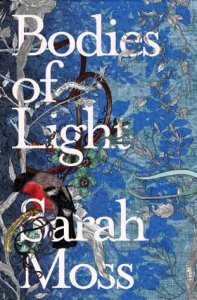
bodiesAt first most of the tension of the novel comes directly from Anna’s personal situation, but when Anna and the children uncover a baby’s skeleton while digging in the garden, further layers accumulate. Anna becomes preoccupied with finding out the baby’s identity and thus gets drawn away from her book and into research on Colsay. We learn about the island with her, from her sources, and also from the 19th-century letters that make up yet another facet of the novel. The letters–which Anna eventually reads and incorporates into her work–are from May Moberly, younger sister of Alethea Moberly, the protagonist of Moss’s later novels Bodies of Light and Signs for Lost Children. (I somehow hadn’t realized that May’s story came first. On her website, Moss says “I knew quite a lot of May’s story when I finished writing Night Waking, although most of it wasn’t part of that book.”) May, a trained nurse, has been sent to Colsay, part of what turns out to be an unwelcome intervention into the island’s high rate of infant mortality.

All of these elements, and also Anna’s involvement with the family who come to Colsay to vacation in the cottage, are individually interesting and collectively resonant. What came through to me most clearly, though, was Anna herself: her struggles with guilt and boredom and sleeplessness–with the sometimes overwhelming conflict between love and desperation–while more extreme than my own, were completely, unhappily, familiar. As Night Waking ends, Anna’s life is changing for the better. If I’d read the novel fifteen years ago, I would have rejoiced in that cautious optimism, eagerly embracing the promise that balance can eventually return, as well as the message that it is both right and possible to reconcile being a parent with being (by) yourself. But now that my own children’s night wakings are long over and they are nearly independent, I am amazed and a bit frightened by how disorienting it is to face the very thing Anna and I both sometimes yearned for: their absence. Who knew–certainly Anna can’t imagine–that a room of one’s own just might, eventually, feel so empty.

This Term In My Classes: Planning for Plagiarism

It’s that time again: through the haze of the August heat you can sense the faint glimmers, atmospheric shivers of anticipation and dread. That’s right, the fall term is coming!

I’ve already been doing a bit here and there to prepare, because I prefer that to doing it all in a big push when it’s absolutely too late not to. I understand the desire to keep summer work (and play) uncluttered with the business of the teaching term, and if that works for you, great, but I find many of the necessary chores tedious enough as it is without being in a rush. So I  started picking away at my fall to-do list around mid-July, and as a result I have my Brightspace sites mostly set up already, including draft syllabi and a lot of the other supporting materials.

One thing I’ve been thinking about a lot is what more I can do this year to discourage plagiarism. I brought more cases to our Academic Integrity Officer (AIO) last term than ever before. It wasn’t just me, either: various forms of plagiarism seem to be on the rise across the department.  I do already address academic integrity in my course materials and in class, of course, and I have always tried to shore students up in a positive way, with lots of advice and support and discussion about their assignments, as well as being clear about the risks and penalties of plagiarizing. Still, my own experience last term, and my discussions with the colleague who has the fairly thankless job of AIO as well as with other colleagues who also had many cases, made me think I need to do more–and gave me some ideas about what.*

Because I really hate interacting with my students as if they are all potential criminals, I don’t want to focus on increasing surveillance. Rather, I want to focus on two of the three main reasons I think students plagiarize, which in my experience are panic, insecurity, and indifference.

There’s not a lot I can do about the last category: students who really don’t care about the material we’re studying or the skills I’m trying to teach, who just want to get the course credit as easily as possible. There are a few of these students in almost every class (and more than a few in writing requirement classes) and for them I have only two strategies. One is to try to win them over by making our work as interesting, challenging, and valuable as I can, which does sometimes work. The other is to emphasize the practical risks of trying to pass off someone else’s work as your own: you might not get caught, but you also might, and then instead of saving yourself trouble, you are in trouble.

My only new idea for this group is to recommend very explicitly that they do the math. If you submit an honest attempt at most essay assignments that is more or less in full sentences, that at least circles the assigned topic, and that makes at least a nod or two to actual textual evidence, it is pretty unlikely you’ll flat out fail–your worst case scenario is almost certainly a D. But suppose you do get an F: at least in my classes, that’s a 49%, which is much better for your final average than 0%, which is the typical penalty for a first-time academic offense. Also, if that F paper is actually your work, the feedback on it might steer you towards a better grade the next time–if you care. (What value is there for you, after all, in my comments on something cribbed from Shmoop?) But even if you don’t care, you’ll still do yourself a favor mathematically if you just–as one of my colleagues put it rather colorfully– vomit something up and turn it in. 

I’m more hopeful that there’s something constructive I can do for the other two groups–those who have run out of time and those who don’t trust their own work. Students with these problems need a better process for writing their essays. Our AIO said that what he’s hearing from a lot of students is some version of “I did the reading and then I went online to find out what to think about it.” These students either aren’t willing or able to put in the time to come up with their own ideas or, and this seems quite likely to me, they don’t actually know how they are supposed to come up with their own ideas. That’s where I want to catch and help them: in that moment before they decide to just let the internet tell them what they think.

I do already talk about the process of essay writing in class; I have even begun incorporating a workshop on it in my upper-level classes, while of course it is a major component of my first-year writing classes. I’ve also been trying for some time to clarify how our other class work is related to the kind of writing I ask them to do. But still I seem to spend a lot of time in office hours talking to students who think, for example, that their first step is to come up with a thesis statement. They always look bewildered when I tell them they are doing it backwards: that they will realize (or at least close in on) their argument only after doing the messy and painstaking work of rereading, note-taking, and free writing that generates the raw material that eventually coagulates into an essay. I’ve talked with students who are trying to articulate a thesis before even having finished the reading! That will never work!

As I said, I do talk about process already, but my plan is to do more of this, more of the time, and get them doing more process-related things in class as well, making explicit connections between these exercises and their longer writing assignments. I think I’ll also do up some handouts–maybe even with flowcharts! The hard truth, of course, is that they have to be prepared to spend some time in the muddy, muddy middle, and for a while it will feel like they don’t know where they are going or what they are going to say–until they figure it out. They can’t avoid that time: they have to plan for it, and not panic, and not turn to Google instead. Maybe, if I talk even more often and more positively to them about this process and provide them even more explicit advice and models, I can help them find the confidence to be uncertain for a little while, because they have a better plan than plagiarism.

I suppose “more of the same but better” isn’t a particularly grand plan on my own part–it’s not going to win me any awards for innovation!–but at least I feel clearer about where I think my intervention is needed and my guidance could be useful. Also, I like making up handouts! It’s a lot more fun than doing the paperwork for, much less sitting through, yet another academic integrity hearing.


*A lot of advice about thwarting plagiarism puts the responsibility squarely on instructors to devise assignments that are plagiarism-proof, or at least plagiarism-resistant. I agree that we should think creatively about the kind of work we ask our students to do, but I actually resist (and resent) that victim-blaming response, which, among other things, weirdly absolves students of responsibility and also ignores that there may be sound pedagogical and disciplinary reasons for specific types of assignments.


Another Group: Joanna Smith Rakoff, A Fortunate Age

fortunate-age-2I was relieved to discover that nobody else in my book club liked A Fortunate Age either. For once, I feel reasonably confident saying it’s not me, it’s the book! I don’t think we’ve been so unanimous in our dislike of any our choices, in fact, since the disaster that was Paula McLain’s The Paris Wife.

We ended up having a very lively discussion, however, as we tried to figure out where or how we thought the book went awry. The novel rewrites Mary McCarthy’s The Group , which we read back in March. I didn’t love The Group, but it was certainly interesting, edgy, and thought-provoking–and by and large none of us found Rakoff’s updated version any of those things. Was it because Rakoff followed McCarthy’s model too closely and thus had to wrestle her characters into plotlines that didn’t necessarily suit them, and that gave the novel a stale air in spite of all the “novelty” of its 90s setting? Was it that we were all too familiar with that setting to find it historically interesting the way we did McCarthy’s rendition of her period? Perhaps it was that Rakoff’s women seemed too much like McCarthy’s, as if nothing had really changed about their options and preoccupations despite the decades that had passed–they seemed so insular, so self-absorbed, so unengaged with the wider world, or with ideas or possibilities outside their incestuous little nest of relationships. But things have changed for women, though of course not enough and not necessarily in only positive ways: in Rakoff’s novel, however, it seems as if the narcissism of youth makes historical change illegible or irrelevant. We concluded that, more than offering an insightful account of life in the 90s, A Fortunate Age read like The Group in 90s sets and costumes. We all found it a slog.

fortunate-age-1I particularly puzzled over why I found its detailed exposition so tedious. I am on record as a fan of exposition! But by half way through A Fortunate Age I was impatiently skimming through its dense paragraphs of stuff that just didn’t seem worth taking more time over. Rakoff inadvertently furnished a clue with her epigraph, which is from Daniel Deronda. (Beware: If you’re going to invite a comparison to George Eliot, it may well work against you!) True, Gwendolen Harleth is every bit as self-absorbed and ignorant of the wider world as the characters in A Fortunate Age, but (and for me this is crucial) George Eliot is not: her account of Gwendolen’s youthful egotism and willfulness is suffused with wry compassion; the context for Gwendolen’s story is not just the relentless minutiae of her immediate experience but everything else the narrator knows and thinks about the world she lives in. Gwendolen’s limitations do not limit her novel–but Rakoff’s characters are all we get in A Fortunate Age, and they don’t repay our sustained attention. I’m not saying the novel needed exactly what Daniel Deronda has–an intrusive narrator, for instance, or profundity, both of which are risky ventures if you aren’t George eliot–but it needed a broader perspective somewhere, a sense of what kind of story it is ultimately telling about these people and this age, especially since the book aspires (as its title indicates) to be about an era, not just a few individuals.
Our collective impatience with A Fortunate Age led us to abandon our usual practice of following a thread from one book to the next–which is how we got from The Group to The Radiant Way to A Fortunate Age. Enough (for now) of scrutinizing women’s lives and relationships! We wanted something different–formally, intellectually, thematically–and so we settled on Lincoln in the Bardo, which seems about as unlike Rakoff’s novel as is possible. It’s also a book several of us have been interested in but wary about reading, so now we have a specific incentive to press on with it.

In Brief: Megan Abbott, You Will Know Me

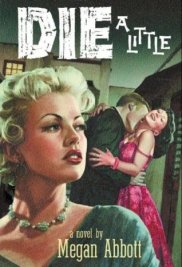
Abbott-die-a-littleI didn’t think I had read any Megan Abbott before this year,  but when I was at the library picking up You Will Know Me I realized that I had signed out one or two of her noir novels at some point in the past–probably while shopping around for ideas for Mystery & Detective Fiction or Pulp Fiction. I hadn’t put the pieces together, mostly because those books are (fairly cleverly) decked out with vintage-style covers which quite simply don’t look as if they belong with Abbott’s contemporary thrillers. (Shallow of me, I know.) I expect it’s also because I didn’t actually read them, or at least not more than the first few pages. It wasn’t personal; it’s just that noir is not my favorite genre–in fact, to a degree that might surprise the students in Mystery & Detective Fiction, I’m not a voracious reader of crime fiction at all, in any flavor, or not any more. When I do read mysteries nowadays, it’s almost always because I want to keep up with old friends, though I do try new writers intermittently, especially if there’s buzz, and sometimes I do like them–Tana French comes particularly to mind. Apparently, on the basis of that admittedly skimpy sample, Abbott was not among them.
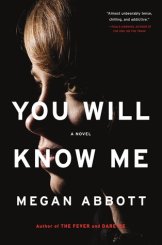
Abbott-you-will-know-meAnyway, lately I’ve been picking up enough buzz about Abbot (who has a new book out) that I thought I would give her what turned out to be another try. First I got hold of The End of Everything–but again I didn’t persist past the first chapter or so. It read like a YA novel, not just because it was centered on teenage girls but because it sounded as if it was written for them. Abbott seems like a self-conscious enough writer that I’m sure she was doing something on purpose with this style, and maybe she went on to do something twisty and surprising with it, but the scenario too seemed a bit pat and familiar and I wasn’t interested in reading on.

You Will Know Me was my next attempt to read one of her books, and it will almost certainly be my last. I did read this one to the end, and there are a lot of things about it that I thought were good or interesting, especially the gimlet-eyed look at competitive gymnastics, which has always equal parts inspired and repelled me. She certainly made it seem every bit as horrendous as I ever imagined! She also knows how to tell a gripping story and keep up the pace–but that’s not altogether a good thing, as I felt manipulated by her heavy-handed foreshadowing even as I started skimming here and there so I could press on more quickly to whatever revelations were to come. When I finished the book, I didn’t feel surprised or shocked, though, much less exhilarated by the experience. I felt tense and dissatisfied and a bit dirty, because so much of the suspense of the novel is really just, or also, or inextricable from, prurient curiosity.

fingersmithI’m not necessarily calling You Will Know Me a bad book. These are (or are they?) the feelings, the reactions, a thriller depends on and aspires to–which is why I don’t typically read them. There is definitely overlap between thrillers and crime fiction, but for me, the best crime fiction depends on our taking a genuine interest in the people and the outcome, caring about what happens both because it’s possible for us to empathize with at least some of them and because of what’s at stake–the immediate consequences for people’s lives and then beyond that, the possibility of justice, if not realized, than imagined. Other kinds of fiction can also be very suspenseful: Daphne du Maurier or Sarah Waters, for instance. But a novel like Fingersmith is engrossing only initially because it makes us voyeurs and lures us in: then it turns on us, exposes us, and makes us interrogate and repent of our self-absorption. It shows us the moral consequences–for us and for its subjects–of the kind of objectification that a thriller depends on. Fingersmith is also 100 times more subtle and ambitious than You Will Know Me, but that’s not really my point, which is just that I found Abbott’s particular brand of suspense a bit distasteful and ultimately unrewarding.

OUP-WHPerhaps tangential, perhaps not: A lot of people were pretty annoyed at the recent piece about Emily Brontë in the Guardian, and I agree it was a sloppy job, and unconvincing about its complaints. But Wuthering Heights is another novel I’ve never much liked, and it’s for some of the same reasons I didn’t like You Will Know Me, and also, I suppose, the reasons that I really didn’t like Eileen. It’s not that I think every novel must be “nice” or uplifting or offer a feel-good epiphany, but I’d like more of a pay-off–intellectually, or ethically, or aesthetically–for time spent in ugliness than these novels seem to me to offer. Wuthering Heights at least has the compensatory virtue of complex artistry. I didn’t discern anything in Eileen that made up for its unpleasantness–and as readers of this blog well know, I don’t share the trendy opinion that simply being expressively unpleasant is some kind of artistic triumph in itself. I’m very aware that this preference almost certainly says more about me as a reader than it does about these particular books–and to be clear, I think You Will Know Me is probably a pretty good book, of its kind. Maybe I underestimate it, and thus Abbott, but I disliked it too much to want to double-check.

“A Better Way of Travelling”: Sarah Moss, Names for the Sea

I recognise my own distrust of Icelandic tourism, of the collector’s desire to tick off geysers and volcanoes and midnight sun on some kind of Lonely Planet checklist, totting up experiences like any other commodity. There must be a better reason to travel, a better way of travelling, than the hoarding of sights your friends haven’t seen … I want to sense the long-dead outlaw’s dread of the dark, not to be told about it in an interpretation centre. I want, I suppose, an unmediated Iceland, even though I know there’s no such thing.

Sarah Moss writes wonderfully about her family’s stint in Reykjavik, the result of a longstanding fascination with “northerly islands” which, in combination with another longstanding desire, for her family to experience life “abroad,” led her to seize an opportunity to teach at Iceland’s National University.

Moss is wry and self-aware and sometimes funny about her difficulties adapting, both to Iceland’s culture and customs and to the more general condition of being an “outsider.” She frankly admits her own peevishness–with the food especially, but also with the traffic, the weather, the housing. Names for the Sea is not, this is to say, a romanticized travelogue or a promotional brochure, even tacitly. Indeed, far from making me dream of someday seeing Iceland for myself, Names for the Sea killed quite dead my faint previous interest in ever going there–even though as an ordinary tourist I could presumably avoid some of the particular challenges Moss and her family encounter with shopping, furnishing, driving, and just generally living.

had sometimes wondered about Iceland as a place to visit, mostly because I know a few people who are from there or have been there and have made it sound pretty cool, and also because Iceland has a reputation for bookishness (for instance, there’s its tradition of a “Christmas book flood” or Jolabokaflod–imagine having a whole word for that!). Unlike Moss, however, I am not instinctively drawn to northerly places. Halifax is quite far enough north for me! (And despite its climate Halifax is not even very far north — it is approximately as far south as Portland Oregon, which I actually find quite disorienting. That just goes to show you that where weather is concerned, latitude isn’t everything!) Moss does nothing to reassure me about how harsh and unforgiving Iceland’s climate is: how long, dark, and relentless its winter, and how fleeting its spring and summer. “By November,” she reports,

it’s been winter for a while. We recognise winter not just because the colours of land and sky and sea have changed, although the greens and blues have turned to shades of grey, but because there is less light, even in the middle of the day. The sun rises at a shallower angle every day, every day the zenith is a little lower, every day sunset is a little further south, as if the sun is running out of power. . . . There is snow, and then rain again, and then more snow. . . . I try to remember the midsummer light, and to know that as the days are shortening now they will lengthen after the solstice. Life will come as surely as death. It’s hard to believe, my Arctic theology.

Moss is also eloquent about the hazards of the road:

Icelandic driving is terrifying. Nobody indicates. Even bus drivers accelerate towards junctions and then jump on the brakes at the last minute, sending passengers and shopping crashing to the floor. People swerve across lanes to leave the freeway from the inside. Icelanders have one of the highest rates of mobile phone ownership and usage in the world, and they don’t stop when they’r driving. . . . In one month we have seen four major accidents, the kind that write off cars, trigger airbags and leave glass and blood, and in one case a baby’s car-seat, on the road.

Since driving is right up there with winter on my list of things I hate, and driving in winter is one of my biggest sources of anxiety here where most (!) people at least try to follow the rules of the road–well, let’s just say that wherever Reykjavik once was on my bucket list, it’s a lot further down now.

And yet. Though it sounds as if Iceland is not for me, Moss’s life in Iceland, while full of difficulties, is not, for her, altogether without its charms. She and her family are intrepid enough (or stubborn enough, or both) to explore the country’s alien landscape, including its active volcanoes–they are there during the disruptive eruption of Eyjafjallajökull in 2010. Moss herself is also determined to learn as much as she can about this strange place she has come to, so she goes out of her way to meet people with expertise in everything from Icelandic politics to local cuisine to elves–“I find the idea of talking to someone about elves embarrassing,” she admits, but nonetheless she braves the trip out of the city to do it, and the conversation is as odd and interesting and faintly disconcerting as you’d expect.

I particularly enjoyed her chapter on knitting, which apparently nearly everybody in Iceland does:

On buses, in restaurants, during meetings, in class. In the first week of term, several students came into the classroom, put down their cups of coffee, took off their coats, hats and scarves and pulled out laptops, power cables, poetry anthologies, knitting needles, and wool. I didn’t, I decided, mind. . . . I can crochet while watching a film. . . . Icelandic undergraduates, it turned out, can knit while drinking coffee, taking notes on their Apple Macs and making enlightening contributions to discussions of Lyrical Ballads. I watched the pieces grow from week to week, comforted, somehow, by the progress of socks and matinee jackets as we worked our way through from Gray’s ‘Elegy Written in a Country Churchyard’ towards The Prelude, as if the knitting were a manifestation of accumulating knowledge. Colleagues knit in meetings, which seems a far more constructive use of time than the doodles produced in the English equivalent. I wonder if anyone would say anything if I tried in committees at home, instead of drawing borders of trees and wonky geometrical patterns around the minutes.

(She should try it, if she hasn’t already! So far nobody has made any objection when I take my crochet out in our department meetings. My theory is that they realize it’s better for everyone there that I manage my stress.)

I also enjoyed her account of her attempts to improve her Icelandic by watching Icelandic films and reading Icelandic fiction, both of which turn out to be good lessons, for a literature teacher, about how much tacit knowledge it really takes–how much cultural capital and “insider” experience–to make sense of what you’re reading and seeing. “Rain drips from everyone’s hair,” she says of the movies, those set in the Middle Ages blurring into the documentaries of early 20th-century life;

Children run in and out of turf houses through low doorways, like rabbits emerging from and disappearing into burrows, and every so often one of the men says something apparently proverbial, like ‘the dark horse runs longest’ or ‘the fog hides many secrets’ and hits another man on the head with an axe … It’s like listening to a tale told by a drunk; I am fascinated, mostly by the landscape, but have no idea what the narrative logic might be. The subtitles are little help because there seems to be no relationship between what people say (not much, mostly about farming) and what they do (mostly farming but sometimes murder).

She does not fare much better with novels. Detective fiction, she observes, is “obviously written with translation in mind,” so it is full of explanations that make comprehension easier for her. Literary fiction, on the other hand, “cause[s] me the same puzzlement as the films”:

I simply don’t understand why the characters do what they do, can’t see the connection between speech and action. In apparently gentle novels of bourgeois life, characters rape and kill with no warning, no reflection and little reaction from anyone else. I find the violent episodes entirely unpredictable, never know at the beginning of a paragraph if the person coming through the door is bringing coffee or a crowbar to the person sitting at the table.

Iceland is “distinctive for its low crime rate,” so she wonders why its fiction and film feature so much “bloodletting”–“Are Icelanders simmering with rage under their jumpers?”

I admired Moss’s perseverance: there is something endearing, even, about her determination to understand, to make sense, not just of these opaque texts but of every aspect of Icelandic life. I’m not sure this is “a better way of travelling” (or of travel writing–the result was sometimes a bit more detail than I actually wanted about the country’s history, politics, or finances) but it is clearly her way: Moss is driven by intellect, or perhaps her need to ask and get answers about everything was a way of compensating for the difficulty she had simply being and feeling in a place where everything is so unfamiliar. I appreciated that she never glossed over those difficulties, and also that for all her inquisitive effort Iceland remained, in some ways, just out of reach for her: the book offers no magic moment of recognition, no epiphany.

Perhaps Iceland’s resistance to Moss’s quest for understanding explains why her fascination with the place endured in spite of everything, even bringing her family back to visit soon after they moved back to the UK, to move once more among “landscapes that simply don’t make sense, mountains that the mind can’t read.” The way Moss writes about that landscape is the only thing about Names from the Sea that nearly changes my mind about travelling to Iceland:

It’s like watching God in the act of creation, passing through fells of bare naked lava and rock, like seeing the world before it was finished. We’re on day four of Creation, moving back towards day three, a world made of sky, fire, earth and water with none of the complications that came later. The mountains are red, as if the cinders haven’t yet cooled, or the black of embers, carved by valleys where it seems that if you watched long enough, you’d see that the rock is still flowing. The elements are translated here: what is solid looks like liquid, rock like water, earth like fire.

I lack Moss’s hardiness and spirit of adventure, though, so what Names for the Sea ultimately convinced me to do was to order another of her novels. I have yet to read anything by her that I haven’t both enjoyed and admired.

Summer Fog

Deck-SkyHere in Halifax we have been socked in with fog and cloud a lot lately, and the last two days in particular have been relentlessly overcast and muggy. The humidity alone is demoralizing, and the absence of sunlight just compounds the gloom. Happily we’re supposed to see at least some sun later today–but most of the rest of the week is forecast to be pretty grey. This kind of disappointing weather is typical of May and June here, but by July we’re usually enjoying a bit more brightness! As our long-awaited and always too-brief summer slips away, it’s hard not to feel a bit depressed, especially as constant construction noise in our usually tranquil neighborhood has made even the few really nice sunny days harder to enjoy. I have hardly spent any time reading on the deck, which is the one summer activity I really look forward to!

twitterlogoMy mopey mood has not been helped by the constant barrage of bad news, or by the ceaseless cascade of angry responses to one thing after another on social media. My twitter feed yesterday was heavily dominated, for example, by people being angry about a terrible “take” on libraries and an ill-conceived hit job on Wuthering Heights. I didn’t disagree with (most of) the complaints: I love libraries as much as the next person in my feed, and though Wuthering Heights is hardly my favorite novel either, if for some reason I felt like making a big public statement about that, I would at least try to explain myself without insulting either the book or those who admire it–and I would certainly make a good faith effort to know the novel better and acknowledge its strengths as part of the project. But eventually I had to wonder who these declarations were really aimed at, since the pieces’ authors are almost certainly not going to see or be persuaded by them. I know it feels good to vent, and we all (myself certainly included!) use Twitter for this some of the time, but after a while the anger seems largely performative, and I’m increasingly inclined to see the compulsion to join the chorus of outrage as a problem in itself, not any kind of solution–though, having said that, I do realize that there can be both comfort and political value in asserting solidarity with other like-minded people. My least favorite genre of tweet is “you’re doing Twitter wrong,” so what I need to do is keep working on managing my own experience of Twitter–which I still find a vital lifeline to relationships and conversations and ideas I value–so that it is on balance more engaging than stressful.

moss-namesOn the bright side, I just finished reading a pretty good book, Sarah Moss’s Names for the Sea, which I will write a bit more about here soon. I also really liked Kathy Page’s Dear Evelyn, which I just finished writing up for Quill & Quire, and now I’m focusing on a short essay on Carol Shields’ Unless, a novel that has come to be one of my very favorites. I also feel good about my piece on “Reading Trollope in the Age of Trump,” which ran last week on the TLS Online–it was a treat to be writing about a Victorian novel again, and it was an interesting challenge to see if I could highlight its contemporary relevance while still mostly focusing on its particulars, keeping it “more Trollope than Trump,” as my editor and I agreed. It was also nice not to be behind their paywall for once!

I’m sure I will perk up soon. The sun is already trying to burn its way through today’s fog, and in the meantime I have plenty to do. Days–and moods–like this, though, which are pretty common for me in the summer, are why I don’t 100% look forward to this season, and why I kind of hate the well-intentioned “how’s your summer going?” questions from the few people I run into, most of whom really only want or expect me to say “fine.”