 The third course I plan to spend time rethinking during this sabbatical is British Literature After 1800, one of a suite of 2nd-year survey classes we originally established to orient students in the big picture (nationally and historically) as context and preparation for our more specialized upper-level courses. These curricular intentions are compromised (some might say, rendered inoperable) by the way our program actually works now: the surveys are no longer specific program requirements but are simply part of suites of classes from which students make their own selections. We do not have the option, either, to make specific surveys prerequisites for specific upper-level courses. I wish it were otherwise, and we did at one time have a more structured (and thus, IMHO, more coherent) curriculum. But here we are, and here these courses still are, and in Winter 2020, for the first time since 2010, I will be teaching this particular one again.
In 2010, not only was it clearer how this course fit into our overall offerings but it also was supposed to do specific kinds of work for our majors and honours students, focusing not just on literary content but also on research and writing skills at a a step up from what we typically cover in our first-year classes. Now that the surveys are no longer program requirements at all, much less part of a deliberate skills-based sequence, that is no longer (as far as I know!) a necessary part of them, any more than it is in any of our other 2000-level offerings. This alone would mean reconsidering the structure and assignments I set up for it when I offered it before, when students did (among other things) an elaborate annotated bibliography. Even if the place of the course in our program had not changed, however, I would want to rethink the reading list.
When I drew up the syllabus in 2010, I followed a very conventional — by which I mean, quite canonical — model. This was not (or not just) a failure of imagination on my part: given the very wide range of our other course offerings, it seemed like a priority to address the “standard” classics that (in my experience) students have often had surprisingly little chance to read at the outset of an English major, ones that are often touchstones or pushing-off points for later authors or movements or specific texts. While in some ways this might seem like a conservative approach, in other ways I consider it essential for understanding our field: it is hard, for instance, to discuss the significance of challenges to the canon, or exclusions from the canon, or problems with the whole notion of canonicity to begin with, without some sense of the traditional canon as a starting point. Or so I thought, anyway: this course, as I conceived of it, set out a preliminary version of literary history that would be complicated (as I repeatedly discussed in class) by other approaches and other courses.
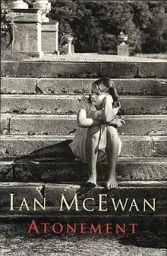
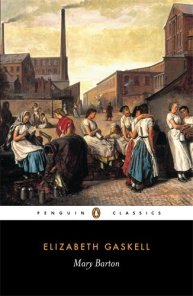
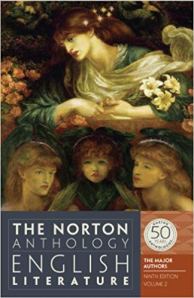 So I assigned the “major authors” edition of the Norton Anthology and we read Wordsworth and Coleridge, Keats and Shelley, Tennyson and Browning and Hopkins, Wilde and Joyce and Woolf, Yeats and T. S. Eliot and Auden, Heaney and Rushdie. A bit less predictably, we also read Elizabeth Barrett Browning and Christina Rossetti, and Katherine Mansfield, and while the first time around I assigned Great Expectations as our representative Victorian novel, the second time we read Mary Barton. Both times, our 20th-century novel was Ian McEwan’s Atonement, which worked really well because it directly–metafictionally and thematically–addresses changing ideas about fiction from Modernism to modernity. The course was a lot of work for me, both because I had to teach a lot of material outside my usual area and because of the challenge of conceptualizing it so that there was some coherence–some patterns and themes to follow across the term–while still doing my best to keep the whole problem of canonicity in view. As part of this effort, I set up one of the most elaborate course requirements I’ve ever done: a collaborative wiki-building project for which the students (working in teams) built study guides for the course based on the lectures and readings as well as their own research and also incorporated some information about readings not included in our syllabus.
 Looking over my notes, I actually think it was quite a good course of its kind. (You can read some blow-by-blow accounts of it while it was in progress if you’re interested; just scroll down this page until you get to 2010!) Now that this course is not specifically meant as a prelude to other courses, however, I am rethinking the kind of course it should be on its own terms. I would still like to provide something of a canonical overview–because, again, I think some sense of what that looks like is really helpful for other critical, even subversive, conversations–but I would also like to build more of the critiques and revisions and alternatives into the course itself, rather than assuming they will come up later. This assumption just doesn’t seem reasonable any more given the extreme flexibility of our current program (which is a response to scarce resources more than a principled shift away from requirements or sequences), and I also think we will have more interesting conversations in the moment if I shape the reading list to include more contestation and urgency.
How to do that, though, without losing the basic chronological survey structure that distinguishes this course from ones organized by genre, theme, or just narrower parameters? I have been thinking about organizing the readings into clusters, such as gender or nation and identity, but I don’t like to abstract topics or themes as if it doesn’t matter when they took on a particular literary form or voice or what IRL they might have been responding to. In every course I teach, in fact, including introductory classes, the mystery class, and the 19th-century novel classes, I tend to teach things in chronological order because it makes the most sense to me pedagogically: it allows us to work through any relevant historical contexts in order, and to talk about ways writers respond to each other. That doesn’t mean it’s impossible to compare earlier and later treatments of related ideas or forms; it just means that this possibility gets more robust as the course progresses. (This is one reason I often focus the first assignment(s) on a single text and then make later assignments comparative.)
One thing I could do, as a compromise, is choose all of the texts for the course with an overarching theme in mind. This is probably quite feasible, especially if that theme is itself somewhat flexible. In fact, having some reason to choose one thing over another is going to be essential, as canon (re)formation in the past couple of decades has been almost entirely additive: anthologies have only gotten bigger, and some of them, vast already in print, also have associated websites with still more potential material! The thing about letting go of the “old standards” approach is that it leaves you quite overwhelmed with possibilities. Thinking in terms of “how to have the best conversation about X” rather than about coverage (which was impossible, of course, even in the old model) will be not just helpful but essential. I just (just!) need to settle, in that case, on which conversation(s) I want the course to highlight and then figure out how best to include a variety of voices–which is something that I should have done better at in the previous versions.
 I actually already have one specific idea, which is to substitute Andrea Levy’s Small Island for Atonement. It too is a book that crosses literary generations and that tells a story about telling stories, but it starts from a very different place and has very different concerns. I think it’s a very readable book, less subtle, perhaps, than Atonement but also less insular. Atonement is very much a novel about novels, which is one reason I admire it and enjoyed teaching it; this time around, though, for this course, I think I want less literary self-consciousness and more social and political engagement in the reading list. That might make Mary Barton still a good option, but I’m also wondering about Kipling’s Kim, which is one of the 19th-century novels I’ll be getting to know this term–because like Small Island, it’s (as I understand it, anyway) about how we think about who we are in relation to where we come from and where we live. Is that the overarching theme I want to go with? I don’t know yet, but at least it’s a place to start thinking about how to conceptualize this survey course in a new (for me) and possibly more relevant way.
I’d be very interested in knowing how other people approach survey courses of this kind. I have always thought that they are, or should be, the backbone of a good English curriculum. Obviously that view no longer prevails, in practice, in my own department, where we once had a mandatory survey (“Literary Landmarks”) for all majors and honours students. I am sensitive to the objection that we don’t want to perpetuate narrow ideas about the canon or literary history. Within the scope of any such course, though, these issues can always be confronted directly–as I know they were by my colleagues who taught “Literary Landmarks” back in the day. If you have taught — or taken — a survey course, what principles organized it? How did you approach the impossible task of coverage and the essential task of subverting your own generalizations as you went along? What readings worked really well? And, not incidentally, if you assigned an anthology, which one? (At the moment, I am inclined towards making up a custom anthology using Broadview’s excellent tool for this.)
 In
In  To date, the books I’ve chosen for this seminar have all been by women writers, about women detectives, and explicitly interested in gender and detection. They all, that is, bring a lot of self-consciousness to their engagement with detective fiction as a genre. Collectively, they also cover a good range of subgenres or types of detective fiction. While in these respects the list has reasonable breadth, however, in other respects it is quite narrow; the feminist tradition it covers is, to put it mildly, not very intersectional. I put in some time in the past trying to fix this problem; though I came up short, the good news is that I do, as a result, already have a preliminary list of names to start with, particularly of African American authors: among these are
  So far I have never assigned a Canadian writer in either of my detective fiction classes, primarily because I haven’t found one that takes the genre in what seems like a new direction or that really made me sit up and take notice. (Phonse Jessome’s
  One of the problems I ran into last time I went down this road was getting my hands on samples from the authors I was interested in. I probably just need to be more persistent and order a lot of titles through interlibrary loan. The other problem is that I’m not really a voracious or enthusiastic reader of mysteries (odd, I know, in the circumstances) so I tire easily of the necessary exploratory work and I can take a while to warm to books that are not immediately appealing to me (though I can eventually get there, as has happened with Walter Mosley’s Devil in a Blue Dress–still not a personal favorite, but one I have found very satisfying to teach). This is why I need help sifting through or coming up with good options so that I can make this reading list represent a wider range of voices. Ideas and recommendations would be very welcome.
 One of my plans for my upcoming sabbatical is to reconsider and possibly refresh my reading lists for courses I offer frequently. It may be that the reading and rereading I do confirms my usual selections, or that it gives me ideas for mixing things up a little, or that I get inspired to rethink my approach altogether–we’ll see! It isn’t that I’m dissatisfied or trying to fix anything in particular about these courses, which usually go very well. It’s just that book orders for the next year come due in the middle of term when I’m too busy to do this kind of exercise. I don’t want change for the sake of change, but I also don’t want to slide into complacency or let my classroom conversations stagnate.
 This context explains the choices I typically make for the 19th-Century Fiction Austen-Dickens-Hardy courses: in our curriculum, there are other courses that focus on particular kinds of fiction from the period, so I stay away from works in those categories (such as Frankenstein or Dracula, for example, or Alice in Wonderland) that I know students will read elsewhere and focus primarily on realist, domestic, historical, or social problem novels. I start with Austen, but I tilt English 3031 towards the Victorians, rather than the Romantics, because they have their own classes; similarly, I end English 3032 with Hardy and (with regret) leave Forster and his fellow Edwardians to the later courses.
 Besides books like Frankenstein that I know are covered frequently in other courses, probably the most obvious absence from this list is Wuthering Heights. I have read it more than once but never taught it, for the simple (if perhaps indefensible) reason that I like the Brontë novels I do teach much better and the maximum of five books per course that seems realistic to me is a zero-sum game. Also, my colleague Marjorie Stone, who loves Wuthering Heights, regularly offers an upper-level seminar on the Brontës. This winter is her last term in the department, however: her impending departure is another reason I am taking stock in this way. Wuthering Heights is (sigh) near the top of my “reread in 2019” list.
 So besides Wuthering Heights, what other alternatives
  There’s another dimension that I need to give further thought to, and that’s which less canonical writers or genres I should work into these plans. I’ve made it this far without reading any novels by Bulwer Lytton or Disraeli or Charlotte Yonge, any “silver fork” novels or Newgate novels or, besides The Odd Woman, any ‘New Woman’ novels. I haven’t read Ouida or Marie Corelli or Amy Levy, or H. G. Wells or* …. but then, the list of books I have read is always (and always going to be) much shorter than the list of books I could have read. The challenge is always deciding which of those are books I really should have read. In the end it’s about defining purposes and drawing lines, which are always exercises in artificial precision. For my current fairly narrow purpose–refreshing the reading list for two undergraduate courses already defined by what they are not–the authors I’ve already identified as priorities are probably more than enough to take on, but if there’s a story about the 19th-century novel from Austen to Hardy (that is, roughly from 1815-1890) that you think I can’t tell, or could tell better, with the help of someone I seem likely to overlook, I’d be happy to know!
 More clutter to clear out of my head, if I can — something that has been on my mind for about three weeks now, but in an unfocused or inconclusive form. In fact, I’ve started and then deleted a couple of posts about this already; I just couldn’t seem to get very far before either deciding I didn’t want to get into it after all or running out of energy. But now the topic feels like mental debris, so let’s see if I can make any kind of sense of it so I can move on. One thing my blog is supposed to be for is freeing me to write about things without having to be absolutely certain about them, after all.
 This is all good! That is, it is all good if these are the activities you want your students engaged in–and I genuinely have no problem with that. I’m just not interested in doing that kind of thing myself, and what I was trying to figure out is why, and then whether this signals a deficiency of some kind in my own pedagogical approach. After some reflection, I decided the answer to the first part of that question is that increasingly, I do not approach my classes as steps towards making students into scholars, as part of a program designed to train them to do academic things. Instead, I aim to engage and train them as readers–attentive, well-informed, rigorous readers, to be sure, but with their eyes first and foremost on the page, not on contexts or scholarly apparatus or digital tools.
 I’m not saying that the kinds of hands-on learning students get from constructing timelines (or whatever) can’t contribute to the conversations I prioritize, and clearly it can also give them valuable experience of other kinds, including building the skills set required to work with these kinds of digital tools. I can’t shake the feeling, though, that these projects take time away from, or redirect attention from, the books themselves, and there are so few contexts in which a sustained focus on reading is even possible, much less required and supported. If my own work and interests were in the field of book history, I expect I would find these tools more personally congenial. At the same time, my own estimation of the value of some forms of scholarly work has also eroded so much in the past decade or so–my own impatience with its insularity, with the feeling of playing insider baseball, has gotten so acute– that I have far less interest in drawing students into that world than I have in … well, in doing what I do in my own classes, which is pretty well documented here across the decade-plus history of
 I was looking back over some old posts in this series and November entries have a certain … similarity, shall we say! We’re all–students and faculty alike–tired, busy, and kind of gloomy. The introduction of a week-long break (coming next week for us) has not made as much difference as you might think: last year I was struck by how much more tired and behind a lot of my students seemed when classes started up again, and because the break also comes quite late in the month, we all felt a bit frantic after it because the end of classes was suddenly so close.
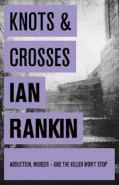 We aren’t quite there yet, however: there’s still the rest of this week to get through. In Mystery and Detective Fiction we’ve just wrapped up our discussions of Ian Rankin’s Knots and Crosses. Although I think Knots and Crosses is gripping and clever, I’ve been wishing that I left The Terrorists in instead when I decided which book to cut to make room for An Unsuitable Job for a Woman, because its political engagement is in some ways more immediately relevant and its morality is more complicated. That said, Knots and Crosses offers a pretty direct engagement with what we now call “toxic masculinity.” Its Gothic games seemed a bit too pat to me this time, though–I don’t entirely disagree with Rankin’s own assessment of it as a bit too clever, a bit too much the self-conscious work of a young writer immersed in literary theory and history and eager to show off what he knew.
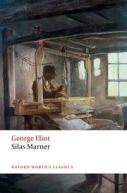 In 19th-Century Fiction tomorrow we are finishing our time on Silas Marner. Because I have only taught Silas Marner once or twice before, and many years ago, I have been feeling my way a bit hesitantly, not being entirely certain which questions will catch students’ interests or draw them most naturally towards the novel’s big ideas or best moments. Oddly, perhaps, I’ve found it difficult precisely because the novel is so short, though I chose it hoping that its brevity would make George Eliot more accessible than usual. I dialed back the amount of context I provided at the outset, but even so it took up nearly one whole class, and that left us only three more to talk more freely about the novel. With Middlemarch, in contrast, I typically have at least three weeks’ worth of classes, or around nine hours, and we get even more time when I assign it in Close Reading. And yet three hours is actually plenty in some ways too: because not a great deal happens in Silas Marner just in terms of plot, I feel as if I have been struggling to work on the meaning of what does go on without repeating myself. Still, I think it has been OK overall. In fact, I have been pleased at both the quantity and the quality of participation in class discussion, which certainly suggests to me that they are finding the novel’s distinct combination of realism and moral fable engaging. We have already talked a fair amount about the importance of taking responsibility and making deliberate choices, rather than trusting to luck, fate, or God, as key to Eliot’s moral vision; tomorrow we will talk about this in the specific context of family, especially parenting, including both Silas’s choice to raise Eppie (in contrast to Godfrey’s actions) and Eppie’s choice to stay with Silas. I think this is the only one of Eliot’s novels that comes close to being unironically sentimental, at least in the main plot line–and it’s just so lovely.
 The three Cs are are Cold, Collins, and Chandler, and I am actually done with all of them now, but I haven’t blogged about my classes since they were all just starting up, so I thought it was time to get caught up. A trace of the first does remain in the form of a minor but lingering cough, but although I did end up having to cancel one day of lectures when I actually lost my voice for a bit, it wasn’t too bad. A number of my students and colleagues have been much sicker, poor things.
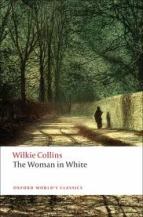 I also felt just a bit impatient with The Woman in White, though it is a lot more fun than The Big Sleep. At one point in our discussions this time a student actually asked a question I ask sometimes too about different novels, that could perhaps be summed up as “Are we giving this novel too much credit?” — or “Are we putting more interpretive weight on this novel’s details than they can really bear?” I feel that more with Lady Audley’s Secret (which I think is fundamentally incoherent, or indecisive, about some of its central thematic questions) than I do with The Woman in White, but I think it’s always a fair question to ask. It’s not one that I think can ever be answered definitively either way, but there’s no doubt that some novels seem less in control of their own meaning than others, while some can rather deflate under scrutiny. Some novels, too (as I ended up saying about The Woman in White, though not, if I remember correctly, to the same student) raise a lot of interesting questions or stir the pot in thought-provoking ways without necessarily resolving every aspect.
 In 19th-Century Fiction we are actually on our penultimate novel, Silas Marner. I’ve been a bit nervous about how it would go, as it starts out pretty slowly and Eliot’s prose requires closer attention than any of our other novelists’. I also haven’t taught it very often–only twice before that I can remember, and never in a lecture class of this sort. Today was “big picture” day so I set up some key ideas and then we began talking about Silas himself, first as he is seen by his neighbors in Raveloe and then as we come to understand him thanks to the narrator’s explanations and commentary. I tried to emphasize the importance of noticing the different ways people arrive at their explanations for what they see, which I think is key not just to the themes of the novel but also to its pacing, in which not much often seems to be happening but we realize, if we know to look for it, that a lot of the action is in perception and interpretation. One student brought up Silas’s beloved pot, which I thought was a particularly nice detail to have picked up on:
 In Mystery and Detective Fiction we’ve just wrapped up our discussion of The Murder of Roger Ackroyd. It’s been an interesting fall to be teaching this course. I always open it with some discussion of the differences between “literary” and genre fiction–not just what those differences are presumed to be but how they shape people’s expectations and evaluations of books on either side of the supposed divide. I imagine, however, that to students already accustomed to a literature curriculum that incorporates not just popular culture but a wide range of media (we have courses on both Chaucer and comics, on Shakespeare as well as Tolkien, on poetry and on television and video games) it sometimes seems as if in advocating for the intellectual gravitas of our course material I am arguing against a straw man.
 This term, however, both Margaret Wente in the Globe and Mail and Luke Brown in the TLS stepped up to show my students in real time that the debates about the literary merits of crime fiction are ongoing and can be both intense and judgmental. Wente published an op-ed decrying the degradation of our curriculum–yes, ours in particular: she singled out Dalhousie’s English department and Mystery & Detective Fiction was among the courses she specifically mentioned as symptoms of our decline. (I won’t link to Wente’s column, because I don’t want her bad faith and shoddy practices rewarded with clicks, but
  In 19th-Century Fiction we’ve just finished our work on The Warden. I’ve written a couple of times already about why Trollope feels unexpectedly pertinent to our current moment, whether as
  The Warden is an odd little book, and in many respects it is hardly a radical one. As we discussed in class, for instance, the bedesman who speak up for what they think is theirs by right are characterized as greedy and ungrateful, and they are ultimately punished for it, ending up worse off both economically and emotionally than they were under Mr. Harding’s wardenship. The novel’s social vision is fundamentally paternalistic. There is something at least potentially radical, though, about its ethical vision–about its casting as a modern-day hero someone who, when criticized, does not lash out but turns inward, and who then will not be dissuaded even by the most powerful people around him into ignoring what his conscience decides is right. Mr. Harding’s resignation does not really fix anything: the novel explores at several levels the complicated relationship between individuals and larger systems and institutions, and in doing so it raises timely questions about the possibility of meaningful moral agency in corrupt circumstances. I think a lot of us are struggling with this right now: the things we can do on our own seem so insufficient that it is tempting to stop trying to do anything. There’s some encouragement to us in the vicarious satisfaction we get from seeing the Warden persist. Even Archdeacon Grantly, imposing bully that he is, is ultimately no match for him! We all probably face a version of the Archdeacon’s exasperated “Good heavens!” sometimes, maybe especially when we try to take some small, imperfect, corrective action of our own. The Warden is not about taking to the barricades–but most of us aren’t going to do that anyway. Mr. Harding might at least inspire us to play our imaginary cellos with renewed vigor as we carry on living our own ethically complicated lives as best we can.
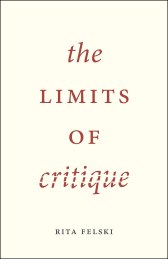 Thinking about this has reminded me that I should finish reading Rita Felski’s The Limits of Critique, which looks like it will give me a more sophisticated way to understand and talk about the tension I feel between what I do and what I sometimes think I’m supposed to be doing. In her introduction she comments that many current critical approaches “subscribe to a style of interpretation driven by a spirit of disenchantment.” That sounds right to me. “Why,” she asks a bit later on “are we so hyperarticulate about our adversaries and so excruciatingly tongue-tied about our loves?” Since I escaped graduate school, my own critical practice has, I think, focused on becoming as articulate as I can about my loves, but I’ve sometimes felt a little sheepish about that, as if my methods, if challenged, wouldn’t really stand up to scrutiny. I look forward to Felski’s arguments–even more since I noticed that one of her chapters is on crime fiction, which rather neatly brings this post back to where it began.
 We’re barely a week into the term but already the sultry summer weather has mostly given way to the cooler crispness of fall. There will still be plenty of warm days well into October, but we won’t be able to take them for granted: they will have the golden haze of precious time stolen from looming winter. I am grateful, this year, for the change in seasons; the heat and humidity were oppressive this summer and the sense of being stifled and confined by the weather made my usual difficulties
 In 19th-Century Fiction from Dickens to Hardy we’ve had a couple of classes on David Copperfield already. I used the first session to give some general introductory remarks on Dickens and then on Copperfield–comments on the exuberant excesses of Dickens’s style, for instance, and how we might think of it as a deliberate or strategic response to the kinds of problems his fiction is typically about. What could be less utilitarian than the joyful abundance of character and incident in a novel like David Copperfield? And what could be better nourishment for our hearts and imaginations than its sentimentality, its humor, its pathos, and its metaphorical and symbolic richness?


 Novel Readings