 Last week was our winter term study break, which is always a welcome interlude–more welcome even, I think, than the equivalent week off from classes in the fall because the winter term is grueling in ways the fall term is not, simply because it’s winter! Everything just takes more time and energy. We’ve been having a spell of unusually mild weather over the past few days and it has been so nice not to have any shoveling or scraping to do. There have even been days when it made perfect sense not to wear boots! Imagine that, in February. 🙂
But we’re back in class now, and from here to the end of term it will feel to all of as if we’re hurtling down hill. Why does the second half of term always seem to go by so much faster than the first? It’s not like we don’t still have a lot to get through! So: let’s take stock.
 In British Literature After 1800 we have just finished a couple of weeks on Great Expectations. More than half the class chose to write their first paper on it, which may be a sign of engagement, though it might also be a sign that they don’t want to write on poetry, or that they realized they would like to get the paper out of the way before the later option. In terms of our class discussions, I think it was nice to park ourselves in one place for a while, as the course overall, just by its nature, moves quite briskly along through a range of quite different material. As I look ahead to the other long texts I chose for the course (Three Guineas and The Remains of the Day) I’m pleased at the thematic connections I can see opening up. From a pedagogical point of view, that means they pair up in interesting ways for the later assignments, which include a comparative essay. But they are also different enough in form and voice that our conversations won’t get repetitive.
 I’ve taught The Remains of the Day quite a few times, but before we get to it there’s quite a lot of material on the syllabus that I haven’t assigned often or at all before, starting on Friday with Kipling’s “The Man Who Would Be King” (which is the first Kipling I’ve ever taught) and including Three Guineas. I have assigned A Room of One’s Own enough times to know some of the challenges of working through Woolf’s long winding arguments. With Room I have found it helpful to start by modeling very carefully how to follow her from one step to another, literally drawing a map of the associative connections from one idea to the next. Skimming is much more hazardous here than it is with Dickens, where you may well miss details or delights if you aren’t paying close attention but you are likely to catch on again eventually. With Room there are set pieces that are particularly good for close reading and discussion (the contrasting dinners in the opening, for instance, or the story of Shakespeare’s sister): I think there are similar exemplary moments in Three Guineas but I haven’t had a chance to test them out and see which ones catch on. Our sessions on it will thus be necessarily experimental, but I hope the students will find the book as brilliant and provocative as I do.
 In 19th-Century British Fiction from Austen to Dickens we have wrapped up our work on Waverley — and I have to say, it seemed to go pretty well! I allowed more class time for it than I have before, and I really dug in on the historical context early on, both of which I think helped, but credit definitely also goes to the students: they just didn’t seem to find it as difficult, or at least as off-putting, as the previous batch did, or if they did, they were more good-natured about it! There was not nearly the precipitous falling off in class discussion after Pride and Prejudice that I’d feared. Something else I’ve already noticed is Waverley (and Waverley) coming up in discussions of other readings (including of Great Expectations, as I have a number of students who are in both classes), which confirms my sense that whatever its challenges, it is a novel that sets the terms for a lot of what happens after it.
 Next up in this class is The Tenant of Wildfell Hall, which we started on Monday. I have assigned this often in my seminar on the ‘woman question’ but I realized it has been nearly a decade since I worked through it in a lecture class instead. As always, I am enjoying rereading it. I think it is such a smart novel, especially in its complicated narrative and chronological structure. (Here’s my Open Letters Monthly essay laying out my ‘reading ‘ of it.) But it’s also very direct and emotionally engaging, making it a rather different experience than Waverley in ways that are both refreshing for us as a group and interesting for us as students of the 19th-century novel. One of the things I thought about a lot during my sabbatical last winter was whether it was time for me to slot Wuthering Heights into this course. I admit, I’m glad I didn’t. For one thing, I’ve got enough new stuff on my plate right at this moment in the term. But the key thing is that I can’t get past how unpleasant I find Wuthering Heights. If I had time to do two Brontë novels, I could do Tenant right after it, as a tonic and a corrective (which is, some critics think, something Anne herself intended it to be), but in a class with only 5 novels altogether, that’s not an option. Still, maybe next time. Or maybe not.
 After Tenant we will be doing Mary Barton and then wrapping up with Hard Times. We’ve already been asked to submit course descriptions and tentative reading lists for 2020-21, and one of the courses I’ll be doing is the Dickens to Hardy course. Dickens is the only novelist explicitly named in both course titles, and every so often I wish I didn’t feel obliged to include him on every reading list–or to include Hardy at all–so I asked this group if they’d feel cheated if they signed up for “The 19th-Century British Novel from Dickens to Hardy” and discovered they would not be reading either Dickens or Hardy. A bit to my surprise, most of them said an emphatic “Yes!” I guess those names have more traction than I realized. The problem for me is that I really (really) want to assign Middlemarch for the class, and I’m wary of including two monstrously long novels, which means once again I’d have to choose among the short(er) Dickens options, which are getting a bit stale for me. Or would I? Would it be so tough to read both Bleak House and Middlemarch in one term? What if I included two really short novels in between, to balance them out (The Warden? Cranford?) and then ended (as apparently I must) on Hardy? I have a couple of months to think about this before the actual book orders are due: I’ll run some scheduling scenarios and see what looks reasonable.
 We have had more storms since the last time I posted but happily no more storm days, so we are still on schedule … for now! (In fact, things are looking
  I really did enjoy rereading the novel this time, especially the reliably hilarious as well as deliciously subversive final encounter between Elizabeth and Lady Catherine. One thing we spent a fair amount of time on in class is the way Austen manipulates us into liking or disliking characters, only, much of the time, to undercut or at least complicate our “first impressions” so that we realize we are vulnerable to the same interpretive mistakes as the characters. In this respect I think even Mr Collins gets a bit of a reprieve from our initial distaste. Not only is his offer to Lizzie actually quite honorable, despite also being laughable, considering he has no obligation to make up to the Bennet sisters for the future loss of their home, but at Hunsford we see that while he is still absurd, he treats Charlotte well and has made it possible for her to live a dignified life. I don’t think there’s any backtracking on Lady Catherine, though: she remains an antagonist to that bitterly delightful end:
 In British Literature After 1800 we are still reading poetry and I am still struggling with “how to balance attention to context and content with attention to form,” as I put it in
  This is hardly a radical strategy, including for me. I do often (and did this term) provide study questions for the novels in my 19th-Century Fiction classes, for example, to help students organize their observations as they read the long books–to know what, of all the many details flooding past them, to really pay attention to. But I also find it pretty easy to ask questions in 19th-Century Fiction that will get at least some answers, and usually lots of them, because we always have plot and character as starting points, from which we can level up to questions about form and theme. Maybe because I don’t teach poetry often, I underestimated the difference it makes to be working on, not just poetry, but poetry much of which is in a somewhat archaic diction. My impression (though I may be mistaken) is that many of the students are struggling with the literal meaning of the poems–their basic paraphraseable content. Perhaps, too, the variety in our reading list that keeps things interesting for me (and is to some extent necessitated by the survey format) is making things harder for them because each poet is so different and thus makes different demands on our attention as readers. With that in mind, in the study questions I came up with I tried to make the assigned poems more legible for them, combining questions about theme with prompts to consider form, and making some connections across the poems.

 We are well into Pride and Prejudice in 19th-Century Fiction this week and I have to say that while
 In British Literature After 1800 we are skipping briskly through our small sample of Romantic poets. The rapid pace is at once the blessing and the curse of a survey course with a mandate to span more than 200 years of writing in multiple genres: we don’t spend long enough in any one place to go into a great deal of depth, which means we also don’t spend long enough on any one topic to get tired of it. I enjoy the variety myself, including the chance to talk about genres and examples that don’t come up in the courses I teach more often–such as Romantic poetry! In fact, because the introductory courses I’ve taught for the last several years have been either Introduction to Prose and Fiction or Pulp Fiction, I’ve spend hardly any time on poetry at all except for Close Reading, and the last time I taught that was Fall 2017. So I’m having fun, but also feeling a bit wobbly about how to balance attention to context and content with attention to form.
 Given the cyclical nature of the academic life as well as the recurrence of texts and topics in the classes I teach most often, there are lots of things I might be saying “Not again!” about! This week, however, the particularly irksome repetition is the disruption to the start of term thanks to a big storm–not
  So what, besides calming my nerves (and perhaps theirs as well), is on the agenda for our remaining classes this week? Well, in British Literature After 1800 Friday will be our (deferred) Wordsworth day. In my opening lecture on Monday I emphasized the arbitrariness of literary periods and the challenges of telling coherent stories based on chronology, the way a survey course is set up to do. But I also stressed the value of knowing when things were written, both because putting them in order is useful for understanding the way literary conversations and influences unfold, with writers often responding or reacting to or resisting each other, and because historical contexts can be crucial to recognizing meaning. My illustrative text for this point was Wordsworth’s “I Wandered Lonely As a Cloud,” which (as I told them) is the first poem I ever memorized, as a child. It was perfectly intelligible to me then, and it is still a charming and accessible poem to readers who know nothing at all about what we now call ‘Romanticism.’ Without historical context, it seems anything but radical–and yet Wordsworth in his day (at least, in his early days) was considered literally revolutionary. His poetry “is one of the innovations of the time,” William Hazlitt wrote in “The Spirit of the Age”;
 In 19th-Century Fiction it’s time for Pride and Prejudice, though I’ll start with an abbreviated version of the lecture I would have given on Wednesday on the history of the 19th-century novel. It has been several years since I’ve taught Pride and Prejudice (
 There’s no doubt that if I were teaching Mansfield Park these questions would be a big part of our discussion, as they are when I teach The Moonstone. I haven’t so far arrived at any ideas about how — or, to some extent, why — we would take up this specific line of inquiry in our work on Pride and Prejudice. Perhaps I am too prone to let the novels I assign set their own terms for our analysis–to rely on their overt topical engagements more than what they leave out or obscure–but this particular novel doesn’t seem to be about race and empire, even though its characters live in a world where these things (while never, I think, explicitly mentioned) matter a lot. Beyond acknowledging that fact,
  2019 began with a lot of thinking about teaching, because I was on sabbatical for the first half of the year and that meant the great luxury of time away from teaching itself. Sometimes in the past the result has been
 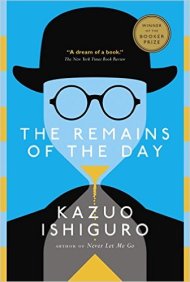 I finally settled on Great Expectations and The Remains of the Day for the representative Victorian and 20th-century novels in the survey course, partly because I love them both and feel confident about teaching them and partly because along with Three Guineas (which will be a new teaching text for me), I could imagine a range of thematic continuities within this set of readings that would work well for final essay assignments–ideas of class and social mobility; social insiders and outsiders, deference, domination, and political power; the relationship between money, privilege, and moral freedom; art and language as vehicles for advocacy or subversion; social order, resistance, and fascism. We’ll see how it goes!
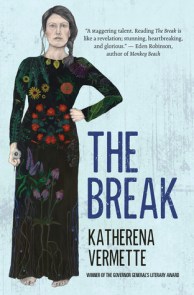 One of the questions I struggled with as I finalized my book order was
  I thought Women & Detective Fiction went well. I feel less satisfied about Pulp Fiction, mostly because I found the change from 90 (which already felt too big) to 120 students pushed the class past a tipping point for the kind of pedagogy I want to and tried to practice. Part of the problem was just logistical: much as I believe in the value of doing lots of small-stakes exercises to maintain engagement and give frequent opportunities for writing and feedback, I don’t think I can continue with some of my habitual versions of this (such as regular reading journals). The thing about scaling up class sizes is that while the regulations for Writing Requirement classes mean that we have TAs for every 30 students, in practice this only means that we hold steady in terms of the number of finished essays we mark. Everything else remains the responsibility of the professor, from recording attendance and marking exams to handling accommodations and plagiarism cases. As a result there’s no question that larger classes (despite superficially maintaining that 30:1 ratio) are more work for the instructor. (Also, despite my best efforts to address the issue in more effective ways, subbing in The Big Sleep for The Maltese Falcon, while a nice change for me, did not dramatically decrease
  The worst part of the increase in class size for me is that I don’t like teaching (especially teaching first-year students) in a large lecture hall. This is not just about my personal comfort–in fact, I am reasonably confident when giving formal lectures, which have the advantage, from a purely self-interested perspective, of ruling out the unexpected! But my preferred teaching style is interactive, because the back and forth between us reflects the way I think we actually learn to do (and improve) the kind of analysis central to literary studies (through
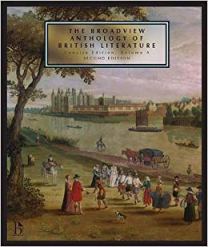
 And now, on to next term. It is finally time to actually teach the Brit Lit survey and see how my decisions work out (including which readings to include in the nice custom reading Broadview Press put together for us); I’m especially looking forward to covering some poetry, which I rarely get to do. My other course this winter is 19th-Century Fiction from Austen to Dickens: this year’s books are Pride and Prejudice, Waverley (look at that handsome new edition!), The Tenant of Wildfell Hall, Mary Barton, and Hard Times. I’m actually eager to get started: both are small-ish classes (around 35) and I know there will be at least some familiar faces in both as well.
 Ask anyone on campus — student, staff, or faculty — how they are doing and it’s likely you’ll get some version of “hanging in there.” It is ever thus, in November! The weather has turned grey and the unrelenting chill of winter has set in, deadlines that seemed far off loom, work piles up. It can be hard to keep one’s spirits up! One of the things I try to do is stay as positive as possible in the classroom, exuding as much enthusiasm as I can manage for our work in the hope that I can give a bit of a boost to my students’ understandably flagging energy. It’s sometimes a bit tricky, especially because for them I am one of the people setting the deadlines and demanding the work: I can’t really just play nice, at least not all the time. But at least I can try to show them that I scare because I care!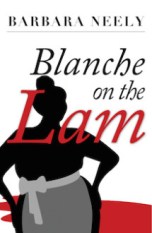
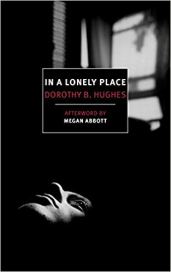 Both of these books seem to have gone over well. Hughes in particular seems to have been a favorite, so much so that I am contemplating assigning In A Lonely Place in the Mystery & Detective Fiction survey class next year instead of my usual hard-boiled options (The Maltese Falcon and The Big Sleep). But Neely too has provoked really engaged conversations: I think we all appreciated the bluntness of Blanche’s critiques as well as Neely’s resistance to feel-good outcomes. Today, for example, we talked about Blanche’s decision not to accept the position she is offered after the case has wrapped up. It would have been sentimentally gratifying for her to stay on as Mumsfield’s caretaker, but throughout the novel she highlights how condescending as well as burdensome she finds the expectation that she’ll play the “Mammy” role, and fond as she is of Mumsfield (and generously as they promise to pay her) it makes sense that she can’t say yes. More broadly, too, an ending in which she stays on with the family after everything that has happened and everything she knows–not just about them but also about the world she lives in–would endorse an optimistic but facile vision of racial reconciliation that the rest of the novel has rejected as at best naive.
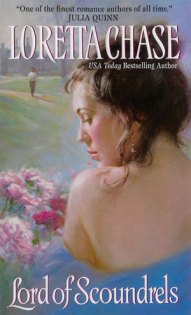 We are well along in our romance unit now in Pulp Fiction, and about two-thirds through Lord of Scoundrels. I think it’s going OK. Today I got peevish towards the end of class because we were working collectively through some passages–it was going pretty well, from my perspective, with a reasonable number of students participating–and as the end of our time approached quite a few students started packing up and then sat poised on the edge of their seats, clearly impatient to get away. I try not to take this personally (it happens, to some extent, almost every time): I know they are busy and anxious and for all I know the ones who were most visibly disengaging had a big midterm in their next class or something. Still, I never go over our time, and not only is it rude to me and to the students who are talking to have all that rustling going on, but it’s demoralizing to see them visibly not caring about the work we’re doing. It undermines that positivity project I mentioned! It also frustrates me that they clearly see class discussion as expendable in a way that lecture time isn’t. From my perspective, that’s the most important thing we do! I’ve made this point to the class more than once, of course. See? Peevish.
 I certainly did not desire the disruption that has characterized my last few days at work! My office building was evacuated Thursday morning–just as I was settling in to do, well, a whole bunch of things! It turned out that due to some kind of maintenance mix-up,
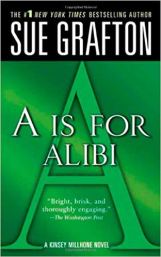 We have been working through Sue Grafton’s A is for Alibi, which everyone seems to have enjoyed quite a bit. It is fast-moving and sassy in a way that (IMHO)
  I was reminded this week, though, that besides being a bit more fun, Grafton’s novel has its own thought-provoking elements, particularly in its development of a male character who plays the part of the femme fatale and also (as other critics have noted) of an extreme form of the Byronic hero–mad, bad, and dangerously sexy to the female protagonist. In our discussion, we found it interesting that while the male hard-boiled PI rarely seems genuinely attracted to the femme fatale, whose allure (at least in the examples we could think of) is too transparently a decoy, Kinsey and Charlie do seem to have an actual spark, even an affinity. Desire is conventionally disruptive to the detective’s work, and it is to Kinsey’s too, but at the same time it almost feels as if it’s just bad luck he’s a murderer, because otherwise they’re pretty well suited! Kinsey’s resolute independence–her refusal to be domestic or to conform to gendered expectations–is refreshing, though I think some aspects of it (like the pride she takes in pumping her own gas) also feel a bit dated now.
 In Pulp Fiction we have been wrapping up work on the second assignment, with drafts and peer editing on Friday and the final versions due Wednesday. Today I gave my opening lecture on romance fiction. Our initial readings are two somewhat polemical primers on the genre (Jennifer Crusie’s
  Technically, actually, it was in someone else’s class: I was invited to come and talk about social media to our Honours Capstone Seminar, which (among other things) features a range of guest speakers talking about everything from digital humanities to graduate school to (non-academic) career paths.
 As I told the class, I really struggled with what to say. I have given quite a few talks on the subject by now, especially on blogging: these include relatively informal sessions at faculty
  nce upon a time I might have considered these topics equally relevant for our Honours students, many of whom (in those days) were likely heading on to graduate school. A lot has changed, though, and I no longer feel comfortable actively grooming students for an academic path that (as I said to them) now seems strewn with broken glass. (There’s more about how the dismal academic job market has affected academic blogging in
  In my short talk, I did not go into more detail about the arguments pro and con about graduate school in the humanities (and I know there reasons, some of them pretty good ones, or at least not terrible ones, that other people still insist that encouraging students to head into Ph.D. programs is perfectly rational and ethical). I just highlighted some of the many articles they could read about it if they wanted, and urged them to talk to their professors if they were thinking about it. What I decided to use most of my own time for was making sure that they knew graduate school was not the only (and might be far from the best) way to keep talking about the literature they love in ways they find exhilarating. There are, I said, other places, other people, other opportunities, for people who love books, and I know that because of the time I spend on social media.
 I don’t know if they were very interested in what I had to say. If they were, they didn’t express it through a torrent of follow-up questions, that’s for sure, and I’m also pretty sure that I didn’t make a dent in anyone’s plans regarding graduate school applications. I said things I really believe in, though, which is consistent with what I would have said if I had talked about “best practices” instead, namely, be authentic. Further, and more important, as I worked up these remarks I realized that my own case for twitter and blogging is not really about their academic value anymore either. Whether the students needed or wanted to hear it or not, for me it was useful discovering that I still feel quite passionately about the positive value of reading, writing, and commenting on blog posts, and sharing ideas, tips, enthusiasms, and disagreements about reading via Twitter. Why should they care how much my life changed for the better because one day, without really knowing what I was doing or why, I pressed ‘publish’ on my first Novel Readings post? But I care, and really it has, in ways I could not possibly have predicted. So to the doubters and skeptics (if for some reason you happen to stop by), well, you do you, but I think you’re missing out. And to those of you who, like me, are out here living your best bookish life online and discovering friends and comrades along the way, cheers!
 We have started our unit on detective fiction in Pulp Fiction and moved from Sayers to Hughes in Women & Detective Fiction, meaning it’s time to test
 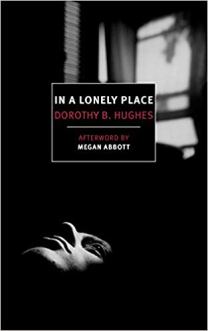 I know The Big Sleep reasonably well at this point (though I still rely heavily on the helpful sketch of the basic plot, complete with who killed whom and why, that I drew up the first time I taught it!). This is my first time teaching In A Lonely Place, though, and so I am feeling my way along, trying to anticipate the most useful lines of discussion to open up, to tell what’s obvious and what isn’t, what examples are most thought-provoking, and so on. One small but important logistical thing you can’t really be sure of until you try it is whether you’ve chosen the right place to break up the novel for reading. I think I should maybe have assigned a bit more of it for today than I did (we read just the first two sections,just about 50 pages), but we didn’t run out of things to talk about, so that was reassuring.
 We are well into the term now, and overall I think it’s going fine. I do not like teaching Pulp Fiction at 120 students, which maybe doesn’t sound like that big a change from 90 but certainly feels like one to me. I miss being able to see their faces–and having at least a fighting chance of learning their names! I know that I have colleagues who have taught intro classes at even larger sizes, and also that I have colleagues who are comfortable, pedagogically, with teaching writing at this scale. Maybe they know something I don’t about how to make it work, but for me, the increasingly sharp division of class time into formal lecture time–you can do some Q&A, but not a wide-ranging, inclusive discussion in a tiered lecture hall–and tutorial time (where the 30:1 ratio is still far from ideal for either discussion or hands-on writing and editing work) is really unsatisfying. I don’t think it serves us or them particularly well.
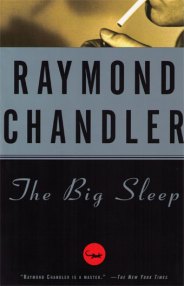 The odds that we’ll ever be able to get back to smaller first-year classes seem slim, however, so I’ll just keep trying to make the best of it. Right now I’m considering giving up on some things I think are pedagogically valuable (like frequent low-stakes work) because logistically it’s just getting to be too much–but it’s too late to do that for this year! In the meantime, we are nearing the end of our unit on Westerns; next week we start on mysteries, with The Big Sleep taking the place of The Maltese Falcon this time around. As you might recall, I had big plans for
 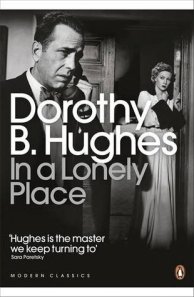 Next up is In a Lonely Place, which means for a while both my classes will be steeped in noir. Though I think both books I’ll be working on are great examples of their kind, it is not my own favorite kind of crime fiction, and it’s likely that this juxtaposition will exacerbate another lurking dissatisfaction of mine this term, which is with the amount of teaching time I’ve been spending on genre fiction. I hope it’s obvious that I am not a snob about genre fiction! I read and enjoy a lot of it; I was the one who introduced our detective fiction class well over a decade ago and I have taught it with great enthusiasm probably a dozen times; a few years ago I volunteered to do Pulp Fiction instead of one of our more standard intro to lit options; I regularly include sensation fiction in my Victorian fiction classes and offer a course exclusively on it; etc. This term, however, I have found myself unexpectedly weary of spending so much of my class time on books that (frankly) wear a bit thin over time because they aren’t, many of them, quite the kind of book that the English literature classroom–or at least my English literature classroom–was designed to showcase.
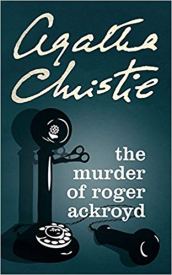 Do I really think that? Can I even say that? What exactly am I saying? I’m certainly not saying we can’t or shouldn’t teach genre fiction, or that doing so doesn’t involve doing rewarding or meaningful analysis. That we even have the concept of ‘horizontal reading,’ though, does suggest that genre fiction isn’t always best approached with the aim of deep or close reading, doesn’t it? Agatha Christie, to give just one example, is brilliant at many things (and I have gotten pretty good at making the case for them), but it’s not much fun lingering over the details of her prose; not much will come–not much of interpretive interest, anyway–from mining them for the kind of nuances we appreciate when we read, say, “Araby.” Sometimes in the detective fiction class I point out that (though of course there are exceptions) a lot of details we might read as symbolic in another kind of fiction are better read more literally in crime fiction: does it make any sense to read the dagger in Roger Ackroyd’s neck as anything other than a convenient sharp object suitable for murder? There is a similarly literal impulse in a lot of detective fiction: no matter how complex the social, political, or psychological elements, it is rare for the language in particular to be of great interest.
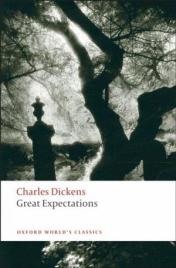 I think what I’m saying is that I love my 19th-century fiction classes, which I still teach regularly, but I have also, over the years, loved teaching other more conventionally “literary” material and I’m starting to miss the greater variety I used to enjoy, especially the chance to teach more poetry and more (literary) fiction from other periods. That’s one reason I’m excited to be doing the British literature survey next term. I’ve also asked that, if possible, my next first-year course assignment be something besides Pulp Fiction. When I first designed my version of the course I imagined that students would get caught up in the contrarian spirit of reading genre fiction instead of the classics, but as far as I’ve ever been able to tell, they mostly don’t care: with rare exceptions, they’ve never thought about the difference before and what they really want is just to get their writing requirement as easily as possible. My advocacy for dismantling the canon is wasted on them: I’m standing there at the lectern basically having an argument with myself! And somehow right now I feel as if I’m losing it.
 Novel Readings