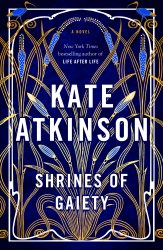
 October was a terrible reading month for me. I didn’t even start many books, much less finish them. A last minute push (and, I’ll admit, a bit of fed-up skimming) got me to the end of Kate Atkinson’s Shrines of Gaiety, which I had acquired precisely because I figured that, whatever gripes I have had in the past with her logic or narrative trickery, I could trust Atkinson to tell a story that would carry me along out of my slump. Unfortunately, that didn’t happen: Shrines just never clicked for me. Its overly elaborate plot is delivered piecemeal, with lots of chronological jumping around; although there are a lot of well-conceived characters, none of them came to life for me, at least not enough to provide any momentum; and the ending is beyond bad — the last several pages read as if Atkinson got tired of the whole project and just transcribed everything that was left in her notebooks. YMMV, of course: the novel has gotten a lot of glowing reviews, and many readers on Twitter replied to my grumpy report about it saying they’d enjoyed it just fine.
The only other (new) novel I finished in October was Flynn Berry’s Northern Spy. It’s a thriller, well paced and plotted and with a bit of intricate moral dancing around questions about how far it is right to go, for your family, for a cause, or for your conscience. I’m not rushing out to buy Berry’s other novels, but if I saw one at the library I’d definitely pick it up.
I’ve been reading steadily for my classes, of course. In Women and Detective Fiction we’ve finished Dorothy B. Hughes’s In A Lonely Place and now also P. D. James’s An Unsuitable Job for a Woman; tomorrow we have our first discussion of Sue Grafton’s A is for Alibi. Rereading Grafton today I appreciated the light-heartedness of it. I mean, obviously as it’s a murder mystery there’s a grim aspect to it, and at times it is very serious indeed, but Grafton has a sense of humor about the genre and is clearly having fun up-ending its tropes. My experience in previous years is that students find her revisions more dated than they do Sara Paretsky’s; there’s usually a certain impatience with Kinsey’s “I’m not a girly-girl” shtick. I admit, I relate to it, perhaps because my own early introduction to feminism was by way of Free to be You and Me and not being allowed to have Barbie dolls. I do think V. I. Warshawski is a more interesting character and Paretsky overall is more thoughtful about the politics of her novels. I also got pretty tired of Grafton’s series well before the end of the alphabet (she only got as far as Y). But A is for Alibi is brisk and smart and has plenty of unexpected twists, which I hope will help keep the students’ attention.
 In 19th-Century Fiction we have been working on Middlemarch for a couple of weeks. I wish I could say it is going well. I don’t think it’s going badly exactly, but honestly this term I don’t really know. Attendance is just appalling: most days, maybe 60% of the class shows up, which is unprecedented, in my fairly long experience. I don’t know what to make of this. I know it’s not personal, or at least I’m trying not to take it personally, but that doesn’t make it any less disheartening. The students who are present are pretty quiet; I think – I hope – they are engaged, but much of the time it’s hard to tell, and I worry that at this point I am mostly performing enthusiasm, not eliciting it. The ones who do speak up have good things to say, but I’m not used to having to work so hard to get anything out of the class, to get any energy back from them. I’m going to keep trying! The ones who are showing up deserve no less, and I remain hopeful that between us we can and will make the most of this opportunity to read this great novel together.
I was really looking forward to these classes on Middlemarch because I thought, or hoped, they would shore up my faltering faith in all the ways I have spent my “one wild and precious life.” Whatever else was going wrong in my life before all of this, I could count on my classroom hours to make me feel better, by taking me out of my own head for a while and also because of the joy of engaging with students about books in ways I really do value and cherish and believe in. I guess I shouldn’t be surprised that it isn’t so simple this term. The image I keep returning to lately is that it’s like I’m crossing a suspension bridge. It’s a bit unsteady underfoot, but as long as I look straight ahead it’s not too bad moving forward, just doing the next thing that’s in front of me, and the next, and the next. It’s when I look down and realize all over again what’s below it, or it’s shaken by a gust of wind (a memory, a place, a picture, or just a feeling) that the vertiginous sensations return — “O the mind, mind has mountains; cliffs of fall / Frightful, sheer, no-man-fathomed” — and I am overcome, unbalanced, beside myself, in spite of myself.




 Something else that’s different is how emotionally confusing and therefore exhausting I’m finding the present. The early days of grief are awful but absolute, almost simple, I realize now: there are no options, no expectations, for anything besides mourning. I have learned so much about grief since then, from experience but also from others, and from reading. One thing I’ve learned is that “it takes time” doesn’t mean that with time the grief lessens; it means something more like you get used to living with it, you learn to walk around with

 The mind is not only its own place, as Milton’s Satan observes, but it can also be a pretty strange place, or mine can anyway, especially these days. Today, for example, it has been six months (six months!) since Owen’s death, and what keeps running through my mind is a mangled version of lines from “The Charge of the Light Brigade”: “half a year, half a year, half a year onward, into the valley of death …” and then nothing comes next, it just starts over, because not only (of course) are these not the poem’s actual words but I don’t know what words of my own should follow to finish the thought.
 It’s hard to imagine a poem that is less apt, for the occasion or for my feelings about it. (I hate this poem, actually, though I love so much of Tennyson’s poetry.*) I can’t think of any reason for this mental hiccup besides the generally cluttered condition of my mind thanks to two years of COVID isolation and now six months (six months!) of grieving. Six months is half a year—half a year! I have to keep repeating it to make myself believe it, and it’s probably just the repetition and rhythm of that phrase that trips my tired brain over into Tennyson’s too-familiar verse.
Half a year. That stretch of time seemed unfathomably long to me in the first
It’s hard to imagine a poem that is less apt, for the occasion or for my feelings about it. (I hate this poem, actually, though I love so much of Tennyson’s poetry.*) I can’t think of any reason for this mental hiccup besides the generally cluttered condition of my mind thanks to two years of COVID isolation and now six months (six months!) of grieving. Six months is half a year—half a year! I have to keep repeating it to make myself believe it, and it’s probably just the repetition and rhythm of that phrase that trips my tired brain over into Tennyson’s too-familiar verse.
Half a year. That stretch of time seemed unfathomably long to me in the first  How should the thought finish? As I walk through the valley of the shadow of Owen’s death, I have no sure path or comfort. All I know, or hope I know, is that at some point, in some way, I will emerge from it and he will not. Six months ago today, devastated beyond any words of my own, I copied stanzas from Tennyson’s In Memoriam into my journal. It remains the best poem I know about grief, though as it turns towards a resolution not available to me, maybe it’s more accurate to say that it contains the best poetry I know about grief. (For that, I can forgive him the jingoistic tedium of “The Charge of the Light Brigade.”) This has always been my favorite section—it is so powerful in its stark simplicity:
 Not a happy summer. That is all the materials for happiness; & nothing behind. If Julian had not died—still an incredible sentence to write—our happiness might have been profound . . . but his death—that extraordinary extinction—drains it of substance. (Woolf, Diaries, 26 September, 1937)
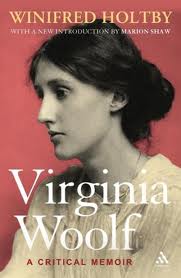 I haven’t written much new about Woolf yet this year (I’ve been focusing on other pieces of my project) but I have thought about her a lot—specifically, I have thought a lot about her suicide. One of my favorite things about Holtby’s Critical Memoir of Woolf is that Holtby died before Woolf did and so no shadow darkens her celebration of
  With Woolf on my mind again thanks to Queyras’s book, I picked up Volume 5 of her diary (1936-1941), which I have to hand because it covers the time she was working on The Years and Three Guineas. So much is always happening in her diaries and letters: you can dip into them anywhere and find something vital, interesting, fertile for thought. This volume of the diary also includes the lead-up to war and then her experience of the Blitz, and the final entries before her suicide, which are inevitably strange and poignant—even more so to me now. Leafing through its pages this time, though, it was the entries around the death of her nephew Julian Bell in July 1937 that drew me in: Woolf as mourner, not mourned.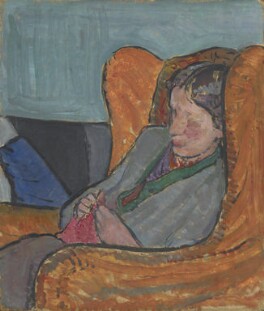
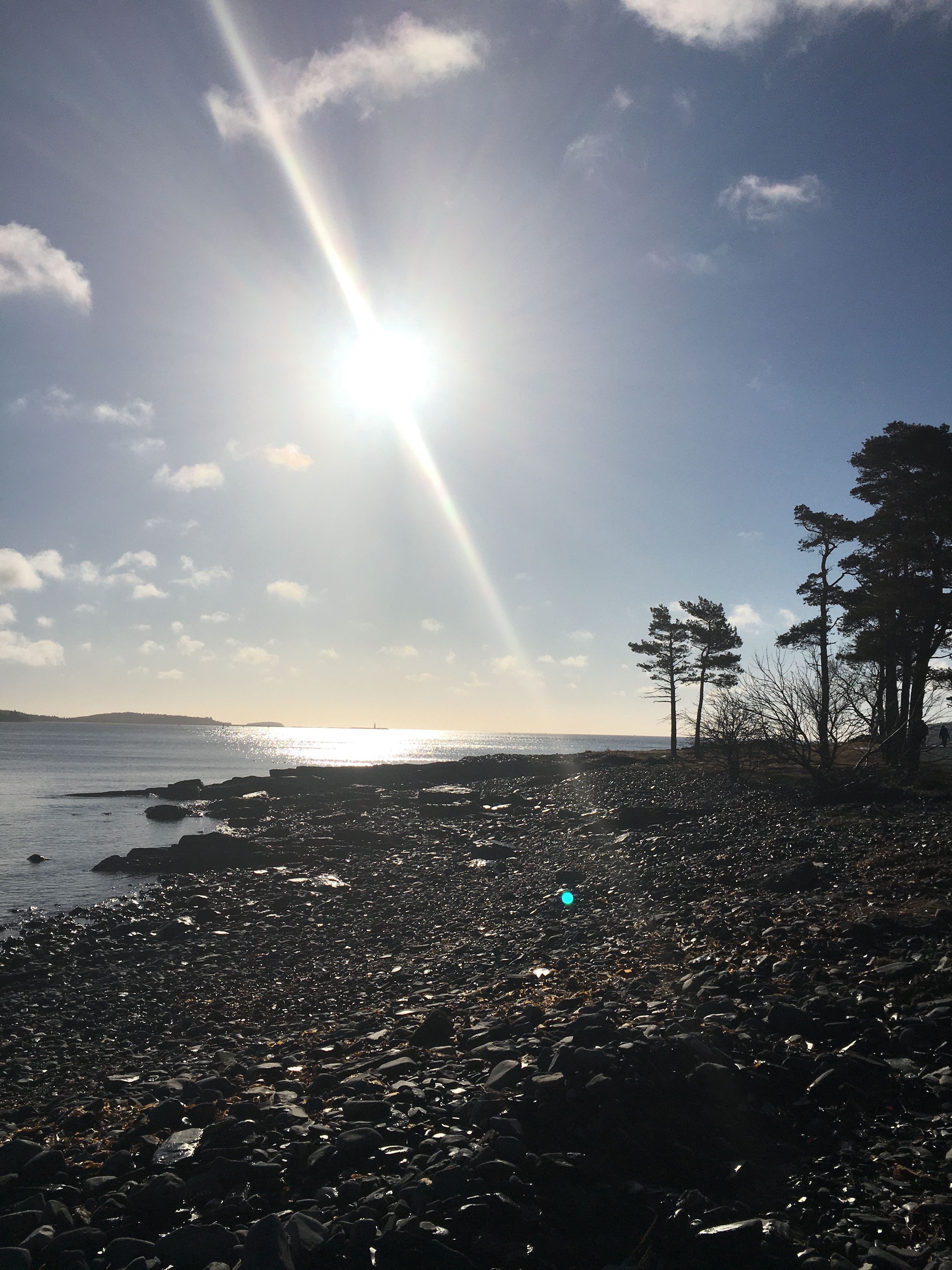 I’ve been thinking about how many times people have expressed their love and sympathy for us by saying “there are no words,” and then about how important it has felt to me, since Owen’s death, to try to find some words for what it feels like to lose him and grieve for him. Writing has helped, even though I have also often felt the truth of Tennyson’s lines: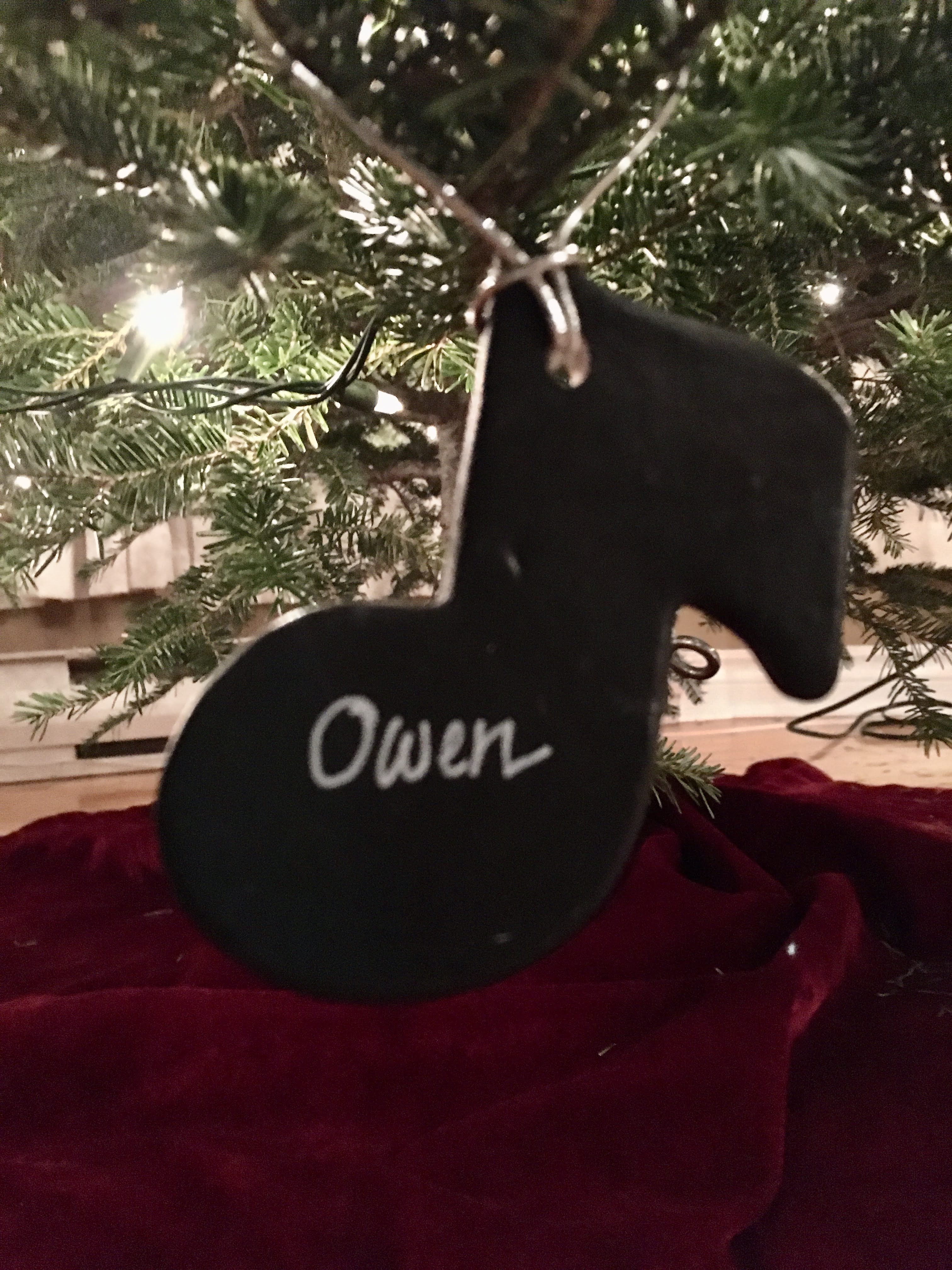




 It is terrible, the damage grief does to one’s own generosity. I don’t like it, though for now I can’t seem to help it. Anger is often mentioned as one of the ‘stages’ of bereavement; I haven’t seen any discussion of selfishness, but that’s what it feels like, or self-absorption. All these years reading Middlemarch and now I can’t displace myself and my sorrows from the center of my narrative: I’m disappointed in myself. How I have always admired Dorothea’s resolution after her night of mourning her lost love: “She said to her own irremediable grief, that it should make her more helpful, instead of driving her back from effort.” Of course, thinking the man you loved is not the man you thought him to be—even believing that your chance at joyful passion is over—is hardly the same as knowing your child walked away from you into the night and will never come back.
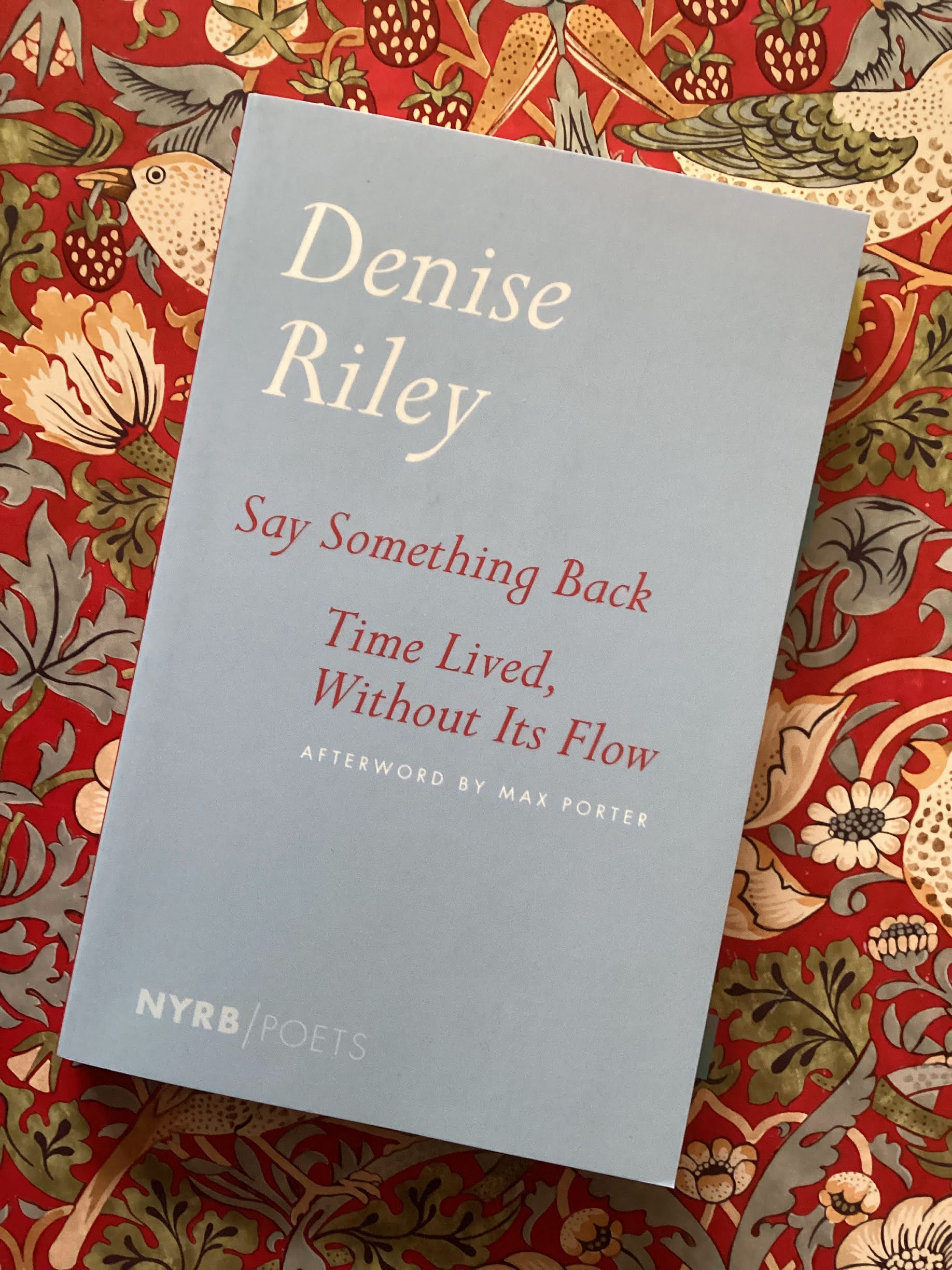
 The other question I’m hearing more and more is some variation on “have you considered talking to someone?”—meaning, of course, someone else, someone professional, someone who knows what to say. (Maybe that’s why the “how are you doing” question feels a bit loaded, as the combined subtext starts to seem like “this has gone on long enough.”) This has made me think again about Ignatieff’s comments in On Consolation about our current reliance on “therapeutic professionals” who “treat our suffering as an illness from which we need to recover.” “When suffering becomes understood as an illness with a cure,” he says, “something is lost.” I don’t think anyone who has suggested this to me means to imply that it is wrong for me to still be grieving; again, I know that they want to help, they want—for my sake—for me to be feeling better, doing better, living better. I don’t know if a therapist would approach my grief as something to be fixed or cured. I hope not: I don’t want to “recover” from it, and I don’t think I could. (“Some part of you may still remain in the underworld,” Riley says, and that seems right, meaning both true and appropriate.) I will find out, though: I have found someone to talk to (it’s not an easy process, as many of you probably know), though they can’t fit me in for a while. It is hard to think even that far ahead, but it seems likely I will still need whatever it is that they have to offer.

