Munro’s Books

I’m still on vacation in Vancouver, though I head back to Halifax tomorrow. Obviously, I haven’t had much time for blogging–in fact, I just spent two days in Victoria, at the elegant Empress Hotel, where they are far too elegant for wireless and so I went without the internet for as long as I have in ages! I was too busy playing sentimental tourist to notice, really, though it was odd not to be able to look things up when they occurred to me.

My trip has not been without benefit to my life as a blogger, though, because I am coming back with some good new reading material, mostly thanks to a long stop in Victoria’s amazing “indie” bookstore, Munro’s Books. I can’t think of a better use for a blog post than to put in a plug for them. What a treat it was to browse shelves crowded with such a fine selection; it was particularly notable to me, after being limited often to Coles and Chapters in Halifax, that they carry what I think of as the “catalogue of the recent past”: not just the blockbuster bestsellers and the latest releases by big name ‘literary’ authors, with a selection of ‘classics’ to round things out (and really, for all the miles of shelf space at Chapters, that’s still about what you find), but writers’ back catalogues and interesting works that are no longer new releases but haven’t, after all, expired, as you might think from looking for them elsewhere. Just as an example, they had about eight titles by William Boyd (whose remarkable Any Human Heart I reviewed a while ago), and about five by Hilary Mantel that predate Wolf Hall (I bought Beyond Black). Sure, you can usually get ahold of these older releases through Amazon (or Chapters online), but I like to take a look at books when making my selections, a luxury I have often had to forego in recent years. It was difficult to limit myself to three books (my other two, after much deliberation, were Anne Enright’s The Gathering and Penelope Fitzgerald’s The Bookshop), but I had to keep in mind that I would be packing and carrying them on the bus and ferry back to Vancouver and then stuffing them into my suitcase to come home as well (along with all the Kidsbooks purchases). That’s why I didn’t get, for instance, Mark Helprin’s A Winter’s Tale, or Laurence Durrell’s The Alexandria Quartet, or . . .

Anyway, I’ll be home soon, with a few books and lots of memories. I have to say that a particularly fun, and particularly nostalgic, part of the trip to Victoria was a visit to Miniature World. This little museum was a childhood favourite, and the most remarkable thing about going back after a gap of probably 30 years is that it doesn’t seem to have changed at all. The displays, including a whole series of war scenes (under the heading “Fields of Glory”), a cross-Canada model train, several scenes from Dickens, and a great collection of doll houses (with all kinds of working lights and fireplaces and other moving parts), are the work of dedicated amateurs, as is evident in the hand-done calligraphy signs on the exhibits. The carpets are dingy, the ceilings are low, but the glass is so clean you frequently foget it’s there and bang your forehead on it as you lean in trying to see all the astonishing little details, done with so much loving care. In its own quirky way, it’s just as moving as the great hall of totem poles in the Royal B. C. Museum.

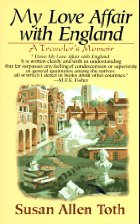
Being and Travelling: Susan Allen Toth, My Love Affair with England

I’m currently on holiday in Vancouver, the beautiful city in which I had the great good fortune to grow up. I have more or less reconciled myself to being unable to live here myself, but coming home to visit is always a mixture of pleasure and poignancy for me. Walking the sea wall around Stanley Park, or even just coming around the crest of the hill near 16th and Alma and seeing the skyline come into view, with the mountains rising behind it and the lush trees in front, I feel the truth of George Eliot’s evocative passages about the landscapes of our childhood, from The Mill on the Floss, for example:

The wood I walk in on this mild May day, with the young yellow-brown foliage of the oaks between me and the blue sky, the white star-flowers and the blue-eyed speedwell and the ground ivy at my feet – what grove of tropic palms, what strange ferns or splendid broad-petalled blossoms, could ever thrill such deep and delicate fibres within me as this home-scene? These familiar flowers, these well-remembered bird-notes, this sky with its fitful brightness, these furrowed and grassy fields, each with a sort of personality given to it by the capricious hedgerows – such things as these are the mother tongue of our imagination, the language that is laden with all the subtle inextricable associations the fleeting hours of our childhood left behind them. Our delight in the sunshine on the deep bladed grass today, might be no more than the faint perception of wearied souls, if it were not for the sunshine and the grass in the far-off years, which still live in us and transform our perception into love.

Halifax has its charms (as shown, for instance, in my recent post about the Public Gardens) but they generally still seem to me slim compensation for the wintry grey drabness of the city for most of the year, and for the less tangible but more difficult effects of living apart from family and old friends, and from the landscape that is laden with the “subtle inextricable associations” of my past. It’s nourishing to my own “wearied soul” to be here again: sometimes I feel as if I’m literally drinking in the city through my senses, recharging some important internal source of energy.

At the same time, I can’t really imagine living here any more. It has been too long: my life has changed too much, and I have too. So being in Vancouver also has a disorienting effect, as I follow the footsteps of my former self and try to relocate myself in the world. Being in Vancouver now feels oddly like hanging around on the road not taken: it’s a beautiful place, but it isn’t my place.

I have been thinking about these issues because last year, instead of coming to Vancouver, I went to England. I hadn’t been there since 1986, and so the trip provided its own measures of how far I have travelled personally, internally, in the meantime. But mostly it was just exhilirating to step into a landscape that was not part of that cycle of  nostalgia and regret, and to regenerate or recharge different enthusiasms–some, admittedly, with their own roots in my past (like my childhood obsession with Tudor history) but also literary interests that were no part of my intellectual life in 1986 (when I had no intention of majoring in English) and a more open-ended pleasure in seeing different people and places, in seeing a much wider and faster current of life than usual.

I felt so renewed by last year’s expedition that I had initially hoped to return to England this year–so when scanning my parents’ vast and remarkably various book collection, my eye was drawn to Susan Allen Toth’s book My Love Affair with England. There aren’t a lot of personal memoirs in my library–or my parents’, for that matter. The memoir usually strikes me as a strange genre: unless you are someone who has a real claim on our attention, why would you presume to tell us quite so much about yourself? Why should I be interested in you? And yet (as blogging certainly demonstrates) often we are interested in other people’s lives, either because for some reason they resonate with our own or because their differences engage us, or sometimes just because they are good writers and storytellers.

Toth is a good storyteller. One thing she recounts in My Love Affair with England is in fact her own discovery of the value of that ability. Leading a group of students on a study trip to England, she finds herself answering their questions about herself:

those story-telling nights with my students were my real beginning as a writer. Until they gave me their eager attention, I had never realized that anyone might be interested in the anecdotes that seemed to form a narrative of my life. I was surprised that they could sympathize with stories that troubled or haunted me and that they could laugh at the odd or humiliating or ironic details I could now, at some distance, finally see as funny.

Just as the first paragraphs of this post don’t tell you anything, really, about Vancouver, considering the city instead in the context of my own life, Toth’s book is not really about England but about her feelings about England, her experiences of it and the personal significance of her travels there. She begins, in fact, with a series of disclaimers reminiscent of those often found in 19th-century travel books by women*: “I do not think of myself as an authority on contemporary English life,” she says, for instance:

My only gudes to society, politics, or economics are what I observe, read, or gather from casual conversations in gardens, on walking trails, in the greengrocers, or at bed-and-breakfast tables.

“Nor,” she adds a bit later, “am I a scholar of English history. How could I pose as one when I shamefacedly doze over almost any definitive volume of economic, social, military, or political commentary?” She has written the book not to elucidate the kinds of questions addressed in such “definitive” volumes, but to answer the question, “Why England?”:

What does it offer that I lack in my life? What in my background . . . has made England my country of choice for pilgrimage? What have I found there, what have I learned, what has nourished me?

In the book, Toth does not set out an explicit response or conclusion about these questions. Instead, she shares stories of her visits, from her earliest visit as a young college student in 1960 to a difficult stop-over on her honeymoon (her first husband’s lack of interest in her England foreshadows their eventual divorce) to many subsequent trips on her own and with her second husband, her daughter, and her mother. Interspersed with these more directly autobiographical chapters are themed ones: food, gardens, sheepdog trials. I particularly enjoyed “Up the primrose path,” about the English “national pastime” of walking and some of Toth’s own favorite rambles:

The joy of most English paths is how quickly anyone can feel alone on them. Just being able to disappear from a busy road between high hedgerows is wizardry. One moment, a straight cement line, whizzing cars and thundering lorries, acrid fumes and oily smoke. Another moment, a quick turn of the path, violets poking up through a hawthorn-and-hazel hedge, the gray flash of a disappearing rabit, and the tantalizing scent of unseen wild roses.

The best paths usually lead to the most remote places. After negotiating the hairpin curves of Hardknott Pass in the Lake District, James and I decided to unwind by taking a walk to Devoke Water, a small mountain tarn not far away. . . . Our path turned out to be a rocky track, an easy half-mile walk that took us gradually over a slight incline and then down to the shores of the lake. The track cut across the top of a moorland that seemed absolutely deserted, not even any sheep drifting over its barren slopes. It was late September, and under heavy gray skies, the grass looked almost brown, and the empty fells as if they had already fallen into a winter sleep.

Devoke Water lay in a shallow bowl formed by treeless gray-green fells. The surface of the lake was absolutely still, a steely gray that seemed a mirror image of the lowering sky. An old stone boat house, which seemed abandoned but was securely locked, looked as ancient as the landscape to which it now belonged. . . . Since dusk was just beginning to shadow thehills, we did not try to walk around the tarn. It looked forbidding, hidden away from the ordinary world among these treeless fells, bereft of any living presence. Slowly we followed the rutted lane back to our car. We did not talk much. Devoke Water had cast a spell, and neither of us wanted to break it.

It’s not showy writing but it’s good reading, clear, detailed, and evocative. Overall, though, the book is mostly about Toth; because she doesn’t offer much information or context about the sites she visits, my interest in her chapters ebbed and flowed depending on how interested I already was in their topics, or in how caught up I got in her personal life: England provided the occasion for building a relationship with her. Here I had a head start, as one reason her book is on the shelf here is that she was my mother’s college roommate (and remains a friend). Thus there are already points of connection between her life and mine, though none that make an explicit appareance here. Still, it’s easier to overcome the memoir skepticism when it’s someone you know, if only remotely. She’s also an English professor, so there’s some affinity there too, in the literary interests that underwrite some aspects of her ‘love affair’ with England. But I think I would have enjoyed this book anyway, for its companionable tone and lack of pretension, and for its interest in the ways places in the world are always, also, places in our lives.


*I know this because I am working with a PhD student doing very interesting analyses of travel writing by 19th-century English and German women travellers in Italy.
Happy Mother’s Day from Victorian Halifax

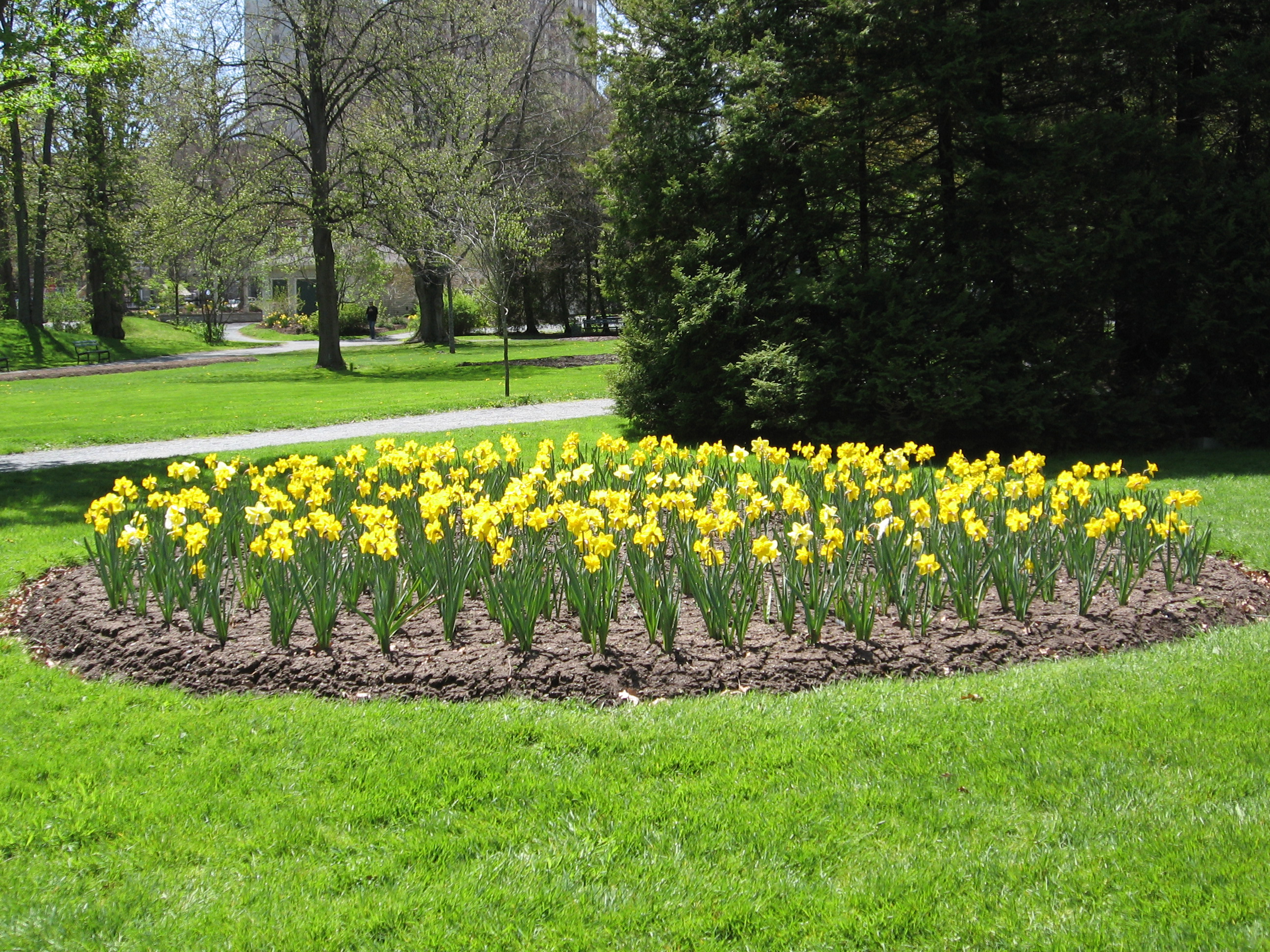
From the Novel Readings Archives: A bright, if cold and breezy, outing this morning to my favorite place in Halifax, the Victorian Public Gardens, inspires this re-post. I went with my lovely daughter, as a Mother’s Day treat. At this point the flowers and trees are not yet in full bloom, as they are in the pictures below, but the bulbs have opened and it’s exhilirating, after another long winter, to see the signs of spring.


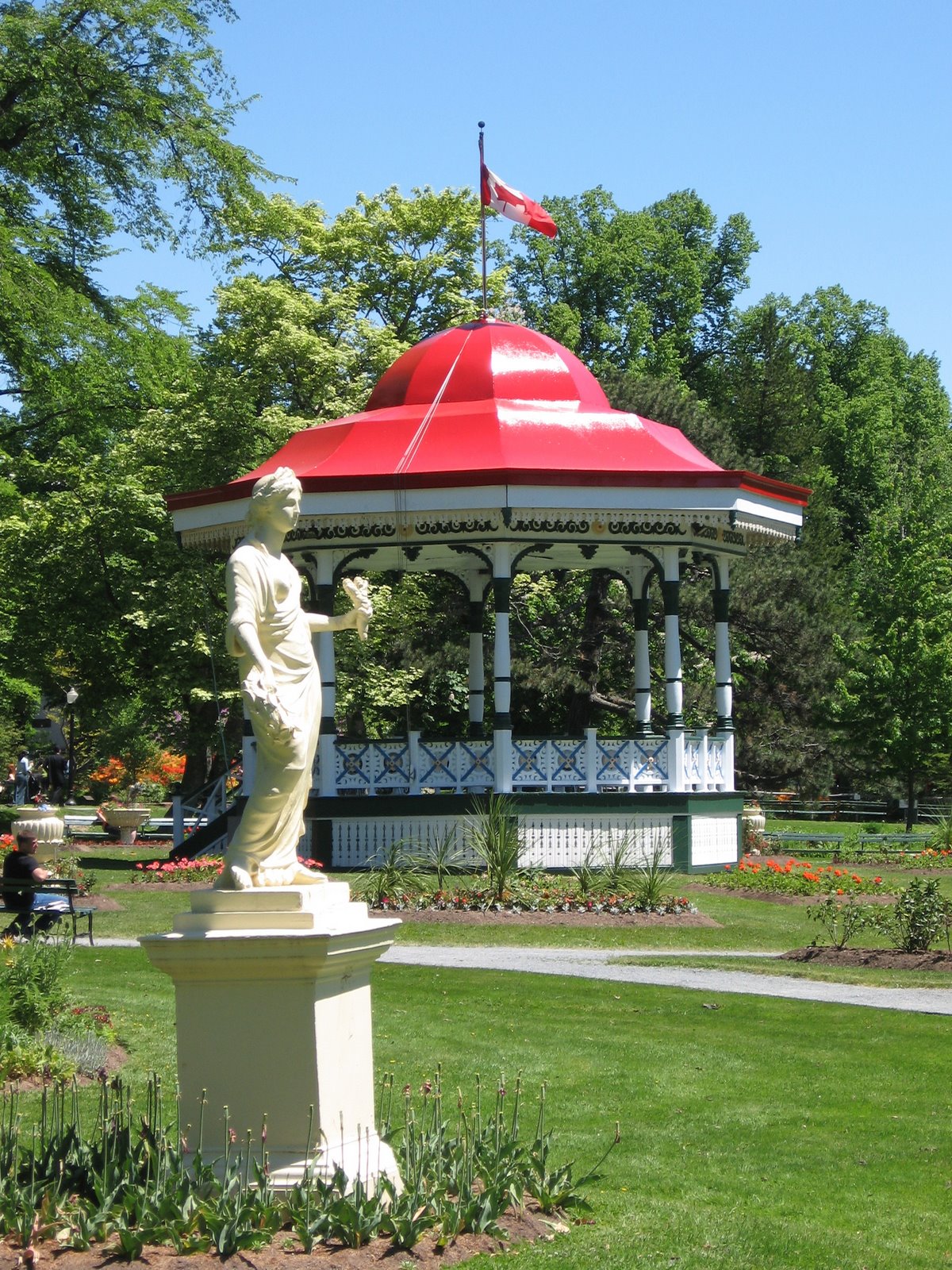
First opened in 1867, the Public Gardens feature the most spectacular rhododendrons I’ve ever seen, as well as formal flowerbeds, a gazebo (with band concerts on Sunday afternoons), a large duck pond (with abundant ducks) and all manner of fountains and statues. It’s a green oasis in the middle of downtown: you can barely hear the hum of traffic, and as you stroll the well-kept walkways (no dogs, no joggers, and no bicycles allowed!), you can easily feel as if you have stepped back into a Victorian fantasyland.

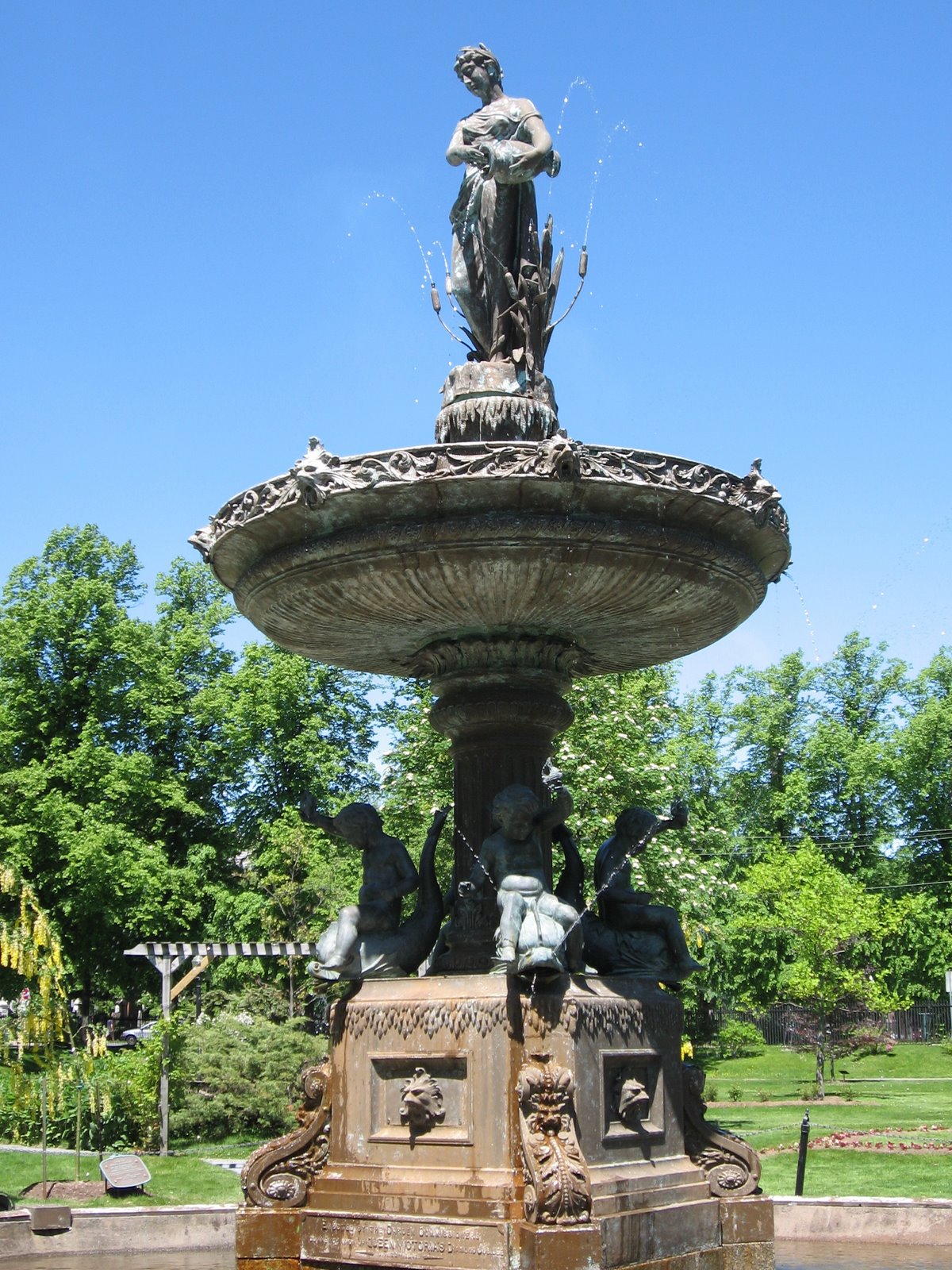
There’s a Boer War memorial fountain, and a fountain commemorating Queen Victoria’s Diamond Jubilee. Even the swans are named ‘Horatio’ and ‘Nelson.’

Diamond Jubilee Fountain
Horatio (or Nelson)

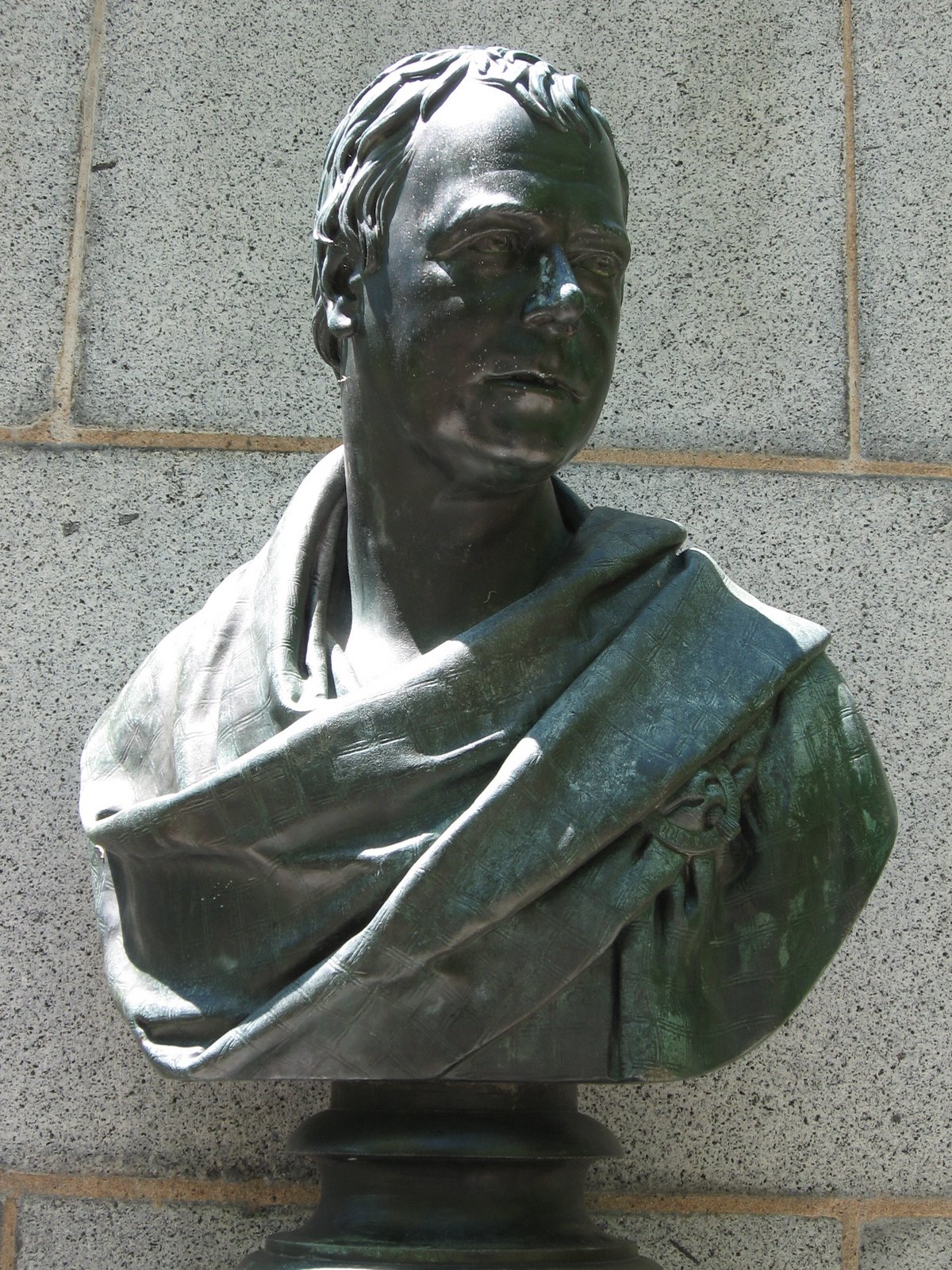
When Hurricane Juan struck Halifax in 2003, the Public Gardens were hit hard (though not with quite the devastating results seen at nearby Point Pleasant Park, which lost an estimated 70% of its trees). Since then, the Gardens have been beautifully restored. Here are a couple more pictures from [last year’s] trip, including a shot of the bust of Walter Scott that used to be right outside the front gates (during the restoration, it was relocated to just across the street, near the statue of Robbie Burns–we’re not called New Scotland for nothing).

Sir Walter Scott

Robbie Burns

Massive Rhododendrons

Victorian Gazebo

A Victorianist in Halifax today.

Happy Mother’s Day!

‘Not many girls would have used their wits the way you did’: Nancy Drew

There’s one obvious candidate for inclusion in my seminar on women and detective fiction that I hadn’t thought seriously about before today. But if exemplarity and influence matter, surely Nancy Drew is right up there with Miss Marple–more important, perhaps, if you consider the number of high profile contemporary women, now role models themselves, who say they took some of their own inspiration from her. Students have asked about her before, but I hadn’t really followed up, mostly on the grounds that the books are ‘young adult’ fiction and thus unlikely to be of much literary interest. But once you’ve made the move into genre fiction in the first place, you’ve acknowledged the significance of other factors, alongside or, sometimes, instead of, more strictly literary ones–and these days it’s not obvious how you define the ‘literary’ anyway. So I thought I’d poke around a bit, and though I haven’t had time to read any of it yet, I quickly became aware that there’s quite a bit of critical work on the girl sleuth, including by feminist writers like Carolyn Heilbrun, and by other mystery writers, including  Sara Paretsky. She’s looked at as a feminist exemplar, a break-out figure in the genre of detection fiction, a “WASP” super-girl, and a “ballbuster.” There’s discussion of the novels in the context of other series fiction for young readers, and in a range of historical and political contexts. The series has a complex history (the current editions of the “original” mysteries, for instance, are in fact revisions of the 1930s versions which were revised starting in the 1950s because of their racist attitudes) and of course the figure of Nancy herself has a cultural currency that is probably about equivalent to that of Sherlock Holmes. I started thinking that maybe I should make room for Nancy on the syllabus! It seems as if we would have plenty to talk about.

So I borrowed my daughter’s copy of The Secret of the Old Clock and gave it a quick read–after all, it has been more than 30 years, probably, since I myself was an avid reader, not just of the Nancy Drew books, but the Trixie Belden series as well as the Hardy Boys. I was right about the language not being particularly sophisticated or subtle, but Nancy herself is certainly a dynamo. In this book alone she saves a young girl from drowning, fixes a flat tire and an outboard motor, chases down a gang of unscrupulous thieves, stares down the town snobs, and recovers a lost will, with the result that both money and justice are effectively redistributed. Her independence at the wheel of her car anticipates V. I. Warshawsky’s confident navigation of the streets of Chicago (down these mean streets a woman can go, untarnished and unafraid, provided she has a reliable set of wheels)–and now that I think of it, like V. I. she’s also always well turned out (“looking very atttractive in a blue summer sweater suit,” “dressed in a simple green linen sports dress with a matching sweater,” “becomingly dressed in a tan cotton suit”–I suspect these details were added in the 1950s revisions). Motherless, she enjoys the apparently unqualified support of her father, who never discourages her risk-taking, though he’s touchingly pleased when her exploits end safely. (She drives him around, which I thought was an interesting detail.) She doesn’t meet any opposition or skepticism from the police, either. There is something sort of inspiring about the freedom and rectitude with which she rushes through the story. I’m not sure yet if I’ll put her on the syllabus–I do think it would be a case in which the apparatus we’d put around the book would be more interesting, in many ways, than the book itself. But at the moment, I’m tempted.

Women and Detective Fiction: Update

I’ve been industriously rounding up samples of the various writers on my list of possibilities for the Women and Detective Fiction seminar (see here for the current reading list and parameters for my current search). What strikes me most at this point is that there’s a difference between a book you might want to read and a book you’d want to teach. There just has to be enough to talk about if you’re going to teach something. In a class focusing on genre fiction, innovation is one potentially important factor; hence my interest in Grafton and Paretsky, for instance, who took the well-established conventions of hard-boiled private eye fiction and did something different with them. But exemplarity also matters; we will read Agatha Christie, for instance, because she establishes and perfects so many conventions of a certain kind of ‘puzzle fiction’ or ‘cozy,’ and because Miss Marple is a crucial prototype for many women detectives who follow. Complexity of form or theme gives us more to think and talk about; for this particular course, novels that explicitly explore the relationship of women to crime and detection, or to power and justice more broadly, or that raise questions about the effect of gender on (mystery) writing can provoke particularly good conversations. Good writing matters, though it’s not an easy thing to define, and what we might typically think of as literary qualities are not always appropriate to genre fiction–or their absence may be outweighed by the other factors I’ve mentioned. This is all by way of saying, yes, there are dozens, even hundreds (maybe thousands!) of mystery novels that might fit the broad course description, but it’s difficult to find a half-dozen or so that can support the weight of our attention in the classroom. (I realize that this result reflects as much on the peculiarities of teaching literature as it does on the particularities of detective fiction; many historical accounts of English studies as a discipline have pointed out that, for instance, “close reading” as a critical practice arises coincidentally with modernist texts that need pretty painstaking analysis to yield their meaning. But that’s a subject for another post.)

To get on with it, since my previous post I’ve managed to get my hands on samples by a number of the authors we came up with as likely suspects. Here are the ones I’ve looked at so far. I don’t pretend to have read them all through; by a few chapters in, I could usually tell (or I thought I could, anyway) where things were going. If you think I missed a bet and should go take another look at one, just let me know: I’ve got them all for another couple of weeks.

Karin Alvtegen, Betrayal and Shame. These both look kind of interesting, but they just didn’t seem to be the right kind of novels–they aren’t detective novels. for instance, but are closer, I think, to thrillers.

Karin Fossum, Broken. Basically, ditto. This one looked literarily quite interesting, though, and others on her backlist look like they might suit better. I’ll keep looking.

Laurie R. King, A Grave Matter, The Beekeeper’s Apprentice, and The Art of Detection. I thought A Grave Talent was pretty good but not, ultimately, that interesting (in that teaching kind of way). If I could find another in the Kate Martinelli series that had a more thematically relevant case at its center, that might be a reasonable option to displace ‘A’ is for Alibi, as the series combines two of my desiderata (police procedural, lesbian). The Beekeeper’s Apprentice was more entertaining than I expected (I often find historical mysteries unbearably tedious), at least for the first half, but I got a bit tired of Holmes (as usual) and having a female version of him didn’t really help after all. I would have liked it better if he had to face off against somebody who rejected his methods (and, for that matter, his annoyingly superior personality). The Art of Detection, which brings the two series together, lost me too.

Sandra Scoppetone, Everything You Have Is Mine. I read about half of this one and it seemed fine, very much in the Grafton / Paretsky / Muller line of female private eye novels. That’s the thing, though: it didn’t break out of that form and do something really different. Paretsky has said that when she began her V. I. Warshawski novels she meant to do a simple role reversal, with a woman in the private eye’s place–but she found that changing the sex of the detective affected too many other aspects of the story and she had to develop a more complicated model. Scoppetone seems to have found it quite easy to fit her lesbian investigator into an existing model; nothing in the novel (as far as I read) suggested that she was going to shape her book around a related inquiry into other challenges to or critiques of heteronormativity, for instance. That she doesn’t have to (or want to) do something more overtly political is fine, even good. But then if it’s just a book like ones we’re already reading but happens to have a gay detective, what would we talk about? We could talk about how times have changed…but then we are doing armchair sociology, not literary analysis.

Denise Mina, Still Midnight. I was looking for the Patty Meehan series but this was one the one that was in (in an e-copy, just by the way, so I downloaded it, oh-so-conveniently, right to my Sony Reader). This one I did read all the way through, because I simply found it more interesting than the other ones. It features a female cop, quite an interesting character, troubled and abrasive, struggling with authority at work and a tragic personal loss and disintegrating marriage at home. If more of the novel had been about her, this might have been the one. But about half of it is spent with a “gang” (they deserve the scare-quotes) of low-lifes who fumble their way through a kidnapping. I thought the account of the victim, haunted by childhood trauma, was very well done, perhaps the best part of the book, but there were too many pieces in the novel overall with no strong unifying connection between them. I couldn’t see what my teaching idea would be for the novel. Mina’s a good writer, though; I’m going to go ahead and order Field of Blood.

Still looking: Next up I hope to find some of Katherine V. Forrest’s Kate Delafield series, Val McDermid’s Lindsay Gordon series, a sample of the Sharyn McCrumb series Karen recommended, something by Asa Larsson, and Helen Tursten’s Detective Inspector Huss. Thanks for the suggestions!

Ian McEwan, Solar

Solar is everything I expected of a new novel by Ian McEwan, who may be the smartest contemporary writer I read: clever, timely, acerbic, well-written, intensely readable. The problem is that those expectations are not, themselves, at a peak, by which I mean I had no expectation that a new novel by Ian McEwan would be humane, beautiful, or morally weighty. I believe Atonement to be all of those things; I believe Saturday to be all of those things at various points, though not as unequivocally so as Atonement. But after reading Atonement and Saturday I read some of McEwan’s other novels, and was alienated by what felt to me like intellect and skill divorced from humanity.  Enduring Love fascinated but repelled me; A Child in Time puzzled me. Amsterdam left me cold, notwithstanding its Booker Prize, and then so did On Chesil Beach. Of course it is not a universal prescription for excellence that a novel satisfy both heart and head, but that’s what I want, that’s what I think takes a novel from good to great, and Solar seems quite content to leave my heart untouched. I think this is a missed opportunity for a novelist with McEwan’s gifts. Why not set against the shabby opportunism of the protagonist (who is both brilliantly drawn and wholly unsympathetic) either some idealism not undermined by the general attitude of cynicism that permeates the novel–even if only to show it up as ineffectual against the absurd realities of political and scientific institutions–or some unembodied but evocative commitment to the beauties of the planet Michael Beard only pretends to cherish? Bleak House is an unforgettable critique of the stupidities of a system that serves, at most, only those who constitute it, because we see beyond it, unrealized, an idea of human flourishing, of love and justice, worth yearning for. Thus we find the yammering of innumerable lawyers both comic and tragic. Where is Miss Flite, or Lady Dedlock, never mind Jo the crossing sweeper, in McEwan’s universe?

But then, McEwan is not a reformer; he has not taken it upon himself to be–or to target–the conscience of a nation. Is he, in fact, a skeptic about global warming? I’m sure I could find out if I read around in the innumerable interviews he has given since the novel’s publication, but then I’m not sure how relevant that question is, really, to Solar, which I think is less about climate change or solar power in particular than it is about the fallibility and foibles of a particular scientist and, more generally, the peculiarities and contexts of scientific research, which is, inevitably, both constituted and compromised by structures and inividuals bound up in many interests besides whatever lofty ones they claim to serve. Perhaps it would be more accurate to say that his skepticism is directed at our faith in science (and scientists). Both the much-cited “boot room” and Beard’s increasingly chaotic and filthy basement flat undermine our confidence that these are people who can clean up a whole planet:

Four days ago the room had started out in orderly condition, with all gear hanging on or stored below the numbered pegs. Finate resources, equally shared, in the golden age of not so long ago. Now it was a ruin. . . . How were they to save the earth — assuming it needed saving, which he doubted — when it was so much larger than the boot room?

OK, we get it (and in fact I think we would have got it even without Beard’s rather heavy-handed analogy). But we don’t get anything much beyond Beard’s perspective, and while that kind of intense ‘focalizing’ is very effective for some things (including, of course, characterization, but also, here, some comic effects) I think enough is potentially at stake, given the range of interests the novel has–science, love, marriage, the uncertainties of both guilt and innocence, even, to take the broadest possible perspective, the value (or not) of the survival of human life on earth–to contextualize Beard himself better. The open ending, similarly, felt to me like the wrong technical choice. It’s not necessarily shallow artifice to resolve the plot: if you have raised substantive questions, your conclusion is your chance to proffer answers to them. Do the solar panels work or not? Is Lordsburg illuminated? The answer to that question would, in turn, illuminate much more for us, such as whether the cynicism so much on display stems from frustrated idealism or an uncompromising realism (if it weren’t for Atonement, I’d assume the latter). I thought there was an element of cowardice in the novel’s ending as it did, a refusal to commit either way, to override Beard’s failings and force us to accept that progress may come from sources we despise, or to endorse, once and for all, the philosophy of the boot room: we came, we saw, we made a mess we couldn’t fix.

I also found the book’s architecture puzzling. Its three parts make good enough sense in a way, organized around key episodes in Beard’s development (if that’s even the right word). But I don’t understand why we get the back-story on Beard’s childhood and first marriage at the beginning of Part Three: it’s a bit late for introductions by then, after all, and in fact thinking back after that stumble it seemed to me that in each section there was some awkward coverage of information necessary to get us caught up with Beard: who he’s involved with, what project he’s on, and so forth. I wonder what kind of novel would have resulted from a more conventional chronological approach. A longer one, certainly–but might it also have been a richer one, if it had allowed itself to take on the shape of a scientific Bildungsroman? The only growth we witness is in Beard’s girth: does the episodic structure of the novel reflect a rejection of or an avoidance of the relationship between individual growth and historical, social, or moral change? Perhaps McEwan believes people in general don’t learn or change much over time (but, again, we have Atonement as a counter-example). Beard’s stunted self makes for some pretty funny bits (though the scene with the ‘crisps’ is very good, my own favorite is probably the bit on the snowmobile when he believes his penis has not just frozen, but fallen off and “nestl[ed] under the crook of his knee”), but it’s a humor untouched with either love or horror: we laugh at Beard but are never brought into human fellowship with him. Beard himself, of course, is incapable of such fellowship, but I think McEwan should not have let his character’s limits limit his novel.

(cross-posted to The Valve)

Book Order ‘Bleg’: Women and Detective Fiction

Hi, it’s me again, asking for help with my book orders! (No, I’m not just doing this to avoid marking exams. Not just.) This time the course I want to shake up a bit is an upper-level seminar on Women and Detective Fiction. I’ve been quite happy with the reading list I’ve used in the past, but there are a couple of directions I’ve wanted to take the course in and haven’t so far, so I’m thinking of adding to it, maybe without taking anything off, as the reading load has not been particularly heavy (says the Victorianist). As with the more general Mystery and Detective Fiction class, I take a survey approach, trying to cover a reasonable chronological span and then, within that, to represent a range of subgenres–styles or types of mysteries. Then, because it makes discussions and assignments more focused, I have also chosen, for this course, to use books that are both by women authors and feature women detectives. Here’s my standing list:

Agatha Christie, Thirteen Tales

Dorothy Sayers, Gaudy Night

P. D. James, An Unsuitable Job for a Woman

Amanda Cross, Death in a Tenured Position

Sue Grafton, ‘A’ is for Alibi

Sara Paretsky, Indemnity Only

Prime Suspect I (starring Helen Mirren) (this is my one venture into teaching something from a different medium–I think it has gone well in previous years)

If I had to cut something to make room for more reading, it would be one of Grafton or Paretsky–right now, probably Grafton, as I’ve just taught Indemnity Only and felt pleased with our class discussions of it as an intervention into the genre. What’s missing? There are at least three areas I’ve been thinking about, though I think I have room for only one more text. There’s a rich vein of lesbian mystery writing (including books by Sandra Scoppetone, Laurie R. King, Barbara Wilson, Katherine V. Forrest, and many others). There’s a lot of international crime fiction;  Scandinavian writers in particular are in vogue right now (possibilities I’m aware of include Karen Tursten, Asa Larsson, Karin Alvtegen, and Karen Fossum). And none of the books I currently assign features a professional police officer (Prime Suspect, of course, does)–some of the writers in my other ‘categories’ wrote procedurals, so I could look particularly for a two-fer. My problem in choosing is that I simply haven’t read enough of the options, particularly in the Scandinavian ones, where the only one I’ve managed to get my hands on is Tursten’s Detective Inspector Huss, which I didn’t make it very far in, as it seemed dreary and lead-footed in the writing (of course, it may have been the translation).  I’ve read some Laurie King and Sandra Scoppetone, but not with teaching in mind–and that does make a difference, as I’d be hoping for something that fit somehow with other things on the reading list, by treating some similar contexts or themes, and now I can’t remember them well enough to be sure. I’d be grateful for ideas from anyone widely read in this material: help me narrow down my options! Or, of course, suggest something else altogether.

Recent Reading, Briefly: Mantel, Goldstein, Darwin

I’m in the midst of marking exams, so there’s not a lot of mental energy left for serious reading–or writing. But I have read a few things in the not-s0-recent past that haven’t been properly written up, so here are some brief notes, at least:

Hilary Mantel, Eight Months on Gazzah Street. This is another good one, quite different from Wolf Hall and A Place of Greater Safety but also showcasing Mantel’s ability to shape terse but evocative scenes. The NYRB ‘blurb’ on the cover describes her as “the blackest of black comedians” but I didn’t find this work funny at all, probably because the lurking horrors in it are all too real (as shown in Mantel’s recent autobiographical essay about her experiences living in Saudi Arabia–experiences on which Eight Months on Gazzah Street is based). The story reminded me not so much of The Turn of the Screw as of “The Yellow Wallpaper,” paranoia and incipient madness brought on by the claustrophobia of living as a woman under particular historical and social circumstances.

Rebecca Goldstein, 36 Arguments for the Existence of God. Like DorothyW at Of Books and Bicycles, I didn’t finish this one–at least, I haven’t yet. I was really looking forward to it, having liked what I heard about Goldstein’s biography of Spinoza (which I am still interested in reading) and having heard good reports of it from my husband–who is an analytic philosopher specializing in the epistemology of religious belief, so perhaps I should have taken into account that he would have a higher tolerance than I did for a book that seemed all too analytic, including about its own humour. An atheist myself, I had (have) plenty of genuine interest in the conception of the book, but when by two thirds of the way through I still found myself totally unengaged with the characters and put off by the academic satire, which is a risky genre for any novelist (warning: making fun of boring pedants by too close imitation risks making a boring pedant of you!) I just put it aside in favor of other things, and so far I haven’t gone back. When David Masson proposed that it would be best for the novel if our novelists were also philosophers, I don’t think this is the result he had in mind…but of course it’s perfectly possible that the failing is my own, that like Peter Wimsey, I haven’t the “philosophical mind.” (FWIW, my philosopher husband didn’t get very far in Wolf Hall, which I found thoroughly riveting…I do think that different habits of mind are cultivated by different disciplines, which is one reason “interdisciplinarity,” though an ever-popular buzz-word in the humanities, often seems so unsatisfactory in practice.)

Emma Darwin, A Secret Alchemy. I had to read this, to keep up an almost life-long interest in “Ricardiana.” It was OK. It’s one of those hybrid books splicing a contemporary plot (this time about an academic historian, Una, researching Elizabeth Woodville, wife of Edward IV and mother of the Princes in the Tower, and her brother Anthony) with a historical one (about Elizabeth and Anthony, which turns out to be the historical fiction Una writes after deciding she can’t be satisfied with a ‘straight’ historical one). I think the ‘alchemy’ of the title is meant to refer to the creation of fiction (or life) from the imperfect historical record, though I’m not altogether sure. Darwin is a pretty good writer in the contemporary part, though I couldn’t figure out a thematic relationship between its story and characters and the historical one that obsesses Una. In the historical part, she falls victim to the tedious habit of trying to convince us we’re in the past by using stilted language, as if everybody in the Olden Days had a poker up, well, you know. Perhaps I’m idiosyncratic in this reaction, but prose with no contractions isn’t, to me, convincingly ‘historicized.’ I much prefer Mantel’s technique of letting her characters speak robustly, colloquially, even at the risk of anachronism in the specifics. Both stories managed to be poignant at times, about love and loss, but so far I’m not convinced (after reading two of her novels now) that Darwin has the rare combination of acquirement and genius necessary to write truly compelling historical fiction.

Jane Smiley, 13 Ways of Looking at the Novel

From the Novel Readings Archive

One of the reasons I began blogging in the first place was to experiment with writing about books in a non-academic way. One of the first blogging projects I took up, therefore (because research is an academic habit that is hard to give up), was reviewing examples of non-academic writing about books–books about books, but written for actual readers. I read Nick Hornby’s The Polysyllabic Spree, for instance, which was the subject of one of my earliest blog posts, and Sara Nelson’s So Many Books, So Little Time, and Francine Prose’s Reading Like a Writer, and John Sutherland’s How to Read a Novel, among others. Unlike OLM’s Sam Sacks, who thought Jane Smiley’s 13 Ways of Looking at the Novel was a “low point” in the genre of “books about the culture of reading” (to Sacks, Smiley comes across as “a supercilious book-club leader uttering inanities over a demitasse cup”–ouch!), I thought Smiley’s was one of the best of the bunch.* It seems apt, then, to continue my series of posts resurrected from the Novel Readings archives with my own review of this particular book about books.

*Continuing in a nostalgic vein, my comment politely disagreeing with him about Smiley (which seems to have been lost in the move to the new OLM layout)  was one of my earliest interactions with Open Letters. And I also read Michael Dirda’s Classics for Pleasure, the main subject of his review, for my ‘books about books’ project but didn’t write it up because I thought Sam was completely right (and completely articulate, of course) about that one.


Of the array of ‘books about books’ aimed at general audiences that I’ve read in the last few months, Thirteen Ways of Looking at the Novel is by far the most intelligent and engaging. Smiley writes as a novelist primarily, reflecting often on her own experiences and motivation as an author, but she also writes as a scholar, a dedicated reader, and an insightful literary critic who can capture a significant idea about a writer or a text in a well-crafted sentence or two. Here, to give just one of many examples, is Smiley on Anthony Trollope:

Trollope was a great analyst of marriage as a series of decisions that turn into a relationship and then, as time goes by and the children grow up, into history and architecture; simultaneously, he was the great analyst of politics as it devolves into feelings and their effects on the nation. If we say that Trollope is the ultimate realist, we are recognizing that his work as well as his life recognized more points of view, more endeavors, more sensations, more things to think about and reasons to think about them than almost any other novelist; that the technique he developed for balancing the attractions of these sensations–in sentences, paragraphs, chapters, characters, and entire books–beautifully mimics the way many people construct their identities moment by moment. (133)

Not only is that analysis elegantly put–I love the description of marriage moving from something intangible and negotiable into something with the solidity of a building–but every reader of Trollope will appreciate how well Smiley has captured the distinctive qualities of Trollope’s accomplishment in something like the Palliser novels or the Barchester chronicles.

I was particularly impressed with Smiley’s engagement with the moral implications of some of the novels she considers. Her comparative discussion of Wuthering Heights and de Sade’s Justine (in which Bronte’s novel comes off much the worse) is an excellent example of ‘ethical criticism’: like Wayne Booth, Martha Nussbaum, and others (though without explicit reference to any theoretical work in this area) Smiley illustrates that elements far more complex than a novel’s content need to be considered when evaluating its ethical import:

Justine shows that whatever an author’s motives for depicting horror, the form of the novel itself molds the depiction. Ostensibly shocking and immoral, Justine actually promotes a certain moral point of view–that integrity and virtue can be retained and recognized in the face of relentless suffering. In addition, to expose secret corruption is to challenge its existence because of the nature of the novel as a common and available commodity. (111)[F]ar more shockingly cruel, in its way, than Justine is that staple of middle school, Wuthering Heights. No one has ever considered Wuthering Heights to be unsuitable for young girls; most women read it for the first time when they are thirteen or fourteen. There are no sex scenes in Wuthering Heights. . . . At the same time, there are no beatings or shootings in Wuthering Heights. The only blood is shed by a ghost in a dream.

At the same time, the theme of Wuthering Heights is that any betrayal, any cruelty, any indifference to others, including spouses or children, is, if not justifiable, then understandable, in the context of sufficient passion. . . .

Do the characters of Wuthering Heights perpetrate even a grame of the harm that the characters of Justine do? No. Does Wuthering Heights seem in the end to be a nastier novel than Justine does? Yes. They are similar in that both are unrelieved and both have endings that are happy relative to the rest of the novel. But it is more disheartening to read about Heathcliff’s domestic sins than it is to see the crimes of the ruling class exposed, because the exposure of political crimes seems like a step towards ameliorating them, while Heathcliff’s cruelties are specifically directed at those he should be nurturing, and only chance intervenes between him and his victims . . . . The paradox is that novelists ended up exploring the rich subject of the morality of interpersonal relationships only to discover that while, on the one hand, this subject was safe from the danger of sex and violence, on the other hand, achieving in such plots the satisfying feeling of redress is difficult if not impossible. (114-5)

The specifics of her argument will no doubt strike other readers as debatable, but to me her analysis is an effective example of the Victorian critical premise that I have been exploring in my research: that it is not the subject but its treatment that determines a novel’s moral character. The conclusion to this particular section also, I think, effectively captures the problem of the unsatisfying endings that are so common in 19th-century marriage plots (Tenant of Wildfell Hall, for instance, or Middlemarch): the novels expose and critique systemic problems with marriage and the condition of women but struggle to resolve them–or (as with Jane Eyre or The Mill on the Floss) resolve them by abandoning realism. Continue reading

Another Year of Blogging My Teaching

My annual series of posts on ‘This Week in My Classes‘ has come to an end, once again, with the end–not of term, since I won’t file my grades and move on until the 125 exams coming in later this week are marked–but of class meetings. So it’s time again to reflect on what it meant for me to write here about my teaching.

Not much has changed since I first wrote about the experience back in 2008. Then, I emphasized how my initial motivation, to make my work as an English professor more transparent to a skeptical public, had been replaced by a sense of the intrinsic value of being more self-conscious about one of the most important and time-consuming aspects of my job:

I found that taking this extra step each week not only helped me identify the purpose, or, if writing retrospectively, the result of each class, but it made each week more interesting by giving me an opportunity to make connections or articulate puzzles or just express pleasure and appreciation in ways that went beyond what I had time for in class. I pursued links between my teaching and my research projects, for example, as well as between my teaching and my other ‘non-professional’ interests and activities. I articulated ideas suggested by class discussions that otherwise would have sunk again below the surface of my distracted mind. Blogging my teaching enhanced my own experience of teaching. That in itself is a worthwhile goal.

I also noted the benefits of writing more, and more openly: “Though perhaps nobody will read your posts, somebody actually might! And once you realize that, you try to write better–just in case.” And I liked contributing what I hoped might be useful material to the vast reservoir of expertise and enthusiasm that is the ‘blogosphere.’ All of these things are still true, though as I cycle through my classes over the years I am finding that it seems pointless to reiterate what I’ve said before about the readings or themes. I do change up the book list almost every time I offer a course, but rarely by more than one or two books (or else I lose the hard-won benefits of having “prepped” most of the material before–which can be a huge and essential time-saver as I become more senior and take on more administrative responsibilities, and as class sizes, also, creep up, creating more paperwork and demand for my attention from students). Still, this year with the Mystery class in particular it felt a bit repetitive writing up the weekly reports. Yet I still find that when I sit down and make myself give it some thought,  I pretty much always get caught up in writing about something that I find interesting. Indeed, my posts seemed to just keep getting longer!

The biggest teaching challenge for me this year was this term’s Brit Lit survey. I wrote often about the rapid pace of it and the disorienting experience of teaching a great deal of material well outside my comfort zone. Intellectually, though it was exhausting, it was also exhilirating, not least because of the treat of returning to writers I hadn’t paid much attention to since my own undergraduate survey class–though it was also interesting to note how the list of potential inclusions had expanded since those long-ago days (I’m quite sure, for instance, that we didn’t read any Elizabeth Barrett Browning back then, not even “How do I love thee?”). Although the day to day prep was intense for this course (the pay-off will be in the fall, when I get to do it all again), the hardest work I put in was before it started, when I researched and then committed to an assignment sequence involving having the tutorial groups build their own Study Guides using PBWiki. I’m in the middle of evaluating the finished projects now, and I am certainly glad I thought so hard about how to explain the assignment and the evaluation criteria. I was full of zeal and enthusiasm about the wikis when the course began, then I began to feel frustrated when I saw what my current review is confirming: most of the students did just fine on their assigned topic but very few entered with any spirit or creativity into the collaborative aspects of wiki-building. On the other hand, as I read through the final versions of all the pages, I’m satisfied that on the whole they put together a valuable resource–something I expect they are realizing now too, as they turn to them to study for their final exam. Some of them put in a lot of effort, too, and some of them, I think, had a little fun. They all learned something about using computers actively, rather than passively consuming content. These seem like good results to me. I don’t know what they thought about having to do this. I’m sure their course evaluations will tell me!

The other experiment I tried was having my graduate students maintain a course blog. Once they warmed up and got over their self-consciousness, they did a great job: they posted question sets and then followed up with comments, and every week there was a lot of lively online discussion that I thought made our classroom time more focused and energetic. I’m hoping they will post some retrospective thoughts about the pros and cons of incorporating that kind of writing into the seminar. I didn’t think it was that different from posting questions and responses to a discussion board, but several of them hadn’t done that for classes before either, and those that had seemed to find this form more exposed, even though the blog was (and so far, remains) password protected.

Writing this post, I realize that though blogging about my teaching has been interesting but not that revelatory this year, blogging has clearly affected my teaching, by giving me experience in new forms of writing and thinking that I think are worth using in pedagogical contexts and by exposing me to a community of innovative scholars like those at the very successful Profhacker site whose posts on using wikis in the classroom gave me courage (and know-how) to be a little bit innovative myself.