 What a nice conversation unfolded under my previous post! I suppose it isn’t surprising that those of us who gather online to share our love of books also share a lot of experiences with books, including making often difficult decisions about what to keep. Acquiring books is the easy part, as we all know, especially because our various social channels are constantly alerting us to tempting new ones. I have really appreciated everyone’s comments.
Now, about the books I actually read and wrote about in 2024!
My Year in Reading
When Trevor and Paul once again invited me to share my ‘book of the year’ with them for their year-end episode, it took me no time at all to decide on J. L. Carr’s A Month in the Country. I haven’t had any second thoughts about that choice—it is, as I said to them, pretty much a perfect book. But I think there was some recency bias in my selection: going back through my notes and posts, I see two other books that I loved every bit as much. The first of them, Samantha Harvey’s Orbital, was one of the first books I read in 2024 and I thought it was completely marvelous, so I was thrilled to see it go on to win the Booker Prize. The second, Patrick Bringley’s All the Beauty in the World, is a thoughtful and wide-ranging and sensitive and thought-provoking meditation on art and life: I read it in a library copy, but I keep thinking (after all that talk about pruning and purging!) that I’d like to have my own copy so that I can go back to it whenever I want. I do wish there was a fully illustrated edition—it would have to be very expensive, I suppose, but it would be worth it. 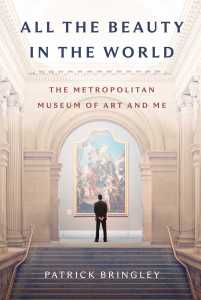
There are another dozen or so titles that stand out to me as particularly rich reading experiences. My blogging was a bit fitful in 2024, but usually when a book really excited me (for better or for worse) it got its own post, instead of being included in a hastier round-up, so it wouldn’t be hard to find out which ones they were by just scrolling back through my year’s posts! But I will highlight a few. One absolute delight, which I did not in fact write up individually (but I read it in February, the month I actually moved, so it’s amazing that I wrote anything at all!) was Herbert Clyde Lewis’s Gentleman Overboard. I can’t recommend this book highly enough. Its premise is so simple (it’s about a man who falls overboard—surprise!) but between his thoughts as he tries to stay afloat and the reactions of those left behind on the ship, the little episode takes on real philosophical, even existential, weight without every becoming ponderous. Another book, in a completely different style, that also takes on Big Issues is Joan Barfoot’s Exit Lines, a darkly comic novel about what makes life worth living, and who has the right to decide what those reasons have run out. Sarah Perry’s Enlightenment, which I reviewed for the TLS, also takes into questions about the meaning of life, but with such delicacy and tenderness; it is my favorite of Perry’s novels to date (although if your tastes are more Gothic, I highly recommend Melmoth, which I thoroughly enjoyed). I suppose it stands to reason that someone whose favorite novelist overall is George Eliot would appreciate novels with a philosophical dimension. The challenge, as Eliot herself noted, is never to “lapse from the picture to the diagram,” and I think each of these novels in its own way invites us to contemplate important questions without becoming programmatic.
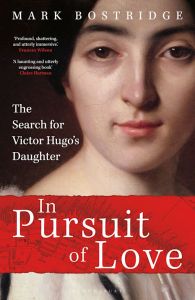 I read two fabulous memoirs in 2024: Mark Bostridge’s In Pursuit of Love (which deserved but did not get its own post) and Sarah Moss’s My Good Bright Wolf (which did). Bostridge’s book is actually a hybrid of biography and autobiography. It is mostly about the sad life of Adele Hugo, Victor Hugo’s younger daughter, who broke away from her father’s overbearing presence and confining household to follow the soldier she’d fallen in love with all the way to Halifax and then to Jamaica. Unfortunately, he was not in love with her, which makes the whole saga both more dramatic—imagine the daring it took, in the mid 19th century, for a young woman to cross the oceans to get what she wanted—and more tragic. Bostridge weaves into this reflections on his own relationship with his father and his own pursuits of love. It’s a compelling narrative on both counts, and the local colour added to its interest, as Bostridge retraced Adele’s journey to Halifax and explored her haunts here (and had dinner with me, incidentally).
Ann Schlee’s Rhine Journey has been highlighted by many others in their ‘best of’ lists; I was very impressed by it too, as I was by Dorothy Baker’s Cassandra at the Wedding. Neither of these is exactly a feel-good read! Another book that has consistently had a lot of buzz in my reading circles is Dorothy B. Hughes’s The Expendable Man; I finally read it and yes, it is indeed excellent. I think I consider In a Lonely Place a slightly better novel (more subtle, more artful) but The Expendable Man is so clever and does such important things within its noir-ish form that I couldn’t resist adding it to the reading list for my Mystery & Detective Fiction class this coming term. I was not so enthralled by Claudia Piñeiro’s Time of the Flies, which was the least intelligible and satisfying of her novels for me so far. I got a lot out of reading and thinking about Denise Mina’s The Long Drop, but I’m still not entirely on board with true crime as a genre—although, perhaps inconsistently, I am not 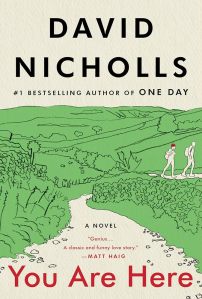 bothered by historical true crime, and along those lines I quite enjoyed my King’s colleague Dean Jobb’s A Gentleman and a Thief, about the jazz-age jewel thief Arthur Barry.
In lighter reading, I loved David Nicholls’s You Are Here—he seems to be a really reliable sort of writer, one whose fiction is accessible without being hasty or flimsy. I still think often about Us, which I read well before my own separation, not because its protagonists are like my own family at all, but because it shows them grappling with changing needs, and just with change, in really perceptive but not melodramatic ways. I discovered (belatedly!) Katherine Center and found much to enjoy in her intelligent romances; I read several of Abby Jimenez’s novels and then decided I’d had enough.
My book club got on a French kick that began with Diane Johnson and took us through de Maupassant, Colette, and Dumas (fils). (I also read Zola’s La Bête Humaine—the One Bright Book people made me do it! Ok, they didn’t make me, but I was inspired to read it so I could properly appreciate their episode. The novel is . . . a lot! And Sarah Turnbull’s astute and lively Almost French was an unanticipated connection between these French books and the other memoirs I read.) We chose Elizabeth von Arnim’s Vera for our last book of the year and it is another I highly recommend, especially if you read and liked Daphne du Maurier’s Rebecca. Vera has a lot in common with Rebecca—the whole plot, really—but the tone is quite different, darker, I would say, because the shadows in Rebecca are Gothic ones and so can be shaken off more easily than the more chillingly realistic menace von Arnim offers up.
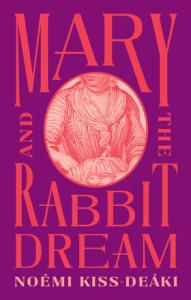 If I had to identify a low point of my reading year, it would probably be Noémi Kiss-Deáki’s Mary and the Rabbit Dream, though I’m a bit reluctant to characterize it that way. There is so much that’s interesting about it, and its style (while off-putting to me) does have an idiosyncratic kind of freshness to it: it doesn’t sound like any other book I’ve read, not just in 2024 but maybe ever! Was the author being innovative, taking an artistic risk in writing it this way? or is she just not a very good writer? If you read it, I’d be interested to know what you decided!
These are not all the books I read in 2024, of course, but they’re the ones that stand out when I look over my notes and posts. One other change in my book habits seems worth mentioning: I experimented quite a bit with audiobooks this year, partly because of all those extra hours I’ve found in the day, which have meant more time on things like crafts and puzzles. In the past I have not had much success with listening to books, but some of them were great. I would especially highlight Dan Stevens’s wonderful reading of Agatha Christie’s And Then There Were None; Naomi Klein’s reading of her own (exceptionally thought-provoking) Doppelganger, which is really worth reading (or listening to) as we head into the second (sigh) Trump presidency; and David Grann’s The Wager, read by Dion Graham, which kept me spellbound.
My Year in Writing
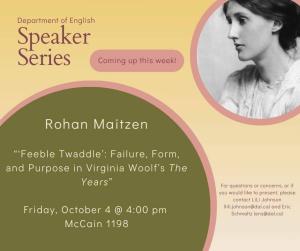 I’m a bit disappointed in how much (or, I should say, how little) writing I got done in 2024. It was my slowest year yet for reviews at the TLS, with just two, of Perry’s Enlightenment and, “in brief,” Sara Maitland’s True North. (I am working now on a review of Anne Tyler’s Three Days in June, so they haven’t quite forgotten me!) I reviewed three novels for Quill and Quire in 2024: Elaine McCluskey’s The Gift Child, Jenny Haysom’s Keep, and Ayelet Tsabari’s Songs for the Brokenhearted. And I did my second review for the Literary Review of Canada, this time of Tammy Armstrong’s Pearly Everlasting, about a girl whose brother is a bear. (What is it with CanLit and bears?) I worked quite a bit on my “project” (I hate that word, but what else is there?) on Woolf’s The Years as a failed ‘novel of purpose’; I kept myself motivated by putting myself on the list for our department’s Speaker Series. I think the presentation went fine. As always, the tough questions I anticipated and fretted about greatly beforehand were not the ones asked, and in fact I really enjoyed the Q&A.
As we head into 2025, I am thinking about how to “level up” a bit in my writing. I do really like doing reviews that have a limited scope, which I find creatively and intellectually challenging (what can I do in just 700 words?), and also comfortable, in their specificity. But I used to sometimes publish more essayistic pieces too, and I want to give some thought to what else I might do along those lines. I also don’t want all that Woolf work to stop with the presentation version, but at the same time I find it very hard to feel motivated to turn it into an academic article, even though that was my initial plan. I think I need to crack it open and reconsider it as something that might (might!) work for the kind of venue I used to dream of getting into—and did, unsuccessfully, submit to a couple of times—in the past, something like the Hudson Review, maybe. A writer’s reach must exceed her grasp, right?
My previous, somewhat paradoxical, experience has been that writing more means I write more—when I kept up my blog more faithfully, for example, I published a lot more other writing as well. Of course, a lot of other things were different in the past, and I don’t know if 2025 will be the year I get my momentum back. I hope I at least try, because I don’t feel altogether satisfied with my recent output, which is not about “productivity” but more about the kinds of things we were talking about in a more tangible context in the comments on my previous post: what matters, what lasts, what remains. 
And on that note—is it sobering or uplifting, aspirational or anxious? all of the above!—I think that’s a wrap on this year-end review. It’s hard to imagine that 2025 can be even a fraction as tumultuous as any of the past three years, personally at any rate (politically, on both sides of the border, it seems likely to be a big old mess). Whatever happens, at least there will always be books, right?
 Novel Readings
*chuckle* I think that a time will come when you will look back on 2025 and think, however did I manage to achieve all that?
LikeLike
I’m glad you didn’t second thought Carr’s A Month in the Country out of favourite book of 2024 position. I read it on your recommendation and your claim that it’s pretty much a perfect book seems pretty much a perfect assessment. How did he manage such a feat with such modest gestures, and with such a limited scope? I mean to return to it, and see if I can figure it out.
I didn’t get far with The Essex Serpent but the TLS review of Enlightenment makes it seem a better bet for me. I appreciate it when a novelist at least addresses some of the important questions, even if they don’t come up with answers. Gentleman Overboard also sounds like something to be investigated. Thank you for sharing your reading year.
LikeLike
I didn’t much like The Essex Serpent either but Enlightenment is a much more subtle and, I think anyway, more successful blend of ideas and genuine emotion. I really loved it.
LikeLike
Thanks. I’ll check it out.
LikeLike
An illustrated edition of All the Beauty in the World would be wonderful. I read it at the end of 2023 and enjoyed it without thinking it left much of an impression. How wrong! I found myself remembering it throughout the year and, more importantly, it made me seek out more art than I usually do, including planning trips to other cities to visit wonderful galleries. I also belatedly discovered Katherine Center’s books in 2024 and loved You Are Here (though it was at times a bit painfully accurate, at least for me as a single thirty-eight-year-old).
LikeLike
As a single 57-year-old, I find I feel pretty detached at this point from “young people’s” romantic shenanigans, which is actually helpful as it means I can enjoy them as story-telling without taking them too personally. 🙂
LikeLike
When I heard you talking about A Month in the Country on Trevor and Paul’s podcast, I was nodding along. It is perfect! Orbital was one of my favorite books this year, too.
When I look back on how much I used to blog at a time of life when I was so much busier, I can’t imagine how I did it. I do think momentum is part of it—the more you do, the more ideas and energy you have. I’d love to read more longer form writing from you; I think you have a gift for essays. And I am impressed you managed to write anything at all this year! Moving takes enormous energy, especially when you’re leaving a house you’ve lived in for a long time and have to make a lot of emotional decisions about what to keep and what to let go.
LikeLike
Thanks for those encouraging words, Liz. Yes, I think you are right about momentum. There’s a kind of inertia that sets in when you just aren’t writing (or blogging!). Something we worked on a lot in therapy (in a different context, more or less, but I think it works in this one) is “behavioral activation,” too: one of my ideas for this year is to see if I can’t apply some principles for that to writing. I just have to figure out what works, since in therapy there’s the external motivator of having an upcoming appointment to “report” to! Like most academics, I work well to deadlines and not so well if I’m the only one I’m accountable too.
LikeLike
Very keen to see your work on ‘The Years’ if it eventuates – it was my final review for the year, and my book of the month for December 🙂
LikeLike