 The mind is not only its own place, as Milton’s Satan observes, but it can also be a pretty strange place, or mine can anyway, especially these days. Today, for example, it has been six months (six months!) since Owen’s death, and what keeps running through my mind is a mangled version of lines from “The Charge of the Light Brigade”: “half a year, half a year, half a year onward, into the valley of death …” and then nothing comes next, it just starts over, because not only (of course) are these not the poem’s actual words but I don’t know what words of my own should follow to finish the thought.
 It’s hard to imagine a poem that is less apt, for the occasion or for my feelings about it. (I hate this poem, actually, though I love so much of Tennyson’s poetry.*) I can’t think of any reason for this mental hiccup besides the generally cluttered condition of my mind thanks to two years of COVID isolation and now six months (six months!) of grieving. Six months is half a year—half a year! I have to keep repeating it to make myself believe it, and it’s probably just the repetition and rhythm of that phrase that trips my tired brain over into Tennyson’s too-familiar verse.
Half a year. That stretch of time seemed unfathomably long to me in the first days and weeks after Owen’s death—a future too far away to imagine, never mind plan or prepare for. Time passing was supposed to be what helped, but that oversimplifies it, as everyone who told us “it takes time” probably knew but didn’t know how to (or didn’t want to) explain. That feeling I had that he was receding—not from our memories or our hearts, of course, but from our present reality—is even stronger now, which is worse, not better. I don’t want him to belong to the past, but time doesn’t stop. I can’t hide from my own future any more, either: my sabbatical (so eagerly awaited, so much of its work so different than I expected, and so much more difficult) ends today. Half a year, half a year, half a year onward: it’s relentless.
It’s hard to imagine a poem that is less apt, for the occasion or for my feelings about it. (I hate this poem, actually, though I love so much of Tennyson’s poetry.*) I can’t think of any reason for this mental hiccup besides the generally cluttered condition of my mind thanks to two years of COVID isolation and now six months (six months!) of grieving. Six months is half a year—half a year! I have to keep repeating it to make myself believe it, and it’s probably just the repetition and rhythm of that phrase that trips my tired brain over into Tennyson’s too-familiar verse.
Half a year. That stretch of time seemed unfathomably long to me in the first days and weeks after Owen’s death—a future too far away to imagine, never mind plan or prepare for. Time passing was supposed to be what helped, but that oversimplifies it, as everyone who told us “it takes time” probably knew but didn’t know how to (or didn’t want to) explain. That feeling I had that he was receding—not from our memories or our hearts, of course, but from our present reality—is even stronger now, which is worse, not better. I don’t want him to belong to the past, but time doesn’t stop. I can’t hide from my own future any more, either: my sabbatical (so eagerly awaited, so much of its work so different than I expected, and so much more difficult) ends today. Half a year, half a year, half a year onward: it’s relentless.
 How should the thought finish? As I walk through the valley of the shadow of Owen’s death, I have no sure path or comfort. All I know, or hope I know, is that at some point, in some way, I will emerge from it and he will not. Six months ago today, devastated beyond any words of my own, I copied stanzas from Tennyson’s In Memoriam into my journal. It remains the best poem I know about grief, though as it turns towards a resolution not available to me, maybe it’s more accurate to say that it contains the best poetry I know about grief. (For that, I can forgive him the jingoistic tedium of “The Charge of the Light Brigade.”) This has always been my favorite section—it is so powerful in its stark simplicity:
Dark house, by which once more I stand Here in the long unlovely street, Doors, where my heart was used to beat So quickly, waiting for a hand,
A hand that can be clasp’d no more— Behold me, for I cannot sleep, And like a guilty thing I creep At earliest morning to the door.
He is not here; but far away The noise of life begins again, And ghastly thro’ the drizzling rain On the bald street breaks the blank day.
He is not here. Half a year. How long, how short, how impossible that feels.*It is amazing that you can listen to a recording of Tennyson actually reciting it, however. Why do I find this so moving? Maybe for the same reason that I found myself in tears when I ran across some of the original issues of Bleak House at the V&A.
 Not a happy summer. That is all the materials for happiness; & nothing behind. If Julian had not died—still an incredible sentence to write—our happiness might have been profound . . . but his death—that extraordinary extinction—drains it of substance. (Woolf, Diaries, 26 September, 1937)
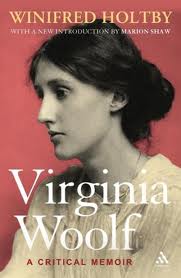 I haven’t written much new about Woolf yet this year (I’ve been focusing on other pieces of my project) but I have thought about her a lot—specifically, I have thought a lot about her suicide. One of my favorite things about Holtby’s Critical Memoir of Woolf is that Holtby died before Woolf did and so no shadow darkens her celebration of
  With Woolf on my mind again thanks to Queyras’s book, I picked up Volume 5 of her diary (1936-1941), which I have to hand because it covers the time she was working on The Years and Three Guineas. So much is always happening in her diaries and letters: you can dip into them anywhere and find something vital, interesting, fertile for thought. This volume of the diary also includes the lead-up to war and then her experience of the Blitz, and the final entries before her suicide, which are inevitably strange and poignant—even more so to me now. Leafing through its pages this time, though, it was the entries around the death of her nephew Julian Bell in July 1937 that drew me in: Woolf as mourner, not mourned.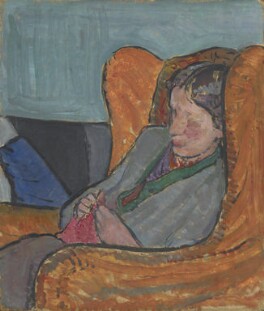

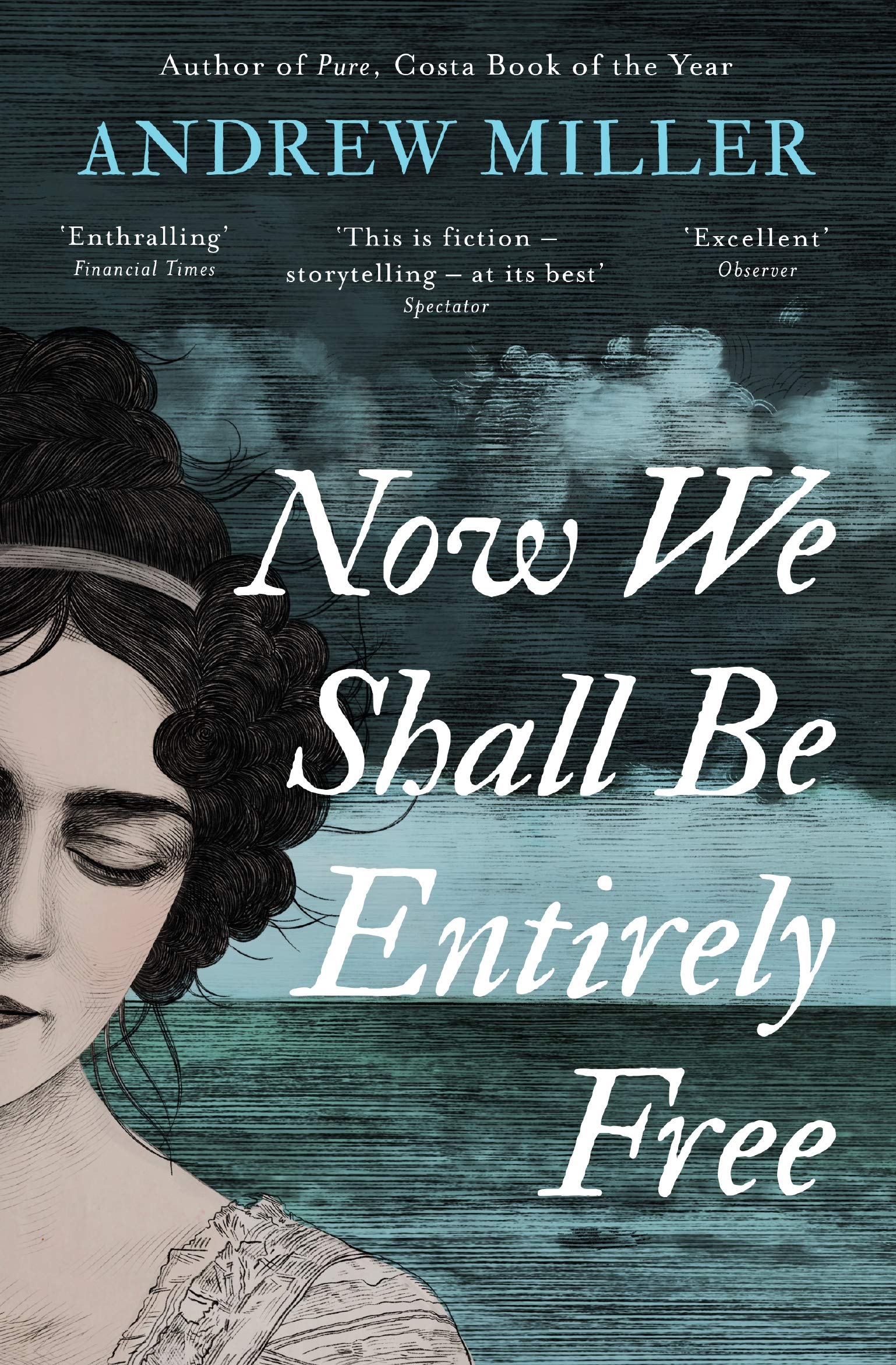
 The aspect of the novel that I found the most thought-provoking is that the act that precipitates Stephen’s subsequent descent into alcoholism and despair is (relatively speaking) quite a small-scale one. There’s a lot of build-up to it, a lot of manipulative anticipation created. In the lead-up to the revelation, we hear about a range of horrifying atrocities—booby-traps and bombs; gangs kidnapping, torturing, and murdering people; cold-blooded shootings of people pulled from their cars in front of their families—so it’s almost an anti-climax when we find out that what Stephen did (“all” Stephen did) was shoot an unarmed teenager. It happens during a house search, a routine but also very tense operation: everything, we have learned by this point, is unpredictable in Belfast, and being on edge is a way of life for the soldiers on patrol. Stephen is posted in the alley; when the boy comes out of the back door, all Stephen registers is that “his hands were not quite empty.” Afterwards, Stephen is encouraged to dwell on the perceived threat: “if I’d believed my life was in danger then I’d had every right to do as I did.” He does as he’s told, and in the end there are no formal consequences beyond his being relocated out of Ireland.
 Novel Readings