“Menaced by intimations of the truth”: Elizabeth Taylor, Angel

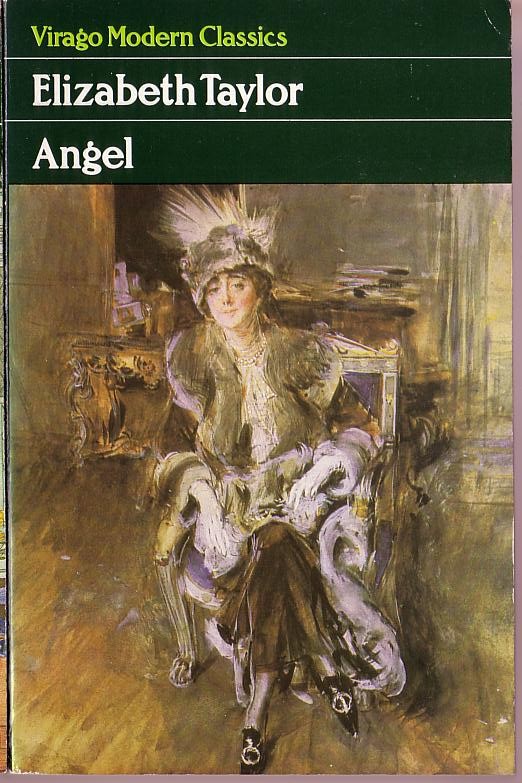
angelAngelica Deverell, the eponymous protagonist of Elizabeth Taylor’s Angel, will not accept the dreary reality she lives with, and so she creates a different world through her fiction, finding in it all the glamour and drama she yearns for and believes she deserves. So far, so good, right? We’ve met imaginative young girls in novels before — Jo March, Anne Shirley — who channel their repressed energy for life into story-telling, and whose hunger to express themselves matches their exuberant desire to live more fully. But Angel, it turns out, is no relation to these lovable sprites, and Elizabeth Taylor’s own novel offers none of the cheerful consolations of Little Woman or Anne of Green Gables: there’s something much darker and sadder in this account of a woman who never ceases in her insistence that her fantasies are reality but whose life never does bring her any real joy — only constant battle against unwelcome truths.

Angel, in other words, is a book that surprised me. I thought I knew the kind of thing I was getting into when I started it, and I was instantly on Angel’s side, too, when on the very first page she confronts her dubious teacher about an essay poor Miss Dawson can not believe Angel has written: “Who does she think wrote it if I didn’t? Who does she think could?” But things went awry for me after that, as Angel turns out to be anything but sympathetic — and yet there’s something compelling and maybe even tragic about the completeness with which she insists on living her own version of her life, never backing down even when faced with the cruelest facts. Refusing reality is hardly the route to moral heroism, and at no point does Angel transcend her own egotism, while at no point does Taylor soften her or elevate her to make our work easier.

Her publisher manages, as we must, to see her straight on: “He realised the hunger she had suffered, the deprivations of her wilful, ranging imagination.” Early in her career she tells him the truth of her early life but concludes, “None of what I told you seems true to me and I know that one day I shall stop believing it.”

Unreality is also the hallmark of her novels, which are critically disdained:

The very passages of which she had been most proud, had been printed as if they were richly humorous; her dialogue, her syntax, her view of life, her descriptions of society were all seen to be part of some new and quite delicious joke. No one had wept, it seemed, when reading the funeral scene–unless it was with laughter.

Yet laughable as the books are, they are (for a time, at least) bestsellers:

The more the critics laughed, the longer were the queues for her novels at the libraries; the power of her romanticism captivated simple people; her preposterous situations delighted the sophisticated; her burning indignation when some passing fury turned her aside from her plot into denunciations and irrelevancies, swayed some readers into solemn agreement and others into paroxysms of laughter.

Taylor is clearly a sophisticated novelist, not one aiming at simple people, so the most surprising aspect of Angel is the total absence of satire at Angel’s expense: she paints her character’s portrait with the same unexpected ruthlessness as Angel’s eventual husband Esmé literally paints it:

 The portrait lacked exuberance and he had painted her in her darkest clothes against a banal background; the empty window behind her, the bare wall, emphasized the suggestion of loneliness. . . . at the time people thought the portrait dreary and tactless and wondered why Esmé had not the wit to modify the arch of her nose, the eccentricity of her clothes and correct her slight astigmatism, and if she would not disguise her own pallor, he, on canvas, might have done so.

His unsentimental realism is the complete opposite of Angel’s denial of reality, which remains perfect even as she becomes increasingly freakish in her aging eccentricity:

To herself, she was still the greatest novelist of her day, and not the first in history to receive less homage than was her due. No one bought her books, and only the middle-aged or elderly had ever read them: she did not know that she was now a legend of which the young had only vaguely heard; risque, their grandparents, in quaint fashion, said her novels were.

Somehow, Taylor manages to bring no judgment down on Angel for refusing to live in the world. It would have been easy to enhance the pathos of Angel’s final moments by granting her an epiphany, a moment of painful self-awareness, but all she feels is fatigue, and relief when she realizes her long struggle is over: “it was not to be gone through again; after all she was at home, in her own bed, with her own life behind her.” In choosing fantasy she has not, after all, taken the easy way.

Should Graduate Students Blog?

On Thursday I’m speaking to our graduate students’ “professionalization” seminar about academic uses of social media, particularly blogging. I’ve given related talks a few times now, but this is the first time I will have led a session about blogging specifically for an audience of graduate students, for whom some of the issues I typically address have somewhat different implications. Thinking about this, I was reminded that last spring Leonard Cassuto (with whom I had a couple of initially testy but ultimately amicable exchanges about the place and value of academic blogging) asked me for my thoughts about whether graduate students should blog. He was working up a piece for the Chronicle of Higher Education on the question that, as far as I know, never ended up in final form — at any rate, I didn’t see it, and he never got back to me to ‘preview’ his use of any quotations from my reply, which he had promised to do. I thought I might as well “repurpose” the response I sent him, as I had taken some pains over it, so here it is, lightly updated. I’d be very interested in any responses, qualifications, objections, or counter-arguments, not least because they will help me refresh my own thinking about this as I head into Thursday’s seminar.

Should Graduate Students Blog?

Should graduate students blog? That’s a tricky question with at least two important aspects to it. One is whether graduate students should blog with the specific aim of advancing their professional academic careers (that is, improving their chances of getting tenure-track work). Another is whether they should blog for its intrinsic benefits.

These are not, of course, entirely separate questions: some of the things that can be gained from blogging (greater ease and confidence in writing, experience with the give-and-take of post-publication peer review, connections with other people in your field but also with a wider audience, a sense of purpose and accomplishment, freedom to experiment with topics and with voice) can contribute to professional success by making better scholars, teachers, and intellectuals of us all. It can also inculcate work habits conducive to producing more conventional publications: regular bloggers can all testify to the ever-present awareness that the blog needs to be fed!

But it would be naive to ignore that blogging (for some good and some bad reasons) is not yet widely recognized as a legitimate form of academic publishing and that the case for it as productive academic work at all remains a difficult one to make. Graduate students aspiring to tenure-track positions hardly need to be told that for most hiring committees, the crucial measure of their competitiveness as candidates will be the number of conventional peer-reviewed scholarly publications on their c.v.–and the more prestigious the venue, the better. Though blogging one’s research projects can be a useful stage en route to achieving those conventional publications, or even to finishing the dissertation (Scott Kaufman’s Acephalous blog was once the place to look to see this in action!), in itself it is not the same thing and will almost certainly not be valued in the same way. And maintaining a good blog takes time–not necessarily or exactly time away from that kind of clearly marketable scholarly work and publication, but time that might be better used to focus directly on finishing that thesis and getting those lines for your c.v. There are definitely risks involved, then, in deciding to blog.

That said, blogging is increasingly acknowledged as having a place in the overall ecology of academic scholarship. Graduate students who choose to blog should by now be able to make a thoughtful and well-supported case for the value of that effort as part of their overall scholarly portfolio. I think a crucial point is that this case needs to be backed up by faculty members who can explain, to their colleagues and to administrators, the role blogging can play in developing original scholarship as well as in knowledge dissemination and outreach. Those of us who have used the protection of tenure, for instance, to experiment ourselves with alternative modes of writing and publishing need to be advocates for graduate students who take the risk of doing less conventional kinds of work. (See, for instance, Kathleen Fitzpatrick’s piece on supporting students working in Digital Humanities, which is not the same thing as blogging but raises many similar issues, including how such non-traditional work can be recorded and evaluated).

There’s one more angle that’s maybe worth considering: with tenure-track positions so rare, graduate students may look at blogging, not just as an activity related (however equivocally) to their potential academic careers, but as one way of turning their skills and knowledge outward from the academy. Though this can hardly be counted on, blogging can help someone establish an identity and a following that might create new kinds of opportunities–in online journalism, for instance, or in other ways not strictly imagined at the outset. Again, there are risks in investing time and effort in something without a clear professional pay-off, but just what that profession or pay-off might be should certainly no longer be defined in solely academic terms. Aaron Bady, proprietor of the blog zunguzungu and one of my former colleagues at The Valve, comes to mind as a good example of someone who has established a significant online presence.

So, do I think graduate students should blog? I do think they should consider it, because I know from my own experience how intellectually beneficial blogging is and how it creates contacts and opportunities. It would be hypocritical of me to recommend against graduate students engaging in work I believe to be good for us and for our profession. But I think they need to be aware that as far as I can tell, my view remains a minority one, and they should think carefully about how they manage their time and about what kind of blog, if any, might serve them best. Defining a niche, for instance, might be important; collaborating in a group blog might be a way to spread the work around (see, for instance, The Floating Academy, whose contributors would be good people to ask about blogging — I’d be happy if they weighed in here). If graduate students do decide to blog, I think they should be ready to explain clearly how doing so contributes to their professional development and to the advancement of understanding in their field, and I think we should listen to them and find a responsible way to evaluate the value of the work they’re doing. (Blogs are just a form, after all; their value and impact depend on how that form is used, on what it is used for. We should be well past the point of generalizing about blogging as such.)

I certainly don’t think we (t-t faculty, administrators) should expect or demand that graduate students blog, at least not until we’ve normalized giving professional credit for blogging: that just adds one more thing to the already daunting set of expectations they labor under.

What do you think?

Latter-Day Dorotheas? Renunciation in Trollope and Tyler

From the Novel Readings archives (originally posted June 15, 2007)

trollopevillageWhen I decided to take a break from more “serious” reading with Joanna Trollope’s A Village Affair, I wasn’t really expecting the novel to reach towards the serious itself. I had read it before, but what I had retained was admiration for the clarity with which Trollope gives us the people she has devised: many (though not all) of her novels that I have read have struck me as achieving an enviable quality in their characters: they are enormously specific and individual and often intensely, even poignantly, believable. Here, Alice’s father-in-law, Richard, seems especially well conceived. Everything he says communicates to us who he is and how he has lived, particularly in his marriage to a woman he persists in loving but who cannot, in her turn, recognize in him someone as complex and fully human as she is. He lives this hampered life in full knowledge of its limits, neither tragic nor stoic. Alice’s discontent is the stuff of cliches; her affair seems contrived (by the author) to break up the seemingly calm surface, the routines and compromises of daily life. In fact, this is how Trollope’s plots generally work: the ordinary people, the change or revelation, the repercussions. For me, it’s the repercussions she does really well. Having set up her experiment in life, she works out plausibly how it will play out, and she does not sentimentalize–as, in this case, Alice’s “coming alive” through a new and different experience of love creates more problems than it solves.

In this case, as in another of her novels that I think is very smart, Marrying the Mistress, Trollope sets her characters up to confront what is a central dilemma in many 19th-century novels as well, namely how to resolve the conflict between, or how to decide between, duty to self and duty to others. That she is aware of her predecessors in this investigation is indicated by the quotation from Adam Bede recited (OK, improbably) by one of the characters in A Village Affair. As that quotation forcefully indicates, George Eliot placed a high value on renunciation and on accepting (as gracefully as possible) the burden of duty: resignation to less than you want, or less than you can imagine, is a constant refrain, and this with no promise of rapturous happiness. Hence the melancholic tinge at the end of Romola, for instance, or Daniel Deronda, or, for all its lightning flashes of romantic fulfilment, Middlemarch. (Of course, famously, it is her heroines who must resign or, like Maggie Tulliver, die.)

Although much has changed socially and politically since George Eliot found it unrealistic to give Romola, Maggie, or Dorothea uncompromised happy endings, the struggle between what we want for ourselves and what is expected or demanded of us by others continues to be a staple of fiction. Though Trollope’s scenario is much more contemporary, she too accepts that one’s individual desire cannot (or not easily, or not ethically) be one’s guiding principle, because of the “visible and invisible relations beyond any of which our present or prospective self is the centre” (Adam Bede). So Trollope, with admirable restraint, refuses a fairy tale ending for her protagonist, though, with a different kind of insistence that perhaps George Eliot would respect, she also pushes her out of the unsatisfactory life that was her reality before, and into what, given this context, seems like a narrative limbo, or a waiting room. This is not to say that Alice’s single life is an incomplete one, but she herself acknowledges that it is not, in fact, what she really wanted–only what she was capable of achieving.

tylerladderI think this novel makes an interesting comparison to another quiet novel about a woman reconsidering her life, Anne Tyler’s Ladder of Years, which I have always admired. But Tyler, though far from offering simplistic fairy tales, offers her own version of the resignation narrative. In Ladder of Years, as in Back When We Were Grownups, it proves mistaken for the heroine to try to start a new life, however much she is, or believes she is, following the promptings of her innermost self. Again, the “visible and invisible relations” exert a powerful pressure, like the entangling webs of family and society in Middlemarch but perceived, overall, as more kindly, less petty and destructive. The plain litte room Delia takes and uses as a staging ground to reinvent her life is a room of her own, but her story is not rightly understood as being just about her own life (“was she alone,” Dorothea asks herself). In these novels Tyler’s women learn to appreciate the value of what they tried to leave, to see their own identities as having become inseparable from those of the others whose demands and complications hamper their desires. The vision seems starker in Trollope’s novel (“Aga saga” though it certainly is).

This Week in My Classes: Anger and Passivity

Donkey Ears

Andrea Kaston Tange’s post on ‘the chastising professor‘ at Curiouser and Curiouser was timely: on the very day it went up, I had started my intro class with a brief rant pep talk about last week’s disappointing attendance and lackluster participation. It was a subdued occasion: no hissy fits, I promise! My intervention was very much along the lines of Andrea’s “Sincere and Concerned Speech on Investment in Your Own Education,” with a dose of “We’re Talking About Things That Really Matter.” We were reading Adrienne Rich and Sylvia Plath, for crying out loud! This is not material to be encountered passively.

I share Andrea’s concern about whether these speeches are in fact motivating. In the moment, they are guaranteed to be downers: nobody who’s been publicly criticized is going to feel a lot like cooperating with the person who just chastised them. I thought hard over the weekend about whether to bring this negative energy into the room, but in the end I decided that it was important for me to make a public statement about expectations, and about what real success and productivity look like in a discussion-based class. It’s not like you get a lot of positive energy going anyway when people are arriving unprepared, or at any rate not prepared enough to contribute to discussion, or are putting their heads down on their arms to nap during discussion, or not showing up at all. We have been going along pretty well all year and the recent slump has been conspicuous – not for all of the students, of course, but for enough to make a significant difference in the overall class experience. I don’t know if it’s feminism causing them to disengage, or midterm exams in other classes, or what — but it seemed wrong just to press on as if nothing’s the matter, as if it’s quite OK to treat our class as a time and place when they can just show up and that will be good enough.

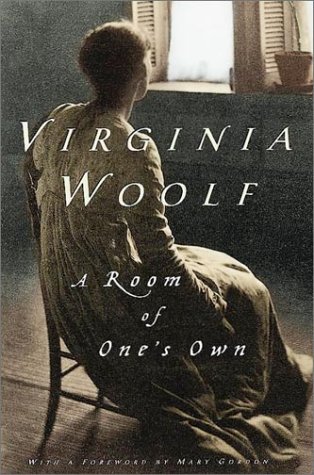
Things seemed a bit better yesterday. We’re working our way through A Room of One’s Own, which is not an easy text to make sense of, but I had given them a couple of specific things to think about beforehand (as I almost always do), and I also let them warm up in small groups first before we came together to talk as a class. We focused on the two college meals Woolf describes in such detail in the first chapter, working out the connections she makes, both implicitly and explicitly, between eating and writing. Then we went with her to the British Museum and considered her attempt to find “facts” — and the resulting analysis of the angry Professor she discerns behind the studies she reads. We’re reading Chapter 4 for tomorrow and I’ve asked them to focus on her comments about Austen and Brontë, especially about her idea that in great writing we are unaware of the writer’s state of mind. Since a lot of them don’t know Austen and Brontë well or at all, I suggested they think back over our course readings for examples of writers whose state of mind is or is not conspicuous in their work, and whether they agree that when we become aware of it, it deforms the writing the way she thinks Brontë’s anger deforms Jane Eyre. Martin Luther King is one of the first of our other authors that occurs to me: I’ll be interested to hear what they came up with. A follow-up question, of course, will be whether they think Woolf’s own quite discernible anger (beautifully controlled though it is) in any way diminishes the artistry of A Room of One’s Own.

In 19th-Century Fiction, we’ve moved on to Lady Audley’s Secret. I was a bit petulant yesterday when my questions for discussion elicited very little response. Maybe I need to give them the “Sincere and Concerned” speech too! But actually, in that class I think I probably just need to back off a bit more than I have been doing. When I have a lot to say, student passivity can become a self-fulfilling prophecy, and I think I’ve just been too quick in the last couple of weeks to fill in when their answers weren’t forthcoming. Lady Audley’s Secret certainly gives us plenty to talk about. So for now, I’ll do my best to stay upbeat, and hope that their apparent inertness is just fallout from the hour we lost with the time change.

“Move it or lose it”: on stagnation and (im)mobility

DALHOUSIE-UNIVERSITYCraig Monk’s column in the latest University Affairs really struck a chord with me. Energized by the presence of a new colleague, he reflects on the challenge of “elud[ing] stagnation” in academic work. Hiring often happens in cycles, and right now at many places (Dalhousie included — or at least in my faculty at Dalhousie) there’s no new (full-time) hiring going on at all, with the result that there are no infusions of fresh ideas or enthusiasm that aren’t compromised by uncertainty. In addition, as Craig points out, “tenure limits lateral mobility”; while he is a wholehearted supporter of tenure (as am I), he recognizes that even as it protects the core of our work and values as academics, it also makes some kinds of positive change difficult to effect. “It would be nice to work,” he observes, “in a field that eludes stagnation.”

Security and stability in one’s jobs are wonderful – and increasingly rare – things to have. No tenured academic can help but feel both incredibly lucky and incredibly privileged. Like Craig, more than anything I value the autonomy that comes with these advantages: “I have never,” he notes, “felt pressure to teach only certain texts, and I built a research program around satisfying my curiosity.” That same description of why this is such a great job also hints, though, at why it is also a challenging one. A great deal of the work is self-motivated, and to do it well requires not just curiosity but also enthusiasm, creativity, and energy.

I see very little evidence in my daily work that tenured faculty live up to the stereotype summed up in the term “deadwood.” The path to tenure is too hard and uncertain and requires too intense a personal commitment to requirements that you have to really care about to do at all, never mind successfully. In my experience, academics are driven — by passion, by interest, by ego, by a need for constant affirmation … by many things, none of which magically dissipate when tenure is finally won. But that drive needs fuel, and I think Craig is right that stagnation is a risk, especially when economic conditions are difficult, class sizes are rising, resources are scarce, colleagues are not replaced, and students seem more interested in credentials than education. Add to these pragmatic concerns the constant messages humanities faculty get (from outside as well as inside the university) that our work is not valuable and our expertise is dispensable, and it can be difficult to sustain the enthusiasm that generates excitement and new ideas in the classroom or in our writing.

I’m particularly prone to feeling stagnant in spring (or what passes for it here). It’s not just the dreary grey weather, though that’s certainly part of it: after all these years, I still get painfully homesick around the time the cherry blossoms start to come out in Vancouver. For some years after I came to Dalhousie I continued applying to jobs in the hope that I could be closer to my family. Realizing that this was never going to happen was very depressing for me and made me feel quite trapped. One of the cruelties of academic life is that you become less mobile the more experienced you are — until and unless you cross the magical threshold and become a contender for something like a Canada Research Chair, or take a turn into administration, though even then moving to a particular location is hardly something you can make happen. I do try not to brood about this any more, but I’m reminded of my immobility every spring when students start reporting on the results of their various applications: as they move on to new programs and new jobs, very often in different cities or even different countries, I find myself wistfully telling them “send me a postcard – I’ll be here, where I always am!”

office

Anyway, because literally moving is not something I can any longer work or hope for, I have tried to find ways to avoid stagnation while staying in the same place, and the paradoxical thing is that while tenure is a major impediment to the former, it provides crucial protection for the latter because it gives me the freedom to experiment. I’m not that interested in the particular changes Craig mentions (such as secondments, exchanges, cross-appointments, advising, recruitment, administration). What I have done, sometimes deliberately and sometimes by accident, is reinvent myself as a scholar and professor. Dreaming up new courses is one obvious version of this. I also took a big turn in my research interests in the years just after I got tenure and my monograph came out, away from gender and historiography, where I’d been focusing since graduate school, and towards literature and ethics. This meant a gap in my publication output, but the work was very rewarding and led not only to a couple of articles but also to significant changes in my pedagogy. Then in 2007 I started blogging, not realizing how much of a change this would ultimately lead to in the way I conceptualize both academic work in general and my own professional life more particularly. More than anything else, my work with Open Letters Monthly (though it’s not clear that it will help me advance professionally) has helped me feel that I am not standing still — that while I may sit at the same desk in the same office I’ve had since 2001, I have moved on in some ways that really matter.

Still, a little more literal change might also be refreshing. I recently learned that a colleague in my faculty is leaving for a position somewhere else (yes, a rare example of lateral mobility!). I wonder who’s in line for his office.

Incalculably Diffusive? The Impact of the Humanities

From the Novel Readings archives, a response to early reports on the UK’s “Research Excellence Framework.” Collini’s critique (and this post) came out in November 2009 (sadly his piece now appears to be behind a paywall). UK academics can no doubt update us on how far his concerns have proven justified.

BalliolAt the TLS, Stefan Collini has a trenchant critique of the British government’s “Research Excellence Framework” for research funding in the universities. A key factor will the assessment of “impact”:

approximately 25 per cent of the rating (the exact proportion is yet to be confirmed) will be allocated for “impact”. The premiss is that research must “achieve demonstrable benefits to the wider economy and society”. The guidelines make clear that “impact” does not include “intellectual influence” on the work of other scholars and does not include influence on the “content” of teaching. It has to be impact which is “outside” academia, on other “research users” (and assessment panels will now include, alongside senior academics, “a wider range of users”). Moreover, this impact must be the outcome of a university department’s own “efforts to exploit or apply the research findings”: it cannot claim credit for the ways other people may happen to have made use of those “findings”.

Collini’s main interest is in the “potentially disastrous impact of the ‘impact’ requirement on the humanities”:

the guidelines explicitly exclude the kinds of impact generally considered of most immediate relevance to work in the humanities – namely, influence on the work of other scholars and influence on the content of teaching

Collini points out a number of profound “conceptual flaws” in the proposed process, among them the assumption that all disciplines across the university can and should be assessed in the same way, and the pressure on researchers to devote their time not to the “impact”-free zones of writing and teaching in their areas of specialization (because influence on work in your field, for instance, does not count as “impact”) but on marketing. His concluding peroration:

Instead of letting this drivel become the only vocabulary for public discussion of these matters, it is worth insisting that what we call “the humanities” are a collection of ways of encountering the record of human activity in its greatest richness and diversity. To attempt to deepen our understanding of this or that aspect of that activity is a purposeful expression of human curiosity and is – insofar as the expression makes any sense in this context – an end in itself. Unless these guidelines are modified, scholars in British universities will devote less time and energy to this attempt, and more to becoming door-to-door salesmen for vulgarized versions of their increasingly market-oriented “products”. It may not be too late to try to prevent this outcome.

Though I agree it is essential to make the argument about the intrinsic value of “the humanities,” it seems at least as important to challenge (as he does) the mechanisms for measuring impact, because the “end in itself” argument risks perpetuating popular misconceptions about the insularity of humanities research, when in fact it is quite possible to argue that our impact on the wider world (particularly, but not by any means exclusively, the cultural world) is already substantial, but probably too diffuse to be measured even by the “thirty-seven bullet points” comprising the “menu” of “impact indicators.” Two academic articles I read recently provide some supporting evidence for this claim.

fingersmithHere’s Cora Kaplan, for instance, in a recent essay in The Journal of Victorian Culture:

Sarah Waters has a PhD in literature . . . ; she has said that her research on lesbian historical fiction suggested to her the potential of an underdeveloped genre. In its citation and imitation of their work, Fingersmith paid generous tribute to Victorian novelists; it also has a considerable indebtedness to feminist, gay, lesbian and queer critics and social and cultural historians of Victorian Britain. It would not be too frivolous to see Fingersmith – together with other examples of fictional Victoriana – in their synthesis of the detail and insights of several decades of new research on the Victorian world and its culture as one measure of the ways in which Victorian Studies has developed over the last half century. (JVC 13:1, 42)

And here are Patricia Badir and Sandra Tomc responding, in English Studies in Canada, to calls to take the humanities “beyond academia.” Offering a polemical summary of “what the humanities in general, fueled by highly esoteric post-structural theory, have accomplished in the way of widespread social and cultural contributions over the last twenty years,” they begin with the premise that poststructuralism began as a “theory propounded by a tiny priesthood of high intellectuals”:

But this priesthood had acolytes–graduate students at first, then, by the mid-1980s as “theory” inevitably made its way into the classrooms of ivy league professors, undergraduates. The undergraduates . . . did not uniformly move into Ph.D. programs, thereby assuring theory’s continued enclosure in a specialized community. They moved into a variety of illustrious professions and industries, including, most significantly, America’s powerful and ubiquitous culture industries. . . . [T]he Hollywood of today is ruled by ivy league degrees, most of them earned in the 1980s or 1990s, and most of them . . . heavily larded with humanities courses–courses in English, film studies, American studies, gender studies, history. These people were taught by their professors to value certain kinds of aesthetic objects. As they assumed positions of authority in the late 1980s and early 1990s, they began to patronize films and filmmakers that meshed with what they had been taught was cutting-edge culture. The signature films of the early 1990s . . . featured the “politically correct” identity issues and self-referential formal experimentation lauded in the postmodern classroom: Thelma and LouisePhiladelphiaThe Crying GamePriscilla, Queen of the DesertThe PianoPulp FictionThe English Patient. In television, . . . the transformation to postmodern forms has been even more radical: Buffy, the Vampire SlayerThe X-FilesAlias. . .

“One could make the same argument,” they go on, “for the field of journalism,” and they go on to do so, and to the “massive industry” in “‘literary’ objects” including not just books but adaptations. To calls that the humanities address the interests of “civil society,” they reply that “the humanities have, in a large measure, already shaped contemporary civil society”: “the fashions we are being asked to follow are our own.” (ESC 29:1-2, 13-15). I’m sure it’s easy to argue about which are the “signature films” of the 1990s, but the general case that specialist research in the humanities makes its way into the wider world by way of our classrooms seems presumptively strong–but that is just the kind of “impact” apparently discounted by the Research Excellence Framework.

I’m sure more (and perhaps more concrete) examples could be provided by most academics looking at intersections between their own fields of specialization and the world “outside” the academy. A concerted campaign to demonstrate the “impact” of humanities research might do as much good as insisting also that, whatever its “impact,” the work is valuable in itself. And it should probably be carried on not (just), as with my two examples, in the pages of academic journals, but as publicly as possible–in the TLS, but also through blogs, letters to the editor, talking to our neighbours–you name it. Many thousands of our students are out there somewhere, too, who could surely testify to the “impact” of our work, not just on their cinematic tastes, but on their thinking, reading, and voting lives. After all, the REF may be specific to the UK, but the narrow version of utilitarianism it represents is not.*


*Narrower than J. S. Mill’s, certainly: “Next to selfishness, the principal cause which makes life unsatisfactory is want of mental cultivation. A cultivated mind – I do not mean that of a philosopher, but any mind to which the fountains of knowledge have been opened, and which has been taught, in any tolerable degree, to exercise its faculties- finds sources of inexhaustible interest in all that surrounds it; in the objects of nature, the achievements of art, the imaginations of poetry, the incidents of history, the ways of mankind, past and present, and their prospects in the future. It is possible, indeed, to become indifferent to all this, and that too without having exhausted a thousandth part of it; but only when one has had from the beginning no moral or human interest in these things, and has sought in them only the gratification of curiosity.”

This Week in My Classes: Feminism and Fatality

richThis week in my section of Intro to Literature we’re starting a unit organized around women writers and feminism. We’re starting this week with some poetry — Adrienne Rich’s “Aunt Jennifer’s Tigers” and “Diving Into the Wreck,” Margaret Atwood’s “You fit into me,” Marge Piercy’s “The Secretary Chant,” and Sylvia Plath’s “Daddy.” Next we’re working through A Room of One’s Own, and then we close out the unit — and the term — with Carol Shields’s Unless.

I decided to lead off yesterday with some introductory comments: a bit about the history of feminism, and a bit more about feminism and literature, with a focus on ways feminist critics have challenged and revised the literary ‘canon’ as well as on some of the ways feminist critics taught us to read differently. Am I alone in feeling an uncomfortable blend of diffidence and defensiveness when introducing these kinds of questions? I have had just enough comments over the years, on course evaluations and in class, from students who are offended by what they feel is an unnecessary or unwelcome emphasis on gender issues that I know there will be some resistance (whether or not it’s spoken aloud) to the idea that this is something we ought to talk about. The attitude I’ve heard expressed most often is that the time for all that is over and so it’s quaint but annoying to read a writer such as, say, Sara Paretsky (whom I teach often in Mystery and Detective Fiction) drawing overt attention to inequality and making openly polemical statements. (A variation of this is approval of Paretsky’s detective, V. I. Warshawski, because she’s a feminist but doesn’t make a really big deal about it — which isn’t true, actually. And there’s always a minority that enjoys V.I.’s outspoken politics and unapologetic attitude.) Once a student complained in an evaluation for a course on the 18th and 19th-century novel that the class was biased towards feminism, a bias clearly revealed by the preponderance of women writers on the syllabus: as it happened, that year the reading list for the course in question was split 50/50 between women and men, so I could only conclude that the bias was perceived because our male writers also raised pressing questions about women’s roles. In Intro a couple of years ago, a student (again, anonymously in his or her evaluation) protested that “the prof was such a feminist” — which struck me as odd because that year I honestly couldn’t think of what would have been the trigger for this complaint. It doesn’t take very many such remarks, however ill-founded or oddly calculated they seem, to make one aware that teaching feminism (or as a feminist) is a tricky business.

I believe (though I may be wrong about this, of course) that I do not approach gender issues or feminist interpretations in an aggressive or polemical way. However, it’s rare for these topics not to come up in my classes because they are so fundamental to my own critical apparatus — and, of course, for courses in Victorian literature, they are central to the material itself. One thing I don’t feel is apologetic, then. My guess is that just talking openly about gender issues and feminism simply comes across as polemical to people who aren’t used to, or are resistant to, having that conversation. (That probably explains the intro student’s comment above, as well as my own obliviousness to what exactly I’d done “wrong.”) Basically, these students just need to get over it!

roomHowever, I do want to make our class discussions productive and inclusive, especially for this class of (mostly) first-year students, many of whom may not have had explicit discussions about feminism and literature before, so I fretted quite a bit about exactly what to say and what tone to take on Monday. One thing I pointed out is that politics broadly understood have been part of our discussions all year: we just haven’t identified what we’re doing as political criticism. And I noted that we’ve already talked about the challenge of literary evaluation, and about canonicity. We’ve also already worked on texts that are all about women’s position in society: “The Yellow Wallpaper,” for example, and “A Jury of Her Peers.” So we’re doing more of the same. Now that we’re doing a whole cluster of works with this focus, though, it makes sense to create a more explicit framework, both for what the authors are doing and for what we are doing. I hope I hit the right note in my introductory remarks. We’ll see how it goes. One of the particular challenges (something I’m going to address specifically tomorrow) is that a lot of the works we’ll be reading are angry ones — including A Room of One’s Own, though the anger there is very, very carefully managed (but is it entirely hidden?). I think anger can be off-putting: it makes the reader a bit squirmy, as if they are being blamed or attacked. It’s hard to like an angry person! The tendency (which I have been unable, despite my efforts, to quell completely) to prefer speakers or characters who are “relatable” makes anger a problem for a lot of students. My hope is that we can make it a useful problem — because after all, what does it mean to tell someone not to be angry, or not to listen to someone who is angry — especially if they have good reason for it? Angry women, of course, always get a particularly hard time.

I’d be interested in hearing from other people about their classroom experiences with feminism. Some of you probably teach (or have taken) courses much more completely and explicitly dedicated to the topic: classes on feminist theory, for instance, or feminist philosophy. I expect the population of such classes is more self-selecting so perhaps the awkwardness I sense (or am I just projecting?) does not arise.

In 19th-Century Fiction we are finishing up The Mill on the Floss this week. Tomorrow we’ll discuss the ending. I’ve collected a string of quotations from various critics onto a handout which I hope will provoke plenty of discussion…some of it about feminism! Reading “Diving Into the Wreck” over today for class, I found myself thinking that it resonates uncannily with the ending of The Mill on the Floss — not just in being watery but in being difficult to explain.

“Middlemarch in Six!” Nick Hornby’s The Polysyllabic Spree

This is the first in what I plan as a regular series of re-posts from my archives. It seems appropriate to lead off with a review that was not only one of my earliest posts (it first went up on the blog in January 2007) but one that lays out some of my reasons for blogging in the first place. It is quite interesting (for me, at least) to see how I was thinking about blogging and criticism at the time, and to reflect on how things have changed in my writing life since then. When I wrote this post, I was venturing out of academic writing for the first time and quite uncertain about where my experiment might take me. One of the tasks I set myself, therefore, was to explore “books about books” written for non-academic readers, to find out what they were like and whether I might learn from them about how to write differently, or for a different audience, myself. Hornby’s was one of the first I read, and remains one of the ones I’ve liked the best. I’ve tweaked my review just a little to clarify its timing and reflect changes in the format of Novel Readings.
Another reason I chose to revisit this particular post is that just recently, Litlove at Tales from the Reading Room reviewed The Polysyllabic Spree along with Zadie Smith’s Changing My Mind; you can read her very thoughtful review here. It turns out we liked and noticed (and quoted) some of the same things.

hornbyspreeIn addition to the reasons laid out in the introduction to this blog (see ‘About Me,’ above), I wanted to try writing up informal notes on my reading because of my ever-increasing dissatisfaction with the kind of writing about books I am expected to do professionally, namely academic literary criticism. Although I believe that academic criticism has its own kind of interest and value, as an avid reader I often find it frustrating and bizarre when the conversation about a book becomes remote in both form and feeling from the conversation I think the book itself is supposed to be a part of. My own area of academic expertise, for example, is the Victorian novel, and if any one quality could be said to be typical of so many books so widely varying in subject and style, it would be a sense of engagement with the world–not that they aspire to represent it mimetically (any reader of Victorian fiction knows there is nothing naive about what often gets called its ‘realism’), but that these books challenge their readers to think and care about all aspects of social, political, economic, and romantic life. “Dear reader!” Dickens concludes his polemical anti-Utilitarian novel Hard Times. “It rests with you and me, whether, in our two fields of action, similar things shall be or not. Let them be!” And of course his “Let them be!” is a call to action, not to complacency or passivity: let the world be the way you and I can imagine it to be, better, more just, more loving, more humane. But current literary criticism communicates little of this urgency, and none of Dickens’s humour, or, as he would have it, fancy.

My concern is not so much that literary criticism is often written in difficult, obscure prose (after all, every specialization requires its own jargon)–although I have finally achieved the courage and professional security to adopt Nick Hornby’s poetry-reading philosophy for my own reading of criticism and theory (“If something doesn’t give you even a shot at comprehension in the first couple of readings, then my motto is “F–k it” [p. 91, my polite hyphens]). My objection is more that we have distanced ourselves so completely from ordinary conversation about books that we have become irrelevant to all readers but ourselves. Of course, there are some exceptions, academics who have produced the textual equivalents of cross-over albums. But most of us know that when we write and publish even our most supposedly ground-breaking article, it is destined straight for the dustbin of other scholars’ footnotes. Most of us are presumably OK with this result, or there would be a revolution. Or perhaps the necessity of publishing such material to secure and keep our jobs and our professional credibility drives doubts away. But Dickens, to stick with my example (not least because he is one of Hornby’s favourite examples as well), certainly hoped his words had more life in them than that.

All this is by way of saying that I wanted to experiment a little with writing in a different way about books, a way that would reflect my experience of reading them and thinking about them in a more immediate, personal way than academic writing allows without letting go altogether of the analytic habits built up by years of professional training. Surely there can be an informed, educated conversation about literature that allows, for one thing, for judgment, for values, for affect, for liking and disliking. And, of course, there is such a conversation–indeed, there are many such conversations today, just not in the pages of academic journals. One contribution that I have just finished re-reading is Hornby’s The Polysyllabic Spree.

I first read sections of this book last year, when a graduate student passed it on to me thinking (rightly) that I would enjoy Hornby’s infatuation with David Copperfield (thanks, El!). Since I began thinking about alternatives to academic criticism, partly through my work on 19th-century literary reviewing, I have begun looking for examples of contemporary writing about books that achieves something like the balance I am interested in between analysis and immediacy, and going back to Hornby’s collection this week, I think he gets fairly close. Unlike those in Sara Nelson’s So Many Books, So Little Time, for example, Hornby’s commentaries, though engagingly personal and idiosyncratic, focus primarily on the books and not on himself. He attends to questions of craft, though my academic side wishes he would introduce some technical terms here and there for greater precision, and he thinks about the books in terms of the means they use to their ends while still considering also the value of those goals. For all his breezy style, he has a knack for summary judgments, as when, after recounting a particularly horrific detail from a rape scene in Pete Dexter’s Train, he objects that it seemed to have happened “through a worldview rather than through a narrative inevitability” (97). For me, the great charm of this collection is its combination of these moments of intense literary and moral scrutiny with irreverence and humour. Who says you can’t be both serious and funny? I loved his idea of the “Cultural Fantasy Boxing League” in which, he supposes, “books would win pretty much every time. Go on, try it. ‘The Magic Flute’ v. MiddlemarchMiddlemarch in six…” (58). Of course!

But Hornby really won me over when he articulated what I think book lovers everywhere feel: the extent to which our own libraries are extensions or reflections of our identities. This is why we recoil from well-intentioned and practical advice to ‘clear some space’ on our existing bookshelves to make room for new purchases! “I suddenly had a little epiphany,” he says, as he files away some volumes: “all the books we own, both read and unread, are the fullest expression of self we have at our disposal. . . . with each passing year, and with each whimsical purchase, our libraries become more and more able to articulate who we are, whether we read the books or not” (125).

“Buried Treasure”: Disrupting the Archives

Arcimbolo LibrarianIn the article by Robert Cottrell of The Browser that I linked to in my earlier post on blogging and intellectual curiosity, there’s a section on the way “we overvalue new writing, almost absurdly so, and we undervalue older writing.” His comments about this really resonated with me. I’m sure I’m not the only blogger who watches posts scroll off into the ether and wishes there were some way to counteract the relentless downward pressure of the form itself — “a thin new layer of topsoil gets added each day or each week,” as Cottrell puts it, while “what’s underneath gets covered up and forgotten.”

Of course, the older posts are still “there,” in some sense, but once they scroll off the bottom of the page, their invisibility can make them seem irrelevant. But book reviews do not lose their interest or value over time — not, at least, if they are conceived of as conversations with other readers rather than marketing or promotional tools tied to publishers’ calendars. Precisely because a lot of book bloggers read on their own schedules, following their own whims, though, these conversations are particularly diffuse, unpredictable, and difficult to re-discover: more than once I’ve read a book that I know some of my blogging friends have talked about before, but I’ve been stymied by the inefficiencies of turning up who it was who said what when, and thus my own thinking is corralled and my post goes up link-less. Tag clouds and category lists are helpful as far as they go, but if you follow more than a handful of blogs, that’s not very far. And what about posts that went up before you started following someone, so you don’t even know that you should look for them? It’s bad enough that I’ll never have time for all the material I know is out there, but what about the unknown unknowns?

Some bloggers, myself included, do have an index of one kind or another to help counteract the present-centeredness of the form. I’ve tried to make mine user-friendly by organizing it into themed pages (see the tabs across the top). I know I appreciate this kind of explicit visitor’s guide when other bloggers do it (here’s Ana’s ‘Review Index,” for instance, at Things Mean A Lothere’s Litlove’s, from Tales from the Reading Room; and here’s Jenny and Teresa’s at Shelf Love.). Still, the form of blogging – and really of all online publishing – means that we are most likely to pay attention to whatever’s on the top of the front page. As Cottrell says

You can call up a year-old piece as easily as you can call up a day-old piece. And yet we hardly ever do so, because we are so hardly ever prompted to do so.  Which condemns tens if not hundreds of thousands of perfectly serviceable articles to sleep in writers’ and publishers’ archives, written off, never to be seen again.

It doesn’t have to be that way! What we need are more overt prompts, that’s all, and we can do this, as Cottrell points out, more easily than ever before. “I suspect that the wisest new hire for any long-established newspaper or magazine,” he proposes,

would be a smart, disruptive archive editor. Why just sit on a mountain of classic content, when you could be digging into it and finding buried treasure?

At Open Letters Monthly, we have actually begun putting a piece or two from our extensive archives onto the main Table of Contents for each issue, usually essays or reviews that somehow complement our new ones or that have renewed relevance. Here at Novel Readings I’ve re-run pieces from my own archives a few times, usually in the summer when the pace of new blogging is slow. I’ve usually felt a bit sheepish about this, but since reading Cottrell’s essay I’ve decided that not only is there no shame in it, but there’s actually value in it. By putting old (or, to use Cottrell’s more positive term, “classic”) content out in front again, I can make sure it isn’t “written off” – that it finds new readers and maybe even starts new conversations. And so I’m going to start re-posting pieces on a regular basis. I’ve never been a “new post every day” kind of blogger anyway, and I don’t intend to reduce the amount of new writing I do, but I will supplement it with “buried treasure.” Because my posts generally fall into two broad categories – academic and literary – my idea is that every week I’ll re-post one thing of each kind. If this starts to seem like too much, I’ll cut back to a “classic” piece of each kind in alternating weeks. And if I end up thinking that a lot of what’s buried deserves to stay there … well, then I’ll have to rethink this whole topic and should probably also think about why I blog in the first place!

Stay tuned, then. And if you’re sitting on your own mountain of classic content, consider bringing some of it out into the fresh light of day. Some of us might have missed it the first time, after all!

Intellectual Curiosity: True Confessions Edition

wordpressEven as I wrote my previous post about how disengagement from online discussions strikes me as evidence of a lack of intellectual curiosity, I was nervously aware that in my own ways I too am disengaged and incurious. For example, I almost never attend my department’s weekly colloquium. I used to go faithfully every Friday. My initial falling off coincided more or less with the arrival of my children and the attendant complications of having to get to the daycare before it closed — that, and not liking the poor kids to have longer days than I did, since of course you have to drop them off before work as well as pick them up after. And for a tired working parent, 3:45-5:00 Friday afternoons is a particularly difficult time to do one more work-related thing that’s not strictly required. It was still possible to go, of course, and sometimes I did, while other times my husband went to the corresponding event in the philosophy department.

But the truth is, I didn’t really miss it, and I have not gone back to anything like regular attendance. I don’t doubt — and don’t mean to impute anything about — the quality of presentations. Every talk I’ve been to (and, I’m sure, every one I’ve skipped) has been erudite, polished, and professionally delivered. Nonetheless, the experience of attending such academic talks is one I don’t usually enjoy very much or feel I benefit very much from, and so when I miss them, I don’t usually feel I’m missing out,  any more than I feel I’m missing out when I play hooky for a while from a conference I’m attending to go to a museum. The honest if shameful truth (and I really am kind of ashamed of it) is that I have real trouble staying interested at a lot of academic talks, just as I have trouble getting or staying interested in a lot of academic criticism. I used to feel a lot more angst about this than I now do: I was sure (especially when the first symptoms of this disengagement came over me in graduate school) that the problems all lay with me. It didn’t help that some of my peers in graduate school, and at least one of my professors, pretty clearly thought so too (it takes a while, I can tell you, to recover your confidence after a professor has declared you “intellectually calcified”). I struggled very hard to care about critical debates that seemed so urgent to others  (if, to me, so obscure and often incomprehensible); now I believe that, though I was and am, no doubt, dull in some ways, I might have been sharper if I’d been working on different material.

Anyway, theoretical obstructions have been one cause of (or excuse for) my disengagement. Now that I don’t have to worry about certain kinds of academic discourse, I don’t even try. I even gave away my volumes of Foucault and Derrida, my Judith Butler and my New Historicism reader. They may be interesting to other people, but to me they were neither interesting nor, as far as I could ever tell, useful for the kind of critic I have turned out to be.

It’s not just abstraction (or abstruseness) that is an impediment for me, though (and I don’t think actually that most of the talks I don’t attend are particularly theory-headed). I think it’s the combination of their specialization (really, hyper- or micro-specialization) and their format that turns me off. The pressure to specialize leads, among other things, to quite a lot of what I think of as “pickle” criticism (see the long footnote to this post; see also this thought-provoking post from D. G. Myers about “an end to readings”). It also reduces the portability of the ideas in most papers: rarely does such a narrowly focused reading give me something I can take away and use. I might still find it intrinsically interesting, informative, or just entertaining, but the odds of that are reduced by the standard presentation style, which is to read a very carefully constructed paper full of rhetorically deft bits all intricately related to each other. I’ve seen reasonable arguments made for this format, particularly for literary interpretations (which do, indeed, turn on precise turns of phrase both in the original text and in the analysis). I’ve seen it used very well, and that’s exactly the kind of paper I’ve typically given myself (though I do try to write it for speaking, as a lecture, rather than a document). It can be a very alienating experience, though, at least for me, to hear someone read a very dense text aloud on a very narrow topic. Though I am committed in principle to the value of open-ended inquiry, and I would never want my own interests to determine what projects are or aren’t pursued, that doesn’t mean I always want to sit for 90 minutes and listen to all the gory details. My notes and doodles often begin hopefully and responsibly enough, but too often they deteriorate. Recently I flipped through the little notebook I bring along to talks and saw, in big block letters across the page, “WHY???” I don’t know what exactly prompted that particular silent outburst, but clearly, at some point, I had let go of the rope.

title_english

So why should my colleagues spend their time in the blogosphere if I can’t show up regularly for our colloquium or manage an entire conference day without some time out? What right do I have to chastise other academics for their lack of intellectual curiosity, given how far I now indulge my own failure to find things interesting? I think that’s a fair question because it reminds me that in both cases we are making cost-benefit analyses: we’re asking what we will get out of a given activity. Many of my colleagues (though certainly not all!) do go every Friday, and they seem able to engage with almost any paper they hear. I admire them — and I’m entirely sincere in saying so. I also envy them. My own career path would have been much more straightforward, and my general level of anxiety lower,  if I felt the same.  But I don’t!  Maybe I should, or should keep trying (trying harder). But why? I have been in this profession for 23 years — longer, if you count my undergraduate years. Though I can’t predict what any specific paper will be like, I have a good general idea of how this whole process works. I make informed guesses, not about which papers will be good ones of their kind, but about which ones I want to attend as well as which ones (for one reason or another) I ought to attend. I don’t scorn people for continuing to present formal papers; I don’t shrug off the value conferences have for other people despite my own indifferent experiences of them; I don’t call for an end to our colloquium because on the whole I don’t find it professionally valuable, however much I might enjoy individual papers. I guess all I’d like is for people not to take for granted that this way of doing things is the only (or even the best) way to share our work with each other.

I feel as if I should say, for the record (though the presenters themselves are not blog readers, as far as I know) that the last two colloquium papers I heard were super — engaging, original, and thought-provoking! One was my fellow-Victorianist Marjorie Stone on “Robert Browning’s ‘Porphyria’s Lover’ on YouTube:  Contemporary Popular Culture, Erotomania, and Psychology in the Dramatic Monologue”; the other was the brilliant and funny Len Diepeveen on “Smudges and Shiny Things.” (Speaking of Len’s paper, if any of you know of any paintings of shiny things with smudges on them, he’d like to hear from you.) There’s another talk coming up quite soon that I really wish I could go to but can’t because of a scheduling conflict. My not showing up is not a judgment of anyone in particular! Sometimes I’d rather hear from you about your work in some other way, though. In fact, I bet I’d rather read about it on your blog, if you had one.