 The new term is underway, as you might guess from the sudden dearth of new blog posts. After all this time I am much better at the start-up logistics; what gets harder is adjusting to the sudden dramatic increase in demands on my energy. I was exhausted after every class meeting this week! But as we get deeper into our course material, more energy flows back towards me, and then the process feels less draining — on a good day, it’s even exhilarating!
One thing I found myself thinking a lot about as my classes got underway is the importance but also the difficulty of bringing us all together intellectually as well as physically. I always feel that before we can delve into the details of our particular readings, we need to establish some common ground. Because both the canon and our curriculum have diversified so much in the last few decades, there’s very little that I can expect everyone to know or to have read. Even with our most “advanced” seminar classes, I can’t expect students to have studied any of the material before, or even any material from the same genre or period. (This is increasingly true of students in graduate seminars as well.) While the range of knowledge and perspectives everyone brings can have some great results for our discussions, it can also mean things get a bit random and scattered, or that it’s hard to make connections meaningful enough to draw everybody in. So one thing I try to do at the beginning is sketch out some of the general territory in which our particular class is situated. This usually means providing historical and/or literary historical contexts, but it can also mean setting up some conceptual frameworks.
 For Mystery & Detective Fiction, for instance, I start with some comments about the (vexed, contested, elusive, perhaps nonexistent) difference between “literary fiction” and “genre fiction,” and some thoughts about how our ideas and expectations about these kinds of fiction affect our reading strategies. I also give an overview of the development of mystery fiction as a genre, from Newgate and gothic fiction through sensation fiction and Sherlock Holmes and on to the present day, with attention to the emergence of a wide range of subgenres; and I talk a bit about the history of policing, from thief-takers to Scotland Yard. For courses on Victorian fiction, I often lead off with some discussion about the contemporary connotations of “Victorian,” then talk about the historical and literary-historical reasons for those stereotypes; then I go over some generalizations about the “rise of the novel,” with some attention to social contexts and some to formal or thematic trends.
I’m always very aware when I put these introductory lessons together that they are, inevitably, in some ways artificial and inadequate. I usually say so eventually, too, noting that every generalization I offer, every master-narrative I string together, could itself be the starting point for a complex and nuanced exploration of details. But I still believe that we need some sense of a (not the) big picture, just to get oriented. I also think good reading does rely to some extent on having the relevant knowledge: to give another example from my own recent teaching, I don’t think it’s possible to read A Room of One’s Own really well if you don’t know anything about the history of women’s education and where to place A Room of One’s Own in that story. It’s not that you wouldn’t get anything out of your reading without knowing these things, but aspects of your understanding would necessarily be superficial. So that’s a context I make sure we address in class.
I doubt there was ever a time when every student arrived in any given class with all the “right” equipment: setting things up, or filling them in, has always been one of a teacher’s jobs, along with drawing semi-arbitrary lines around what’s relevant and what’s not. It’s a good thing that we’ve gotten more self-conscious about how and why we do this and why it is also a way of making things up, but I expect most of us still do some version of it, laying the groundwork we want everyone to have for our purposes. In my department, we used to do more of this structurally, through course requirements and prerequisites. This has become less and less possible, however, both because of the way our mandate has grown (despite what some conservative bobble-heads might think, the expansion of literary studies has been additive — it’s not that we teach comic books instead of Shakespeare or vampire movies instead of Beowulf but that, resources permitting, we do it all!) and because students seem to like requirements less and less. (I think the two developments are related, actually: the more it’s clear they could reasonably study, the less reasonable it seems for us to require them to study anything in particular.)
 If our curriculum currently has an organizing principle or direction, it’s more skills-oriented rather than content-oriented: first-year classes emphasize reading strategies and writing skills, then for majors and Honors students we have kinds of required classes (literature surveys and theory / methods) that they choose among. There are some breadth requirements, for historical range, but because they can take classes in pretty much any order they want, none of this provides any predictability or consistency. And so I try to build it in myself.
I’m curious what other people’s experiences have been with this sort of problem — or whether it even seems to you like a problem! Maybe other teachers just show up and jump right in, or maybe students would rather learn as they go, or make do with what they already know, and never mind the Grand Unifying Theory of Everything, even as a provisional framework. If you’re a professor, how does your department deal with the question of “coverage,” or of sequencing, or have you done more or less what we’ve done, that is, let the diversity of material become a smorgasbord of options for students? Viewed that way, I think our offerings are pretty tempting — they are both nutritious and delicious! And mostly I am glad about that, about their variety and inclusiveness and even idiosyncrasy, because that’s the reality of our field. We contain multitudes! For the first week or so of every term, though, I struggle with the pedagogical implications of what we have become.

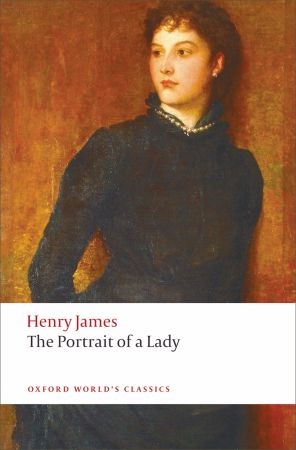
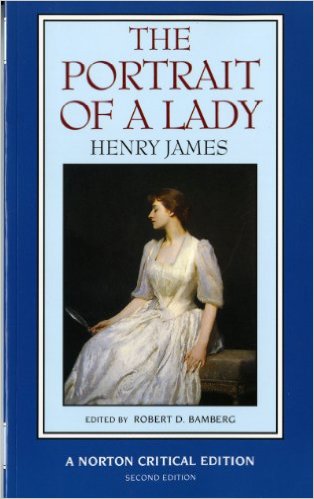
 What renders [James’s method] distinct from, say, Thackeray’s method, with which it has been compared, or from George Eliot’s, is the limitation of the favorite generalizations and analyses. If the reader will attend, he will see that these take place quite exclusively within the boundaries of the story and characters. That is to say, when the people in the book stop acting or speaking, it is to give the novelist an opportunity, not to indulge in general reflections, having applications to all sorts and conditions of men, of whom his dramatis personae are but a part, — he has no desire to share humanity with them, — but to make acute reflections upon these particular people, and to explain more thoroughly than their words and acts can the motives which lie behind. . . .






 I’m always relieved at the end of the term, because the last phase is always quite stressful. But I’m also always aware that it’s really only the end of a term — another one immediately looms, and another, and another! Every limit is, indeed, a beginning as well as an ending, and so this in-between time inevitably prompts reflections. What went well — and what could I do better next time? What fell flat — and what might, nonetheless, be worth trying again? From class policies to book lists, from the layout of the syllabus to the assessment of final exams, teaching is always a work in progress, isn’t it?
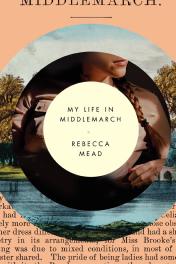 I enjoyed a lot about my graduate seminar on George Eliot, but it was a source of some pedagogical frustration for me. I felt all term that I was talking too much, for instance. But also I felt somewhat confused about the aims of the seminar now that we’ve all openly admitted that
 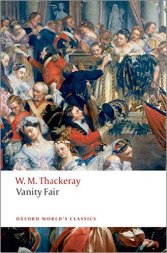 My other course is yet another incarnation of “The 19th-Century Novel from Austen to Dickens,” for which as usual I have mixed up the reading list: instead of Persuasion, I’ve switched in Pride and Prejudice (which I haven’t done in 5 years); instead of Waverley, I’m bringing back
 But it turned out that although I am the only person in my book club who doesn’t own (and love) dogs, most of the others also didn’t like the book much. One was offended by it because she loves dogs and thought the book showed Alexis doesn’t actually like them: his version of them is negatively selective, uncharitable, she proposed. The nobility of the dog who waits years for his owner to come back struck a chord with some of the others (though why this dog, in spite of his grasp of human language and motives, never figures out that she has died did bother us). We all agreed with the one who cried that the last dog’s death was very pathetic — but she recently lost her own dog, so she thought she might have also been emotionally vulnerable. I was the only one who had gotten both distracted and annoyed by the weirdly specific allusions to Victorian novels (if you were going to train your preternaturally talented dog to recite just one 19th-century novel, would you choose Vanity Fair? and what is it exactly that makes Mansfield Park the pooch’s preferred Austen?). In general, the complaint was simply that it wasn’t very engaging, though as is often the case, as we talked we found it getting more interesting, at least theoretically: why does the acquisition of language so immediately cause such a deep rift? what is it about poets that makes them both outcasts and – or so Alexis proposes – the only ones likely to find happiness? We had a little fun going through the poems, too, looking for the hidden dog names that we’d missed the first time.




 Novel Readings