June Reading

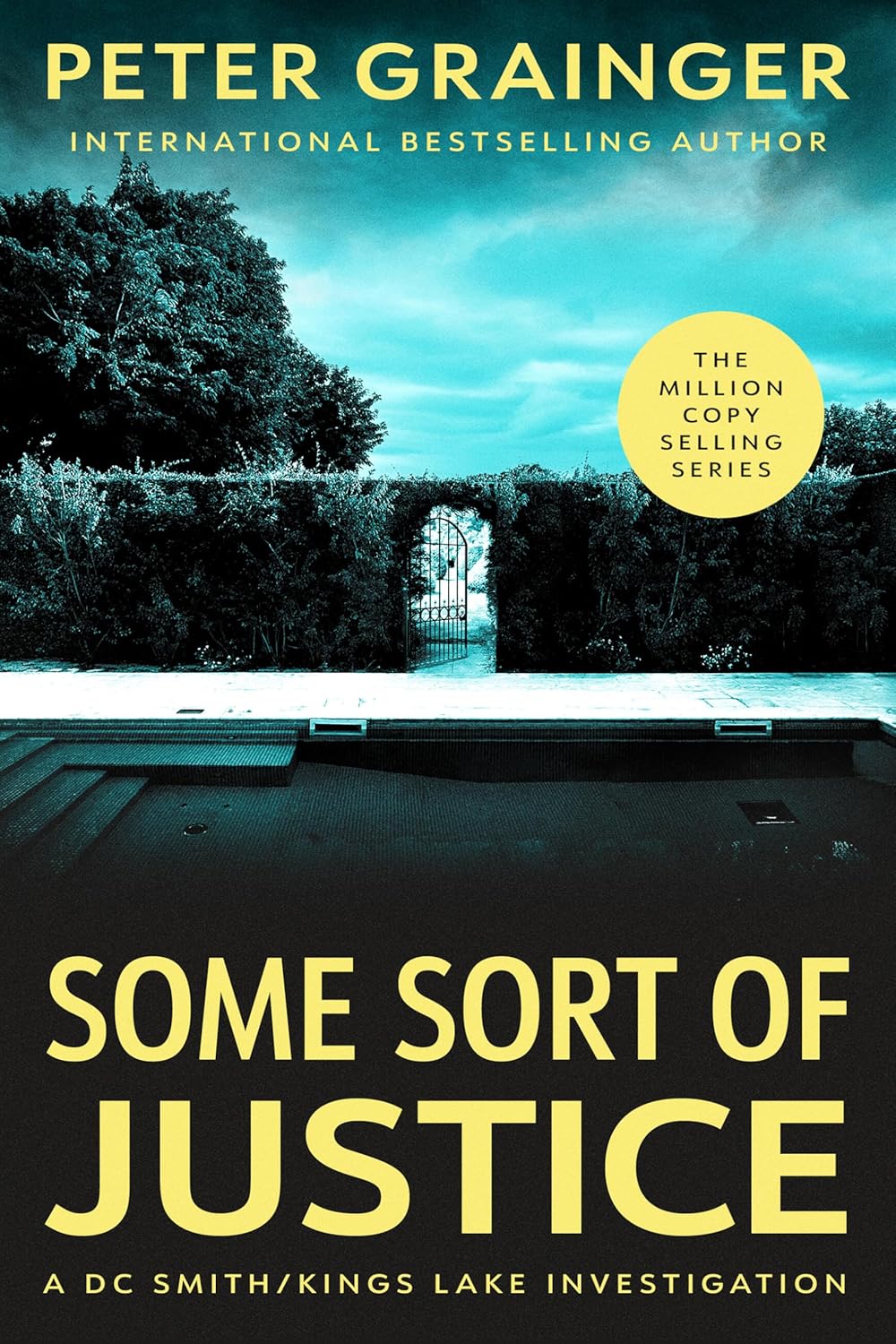
June was an odd reading month for me. I read six books by the same author, Peter Grainger, and two books about another single author, Daphne du Maurier. I didn’t read much else, partly because I went to Vancouver to see my family for a week. Sometimes I get in a good chunk of reading on the flights, but this time there was fairly constant turbulence in both directions, not enough to be truly frightening, but enough to keep this nervous flyer from concentrating. I spent a lot of time just listening to calming music (thanks for your help, Kasey Musgraves and Emmy Lou Harris!) and doing deep breathing exercises. What a miserable experience air travel has become, right? Overcrowding, seats that don’t recline, having to pay for every little thing as if it’s an “extra.”

I have read another two of Peter Grainger’s mysteries since I got back from Vancouver as well: I have now read all of the ones that are easily accessible from either my library or Kobo (for some reason, a whole bunch of them were very cheap at Kobo – the ones I haven’t read yet are the middle ones that remain full price there). I have been trying to put my finger on why they are so enjoyable. They were highly recommended to me by a couple of other readers, but that’s not always a guarantee, especially for mysteries, a genre I have been feeling a bit weary of in recent years. It’s especially notable to me that I started the series via audiobook: usually I find novels too slow on audiobook, compared to how fast I can read them to myself, so I prefer non-fiction, which also (for the books I choose, anyway) tends not to demand quite such minute attention, especially at the sentence level.

My enjoyment of the audiobooks is a clue to the general appeal of this series: Grainger (actually Robert Partridge) is a master of pacing. There are other strengths of the series, from the deft and engaging characterization (especially of DC Smith) and the wonderful evocations of the Norfolk setting to the equally deft way in which the cases often touch on broader social and political issues, without ever feeling gimmicky or heavy handed. But a lot of other mystery authors are good at these things too, including, just for example, Elizabeth George and Tana French. Both of these writers tend towards the prolix, however (IMHO etc.) whereas Grainger just gets on with it: there’s a crime, there’s an investigation, evidence and witnesses are pursued, the case is resolved. Even though the two most recent ones, The Late Lord Thorpe and Some Sort of Justice, are about the same case, they approach it differently enough that I still got none of that sense of bloat that I occasionally get from French and consistently now get from George, whose most recent was a DNF for me.

Bringing up French reminds me of Dorian’s recent post about her latest novel, The Keeper, which I haven’t read yet. I’m not quite as big a fan of French as he is, but I do agree with the widespread view that she is among the very best writers working in crime fiction today. In his post, Dorian says that The Keeper is “a terrific example of how crime fiction can chart its post-copaganda future.” Not least because I have so often taught a survey course on mystery & detective fiction, I have thought a lot about the “copaganda” charge, which is often levelled quite generally against crime fiction, and especially against the subgenre of police procedurals, as if to situate the story in a “cop shop” is enough to warrant the charge. (I am not saying that this is something Dorian does, to be clear, in this post or anywhere!) A more nuanced version would be that even if the novel exposes or critiques problems with the police as an institution or a manifestation of state power, the common trope of the heroic or anti-heroic officer counteracts or undermines that critique.

Both George’s Thomas Lynley and P. D. James’s Adam Dalgliesh are excellent examples of the ‘honourable man in a (sometimes, potentially) dishonourable system’ version of the procedural. Both are fine fictional creations (I am personally very fond of Dalgliesh, and was glad that when he finally fell in love, it was with an English professor!), and their novels often have plenty of moral complexity – but I would say that overall, their series, while not idealizing the police, tend to portray them as mostly serving the public good. (I haven’t reread George’s early books in a while, so I can’t back that up with examples off the top of my head. I wrote about James’s oeuvre here.) Ian Rankin’s Rebus series, I think, looks more skeptically at the police as an institution – and even more so (not unrelatedly) at the army, as is made particularly clear in the one I have frequently assigned, Knots and Crosses. I would actually really like to reread Rankin’s whole series and do a survey piece along the lines of the one I did on James for the TLS: rereading all of the Dalgliesh novels in a row really helped me see what James does and doesn’t do with them, and my sense of Rankin is that he is smarter about his choices in ways that keep his books from having the quality I described as “insular” for hers – or perhaps it is more simply that she is more conservative, politically, than he is, and that this shows up in how they think and write about the police.

Anyway! If I were to fault Grainger’s DC Smith series, it would be on the grounds that his coppers are all pretty much the good guys. The main institutional enemy is incompetence and political timidity. Perhaps there are counter-examples in the handful of titles I haven’t read yet from around the middle of the series, but in the ones I have read, there’s no corruption, no abuse of power, no violation of rights, no skulduggery to “get their man.” Half the time even the criminals aren’t really so bad! The worst we’ve met so far is a kind of Epstein-like figure; even the man who actually kills somebody in that case is a lot more sympathetically portrayed than he is. So maybe there is a bit of “copaganda” going on here: DC Smith is wily and funny and a moral touchstone. It’s true he’s considered difficult to work with by his superior officers and has a tendency to work out his own sense of what is right to do, but (again, in the ones I’ve read) this never veers into vigilantism, and is more about that incompetence and timidity at the top than about Rebus-style willingness to outright skirt the rules or play dirty. This is part of the appeal of the genre, of course: it’s fiction, after all, and I think it’s OK to show us what we think things should be like, not always to hammer away at the way they really are – I say this as, among other things, an unrepentant fan of The West Wing. A citizen’s mental reach must exceed their grasp, or what’s the imagination for, right? We need some sense of the “ought” as well as the “is,” as well as a bit of respite from how awful the is generally is these days. But I do understand why portrayals of the police as benign, or as heroic guardians of justice and protectors of the innocent, are problematic. Dorothy Hughes’s The Expendable Man is just one of many examples of how else to tell the story.

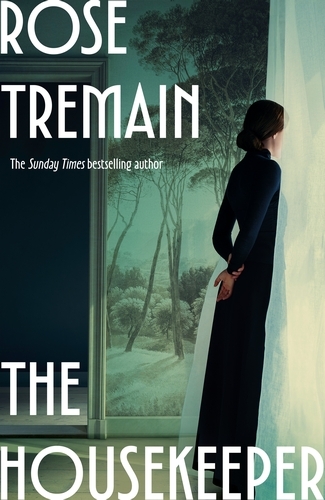
Much more briefly, the other things I read in June. I’m working on a review of Rose Tremain’s The Housekeeper, so I reread Rebecca earlier this summer and have now read Tremain’s novel twice and also read Margaret Forster’s fascinating biography of du Maurier. I’ve flipped back through Restoration and Music and Silence, and poked around in a couple of Tremain’s other novels, including The Colour (about the gold rush in New Zealand). She is a strange writer, I find, one that’s hard to categorize: I had thought of her primarily as a historical novelist because the one I heard most about was Restoration, but she tries a lot of different things. I am not convinced about The Housekeeper – why? You’ll have to wait for my review!

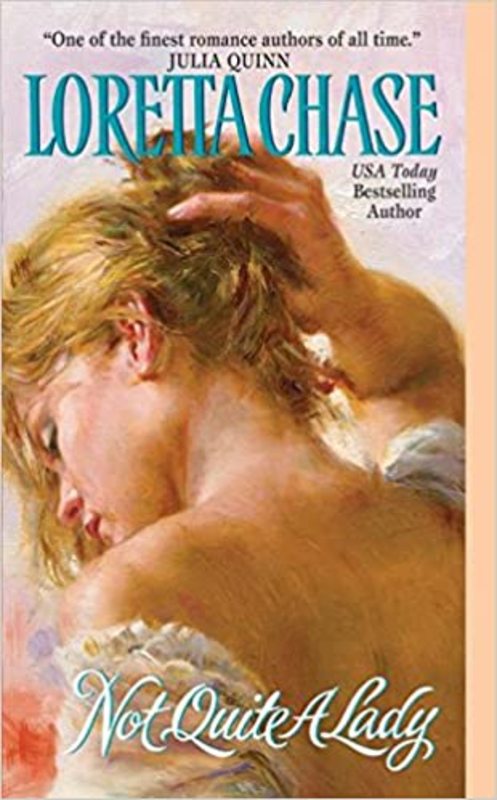
I read one romance novel in June, Loretta Chase’s Not Quite A Lady – this is one of the Carsington series, which also includes Lord Perfect, Miss Wonderful, and my favourite, Mr. Impossible. I think I had read Not Quite A Lady before, but I’m not sure. It is not, I didn’t think, as delightful as the other three I’ve named, but it’s still pretty good.

Finally, I read Darcey Steinke’s Flash Count Diary. It wasn’t really my thing. I am shocked at how quickly specifics about it have already faded from my memory! This is the hazard of posting only monthly, instead of when the books are still fresh in my mind.

Loyalty and Cutting Your Losses

banquetAlex at Thinking in Fragments has an interesting post up about how to decide whether to carry on with a series if you aren’t that impressed with its first installment — and asking for examples of writers whose books got better as they went on. She cites the Peter Wimsey novels, for instance: if Whose Body? had been her first experience with them, she wonders if she would have read any further. (As someone who is not a fan of the early ones in Sayers’ series either, I wonder the same — I first met Wimsey in Strong Poison, fell for Harriet, and read on for her sake as much as his.) She also mentions Ian Rankin: while I like Knots and Crosses quite a bit, I agree that it’s not Rankin’s best.

I’m slow to pick up new series: life is short and books are so, so  many! So I need a strong testimonial to carry one if I’m not immediately convinced it will be worth it. One relatively recent example of a case where I’m glad I persisted would be the Martin Beck books: I didn’t like Roseanna all that much, but I could tell something interesting was going on and Dorian in particular was persuasive about the merits of the series overall. With Tana French’s Dublin Murder Squad series, on the other hand, or the Brother Cadfael mysteries, one book was enough to convince me to read them all — though I’m doling out Brother Cadfael because it’s comforting to know there are more when I need them. My first Commissario Ricciardi mystery has given me yet another series I expect I’ll be faithful to.

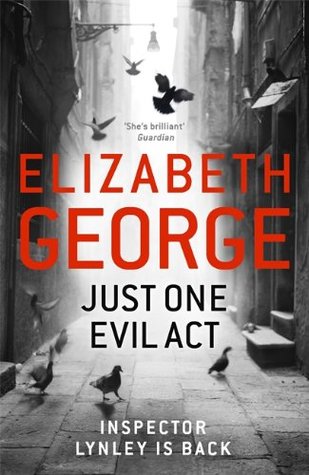
Where I have the most trouble, though, is knowing when to give up on a series that I’ve enjoyed for a long time but that seems to have lost its lustre. I’m instinctively loyal: I like to stick with things I’ve started. This means I do keep picking up Sue Grafton’s novels, for instance, even though I haven’t really enjoyed any of them for a long time. Keeping up with Kinsey is one motive, and now that she’s up to X, my completist instincts might kick in — having come this far, how can I not read all the way to Z? But what about Elizabeth George, whose A Banquet of Consequences I have been slogging through? I am about 3/4 through at this point, and that’s only because I’ve taken to skimming a lot of the details about the case and focusing closely only when Lynley and Havers are actively involved. Her books seem to get longer and longer, and it’s hit or miss whether I’ll be interested enough in them to make it worth while. For me, 600 pages just seems excessive for a mystery novel — or any novel, really — that is all plot and character, with no thematic complexity or depth of insight. I do want to know how things are going for her main characters though, because her early novels were so good at making me care about them. I’ve felt this way about George for some time (2009, 2012) — but then I really liked 2013’s Just One Evil Act, which I suppose makes it reasonable to at least keep trying.

Maybe it’s time I broke up with some of these series. Is loyalty really a virtue for a reader, after all? I have sometimes wondered if the guaranteed sales an author like Grafton or George has now becomes a factor in what strikes me as pretty poor editing of their books; I remember Josephine Tey’s Inspector Grant, too, scoffing at people who buy “the new Lavinia Fitch” or “the new Silas Weekley” exactly as they would “a new hairbrush”: “they never said ‘a new book by’ whoever it might be. Their interest was not in the book but in its newness. They knew quite well what the book would be like.”

Sameness is comfort, of course: we don’t always want to (and never really have to) keep ourselves constantly alert by reading only what is unfamiliar. But, as I said, life is short and there are so many books to read! Are there series you have grown disappointed enough in, or tired enough of, to cut your losses? What keeps you going back to a series even if it doesn’t always live up to its best examples?

Elizabeth George, Just One Evil Act

oneevilactThe last time I wrote about Elizabeth George here, after reading 2008’s Careless in Red, I said that “I turned to these latest instalments [in her series] motivated far less by curiosity about the latest corpse than by the desire to know how things are going” with her main characters: Thomas Lynley, Barbara Havers, Simon and Deborah St. James. I was tiring of the detective plots that ostensibly motivated the novels but that really just provided an excuse and an occasion for personal stories and character development. Then with 2012’s Believing the Lie I admitted that these private lives were also becoming a bit stuck for me: so much angst, and so many words (I have thought for a while that George’s books aren’t getting edited as stringently as I’d like). Still, she’s a writer I trust enough to keep trying — as I kept on going even after the disaster that was 2006’s What Came Before He Shot Her (a good enough idea, but, in my opinion, really unsuccessful in the execution). We’ve been in a reading relationship since 1988, after all: that’s a lot longer than I’ve known most of my actual friends, or my husband, for that matter.

This weekend I caught up on her latest, Just One Evil Act, and it made me glad I’ve stuck with her and this series, because I really enjoyed it. I think one reason it worked so well for me is that it combines case and characters: the crime story is a big tangled mess involving Barbara Havers’ friends and neighbors Taymullah Azhar and his (maybe a little too sweet?) daughter Haddiyah. The more Barbara in the case the better, usually (Deception on His Mind, in which Barbara operates solo, is one of the most interesting books in the series), and in this case her annoyingly endearing bulldog tendencies have a certain poignancy because she really has no other friends, so her attempt to find out what has really happened has an urgency that transcends professionalism. Not that Barbara usually toes the professional line, of course, but sometimes she just seems defensive and stubborn, whereas here she is defensive and stubborn and really vulnerable. An ongoing theme of the series is loyalty, too, and here it’s not just her devotion to her friends that drives the plot but Lynley’s to her that is tested (again) to the limit.

I also enjoyed following the action to Italy: much of it takes place in Lucca, which looks as lovely as George makes it sound. It was kind of a two-for-one deal, a Lynley novel plus a Donna Leon mystery, all in one! Lucca

I wonder if one reason I’m slow to pick up new mystery series these days is that I have been reading the same ones for so long — between Rebus and Kinsey and V.I. and Lynley and Dalgliesh (and, less faithfully, Banks, and Kincaid / James) I just don’t have room in my heart for many more! That’s not to say I haven’t read mysteries I’ve liked recently (I have Dorian and others to thank for putting me on to Tana French, and I’ll probably keep up with any new ones in Kate Atkinson’s Jackson Brodie series, for instance), but I have sampled a lot of others and just not felt inspired to go steady with them, even if they struck me as pretty good. It’s not altogether bad to know they are in reserve! I can have a big Maisie Dobbs phase later on, when some of my old standbys have retired.

From the Archives: Who Cares Who Killed … Whoever It Was?

I’m reading Elizabeth George’s Believing the Lie, and I find I still feel pretty much as I did when I wrote this post in 2009: I’m more interested in the continuing characters than in the mystery plot they’re caught up in. Given the particular characters, I suppose it’s inevitable that a novel about them would involve some kind of crime story, and I appreciate what George is able to do with character development while still working in the procedural form. But I’m tempted to skim everything that’s not directly about Lynley and his immediate circle…


(Originally posted May 1, 2009)

I’ve just finished reading the latest releases by two of my favourite mystery novelists, P. D. James‘s The Private Patient and Elizabeth George‘s Careless in Red. (I know they’ve been out for a while; I was waiting for the paperback editions.) Both books are better than fine as examples of their type–though George is in fact American, both authors write what we could call highbrow British police procedurals, leisurely in pace, attentive to setting, driven by character more than plot. Both write well; James’s prose is more economical, while George’s would (IMHO) benefit from more stringent editing, but both offer their readers intelligent complexity of language and thought. The depth of character and theme both achieve justifies James’s repeated assertion that crime fiction provides a useful structure for the novelist without necessarily limiting the literary potential of her work.

Yet for all their virtues, I found myself unexpectedly dissatisfied with both of these novels, for reasons that are based in their form. Often in my course on mystery and detective fiction we talk about the limits working in this genre sets on certain literary elements, chief among them characterization. A mystery novelist can not afford to mine the depths of her characters as long as they are suspects in the case. This technical limitation is most apparent in writers of ‘puzzle mysteries,’ such as Agatha Christie, but even with writers who develop their people quite fully, as James and George do, an element of opacity is required, not just about their actions, but about their feelings and values, else we will know too quickly “whodunnit.” (There are exceptions, of course, as when some of the novel is openly from the point of view of the criminal, though often then we have inside knowledge without knowing the character’s outward identity.) The same limits do not, however, apply to the detectives–which is one reason, as historians and critics of the genre have pointed out, for the appeal of the mystery series. Across a series of novels, we can come to know the detectives very well, and a developmental arc much longer than that of any single case emerges. Though the case provides the occasion, after a while the real interest lies with the detective.

That, I think, is very much what has happened with both James’s Adam Dalgliesh and George’s Thomas Lynley. Every one of their books is populated by a new array of people, but they are the ones with whom we have longstanding relationships–remarkably longstanding, indeed, as James has been publishing Dalgliesh mysteries since Cover Her Face in 1962, and the first Lynley novel, A Great Deliverance, was published in 1988. And though Dalgliesh and Lynley have always been complex and interesting protagonists, in recent books so much of significance has happened in their lives that I turned to these latest instalments motivated far less by curiosity about the latest corpse than by the desire to know how things are going with them. While actually reading the books, I took a fairly perfunctory interest in the investigations but I was keenly interested in what came to seem the regrettably few sections focusing on, for instance, Dalgliesh’s relationship with Emma Lavenham (and not just because it’s a little victory for English professors everywhere). The real novelistic potential of The Private Patient emerges, I think, in the scene in which Emma confronts Dalgliesh in his professional capacity and we see, fleetingly, the difficulty that even these two extremely intelligent and independent people might have reconciling law and love, justice and humanity. But this material is not developed, and in fact the novel in which it does become the focus would have to leave the genre of detection quite far behind. (Gaudy Night is a rare example of a novel that I believe successfully balances human and literary interests with mystery elements, partly by integrating the case so thoroughly with the personal aspects of the story and making both the detection and the romance converge on the same themes.) Careless in Red spends more time on Lynley’s personal situation, but again his struggle to move forward after the tragedy of two novels ago (see how I’m avoiding spoilers, in case anyone hasn’t already read this excellent series?) is subordinated to the case at hand–though George does set the case up with thematic echoes of his tragedy.

I can hardly fault either author for the relative weight they give to the professional, rather than personal, business of their characters. That’s the kind of book they have undertaken to write. Also, as their protagonists are professional detectives, policing is integral not just to their work, but to their identities. But I do wonder if even James, the acknowledged Grande Dame of the genre, hasn’t finally shown us the end point (dare I say the dead end?) of a commitment to this genre. Just introducing the kind of story arcs they have given their protagonists recently suggests that James and George might be chafing at the constraints of detective fiction, wanting to write a straight novel of psychological and moral development, a novel in which incident is second to character, a novel squarely in the tradition James has always claimed as hers–that of Austen and George Eliot and Trollope. At any rate, that’s the kind of novel I find I wish they would write. Over the years they have succeeded in getting me quite emotionally involved in the lives of their main characters (and not just Dalgliesh and Lynley, either, but Kate Miskin, Barbara Havers, Simon and Deborah St. James…). The corpse and suspects, however, are never more than passing acquaintances.

On a somewhat tangential note, I was struck reading The Private Patient by the elegaic note on which it ends, in a passage which also echoes the wonderful ‘squirrel’s heartbeat’ passage from Chapter XX of Middlemarch:

She thought, The world is a beautiful and terrible place. Deeds of horror are committed every minute and in the end those we love die. If the screams of all the earth’s living creatures were one scream of pain, surely it would shake the stars. But we have love. It may seem a frail defense against the horrors of the world but we must hold fast and believe in it, for it is all we have.

Though of course I would not rush to assume that a character’s views are those of the author, it is hard not to read this final paragraph from a novelist who has spent nearly five decades telling us about “deeds of horror” as a reminder, even a consolation, that even in a murder mystery, death need not define life.

Who Cares Who Killed … Whoever It Was?

I’ve just finished reading the latest releases by two of my favourite mystery novelists, P. D. James‘s The Private Patient and Elizabeth George‘s Careless in Red. (I know they’ve been out for a while; I was waiting for the paperback editions.) Both books are better than fine as examples of their type–though George is in fact American, both authors write what we could call highbrow British police procedurals, leisurely in pace, attentive to setting, driven by character more than plot. Both write well; James’s prose is more economical, while George’s would (IMHO) benefit from more stringent editing, but both offer their readers intelligent complexity of language and thought. The depth of character and theme both achieve justifies James’s repeated assertion that crime fiction provides a useful structure for the novelist without necessarily limiting the literary potential of her work.

Yet for all their virtues, I found myself unexpectedly dissatisfied with both of these novels, for reasons that are based in their form. Often in my course on mystery and detective fiction we talk about the limits working in this genre sets on certain literary elements, chief among them characterization. A mystery novelist can not afford to mine the depths of her characters as long as they are suspects in the case. This technical limitation is most apparent in writers of ‘puzzle mysteries,’ such as Agatha Christie, but even with writers who develop their people quite fully, as James and George do, an element of opacity is required, not just about their actions, but about their feelings and values, else we will know too quickly “whodunnit.” (There are exceptions, of course, as when some of the novel is openly from the point of view of the criminal, though often then we have inside knowledge without knowing the character’s outward identity.) The same limits do not, however, apply to the detectives–which is one reason, as historians and critics of the genre have pointed out, for the appeal of the mystery series. Across a series of novels, we can come to know the detectives very well, and a developmental arc much longer than that of any single case emerges. Though the case provides the occasion, after a while the real interest lies with the detective.

That, I think, is very much what has happened with both James’s Adam Dalgliesh and George’s Thomas Lynley. Every one of their books is populated by a new array of people, but they are the ones with whom we have longstanding relationships–remarkably longstanding, indeed, as James has been publishing Dalgliesh mysteries since Cover Her Face in 1962, and the first Lynley novel, A Great Deliverance, was published in 1988. And though Dalgliesh and Lynley have always been complex and interesting protagonists, in recent books so much of significance has happened in their lives that I turned to these latest instalments motivated far less by curiosity about the latest corpse than by the desire to know how things are going with them. While actually reading the books, I took a fairly perfunctory interest in the investigations but I was keenly interested in what came to seem the regrettably few sections focusing on, for instance, Dalgliesh’s relationship with Emma Lavenham (and not just because it’s a little victory for English professors everywhere). The real novelistic potential of The Private Patient emerges, I think, in the scene in which Emma confronts Dalgliesh in his professional capacity and we see, fleetingly, the difficulty that even these two extremely intelligent and independent people might have reconciling law and love, justice and humanity. But this material is not developed, and in fact the novel in which it does become the focus would have to leave the genre of detection quite far behind. (Gaudy Night is a rare example of a novel that I believe successfully balances human and literary interests with mystery elements, partly by integrating the case so thoroughly with the personal aspects of the story and making both the detection and the romance converge on the same themes.) Careless in Red spends more time on Lynley’s personal situation, but again his struggle to move forward after the tragedy of two novels ago (see how I’m avoiding spoilers, in case anyone hasn’t already read this excellent series?) is subordinated to the case at hand–though George does set the case up with thematic echoes of his tragedy.

I can hardly fault either author for the relative weight they give to the professional, rather than personal, business of their characters. That’s the kind of book they have undertaken to write. Also, as their protagonists are professional detectives, policing is integral not just to their work, but to their identities. But I do wonder if even James, the acknowledged Grande Dame of the genre, hasn’t finally shown us the end point (dare I say the dead end?) of a commitment to this genre. Just introducing the kind of story arcs they have given their protagonists recently suggests that James and George might be chafing at the constraints of detective fiction, wanting to write a straight novel of psychological and moral development, a novel in which incident is second to character, a novel squarely in the tradition James has always claimed as hers–that of Austen and George Eliot and Trollope. At any rate, that’s the kind of novel I find I wish they would write. Over the years they have succeeded in getting me quite emotionally involved in the lives of their main characters (and not just Dalgliesh and Lynley, either, but Kate Miskin, Barbara Havers, Simon and Deborah St. James…). The corpse and suspects, however, are never more than passing acquaintances.

On a somewhat tangential note, I was struck reading The Private Patient by the elegaic note on which it ends, in a passage which also echoes the wonderful ‘squirrel’s heartbeat’ passage from Chapter XX of Middlemarch:

She thought, The world is a beautiful and terrible place. Deeds of horror are committed every minute and in the end those we love die. If the screams of all the earth’s living creatures were one scream of pain, surely it would shake the stars. But we have love. It may seem a frail defense against the horrors of the world but we must hold fast and believe in it, for it is all we have.

Though of course I would not rush to assume that a character’s views are those of the author, it is hard not to read this final paragraph from a novelist who has spent nearly five decades telling us about “deeds of horror” as a reminder, even a consolation, that even in a murder mystery, death need not define life.

Elizabeth George, What Came Before He Shot Her

What Came Before He Shot Her is a good idea: a “whydunnit,” as one of the reviewers’ blurbs calls it, the backstory of the 12-year-old boy arrested near the end of With No One as Witness for the shooting of Inspector Lynley’s pregnant wife Helen. However, it is not, in the end, a very good novel. Its story is moderately compelling: knowing, as we do, more or less how it ends (or thinking we do–note the tell-tale “apparently” on the back cover), there’s still some interest in seeing how we get there, George’s characters are varied and carefully individualized, and many of the situations she imagines for them are full of pathos. But the book is primarily a treatise in criminology or sociology–a dramatization of George’s understanding of what forces would compel a young kid to commit a horrible, and horribly random, murder. In her concern to cover the many failings in “the system,” she seems to have let her literary sensibilities lapse almost completely. Particularly jarring to me was the dissociation between the narrating voice and the characters’ perspectives. Of course, it is legitimate to incorporate commentary that comes from outside “story space” and offers insights not available to those acting out the drama. But too often here the comments have no bearing on the unfolding catastrophe, belonging to nobody in particular, as when one character gets a cell-phone, described intrusively as “the late-twentieth-century’s most irritating electronic device” (183). Too often, as well, the narration sounds like it is excerpted from a textbook: Ness has “fallen through the cracks” at her school, for instance (62), or a counsellor does not realize that to her clients, she appears as “an adversary incapable of relating to a single element of their lives” (604). To Ness, the overheard sounds of her aunt having sex “comprised auditory torture, a blatant statement about love, desire, and acceptance, a form of imprimatur upon her aunt’s desirability and worthiness” (330); later Kendra’s emotional turmoil is summed up as “an amalgamation of the physical and emotional in a pitched battle with the psychological” (349). “In a society in which handguns had once been virtually nonexistent among the thieving and murdering clsses, they were now becoming disturbingly prevalent. That this was a direct result of the easing of borders that came along with European unification–which was, to some, just another term for opening one’s arms to smuggling into the country everything from cigarettes to explosives–could have been mooted forever, and Sergeant Starr had not time for such mooting” (367)–we get it, here and everywhere–the author has been doing homework. But for me, at least, there’s too much evidence of it here, too much the tone and attitude of a case study. The story of Joel’s descent into crime is superficially plausible, but evaluating it requires someone with social science, not literary training. And don’t even get me started on the fact that really, we are given 707 pages of “whydunnit” for the wrong “whodunnit” anyway…