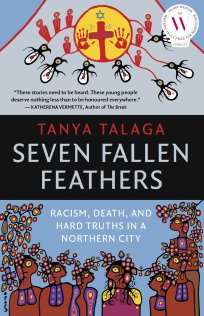
 “To understand the stories of the seven lost students who are the subjects of this book,” Tanya Talaga begins her devastating, angry, and thought-provoking book Seven Fallen Feathers: Racism, Death, and Hard Truths in a Northern City,
you must understand Thunder Bay’s past, how the seeds of division, of acrimony and distaste, of a lack of cultural awareness and understanding were planted in those early days, and how they were watered and nourished with misunderstanding and ambivalence. And you must understand how the government of Canada has historically underfunded education and health services for Indigenous children, providing consistently lower levels of support than for non-Indigenous kids, and how it continues to do so to this day.
Seven Fallen Feathers provides a lot of that necessary context, beginning with a summary of the history of the area on the norther shores of Lake Superior that was once a meeting place for the Indigenous people of the area, then became “the hub of the fur trade,” and then saw the development of the modern city with its “two faces”: “the Port Arthur side is the white face and the Fort William side is the red face.”
Throughout the book, more general historical background is interwoven with the stories of the seven students. Their deaths eventually prompted an inquest intended both to probe what happened and to issue recommendations to improve conditions for and better protect other students who, like them, traveled to Thunder Bay to attend high school. By addressing each student’s case separately, Talaga is able to emphasize their individuality: their personalities, their family situations, the specific conditions of their lives, hopes, struggles, and premature deaths. By presenting them collectively, as the inquest also finally did, she is also able to highlight the common systemic factors that contributed to their deaths: the devastation wrought on their families and communities by the residential school system; the restricted opportunities that forced them to travel far from home to a hostile city to continue their educations; the abuse and racism they faced in Thunder Bay both from residents and from the police, who were slow to investigate when they disappeared and then quick to blame the victims.
Talaga is a good storyteller; her anger and grief are often obvious, but the emotional undercurrents reinforce the book’s purpose, which is not just to inform but to motivate. “Can the settlers and the Indigenous people come together as one and move forward in harmony?” she asks in the Epilogue. This is clearly one of the most important questions currently being raised in “the country that we call Canada”; her book offers, as the subtitle says, “hard truths,” ones that are necessary to face before the next stage, reconciliation, can really be contemplated.
 Seven Fallen Feathers left me with a lot to think about. Some of my lingering questions are historical or sociological; more reading, presumably, is the next step there. On a more personal level, the book prompted me to reflect uncomfortably on my own education in the B.C. public schools in the 1970s and early 1980s. If you’d asked me then, I would probably have said that we did pay attention to Indigenous history. Mostly, as far as I recall, this took the form of visiting museums with exhibits that included First Nations art, clothing, and tools — the kind of things always on display at the Museum of Vancouver, for example. We made regular trips to the Museum of Anthropology, too, where we saw the art and artifacts, looked with awe at the vast carvings in the great hall, and wandered through the Haida houses on the grounds. I was used to seeing totem poles on display, in parks as well as in museums, and I always found them impressive but didn’t really inquire into their meaning or how they were being used.
Back then, I would probably have explained all of this as a benign part of Canada’s larger commitment to multiculturalism: to me it was positive and interesting, but also remote from my own life in present-day Canada. I don’t recall ever hearing the terms “residential school” or “sixties scoop,” or learning anything specific about treaties, land claims, or anything else related to the current political or social situation of Canada’s Indigenous population. We took trips to Fort Langley and took away square nails as souvenirs — but the idea that we are still in some sense settlers, that colonialism is an ongoing process, not just something to be reenacted by guides in “period” costumes, would have been wholly unfamiliar to me.
 In retrospect, I still think some of this early experience was benign: it’s good that I took for granted the interest and value of Indigenous art and culture, for instance, seeing them as as part of my own national habitus. It’s thought-provoking, however, to consider how the whole idea of multiculturalism, with its celebratory overtones, might have contributed to a certain kind of complacency: for me, as far as I even thought about it self-consciously, looking at Haida carvings and going to Greek Day were about on a par as ways of appreciating “other” cultures.
Though to some extent I do blame public schools that surely should have made the history and politics of my own country seem more urgent to me, my comfortable oblivion to grimmer contexts was certainly, as I got older, partly my own fault. I was never particularly interested in politics, or in Canadian history, so when I got old enough to look outside the school curriculum, I was going in different directions. I almost never read the newspaper as a teenager–though if I had, I wonder if I would have seen anything, in those years, that would have shown me the part of Canada’s history that Talaga’s book addresses, or shown it in the light she does. That I am learning more about it only so belatedly is itself a symptom of educational failures, some of them my own but some of them also systemic, part of the same large and uneven patterns of race and privilege, knowledge and power, that Talaga’s book indicts. Now at least I can see something my childhood self couldn’t: that my ignorance was a luxury her seven subjects never had.
 The 2016 U. S. election has given some books I regularly teach new resonance–and not in a good way. In March 2016,
  I’ve been thinking that another novel for our times is


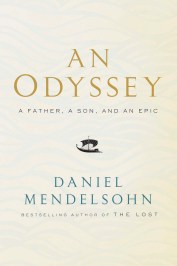
 Theirs is not an easy relationship, and the more I learned about it the more the idea of bringing it into the classroom struck me as brave, on both sides but especially–perhaps because I too am a teacher–on Mendelsohn’s. He tells the students in advance that his father will be sitting in, “so his presence on the first day of class wouldn’t be a distraction.” Jay has promised, however, that he’s just going to observe, not participate: “I’m just gonna sit there and listen.” Mendelsohn never explicitly says as much, but it’s easy to imagine that, to him, this seemed a bit like payback: this would be his class, his room, his rules, his authority. On the very first day, however, his father puts his hand up and makes both his presence and his rather contrarian opinions felt: “‘Hero’? I don’t think he’s a hero at all,” he says about Odysseus, and from then on he is a regular contributor who not only engages vigorously with the Odyssey but changes the whole classroom dynamic, because Jay’s parental claims can sideline Mendelsohn’s professional role.
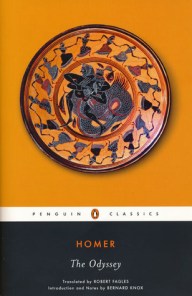 I wondered as I read if I enjoyed An Odyssey partly because I have never read the Odyssey, so in contrast to my reading of My Life in Middlemarch, in my reading of Mendelsohn’s book I was in a student-like position myself.* I have always enjoyed hearing passionate experts, and Mendelsohn’s love for his subject makes the discussions of the Odyssey positively hum with energy. I worried that my own ignorance would be an impediment to my pleasure, but while I might have enjoyed the book even more if I had read Homer, it’s possible that the opposite is true: the book is clearly written with people like me in mind, and I don’t know if someone familiar with the Odyssey would find much of interest in the analysis, or perhaps would take issue with some of the interpretations. I thought at first the book might inspire me to read Homer for myself at long last–but in the end both the quotations and Mendelsohn’s commentary made me think I might not like it very much, or be very good at it. The idea of its “ring composition,” for instance, is compelling in theory, but must be quite baffling, even frustrating, in practice, at first. (The irony is not lost on me that I am saying this and yet in just a couple of weeks I will be waxing eloquent to my own students about the web-like narrative structure of Middlemarch!) Perhaps, like Jay, I need to sit in on a seminar, both for motivation and for elucidation.
 The first couple of weeks of the new term are always deceptive: you anticipate them with so much anxiety after the slower pace of summer work, but then for a while, though the logistics are a bit hectic and there are more day-to-day deadlines, it doesn’t seem that bad. But then the first significant assignments come in, and you have to keep up the day-to-day stuff on top of marking them, and there are more meetings, and they both take time and generate things to do, and the next thing you know you are barely keeping track of it all. And that’s about where I am now!
 Still, I always like the energy both demanded and generated by the actual classroom time; regular readers will know how often I complain about summer doldrums, too, brought on by too vacant a schedule and too few opportunities for interaction and engagement with other people. As more and more of my colleagues head into retirement, I do sometimes fantasize about what that phase will be like for me, and how soon I might be able to enter into it. (Not that soon, since I’ve just turned 50!) I think when the time does come I will have to be careful that it isn’t like an endless summer, without any structure. For now what I have to do is make sure I can maintain my energy and enthusiasm — by, for instance, trying to bring less work home with me than I once had to, and making time as best I can for the reading and writing that I want to do.
 This is not to say that I’ve tired of enthusing over Donne’s “Death, be not proud,” even in the context of trying to teach scansion, and I am absolutely looking forward to teaching both Middlemarch and The Remains of the Day again. As the great Samuel Johnson said, “When a woman is tired of Middlemarch, she is tired of life!” OK,
  We’re one week into the fall term and I’m starting to feel that I’ve got my sea legs back. Every new term seems a bit herky-jerky at first, but before long it smooths out, or at least becomes routine again.
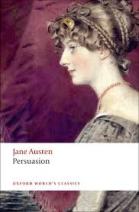 In 19th-Century Fiction, we’re reading Persuasion. For a long time I have identified Persuasion as my favorite Austen novel, but this time through, my allegiance is wavering: more than usual when reading it I am frustrated by Anne Elliot’s not speaking, when all it would take to bring about the consummation so devoutly to be wished is a few clear words at the right moment. I know, I know: her reticence and self-control are admirable, and just going for what you want makes you Louisa Musgrove, a literally fallen woman who clearly signals the dangers of undisciplined desire. When Anne finally does say something (“she speaks!” say my marginal notes at one point) it is also always significant: a breakthrough of feeling, an assertion of principle, a lesson in values. Still, one key to the novel’s happy ending is that she finds her voice, or figures out how to use it to win for herself the kind of happiness someone of her high character can accept: not simple pleasure or self-gratification, but a marriage of true minds.
 On the very first page of Celeste Ng’s
  Or maybe not. I hope not. I don’t mean that my students in the classes that started up today made a bad impression on me–far from it, in fact, as they seemed pretty attentive and ready to go, which is impressive considering the circumstances of my first class meeting this morning, at least. But their first impressions of me probably could have been better, and given the research that shows students make up their minds about professors pretty quickly (for better and for worse), it’s a bit discouraging to start the term off this way.
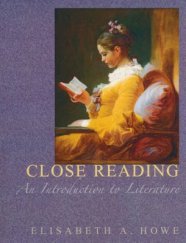 My morning class was Close Reading. I don’t think it was a disaster–I did more or less get through my introductory lecture, in which I lay out the underlying concepts of the course as I’ve developed it–but it did not go well. One problem both was and wasn’t my fault. It was my idea to find us a new room when I saw that we’d been assigned to one of the dreary (and very dusty) rooms in our
  Well, I’m sure they’ve seen worse–right? I did at least cover what I’d meant to, and I think I made helpful noises when students asked questions, and now we are working on relocating the class again so none of us have to endure quite that level of discomfort again. Ironically, the only room that is currently available is the same one in Life Sciences that I worked so hard to get out of. If it’s big enough and not too hot, I guess I can put up with having a chalk board instead of a white board and needing to sign out cables any time I need to hook up my iPad for slides. (I won’t be using my laptop again, that’s for sure: I don’t need that extra layer of worry!)
 There was an undeniable nip in the air when I went on my run this morning–the overnight forecast even included the ominous words “risk of frost.” Though we are sure to have some more warm weather as September unfolds, it will be nice fall weather: the season is definitely changing. The other sure sign of that, of course, is that classes start this week. I’ll have more to say about that soon as I begin the 11th season of posts about ‘This Week In My Classes.’ Before summer has completely receded, though, I thought I’d take a look back at its reading highlights.
 Katherena Vermette’s
  It’s a bit misleading to call Rhoda Broughton’s
  Last but not least, I read Sylvia Townsend Warner’s grimly charming
  Of the books I read for reviews, the one I enjoyed the most was Gillian Best’s The Last Wave; my write-up will be in the next issue of Canadian Notes and Queries. Adam Sternbergh’s
  Novel Readings