“Ah, those days”: J. L. Carr, A Month in the Country

CarrAh, those days . . . for many years afterwards their happiness haunted me. Sometimes, listening to music, I drift back and nothing has changed. The long end of summer. Day after day of warm weather, voices calling as night came on and lighted windows pricked the darkness and, at day-break, the murmur of corn and the warm smell of hayfields ripe for harvest. And being young.
If I’d stayed there, would I always have been happy? No, I suppose not. People move away, grow older, die, and the bright belief that there will be another marvelous thing around each corner fades. It is now or never; we must snatch at happiness as it flies.

I had heard A Month in the Country referred to so often, with such admiration, that I avoided it, rather cynically, for years, doubting it could live up to the hype. Now I wish I hadn’t: it is perfectly lovely—although if you haven’t read it, please don’t interpret that as meaning it is lightweight “feel good” fiction. It isn’t even bucolic, despite the title, and despite Carr’s wonderful evocations of the country landscape that envelops Tom Birkin when he goes to the village of Oxgodby to restore the obscured medieval mural in its otherwise unremarkable church:

The rain and ceased and dew glittered on the graveyard grass, gossamer drifted down air-currents, a pair of blackbirds picked around after insects, a thrush was singing where I could see him in one of the ash trees. And beyond lay the pasture I had crossed on my way from the station . . . then more fields rising towards a dark rim of hills.

It’s a tiny novel, a novella really, and one thing that makes it so remarkable is how much is in it even as so much is deftly left out. It is, as Tom says of the view from his window, “immensely satisfying.” We get just enough detail, about, for instance, the horrors Tom experienced during the war, or his grief about his broken marriage, to feel how deeply wounded he is, and yet we know this only from glancing references or occasional confidences, never from extended exposition. Tom doesn’t want to dwell on these painful things, but we understand that they are always with him, no matter how little he says about them, and because what he does say is so devastating. Carr also doesn’t offer us, or Tom, a month in the country as the simple cure for what ails him. This is no Eat, Pray, Love: in this book, trauma is trauma and stays that way, even as its sufferers discover that, though unrecovered, they still have the capacity for love and joy.

Carr2Throughout the novel there is a neat but never pat association between the restoration of the mural and Tom’s reconnection with a world full of life and colour—and along the way we get to follow Tom’s growing excitement about the painting itself, which he comes to believe is a true masterpiece:

It was breathtaking. (Anyway, it took my breath.) A tremendous waterfall of colour, the blues of the apex falling, then seething into a turbulence of red, like all truly great works of art, hammering you with its whole before beguiling you with its parts.

You can tell, although the point is never forced on us, that the restoration process is at once literal—described with rich technical detail, inviting us to marvel at the human capacity for creation and the way art touches and enlivens us across time and difference—and metaphorical, with the painter’s dedication to his task, in the full expectation that it will not last, that it will be lost to obscurity, standing in for our own commitment to our lives, which also will not last, which will also be obscured by the relentless passage of time. Faced with that prospect, we can either throw ourselves into it, as the artist does, giving it the very best we have, or retreat, succumb, despair. But spelling it out like this spoils it a bit, just as Tom knows that if he tries too hard to perfect the details of the uncovered painting he risks ruining it.

Tom is tempted to idealize his time in the country, but he recognizes and resists the lure of nostalgia, even for lost love, and this is the smartest thing about the novel: it at once celebrates and refuses the dream of what might have been. The promise of that idyllic interlude could never be sustained, or regained:

We can ask and ask but we can’t have again what once seemed ours for ever—the way things looked, that church alone in the fields, a bed on a belfry floor, a remembered voice, the touch of a hand, a loved face. They’ve gone and you can only wait for the pain to pass.

“All this happened so long ago,” Tom says at the end of the novel, “and I neve returned.” There is deep sadness at the irrevocability of his loss, but in leaving he also preserved the memory (“it stays as I left it”), which will never lose the beauty of its unfulfilled promise.


June Reading Wrap-Up

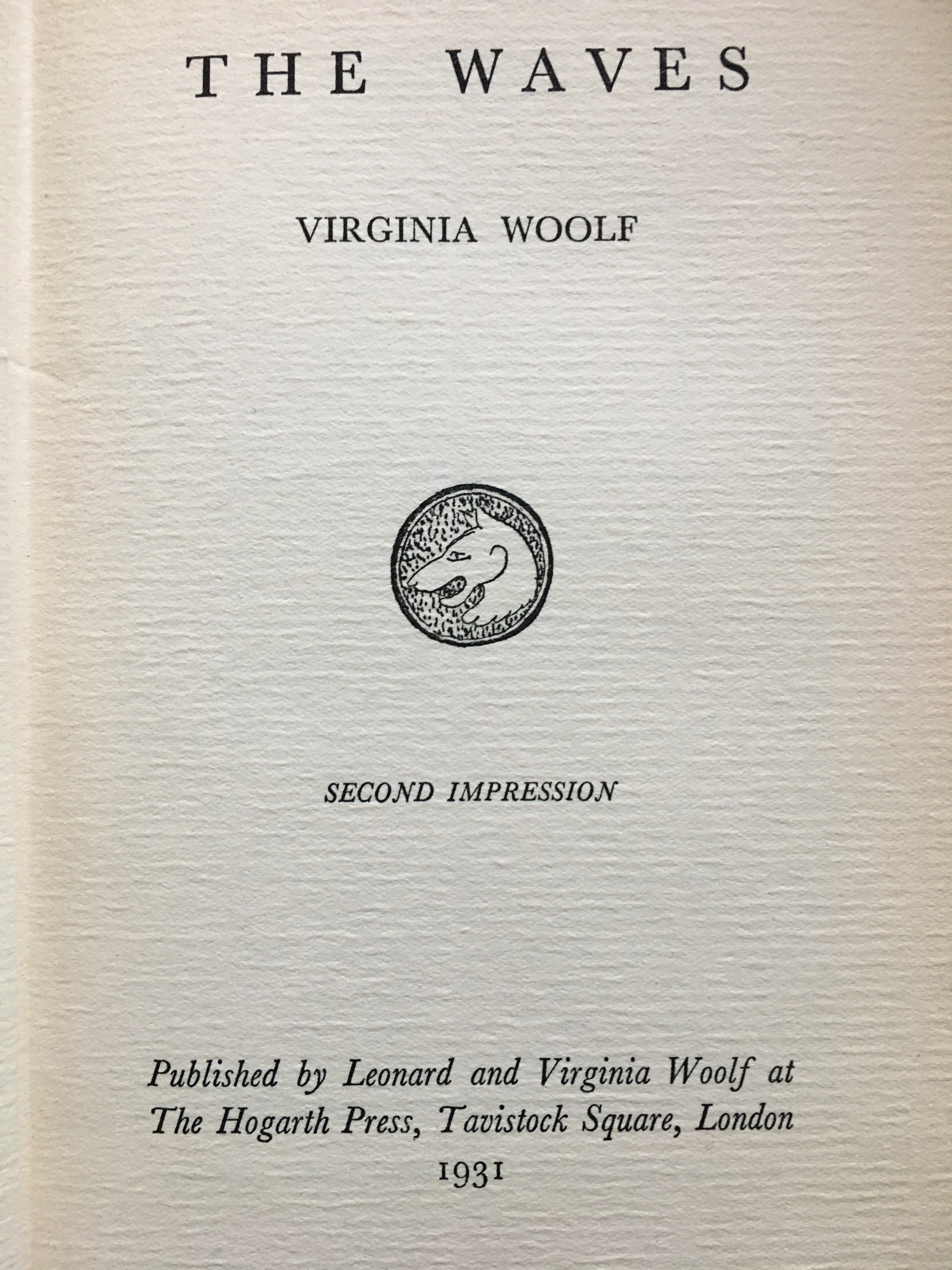
QEPJune began slowly, as a reading month anyway, as I was in Vancouver for the first 10 days of it and, as is pretty typical on these trips, I was too busy to settle down with a book. I did read about half of John Vaillant’s The Golden Spruce on the plane, and most of Donna Leon’s Drawing Conclusions while I was there (I borrowed it from my parents’ well-stocked mystery shelves but did not manage to finish it before I left). I’m definitely not complaining! It was a cheerful visit, made more so because Maddie was with me and I loved sharing my favorite people and places with her. Because we were also sharing a suitcase, I was also very restrained and did not buy any books while I was there. The only one I acquired was a very cool gift from my mother: a second impression of the first edition of The WavesWaves, from the Hogarth Press. 
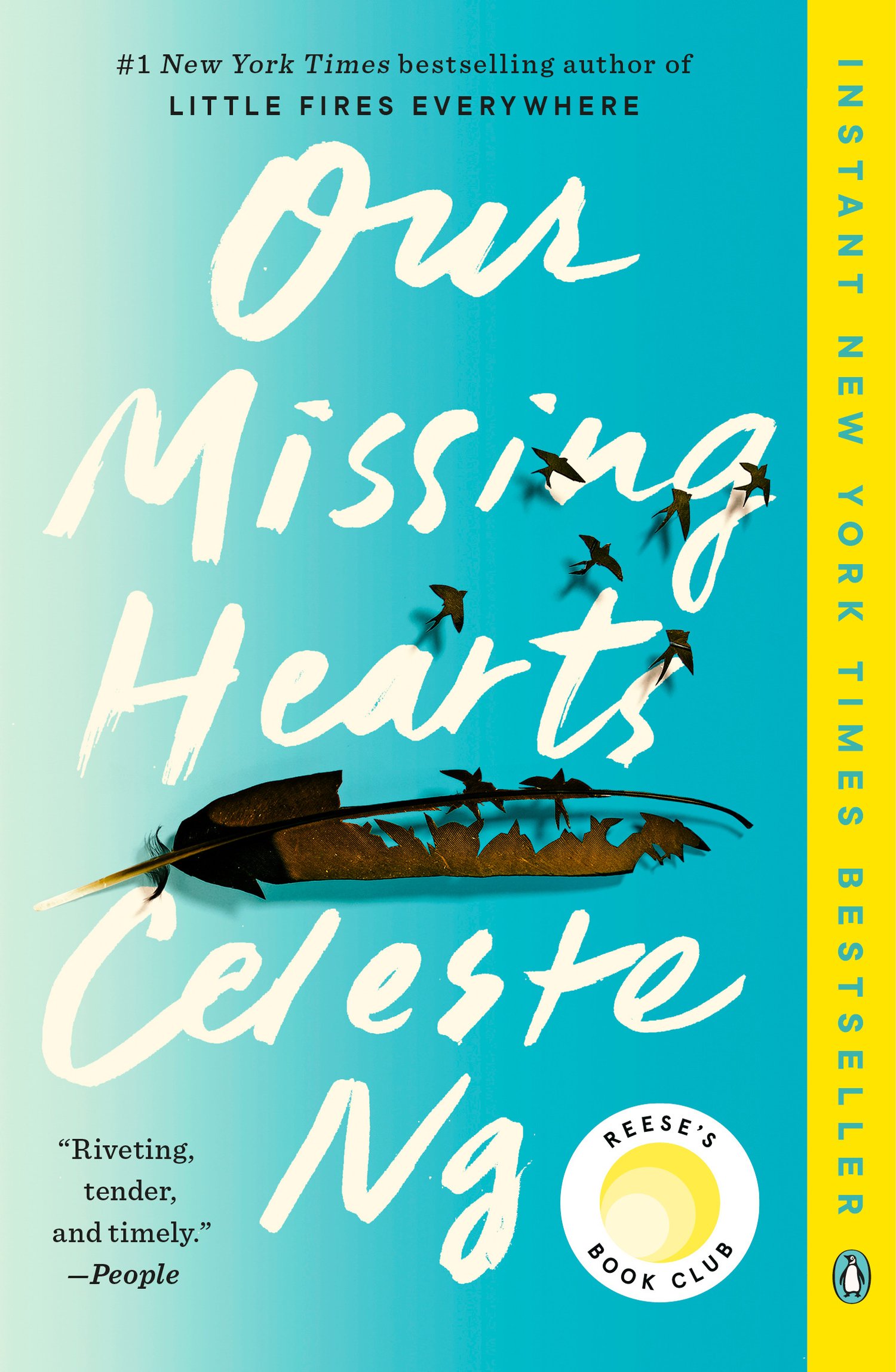
I tried to make up for lost time when I got back: by the end of the month I had read seven, nearly eight, books (I finished the eighth one, Michael Cunningham’s Day, this morning, so I guess technically it counts towards my July reading). I already had my say about Celeste Ng’s Our Missing Hearts and David Nicholls’s You Are Here; the other stand-out is Dean Jobb’s A Gentleman and a  Thief, which is a well-told account of Arthur Barry, a daring and debonair “second-story man” who stole thousands of dollars worth of jewelry from the rich and privileged during the Jazz Age. His life story has many other surprising twists and turns, including a violent prison break and a tender and lasting romance. Jobb includes a lot of contextual information about the times and places and people in the book, all based on impressively thorough research. At times I did find myself thinking “this is how you turn one good idea into a whole book”—not that this material is padding, and certainly not that it doesn’t add anything, but the book got me pondering the whole genre of narrative non-fiction, not least because I had the same reaction to The Golden SpruceJOBB, that while all of its detail about the history and processes of the lumber industry in BC were interesting enough, the book also gave the impression of a single man’s story elaborated or built up with background and contexts until it made a large enough whole. Sometimes I just wanted to get on with the actual events!
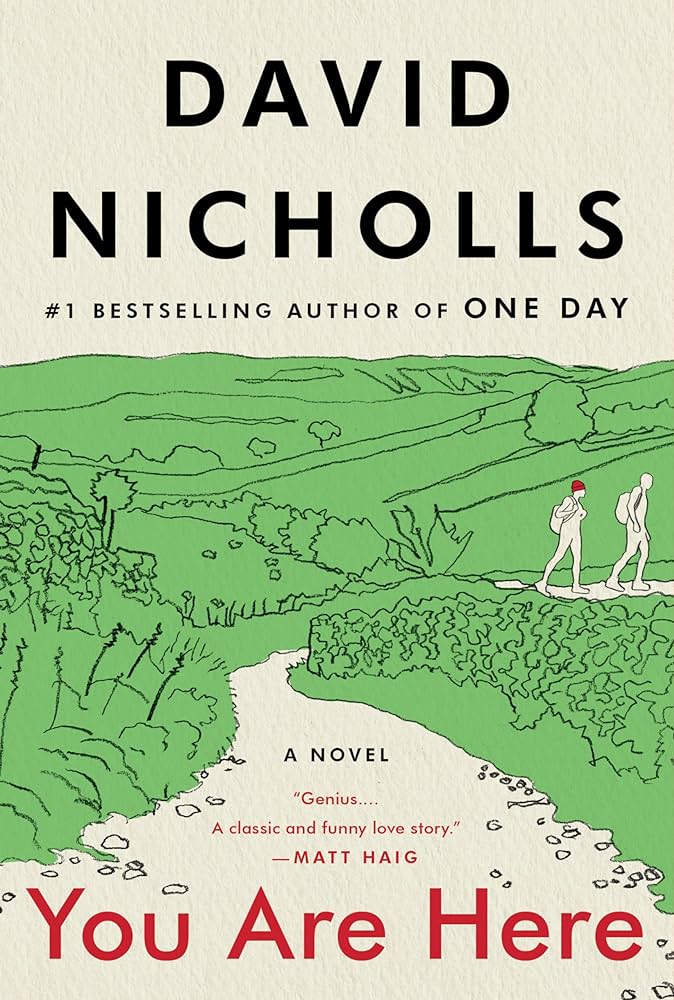
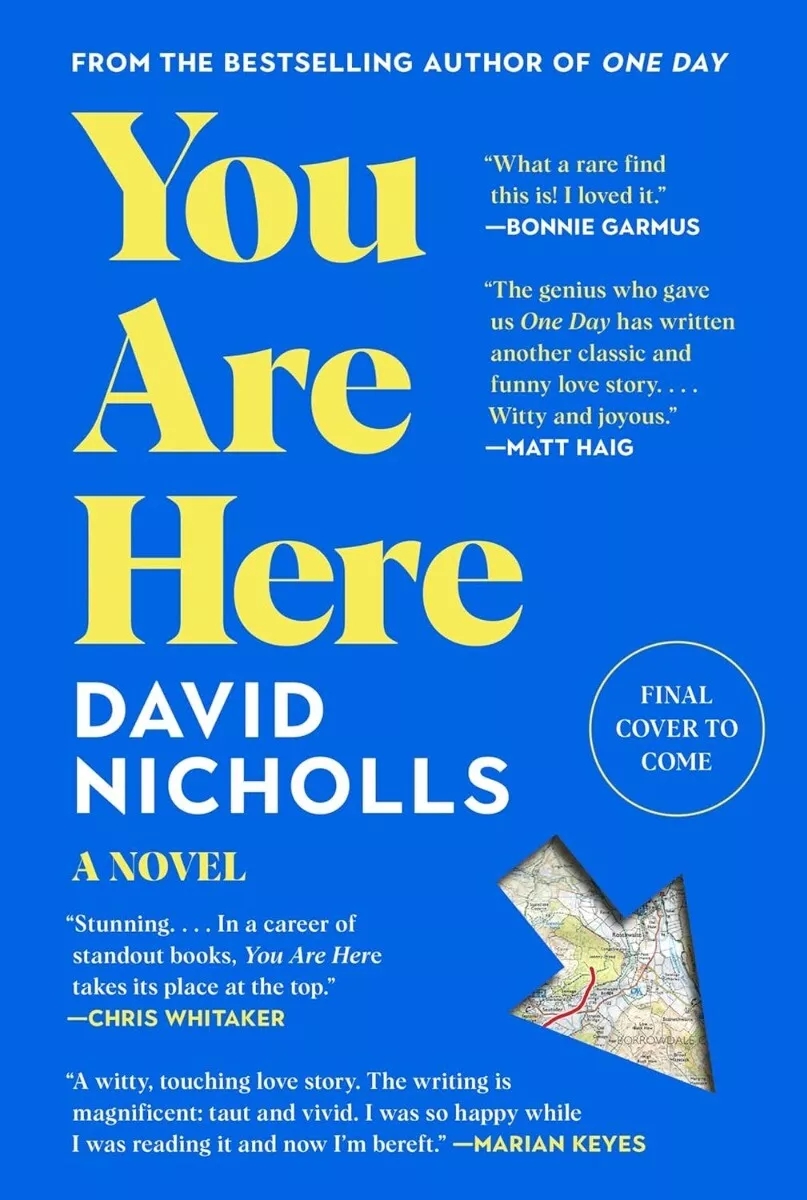
I enjoyed Elizabeth Hay’s Snow Road Station, enough that I passed it along to a friend I thought might also like it, but not enough that I felt compelled to give it its own post. I found Emily Henry’s Funny Story fine: it passed the time, she writes OK, but I can’t imagine re-reading it (or any of her novels, for that matter). Funny Story had me thinking again about when a novel with a romance is a romance novel, a gambit nobody seemed interested in in my post on You Are Here. I’m pretty sure Funny Story is a (genre) romance, and by the time I’d finished it, I was more convinced than before that You Are Here is not, but it’s possible that You Are Here is just a better version of the same form. Better how? I want to say it’s richer, more thoughtful, more expansive, something like that, but I’m not sure I could defend those claims or demonstrate what I mean with examples. Anyway, I did enjoy Funny Story, about as much as I did Carley Fortune’s Meet Me At the Lake (which I read in May), but not enough to understand her massive best-sellerdom (or Fortune’s, for that matter). Any Emily Henry fans out there who would like to explain her specific appeal for them?henry

My other June reading was Tammy Armstrong’s new novel Pearly Everlasting, which I am reviewing for the Literary Review of Canada. As I told the editor, I almost certainly would not have picked up a book with its premise (it’s about a girl who is raised with a bear cub as her “brother”) to read just for myself. But it can be good, productive even, to read outside your comfort zone for a review, and I do always try to approach a book on its own terms, at least initially. We’ll see how this turns out! (What is it about CanLit and bears, though?)

And that’s my June reading! One thing I have figured out is that I get further these days if I settle in to read in the mornings than if I assume I will get around to it in the evenings. This isn’t really an option during the academic term, when I have to be up and out in time for classes and meetings, but my schedule is pretty flexible most days in the summer, plus I wake up quite early nowadays, meaning I can often get in an hour or two of reading before 8:30 or 9:00 a.m. and then start in on the day’s business. By 8:30 or 9:00 p.m., on the other hand, I am often past the point at which I can really concentrate pleasurably or productively on the page, so that’s a good time for P&P (podcasts and puzzles!), or crochet in front of the TV. It still seems to me that there are more hours in the day than there used to be, a phenomenon I’ve learned is shared by others who have found themselves living alone after years of busy parenting and cohabiting. Sometimes those hours do drag! But I am learning to fill them, and trying my best to consider them a luxury, or at least an opportunity, rather than a slog.

Moving Forward: David Nicholls, You Are Here

Nicholls1On the approach to Richmond, they passed a sign, a large board with a map of the path they were following, the scrawled red line from west coast to east, an arrow two-thirds of the way across labelled ‘You Are Here’.
‘Look at what we did together,’ she said.
‘I know,’ he said. ‘It’s quite something.’
‘And this . . .’ She measured out the remainder of the journey, a hand-span. ‘This is nothing,’ she said, and wondered, What if he asked me to stay on and finish the walk? Is that what he wants? If he asks me, if he asks me, I will. I will stay with him and walk into the sea.’

I didn’t take any notes as I read David Nicholls’ Here You Are. I didn’t even jot any pages numbers on the inside back cover, bits I liked or passages to go back to, threads I was following or (my usual bare minimum) a likely candidate for the title and lead-in quotation for a possible blog post. (I had to leaf through it again to find one to use!) I just read it straight through, which is not by any means a bad thing—although given the kind of reader I usually am, that perhaps suggests that it’s not a particularly deep or ambitious novel. I think that’s a fair assessment, actually, and there’s nothing wrong with that! In fact, the novel suited me perfectly in the moment, as I have been tired lately and finding things in general a bit wearing, so anything more demanding would probably have defeated me.

So when I say You Are Here is an amiable, intelligent, pleasantly predictable second-chance romance, I don’t mean to damn it with faint praise at all. Nicholls has a gift for characterization, and the leads here are just complex and troubled enough to add some shadows—to tether the story’s feel-good arc to some plausible sorrows and struggles so that it isn’t such light reading it feels insubstantial. He’s also very good at setting, and You Are Here lets him make the most of this, as it takes place on a walking trip across England (there are even maps!). It rains a lot, probably realistically, but even through the fog and clouds there are views:

The peaks were all around them now, outlined sharply against each other, like old-fashioned theatre flats. They walked a ridge, still a climb but not too arduous, the ground easy-going, short, tough grass like office carpet, until they were standing at a viewpoint, a rocky crown, toothed like battlements, the kind of place you might go to summon dragons.

It was a clever thought on Nicholls’ part to make his hero a geographer, so we don’t get just scenic descriptions but lots of little details about rocks and ridges and plateaus and massive incremental changes across inconceivable stretches of time—I think I found his mini infodumps more interesting than the heroine did, which may not bode well for their implied HEA!

Nicholls2The other clever thing about You Are Here is how neatly the walking trip fits the underlying movement of both plot and character: that it’s obvious (in a novel, a literal journey is pretty much always also a metaphorical journey) doesn’t make it dull, and the gradual progress of our protagonists towards tolerance, then interest, then understanding, then liking, then affection as they trudge and clamber and stroll towards each new stopping point is well done. Even though it seemed pretty clear what their final destination was, the route they take to get there is not, unlike the literal journey, mapped out ahead of time, and it was satisfying arrivingthere with them after the requisite Big Misunderstanding.
That’s another romance term, of course, and it is interesting to me that Nicholls’ novel so clearly fits all the conventions of the genre, except (as far as I can tell) in how it is packaged and marketed, which is certainly not as “genre fiction.” The ultimate test of these imperfect distinctions is where a book gets shelved in the bookstore, and I feel confident that You Are Here will be in the Fiction section, not the Romance section (where there is even that option). It is longer and richer in detail than a fair number of genre romances—I would even cautiously say that it is better written in these respects than most of the romances I have sampled, the formulaic underpinning less conspicuous and other more writerly elements predominating. (I am cautious because of course I have read only a small sample of the vast array of options, and some of the ones I have read are very well written, though my enthusiasm for the form has subsided somewhat since my long-ago conversion.) Not all fiction with a romance in it is romance fiction, just as not all fiction that includes a crime is crime fiction: maybe that’s really all that’s at stake here, that Nicholls has written about a romance, he hasn’t written a romance.

Anyway, whatever kind of novel it is, it’s an enjoyable one. It even made me think that one day I should go on a walking holiday! (That seems pretty unlikely, now that I’ve put the novel down, as I’m not at all a “carry a heavy rucksack up hills in pouring rain” type, but someday I would like to see some of the landscapes they cross.) I really liked Us as well, so Nicholls is two for two with me so far!

“Listen”: Celeste Ng, Our Missing Hearts

HeartsSomewhere, maybe, someone is telling someone else: Listen, this crazy thing happened the other night and I can’t stop thinking about it. Days later, weeks even, Margaret’s voice still lodged in the crevices of their brain, the stories they’ve heard a pin completing a circuit, lighting up feelings that have long lain dark. Illuminating corners of themselves they hadn’t known. Listen, I’ve been thinking. Eight million people, all those stories passing from ear to ear. Would one person be compelled? One out of eight million, a fraction of a fraction. But not nothing. Absorbing that story, passing it on. Listen Somewhere, out there, saying to others at last: Listen, this isn’t right.

Celeste Ng’s Our Missing Hearts held me from its first page to its last—and yet by the time I finished it I was also wondering if the very directness with which it played, not just to my emotions, but to my values, was a weakness of the novel rather than a strength.

Our Missing Hearts is a dystopian novel that (like The Handmaid’s Tale) is frightening because its vision of the world is so familiar, so plausible, an extension of what it is already like—of what our society is already manifestly capable of—rather than a fantastical horror story. The novel is set in the near future after a massive economic crisis that was blamed on China, leading to the implementation of surveillance and control measures putatively designed to “protect American culture and traditions” (the PACT act). It tells the story of Noah, or Bird, as he was once called, who lives with his father in a university dorm where they moved in search of obscurity and thus, they hope, safety. Noah’s mother Margaret is of Chinese descent; her parents were among the earliest targets of the anti-Asian violence instigated by PACT, but she and her husband Ethan had believed if they just lived quietly, they would be left alone. Then a poem Margaret wrote becomes an anthem for a protest movement, and to save Ethan and especially Bird (who looks like her), she leaves them to go into hiding. Bird eventually sets out to find his mother, and in the process sees both the full horror of the world his parents have desperately tried to shelter him from and the courage of those who resist the evils it inflicts.

As Ng says in her author’s note, “The pandemic that began in 2020 brought a sharp increase in anti-Asian discrimination, but this isn’t a new phenomenon”; “real life examples,” she goes on, “were never far from my mind.” Her focus is on the United States but Canada has a similar shameful history and a similar painful present: tonight’s news stories on CBC, in fact, include one that is grimly illustrative. Ng does a good job dramatizing the insidious ways official prejudice legitimizes individual aggression, while also influencing bystanders to look away, whether out of indifference or fear. Bird has seen rudeness and contempt before his quest but never brute violence of the kind he sees when he follows his mother’s trail to New York and sees a woman who reminds him of her:

The woman notices him across the street, watching her, and smiles. Perhaps he reminds her of someone, too; perhaps at first glance she mistook him for someone she loves and now that love spills over to him, a largesse. And because she is looking at him, because she is smiling at him and perhaps thinking fond thoughts about this little boy who reminds her of someone she loves, she does not see it coming: a fist, smashing into her face.

The violence the novel is most concerned with is not quite so direct, or at least not so directly physical: the “missing hearts” of the title are children taken from their parents when suspicious or malevolent observers accuse the parents of un-American behavior or beliefs. Resistance to these legal but immoral kidnappings is the cause for which Margaret’s poem becomes the anthem, and to which Margaret ultimately dedicates herself. Again, Ng points to real-life counterparts, from “the separations of enslaved families” to the ongoing “separations of migrant families still occurring at the U.S.’s southern border and beyond.” Our Missing Hearts is thus clearly and intentionally timely, an attempt to enlist the power the novel itself celebrates—the power of stories, and of those who cherish, preserve, and perpetuate them (librarians, aptly, are central to the resistance)—to get people to listen and say “this isn’t right.”

This is obviously a good thing: any enthusiast of 19th-century “social problem” novels is bound to say so, and to refrain from quibbling about didacticism or heavy-handedness. And overall I wouldn’t really say Our Missing Hearts is heavy-handed or didactic—and who, after all, doesn’t love stories, books, and librarians? Well, actually, mistrust of books and libraries is another all-too common reality these days, so unfortunately I guess the case for their social and political value does need to be made . . . but not to me, really, just as—though I was chilled and saddened by the incidents the novel depicts—I also don’t need convincing that prejudice and discrimination and violence of that kind “isn’t right.” Perhaps paradoxically, this is why by the end of Our Missing Hearts I had become somewhat less invested in it as a reader: it started to seem like preaching to the choir. The power of Margaret’s final act of protest is its reach: her message doesn’t target only sympathizers. Would anyone who really needs the lessons Ng offers actually pick up her novel? They might, I suppose, and also there might well be readers who, whatever their other good intentions, have not thought very hard about anti-Asian discrimination in particular, or who need to reflect more generally on how easily tyranny slips in if we make enough “little” concessions along the way, or if we look the other way often enough (another of Ng’s sources is Timothy Snyder’s On Tyranny). Maybe this is a foolish or arbitrary reservation in any case: dramatizing problems readers may not have seen or experienced for themselves has a power of its own, and as the narrator of Middlemarch says, “Who can say what may be the effect of writing?” Better to write what you believe in and hope it makes a difference than to keep quiet about the injustice and suffering you see in the world.

Mid-May Mop-Up

zolaBook blogging was easier, somehow, when I just wrote up every book I read as soon as I finished it. I was so much busier in other respects when I adopted that habit: looking back, I have now idea how I found the time for it. But one plausible theory is that I saved a lot of time not dithering about blogging! Just do it – good advice for so many things, including writing.
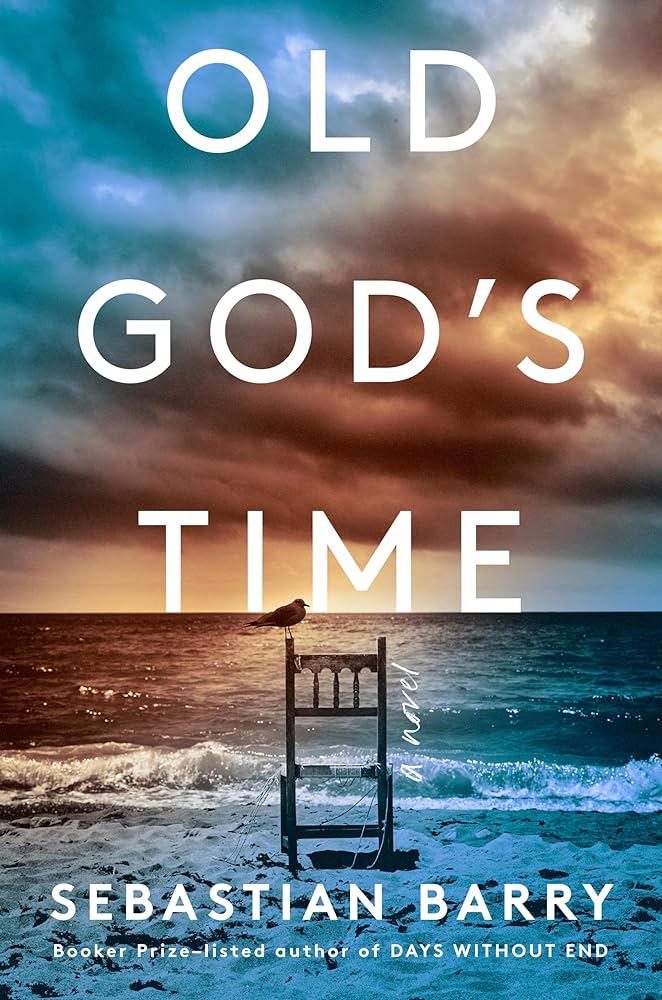
So. I have read five books so far this month. Two of them were really good: Zola’s La Bête Humaine, which is “good” in the sense that it does what it sets out to do really well, and Sebastian Barry’s Old God’s Time, which is grim and sad but also beautiful in that way a lot of Irish novels are.

I kind of hated reading La Bête Humaine, though it was very gripping and once I started I didn’t want to stop. (It goes by quite quickly because so much bad stuff is happening that you are propelled onward by an unpleasant mingling of curiosity and dread.) The only other Zola I’ve read is Germinal and that was a long (long!) time ago. I remember its being pretty rough, but I don’t recall that it was as histrionic, violent, or pessimistic (about everything – humanity, society, the law, men, women, you name it!) as La Bête Humaine, which is like a Dickens novel in which every character is as awful as . . . actually, I can’t really think of a Dickens character, however unpleasant, who would be at home in the world of this particular Zola novel. And when Dickens gives us brutality, he also always gives us tenderness: A Tale of Two Cities may be his most violent novel overall, for instance, and it has one of his most beautiful, redemptive endings. This is definitely not part of Zola’s vision of the world. A good (meaning, not terrible) moment in La Bête Humaine would be one where one of its murderous characters actually manages not to murder someone, as here:

So it had happened – he had possessed Severine and had not taken the hammer to smash her skull. She was his and there had been no struggle, none of that instinctive desire to throw her on her back dead, like some trophy snatched from others . . . It was with loving gratitude and a desire to be lost in her that he took her again into his arms.

Ah, young love, right?

barryThe novel’s non-stop melodrama is in service of a worldview, or an idea about human desires and instincts. I think possibly this sentence is key: “The door of terror opened over the black chasm of sex, love even unto death, destruction for fuller possession.” I hope the One Bright Pod folks (whose fault it is that I read this) will tell me if there is some kind of link to D. H. Lawrence here: it seems so to me, but I don’t know Lawrence well enough to be sure. I also hope they talk about what trains signify and how they are used in the novel. They are clearly (I think) symbols of modernity, but there is a lot more going on with them, especially the engine personified by one of the characters as a woman (“she” is perhaps his most genuinely caring relationship). Once I’d freed myself from finished the novel, I couldn’t bring myself to linger long enough over it to think things through. That’s what smart friends with podcasts are for!
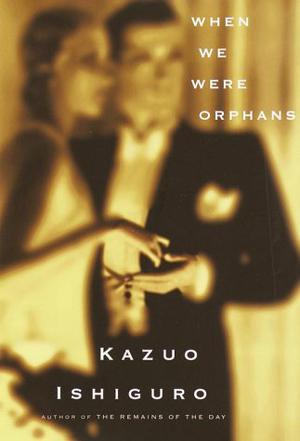
I felt a bit of resistance to Old God’s Time by the end too, though it is so melancholy and the writing is so evocative (and also evasive and unreliable) that I enjoyed it much more. But is there a risk, maybe, in making all sad stories turn out to be about the priests? Every such story is different, sad in its own way, but it’s hard not to find something predictable about the revelations. This was the first of Barry’s novels that I’d read: I don’t know if its subject is a typical one for him.

ishiguroThe other three books I’ve finished are Mollie Keane’s Good Behaviour (didn’t much like it, though I could see how skillful it is), Kazuo Ishiguro’s When We Were Orphans (found it boring even though I knew he was doing his withholding / unreliable narrator trick again so I knew that if I only understood what lay beneath the boring layer, it would be much more interesting – this is a risk he takes repeatedly, as I discussed in my post on re-reading Never Let Me Go, but there I think the payoff was much greater, although I did not read When We Were Orphans attentively enough to be certain), and Joan Thomas’s Wild Hope (which recently was nominated for a Canadian crime fiction award, raising my own hope that it might be that elusive thing, a Canadian crime novel I am keen to assign in my detective fiction class – but no, it is too much “fiction” and not enough “crime,” and qua novel it didn’t really excite me).
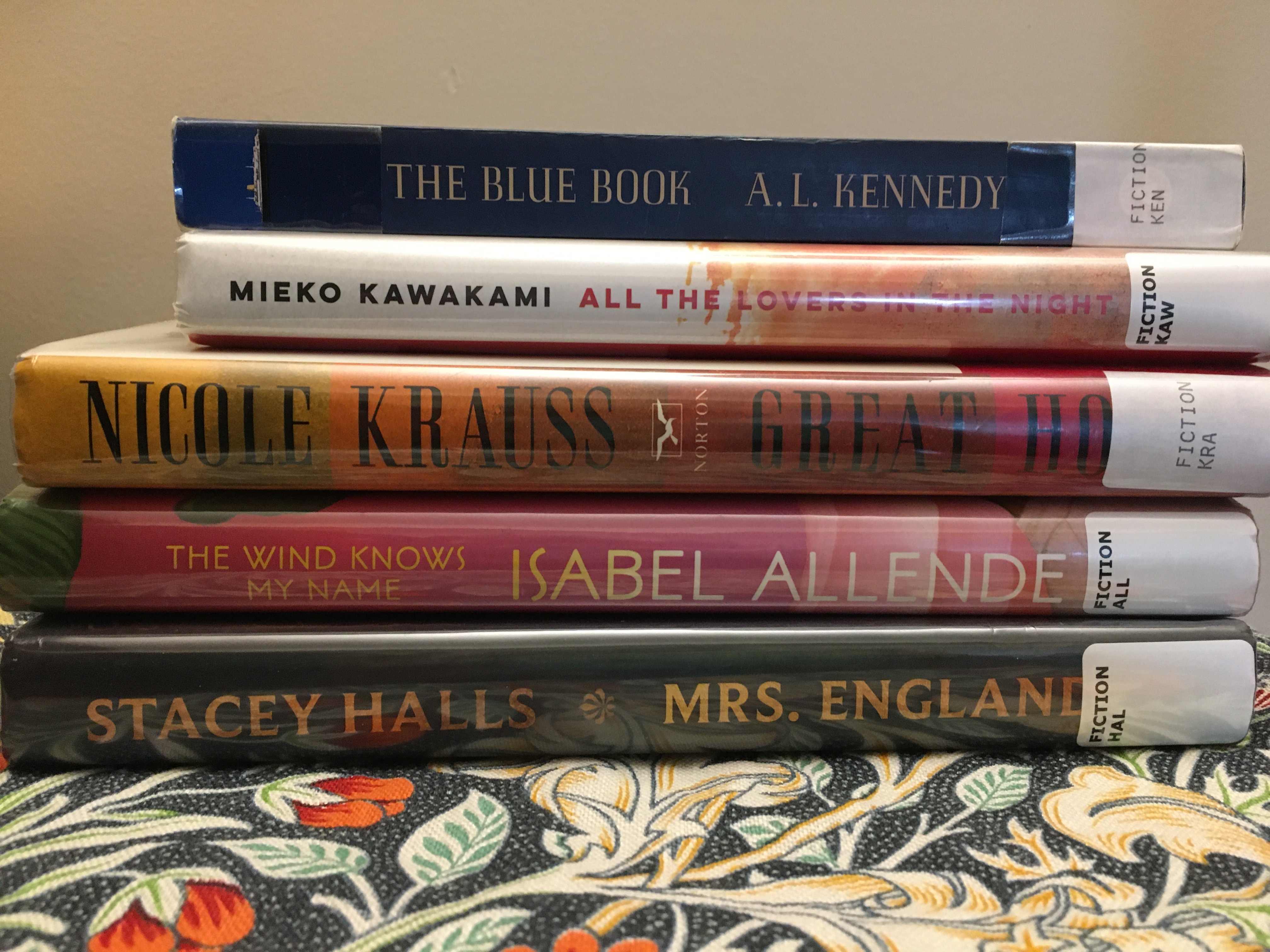
Library StackWhat’s next, you wonder? Maybe Celeste Ng’s Our Missing Hearts, which I picked up recently with a birthday gift card (thank you!), or something from my miscellaneous stack of library books. Living so close to the public library has made me pretty casual about taking things out that I may or may not commit to reading: I like having options! (If there’s anything there you think I should definitely try, let me know.) I also have Cold Comfort Farm to hand, which was my ‘Independent Bookstore Day’ treat – but I’m saving it to read on the plane when I go to Vancouver in a couple of weeks.

April Reading

bronskyApril hasn’t been a bad month for reading, overall. I’ve already written up Dorothy B. Hughes’s The Expendable Man, and it certainly stands out as the best of the bunch – but Alina Bronsky’s Barbara Isn’t Dying is a very close second, and if I were ranking based purely on pleasure, it would be tops.

Barbara Isn’t Dying (translated from the German by Tim Mohr) is wry, funny, and poignant. It follows the struggles of dour Walter Schmidt, who wakes up one morning to find that his wife Barbara is ill and unable to do the cooking and cleaning and laundry and everything else she does that until then Walter has taken for granted. Walter, who begins the novel not even knowing how to make coffee, has to figure out how to get by, which he does partly through his own stubborn persistence and partly because he just keeps asking how to do things and people answer, from the young woman in the nearby bakery to the Facebook followers of a famous cooking show Walter happens upon. (His Facebook experiences are pretty hilarious: he has no idea at all how the site works or who these people are replying to the posts he makes under Barbara’s name.) As the novel goes on, Walter doesn’t just learn to cook but also learns to be a better person, a better husband, and a better father, a predictable arc, perhaps, but Bronsky isn’t heavy-handed about it, and Walter never becomes a very lovable guy. (For one thing, there are a few too many times when he tries hard to remember if he ever hit Barbara in the past – he’s pretty sure he didn’t, but the question itself is unsettling.) We also learn more about what Barbara had to deal with in their marriage before her illness, and we watch Walter make his rather lumbering way towards repentance and repair. Some of it will be too late, but not all of it, and that matters.

eastboundI read Maylis De Kerangal’s Eastbound in one sitting, not just because it’s short but because it’s very suspenseful and I really wanted to find out what happened! I ended up thinking that the novel’s success in this respect worked against the quality of my reading of it, because I didn’t linger over the aspects of the novel that make it more than just a thriller. The story is very simple: a young Russian soldier on a train to Siberia decides to go AWOL and is helped in his attempted escape by another passenger, a young French woman. Will he succeed, or will he be discovered and pay the price? Anxious to know, I paid less attention than I should have to the descriptions of the landscape scrolling past them – though I did appreciate them, I didn’t really think about them, and a reread of the novel would probably show me more metaphorical and historical layers to the characters’ journey. Some other time, maybe, as I had to return my copy to the library! But even my brisk reading showed me why Trevor and Paul were so enthusiastic about the book.

My other reading has been more desultory. I enjoyed Richard Osman’s The Last Devil to Die, a lot more than the first one in the series which I read a year or so ago. I also enjoyed Adrien McKinty’s In the Morning I’ll be Gone, which I read as part of my ongoing scouting for possibilities for my mystery class – I wouldn’t assign it, but it was a gripping read. I read Steph Cha’s Your House Must Fall for the same reason and also would not assign it, although that’s as much because it does not really have the form of a mystery (I’m specifically ‘shopping’ for police procedurals) as because I found it – despite the compelling social and historical contexts it deals with – a fairly plodding read. I DNF’d Qiu Xiaolong’s Hold Your Breath, China for similar reasons. I am definitely taking advantage of living walking distance to the public library: it is great being able to wander in and pick up a few things to sample. (I also now live within walking distance of Bookmark, where it is also very tempting to wander in and pick up a few things – such as Barbara Isn’t Dying!)

Apple-on-a-Windowsill_low-resMy current reading is Shawna Lemay’s Apples on a Windowsill, which is (more or less) about still lifes as a genre, but which roams across a range of topics in a thoughtful and often beautifully meditative way. A sample:

Why is it that this moment of transcendence induced by a still life, this seeing through to the other side, this opening or loophole where we drop into the sheer mystery of being, is so interesting to me? I think it’s because it also contains the promise of the moment after. A still life stops time, is out of time, occasionally offering the viewer that rupture/rapture. It is also suspenseful. The question hovers: what happens next? And it gives us an interval to dream new possibilities. It affects us, and it affects how we walk through this world, into the loophole, beyond the threshold, our eyes open, awake.

This genre – what is it, exactly? personal essay? pensées? – isn’t always, or even usually, my thing, but I have had an interest in still lifes myself for a while, not an expert interest but just a curiosity, a desire to look more closely at them. I particularly like ones with glassware, like this one by Pieter Claesz:

1024px-Pieter_Claesz._-_Still-Life_with_Oysters_-_WGA04964

I find that wine glass mesmerizing. I also follow Lemay on Instagram and had enjoyed and been intrigued by her posts of still lifes she composed and photographed. I am appreciating the book’s commitment to finding beauty in every day objects, and to encouraging us to find everything, from quotidian objects to our own faces, worth looking at. The chapter I just read, “An Ugly Woman,” includes discussion of selfies, that much-maligned genre, which Lemay says she finds “potentially beautiful and ridiculous and fun and ultimately sublime attempts to capture your own soul when others have perhaps failed. We’re not movie stars,” she goes on, “but we exist right now at this exact moment and one day we won’t.” Why not record that moment, then? And she is eloquent about “people who are not airbrushed, who have wrinkles, and other tics and quirks.” “What would happen,” she asks, “if we were all able to imagine our wrinkled selves as fucking cool looking?” What indeed?

“The Wrong Man”: Dorothy B. Hughes, The Expendable Man

hughes-1Another car would have come along, a family car for which she had said she was waiting, or even another man, a white man. Most travelers, like most men, were intrinsically decent. The end result for Iris would have been the same, cruelly the same. But he needn’t have been involved. He was the wrong man to have played Samaritan, and he’d known it, known it there on the road and in every irreversible moment since.

By the time I finished The Expendable Man, I was pretty sure I wanted to include it in the reading list for my survey course on mystery fiction next time around, probably in place of Walter Mosley’s Devil In A Blue Dress. It’s not that I think it’s better than Devil, but I’ve assigned Devil so often I would like to take a break from it, and Hughes’s novel deals with some very similar thematic issues. Both are astute and thought-provoking variations on noir conventions; both use specific individual crimes as devices for examining much bigger questions about social justice and especially about, as the NYRB cover text puts it, “the greatest of all American crimes.” The Expendable Man is also really gripping reading: its first chapter especially is an absolute masterclass in atmospheric unease. My profound relief when Hugh finally rid himself of Iris was  compromised only by knowing that of course this was not really going to be the end of it for him—and by knowing already what the narrative itself so coyly withholds for as long as it can, which is that Hugh is a Black man in a racist world, and so he is never really going to be either free or safe.

hughes-2There are many interesting aspects of the investigation that unfolds as Hugh (with painful inevitability) ends up the prime suspect in Iris’s death. I haven’t spent enough time with the novel at this point to be sure what to make of all of them, but one thing I’ll want to think more about is Ellen’s role, which doesn’t fit any of the usual restrictive hard-boiled parts for women to play. It seems tied to the novel’s attention to class, which, as Mosley notes in his Afterword to the NYRB edition, does not protect Hugh the way he hopes it will: his education and career path, his family’s money and social standing—none of it insulates him from hatred or suspicion. But Ellen’s money and connections are sources of strength, as is her prompt and unequivocal commitment to being on Hugh’s side. If Iris can be seen as a version of the damsel-in-distress turned femme fatale (intentionally or not), Ellen is an ally and partner for Hugh, one who refuses to sit on the sidelines while an injustice is perpetrated. There are other details worth considering about who helps Hugh and who doesn’t, too, including the white lawyer whose motives are primarily political, rather than principled.

The aspect of the novel that I liked the least was its vilification of abortion providers. At least on this first read, I didn’t get any sense that Hugh considers reproductive rights worth defending. What sympathy he feels towards Iris is about her as a murder victim – which is related, of course, to her abortion, but I didn’t pick up any compassion for the secrecy and the risk specific to it, any sense that if only she could get a safe and legal abortion she would have been less vulnerable to other kinds of predation. And Doc Jopher comes across as wholly repugnant, including to Hugh, who reflects with disgust that whatever sentence he serves, he’ll be back before long “to carry on with his butcher’s business.” I don’t think this matters to my interest in assigning the novel: books don’t have to align with my politics to be worth discussing, that’s for sure – otherwise I couldn’t possibly assign The Big Sleep, which I find both misogynistic and homophobic. It’s also possible there are details that would complicate or even change my reading of Hughes’s novel as aggressively anti-abortion (not just grim about its realities at the time). I’d be interested to know what other readers of the novel think about this element of the novel. Does it just seem “of its time”? (And yet, of course, abortion rights were not universally condemned in 1963, so even if so, that’s a particular stance to take on an ongoing controversy.) If I keep Sara Paretsky’s Indemnity Only on the list, there would be an immediate contrast with V. I. Warshawski’s friend Lotty Herschel, whose commitment to providing safe abortions (even when they were illegal) is part of that novel’s feminist framing.

hughes-3The thing that does make me hesitate is the oddity (arguably) of assigning a novel that is fundamentally about race, and that is told from the point of view of a Black man—but which is written by a white woman. “A white woman writing of a young black man’s problems with the law was a certain kind of gamble,” Mosley comments in his Afterword—but Mosley himself doesn’t seem to consider it problematic, moving immediately on to remark Hughes’s general interest in writing “from perspectives far from her own.” It is clear from the afterword that Mosley greatly admires Hughes in general and The Expendable Man in particular. What kind of representation is more important, in a class like mine that tries to show the range of uses to which the forms of detective fiction have been put since its emergence as a distinct form? It seems as if Mosley would consider it most important to address “the darker reality” (as he puts it) that lies behind more “glittering versions of American life.”  Presumably he thinks the gamble paid off for Hughes because the result was a very good novel.

This Term (and My Classes)

cassatThis term is the first one since I began posting about ‘this week in my classes’ in 2007 that I haven’t posted at all about my classes. What’s up with that, you might wonder? Well, more likely you hadn’t noticed or wondered, but I’ve certainly been aware of it and pondering what, if anything, to do about it.

There is at least one very dull pragmatic reason why I haven’t been blogging very often, about anything: along with my chronic shoulder pain, which (despite my best efforts to address it through ergonomic adjustments and to improve it through physiotherapy) persists and is notably exacerbated by computer use, particularly lots of mousing, I have also developed lower back pain that is also clearly related to sitting at my desk. I am working on solutions for this, but in the meantime I have been trying to spend less time at my computer. That said, one of the odd features of my back pain is that it gets better when I’m very absorbed in something. To me, this suggests that posture and ergonomics are only part of the picture and that stress may be another part of it. Often, for me, it’s precisely blogging that has this distracting effect—mysteriously (ha!) it doesn’t work out that way when I’m grading online exams or wrangling Brightspace settings. So there are definitely other factors at play in my blogging slump.

millonflossIt certainly isn’t anything to do with this term’s classes. At least from my perspective, both of them—Mystery & Detective Fiction and The Victorian ‘Woman Question’—have gone very well. Of course there have been the occasional sessions that dragged a bit, and we had an unusually high number of snow days that created a lot of logistical headaches, but in general discussion was both substantive and lively. I continue to try to wean myself from my lecture notes. This gets easier and easier in the mystery class, as I am pretty confident now both about how I want to frame the course and readings in terms of ‘big picture’ issues and about the specific readings. (I mix in new options quite regularly, because for various reasons I have been teaching the course basically every year for ages, so this definitely keeps it fresh and interesting for me: I just finished reading Dorothy B. Hughes’s The Expendable Man and I’m 90% certain I’m putting it on the reading list for next year, for one!) The ‘woman question’ class is a seminar, so I don’t lecture there anyway; I so looked forward to our class meetings all term, both because the readings are all favorites of mine and because we always had such good conversations about them. The only slight exception was with the excerpts from Aurora Leigh, from which I learned both that assigning excerpts is a bad idea (something I already believed but overrode, for practical reasons)—when it comes to long texts, do or do not, there is no try!—and that narrative poetry is hard, or at least it takes a different kind of preparation and attention than fiction, and that if I’m going to assign any of Aurora Leigh I need to take that into account.

Anyway, it’s true that these are courses I have taught and thus blogged about with some regularity, but that doesn’t usually stop me from reporting back and reflecting on how things are going. To the contrary, really, as I still believe what I said after my first year of blogging about my teaching, which is that

taking this extra step each week not only helped me identify the purpose, or, if writing retrospectively, the result of each class, but it made each week more interesting by giving me an opportunity to make connections or articulate puzzles or just express pleasure and appreciation in ways that went beyond what I had time for in class

I have become a better teacher because I kept this up: I learned so much from it, about myself, about teaching, and also about the subjects I teach, from writing to contemporary fiction.

succulentSo what’s my problem this term? I think it is rooted in my uncertainty about how to address some big changes that have taken place in my personal life. When I wrote up my year-end post for Novel Readings in December, I remarked that the last months of 2023 were particularly frantic, “about which more, perhaps, some other time,” I said then. Novel Readings has never been—or at least has never been intended as—a really confessional or intimate blog, though over the years I have certainly written about some personal things. The most personal it got was in the immediate aftermath of Owen’s death: I felt compelled, in ways I still can’t really understand, to write about it, maybe because finding words for what had happened and what I was feeling seemed essential to coping with it, to giving that experience a shape that I could live with. (I have since read a lot about the importance to trauma recovery of developing a “bearable narrative,” which seems on point, if not altogether sufficient to what I was and often still am seeking when I try to find words to express my grief.) I was always very conscious, though, that I didn’t have the right to speak for other people or to violate other people’s privacy, including Owen’s, in those posts. In a more general way, I would say that the value of Novel Readings to me, and also of all social media, lies in its authenticity: I don’t have to reveal everything about myself and my life, but what I do talk about should (I believe) honestly reflect who I am and what is going on with me, if only so that any interactions I have with other people are similarly authentic and thus meaningful. Yes, we all “curate” our social media presence—and a blog is essentially long-form social media, right?—but then, we do the same IRL, picking and choosing what we share, and the relationships that matter the most are the ones in which we are most fully ourselves.

Smith BeautifulIn my current circumstances, this principle, if that’s what it is, runs up against the principle that I shouldn’t talk about other people’s business here: it feels wrong not to acknowledge that my life has changed significantly, but I have felt—rightly, I think—constrained from going into any detail that might cross the line, which has also meant I have felt constrained from talking about some of my recent reading as frankly and completely as I would have liked to, because I couldn’t address how something like, say, Maggie Smith’s You Could Make This Place Beautiful resonates, or doesn’t, with my new circumstances—which, in a nutshell, are that my husband and I separated shortly before Christmas and I have since moved into my own apartment. The first part of this term, then, was a chaotic combination of “downsizing” (and what a euphemism that is for the hard physical and emotional labor of clearing out a house you’ve lived in for over 20 years!), packing, and moving, all while also, of course, carrying on with my classes and other work. Even setting aside the inhibitions I felt about breaking this news or integrating it into any reflections on my reading and teaching, no wonder I didn’t have much time or energy for ‘extras’ like blogging, right?

divorceObviously I have reached a point at which it seems fine and reasonable to say what has been going on, though I don’t expect I will ever consider Novel Readings an appropriate place to talk about how or why things have unfolded in this way, or even how I feel about it all! That’s nobody’s business but ours, by which I mean mine and my (truly excellent) therapist’s. 😉 Seriously, though, I do believe we bring our whole selves to our reading, so what I want to work on is how to acknowledge how my new reality sometimes does affect my engagement with books. I can say already that nothing about Diane Johnson’s Le Divorce, which I just read for my book club, seems relevant or resonant at all in that way (though I did enjoy it on its own terms)—though there were moments in The True History of the First Mrs. Meredith that definitely struck a chord.

Sorry if this seems like a long way around to nothing in particular. Writing is thinking, or so those of us for whom words really matter usually believe, and I guess I needed to figure some things out—while also (I hope) breaking the habit of not writing here as fully and frankly as I can. With the term now wrapping up, I am looking forward to turning my attention back to some larger projects I was making decent headway on last summer, before things went . . . the way they went! And I am planning to get back into the blogging habit, because I enjoy it and it is good for me in so many ways, including but not exclusively as a writer. A new chair, some exercise classes, and perhaps (sigh) more physiotherapy will hopefully resolve the physical obstacles, leaving only the psychological ones to be overcome. In the meantime, I still have exams and final essays coming in, so if Novel Readings stays a bit quiet for a while, that will be why.

“To Stand Still Awhile”: Patrick Bringley, All the Beauty in the World

bringley1After college, for a period of two years and eight months, the “real world” became a room at Beth Israel Hospital and Tom’s one-bedroom apartment in Queens. Never mind that I was starting out at a glamorous job in a midtown skyscraper; it was these quieter spaces that taught me about beauty, grace, and loss—and, I suspected, about the meaning of art.

When in June of 2008, Tom died, I applied for the most straightforward job I could think of in the most beautiful place I knew. This time, I arrive at the Met with no thought of moving forward. My heart is full, my heart is breaking, and I badly want to stand still awhile.

The “glamorous job” Patrick Bringley turned his back on was at the New Yorker; the job he took after his brother Tom’s death was as a guard at the Metropolitan Museum of Art, a job he held for a decade. Reading All the Beauty in the World, his moving, meditative, wide-ranging reflections on his experience standing for thousands of hours among some of the world’s greatest treasures, I wondered if he always had it in the back of his mind that there would be a book in it someday. It’s hard to imagine anyone both literary and ambitious enough to work at the New Yorker not having that thought! This was not in any way a cynical notion on my part; if anything, I feel lucky that, with whatever long-term intentions, Bringley clearly thought and wrote down enough during his time in the museum that I could now read about it and be guided by him towards insights into what art can mean and do for us if we just stand still long enough to let it.

One of Bringley’s central insights is that art’s power comes from what it shows us about the most commonplace, and thus most human, parts of life. “Much of the greatest art,” he observes,

seeks to remind us of the obvious. This is real, is all it says. Take the time to stop and imagine more fully the things you already know. Today my apprehension of the awesome reality of suffering might be as crisp and clear as Daddi’s great painting.* But we forget these things. They become less vivid. We have to return as we do to paintings, and face them again.Daddi

It isn’t always suffering and death that art invites us to stand and face. One of Bringley’s favorite paintings is Pieter Bruegel’s The Harvesters, which shows, in the foreground, a little group of peasants on their lunch break:

Looking at Bruegel’s masterpiece I sometimes think: here is a painting of literally the most common thing on earth. Most people have been farmers. Most of these have been peasants. Most lives have been labor and hardship punctuated by rest and the enjoyment of others. It is a scene that must have been so familiar to Pieter Bruegel it took an effort to notice it. But he did notice it. And he situated this little, sacred, ragtag group at the fore of his vast, outspreading world.

“I am sometimes not sure,” Bringley adds, “which is the more remarkable: that life lives up to great paintings, or that great paintings live up to life.”

templeThe individual sections of All the Beauty in the World are organized, more or less, around Bringley’s assignments to particular rooms or wings or exhibits; the larger framing is his gradual reconciliation, if that’s the right word, with the “real world” outside the museum as he learns to live with Tom’s loss. Both the people he works with (who come from all parts of the world and all have their own stories about how they came to be standing guard over Van Gogh’s Irises or the tomb of Perneb) and the people he encounters as visitors all play a part in this emotional journey, but it is the art that matters the most, in ways that are better suited to samples than summaries. Here, for instance, is Bringley’s description of a silk scroll hand-painted by Guo Xi, a “Northern Song Dynasty” master:

Ink on silk is an unforgiving medium; there are no do-overs; he couldn’t rub out and paint over his mistakes as the old masters could do with oils. My eyes can trace every stroke Guo made in AD 1080. No part of his artistry is hidden from me, nothing submerged under overlapping layers. According to Guo’s son, the master’s regular practice was to meditate several hours, then wash his hands and execute a painting as if with a single sweep of his arm . . . What this picture has afforded for a thousand years it affords today. My eyes travel the same old routes, past the fishermen in their small, still boats, the bare autumnal trees, the peddlers and their pack mule, the rock croppings, the stooped old men ascending a hill, and into the mountains shrouded in mist. It is achingly beautiful . . . I am happy to be inside this picture, so clearly a melding of nature and the artist’s mind. Guo himself feels like my intimate . . . Guo

Here he is being won over, after long skepticism about the Impressionists, to the magic of Monet’s Vétheuil in Summer:

I see a village and a river and the village’s reflection suspended in river water, only in Monet’s world there is no such thing as sunlight really, just color. Monet has spread around the sunlight color, like the goodly maker of his little universe. He has spread it, splashed it, and affixed it to the canvas with such mastery that I can’t put an end to its ceaseless shimmering. I look at the picture a long time, and it only grows more abundant; it won’t conclude.

Monet, I realize, has painted that aspect of the world that can’t be domesticated by vision—what Emerson called the “flash and sparkle” of it, in this case a million dappled reflections rocking and melting in the waves . . . Monet’s picture brings to mind one of those rarer moments where every particle of what we apprehend matters—the breeze matters, the chirping of birds matters, the nonsense a child babbles matters—and you can adore the wholeness, or even the holiness, of that moment.

With regret, I have left out some parts of this passage, because it is quite long, but I loved every word of it. One more, from Bringley’s encounter with a “nkisi, or power figure, made by the Songye people of what is today the Democratic Republic of the Congo”:

Above all, I can see the extraordinary geometry the wood-carver achieved in his effort to make the nkisi supernatural. This artist faced a tremendous formal challenge, I realize. Unlike Guo’s scroll or Monet’s painting, his sculpture wasn’t an imitation or a depiction of anything else. It wasn’t meant to look like a divine being; it was the divine being and, as such, had to appear as though it existed across a chasm from ordinary human efforts. It had to look a bit like a newborn baby looks . . . a new, miraculous, self-insistent whole.

. . . More than just dazzled, I am moved. With its eyes softly shut, the nkisi has a powerful air of inwardness, as though summoning the will to take on perilous forces closing in on it . . . it had to be this magnificent to push back.

There is much more, ranging across the breadth of the museum’s collections. Although I learned a lot from Bringley’s explanations of specific artefacts, they are (almost) beside the point, as these examples show: the interest and impact of the book comes mostly from his personal interactions—emotional and intellectual—with the works of art. It is an idiosyncratic kind of art appreciation, perhaps, though well-informed (he has done his research, in and out of the museum) and open-minded, but I think Bringley would argue that this is also the best kind.

harvesters

As the years pass, all this time spend standing still gradually brings Bringley back in touch with the movement of life itself. “Grief,” he aptly observes,

is among other things a loss of rhythm. You lose someone, it puts a hole in your life and for a time you huddle down in that hole. In coming to the Met, I saw an opportunity to conflate my hole with a grand cathedral, to linger in a place that seemed untouched by the rhythms of the everyday. But those rhythms have found me again, and their invitations are alluring. It turns out I don’t wish to stay quiet and lonesome forever.

One sign of his revitalization is, paradoxically, that art begins to lose its hold on him. Looking at a painting of a mother and child by Mary Cassatt, he is overcome with its beauty: “for the first time in a long time, I simply adore.” He is saddened by his realization that this total absorption in a work of art has become less frequent for him:

Strangely, I think I am grieving for the end of my acute grief. The loss that made a hole at the center of my life is less on my mind than sundry concerns that have filled the hole in. And I suppose that is right and natural, but it’s hard to accept.”

All grievers probably recognize this reluctance to admit that time simply will not stand still with you and your sorrow (I’m reminded yet again of Denise Riley—”The dead slip away, as we realize that we have unwillingly left them behind us in their timelessness—this second, now final, loss”). Life is movement, and most of us step back into the current again at some point, changed but persisting. “Sometimes,” Bringley concludes,

life can be about simplicity and stillness, in the vein of a watchful guard amid shimmering works of art. But it is also about the head-down work of living and struggling and growing and creating.

bringley2And so he leaves this job too. From now on when he returns to the museum it will be as a visitor, just another person stepping inside for a moment to be reminded of the obvious, and to be reassured

that some things aren’t transitory at all but rather remain beautiful, true, majestic, sad, or joyful over many lifetimes—and here is the proof, painted in oils, carved in marble, stitched into quilts.

How I wish I could walk out the door right now and take him up on his closing advice about the best time to visit (“come in the morning . . . when the museum is quietest”). I used to visit the Met regularly myself: as a graduate student at Cornell, I took advantage of my (relative) proximity to the city to get season tickets to the Metropolitan Opera (a dream come true for a long-time listener to their Saturday afternoon broadcasts) and as often as I could, I worked in a museum visit as well. There is never enough time to take in everything you want to see—Bringley had a decade, thousands of hours, and will still be going back, after all! I often feel, in art galleries, that I never know enough to get the most out of them, but Bringley has not just inspired me but given me new confidence. “You’re qualified to weigh in on the biggest questions artworks raise,” he says in his closing peroration:

So under the cover of no one hearing your thoughts, think brave thoughts, searching thoughts, painful thoughts, and maybe foolish thoughts, not to arrive at right answers but to better understand the human mind and heart as you put both to use.

I like that idea of how to be in a museum—and I loved this book.


*You can find links to all the works Bringley references here. Some of them, for copyright reasons, can’t be downloaded, which is why my inserted images (all public domain) don’t 100% correspond to the examples I’ve quoted from the book.

“A Creepy Story”: Denise Mina, The Long Drop

Mina1Everything goes back to normal. Peter Manuel becomes a scary story people tell each other. Just a story. Just a creepy story about a serial killer.

One of the recurrent themes in the course I teach on detective fiction is what it means to turn violent crime into entertainment. This comes up most explicitly in our classes on the ‘cozy,’ because that’s where the transformation of a horrific event into a kind of parlor game is most conspicuous and, potentially, the most jarring. In my lectures on fiction of the “Golden Age,” I quote the critic Julian Symons, who noted that “something has been lost to achieve this rational perfection … the sense that the author has any feeling for the people in the story”; when we move on to hard-boiled detective fiction, we consider Raymond Chandler’s critique of puzzle mysteries in his famous essay “The Simple Art of Murder,” in which he derides their artifice (“they do not really come off intellectually as problems, and they do not come off artistically as fiction”) and praises Dashiell Hammett for giving murder “back to the kind of people that commit it for reasons, not just to provide a corpse.”

Of course, the hard-boiled writers were also writing to entertain (and to sell), and it isn’t necessarily taking the high ground to declare that in your kind of books, crime is as ugly as it is in real life. It isn’t necessarily the case, either, that all Golden Age fiction trivializes its crimes. Poirot certainly takes the murder—and the murderer—of Roger Ackroyd seriously, even if it is disconcerting to see everyone (including him) bustle around chattering about chairs and windows and timetables as if there’s nothing particularly shocking about the dead body in the room with them.ackroyd

During our discussion of Ackroyd last week, one of my students asked, in this context, if at some point we were going to be talking about true crime. The short answer was no: no example is assigned to anchor our discussion, for one thing, and also it’s a course on detective fiction specifically. But it is something that I have thought about myself more than once recently, especially because I usually start the term by asking students to share their own experiences with crime fiction as a genre and increasingly many of them mention their interest in true crime podcasts as their starting point. I know, too, that there are books that challenge the line between fiction and non-fiction in ways that could prove really fascinating for us to talk about in class. Truman Capote called In Cold Blood a “non-fiction novel,” to cite probably the most famous example, but there are also plenty of novels that are based either directly or implicitly on actual cases—including, of course, The Moonstone, which has some ‘ripped from the headlines’ elements.

staircaseOne reason that to date I have not pursued this idea is that true crime, as a genre, makes me uneasy, squeamish, even—ethically, but also more literally. My experience with it is limited and mostly from television, where, for example, I have watched both the TV serial and the documentary The Staircase, as well as both The People vs O. J. Simpson and O. J.: Made in America — and also one season of Netflix’s Making a Murderer. If you can criticize made-up crime fiction for treating imaginary violent deaths as good subjects for an evening’s entertainment, how much worse is it to take the suffering and brutality and tragedy of actual murders and engage us with it in the spirit of a whodunit? Obviously, in both cases everything depends on the treatment: plenty of detective fiction does a lot more than offer us a puzzle, and I’m sure it is possible for true crime writing (or podcasting or dramatizations) to avoid the pitfalls of sensationalism, speculation, and grisly voyeurism. But it can’t help but be a grim kind of reading, writing, watching or thinking, and for my own forays into the already unhappy territory of murder I have just always relied, however naively, on the insulation that seemed to be provided, morally and imaginatively, by knowing that none of what I was reading about ever actually happened to anyone real.

My student’s question got me thinking again, though, about one of the novels that had come to my attention the last time I contemplated incorporating some true crime into my course: Denise Mina’s 2017 novel The Long Drop. I had gone so far as to take it out from the library once before but ended up returning it unread. Then last week I listened to an interview with Mina about it that renewed my interest and overcame some of my initial hesitations. I appreciated especially the ways Mina herself talked about genre, and also the deep sadness she said she felt for everyone involved in the terrible story her book is about. So yesterday I went back to the library to sign it out again, and I finished reading it this morning.Mina2

I’ll say right away that I don’t think I would ever assign The Long Drop. It’s just too grim, and too graphic. Students in a course on crime fiction have to be prepared for some tough material, but The Long Drop tells the story of serial rapist and killer Peter Manuel, and it gives quite a lot of detail about his crimes. I don’t think it’s “coddling” the students not to require them to dwell on this kind of thing, and frankly, I wouldn’t want to have to reread or close read this book either. I don’t think the detail Mina provides is gratuitous or sensationalized: I would describe her approach as unsparing. She’s not going to look past (or let us look past) how bad these crimes were, which seems right and also, perhaps unexpectedly, respectful. One of the most important and moving moments in the novel is when the father of one of Manuel’s victims testifies about his daughter’s death. He hates having to expose Isabelle, and his own grief, to the prurient curiosity of the people in the courtroom, but he feels it is his duty, and so he answers the lawyer’s questions about the terrible night that she disappeared, and the even more terrible day that her body is found. When he is done and is allowed to leave the courtroom,

Mr. Cooke feels no better. He wonders where the sense of finality is. He is as bereft as he was before but now he feels his sorrow exposed for the entertainment of the public. His loss will be written about in the papers tomorrow, read about on buses by people who don’t much care about Isabelle. People who don’t really care are watching him now from the balcony seats. He wonders bitterly if they found his loss entertaining.

Then he looks up and sees a woman among the spectators who is “weeping openly.” Her tears bring him no comfort: “His unique desolation was all he had left of his Isabelle. Now the crying woman has taken that as well.”

For me, this moment was a clear provocation for us to think about Mina’s own project. Is it possible to tell the story of Peter Manuel’s crimes in a way that doesn’t take anything more away from its victims, that doesn’t itself cause fresh harm? Is there a way for us to read about the case that is neither uncaring nor, like the weeping woman, intrusive? It isn’t our loss, after all; it isn’t our daughter. What right do we have to want to know all of this?

mindhunterMina talks in the interview about people’s fascination with serial killers (a point that reminds me of another ‘true crime’ series I’ve seen, “Mindhunter”—which itself walks a fine line in its treatment of its subjects) and notes that people usually want to see them as anomalous. The version of Manuel that her book gives us is hardly “normal,” but at the same time there’s something small, petty, even pathetic about him, rather than monstrous. He represents himself at the trial and one factor in his favor, we’re told, is that

he is charged with horrific crimes but is just standing there, with legs and hair and a jacket on, speaking, doing normal human things. He couldn’t have done those awful things, could he?

He is, however, a terrible liar, and his summing up is full of missteps and contradictions and obvious untruths. “The jury hate him,” Mina says,

not just because he has killed lots of people, but for telling them such a stupid story. A bad story is annoying but a very bad story is insulting. Does he think they are stupid? Is he stupid? He clearly isn’t stupid. He is very something but they don’t know what it is. There’s something really wrong with him.

By the end of his statement, “everyone in the court wants him dead.”

The Long Drop alternates between its recounting of the trial, based very carefully on research and transcripts, and Mina’s imaginative reconstruction of one of the most mysterious parts of the case: a meeting between Manuel and William Watt, whose wife and daughter were among Manuel’s victims. Watt was initially a prime suspect in the deaths of his family; desperate to clear his name, he offers money for information, and (inexplicably) Manuel reaches out. The two men spent an entire night out on the town together, but nobody knows what they actually said or did. This part of the novel, then, is purely fiction, though anchored in what bits of information Mina could find. I understand the temptation, for a novelist, to fill in this massive gap, but there’s something destabilizing about the result: the novel is a strange hybrid text that both does and doesn’t (because it can’t) tell a true story. I’m not objecting to Mina’s method: in fact, I’d enjoy talking with my class about how far it differs from what we see in other more straightforward crime fiction, in which the need to create a compelling narrative out of the evidence is often a central theme. That material evidence alone does not tell us what happened is a pivotal point in The Moonstone, and the resolution of The Hound of the Baskervilles also relies on assumptions and suppositions as much as on things that are known for sure.Mina3

In these respects The Long Drop would fit well into the course as I already teach it, and it would definitely provide a thoughtful and thought-provoking example of one author’s approach to the ethical challenges of writing and reading true crime. It’s also a book that, like others we read in the course, challenges us to consider the relationship between what is legal and what is right. The “long drop” is the special method of hanging used in Scotland at the time (Mina tells us that Manuel is the third-last person executed before capital punishment was abolished there). Her account of Manuel’s own death is also unsparing about the brutality of killing another human being. How much does it matter that it is this human being, who himself showed no humanity?

But overall The Long Drop is, as Mina herself says, a creepy story. I was gripped by it even as I hated reading it—not just because it will be hard to shake off the graphic details but because I felt I was falling into prurience in spite of myself and maybe also in spite of Mina. I didn’t really want to know what I was finding out in this book, but I couldn’t look away. My suspicion about true crime has always been that it appeals to a troubling version of ourselves, the kind of person who is willing to look at real people as if they are characters in a crime novel. Isn’t that worse than enjoying a crime novel that doesn’t treat its characters as real people?