 Over the weekend I finally wrapped up my first ever run-through of Buffy the Vampire Slayer. When I started watching the series last summer, I actually came to it with remarkably little information and no preconceptions except that (and obviously I got over this one) it probably wasn’t going to be a hit with me, since vampires — and supernatural / fantasy stories generally — are just not something I gravitate towards. So why did I even bother giving it a try? Well, if enough people whose insights I have learned to trust and respect in other contexts find value in something, I’m usually willing to give it the benefit of the doubt, and often I’m won over. (Exhibit A.) Also, I’ve told people often enough that you don’t have to like horses to enjoy reading Dick Francis, so I figured that perhaps, in a similar way, I could learn to live with vampires as a device for developing plot and character and never mind how silly the concept seemed.
The truth is, in some ways the vampires and other various demons that populate the series never did stop seeming kind of silly. I actually came to like how cheesy the special effects often were, though: it seemed consistent with the show’s care never to take itself entirely seriously. A more realistic patina would have made it harder, I think, to sustain the comic edge, and especially the frequently arch self-consciousness. For me, anyway, the sense that it was not just okay but right to chuckle at some of the scariest monsters helped me relax and just enjoy the show. (This is not to say that there weren’t times when I was wholly engrossed in it emotionally. I cried more than once, including during the final two episodes of S7!) But I also came to understand how often the show’s monsters work as metaphors or projections. Even more important, I realized that the characters’ battles with them (not just Buffy’s battles, but of course especially hers) were also really about much less literal struggles — struggles for independence, for example, for identity, for acceptance, or for empowerment. A lot of these — appropriately, given the age of the main (human) characters — are the classic issues of the Bildungsroman, but they aren’t problems that just disappear as we age, and one thing the vampire characters do is bring out how relentless and universal change and struggle really are.
 The full series is a lot of episodes and I watched them over a period many months. I couldn’t begin, then, to write up any kind of comprehensive response. So far I’ve avoided what I know is an extensive body of commentary on it online and in print: I didn’t want my own impressions to get drowned out too fast! But if those of you who are longtime fans have any favorite essays, articles, or interviews, I’d be happy to be pointed in the right direction. (I know Ana has posts on Buffy, and when I’m done writing this up I’m heading over to read those first thing.*) Because I’m so new to the series, I don’t even know what the existing points of contention are or why! So I’m just going to write about the things that are most on my mind now, while the experience of watching the series for the first time is still fresh. One sign that it really is a good show is just how much it makes me want to talk about it, and nobody else in my household watched it with me, so I have a lot of pent up if fairly random thoughts about it! I’m not going to worry about spoilers — so anyone who hasn’t already watched the show, you are forewarned.
1. I’ll start right at the beginning, with the music! The theme song is loud, aggressive, and repetitive — in other words, it’s everything I usually dislike in music, and yet I have come to love it. For one thing, it certainly charges you up at the beginning of an early morning run! But I suspect my response to it is now conditioned by what it heralds, much of which is captured in the title sequences, from the eerie beginning to the iconic images of Buffy’s resolute face at the end. The invitation becomes irresistible: “Come be strong, brave, and defiant with me! Spend an hour staring everything and everybody down!” Especially when other parts of my life were really stressful, it felt great to let the music drive other thoughts out of my head (again, not usually what I like music to do!) and usher me into the Buffyverse.
 2. Next, and probably most important, there’s Buffy herself. I was initially annoyed with how insubstantial she seemed. I got that her total ordinariness (besides the whole Slayer thing, of course) was part of the point, and the conflict between her calling and her longing to live a normal life is still potent in S7 (though by then it’s more complex and interesting). Still, for quite a long time I found her anti-intellectualism and general vapidity tedious. Qua high school (and then college) student, she seemed too much the antithesis of my own values. Everyone who told me she grows up a lot over the series was right, though, and her development seemed very believable, because she doesn’t transform so much as fill in the outline we get in the early seasons. Mature Buffy is still more instinctive than reflective, but those instincts get deeper. Also, as her petulance fades, her courage, moral integrity, and resolution make her increasingly admirable, and the increasing complexity of the situations she confronts makes her decisions correspondingly more interesting as well. A game-changing moment for me was her decision to kill Angel at the end of S2. I fully expected the just-in-time return of his soul to give us a pat happy ending, but that choice was much more dramatically interesting, for the plot and also for the development of Buffy’s character. (It was also the first time the show made me cry!) That she has to put her mission first always sets her apart, and it guarantees the fundamental loneliness that gives her both pathos and dignity in the later seasons.
3. That said, I love that every single major victory in the show relies on research! Yay for Willow and Giles, especially, in this context …
 4. …which brings me to the Scoobies. Sure, Buffy is the leader, and I warmed to her, but it’s the ensemble makes the show magic. I didn’t love every member of it equally (I didn’t miss Oz when he drove away, for instance, and I thought Tara was always a weak link — but Anya became a favorite, and I even got pretty fond of Andrew by the end) but the core friendships really mattered to me after a while: there’s something so absolute about their love and trust for each other, and so touching about the way they all, given the chance, can rescue each other. It isn’t always Buffy who saves the day, and it’s not Buffy alone who (over and over!) saves the world.

4. Then there’s Angel. I admit, initially I fell for him about as hard as Buffy did — hence the tears at the end of S2! So I was pretty excited when he dropped back (literally) into the show, and sad, again, when he left it again. Reluctantly, though, I came to admit the writers were right: there weren’t any interesting places left for his relationship with Buffy to go, and if he’d stayed he probably would have become a drag on the plot as well as on Buffy’s development. Keeping him just nearby enough to make the occasional guest appearance was smart, but even smarter was making a lot more room for …

5. Spike! I have to say, I did not predict this at all from the early seasons, but Spike became by far the most interesting character on the show. He changed remarkably from S2 to S7, and yet somehow the writers (and James Marsters) managed to make the transformation utterly convincing at every stage from cheeky sociopath to thwarted evil-doer to compelling protagonist. I couldn’t imagine any redemption from him after the attempted rape scene — the show’s darkest moment, I thought, partly because there was nothing cartoonish about it at all — and then they managed even that, by using that scene to mark an absolutely non-negotiable line between a man with and a man without a soul. I thought S7 overall was kind of uneven, but the quiet scene between Spike and Buffy in Episode 20 (“Touched”) seemed pretty perfect to me, both as the pinnacle of his development into a full person and as an important moment for Buffy, as it helps her believe in herself again — “You’re a hell of a woman. You’re the one, Buffy” — and head off to defeat the final incarnation of …
 6. … the Big Bad! For me, this aspect of the show was always its biggest weakness. I appreciate the value of a larger plot arc to give each season continuity, but the super-villains always just got so irritating by the end! Worst, I think, was Adam from S4, but S5’s Glory is a close second for sheer flamboyant tedium. I enjoyed the evil Mayor in S3, and I found the Trio pretty funny in S6, though I guess they did kind of trivialize the process. (There wasn’t anything trivial about Willow flaying Warren alive, though!) Bad Angel was really interesting, and Spike was a delightfully gleeful villain in the early years. In S7, I thought some interesting things went on with The First, especially the coming and going as different characters from the past. I was very annoyed, though, by the pendant-ex-machina that brought about The First’s climactic defeat. (And why is it Spike who becomes both hero and martyr — shouldn’t that final victory have belonged to Buffy, or to the newly-minted Slayers collectively? And why didn’t Spike — or Anya! — survive the final battle?!)
That’s hardly everything I could say (I haven’t even mentioned Riley yet, for instance, or Drusilla, or Faith, never mind the show’s feminism, or its constant interweaving of sex and death…) but this post has already gotten pretty long. So I’ll close with a general observation: I can’t think of another series I’ve watched in which, over time, the whole so completely transcended the sum of what are often rather feeble parts. Buffy features some spectacularly bad acting; it has really cheesy special effects; a lot of its plot lines are ridiculous and their crises often get averted by what seem like afterthoughts; there are inconsistencies in things like how much Buffy cares about her mother (a great deal more after she dies than in most of the previous seasons); there’s the whole clumsy interjection of Dawn, though I guess she provided some useful dramatic ballast for Buffy. I could go on listing bits and pieces that seem so inept in themselves that surely they shouldn’t add up to great television. Yet somehow they do.

Why is that? The explanation presumably begins with the show’s counterbalancing strengths: there’s some really good acting in it; there’s the dialogue, always so quick and clever and crammed with allusions; there’s pathos, too, and suspense; there’s a lot of experimentation and variation, so you get episodes like “Hush” or “Once More with Feeling” that really do something different (as well as lots of specific episodes that are just really clever or interesting); above all, there are the characters, who somehow, even surrounded by crazy tentacled monsters and in the midst of near-apocalypses, always manage to be utterly believable, and to form relationships you really come to care deeply about. Another moment near the end that I thought captured something essential about the show was the exchange between Buffy and Xander when she asks him to take Dawn away: “I always thought I’d be beside you at the end,” he says, and doesn’t that sum up what the show is ultimately about? Once again, I could keep on listing specific strengths — except that my point is that for me, the success of the series for me didn’t really turn on anything so specific.
Where did the magic lie, then? Ironically, I’ve been thinking that it might come back to the vampires after all, and to the deep satisfaction of seeing them dusted, over and over, by a slip of a girl. “You love humans!” Andrew taunts Anya near the end, and she somewhat sheepishly admits that she has come to love them because, screwed up as they are, they just keep on trying to do the right thing. Maybe it’s Buffy on patrol, rather than Buffy vs. the Big Bad, that is the real model of heroism, the real inspiration. There’s always another vampire rising from the grave, and Buffy’s always there, ready to take it on — and win. If only in our own daily routines we could be so resolute, so skilled, and so successful!

*Update: Things Ana brings up that I was particularly troubled by / interested in too and would like to hear people’s thoughts about: the show’s “exoticization” and its “complicated and sometimes contradictory ideas about gender and sexuality.”
 Where does the time go? It seems like I only just finished reading
  I have also been reading, in dribs and drabs, the critical books I’ve collected about romance fiction and Westerns, taking some first steps towards prepping for next winter’s ‘Pulp Fiction’ class. I have been enjoying the new ideas and frameworks raised by these materials, and they have started a lot of things turning around in my head. But since I haven’t been working on them in a very concentrated way this week I haven’t felt I had anything in particular to say. I’m sure I will! And I have also been kicking around, in a very preliminary way, how I might organize the course, and especially the readings. I am puzzling, for instance, about whether it would work to assign only full-length novels in a first-year course. I have taught many different incarnations of our introductory classes, but every one has included some blend of short and long readings. Short ones, of course, have many advantages when you’re working with beginning students: they can get the whole thing read reasonably quickly and you can begin to practice the analytical skills you want them to learn with material they can easily manage. Then you can build up to longer texts. In some of the genres we’ll cover (detective fiction, for instance) it is easy enough to find good short options, but this seems harder to do with romance. (I found one that I think might work quite well — Liz Fielding’s “Secret Wedding,” which is cleverly metafictional about romance conventions — but it seems to be available only in a Kindle edition, and I’m currently stumped about whether that rules it out as a required reading.) I’ve also been thinking about starting with some Victorian ‘pulp,’ specifically Lady Audley’s Secret — but I’m worried that they might bog down in it, especially if it’s the first thing we read. You can look forward to (or dread, I guess) many more updates as my thinking about this course develops. And, as always, I will welcome input!
 Ebershoff ties Greta’s journey as a painter to Lili’s emergence: it’s Greta’s invitation to Einar to model for her in women’s stockings that precipitates Lili’s emergence, and it’s her paintings of Lili that propel Greta into prominence as an artist even as Einar, initially the more successful of the two, fades into artistic insigificance. Ebershoff’s prose is beautiful throughout — lyrical but precise, poignant but restrained — but it rises to something like exuberance when he writes about her painting:
 A friend of mine highly recommended Kent Haruf’s Plainsong, but when I looked for it at the bookstore they didn’t have it, so instead I brought home his more recent novel Benediction. It seems to me to have been a happy enough substitution: Plainsong may yet turn out to be better, but I thought Benediction was very good.
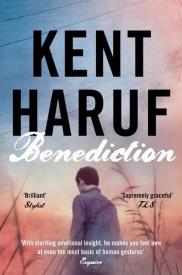 Dad is at the center of Benediction, but the novel’s attention radiates out from him to the small struggles and successes of those around him. Notable among these is the town minister, Rob Lyle, who has been sent to the town of Holt after causing trouble in Denver — trouble he ends up reiterating in Holt because (as he says in his own defense) “I had to say it . . . It’s the truth.” The truth he preaches is love, which sounds common enough except that he suggests people should really mean it, not just pay lip service to it:
 I’m pleased to announce that I’ve completed one of my first summer projects: turning the materials for my
 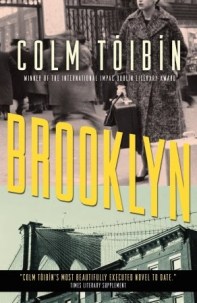 When I posted about Brooklyn
 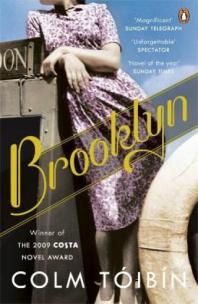 I understand that this can be taken as symptomatic of Eilis’s character. Early in her first year in Brooklyn she recognizes that her survival there in fact depends on suppressing her feelings:
 I feel as if I should begin with a disclaimer: this post is just a preliminary attempt to sort something out for myself that I am sure has been discussed a lot already! I know it’s not a new question, but it is a new one for me to be thinking carefully about — and that’s what my blog is for, not for presenting absolutely finished position papers but for exploration. So don’t jump on me if, for you, this is old news or already a settled question! Instead, tell me what you think, since one thing I’m hoping will come from writing a little about this question here is that I’ll get some leads and ideas for how to think about it better, or where to read more about it.
 Not that there’s anything wrong with that! Lots of (maybe even most) critical work is at least implicitly advocating on behalf of its specific topic — whether for its underestimated importance to literary history or for its political efficacy or for a right understanding of its aesthetic properties. Romance is a special case, too: as pretty much everyone I’ve read who writes about romance says at some point, it seems to call for overt special pleading simply because it is so routinely dismissed and its readers and writers so routinely shamed. If Regis seems at times to protest too much, it’s probably just that she knew her choice of subject would be met with skepticism, if not derision, and not just by her academic colleagues. (I expect that more recent scholarship is less defensive, as genre fiction and popular culture more generally have become increasingly familiar parts of the academic landscape. Eric Selinger and Sarah Frantz’s collection New Approaches to Popular Romance Fiction, which came out in 2012, is also on my reading list; I’ll be curious to see if I’m right that the tone has changed.)
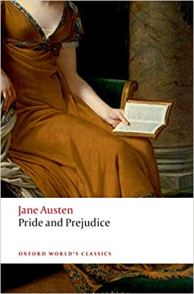
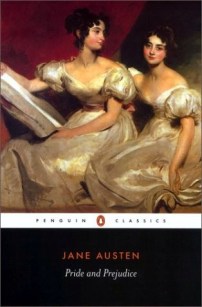 Regis is completely right that by her definition, Pride and Prejudice is a romance novel. But here’s the thing: to me, that suggests she’s using the wrong definition. First of all, it’s too broad to be interesting (even her list of canonical “romances” hardly seems to hang together in a meaningful way, outside a very bare skeletal similarity). It also seems anachronistic, in the same way that calling The Moonstone a “mystery” does: there wasn’t really such a category at the time (that’s not really the kind of book Collins himself thought he was writing), and applying our current terms so absolutely means losing sight of the genealogy of our modern genres. Books can be closely related in kind (or, as Regis sets it up, in structure) with being the same kind exactly.
 Alternatively, you could argue (as I have seen done) that romance, like all genres, comes in both “high” and “low” — or literary and popular — versions.** There’s still a kind of hierarchy, but now you’re separating out those who “transcend the genre” (to use the phrase Ian Rankin hates when applied to crime fiction) from those who happily take their place within it. No direct comparisons are called for, then, and Heyer or Chase (or choose your preferred exemplars) get considered more or less on their own terms. I still think the larger category (the one being subdivided into high and low forms) conflates too many different kinds of things, and the end result can be condescending — it implies, or could, that the serious stuff is going on in some sense over the heads of both readers and writers of the popular incarnations of the genre, or that those who really take themselves and their work seriously will aim at that transcendent kind. But at least this approach doesn’t pretend all novels organized around love and marriage are the same kind of books.
 Once it became more solid, the emerging story and all its ramifications and possibilities lifted him out of the gloom of his failure. He grew determined that he would become more hardworking now. He took up his pen again — the pen of all his unforgettable efforts and sacred struggles. It was now, he believed, that he would do the work of his life. He was ready to begin again, to return to the old high art of fiction with ambitions now too deep and pure for any utterance.
 Something that moved me deeply about Tóibín’s vision is that, as he tells it, there really are costs to such an extraordinarily intellectual life. It isn’t easy to be “one of those on whom nothing is lost”: The Master is suffused with melancholy, and with a strange, contradictory longing for decisive moments that never quite arrive, for connections that are never quite achieved. Every time Henry ventures further out into the world, whether literally or emotionally, just as promptly he retreats. For him, to be fully himself is, paradoxically, to be distant from himself; his best company, it sometimes seems, is his memory, but that is an equivocal solace:
 Classes ended last Wednesday, and I held my first final exam at 8:30 the following Saturday morning. That seemed hasty to me! Students have a lot going on at the end of term, and two days isn’t much time for them finish other assignments, regroup, and rest up a bit. On the bright side (for me, at least) I don’t have another exam until next Tuesday, so this has given me plenty of time to get that first batch graded. Since the only thing I have left to do for my other exam is copy it, I have a nice little window to sort out my own end-of-term mess and start organizing — literally and mentally — for my summer reading and writing projects. I spent some cheerful time this afternoon filing papers, reorganizing my bookshelves, and reflecting on the year that was.
 Often at the end of term I am full of resolutions about things I will do differently next time. One thing I am almost certain I’m going to change is my use of reading journals in the 19thC Fiction course.
  Recently I went out for a very pleasant lunch with a group of local Victorianists. One of the topics of discussion was retirement, and particularly how demoralizing it has been for people we know who have given literally decades of their lives to their universities only to be urged to consider retirement before they themselves feel ready for it. Nobody that we know wants to work past the point where they can’t do their job well, but for many professors 60-ish can actually be a peak time for creative productivity. Academic careers start slowly anyway, given the years it takes to earn qualifications, to land a permanent position (for the increasingly small number privileged enough to do so), then to meet the demands for tenure. Women with children, in particular, may have waited a long time to really flex their intellectual muscles: researchers have shown that
 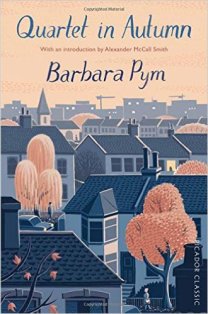 Anyway! Retirement is not the main subject of this post (though it’s related to it, in ways I’ll come back to): it’s just the context for how, at our nice lunch, I ended up mentioning Barbara Pym’s
  This is not to say that there are not pleasures to be had in the kinds of professional reading I’ve mentioned, or that English professors don’t ever want to do that reading. Of course they — we — do. But it’s still reading for work, and it’s pretty clear that “how do you find time to read?” really means “how do you find time for reading that isn’t for work?” Again, this is a question that can be tinged with envy, as if to say the person would also like to do that, but it’s also implicitly, inevitably, judgmental: “why aren’t you as busy with work as I am — why aren’t you too busy to read?”
 But the truth is, I’m probably not, if by “busy” you mean spending every available minute doing academic work — though that depends, of course, on how you define “working” (not to mention “academic”). I have
